
Cast Iron Plant (Aspidistra) Care

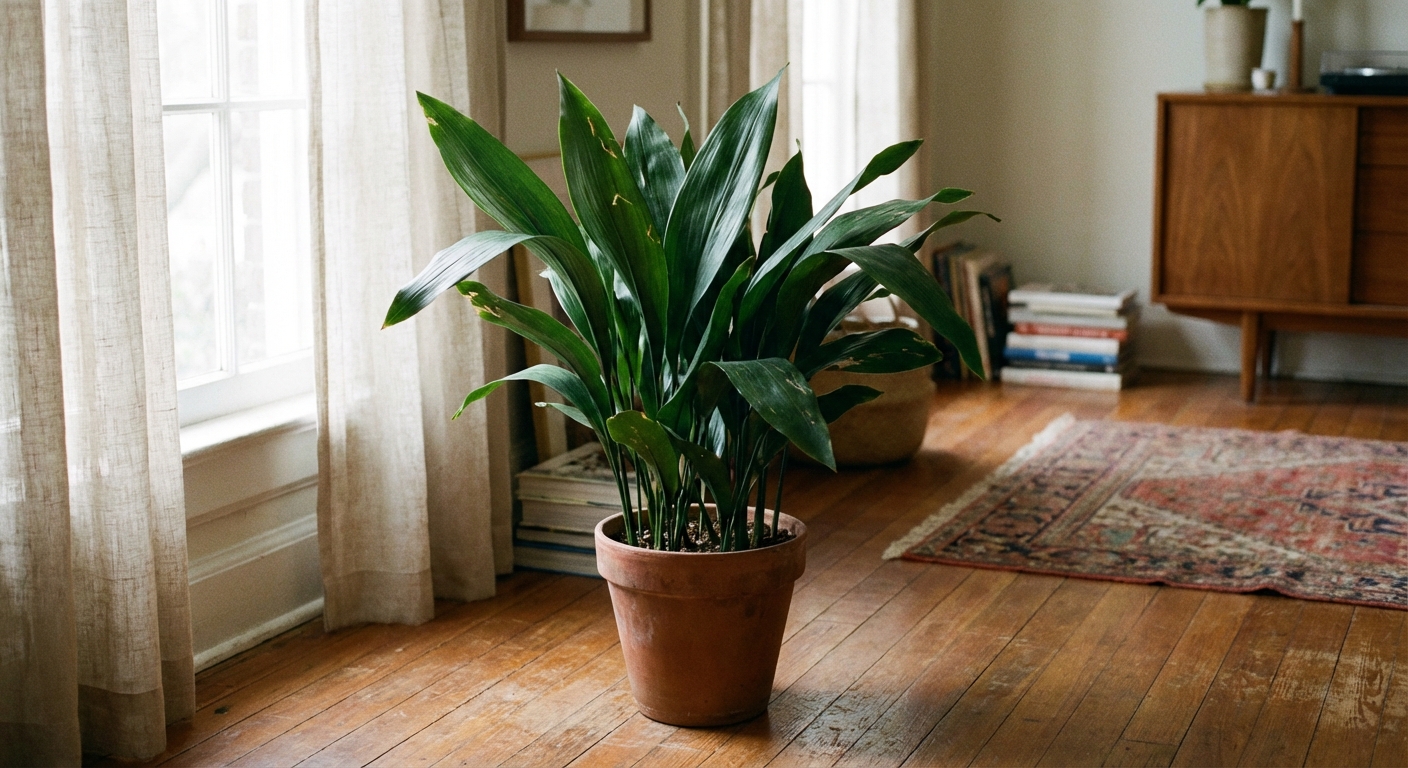
If you have ever wished for a houseplant that just… stays alive, the cast iron plant is your steady, unbothered friend. Aspidistra elatior earned its tough reputation by tolerating the kind of conditions that make fussier plants sulk: low light, missed waterings, and the occasional drafty corner. It will not grow fast, and it will not beg for attention. But give it a little consistency, and it will reward you with glossy, upright leaves that look tidy year-round.
Quick care snapshot
- Light: Low to bright indirect. Avoid harsh sun.
- Water: Let the top 2 to 3 inches dry, then water thoroughly. Much less in winter.
- Soil: Well-draining potting mix, lightly moisture-retentive.
- Temperature: Ideal 60 to 80°F. Tolerates cooler better than most houseplants.
- Humidity: Average home humidity is fine.
- Growth: Slow. New leaves are a small celebration.
- Propagation: Division of the rhizome during repotting.
- Pet note: Often listed as non-toxic, but always confirm with your vet and keep nibbling to a minimum.
Getting to know your cast iron plant
Aspidistra elatior is a rhizomatous plant, meaning it grows from thick, creeping underground stems (rhizomes). Those rhizomes store energy and moisture, which is a big reason this plant can handle a little neglect. Leaves emerge individually on long stems, creating that tidy fountain shape.
You will sometimes see varieties like 'Variegata' (striped) or speckled forms sold as cast iron plants. They share the same care basics, with one twist: variegated plants usually want a bit more light to keep their pattern.
Light: low light champion, but not a cave plant
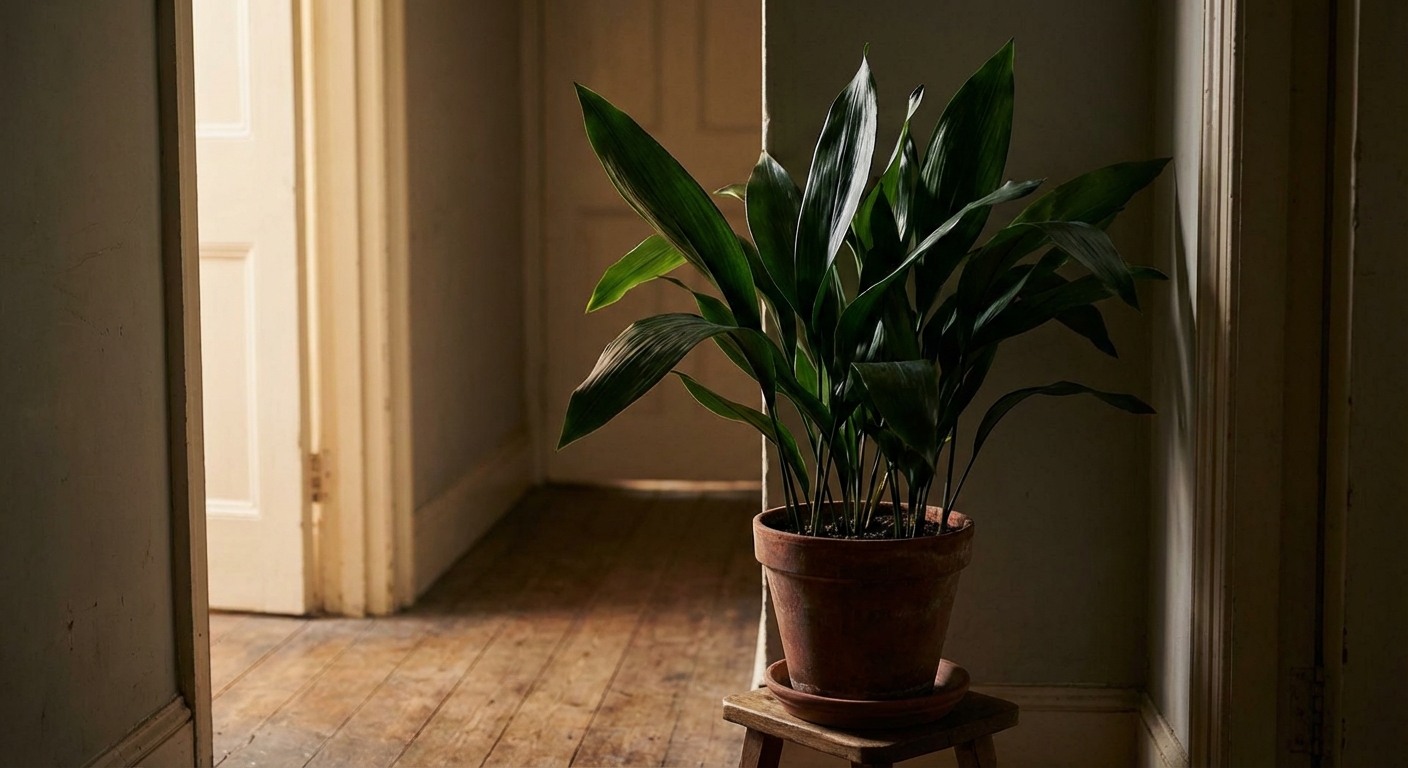
The cast iron plant is famous for low-light tolerance, which is real. It can live comfortably in rooms where you can read during the day without turning on a lamp, even if the plant is several feet from the window.
Best light
- Low to medium indirect light: Ideal for steady, healthy growth.
- Bright indirect light: Faster growth, fuller leaves.
- Direct sun: Avoid midday sun on the leaves. It can cause bleaching and crispy patches.
Clara tip: If your cast iron plant is surviving but not thriving, moving it just 2 to 4 feet closer to a window often makes a noticeable difference over a few months.
Watering: the easiest way to hurt it is to love it too much
Overwatering is the number one cast iron plant problem. Those rhizomes store moisture, and the plant prefers to dry down a bit between drinks.
How often to water
- Check the soil with your finger. Water when the top 2 to 3 inches are dry.
- In low light, it may be every 2 to 4 weeks.
- In brighter light or warmer months, it may be every 1 to 2 weeks.
- In winter, expect longer dry spells. Sometimes 3 to 5 weeks is normal.
How to water properly
- Use a pot with a drainage hole.
- Water slowly until excess runs out the bottom.
- Empty the saucer so the pot is not sitting in water.
Watch the leaves: A slightly thirsty cast iron plant often looks fine. A consistently wet cast iron plant may start yellowing and softening at the base.
Soil and pot: drainage first, always
Aspidistra does best in a mix that drains well but does not dry like dust in a day. You want moisture to pass through, not linger around the rhizomes.
A simple soil recipe
- 2 parts quality indoor potting mix
- 1 part perlite or pumice
- Optional: a small handful of fine orchid bark for extra airflow
Choosing a pot
- Any material works, but terracotta is helpful if you tend to overwater.
- Choose a pot that is only 1 to 2 inches wider than the current one when repotting.
- Aspidistra can be slightly rootbound and does not mind it.
Temperature, humidity, and airflow
Cast iron plants are wonderfully adaptable.
- Temperature: Aim for 60 to 80°F. It can tolerate cooler indoor temps, but protect it from freezing drafts.
- Humidity: Average household humidity is fine. High humidity is not required.
- Airflow: Gentle airflow helps prevent stagnant, overly wet conditions, especially in low light.
If you are placing it near a door or vent, keep it out of the direct blast zone. Constant hot or cold air can lead to stressed leaves and browning.
Fertilizer: light feeding for a slow grower
Aspidistra grows slowly, so it does not need heavy fertilizer. Too much can actually contribute to leaf tip burn and salt buildup.
Easy schedule
- In spring and summer, feed once every 6 to 8 weeks with a balanced houseplant fertilizer at half strength.
- Skip fertilizer in fall and winter unless the plant is actively pushing new growth in bright light.
Salt buildup tip: Every few months, water until it runs freely out the bottom for a full minute or two. This helps flush leftover minerals from the soil.
Slow growth habits: what to expect
The cast iron plant is not here to hustle. It often puts out just a handful of new leaves per year, especially in low light. That is normal and honestly part of its charm.
- New leaves often emerge tightly rolled, then unfurl over days to weeks.
- Growth speeds up with brighter indirect light and warm temperatures.
- Older leaves can last a long time. Do not rush to remove them unless they are damaged.
Pruning and cleaning: keep it glossy and breathing
Because the leaves are broad, dust can build up and block light. A quick wipe makes a bigger difference than you would think.
- Wipe leaves with a damp cloth. Support the leaf underneath with your hand so you do not crease it.
- Trim off fully yellow leaves at the base with clean scissors.
- Avoid leaf shine products. They can clog leaf pores and attract dust.
Propagation: division is the reliable method
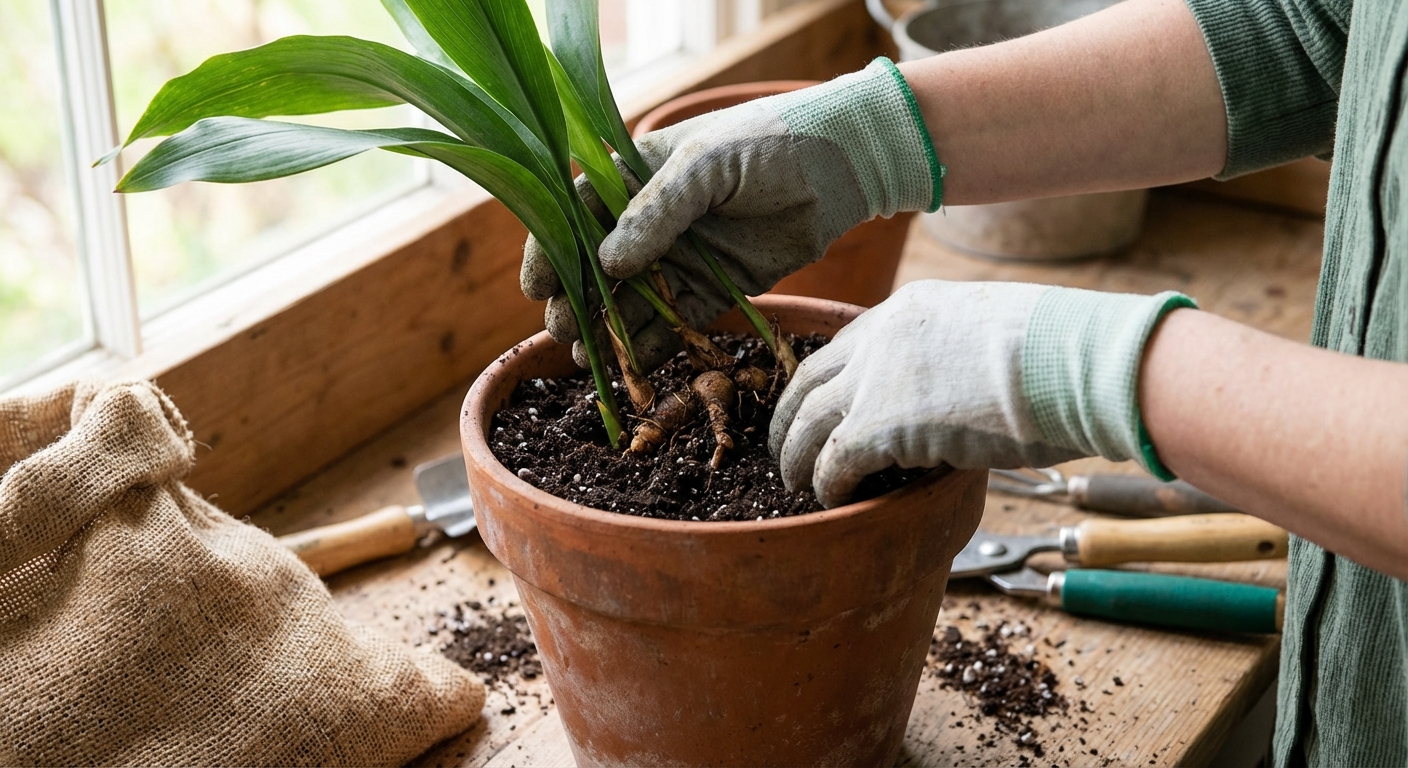
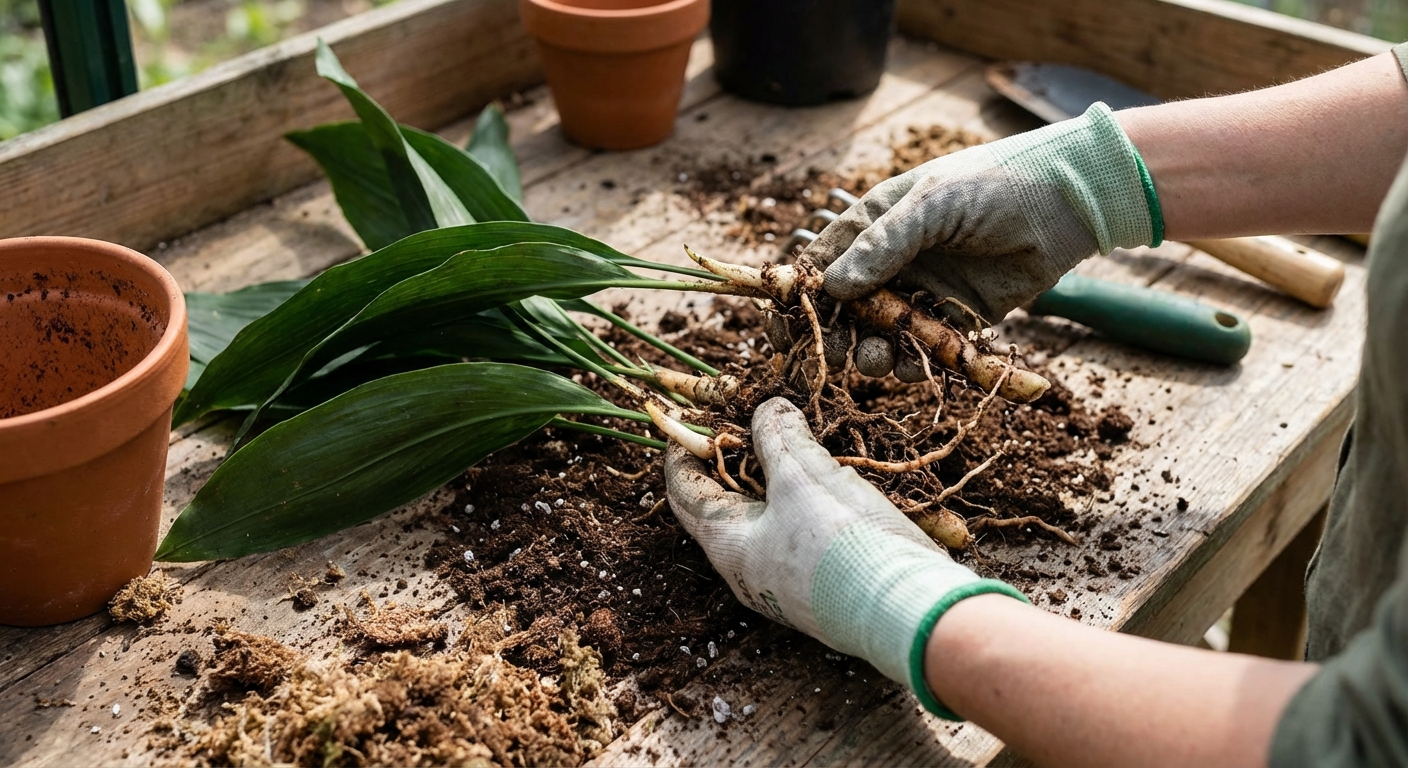
Cast iron plants are best propagated by division. The rhizomes naturally form clumps, and you can split a mature plant into smaller plants during repotting.
When to divide
- Spring to early summer is ideal.
- Divide when the plant is crowded, or when you want to refresh the soil.
Step-by-step division
- Water the plant lightly the day before so the root ball is less brittle.
- Slide it out of the pot and gently loosen soil from the rhizomes.
- Find natural separation points where rhizomes branch.
- Using clean hands or a sterilized knife, separate a section with at least 2 to 4 leaves and a healthy chunk of rhizome with roots.
- Pot each division into fresh, well-draining mix. Keep the rhizome just under the soil surface.
- Water once, then let the mix dry slightly before watering again.
Patience note: Divisions may sit quietly for a while. Root recovery comes first, then leaves.
Common problems and easy fixes
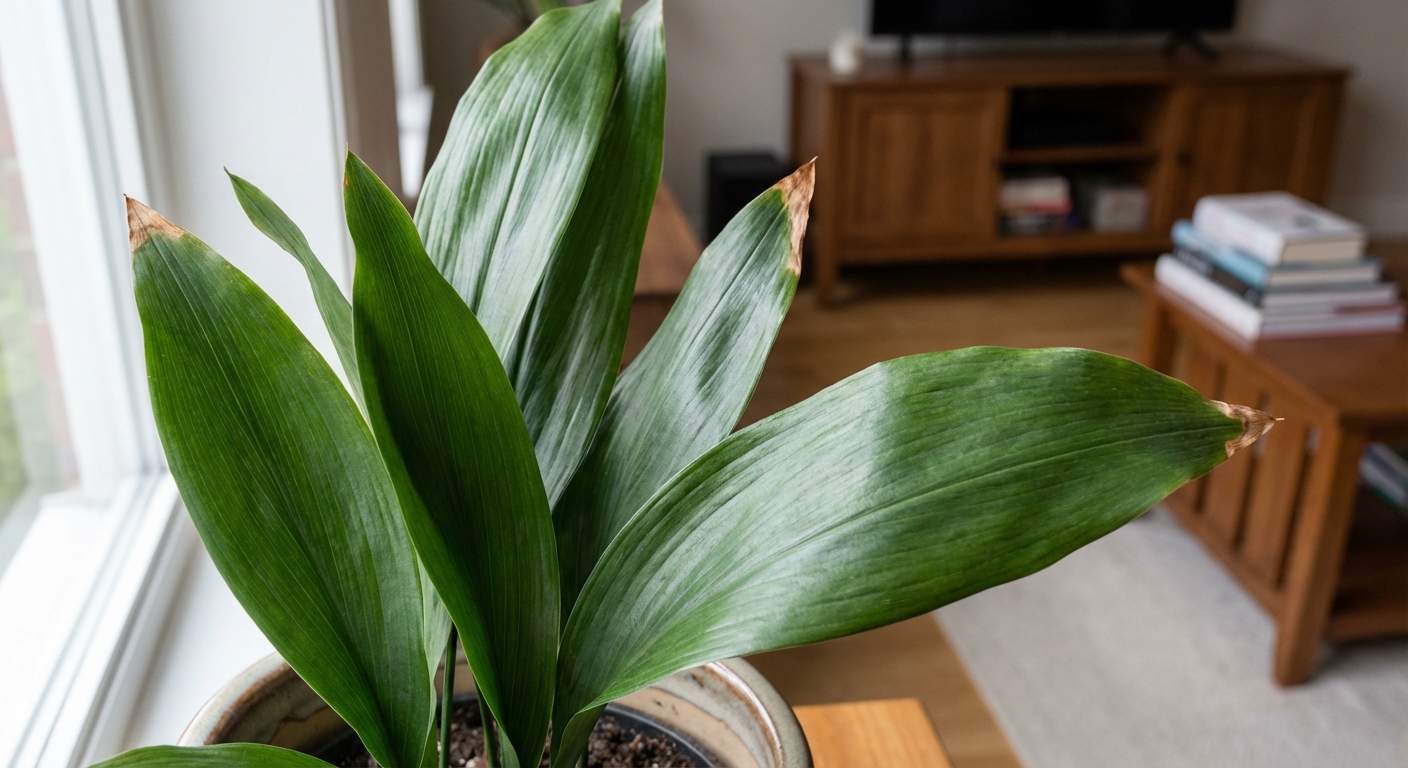
Brown leaf tips
This is common and usually not an emergency. The leaf may stay mostly beautiful for a long time even with a crispy tip.
- Underwatering: If the soil goes bone dry for long periods, tips can brown. Water a bit more consistently.
- Low humidity or heat vents: Move away from forced air or add gentle humidity (a pebble tray nearby or grouping plants).
- Fertilizer salts or hard water: Flush the pot thoroughly, and consider filtered water if your tap water is very mineral-heavy.
To tidy it up, trim the brown tip with clean scissors, following the natural shape of the leaf.
Yellowing leaves
One older leaf yellowing now and then can be normal. Several leaves yellowing at once is your plant waving a little flag.
- Overwatering: Most common. Let the soil dry further between waterings and confirm the pot drains freely.
- Low light plus wet soil: A classic combo for unhappy roots. Either move to brighter indirect light or water less.
- Cold stress: Chilly windows in winter can yellow leaves. Pull the pot a foot or two back from the glass.
Brown patches or faded areas
- Sun scorch: Direct sun can bleach or burn leaves. Move to indirect light.
- Physical damage: Leaves crease if bumped. The mark is permanent, but the plant is fine.
Drooping or limp stems
- Severe thirst: Water thoroughly and let it drain. It often perks up within a day.
- Root issues: If soil is wet and stems droop, check for rot. Remove mushy roots and repot into dry, fresh mix.
Pests
Cast iron plants are not pest magnets, but they can occasionally get spider mites, scale, or mealybugs, especially in dry indoor air.
- Wipe leaves and stems with a damp cloth to remove pests.
- Use insecticidal soap or horticultural oil as needed, repeating weekly for a few rounds.
- Isolate the plant while treating to protect your other houseplants.
Repotting: how often and how to do it
Because growth is slow, repotting is not frequent. Many cast iron plants are happy being repotted every 2 to 4 years.
Signs it is time
- Rhizomes pushing up against the pot edge
- Water runs straight through because roots are dense
- The plant seems stalled even in decent light and care
Repotting steps
- Choose a pot only slightly larger, with drainage.
- Refresh soil with a well-draining mix.
- Keep the crown and rhizomes at a similar depth as before.
- Water once, then let it settle. Avoid heavy fertilizing for 4 to 6 weeks.
Cast iron plant care FAQ
Can a cast iron plant live in a windowless room?
It can tolerate very low light for a while, but it still needs some light to stay healthy long-term. If there is no natural light at all, use a grow light for 8 to 12 hours a day.
Why does my cast iron plant look dusty and dull?
Dust is common on broad leaves. Wipe gently with a damp cloth. Clean leaves can capture more light, which matters in low-light homes.
Does Aspidistra flower indoors?
It can, but it is uncommon indoors. Flowers are small and often appear near the soil line. Most people grow it for foliage, and it does that job beautifully.
A gentle goal: steady, not perfect
If you take one thing from this page, let it be this: cast iron plants thrive on restraint. Moderate light, patient watering, and a pot that drains well will carry you a long way. And if you are the kind of person who apologizes to plants after forgetting them for a week, Aspidistra is ready to forgive you and keep on growing anyway.