
Carpenter Ants in the House and Yard

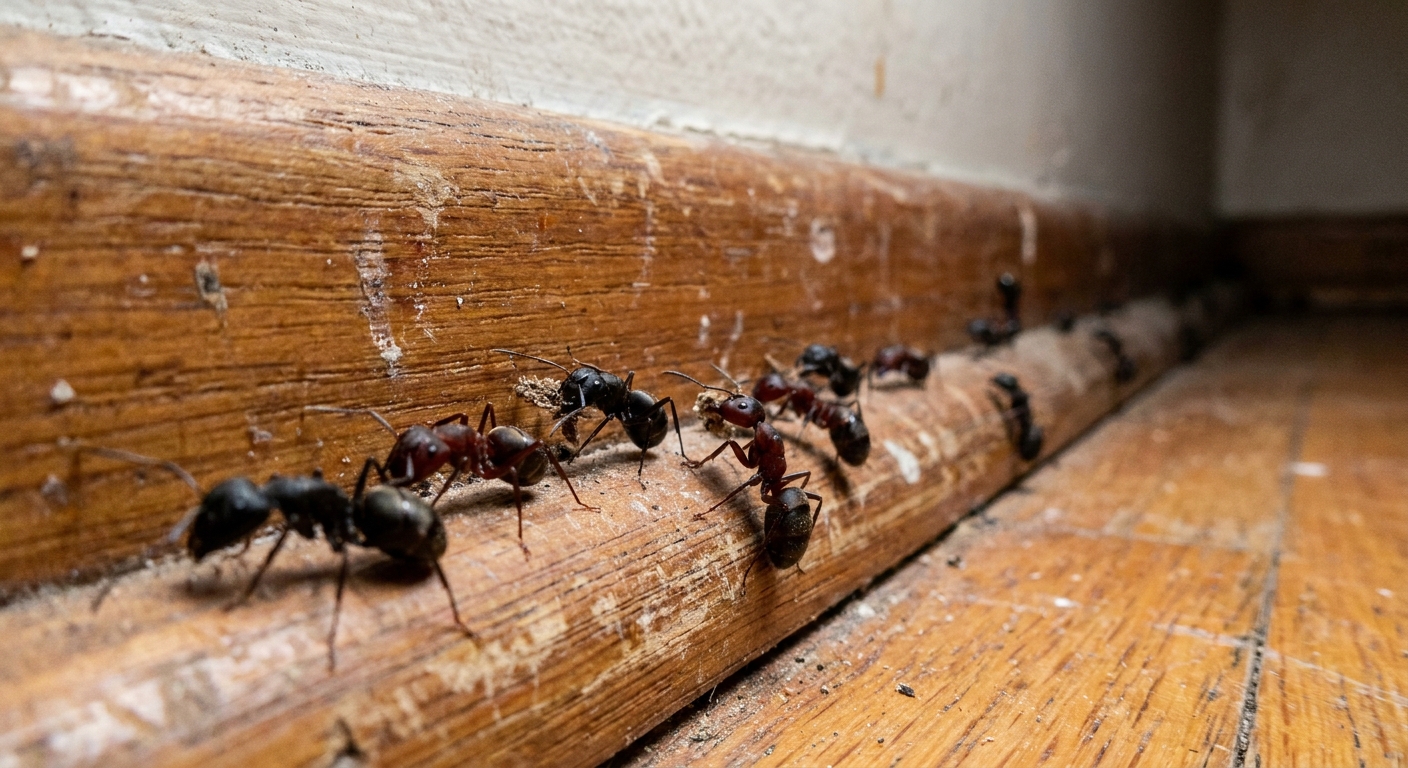
If you have ever spotted a line of big black ants cruising along a baseboard, I know the feeling. It is a little jolt of panic, followed by the urge to spray first and ask questions later. Take a breath. Carpenter ants are absolutely a problem worth taking seriously, but the fix is usually less about heavy spraying and more about detective work. Think moisture, wood that stays damp, and tiny access points that turn your home into their highway.
This Leafy Zen guide walks you through how to tell carpenter ants from termites, what attracts them, how to find their nest, and how to control them with safer, targeted tactics that protect your home without turning your yard into a chemical splash zone.
Quick note on “big black ants”: carpenter ants are often large and dark, but size and color vary by species and region. If you are not sure what you are seeing, use the ID checklist below.

Carpenter ants vs. termites
Carpenter ants and termites both show up around wood, and both can make you worry about structural damage. They are not the same pest, and the treatment plan is different, so identification matters.
Quick ID checklist
- Body shape: Carpenter ants have a narrow, pinched waist. Termites have a thick, straight body with no obvious waist.
- Antennae: Carpenter ants have elbowed antennae. Termites have straight, bead-like antennae.
- Wings (swarmers): Ant swarmers have front wings longer than back wings. Termite swarmers have four wings that are about equal length.
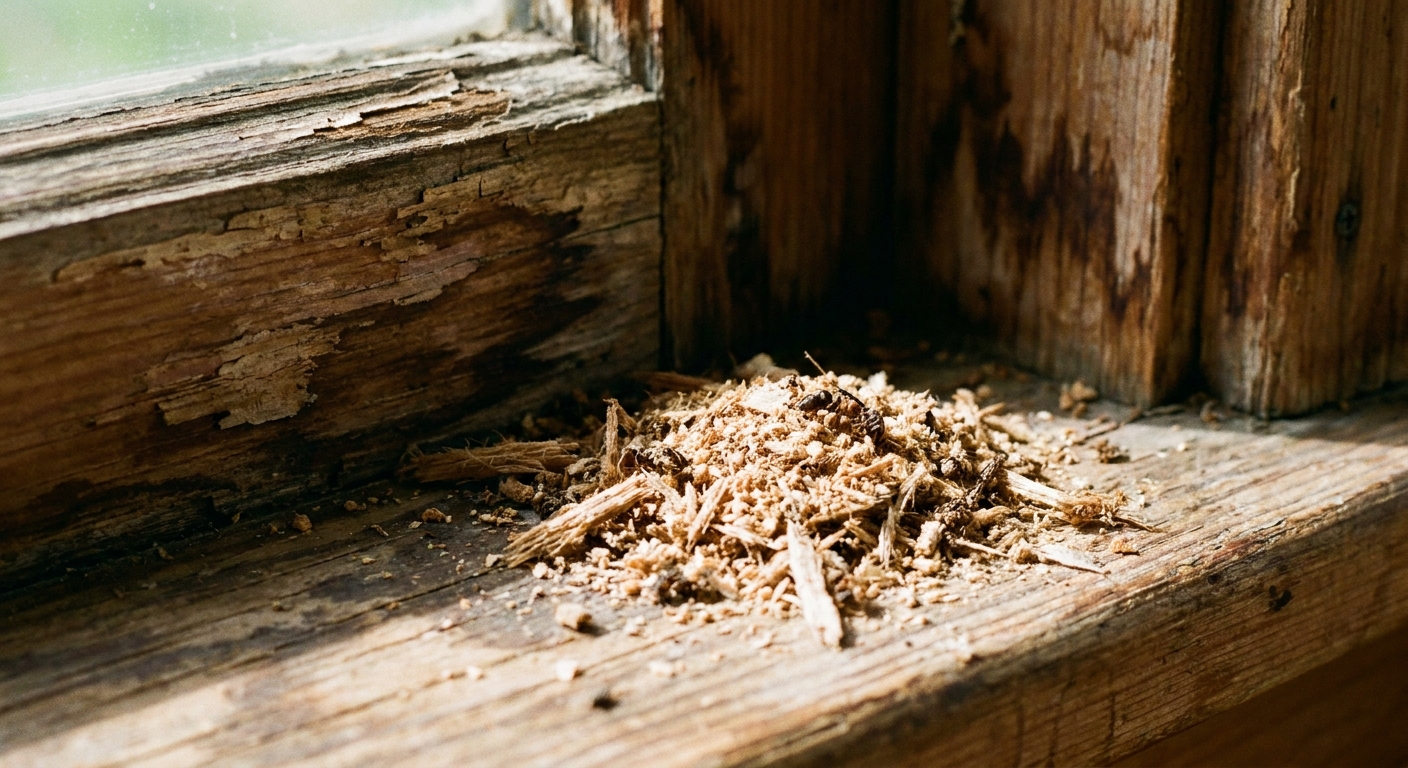
- Frass and debris: Carpenter ants push out coarse sawdust-like material mixed with insect parts. Termites leave pellet-like droppings (drywood termites) or muddy residue and tubes (subterranean termites).
- Damage style: Carpenter ants excavate wood to make galleries. They do not eat wood. Termites eat wood and can cause significant structural damage over time.
If you are seeing mud tubes on foundation walls or crawlspace piers, that is a termite red flag. If you are seeing clean, smooth tunnels in damp wood plus little piles of sawdust, carpenter ants jump to the top of the suspect list.
What attracts carpenter ants
Carpenter ants are drawn to moisture and softened wood. In nature, they move into dead or decaying trees. Around a home, that same preference points them toward areas that stay damp, leak, or do not dry out well.
One nuance that helps: carpenter ants can nest in wood that still looks “sound” from the outside if there is ongoing moisture nearby. Rot is a common clue, not a requirement.
Common moisture triggers indoors
- Leaky plumbing under sinks, behind dishwashers, or around toilets
- Slow roof leaks that wet sheathing, rafters, or insulation
- Condensation issues in bathrooms, basements, and crawlspaces
- Poorly sealed windows or doors that let water wick into frames
- Wet wood in contact with concrete, soil, or constantly damp masonry
Outdoor yard conditions that invite them closer
- Rotting stumps, old logs, or firewood piles pressed against the house
- Mulch piled too high against siding or kept constantly wet
- Tree branches touching the roof or siding, acting like an ant bridge
- Dense groundcovers or shrubs hugging the foundation, trapping moisture
- Dripping hose bibs, clogged gutters, or downspouts dumping water by the foundation
In my garden brain, carpenter ants are like a moisture meter with legs. If they are choosing your home, they are often telling you something is staying wet that should not be.
Where carpenter ants nest
Carpenter ants can nest outside, inside, or both. Many infestations are “satellite” situations where the main colony is outdoors in a tree, stump, or log, and smaller satellite nests pop up inside walls, soffits, or damp framing.
Indoor nesting hotspots
- Wall voids near bathrooms and kitchens
- Window and door frames with chronic water intrusion
- Under tubs and shower pans
- Behind appliances where small leaks go unnoticed
- Attics near roof leaks and poorly vented areas
- Basement rim joists and sill plates with moisture problems
Outdoor nesting hotspots
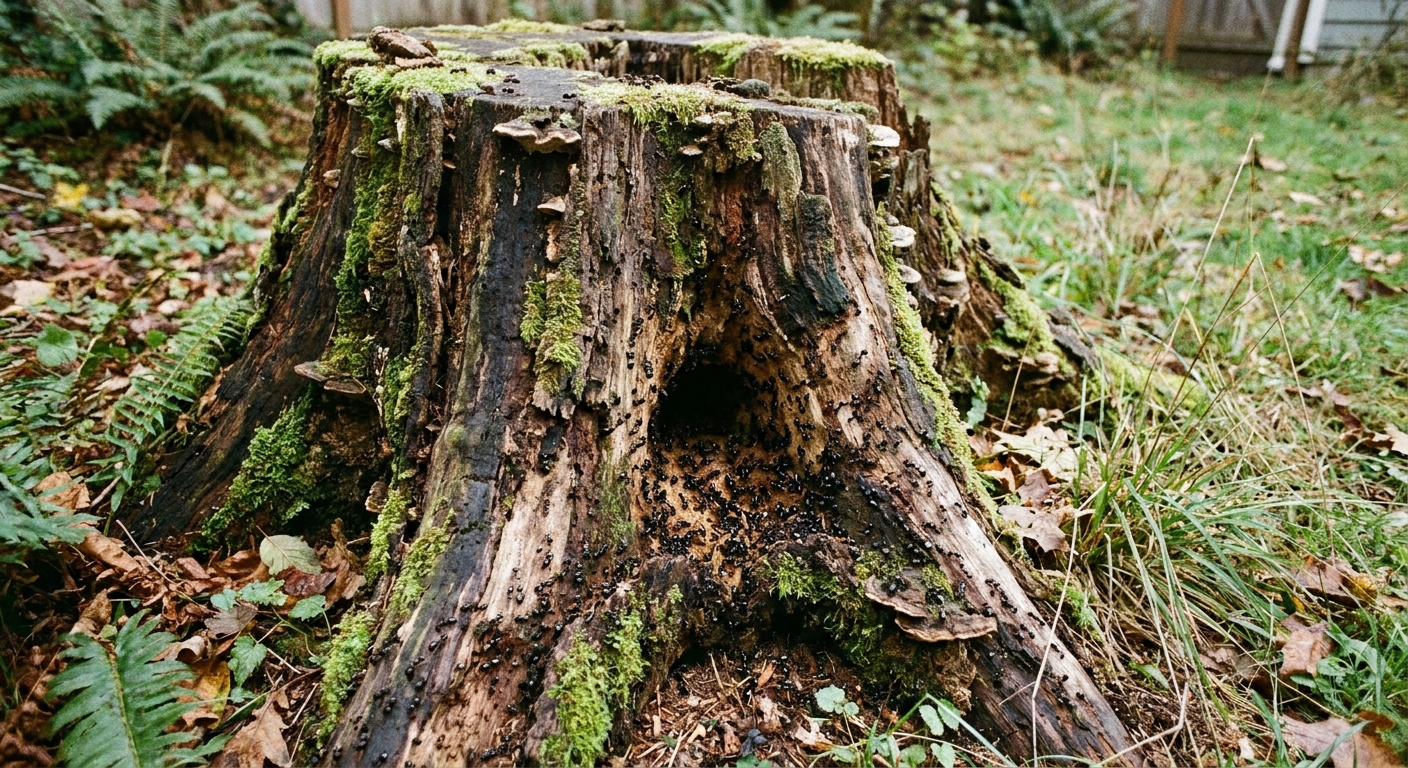
- Decaying stumps and buried roots
- Hollow or rotting trees (especially after storm damage)
- Landscape timbers and raised bed wood that stays damp
- Wood piles, old boards, or composting lumber
How to find the nest
Spraying visible ants is like mopping up water while the faucet is still running. You get real control when you locate the nest and fix the moisture that supports it.
Step 1: Follow the traffic
Carpenter ants often travel in defined trails, especially at dusk and at night. Turn off indoor lights, use a flashlight, and watch where they are heading. Trails commonly run along baseboards, plumbing lines, electrical lines, and edges of carpet.
Step 2: Listen for the “crinkle”
This sounds a little quirky, but put your ear close to a suspicious wall on a quiet evening. A mature nest can sometimes produce faint rustling or crackling sounds. If you do not hear anything, it does not rule out a nest.
Step 3: Look for frass
Carpenter ants keep their galleries tidy and push debris out of a small opening. Frass can collect:
- On window sills
- Along baseboards
- On basement ledges
- Below porch posts or deck beams
Step 4: Probe damp wood
If you suspect rot, gently probe with a screwdriver. Wood that is soft, spongy, or flakes away is both a carpenter ant magnet and a repair priority.
Step 5: Check outdoors in a slow circle
Start at the foundation and work outward: wood piles, stumps, fence lines, trees with cavities, landscape timbers. If you find ants disappearing into a stump or log, you may have found the source.
Safer control tactics
Carpenter ant control is most successful when you combine moisture repair, exclusion, and targeted baiting or dusting only where it is needed. Think precision, not blanket spraying.
1) Fix water first
- Repair plumbing leaks and replace water-damaged materials
- Clean gutters and extend downspouts so water drains away from the foundation
- Vent bathrooms properly and use a dehumidifier in damp basements or crawlspaces
- Seal window and door gaps where water is entering
- Correct grading so soil slopes away from the home
When wood dries out, it becomes a much less desirable nesting site. You are taking away the welcome mat.
2) Exterior exclusion
This is one of the most homeowner-friendly, low-tox moves you can make.
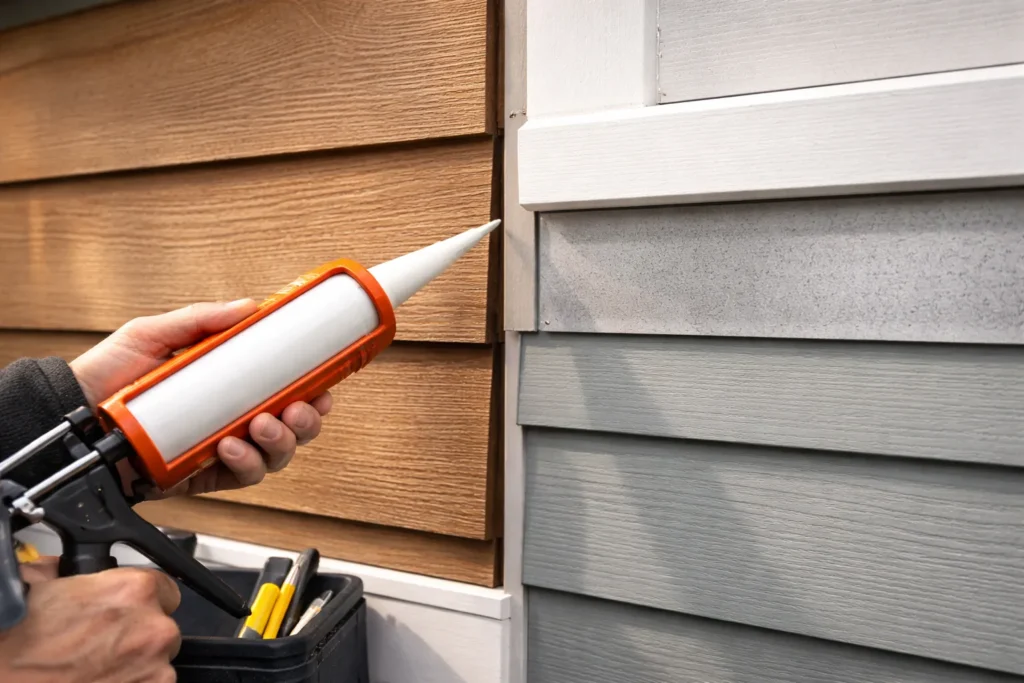
- Caulk cracks in siding, foundation gaps, and around utility penetrations
- Add door sweeps and repair torn weatherstripping
- Screen attic vents and keep screens snug and intact
- Trim branches so they do not touch the roof or siding
- Keep mulch a few inches back from siding and avoid piling it high
3) Sanitation and food management
Carpenter ants do not eat wood, but they do love sweets, grease, and protein sources.
- Wipe up sticky spills and pet food crumbs
- Store pantry goods in sealed containers
- Rinse recycling and keep trash covered
- Address aphids on outdoor plants since honeydew can support ant activity near the home
4) Use baits instead of broad sprays
If you have active trails, baiting is often a safer and more effective approach than spraying. Some sprays, especially repellent types, can cause ants to avoid treated areas and reroute deeper into a structure. Spraying can also interfere with baiting if it is applied near bait stations.
- Place bait along ant trails, but out of reach of kids and pets
- Do not disturb ants feeding on bait. Let them carry it back.
- Be patient. You may see increased activity before it gets better.
What to expect: baiting is not instant. Many situations improve in several days, but full control can take a couple of weeks depending on colony size, satellite nests, and how much moisture is present.
Different carpenter ant colonies may prefer different foods at different times. If one bait is ignored, switching to another formulation can make a big difference.
5) Targeted dusts in voids
If you have identified a nest void in a wall or around a window frame, professionals sometimes use a very small amount of insecticidal dust in that void for long-lasting control. Dust products can be irritating if inhaled and can drift into living space if applied incorrectly. If you are not experienced or you cannot follow the label directions with confidence, this is a good moment to pause and consider hiring help.
6) Outdoors: remove nesting habitat
- Move firewood as far from the home as practical (often 20 feet or more) and keep it elevated and dry
- Remove rotting stumps or severely decayed landscape timbers
- Repair or replace rotting deck boards, fascia, and porch posts
- Store lumber off the ground and under cover
Low-tox options
Helpful in the right place
- Soap and water: A quick way to wipe up and kill visible ants indoors, especially while you track the source.
- Vacuuming: Removes foraging ants and frass. Empty the canister outdoors right away.
- Diatomaceous earth (food grade): Can help in dry, protected areas like under appliances or in cracks where it will stay dry and undisturbed. Avoid creating airborne dust. Keep it away from kids, pets, and anyone with respiratory sensitivities. For wall voids, it is usually safer to leave dusting to a professional.
- Borax-based baits: Often effective, but still needs careful placement and patience.
Usually not enough for carpenter ants
- Essential oil sprays: These may repel foragers briefly but rarely solve a nesting problem.
- Random perimeter spraying: Can push ants into new routes without addressing moisture or nests.
If Leafy Zen had a motto for carpenter ants, it would be: Dry the wood. Block the doors. Target the nest.
What not to do
- Do not spray over bait or right next to bait stations. It can stop ants from feeding and slow control.
- Do not seal every crack in a panic while ants are actively trailing in large numbers. Do your moisture fixes, start baiting, then tighten up exclusion so you do not accidentally force new routes before the colony is under control.
- Do not rip open walls unless you are confident you found the nest and you can repair the underlying moisture issue. Otherwise, you may just create a bigger project.
When to call a professional
There is zero shame in bringing in a pro, especially when the nest is inside a wall or there is significant wood damage. Call a licensed pest management professional if:
- You see winged swarmers indoors (ants or termites) and cannot confidently identify them
- Ant activity is persistent despite moisture fixes and baiting
- You suspect a nest in a wall, ceiling, attic, or crawlspace and cannot access it safely
- You find extensive wood rot or structural concerns
- You have recurring leaks or moisture you cannot locate
Ask about an IPM approach (Integrated Pest Management), which prioritizes inspection, moisture correction, exclusion, and targeted treatments instead of routine blanket spraying.
Prevention checklist
If you want to keep carpenter ants from coming back, prevention is mostly about keeping things dry, tidy, and sealed.
Outside
- Keep gutters clean and downspouts directed away from the foundation
- Trim branches back from rooflines
- Store firewood away from the home, elevated and covered on top
- Keep mulch and soil below siding and avoid constant sogginess
- Remove dead stumps and severely decayed wood near the house
Inside
- Fix leaks promptly, even slow drips
- Vent bathrooms and kitchens well
- Use a dehumidifier in damp basements or crawlspaces
- Seal gaps where pipes and wires enter walls
- Watch window frames and door thresholds for early water damage
A final calming note
Carpenter ants can feel like a personal failure, but they are usually just a sign that moisture and wood are meeting in ways they should not. Treat it like a garden problem: improve the conditions, remove the habitat, then use a targeted intervention if you need it.
If you tell me where you are seeing them (kitchen, basement, near a window, by a deck), I can help you narrow down the most likely nest location and the next best step.