Bougainvillea Care in Cool Climates

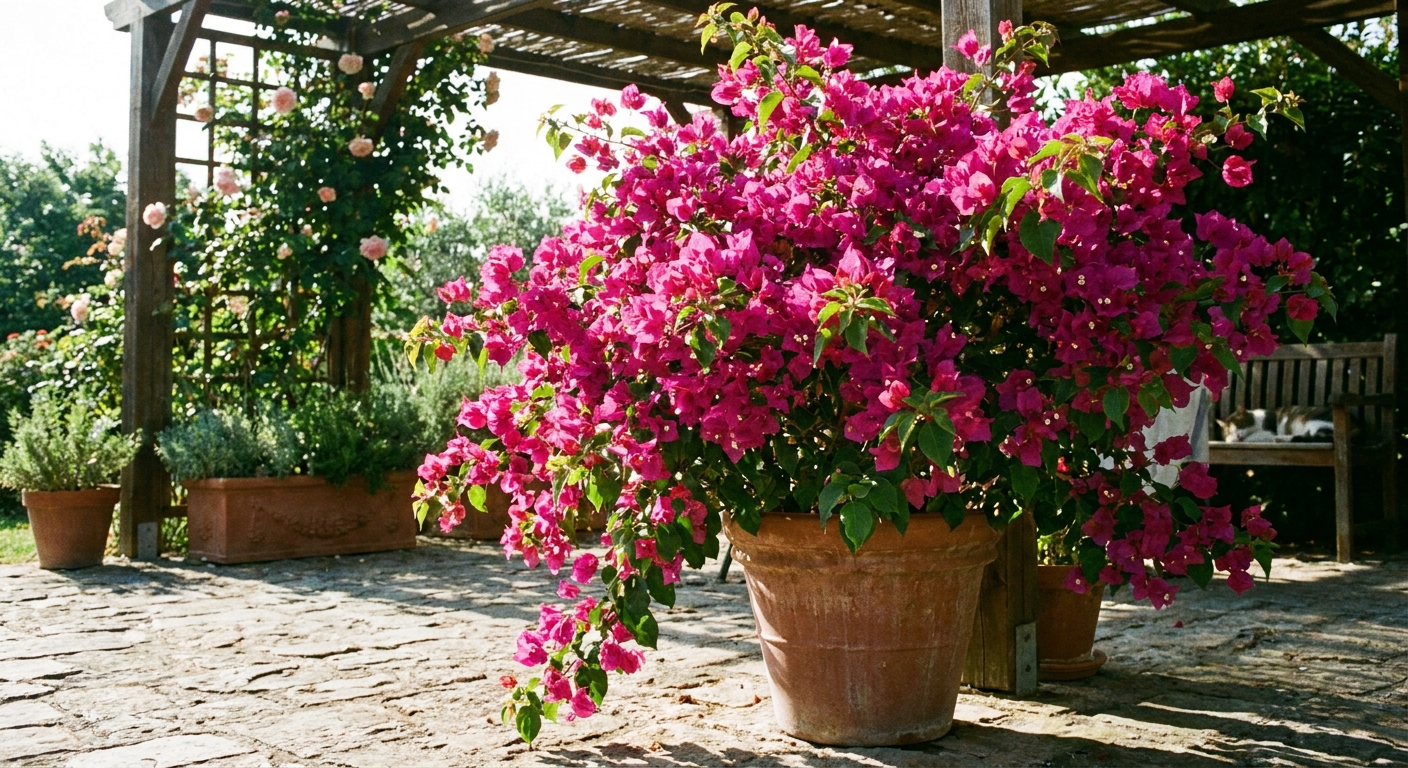
Bougainvillea is one of those plants that looks like it belongs in a sun-soaked postcard, yet it will absolutely live a double life for northern gardeners if you let it. In warm zones it can be a monster vine. In cool climates, it is usually a container plant you summer outdoors, then tuck in for winter like a slightly dramatic houseguest.
The secret is simple: give it blazing sun, don’t baby it with water, prune with intention, and have a clear overwinter plan before the first cold snap. Let’s walk through it together.
Quick climate context: bougainvillea is typically perennial outdoors in USDA zones about 9 to 11 (depending on species and cultivar). Everywhere else, think “patio plant with a winter plan.”

Sun and placement
If bougainvillea had a love language, it would be direct sunlight. Lots of it. The brighter your light, the sturdier the growth and the heavier the bloom.
How much sun?
- Best: 6 to 8+ hours of direct sun daily.
- Okay but stingy on blooms: 4 to 6 hours. You may get more leaves than color.
- Not happy: bright shade or typical indoor light. It will survive, but it may drop bracts and leaves.
Where to place it
For northern growers, think “heat island.” A south-facing wall, a sun-baked deck, a driveway edge where reflected heat bounces back, or a bright courtyard is perfect. Windy corners can shred the papery bracts and dry pots fast, so give it sun with a little shelter if you can.
Container tip: Bougainvillea blooms best when slightly root-bound. Choose a pot that is only a couple inches wider than the root ball, and prioritize drainage over size.
Soil and drought tolerance
Bougainvillea is famously drought-tolerant once established in the ground, and surprisingly forgiving in pots as long as it is not sitting in soggy soil. In containers, the big enemy is waterlogged roots, not thirst.
Ideal potting mix
- A high-quality potting mix cut with extra drainage material like perlite or pumice
- A container with large drainage holes
- Avoid heavy garden soil in pots, it compacts and stays wet
If you want an easy “nursery style” blend: potting mix plus about 20 to 30 percent perlite is a great start.
Root-rot prevention: never let the pot sit in a saucer of water. If there is runoff, dump it.
Watering that makes it bloom
Here is the part that feels counterintuitive if you are a tender-hearted plant parent: bougainvillea blooms better with a dry-down cycle. Constantly damp soil encourages leafy growth and fewer bracts.
How to water in a pot
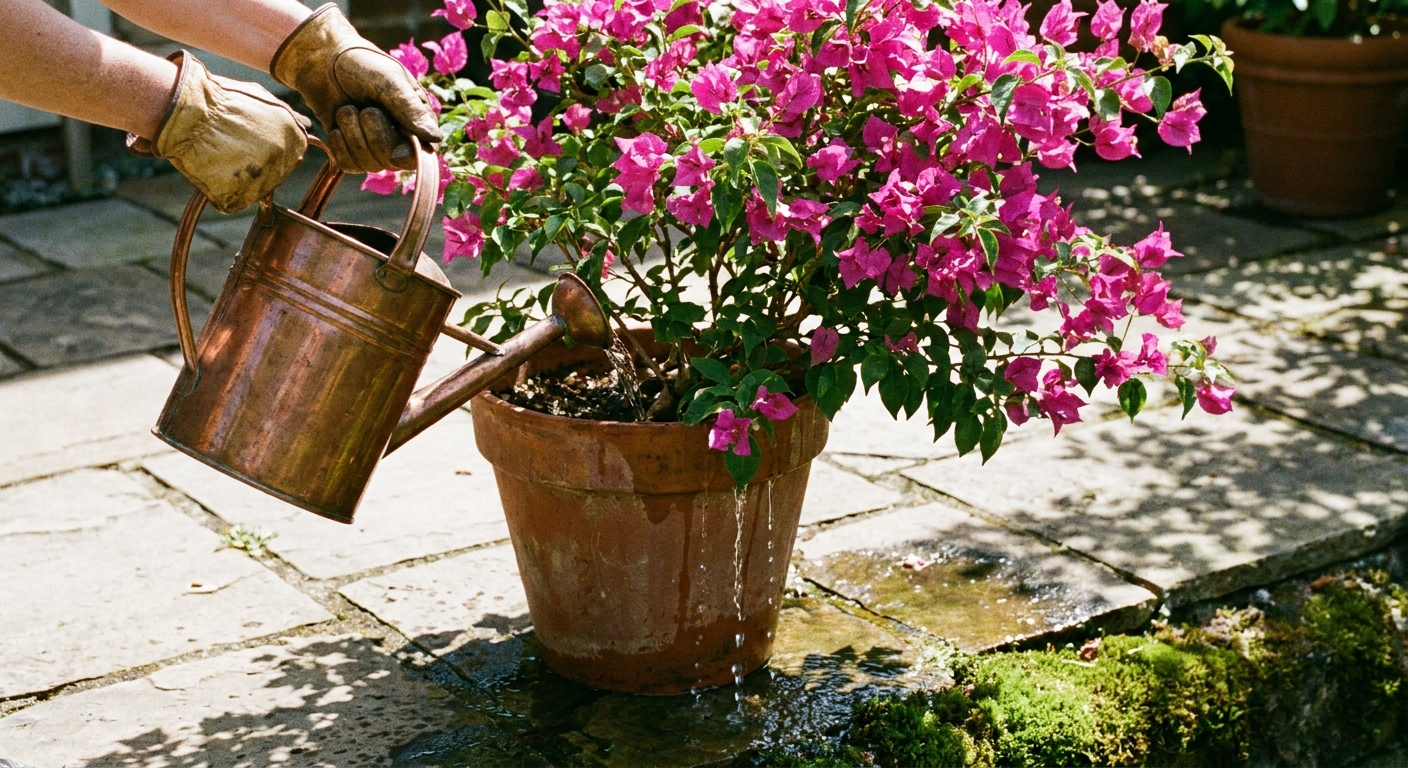
Use the soak-and-dry method.
- Check first: Stick a finger about 2 inches into the soil. In larger pots, also do the “lift test” (a dry pot feels noticeably lighter) or use a moisture meter to avoid watering when the bottom is still wet.
- Soak thoroughly: Water until it runs freely out of the drainage holes.
- Let it dry down again: Do not water on a strict schedule. Water when the pot tells you.
Summer frequency
- Cooler weeks: about once every 5 to 10 days
- Hot, windy weeks: every 2 to 4 days, especially in terracotta
In-ground plants (if you are in a warmer pocket) prefer deep, infrequent watering rather than daily sprinkles.
Signs you are overwatering
- Lots of lush leaves, few bracts
- Yellowing leaves that drop easily
- Soil that stays damp for days
- Wilting even though the pot is wet (a classic root stress signal)
Signs you are underwatering
- Leaves droop, then perk up quickly after watering
- Dry, crispy edges and quick leaf drop during heat waves
A quick note on “flowers”: what you admire are bracts, those papery, colorful leaves. The true flowers are tiny and tucked inside. That is why light and watering changes can cause bloom drop even when the plant looks otherwise fine.
Feeding without the leaf factory
Bougainvillea is not a heavy feeder, and too much nitrogen can push green growth at the expense of bracts.
Simple fertilizing
- Spring to midsummer: feed lightly every 3 to 4 weeks with a balanced fertilizer, or use a slow-release product at label rate.
- If blooms are scarce: switch to a bloom-leaning fertilizer with lower nitrogen.
- Late summer: taper off so the plant naturally slows down before you bring it inside.
Organic options can work beautifully, just keep them modest in containers. A little goes a long way when roots are confined.
Pruning for shape and blooms
Pruning bougainvillea is part haircut, part boundary-setting. It responds well, but timing matters because bracts form on new growth.
When to prune
- Major shaping: late winter to early spring, right before you move it back outside or as new growth starts.
- Light trims: after a flush of color fades. Think “tidy,” not “stump.”
- Avoid heavy pruning in late summer or fall: it can trigger tender new growth right when you need the plant to slow down for indoor life.
How to prune
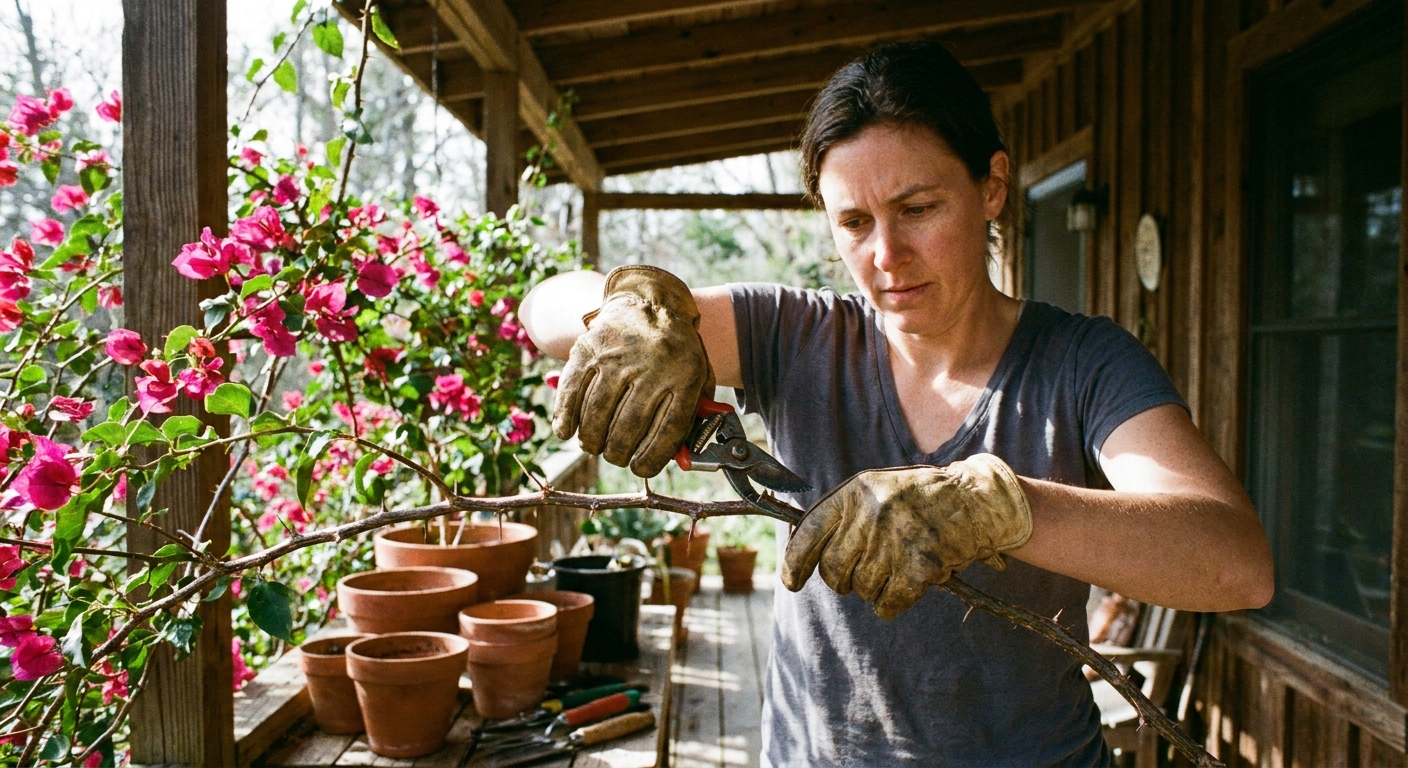
- Suit up: wear gloves and long sleeves. Thorns are no joke.
- Start with cleanup: remove dead, broken, or crossing stems.
- Shorten long whips: cut back to a node or side shoot to encourage branching.
- Open the center a bit: improve airflow, especially for plants that overwinter indoors.
- Train to a support: tie flexible stems to a trellis or hoop while they are young.
Bloom-friendly rule: frequent tiny pinches and trims can give you more flowering tips than one big hack job.
Overwintering in cool climates
If your winters drop below freezing, bougainvillea needs a plan. Cold tolerance varies by species and cultivar, but many are stressed or damaged when temperatures dip to about 32 to 35°F, especially in pots, wind, or wet soil. Hard freezes can kill them.
Before frost
- Inspect for pests: check leaf undersides and stems for whiteflies, spider mites, mealybugs, and scale.
- Rinse the plant: a strong spray of water helps knock hitchhikers off.
- Let it dry: do not bring a dripping wet pot indoors.
- Reduce watering: begin stretching the time between waterings as nights cool.
Two overwinter options
Pick the approach that matches your light and temperature situation. Bougainvillea is flexible, but it likes you to be consistent.
Bright indoors
Place it in the sunniest window you have, ideally south-facing. A grow light helps in truly short-day climates.
- Temperature: average indoor temps are fine, avoid hot blasts from vents.
- Water: sparingly. Let the top 2 to 3 inches dry, then water thoroughly and drain the saucer.
- Expectations: some leaf and bract drop is normal after the move. The goal is survival and a steady, slow pace.
Cool, slowed storage
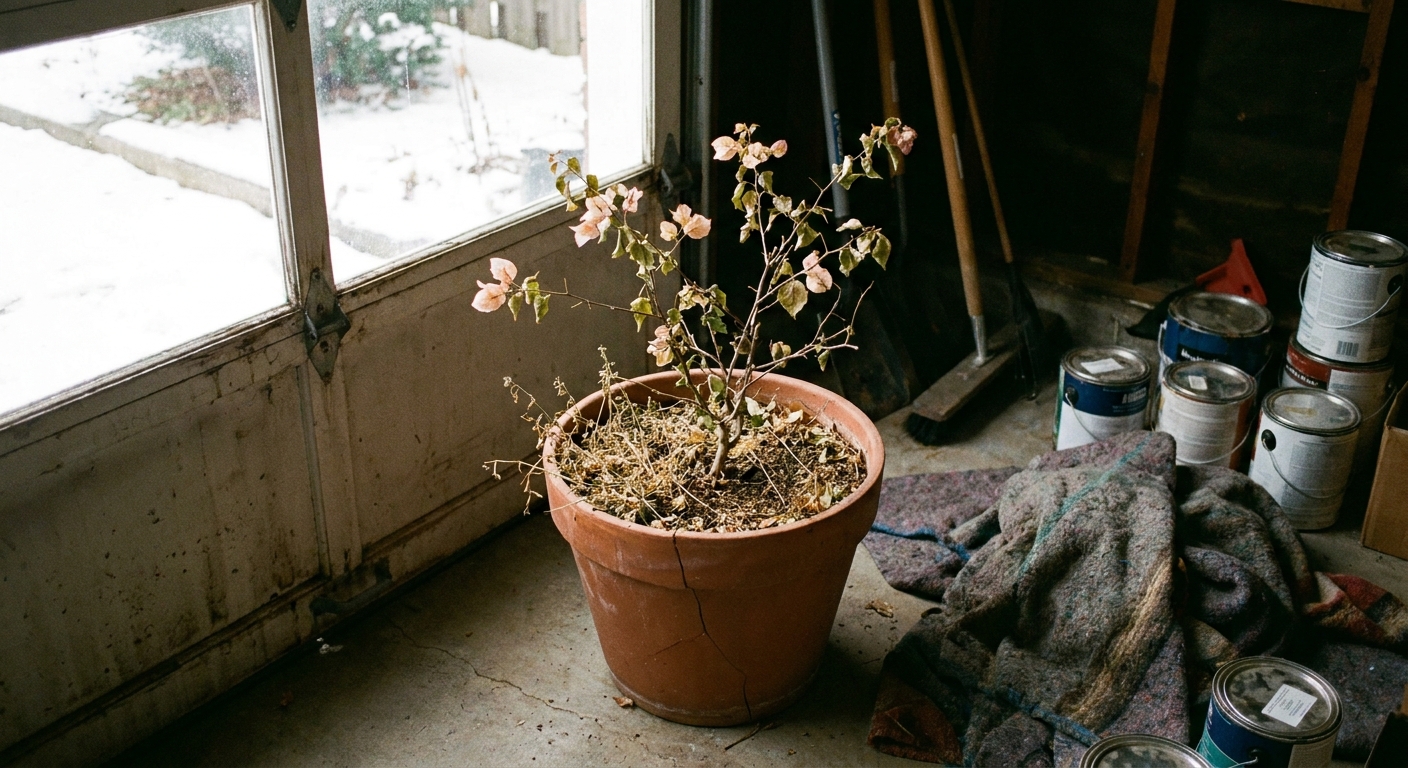
You can overwinter bougainvillea like a sleepy plant in a cool basement, garage with a window, or enclosed porch.
- Temperature: about 45 to 55°F is a sweet spot for slowed growth. If your space is closer to 60°F, give it brighter light because warmth plus low light can increase leaf drop and invite pests.
- Light: low light can work if it is genuinely cool. If it is not cool, go brighter.
- Water: just enough to keep the root ball from turning bone-dry. Think small sips every few weeks, or when the pot feels very light.
- Expectations: it may drop most leaves. That is okay.
Do not fertilize during winter storage. You want rest, not fresh growth.
Cold protection
In spring and fall, it is often not the daytime highs that get you, it is that surprise nighttime dip.
How to handle chilly nights
- Move pots: the best protection is simply carrying it into a garage or indoors overnight.
- Use a frost cloth: if the plant is too heavy to move, cover it before sunset and uncover in the morning.
- Avoid plastic touching leaves: it can transfer cold and cause damage. If you must use plastic, keep it off the foliage with stakes.
If you are trying to push the season, do it gradually. Bougainvillea hates abrupt changes almost as much as it hates wet feet.
Why bracts drop
Bract drop is bougainvillea’s way of saying, “Something changed.” Sometimes it is dramatic but temporary, especially after a move or a weather swing.
Common causes
- Not enough sun: the number one culprit, especially indoors.
- Overwatering: consistently wet soil encourages leaves, not bracts.
- Sudden changes: moving it from outdoors to indoors, or even rotating the pot can trigger drop.
- Too much nitrogen: heavy feeding or lawn fertilizer drift can reduce flowering.
- Cold stress: chilly nights can cause bracts and leaves to fall.
- Pests: whiteflies, spider mites, mealybugs, and scale can stress plants quickly indoors.
Quick fixes
- Move to the brightest light you can provide
- Let the pot dry more between waterings
- Hold fertilizer until active growth resumes
- Check for pests and treat early with insecticidal soap or horticultural oil, following label directions
Repotting and pot size
Bougainvillea likes a snug home, but not a strangling one.
- When to repot: about every 2 to 3 years, or when roots are circling heavily and watering becomes tricky (either drying too fast or staying wet too long).
- How to up-pot: move up just 1 pot size. A too-large pot can stay wet longer and often delays blooming.
- Best timing: late winter to early spring, right before active growth takes off.
Seasonal calendar
Use this as a flexible rhythm, not a strict rulebook. Your microclimate and container size matter.
Late winter (Feb to Mar)
- Inspect overwintered plants for pests
- Do major pruning and shaping if needed
- Begin slightly more frequent watering as buds swell
Spring (Apr to May)
- Harden off gradually once nights are reliably above the mid-40s°F
- Move to full sun outdoors
- Start light feeding when growth is steady
Summer (Jun to Aug)
- Water deeply, then let the pot dry down
- Trim lightly after bloom flushes to encourage branching
- Watch for heat stress in small pots and on windy patios
Early fall (Sep)
- Taper fertilizer
- Begin planning indoor space and pest checks
- Bring inside before frost, not after
Late fall to winter (Oct to Jan)
- Choose bright indoor growing or cool, slowed storage
- Water sparingly
- No fertilizer until late winter
Quick care checklist
- Sun: 6 to 8+ hours for best blooms
- Water: soak thoroughly, then let it dry down
- Soil: fast-draining mix and a pot with real drainage
- Prune: major cuts late winter, light trims after bloom flushes
- Overwinter: bright indoors or cool, slowed storage, minimal water
If you take nothing else from this page, take this: bougainvillea rewards a little tough love. Give it sun, give it drainage, then step back and let it do its wildly colorful thing.