Bottom Watering vs. Top Watering for Houseplants

If watering your indoor plants feels like a tiny daily gamble, you are not alone. I have raised jungly windowsills in city apartments and I still pause before I pour, because how you water matters almost as much as when you water.
Two methods dominate houseplant life: top watering (watering from the soil surface) and bottom watering (letting the pot drink from below). Neither is “best” for every plant or every person. The best method is the one that matches your plant, your pot, and your habits, and keeps your roots healthy.
Quick takeaway
- Top watering is fastest, flushes salts, and is ideal for most everyday houseplants when done thoroughly and allowed to drain.
- Bottom watering is fantastic for plants that hate wet leaves or crown rot, for very dry potting mix that repels water, and it can reduce fungus gnat pressure by keeping the top layer drier, but it does not flush buildup as well.
- Many plant parents do best with a hybrid routine: bottom water most of the time, then top water occasionally to rinse the soil.
What good watering means
Before we pick a method, let us define success. Good watering means:
- The root ball gets evenly moist, not just the top inch.
- Extra water can leave the pot. Roots need oxygen as much as they need water.
- The plant dries at an appropriate rate for its type and light level.
- Mineral salts and fertilizer residue do not build up over time.
If your plant has a drainage hole and a saucer, you are already set up for better outcomes with either method.
Top watering
How it works
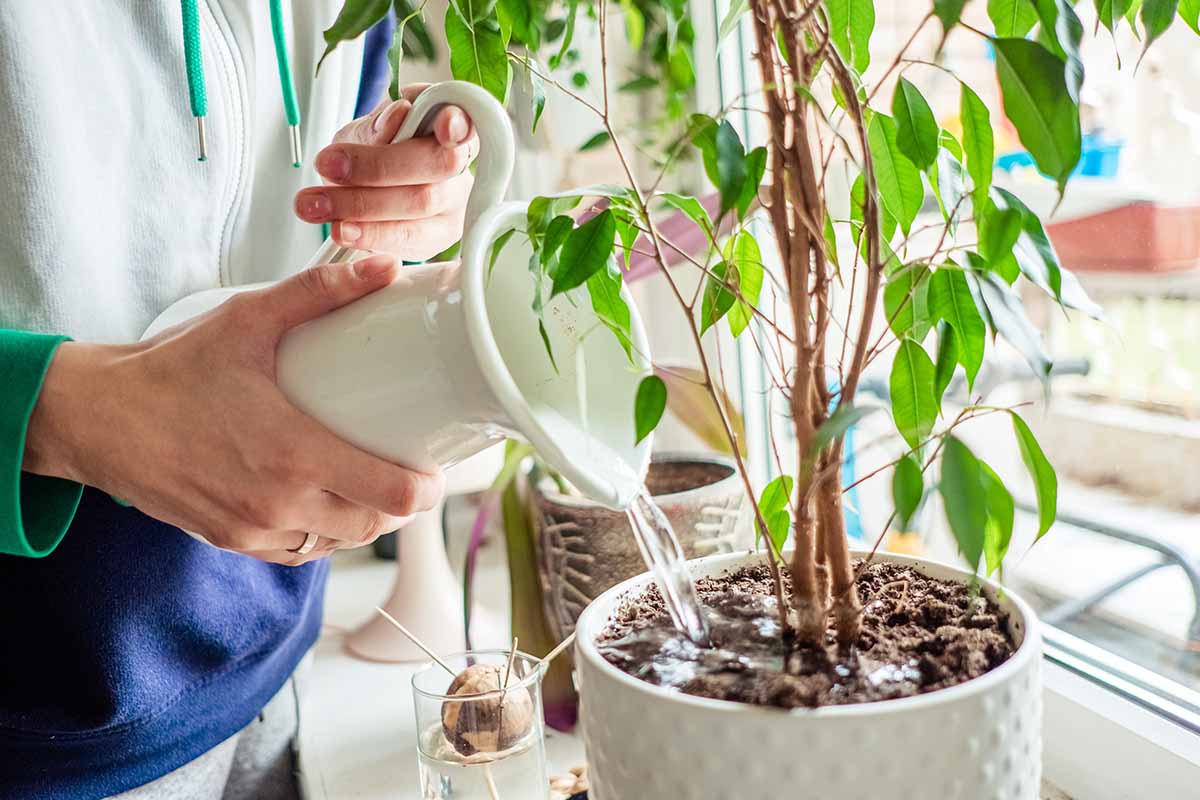
You pour water onto the soil surface until it moves through the pot and exits the drainage holes. The goal is a full soak, not a polite sip.
Step-by-step
- Check moisture first. Use your finger 1 to 2 inches down for most plants, or lift the pot to feel weight. If it still feels heavy and cool, wait.
- Use room-temperature water. Very cold water can slow uptake or stress some plants, especially in winter.
- Water slowly and evenly. Circle the rim, then the center, so the whole surface gets a chance to absorb.
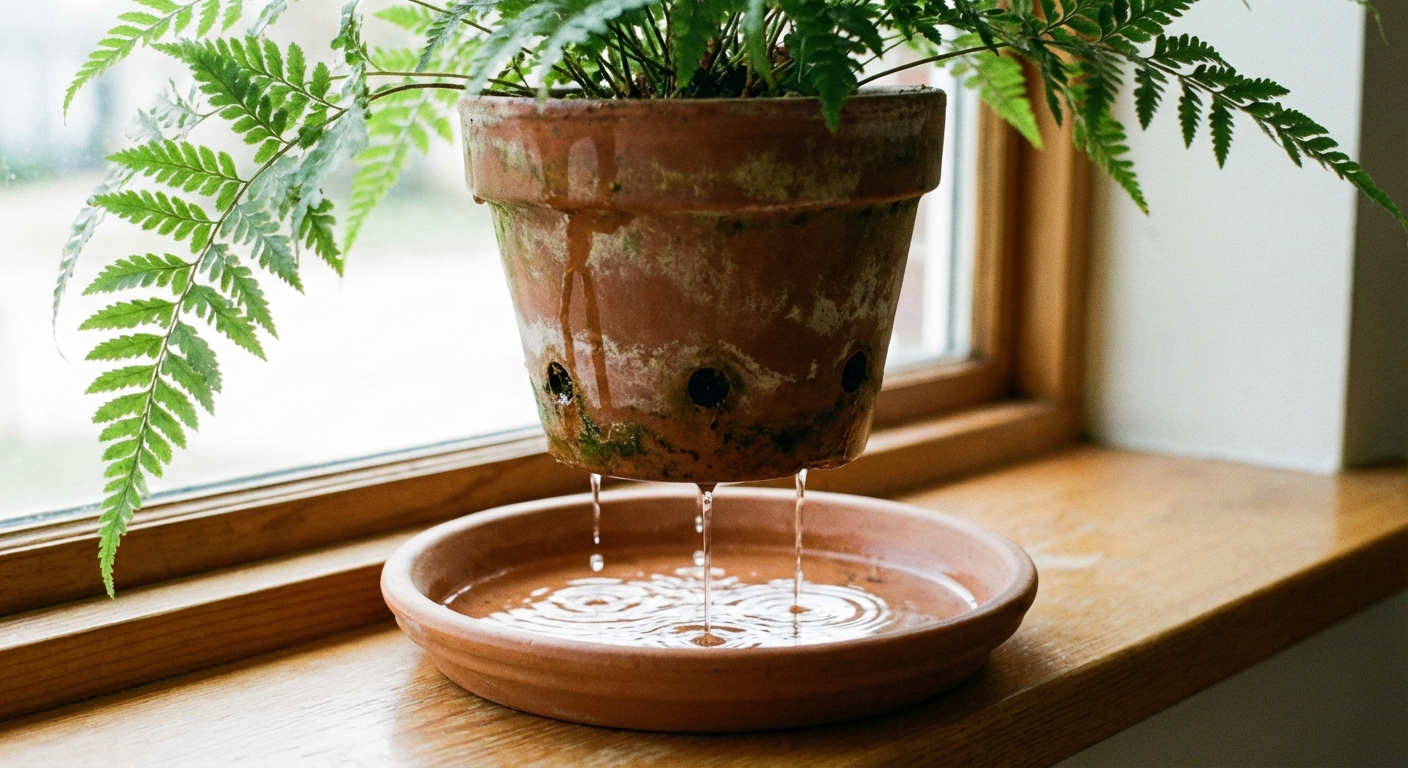
- Water until it drains. Aim for a steady trickle from the bottom holes and a bit of runoff. As a general guide, around 10 to 20% runoff helps rinse the potting mix (exact amounts vary by pot size and soil type).
- Let it finish draining. Give it 5 to 15 minutes, then empty the saucer or cachepot.
- Keep water out of tight centers. For rosette plants and other crown-forming plants, avoid pouring into the center. If water splashes in, gently blot it away.
Pros
- Flushes salts and fertilizer residue. This is a big one for long-term soil health, especially with hard water.
- Fast and simple. Great for big collections.
- Helps re-wet dry mix when done slowly, especially if you break it into two passes (water, wait 5 minutes, water again).
Cons
- Can encourage fungus gnats if the surface stays consistently damp.
- Risk of wet foliage and crown rot for certain plants if water sits in leaf cups or tight centers.
- Channeling is possible in peat-heavy mixes that have dried out, where water runs down the sides and exits without soaking the core. If you see runoff immediately, pause and water again slowly, poke a few holes with a chopstick to help water penetrate, or bottom water once to rehydrate fully.
Plants that usually love it
- Pothos, philodendrons, monsteras (let them dry partway between waterings)
- Spider plants
- Rubber plants
- Most palms (even moisture, not soggy)
- Herbs in bright light (basil, mint) when grown in well-draining pots
Bottom watering
How it works
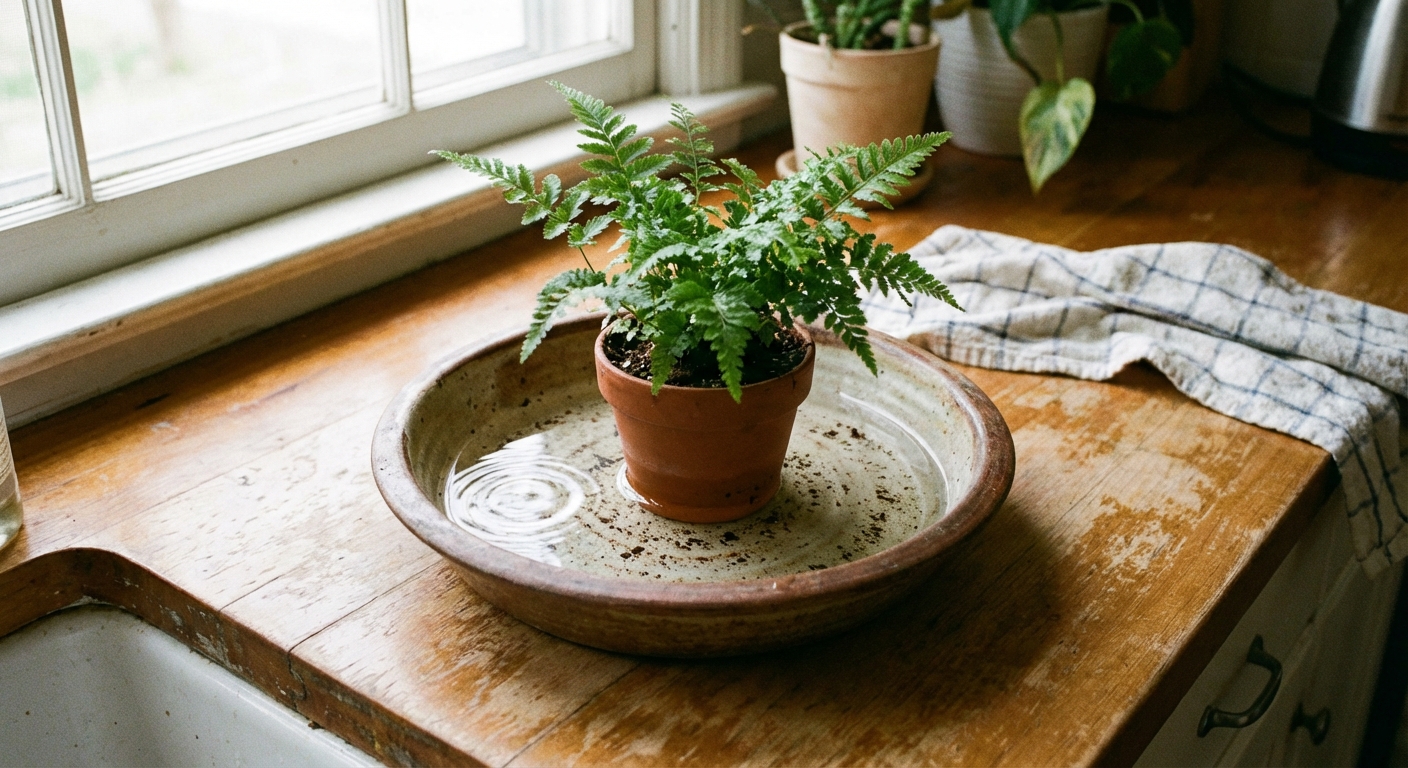
You place the pot in a tray, bowl, sink, or tub of water and let moisture wick up through the drainage holes via capillary action. In many potting mixes, the soil will hydrate upward until it is evenly moist, but very chunky mixes, compacted soil, or severely root-bound plants may wick unevenly.
Step-by-step
- Pick a container. Use a tray or bowl with 1 to 2 inches of water for small pots, or a deeper tub for bigger ones.
- Set the pot in water. Place it so the drainage holes can draw water. They can be just at or slightly below the waterline, not necessarily deeply submerged.
- Wait and watch. Many plants need about 10 to 30 minutes, depending on pot size, soil, and how dry things are. Very dry mixes and larger pots can take longer, sometimes up to an hour. You will often see the soil surface darken when it is nearly done.
- Lift and drain. Remove the pot and let it drip for a few minutes.
- Do not let it sit in leftover water. Empty the tray after draining unless you are intentionally growing a plant that prefers constantly wet conditions.
- Keep it clean. Refresh the soaking water each session and rinse trays occasionally. If you suspect pests or disease, do not share a communal soaking tub between plants.
Pros
- More even moisture in many mixes. Great for plants that dry out unevenly or soil that repels water when dry.
- Less wet foliage. Helpful for fuzzy-leaved plants and those prone to crown issues.
- Drier soil surface. Often discourages fungus gnats because the top layer is not constantly damp (helpful, but not a cure-all on its own).
Cons
- Does not flush salts well. Minerals can accumulate in the upper soil layers over time.
- Easy to overdo if you forget it. A “quick soak” can turn into an all-afternoon root bath.
- Not a fix for tired soil. If the potting mix is badly compacted, crusted, or breaking down, technique alone will not save it. Sometimes you need to loosen the mix or repot.
Plants that often prefer it
- African violets (wet leaves can spot and rot)
- Gloxinia and other gesneriads with sensitive foliage
- Prayer plants (calatheas, marantas) when you want even moisture without splashing leaves
- Small pots that dry fast (2 to 4 inch nursery pots)
- Plants in very airy mixes that can dry unevenly, especially in terracotta
Choosing the best method
Here is the honest gardener answer: it depends on the plant’s structure, the potting mix, and how you tend to water.
Bottom watering works well when
- The plant has a tight center where water can sit (common with some rosette-form plants).
- The leaves hate getting wet (fuzzy leaves, delicate foliage).
- You are fighting fungus gnats and want the soil surface to stay drier (helpful, but pair it with other gnat control habits).
- The potting mix has gone hydrophobic and top watering runs straight through. Bottom watering can help rehydrate more evenly.
Top watering works well when
- You fertilize regularly. Periodic flushing keeps salts from building up.
- You have chunky mixes (orchid bark, aroid mixes) where bottom watering may not wick evenly.
- Your plants are large. Bottom watering a big floor plant is possible, but it is a workout.
- You need to rinse the soil. If you see white crust on the soil surface or pot rim, top watering with runoff is your friend.
Pot and material matter
Terracotta breathes and dries faster. Plastic and glazed ceramic hold moisture longer. That means a plant in terracotta may need water more often, and bottom watering may finish faster, while the same plant in plastic may stay wet longer. Same plant, same window, totally different rhythm.
What about succulents and cacti?
Succulents are less about method and more about dry-down. They want a thorough soak followed by a complete dry period. Both methods can work if:
- the pot has drainage
- the mix is gritty and fast-draining
- you do not water again until the soil is truly dry
If you bottom water succulents, keep the soak on the shorter side and make sure the pot drains completely. If you top water, water deeply and let excess run out.
Common mistakes
Mistake: “I water a little bit every few days.”
This creates shallow, stressed roots and can leave the bottom of the pot dry. Fix it by watering thoroughly, then waiting until the plant actually needs water again.
Mistake: Leaving the pot in standing water
Whether you top water or bottom water, roots sitting in water lose oxygen and can rot. Empty saucers and trays after the pot has drained.
Mistake: Assuming droopy leaves always mean “thirsty”
Overwatered roots can also cause droop because damaged roots cannot move water. Check soil moisture before you water, every time.
Mistake: Ignoring buildup
If you bottom water most of the time, plan a top-watering flush about once a month (or every 6 to 8 weeks) depending on fertilizer and water hardness. Water from the top until you get generous runoff, then let it drain and empty the saucer.
My hybrid routine
If you want a simple habit that works for most indoor plant collections, try this:
- Bottom water plants that hate wet leaves (African violets) or when you are trying to keep the top layer drier.
- Top water the rest, but do it slowly and thoroughly with runoff.
- Once in a while, flush everyone (top water until it runs out) to reduce mineral buildup, especially if you use fertilizer or hard tap water.
It is not about loyalty to a method. It is about giving roots what they crave: oxygen, even moisture, and a pot that can breathe.
Watering FAQs
How long should I bottom water?
Many small to medium houseplants are happy with about 10 to 30 minutes, but timing varies with pot size, mix, and dryness. If the soil was bone dry, it can take longer, sometimes up to an hour. If your pot feels noticeably heavier and the top of the soil looks evenly darker, you are done.
Is bottom watering better for fungus gnats?
Often, yes. Fungus gnats love consistently damp topsoil. Bottom watering can keep the surface drier and reduce gnat pressure, but it will not solve an infestation alone. Pair it with letting the top 1 to 2 inches dry, using yellow sticky traps, and checking that your mix drains well.
Can I bottom water plants in pots without drainage holes?
No, not reliably. Without drainage, you cannot control saturation or remove excess water. If you love decorative pots, keep your plant in a nursery pot with holes and set it inside the decorative container.
What water is best for indoor plants?
Many plants do fine with tap water, but if you notice crispy edges (especially on calatheas or prayer plants) or lots of white mineral crust, consider filtered water, rainwater, or letting tap water sit out overnight (this helps with chlorine in some areas, though chloramine does not evaporate easily and many municipalities use it).
Pick what you will do well
If you are standing in your kitchen with a watering can in one hand and a plant in the other, here is your gentle nudge: choose the method that helps you water thoroughly, consistently, and with drainage. Roots are forgiving when they get air and a good rhythm.
And if you are still unsure, start with top watering for most plants, bottom water your fussy leaf-scorchers (I am looking at you, African violets), and adjust as you learn your home’s light, humidity, and drying speed. That learning is not failure. It is gardening.