
Bird’s Nest Fern Care Indoors

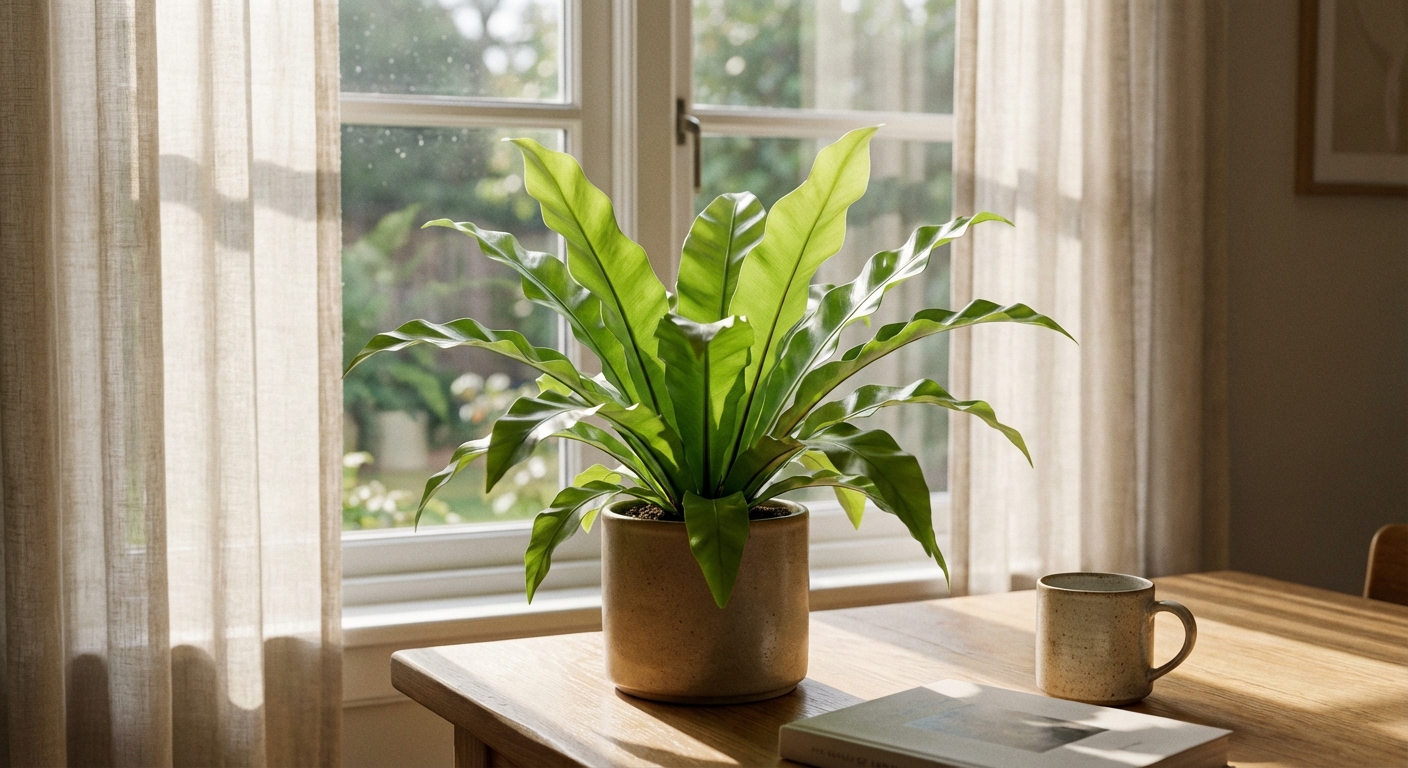
Bird’s Nest Fern (Asplenium nidus) is the fern I recommend to anyone who loves the lush “rainforest” look but lives in a normal, heated, occasionally dry home. Instead of feathery fronds like a Boston fern, it grows sturdy, glossy, strap-like leaves that rise from a tight central rosette, like a green fountain. That rosette is gorgeous and also the one place you need to treat gently.
If you remember just two things, make them these: give it bright, indirect light, and water the soil so the center “nest” does not stay wet for long periods (especially in cool or low-light seasons).
How it differs from other indoor ferns
Most people meet ferns through Boston ferns, maidenhair, or other frilly, fine-textured species that want constant humidity and evenly moist soil. Bird’s Nest Fern is built differently.
- Thicker fronds hold water better, so it is less prone to immediate crisping when indoor humidity dips.
- A central rosette (the “nest”) collects debris and moisture in nature, but indoors it can trap water and rot if it stays soggy.
- More forgiving humidity needs than many classic ferns. It still appreciates humidity, but it typically tolerates average household levels better than Boston or maidenhair.
In short: it’s still a fern, still a fan of steady moisture, but it’s less dramatic about it.
Light: bright, indirect
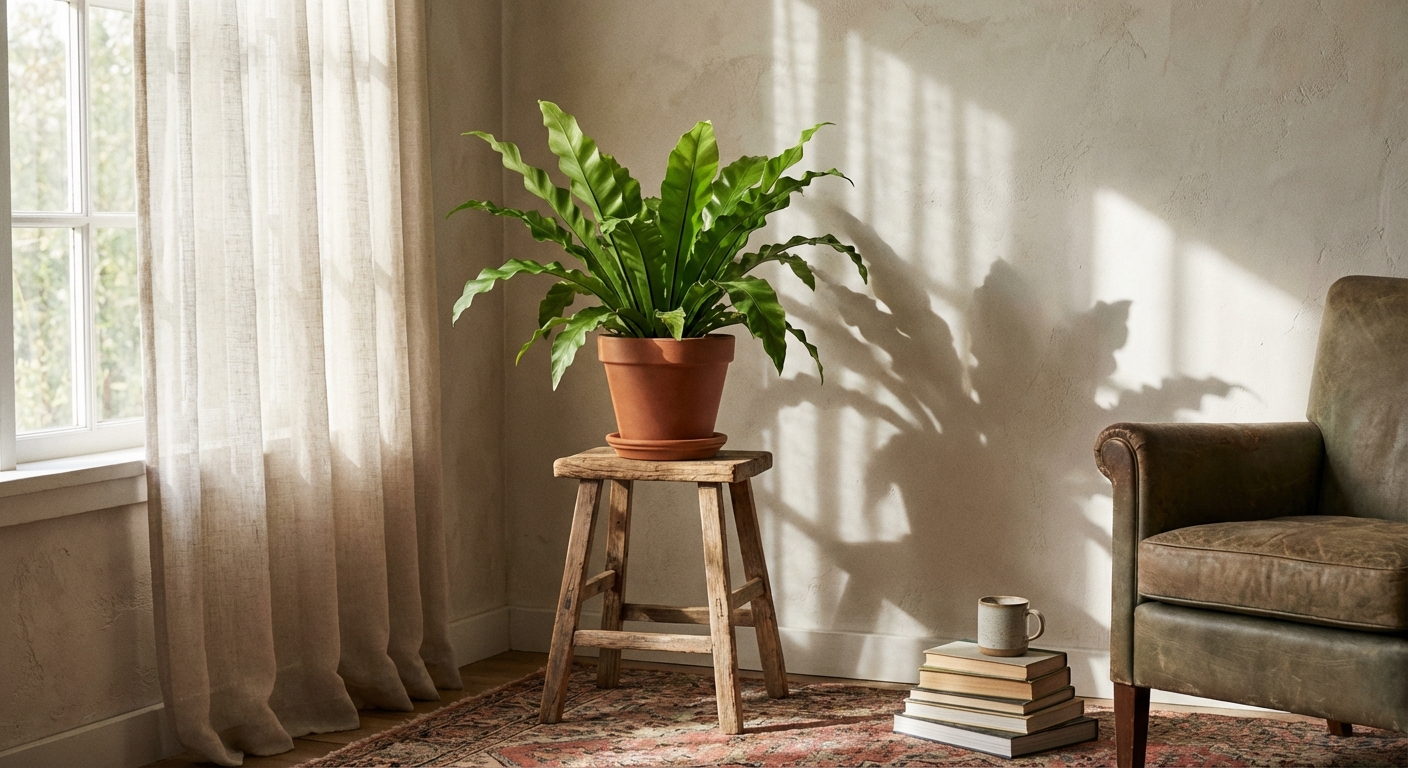
Think “forest floor”: lots of light filtered through leaves overhead. Indoors, that translates to bright, indirect light.
- Best: Near an east-facing window, or a few feet back from a south or west window with a sheer curtain.
- Tolerates: Medium light, but growth will slow and fronds may be smaller.
- Avoid: Hot, direct sun on the fronds. It can scorch and leave pale or crispy patches.
Quick test: If the spot is bright enough to cast a soft shadow (not a harsh, sharp one), it is usually in the right range. If you can comfortably read there during the day without squinting, that is a nice bonus clue too, as long as sun is not hitting the plant directly.
Watering: keep soil lightly moist
This is the most important care detail for Asplenium nidus. The fronds emerge from a central crown. If water sits in that center for long periods, you can invite crown rot. Some growers do rinse or water into the rosette in very warm, bright conditions, but indoors the safest approach is simple: do not make a habit of pouring water into the nest, and never let it stay soggy.
How to water the right way
- Water around the soil surface, aiming near the pot edge, not into the center.
- Water until a little water drains from the bottom, then empty the saucer.
- Let the top 1 inch (2 to 3 cm) of mix dry slightly before watering again. In most homes, that is roughly every 7 to 12 days, but always use the soil feel as your guide.
Water quality note: If your tap water is very hard or strongly chlorinated, this fern often looks happier with filtered, distilled, or rainwater.
Signs you are watering too much
- Yellowing fronds, especially near the base
- A musty smell from the pot
- Soft, dark tissue at the center crown
Signs you are watering too little
- Dry, brittle tips and edges
- Droopy fronds that perk up after watering
- Soil pulling away from the pot sides
Tip for forgetful waterers: A Bird’s Nest Fern prefers consistency, but it handles a small missed watering better than sitting in wet soil for weeks. When in doubt, check the mix, not the calendar.
Humidity: easier than most ferns
Many ferns want very high humidity and will sulk in winter heat. Bird’s Nest Fern still loves humidity, but its thicker fronds make it more adaptable to typical indoor ranges than many fern species. Exact comfort levels vary by home and cultivar, so treat these as targets, not rules.
Aim for: about 50 to 70 percent
Often copes with: 35 to 50 percent with consistent watering and no hot drafts
Simple humidity boosts that help
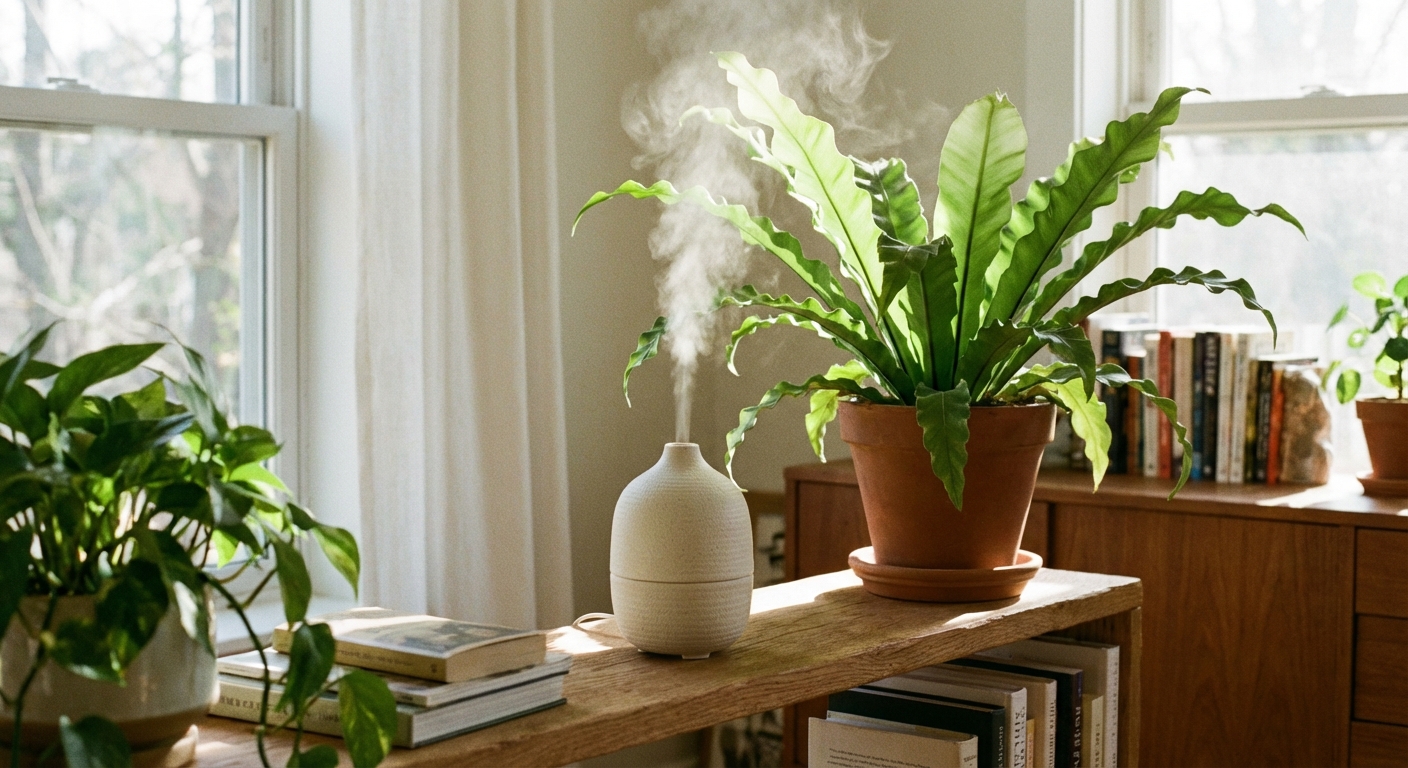
- Group plants together: they create a little shared humid bubble.
- Run a humidifier nearby: especially in winter.
- Bathroom placement: if it has a window, this can be the dream spot.
About misting: A light mist can temporarily raise humidity, but it is short-lived. If you mist, do it in the morning and avoid soaking the crown. For long-term comfort, a humidifier is more reliable.
Soil and pot: airy, not swampy
In nature, Bird’s Nest Fern often grows as an epiphyte, tucked into tree crotches and debris-filled pockets of organic matter where water drains quickly but humidity stays high. Indoors, the goal is a mix that holds some moisture yet stays open and oxygen-rich.
A great DIY mix
- 2 parts high-quality indoor potting mix or coco coir based mix
- 1 part fine orchid bark
- 1 part perlite or pumice
If you prefer bagged options, look for a chunky, bark-forward houseplant mix (often sold for aroids or orchids) and soften it with extra potting mix so it does not dry out too fast.
Pot choice
- Drainage holes are non-negotiable.
- Choose a pot only 1 to 2 inches (2.5 to 5 cm) wider than the root ball. Oversized pots stay wet too long.
- Terra cotta dries faster, plastic holds moisture longer. Either works, just match your watering habits.
Temperature and airflow
Bird’s Nest Fern is happiest in stable, cozy indoor temperatures.
- Best range: 65 to 80°F (18 to 27°C)
- Avoid: cold drafts, blasts from HVAC vents, and temps consistently below 55°F (13°C)
Gentle airflow is good. A strong, drying draft is not. If the fronds are rippling in the breeze all day, it is probably too much.
Feeding: light snacks
This fern is not a heavy feeder. Too much fertilizer can lead to salt buildup and brown tips.
- Feed in spring and summer every 4 to 6 weeks with a balanced liquid fertilizer diluted to 1/4 to 1/2 strength.
- Skip feeding in fall and winter when growth slows.
- Once every couple of months, water thoroughly to help flush excess salts, and always empty the saucer.
Repotting and grooming
Bird’s Nest Fern likes being slightly snug in its pot. Repot only when roots are circling heavily or pushing the plant up, usually every 2 to 3 years. It can be sensitive to rough handling, so aim for “minimal disruption” rather than a full root makeover.
Repotting tips
- Repot in spring if possible.
- Go up one pot size only.
- Keep the crown at the same height. Do not bury the rosette.
Cleaning and care
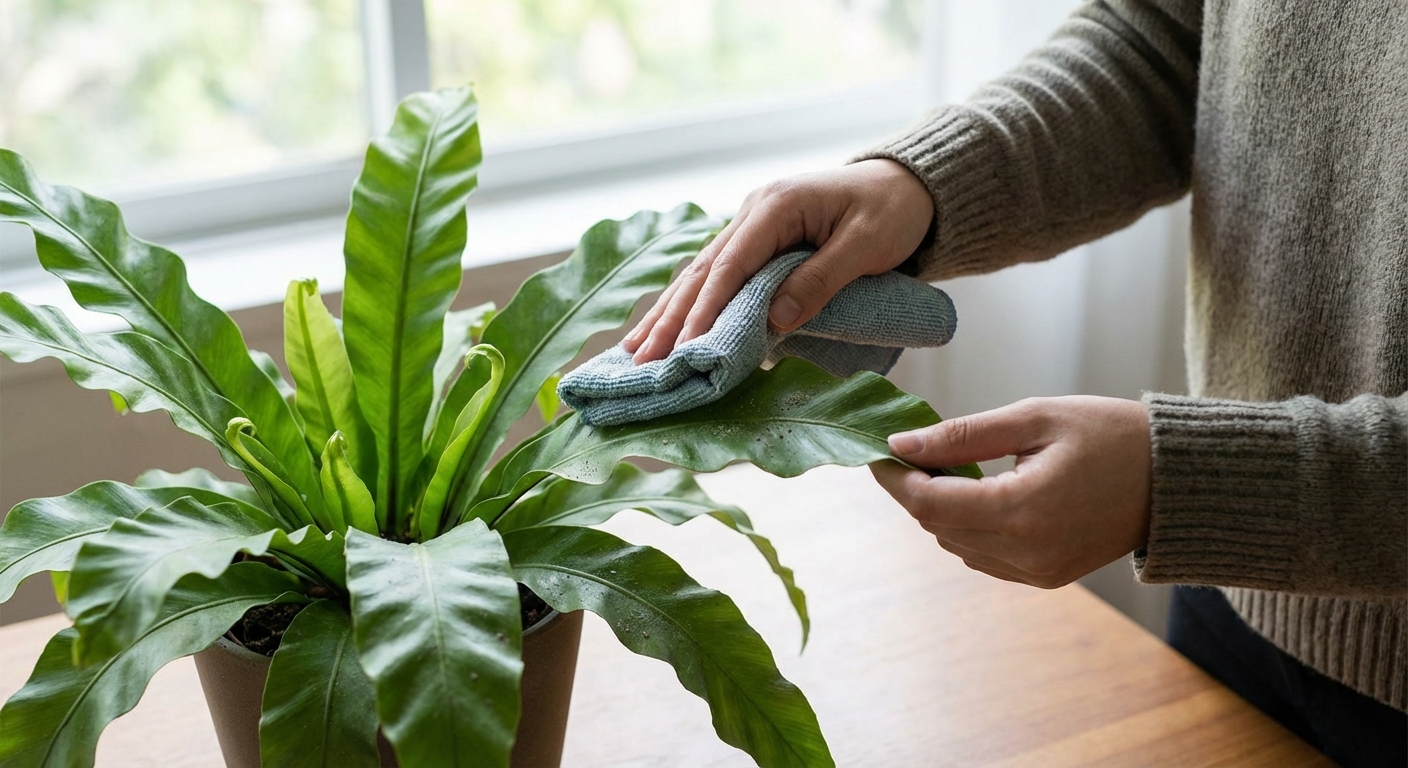
- Dust fronds with a damp cloth. Dust blocks light and makes the plant look tired.
- Trim fully brown fronds at the base with clean scissors.
- Do not peel or pick at the fuzzy brown scales on new growth. They are normal and protective.
Propagation: what to expect
If you are hoping to “split” your Bird’s Nest Fern like a pothos, I have gentle bad news. A single rosette plant does not divide neatly, and cutting it can damage the crown. Most are propagated commercially by spores or tissue culture. For home growers, propagation is usually a patience project, not a quick weekend win.
Cultivars and frond texture
Not all Bird’s Nest Ferns look the same. Some cultivars have naturally rippled, crinkly fronds (you might see names like ‘Crispy Wave’). A wavy look can be totally normal. Focus on firmness, color, and steady new growth from the center.
Common problems and fixes
Brown leaf tips
This is the most common complaint, and it usually comes down to one of these:
- Low humidity or dry air: move away from vents, group plants, or add a humidifier.
- Irregular watering: keep the mix lightly moist, not bone dry then flooded.
- Fertilizer salts: reduce feeding strength and flush the pot occasionally.
- Hard water: try filtered or rainwater for a few weeks and see if tips improve.
Yellowing fronds
- Overwatering: let the top inch (2 to 3 cm) dry, confirm the pot drains well, and consider a chunkier mix.
- Too much direct sun: move it back from the window or diffuse light with a sheer curtain.
- Natural aging: older outer fronds eventually yellow as new ones emerge. If the center is pushing healthy growth, this can be normal.
Black or mushy center (crown rot)
This is urgent. It is usually caused by water sitting in the rosette or constantly wet soil.
- Stop watering into the center immediately and tip out any standing water if present.
- Improve airflow and light.
- If soil is soggy, unpot and inspect roots. Trim mushy roots, repot into fresh airy mix, and water sparingly until you see new growth.
Brown patches or scorched areas
- Most often from direct sun or heat stress.
- Move to bright indirect light and keep away from hot windows in summer afternoons.
Pests (scale, mealybugs, spider mites)
Bird’s Nest Fern is not the biggest pest magnet, but it can happen.
- For small outbreaks, wipe pests off with a cotton swab dipped in 70% isopropyl alcohol diluted 1:1 with water (test a small spot first and use sparingly, ferns can be sensitive).
- Rinse fronds gently in the shower with lukewarm water.
- For persistent issues, use insecticidal soap and keep the plant out of direct sun while treating.
A simple care routine
If you want a low-stress rhythm, here is one that works in most homes:
- Weekly: check the top inch (2 to 3 cm) of soil with your finger, water if it is just barely dry.
- Every 2 weeks: rotate the pot a quarter turn for even growth.
- Monthly: wipe dust from fronds and glance at the crown for any dark, soft spots.
- Spring and summer: feed lightly every 4 to 6 weeks.
And yes, I talk to mine. It does not hurt. It might even help me notice problems sooner, which is basically the same thing as magic.
Quick FAQ
Can I water a Bird’s Nest Fern from the bottom?
Yes, occasionally. Bottom watering can help evenly moisten the mix without wetting the crown. Let it soak 15 to 25 minutes, then drain well. Do not leave it sitting in water.
Why are the fronds wrinkly or wavy?
Many cultivars naturally have rippled fronds. If the plant looks limp or dull, it can also be a sign of inconsistent moisture.
Is Bird’s Nest Fern safe for pets?
Asplenium nidus is generally considered non-toxic to cats and dogs. Still, chewing can cause mild stomach upset in some pets, and the plant will not appreciate being a snack.