
Bird of Paradise Leaves Splitting: Normal or Not?

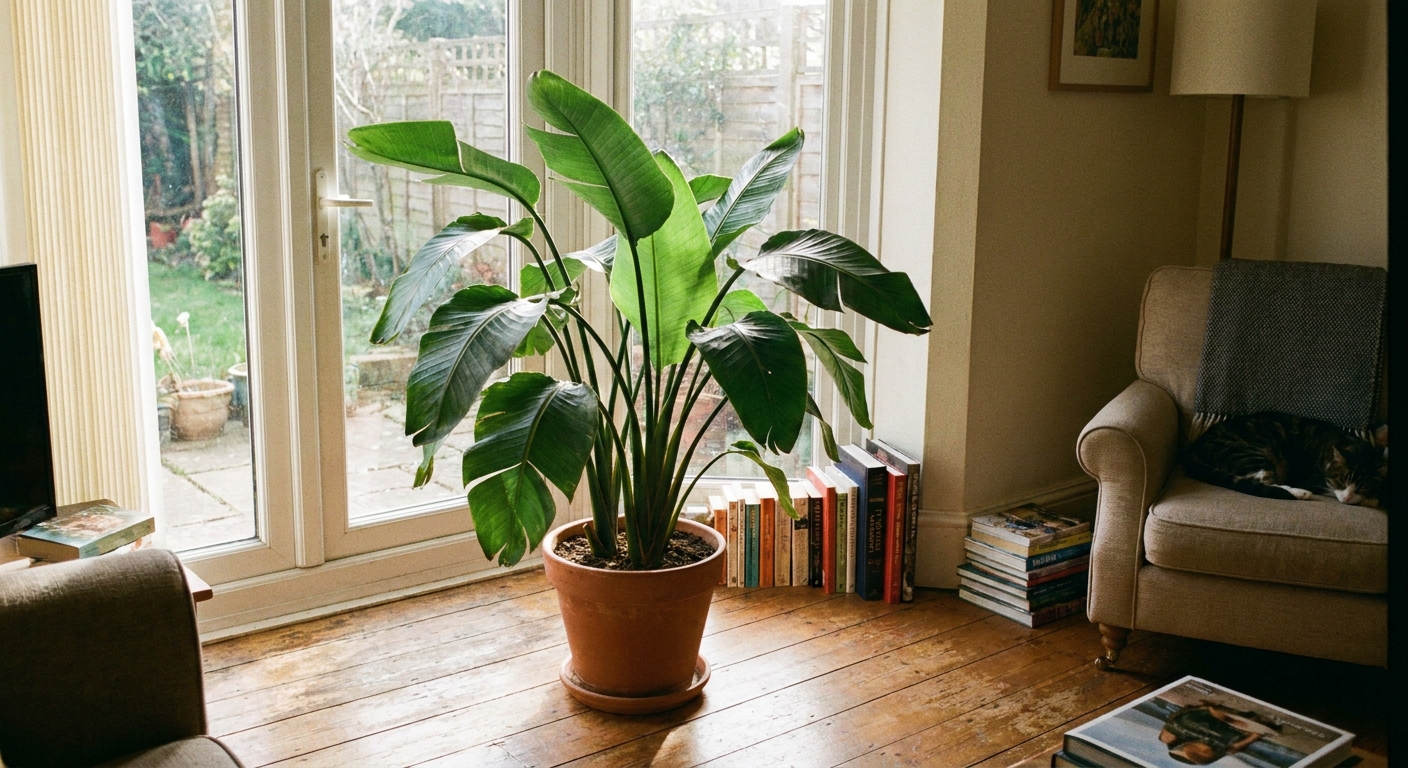
If your Bird of Paradise is suddenly sporting splits and slits, take a breath. In many cases, that “torn” look is a feature, not a failure. Strelitzia leaves are built to handle wind and weather, and splitting helps big, paddle-like leaves survive without turning into a sail.
That said, not every split is the good kind. Some tears come from rough unfurling, low light, dry air, cold drafts, or the tiny drama of pests. Let’s sort out what is normal, what is fixable, and when it is time to worry.

Why Bird of Paradise leaves split
Bird of Paradise (most commonly Strelitzia nicolai indoors, sometimes Strelitzia reginae) often faces wind in its native range. Those broad leaves catch air easily, so the plant has a clever safety valve.
- Natural mechanical splitting: As a leaf expands, it has natural weak points between the parallel veins. Wind and movement can pull the blade apart along those lines.
- Less resistance, less breakage: A split leaf lets air pass through, reducing the chance the whole leaf snaps or the plant topples.
- It shows up more on mature leaves: Young plants can look more “perfect.” Bigger leaves on older plants split more readily because they have more surface area.
What those “good” splits look like: long, clean tears that usually start at the outer edge and travel inward, running in the same direction as the veins.
So if your plant is otherwise thriving, splits can simply mean your Bird of Paradise is acting like a Bird of Paradise.
Normal splitting vs. a real problem
Signs the splitting is normal
- Splits follow the direction of the veins, creating long, clean openings.
- Leaf color is even, rich green (or normal natural color for your plant) with no mottling.
- New leaves keep emerging regularly and size is increasing over time.
- No sticky residue, webbing, or clusters of insects.
Signs the splitting is a problem
- Ragged tearing that looks shredded, with frayed edges and random holes.
- Brown crispy margins expanding inward (often dehydration, salt buildup, or inconsistent watering).
- New leaves tear while unfurling and come out misshapen.
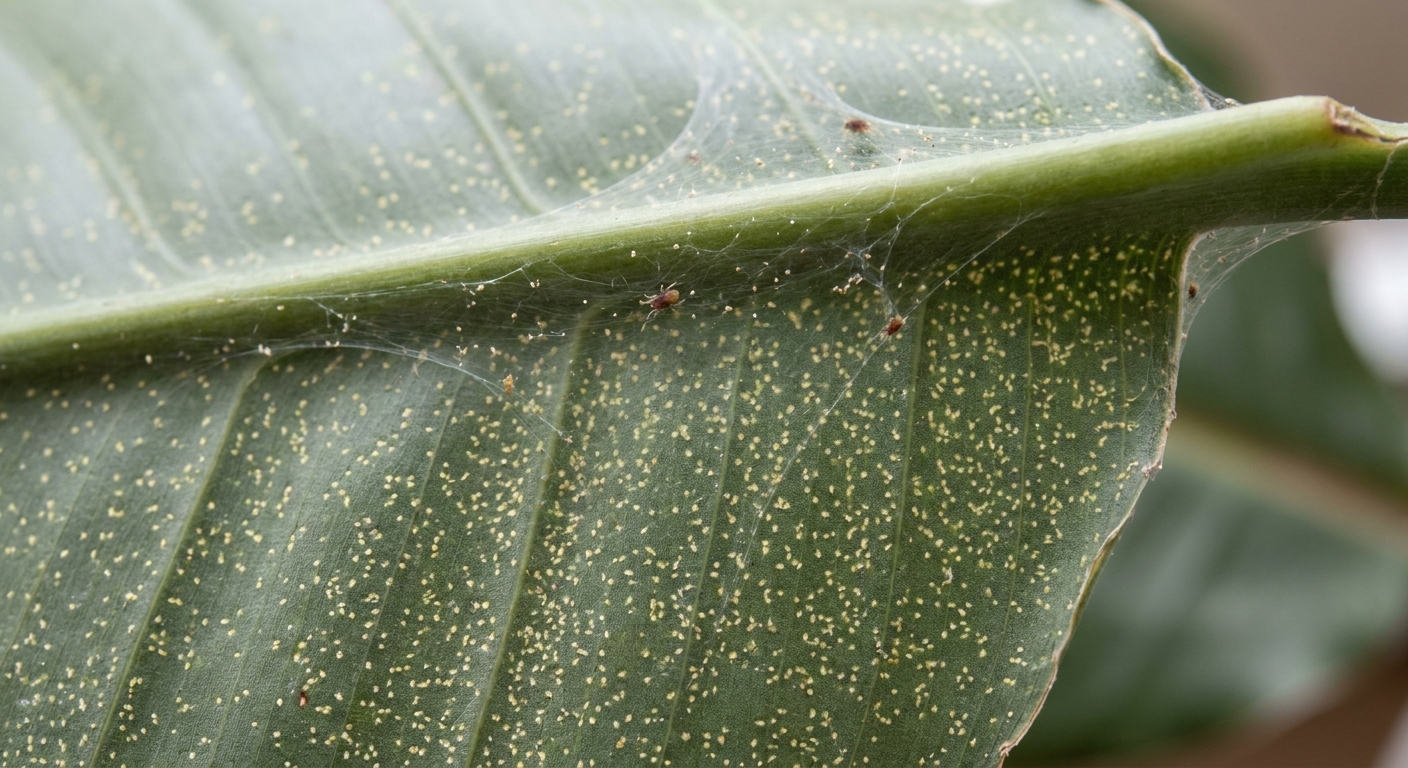
- Stippling, silvery scarring, black specks, webbing, or sticky sap (common pest clues).
- Stalled growth for months during active growing season, even in bright conditions.
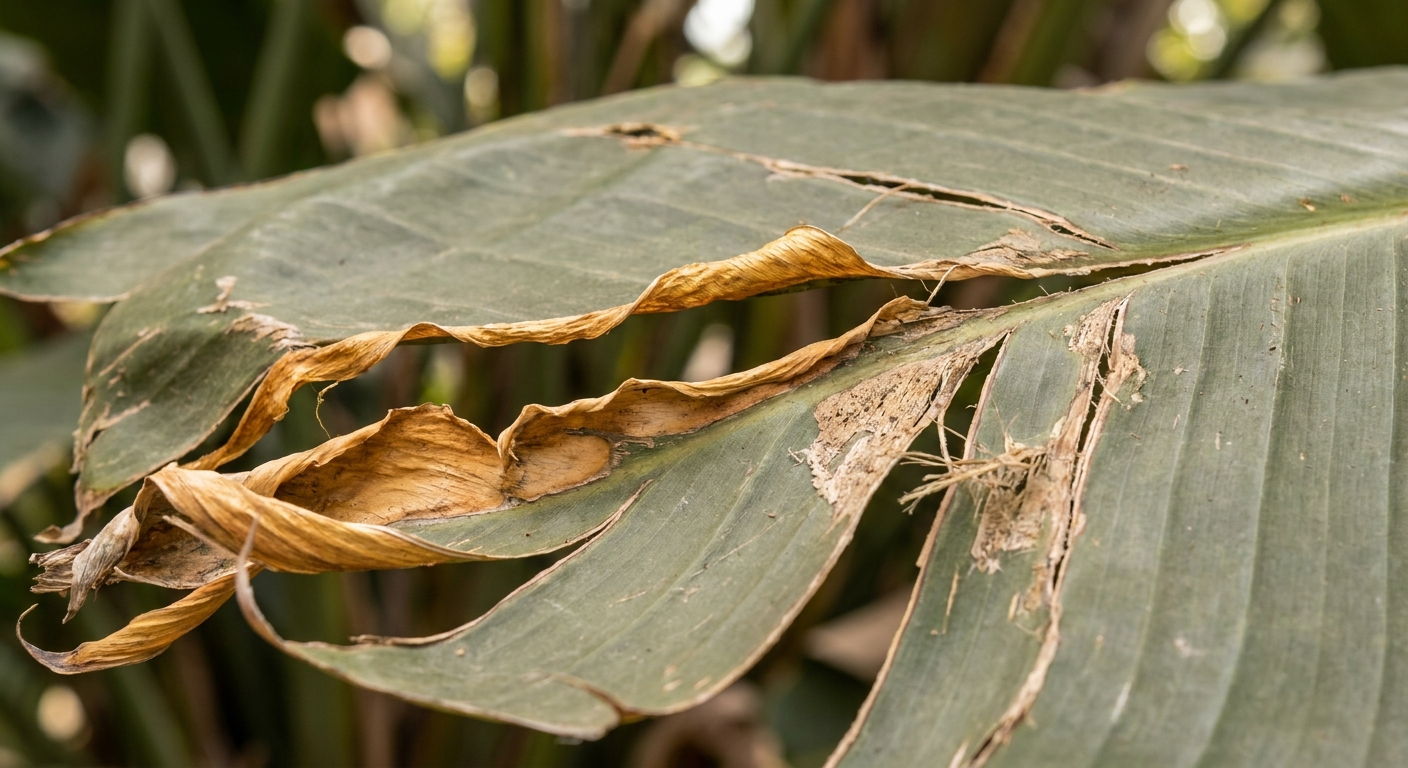
Common causes of “bad” splits
1) Low light (the sneaky culprit)
Bird of Paradise is a bright-light plant. In low light, leaves can grow thinner and the petioles can stretch. That combination can make them more prone to creasing, tearing, or splitting messily.
- What you notice: Smaller new leaves, long lean stems, plant tilting toward the window, slower growth.
- Why it matters: Weaker leaf tissue is more likely to get damaged during unfurling and everyday handling.
2) Rough unfurling from dry air or inconsistent moisture
New Bird of Paradise leaves emerge as tight spears, then slowly unroll. If the plant is very dry, or swings between bone-dry and drenched, that delicate unfurling stage can stick and tear.
- What you notice: A new leaf that looks “zippered,” creased, or torn right out of the sheath.
- Big clue: The damage is mostly on the newest leaf, not just older ones.
3) Physical damage (fans, pets, doorways, moving day)
Those big leaves crease easily. Once a leaf is creased, the split often travels from that weak point. Indoor causes are usually unglamorous: brushing past it, rotating it too aggressively, a curious cat, or a strong HVAC vent.
- What you notice: A sharp crease line, a tear that starts at one spot, or damage concentrated on the side facing a walkway or vent.
4) Pests that weaken leaf tissue
Pests do not usually cause long, clean splits. Instead, they damage cells and leave leaves more fragile, scarred, and prone to tearing.
- Thrips: Silvery streaks or patches, tiny black specks (frass), distorted new growth.
- Spider mites: Fine webbing, pale stippling, dusty look on undersides.
- Scale: Small tan or brown bumps along stems and leaf ribs, sticky residue.
- Mealybugs: White cottony clusters in leaf axils and along ribs.
5) Root and soil stress
If the soil is compacted, staying wet too long, or the plant is seriously rootbound, overall vigor can drop. When the plant is running on fumes, new leaves can be smaller, slower to open, and easier to tear.
- What you notice: Water runs straight through, or the opposite, it stays wet for ages. Growth slows, new leaves are undersized, and the pot feels “all roots.”
- Quick next step: Check drainage, consider refreshing the mix, and repot if roots are circling tightly and crowding the pot.
6) Cold drafts and temperature swings
Tender new growth can be surprisingly sensitive. A cold window, drafty door, or wintertime blast from an AC vent can stress a leaf while it is unfurling, which can lead to cosmetic damage and ripping.
How to reduce unwanted splitting
You cannot prevent all splitting, and you do not need to. But you can help new leaves emerge cleaner and keep existing leaves from getting battered.
Boost the light, gently
- Place your plant where it gets bright light for most of the day, with some direct sun if possible.
- If it has lived in low light, increase light gradually over 1 to 2 weeks to avoid sun scorch.
- Rotate the pot quarter turns instead of half turns, and only every week or two.
Water with a steady rhythm
- Water when the top 2 to 3 inches of soil feel dry. Then water thoroughly until it drains.
- Empty the saucer so roots are not sitting in water.
- If your tap water is very hard, occasional watering with filtered water can reduce leaf-edge crisping over time.
Support smoother unfurling
- Aim for moderate humidity. If your home is very dry, a humidifier near the plant helps more than misting.
- Keep the plant away from hot, dry vents and strong fan blasts.
- Keep it away from cold drafts when new leaves are opening.
- If a new leaf is stuck, do not pry it open. Instead, raise humidity and keep moisture consistent for the next leaf.
Feed for strength (lightly)
If your plant has not been fertilized in ages, it can lose some vigor. During spring and summer, a balanced fertilizer at a gentle dose can support sturdier growth. Think “consistent,” not “more.”
Handle like it is a giant piece of velvet
- Give it space from doorways and tight corners.
- When moving it, tie leaves loosely with a soft cloth so they do not crease.
- Wipe leaves with a damp cloth for dust. Avoid yanking or folding the blade.
If you suspect pests
Do not panic-clean your plant into submission. Go methodical.
- Isolate the plant if you can, especially from other houseplants.
- Inspect undersides, along the midrib, and where leaves meet the stem.
- Rinse and wipe leaves (top and bottom) to physically remove pests and residue.
- Treat with an appropriate option (like insecticidal soap or horticultural oil) and repeat weekly for 3 to 4 weeks, since eggs and hatchlings like to humble us.
Should you cut split leaves?
Split leaves still photosynthesize beautifully. I usually leave them unless they are badly tattered or mostly brown.
- Leave it: If the leaf is mostly green, even with big splits.
- Trim edges: If only the very edge is brown, you can snip along the shape of the leaf with clean scissors. Do not chase perfection.
- Remove the whole leaf: Many growers remove a leaf when it is heavily damaged (often around one third or more) or yellowing and the plant has plenty of other foliage. Cut the stalk low and clean.
One note from a fellow “plant talker”: older leaves will never “heal” back together. Your goal is healthier new growth.
Quick troubleshooting checklist
Use this when you are standing there with your coffee, staring at that one leaf that looks personally insulting.
- Are the splits clean and vein-aligned? Likely normal.
- Are new leaves ripping as they open? Check watering consistency, humidity, temperature drafts, and light.
- Is there stippling, silvering, webbing, sticky residue, or bumps? Inspect for pests, especially on undersides and along the midrib.
- Is the plant stretching or growing slowly? Increase light.
- Are edges browning broadly? Check underwatering, salt buildup, hot vents, and compacted soil.
- Does the pot seem packed with roots or the soil stay wet too long? Look at drainage and consider a repot or soil refresh.
When to worry
Splitting alone is rarely an emergency. It is time to intervene when you see multiple symptoms stacking up.
- New leaves emerge deformed, small, and repeatedly torn.
- You find pests, or you see fast-spreading discoloration.
- Leaves are yellowing rapidly, the plant is wilting despite watering, or the soil smells sour (possible root trouble).
If any of those are happening, focus on basics first: brighter light, stable watering, a quick check for drafts, and a thorough pest inspection. Most Bird of Paradise plants bounce back with a little consistency and a lot less manhandling.
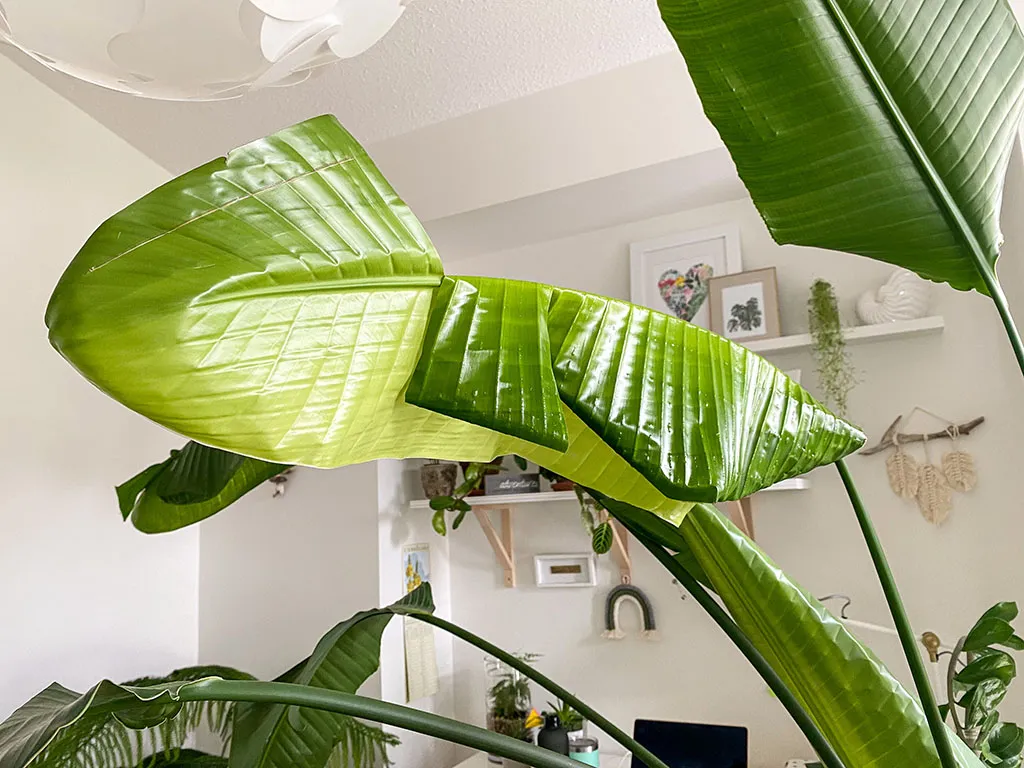
The Leafy Zen takeaway
Split leaves are part of Bird of Paradise’s wild heart. Clean, vein-following splits are normal on a mature plant, and they happen through natural mechanical splitting, not true fenestration. What you want to watch for is ragged tearing, stuck unfurling, pest signs, and overall stress. Give your Strelitzia bright light, steady watering, gentle handling, and enough breathing room, and the next leaves should come in looking calmer and stronger.