
Begonia Maculata Care Indoors

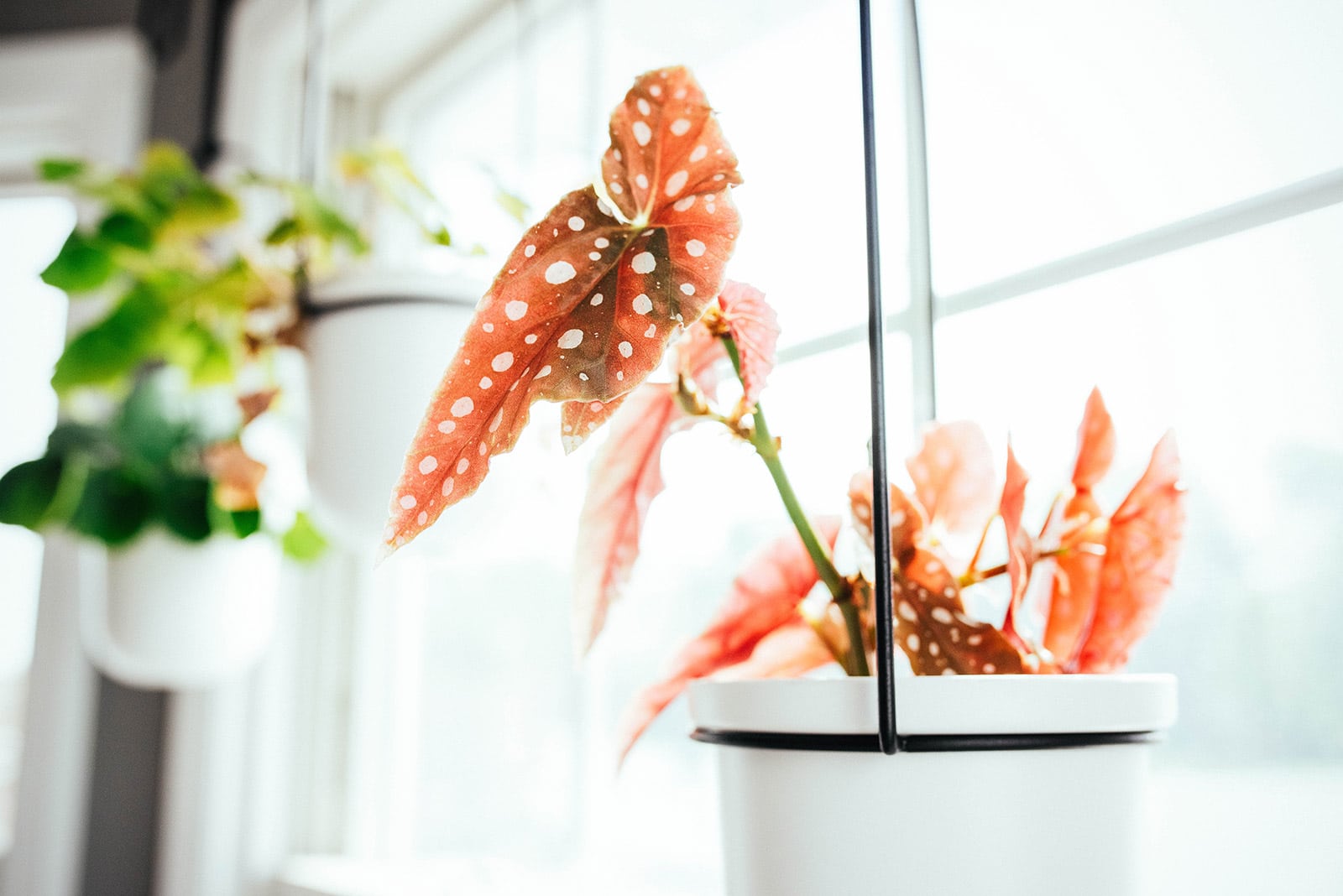
Begonia maculata is the plant that makes even non-plant people stop mid-sentence. Those olive green leaves splashed with silver polka dots, the burgundy undersides, and the elegant cane-like stems make it feel like a living piece of art.
It is also a begonia, which means it has opinions. The good news is that once you learn its rhythm, maculata is wonderfully steady indoors. Below is the exact care routine I use to keep the leaves velvety, edges smooth, and stems strong.

Quick care snapshot
- Light: Bright, indirect light. Gentle morning sun is usually fine.
- Water: When the top 1 to 2 inches of soil are dry, then water thoroughly and drain.
- Humidity: Aim for 45 to 65% if possible. Avoid leaving foliage wet for long periods.
- Soil: Airy, fast-draining mix that still holds a little moisture.
- Temp: 65 to 80°F (18 to 27°C). Avoid cold drafts and temps below about 60°F (15 to 16°C). Keep away from vents.
- Growth habit: Cane begonia. Tall stems benefit from staking and pruning.
- Pet note: Begonias are considered toxic to cats and dogs if chewed or ingested.
Light that keeps the spots crisp
Begonia maculata wants bright light, but not harsh sun. Too little light makes it stretch with long gaps between leaves. Too much direct sun can bleach the dots and crisp the edges.
Best window placements
- East-facing: My favorite. Soft morning sun, bright the rest of the day.
- North-facing: Works if the window is large and unobstructed, especially in summer.
- South or west-facing: Place back from the glass, or use a sheer curtain to filter strong rays.
Signs you should adjust light
- Too much: Faded patches, crispy tips, curled leaves, scorched areas.
- Too little: Leggy stems, small new leaves, slow growth, fewer blooms.
If you use a grow light, aim for a bright-but-gentle setup: 10 to 12 hours a day, with the light high enough that leaves are not heating up.
Watering rhythm for cane begonias
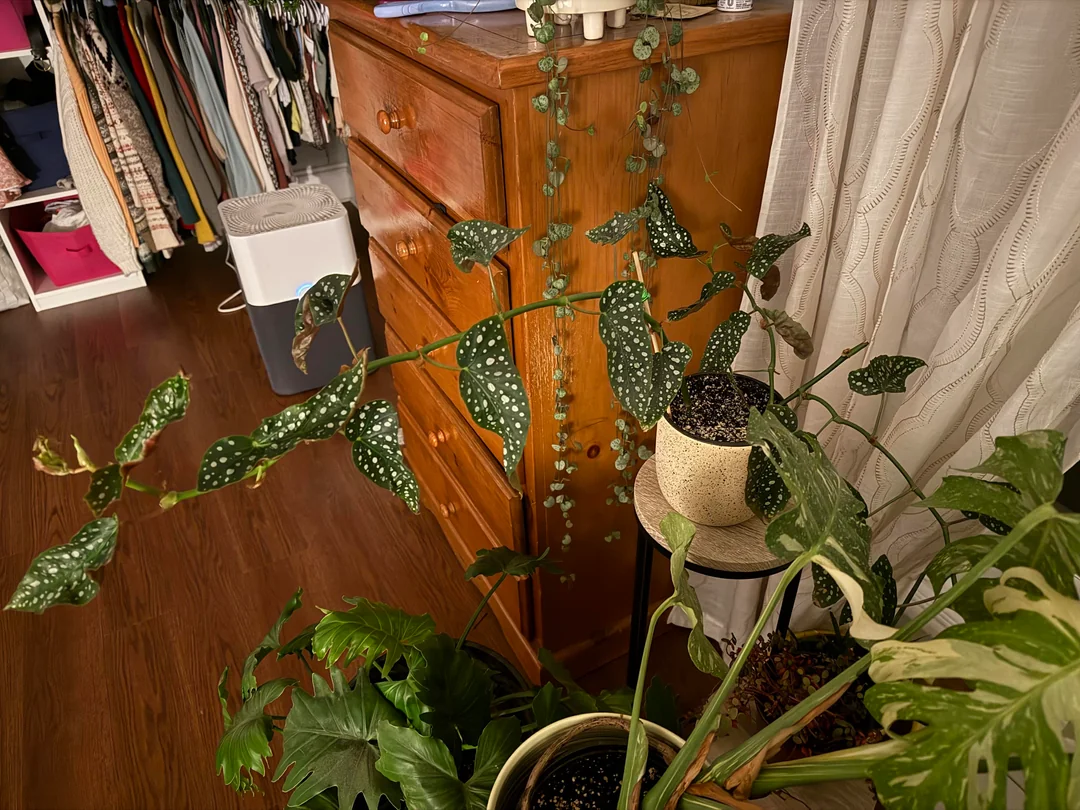
The fastest way to upset a begonia is to swing between bone dry and soaked. Begonia maculata likes even moisture, with breathable soil so the roots never sit in stagnant water.
When to water
Water when the top 1 to 2 inches of soil feel dry. In many homes, that ends up being about once a week in active growth and less in winter, but your pot size, light, and humidity matter more than the calendar.
How to water (step by step)
- Check dryness with your finger or a wooden chopstick.
- Water slowly until you see runoff.
- Let it drain completely. Never leave the pot standing in a full saucer.
- Empty the catch tray after 10 to 15 minutes.
A note on water quality
Mineral-heavy water and fertilizer salts can contribute to crispy leaf margins over time. If you notice white crust on the soil or pot rim, try filtered water, or flush the pot occasionally. If your tap water is strongly treated, letting it sit out overnight can also help, but mineral buildup is usually the bigger culprit.
Humidity without mildew
Begonia maculata is native to southeast Brazil, and it tends to look best with moderate to higher humidity indoors. That said, its leaves can spot, mildew, or sulk if they stay wet. The goal is moist air, not wet foliage.
Easy ways to raise humidity safely
- Group plants together: A small plant “neighborhood” creates a pocket of humidity.
- Use a humidifier: The most reliable fix for crispy edges in dry homes (mine is working overtime in winter).
- Pebble tray: A small, local boost that can help most in smaller or more enclosed spaces, as long as the pot sits above the water line.
Skip these common mistakes
- Frequent misting: It wets leaves more than it humidifies air and can encourage fungal issues, especially with low airflow.
- Leaving leaves wet: If you rinse foliage for cleaning or pests, make sure the plant dries with good airflow.
- Bathroom placement with poor light: Humidity is great, but low light equals leggy growth.
How to prevent crispy leaf edges
Crispy edges are the number one maculata complaint I hear. It is usually not just one thing, but a combo of dry air, inconsistent watering, and a little too much sun.
Do this checklist first
- Move the plant out of direct afternoon sun.
- Stabilize watering: do not let it fully dry out, and do not keep it soggy.
- Increase humidity to at least the mid-40% range if you can.
- Check for salts: flush the pot with clean water every 6 to 8 weeks during growing season, letting it drain well.
- Keep away from heating and AC vents that blast dry air.
Should you trim crispy bits?
Yes, if it bothers you. Use clean scissors and follow the natural shape of the leaf edge. Just know those areas will not “heal” back to green, so trimming is mainly cosmetic.
Soil and potting that protects the roots
Begonia roots like oxygen. A heavy, compact potting soil holds too much water and can lead to rot. I like a mix that drains quickly but stays lightly damp for a few days.
A reliable indoor mix
- 2 parts high-quality potting mix
- 1 part perlite or pumice
- 1 part fine orchid bark or coco chips
Choose a pot with a drainage hole. Terracotta can be helpful if you tend to overwater, but it also dries faster, so keep an eye on moisture.
Repotting timing
Repot in spring or early summer when you see roots circling the pot, the mix breaking down, or water running through too fast. Fast runoff can mean it is rootbound, or it can mean the soil has become hydrophobic from drying too hard. Either way, a refresh helps. Go up one pot size only. A huge pot stays wet too long.
Supporting tall stems and shaping the angel wings
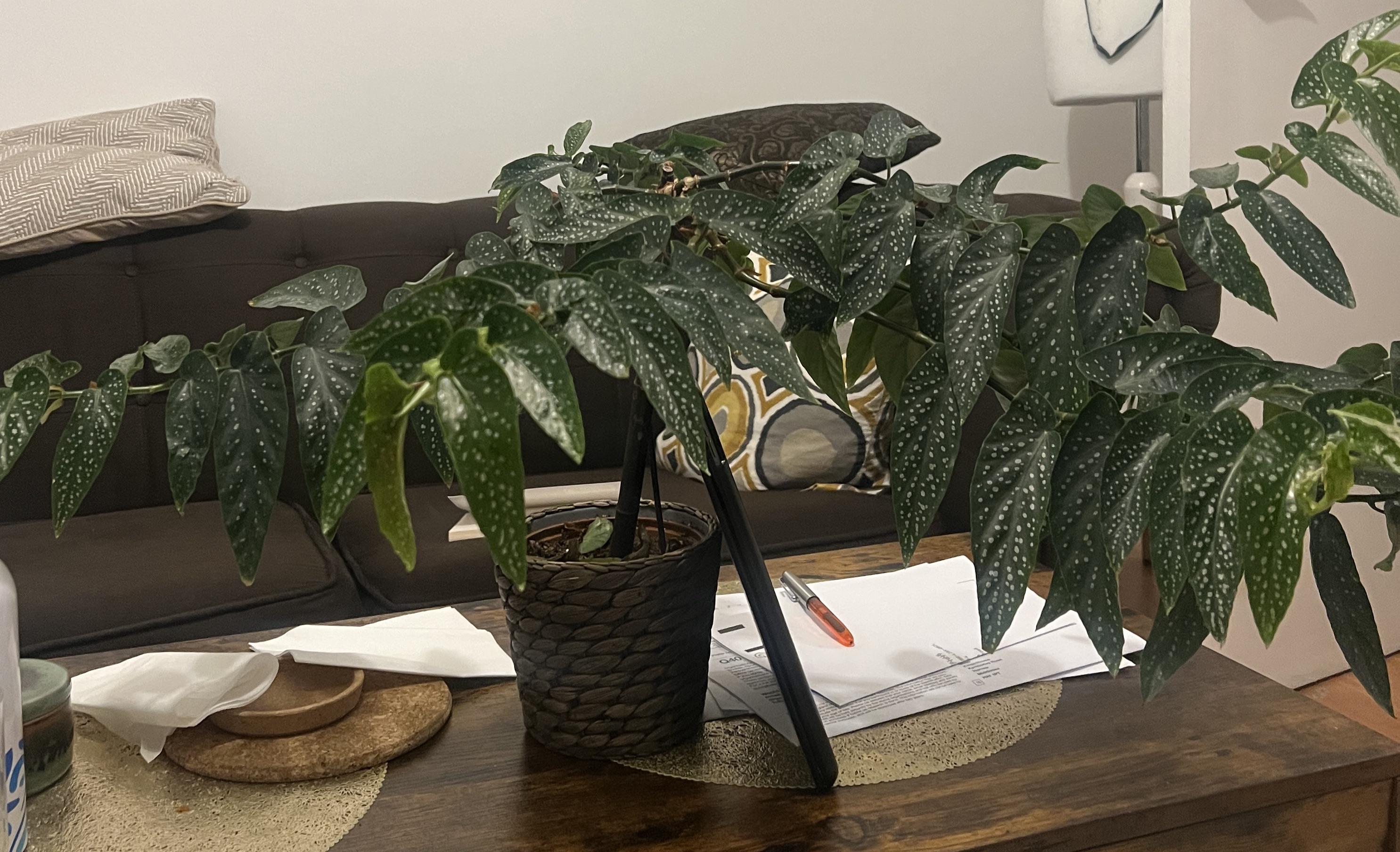
Begonia maculata is a cane begonia, meaning it grows upright on stiff stems. Indoors, it often gets top-heavy as it reaches for light. Staking is not a failure. It is just good plant posture.
Staking options that look natural
- Bamboo stake: Simple and effective.
- Coir pole: Handy support, and it may slightly boost local humidity if you keep it lightly damp.
- Ring support: Great for keeping multiple canes upright without tight ties.
Use soft plant ties or Velcro strips. Avoid thin string that can cut into stems as they thicken.
Pruning for fullness
If your plant is tall and sparse, pinch or snip just above a leaf node. That node can push new growth and branching, which creates a fuller silhouette. Bonus: those cuttings are perfect for propagation.
Fertilizer that fuels leaves and blooms
Begonia maculata is not a heavy feeder, but it does appreciate regular nutrition during active growth.
- Spring through early fall: Feed every 2 to 4 weeks with a balanced houseplant fertilizer diluted to half strength.
- Winter: Pause or feed lightly once every 6 to 8 weeks if it is still growing under strong light.
If you see lots of lush green growth but no blooms, ease up on nitrogen and make sure the plant has enough light.
What blooming looks like
When it is happy, maculata can bloom indoors with clusters of delicate white to pale pink flowers (usually in brighter months). Consistent bright light, steady watering, and light feeding in the growing season are the main levers.
Propagation: the easy way to make a second plant
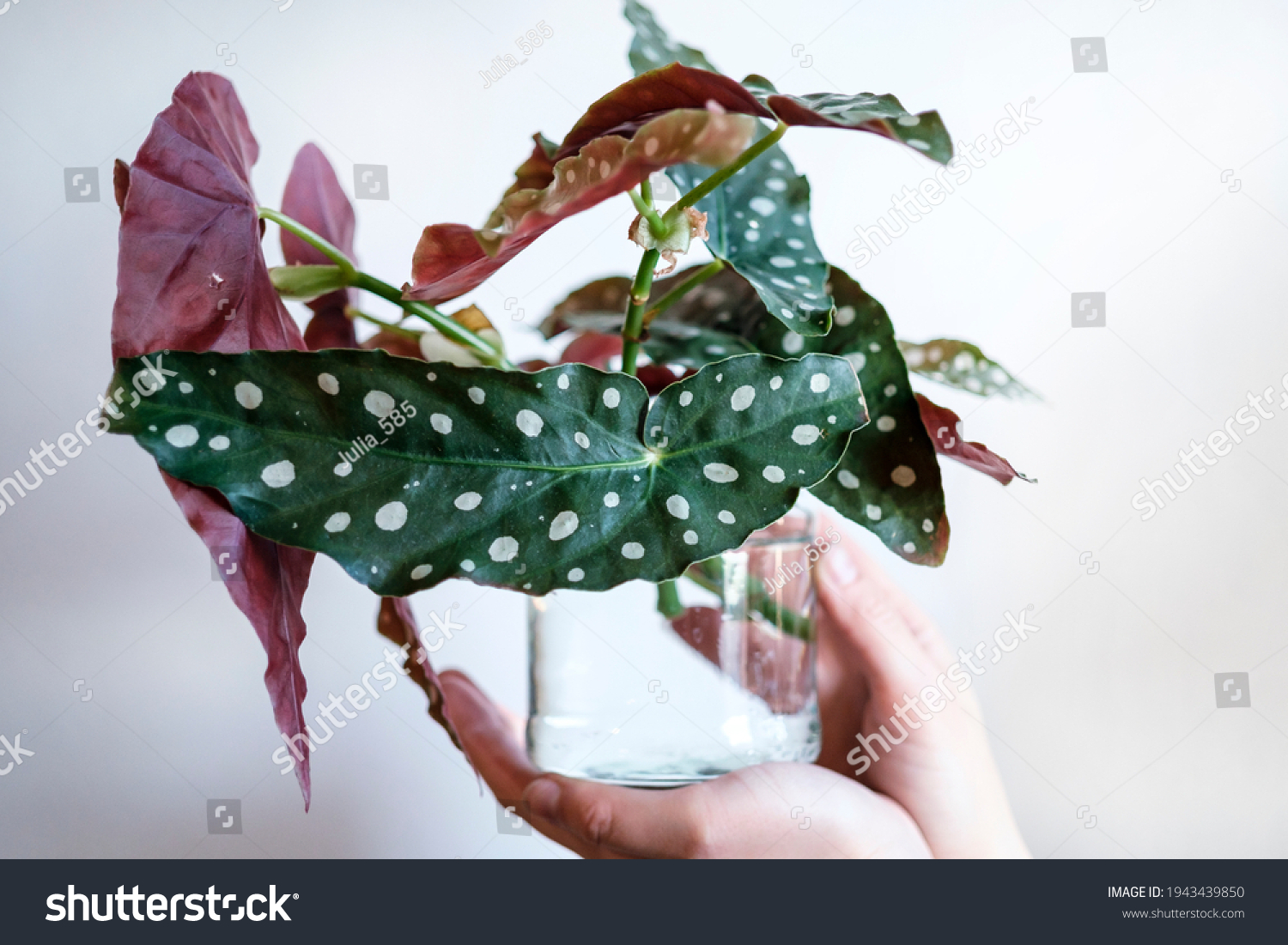
Cane begonias propagate beautifully from stem cuttings. It feels like magic the first time you see new roots, and it is also the best way to rescue a leggy plant.
Stem cutting in water (beginner-friendly)
- Pick a healthy cane with at least 2 nodes.
- Cut just below a node using clean snips.
- Remove the lowest leaves so a node sits under water.
- Place in a clean jar of water in bright, indirect light.
- Change water every few days.
- Pot up when roots are a few inches long and branching.
Stem cutting in soil (sturdier transition)
Take the same cutting, dip in rooting hormone if you have it, and place one node into a lightly moist, airy mix. Cover loosely with a clear bag to hold humidity, but open it daily for fresh air.
Either method works. Water is satisfying to watch. Soil often produces tougher, less transplant-shocked roots.
Pest checks tailored to begonia foliage
Those gorgeous leaves give pests plenty of hiding spots, especially along the veins and on the undersides where the red coloration can camouflage tiny intruders.
What to look for (weekly two-minute check)
- Spider mites: Fine webbing, stippled or dusty-looking leaves, especially in dry air.
- Mealybugs: White cottony clumps in leaf joints and along stems.
- Thrips: Silvery streaks, distorted new growth, tiny dark specks (frass) on leaves.
- Scale: Small brown bumps on stems that scrape off with a fingernail.
How to treat gently
- Isolate the plant first.
- Rinse leaves with lukewarm water if the plant tolerates it, then let it dry fully with good airflow.
- Spot-treat with insecticidal soap or horticultural oil, testing one leaf first. Begonia leaves can be sensitive.
- Repeat every 7 to 10 days for a few rounds, because eggs hatch in waves.
If you are battling spider mites, raising humidity and improving airflow can make a huge difference alongside treatment.
Troubleshooting common maculata problems
Leaves curling
- Most common causes: Dry air, underwatering, heat from a vent, or a chilly draft from a cold window.
- Fix: Check soil moisture, move away from drafts, increase humidity.
Yellow leaves
- Most common causes: Overwatering, low light, or an old leaf naturally aging.
- Fix: Let the top layer dry before watering, brighten the location, remove only fully yellow leaves.
Brown spots
- Most common causes: Water sitting on leaves too long, fungal issues, or sun scorch.
- Fix: Water at the soil line, improve airflow, provide filtered light.
Leggy growth
- Most common cause: Not enough light.
- Fix: Move closer to bright indirect light and prune above nodes to encourage branching.
A gentle routine that keeps it happy
If you want a simple schedule, here is the one I recommend for most homes:
- Weekly: Check soil moisture, rotate the pot a quarter turn, and do a quick pest scan under leaves.
- Every watering: Water thoroughly, then drain. No soggy saucers.
- Monthly: Wipe dust off leaves very gently with a soft dry or barely damp cloth, and do not leave moisture sitting on the foliage. Begonia leaves can bruise if you get rough. Flush the soil if you see mineral buildup.
- Seasonally: In spring, prune for shape and take a few cuttings to start new plants.
And if you mess up, welcome to the club. Begonia maculata is forgiving when you return to steady light, steady moisture, and kinder humidity. The next set of leaves is always a fresh start.