
Bearded Iris Leaf Spot: Brown Ovals on the Fans

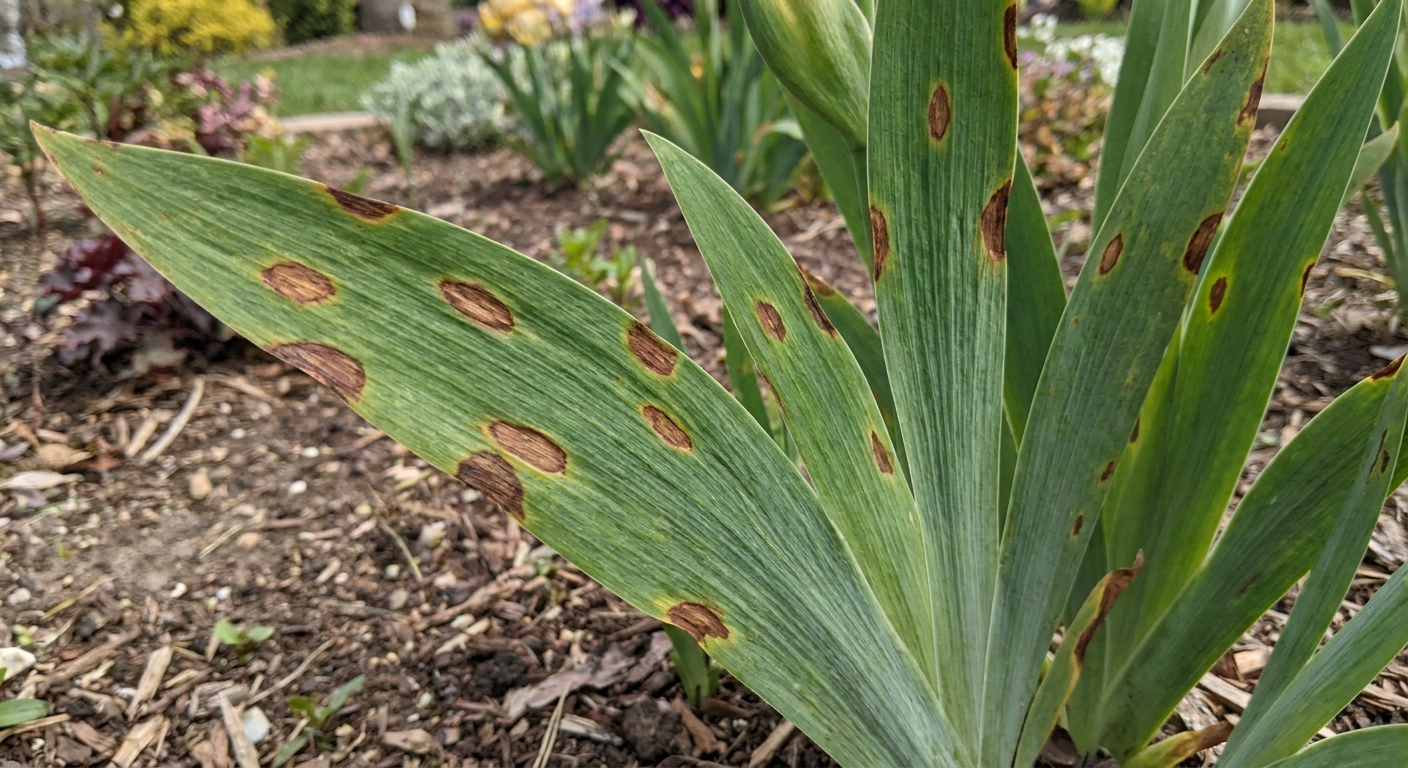
Those neat little brown ovals marching up your bearded iris fans can feel like a personal insult. I have stood over an iris clump with my hands on my hips, squinting like a detective, trying to decide whether I am looking at a simple leaf fungus or a much bigger rhizome problem. The good news is that “brown ovals on the fans” are often a classic leaf spot situation, and leaf spot is usually something you can manage with calm, consistent garden hygiene.
Let’s sort what you are seeing, then walk through exactly what to remove, what to leave, and when you truly need to dig in and cut the rhizome.

What iris leaf spot looks like
Leaf spot on bearded irises is most often caused by fungi, and more than one fungus can be involved depending on region and conditions. Gardeners (and plant labels) commonly lump it all under “iris leaf spot,” because the day-to-day management is similar either way. It typically starts on the foliage, not in the rhizome. In damp stretches of weather, it can spread surprisingly fast.
Classic signs on the fans
- Oval to elongated brown spots that look a bit like coffee stains stamped onto the leaf.
- Spots that may start tan or rusty and deepen to brown as they age.
- Defined margins, sometimes with a slightly darker outline.
- Stippling or peppery specks inside older spots in humid weather (spore structures can show up as tiny dark dots).
- Yellowing and dieback that begins where spots are dense, especially on older outer leaves.
Leaf spot rarely makes the entire fan collapse overnight. Instead, it slowly steals leaf surface area, and by late season you can end up with tattered, browned foliage that looks exhausted. It also tends to build over time, meaning a wet spring or early summer often sets the stage for a messier late-season look.
Leaf spot or something else?
This is the part that saves plants. Brown marks on iris leaves can come from fungus, insects, bacteria, herbicide drift, or plain old weather stress. The fix depends on which one you have, so look for the extra clues, not just the color.
Leaf spot vs iris borer damage
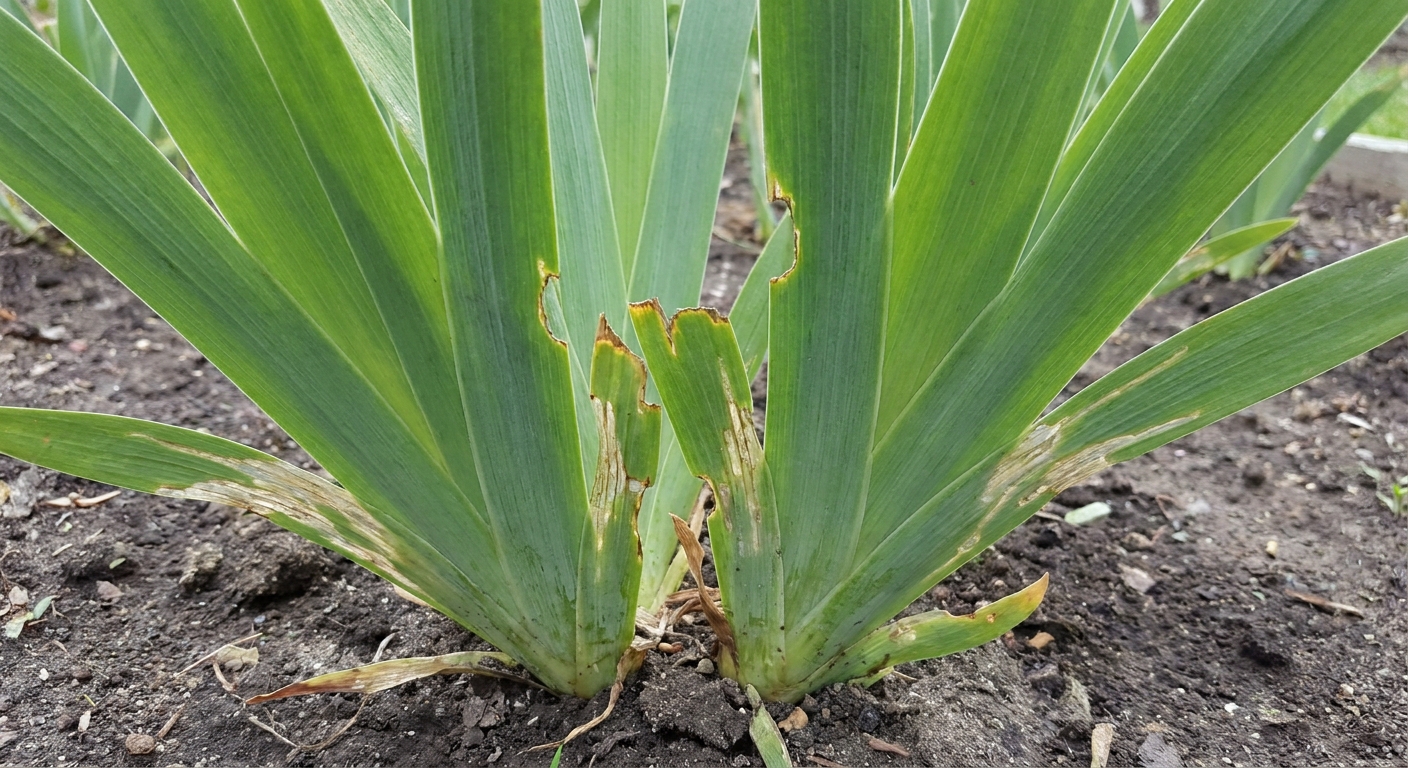
Iris borers tend to leave physical chewing and tunnels, not tidy oval lesions.
- Leaf spot: many separate oval spots on the flat leaf blade, often scattered across multiple leaves.
- Borer: notches, ragged tears, and streaking that can look watery at first, often starting near the base and moving upward as larvae feed.
- Borer clue: you may see frass (brown, sawdust-like insect waste) in folds near the leaf base, or the center leaves may look chewed and distorted.
Leaf spot vs soft rot
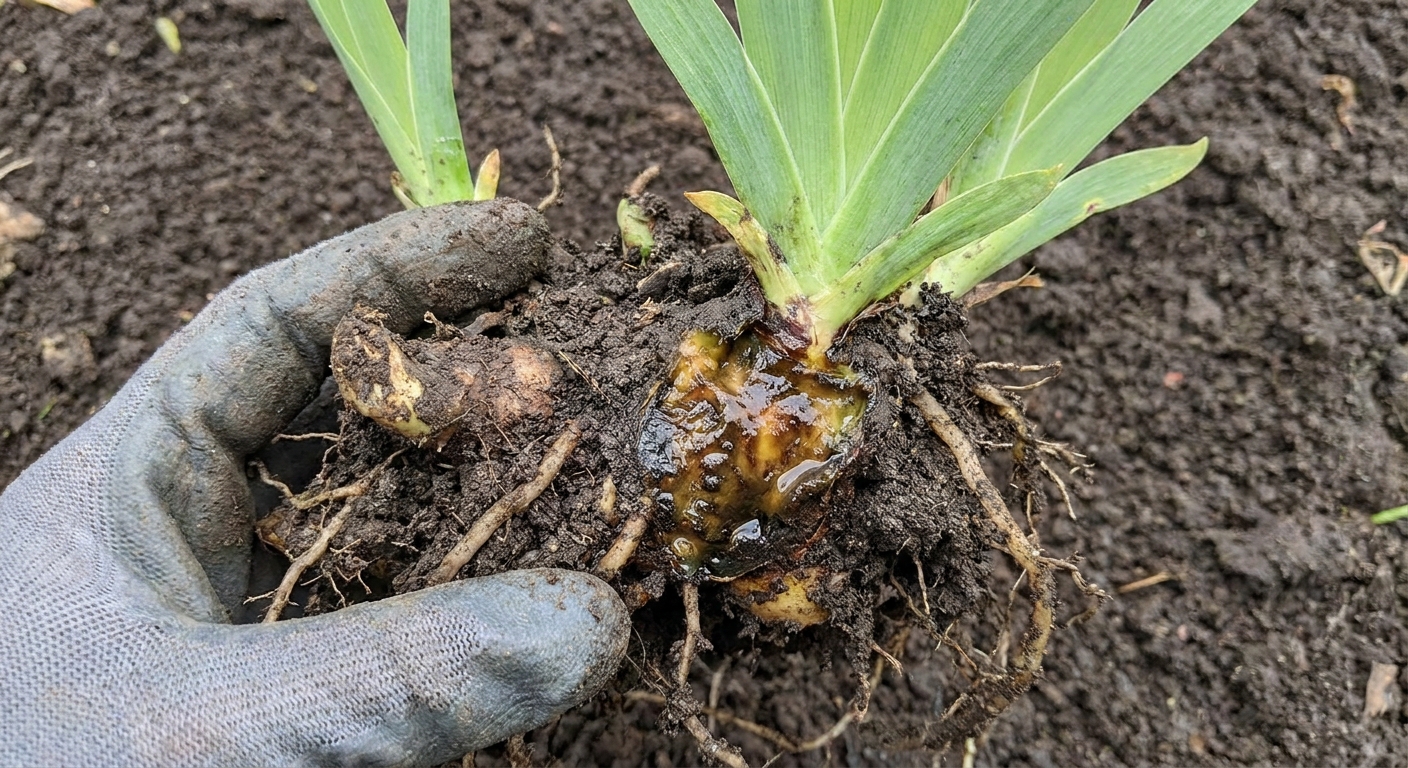
Soft rot is a rhizome emergency. If you smell it once, you never forget it. Leaf spot does not usually come with a foul odor.
- Leaf spot: foliage looks spotted, then gradually browns. The rhizome can still be firm and healthy.
- Soft rot: fans may yellow, wilt, and pull away easily. Rhizomes feel soft or mushy and often smell sour or rotten.
- Soft rot clue: the base of the fan can turn slimy, and the rhizome may ooze when pressed.
Leaf spot vs scorch and other spotting
- Leaf spot: distinct ovals or blotches, often scattered like freckles.
- Scorch: crispy browning at tips or along leaf edges, usually more uniform and not spotty.
- Other possibilities: bacterial leaf issues and herbicide drift can also cause streaks, speckling, or blotches. If spots look unusually water-soaked, strongly striped, or show up suddenly across many plants at once, widen your suspect list.
Why it shows up
Fungal leaf spot thrives when iris leaves stay wet for long periods. Spores spread mostly by splashing water, wind, and contact with infected debris.
- Overhead watering or frequent sprinklers that wet the fans.
- Tight, crowded clumps that trap humidity and reduce airflow.
- Mulch piled up against rhizomes and leaf bases, holding moisture.
- Old infected foliage left in the bed, which can reintroduce spores next season.
What to do today
If you do only one thing, do sanitation. Think of it as breaking the fungus life cycle. You are not trying to create perfection. You are trying to reduce spore load.
Step 1: Remove the worst leaves
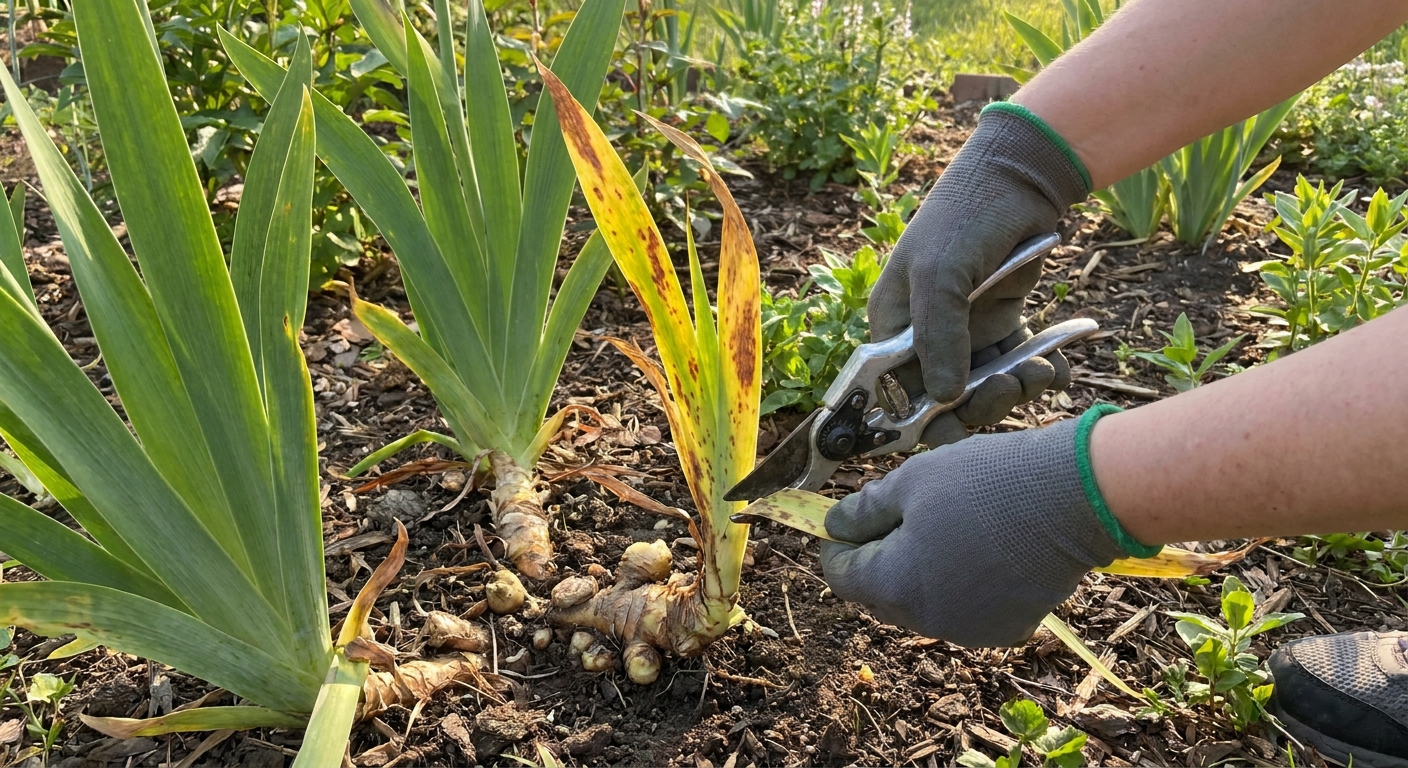
Start with the leaves that are heavily spotted, yellowing, or collapsing. Use clean pruners and cut leaves down to a few inches above the rhizome. Try not to nick the rhizome itself, since wounds invite bigger problems than leaf spot.
- If less than one third of a leaf is spotted, I usually leave it for now and focus on airflow and watering habits.
- If more than one third to one half is covered in spots, or the leaf is browning from multiple lesions, go ahead and remove it.
- If the center fan is still mostly green and strong, protect it. Do not scalp the whole plant unless the foliage is truly overwhelmed.
Those fractions are a rule of thumb, not a law. The goal is to remove the most infectious tissue while keeping as much green as you reasonably can.
Step 2: Clean up every piece
Rake or pinch up cut leaves and old iris debris around the clump. Do not leave trimmings in the bed or aisle to “dry out later.” Get them out of the area so spores are not sitting there waiting for the next splash of water.
Infected leaves should not be composted in a typical home pile unless you are sure it heats thoroughly. Bag them or dispose of them with yard waste if possible. Municipal hot composting is a different story, since it is often managed at temperatures that are more likely to break down pathogens.
Step 3: Disinfect tools as a good habit
Leaf spot is usually more of a splash and debris disease than a “dirty tools” disease, but tool hygiene is still smart when you are trimming multiple clumps. Wipe blades between plants with a disinfecting wipe or dip in a disinfectant solution, especially if you also suspect rot or borer damage anywhere in the bed.
Watering tweaks
Leaf spot loves wet leaves. Your job is to keep moisture in the soil where it belongs.
- Water at the base of the plant, not over the top of the fans.
- Water in the morning so any splashed foliage dries quickly.
- Avoid frequent light watering. Instead, water deeply, then let the surface dry out before watering again.
- Keep rhizomes on the dry side. Bearded iris rhizomes like to sit close to the surface and bake a little.
If you have an in-ground sprinkler system, consider adjusting heads so they do not directly spray the iris bed, or switch that zone to drip.
When to remove leaves or cut rhizomes
This is the decision point. Leaf spot is mostly a leaf management issue. Rot and borers are rhizome issues. If you see rapid collapse, a foul smell, or obvious borer clues, skip the waiting and inspect right away.
Remove foliage only if
- The rhizome feels firm when you press it.
- There is no sour or rotten smell at the base.
- Fans are still anchored and not slipping out of the rhizome easily.
- The damage is mostly spotting and cosmetic browning on leaves.
Inspect and cut rhizomes if
- A fan pulls free with very little resistance.
- The rhizome is soft, squishy, or water soaked.
- You smell a strong sour, fishy, or rotten odor.
- You see tunnels in the rhizome or mushy pockets that suggest borer feeding or bacterial rot.
How to cut out rot safely
If you uncover soft rot or borer damage while investigating, remove the compromised tissue right away.
- Use a clean, sharp knife.
- Cut away all soft or discolored tissue until you reach firm, clean rhizome.
- Let the cut surface dry and callus in the open air if conditions allow, and keep water off the wound.
- Remove and discard badly affected pieces that cannot be cleaned back to solid tissue.
If the bed is staying soggy or drainage is poor, correcting moisture is just as important as the cutting.
Should you use fungicide?
Many gardeners never need to, especially if they catch leaf spot early and commit to cleanup and dry-leaf watering. That said, fungicides can be helpful in seasons with prolonged rain, in valuable collections, or when leaf spot returns aggressively year after year.
If you choose a fungicide, follow the product label exactly for ornamentals and for irises specifically, and focus on preventive timing. Fungicides generally protect new growth more than they heal old spots. If you are spraying over a season, rotating active ingredients (and their FRAC groups when listed) helps reduce resistance problems.
In my own beds, sanitation plus base watering usually does the heavy lifting. I save fungicides for repeat offenders in wet years, and I start early rather than trying to “rescue” leaves that are already freckled top to bottom.
Prevention for next season
- Fall or late-season cleanup: remove dying iris leaves and all debris around clumps.
- Divide crowded clumps: if your irises have turned into a tight, overlapping mat, divide every few years so air can move through the fans again.
- Planting depth: replant so rhizomes sit near the surface, with the tops and “shoulders” not buried under mulch.
- Sun: bearded irises want strong light. Shady, damp corners invite disease.
- Mulch wisely: avoid burying rhizomes or packing mulch against leaf bases.
- Tool hygiene: disinfect when moving between clumps, especially during trimming sessions.
Quick FAQ
Will leaf spot kill my bearded iris?
Leaf spot is usually not fatal on its own. It can weaken plants over time by reducing healthy leaf area, which matters because those leaves feed next year’s growth. With cleanup and drier foliage, most clumps recover.
Can I cut all the leaves down?
You can, but I treat it as a last resort. The leaves are the plant’s solar panels. If only some leaves are affected, remove the worst ones and keep the healthiest center growth whenever possible.
Do I need to dig up the plant for leaf spot?
Not usually. Leaf spot management is primarily sanitation and watering. Dig only if you suspect rhizome rot or borer damage because of soft tissue, odor, tunneling, or fans pulling loose.
Should I compost spotted iris leaves?
I do not recommend it for most home compost piles. Unless your compost reliably heats up enough to kill pathogens, it is safer to dispose of infected leaves off-site. If your area offers municipal hot composting, that is often a better option than a cool backyard pile.