
Astilbe Care for Shade Gardens

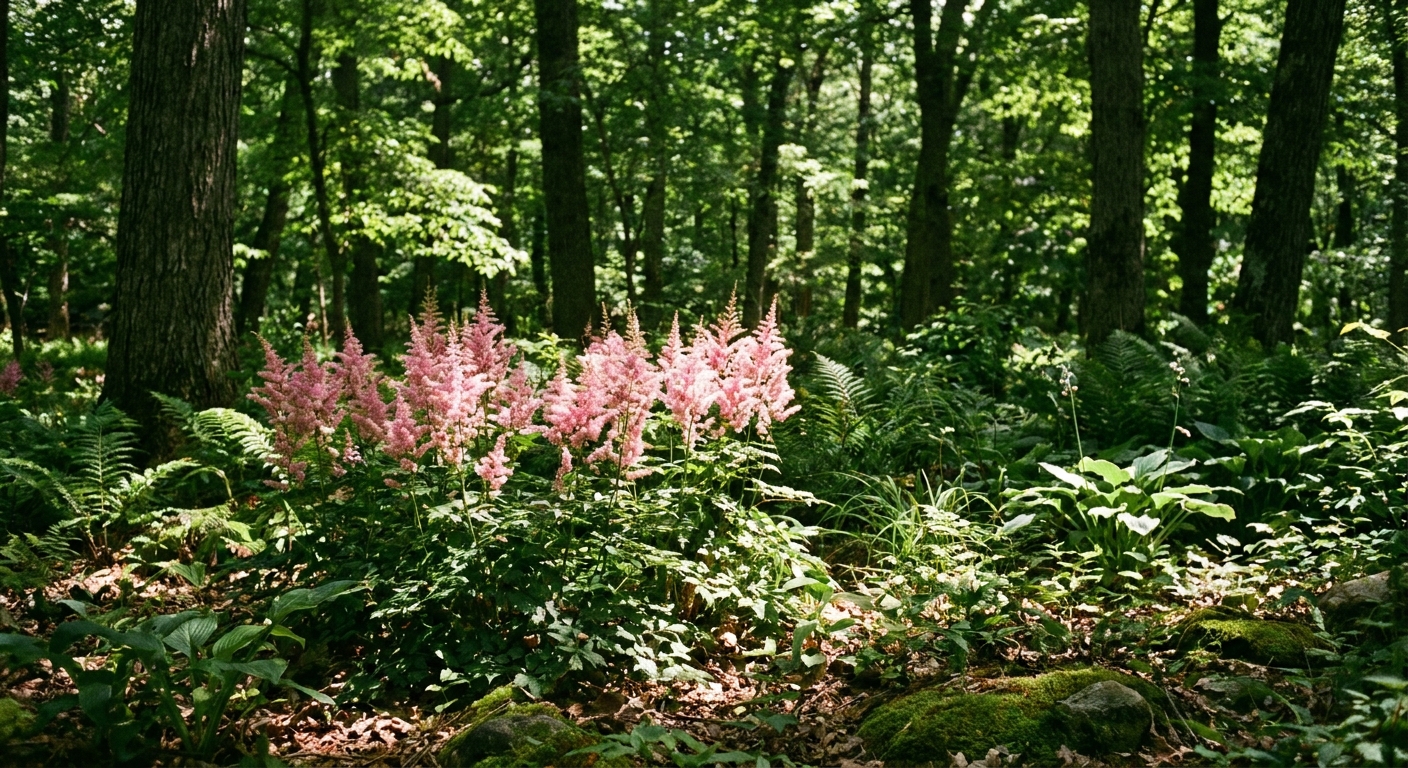
Astilbe is one of those plants that makes shade feel intentional. Those feathery plumes look like little fireworks in soft pinks, reds, and creams, floating over ferny leaves. But astilbe has one non-negotiable love language: consistent moisture. Give it damp, rich soil and a bit of protection from drying wind, and it will reward you for years.
If you have a north-facing border, dappled light under a tree canopy, or a side yard that stays evenly moist (not soggy), you are holding prime astilbe real estate.

Quick astilbe basics
- Light: Part shade to shade. Morning sun is usually fine if the soil stays moist.
- Soil: Rich, loamy, and moisture-retentive. Astilbe struggles in dry, sandy ground.
- Water: Regular, especially in summer heat and during bloom.
- Hardiness: Typically USDA Zones 3 to 8 (varies by species and cultivar, and they dislike hot, dry summers).
- Deer and rabbits: Generally deer- and rabbit-resistant (not deer-proof, but a solid choice for many gardens).
- Best feature: Plumes plus texture. Even after flowering, the foliage is a great shade garden “filler.”
Best shady spots
Think of astilbe as a woodland edge plant. It does not want harsh afternoon sun, and it definitely does not want to bake. The sweet spot is dappled light or bright shade.
Best placements
- Under high tree canopies: Especially where rain still reaches the soil.
- Along north-facing walls and fences: Cooler conditions and steadier moisture.
- Near downspouts or naturally damp areas: Great, as long as water does not pool for days.
- Beside ponds and rain gardens: Astilbe likes humidity and consistent moisture, but plant it on the edges or higher zones of a rain garden, not in standing water.
If your shade is deep (think evergreen gloom), astilbe will still make foliage, but blooms may be lighter. In that case, treat it like a texture plant and let the leaves do the work.
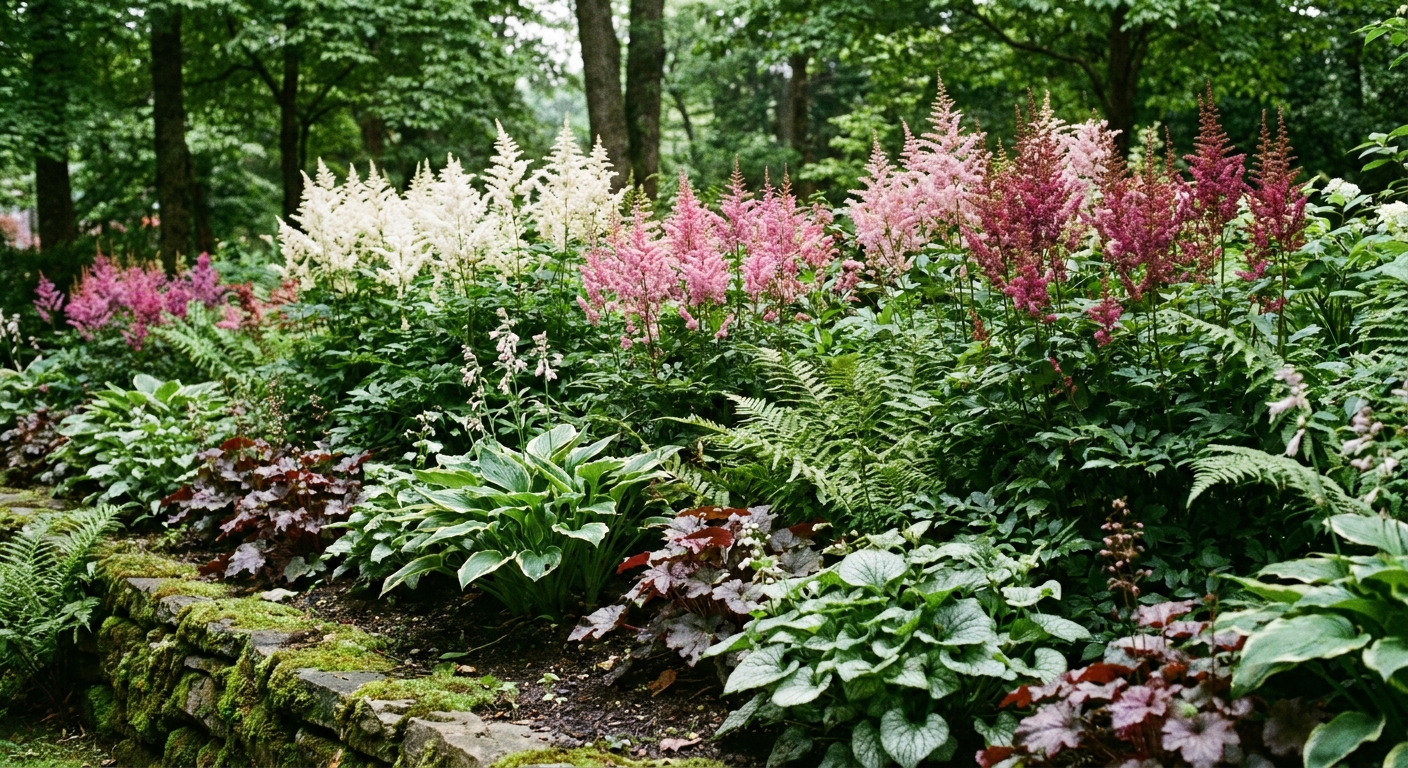
Moisture makes plumes
If I could reach through the screen and check one thing in your garden, it would be this: does your astilbe soil stay evenly moist from spring through late summer? Astilbe has fibrous, moisture-loving roots and will show stress quickly when it dries out.
What “moist” means
You are aiming for soil that feels like a wrung-out sponge. Not swampy, not dusty. If you poke your finger down 2 inches and it feels dry, it is time to water.
Hold moisture, avoid sogginess
- Add compost: Mix 2 to 3 inches into the top layer before planting. Compost holds water and feeds soil life.
- Use leaf mold if you can get it: It is basically woodland magic for shade beds.
- Go easy on high-nitrogen quick feeds: Too much nitrogen can encourage leafy growth at the expense of blooms and can make plants softer and more floppy. Slow, steady organic nutrition is better.
Mulch that helps
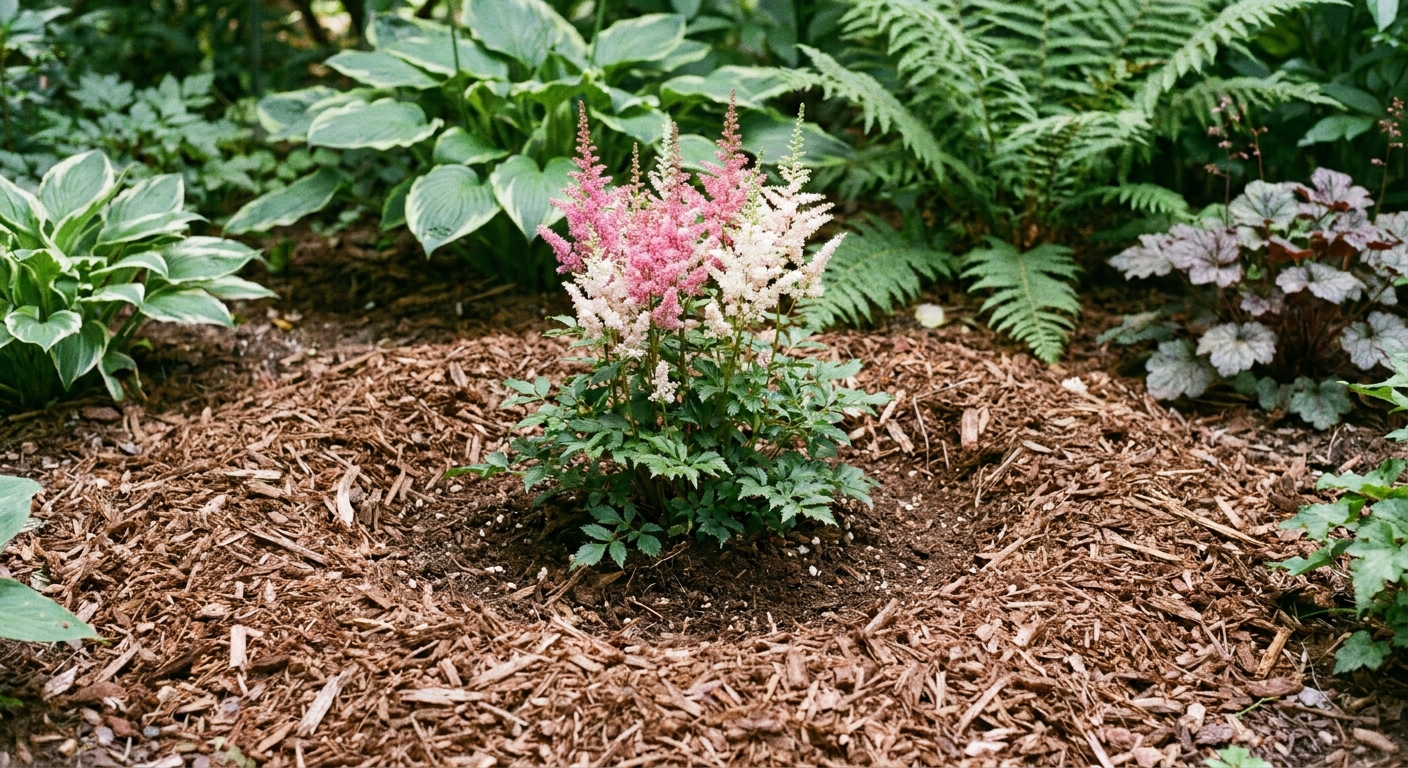
Mulch is the difference between “I water constantly” and “I water like a normal human.” A 2 to 3 inch layer helps shade soil stay cool and reduces evaporation.
Best mulch options
- Shredded leaves: My favorite. They knit together and act like a moisture blanket.
- Fine bark mulch: Looks tidy and breaks down slowly.
- Pine needles: Great under conifers, especially where you want a lighter mulch that still lets water through.
Mulch tip: Keep mulch pulled back 1 to 2 inches from the crown of the plant. Astilbe likes moisture, but the crown still needs airflow.
Watering without guesswork
In shade, astilbe can trick you because the surface looks cool while the root zone quietly dries out. When in doubt, check the soil a couple inches down.
A simple seasonal rhythm
- Spring: Water when rainfall is light. This is when plants are building leafy growth and setting up blooms.
- Early summer through bloom: Keep moisture consistent. This is when drought stress leads to smaller plumes.
- Late summer heat: Water deeply, less often, but do not let the root zone dry out completely.
- Fall: Keep watering until the ground cools and seasonal rains return.
Best method: Soaker hose or drip line under mulch. You want slow, deep watering that reaches the roots.
Bloom timing
Astilbe usually blooms from late spring into summer, depending on the cultivar. The show typically lasts a few weeks, and you can deadhead for a tidier look or leave the plumes to dry on the plant for texture.
Height and layering
One of the easiest ways to make shade look lush is to layer heights like you would in a forest. Astilbe makes this simple because cultivars range from compact little puffballs to tall, airy plumes.
Common height ranges
- Dwarf to compact (10 to 16 inches): Best at the front of a border, along paths, or tucked among rocks and stepping stones.
- Medium (18 to 24 inches): The classic border workhorse. Great with hostas, coral bells, and brunnera.
- Tall (28 to 40 inches, sometimes more): Perfect for the back of a north-facing bed or to rise through ferns under open tree canopies.
Simple layout ideas
- Under trees: Tall astilbe in drifts behind medium hostas, with dwarf astilbe or foamflower at the edge.
- North-facing border: Tall cultivars against the wall or fence, medium in the middle, and compact types along the front for a tidy, layered look.
When you shop, ignore the bloom photo for a second and check the plant tag for mature height. That number matters more than you think in shade, where airflow helps prevent leaf issues.
Planting the right way
Astilbe is not fussy, but it is particular about planting depth and aftercare. A happy start makes everything easier.
Step by step
- Dig a wide hole: About twice the width of the root ball.
- Loosen surrounding soil: Shade beds often get compacted from foot traffic and tree roots.
- Mix in compost: Especially if your soil is thin or sandy.
- Plant at the same depth: Keep the crown level with the soil surface.
- Water in deeply: Then mulch.
Spacing: Space for mature width and airflow. Most varieties do well with 18 to 24 inches between plants, with compact varieties a bit closer.
Dividing clumps
Astilbe slowly expands into a thicker clump. After a few years, the center can get woody and less productive. Dividing is like hitting the refresh button.
When to divide
- Every 3 to 5 years is a common rhythm.
- Divide when you notice smaller plumes, less bloom, or a dead-looking center.
- Best seasons: early spring as growth starts, or early fall when heat is easing.
How to divide
- Water the plant well the day before.
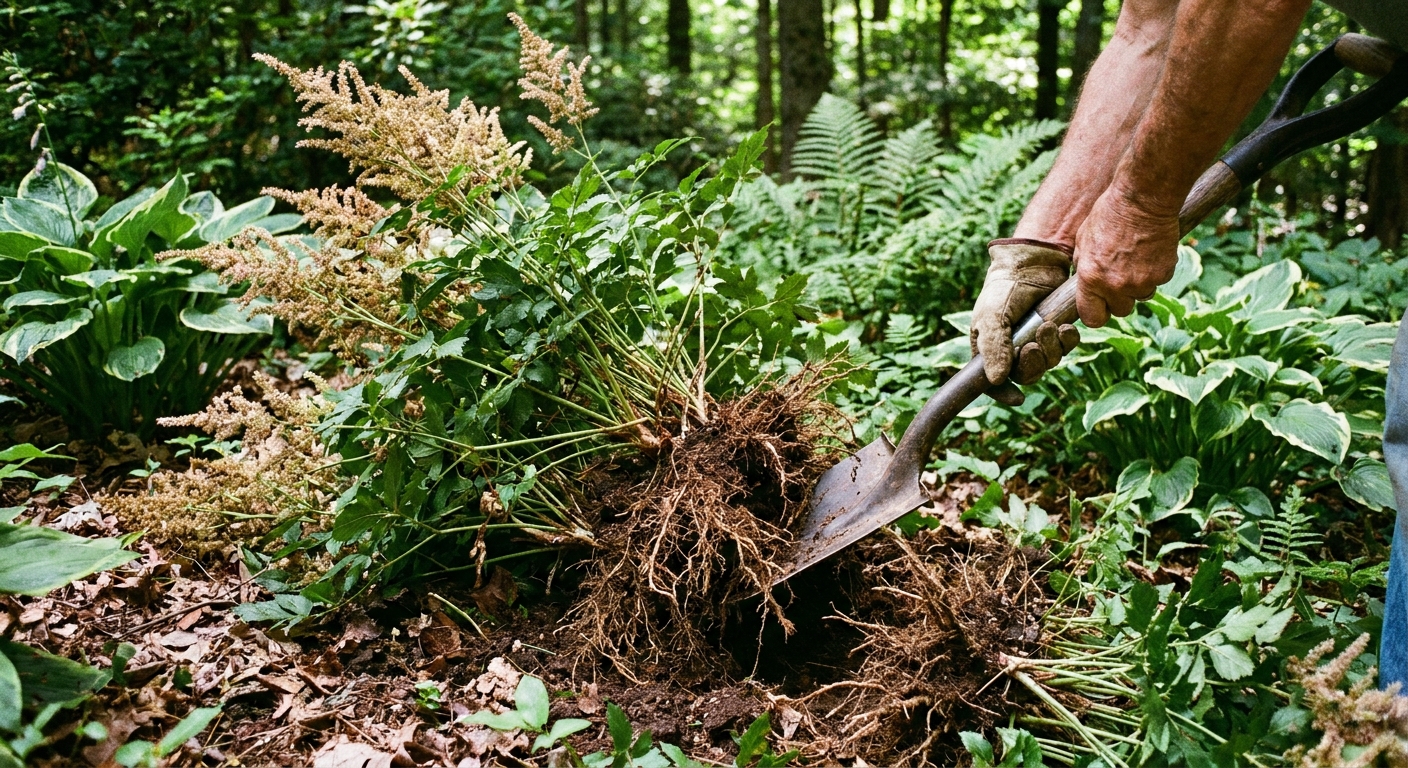
- Dig around the clump and lift it gently.
- Slice into sections with a sharp spade or knife. Each division should have a healthy crown and roots.
- Replant immediately at the same depth, water deeply, and mulch.
Winter care
Astilbe is wonderfully low-maintenance in winter. Once hard frost hits, the foliage collapses and the plant rests below ground.
Cut back in fall or spring?
- Fall cleanup: Cut back to a few inches if you prefer a tidy bed and want fewer hiding places for pests.
- Spring cleanup: Leave stems for winter texture, then cut back before new growth rises.
Either choice works. If your winters are wet, I lean slightly toward spring cleanup because the old growth can help buffer the crown from freeze-thaw cycles. Just do not let soggy debris smother the crown for months.
Crispy leaves
If your astilbe leaves are turning brown at the edges, crisping up, or looking scorched, your plant is speaking clearly. This is almost always about water, sun, or wind.
Common causes and quick fixes
- Dry soil: Deep water, then add mulch. Check moisture 2 inches down during hot weeks.
- Too much sun: Move the plant to brighter shade, or provide afternoon protection. Morning sun is usually safer.
- Drying wind: Shade beds near corners of houses and along driveways can be windy. Add a taller companion plant as a wind buffer.
- Root competition from trees: Under maples and other thirsty trees, you may need more frequent watering and extra compost each year.
- Salt or fertilizer burn: Avoid strong synthetic fertilizers. If you suspect salt buildup, flush the soil with deep watering over a couple of sessions.
Should you cut off brown leaves?
Yes, you can trim crispy foliage for looks. It will not hurt the plant, and it can reduce stress by letting the plant focus on healthy leaves. Use clean snips and cut the damaged leaf back to the base.
Pests and problems
Astilbe is generally low drama, especially when it has moisture and airflow. In very damp shade, keep an eye out for a few usual suspects.
- Slugs and snails: They may nibble tender growth, especially in spring. Hand-pick at dusk or use iron phosphate bait if needed.
- Leaf spot or powdery mildew: Usually tied to poor airflow and crowded plantings. Give plants room, water at the base, and avoid soaking foliage late in the day.
Heat and summer stress
If you garden where summers run hot and humid, astilbe can still be a star, but it will not tolerate drying out. Aim for afternoon shade, consistent irrigation, and a real mulch layer. In heat, “shade” is not always enough. Moisture is the whole game.
More blooms each year
Astilbe blooms best when it is not stressed. The goal is steady moisture, rich soil, and enough light to fuel flower production.
Bloom-boosting habits
- Top-dress with compost each spring: A half inch to 1 inch around the clump is plenty.
- Mulch right after top-dressing: Compost plus mulch is the shade garden power couple.
- Deadhead if you want tidiness: Removing spent plumes keeps the plant looking fresh, but it is not required for rebloom.
- Divide when crowded: It really does bring back vigor.
Companion plants
Astilbe plays beautifully with other shade lovers that enjoy similar moisture. Pairing plants with the same preferences is the easiest way to make care simple.
- Hosta: Big leaves plus airy plumes is a classic contrast.
- Ferns: Especially lady fern and ostrich fern for a woodland vibe.
- Brunnera: Silvery leaves brighten darker corners.
- Heuchera (coral bells): Great for color at the base of astilbe.
- Bleeding heart: Romantic spring blooms that fade as astilbe ramps up.
Easy checklist
If you only remember five things, make it these:
- Plant astilbe in part shade or bright shade, not hot afternoon sun.
- Keep soil evenly moist, especially in summer.
- Mulch 2 to 3 inches to stop the soil from drying out.
- Feed the soil with compost, not harsh fertilizers.
- Divide every few years if clumps get crowded or bloom slows down.
And if your first try is not perfect, welcome to gardening. Astilbe is forgiving when you listen to what it is telling you, and those crispy edges are simply feedback, not failure.