
Asparagus Fern Care

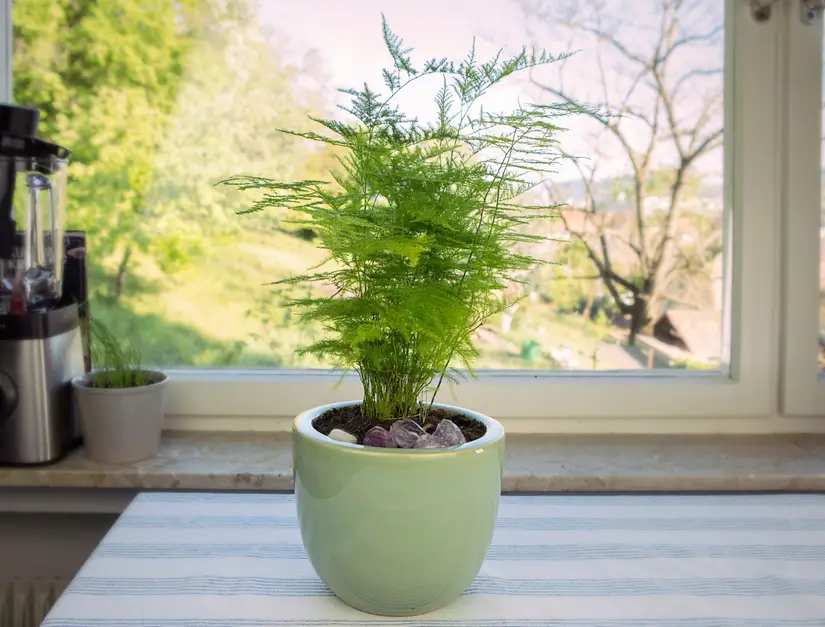
Asparagus fern is one of those plants that looks delicate, behaves tough, and somehow ends up in every bright bathroom window, patio pot, and hanging basket at the garden center. I love it for that soft, fountainy texture that makes a space feel instantly calmer. It can be confusing though. It is called a fern without actually being one, it can scorch in the wrong sun, and those cute little berries come with a big safety footnote.
Let’s get you confident with the basics: what this plant actually is, how to nail the light, how to prune it into a fuller fluffball, how to keep roots from taking over a pot, how to feed it lightly, what to do in cold weather, and how to handle berries safely around pets and toddlers.

Not a true fern (and why it matters)
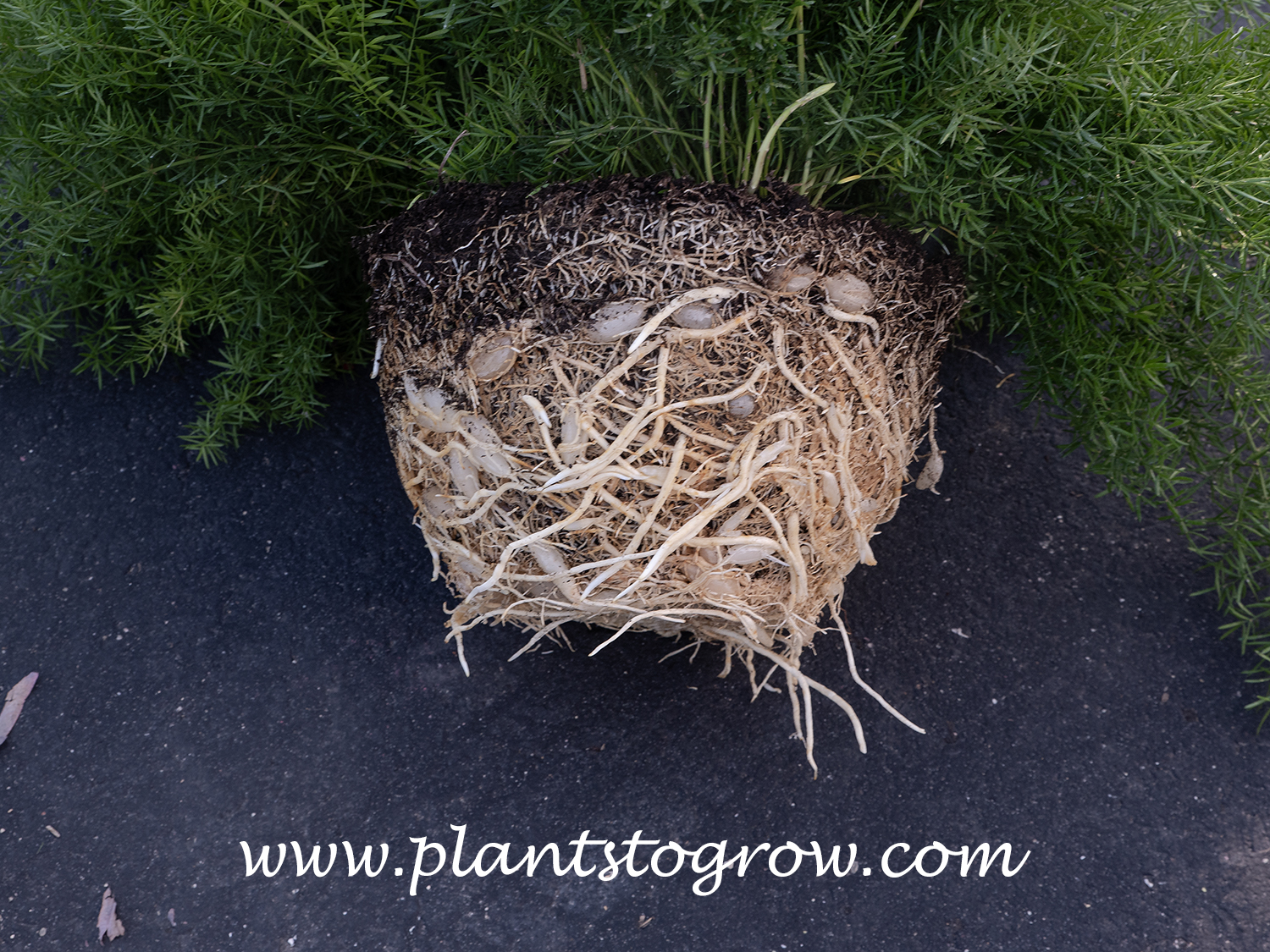
Despite the name, “asparagus fern” is not a fern at all. Most plants sold under this common name are Asparagus densiflorus (often sold as Sprengeri fern, and sometimes labeled under other botanical names in the trade) or Asparagus setaceus (lace asparagus, still commonly seen as “A. plumosus”). They are relatives of edible asparagus, and they grow from thickened, tuberous roots that store water and energy.
That identity swap explains three common surprises:
- It handles dryness better than many true ferns. Those roots store moisture, so it does not need constantly wet soil.
- It can be a vigorous grower. Given time, it will fill a pot with roots and push out lots of new stems.
- It responds well to pruning. You can cut it back and it will regrow from the crown and roots.
One more practical note: many asparagus ferns have tiny thorns along the stems. They are not always obvious until you are repotting or pruning. Gloves are your friend.
Light needs (indoors and outdoors)
Indoors: bright, filtered light is best
If you want the fronds to stay dense and that lovely green to look fresh, aim for bright indirect light. Think: near an east window, or a few feet back from a sunny south or west window with a sheer curtain.
- Too little light: growth gets sparse and stretched, and the plant looks more like green strings than a soft plume.
- Too much direct sun: fronds can turn pale, yellow, or crispy at the tips.
Outdoors: morning sun, afternoon shade
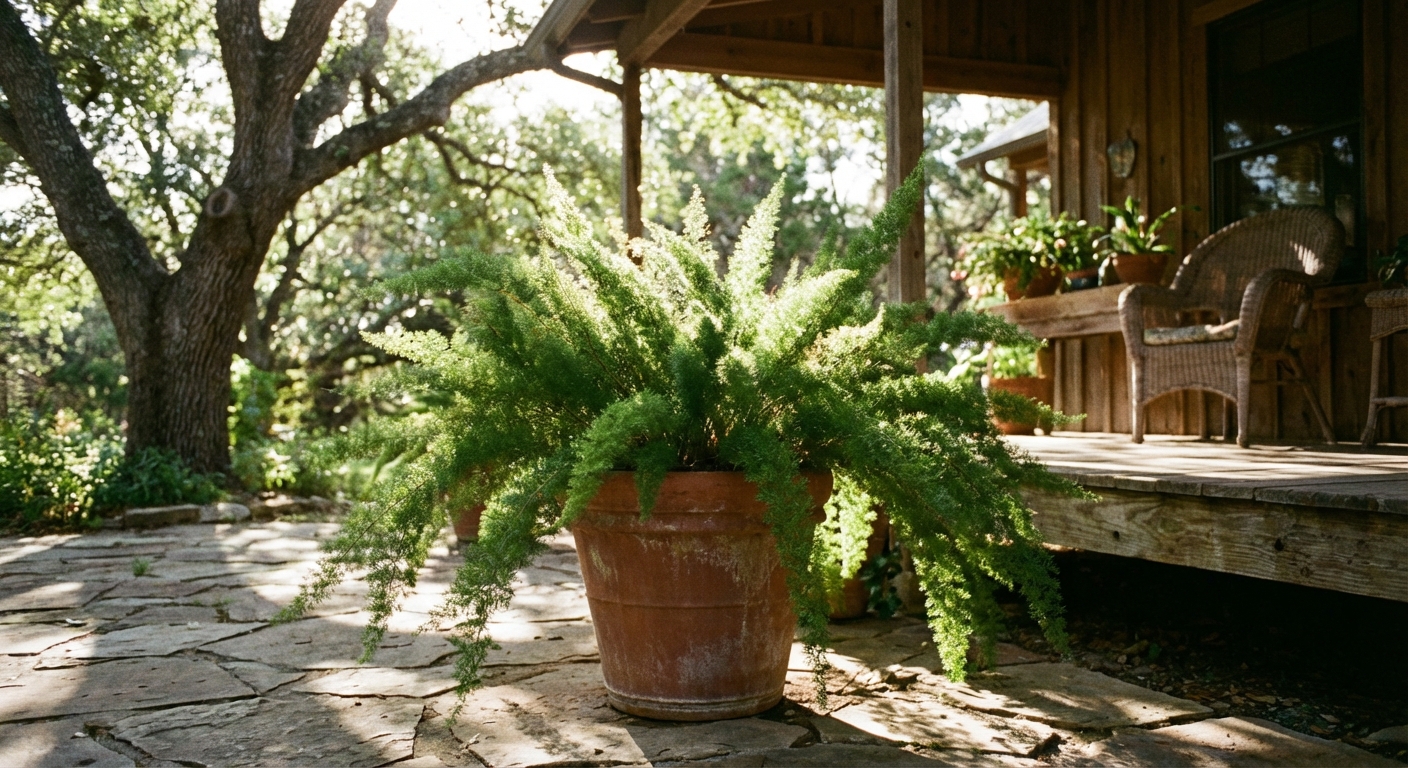
Outside, asparagus fern is happiest with part sun, especially morning sun and afternoon shade. In hot summer areas, strong afternoon sun can scorch it quickly, particularly in containers that heat up fast.
Sun tolerance also depends on acclimation and water. A plant that is slowly introduced to brighter conditions and kept evenly moist can often handle more light than a newly moved plant in a drying pot.
Use this as a starting point:
- Mild summers: part sun to bright shade works well.
- Hot summers: bright shade or early sun only, especially for patio pots.
- Very shady spots: it will live, but it may thin out.
Watering and soil: moist, not soggy
The easiest way to water asparagus fern is to let the top layer of soil dry slightly, then water thoroughly.
- Indoors: water when the top 1 to 2 inches feel dry. Empty saucers so the pot does not sit in water.
- Outdoors in summer: containers can dry fast. Check every few days during heat.
- In winter: growth slows, so watering usually slows too.
Use a well-draining potting mix. If your mix stays wet for days, blend in extra perlite or pine bark fines. Drainage is what prevents root stress and that “why is it yellowing?” spiral.
Humidity helps keep fronds looking plush, but do not stress if your home is average. If tips crisp indoors, try a pebble tray or group plants together before you start misting daily. Constantly wet fronds can encourage fungal issues in some homes.
Feeding: light and steady
Asparagus fern is not a heavy feeder. A little nutrition during active growth keeps it green and vigorous without pushing weak, floppy stems.
- Spring and summer: feed monthly with a balanced, diluted liquid houseplant fertilizer.
- Fall and winter: ease off or stop, especially indoors where growth slows.
If your plant is outdoors in a container, a small amount of slow-release fertilizer in spring can also work. More is not better here. Overfertilizing can lead to stressed roots and crispy tips.
Aggressive roots in pots
Those thick roots are the plant’s superpower, and also the reason asparagus fern can go from “cute and contained” to “why is my pot bulging?”
Signs it is rootbound
- Soil dries out very quickly, sometimes in a day or two
- New growth looks smaller or weaker
- The plant seems to lift up out of the pot
- You see roots circling the drain holes
- Plastic pots start to distort or crack
What to do
- Option 1: Pot up one size. Move to a container 1 to 2 inches wider in diameter. Bigger than that can hold too much wet soil around the roots.
- Option 2: Root prune and refresh. Slide it out, trim back some of the outer root mass (and a few of the thick tubers if needed), then repot in the same container with fresh mix.
- Option 3: Divide. If you want more plants, split the crown into sections with roots attached and pot them separately.
Timing tip: late winter through early summer is usually the easiest window for repotting and division because the plant rebounds quickly in active growth.
Pruning for density
If your asparagus fern is getting wispy, uneven, or a bit like it has a bad haircut, pruning is the fastest way to nudge it back to fullness. The plant does not “leaf out” again on old bare stems, so the goal is to encourage fresh stems from the base.
Simple pruning routine
- Snip yellow or brown fronds at the base. Follow the stem down and cut near the soil line.
- Thin congested growth. Remove a few older stems so light and air can reach the center.
- Cut back long, floppy stems. If a stem is stretched and sparse, remove it at the base rather than trimming the tips.
Hard cutback (for a reset)
For a seriously tired-looking plant, you can do a harder prune:
- Cut most stems back to 1 to 3 inches above the soil.
- Keep the plant in bright indirect light.
- Water normally, but do not keep it constantly wet while it is regrowing.
You will often see new shoots emerging from the crown as it rebounds. Indoors, especially in low-light seasons, it can take a few weeks to a couple of months to look lush again. Outdoors in warm weather, it tends to bounce back faster.
Pruning safety: those tiny thorns can catch you, so I use gloves and a pair of clean snips. I also rotate the pot as I work so I do not miss the older stems hiding in the back.
Temperature and winter care
Asparagus fern likes it on the warm side. Indoors, normal household temperatures are perfect. Outdoors, treat it as frost-tender unless you live in a truly mild climate.
- Cold warning: frost can damage or kill top growth, and hard freezes can be fatal.
- Overwintering patio pots: bring containers inside before frost, then place them in bright, indirect light.
- Winter slowdown: expect slower growth and reduce watering accordingly.
Berry safety: pets and toddlers
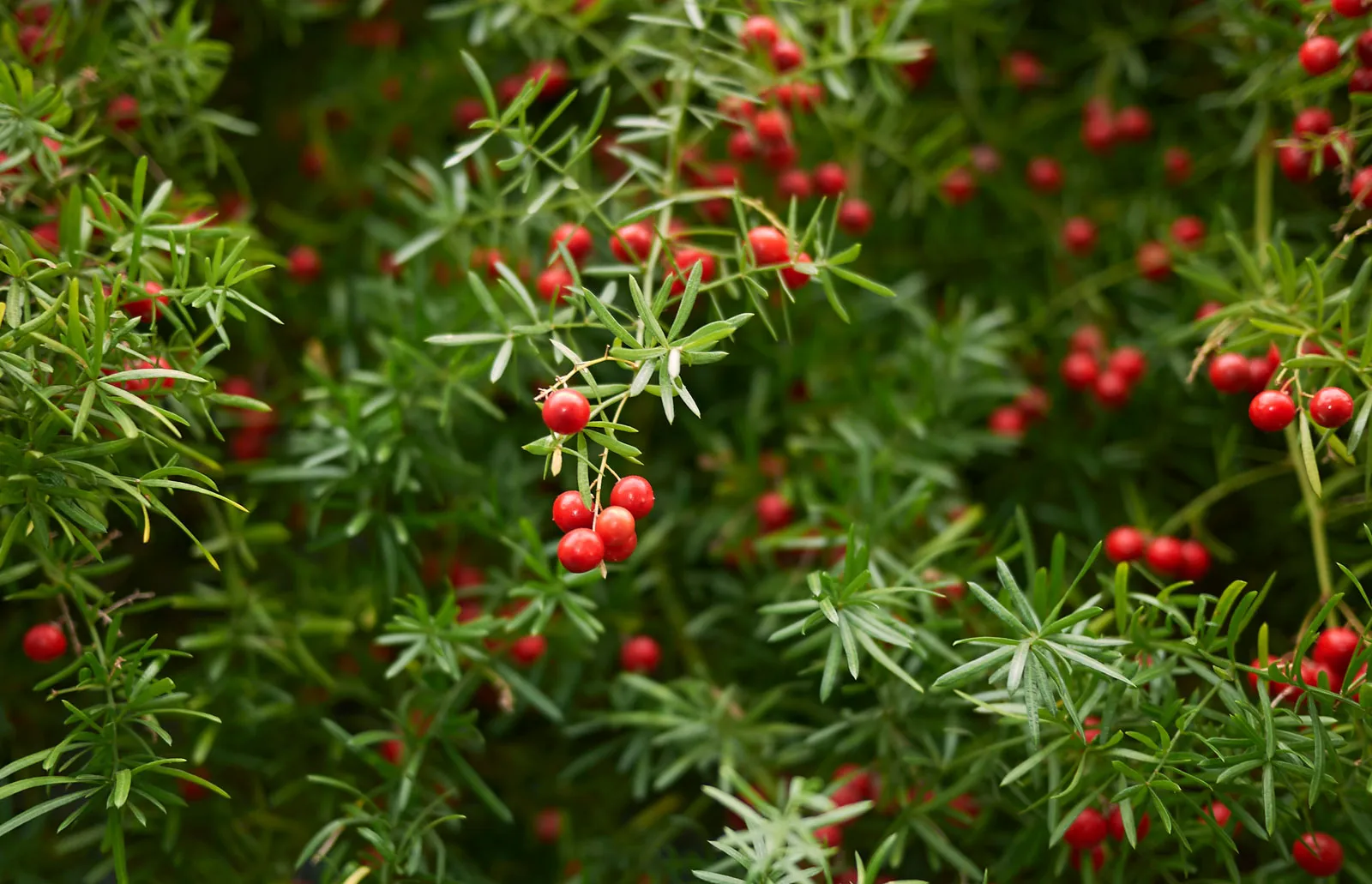
Asparagus fern can produce small white flowers followed by green berries that ripen red. They are charming to look at, but they are not a snack.
Are the berries toxic?
The berries are generally considered mildly toxic if ingested by pets and people, with the most common issue being gastrointestinal upset such as drooling, vomiting, or diarrhea. The foliage can also cause tummy trouble if chewed, and the sap may trigger skin irritation in sensitive people. For pet-specific guidance, the ASPCA’s toxic and non-toxic plant database is a helpful reference, and for humans, poison control can advise based on the situation.
What I recommend for a berry-prone plant
- Remove flowers or berries early. Snip the berry-bearing stems and toss them where pets cannot access them.
- Place plants thoughtfully. Choose a high shelf, hanging basket, or a patio spot behind a barrier if you have a berry-curious dog.
- Watch for fallen berries. Outdoors, berries can drop into pots or patio cracks.
If a pet or child eats berries and you are unsure how much, contact your veterinarian, local poison control, or a medical professional promptly. When in doubt, bring the plant tag or take a photo so you can identify it accurately.
Outdoor note: invasiveness
In some regions, asparagus fern (especially the Sprengeri types) can escape cultivation and become invasive. If you garden in a warm climate and plan to grow it outdoors, check local guidance before planting it in-ground. Keeping it in containers and removing berries helps reduce the chance of spread.
Quick troubleshooting
Yellowing fronds
- Common causes: too much direct sun, inconsistent watering, or a rootbound pot.
- Try: move to brighter indirect light, water more evenly, and check the roots.
Crispy brown tips
- Common causes: dry air, underwatering, too much fertilizer, or hot sun on an outdoor pot.
- Try: water more deeply, shift to afternoon shade outdoors, and consider a humidity boost indoors. If feeding heavily, pause and flush the pot with water once.
Sparse, leggy growth
- Common causes: not enough light.
- Try: increase light and prune older stems at the base to encourage fresh growth.
Pests (spider mites and mealybugs)
Asparagus fern can occasionally attract spider mites, especially indoors in dry air. If you see fine webbing or stippled fronds, rinse the plant in the shower or with a hose, then treat with insecticidal soap as needed. Repeat weekly for a few rounds, because pests love to come back for an encore.
Care checklist
- Light: bright indirect indoors; part sun with afternoon shade outdoors
- Water: when top 1 to 2 inches are dry; do not let pots sit in water
- Soil: well-draining mix in a pot with drainage holes
- Fertilizer: diluted monthly in spring and summer; little to none in winter
- Pruning: remove yellow stems at the base; cut back leggy stems to encourage density
- Roots: repot, divide, or root prune when pot-bound
- Temperature: protect from frost; overwinter containers indoors in bright light
- Berries: remove if pets or toddlers might nibble
If you take nothing else with you, take this: asparagus fern is forgiving. It might sulk after a move or a pruning session, but give it bright, gentle light and consistent watering, and it will fluff back up like it never doubted you.