
Areca Palm Care Indoors

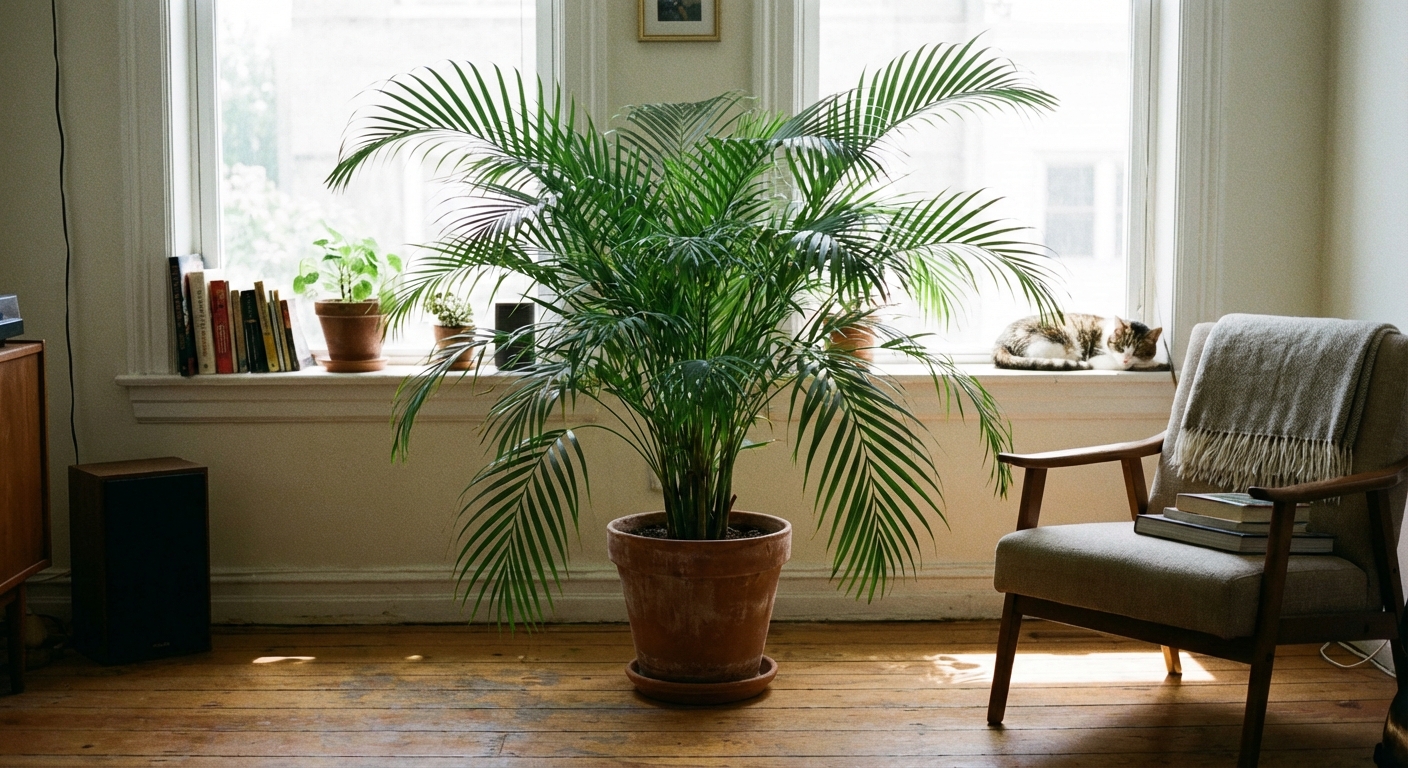
Areca palm (Dypsis lutescens) is the houseplant equivalent of soft sunshine. Those feathery fronds can make a room feel calmer in about five minutes flat. It is also one of the more forgiving indoor palms, which is great news if you are recovering from a so-called “black thumb.”
That said, areca palms are honest plants. If something is off, they will tell you with crispy tips, pale fronds, or slow growth. The good news is that most issues come down to a handful of easy-to-fix basics: light, water rhythm, humidity, and not stuffing them into the wrong soil.
Pet note: Areca palms are widely listed as non-toxic to cats and dogs (per ASPCA). Still, any plant can cause mild tummy upset if a pet treats it like salad, so place accordingly.

Quick start checklist
- Light: Bright, indirect light. A little gentle morning sun is fine.
- Water: Water thoroughly, then let the top 1 to 2 inches of soil dry before watering again.
- Humidity: Aim for 40 to 60% if you can. Many homes at 35 to 45% still do fine with good light and watering, but higher humidity helps prevent brown tips.
- Soil: Airy, fast-draining mix. Never heavy, water-holding potting soil by itself.
- Pot: Drainage holes required. Size up gradually, 1 to 2 inches wider than the root ball.
- Fertilizer: Light, consistent feeding in spring and summer. Pause in winter.
Ideal light indoors
Think “bright shade,” like you would find under a porch roof or beneath a tall tree. Areca palms need enough light to keep those fronds dense and green, but harsh sun can scorch the leaflets.
Quick test: If you can comfortably read in the spot during the day without switching on a lamp, you are usually in the right neighborhood for bright indirect light.
Best placements
- Near an east window: Usually the sweet spot. Gentle morning sun, then bright indirect light.
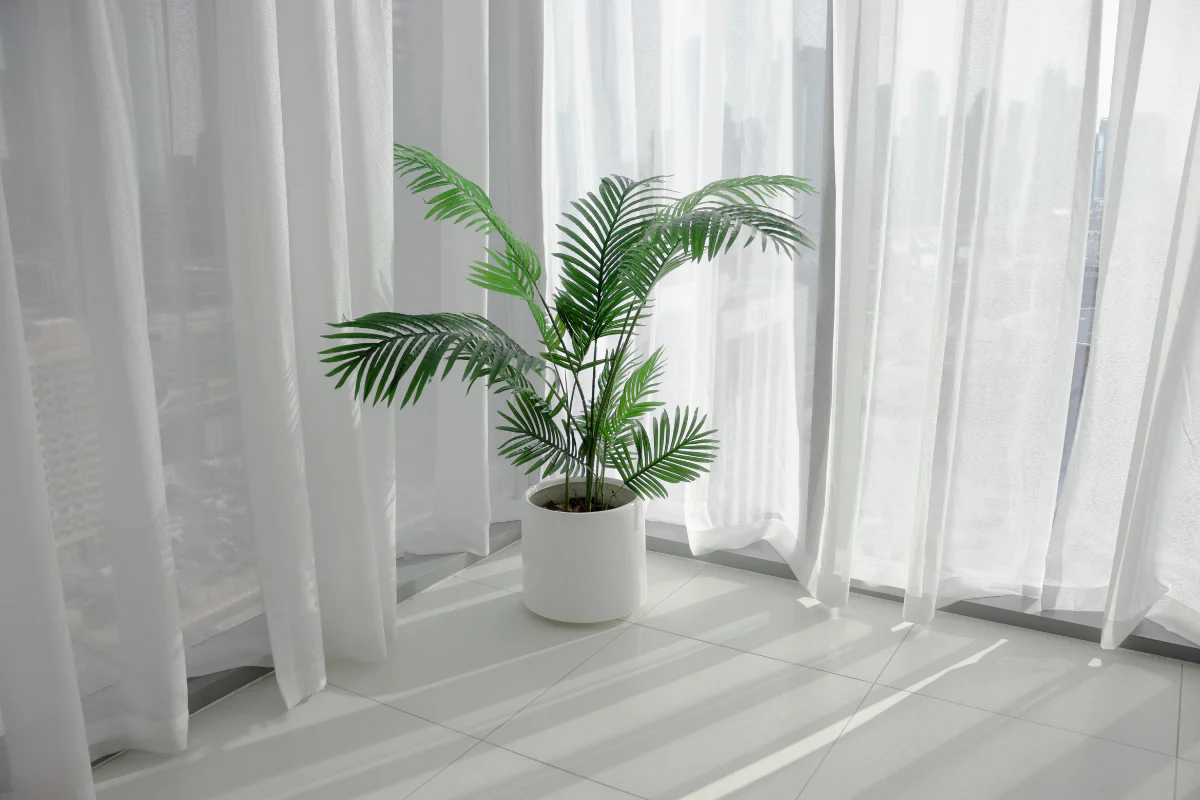
- Near a south or west window: Back it up a few feet or filter with a sheer curtain.
- Near a north window: Often too dim unless the room is very bright. Expect slower growth.
Signs your light is off
- Too little light: Sparse fronds, slow growth, stems stretching, duller green. Low light can also make pest problems more likely.
- Too much direct sun: Bleached patches, crispy tan scorch marks on leaflets.
Clara tip: Rotate your pot a quarter turn every week or two. It keeps growth even and prevents that “leaning toward the window” look.
If your home is dim: A simple grow light (even a small LED panel or bulb a foot or two away) can make a noticeable difference, especially in winter.
Humidity and temperature
Areca palms are tropical at heart. Indoors, they do best when the air is not bone-dry and the temperature is steady.
Targets to aim for
- Humidity: 40 to 60% is a solid goal for most homes. Higher can be even nicer, but it is not a requirement for a healthy palm if light and watering are on point.
- Temperature: 65 to 80°F (18 to 27°C). Growth often slows below about 60°F (16°C). Try to avoid prolonged dips below about 55°F (13°C).
Easy humidity boosts
- Humidifier: The most reliable solution, especially in winter heating season.
- Grouping plants: A few plants together create a small humidity bubble.
- Pebble tray: Can provide small, very localized help right around the plant, though the effect is usually modest in an average room. Keep water below the pot bottom.
Skip placing an areca palm right next to heating vents, radiators, or blasting AC. That constant hot or cold airflow is a fast track to brown tips.
Soil and pot size
If I could sneak one gardening lesson into everyone’s brain while they sleep, it would be this: most indoor plant problems are root problems. And root problems usually start with soil that stays wet for too long.
Best soil mix
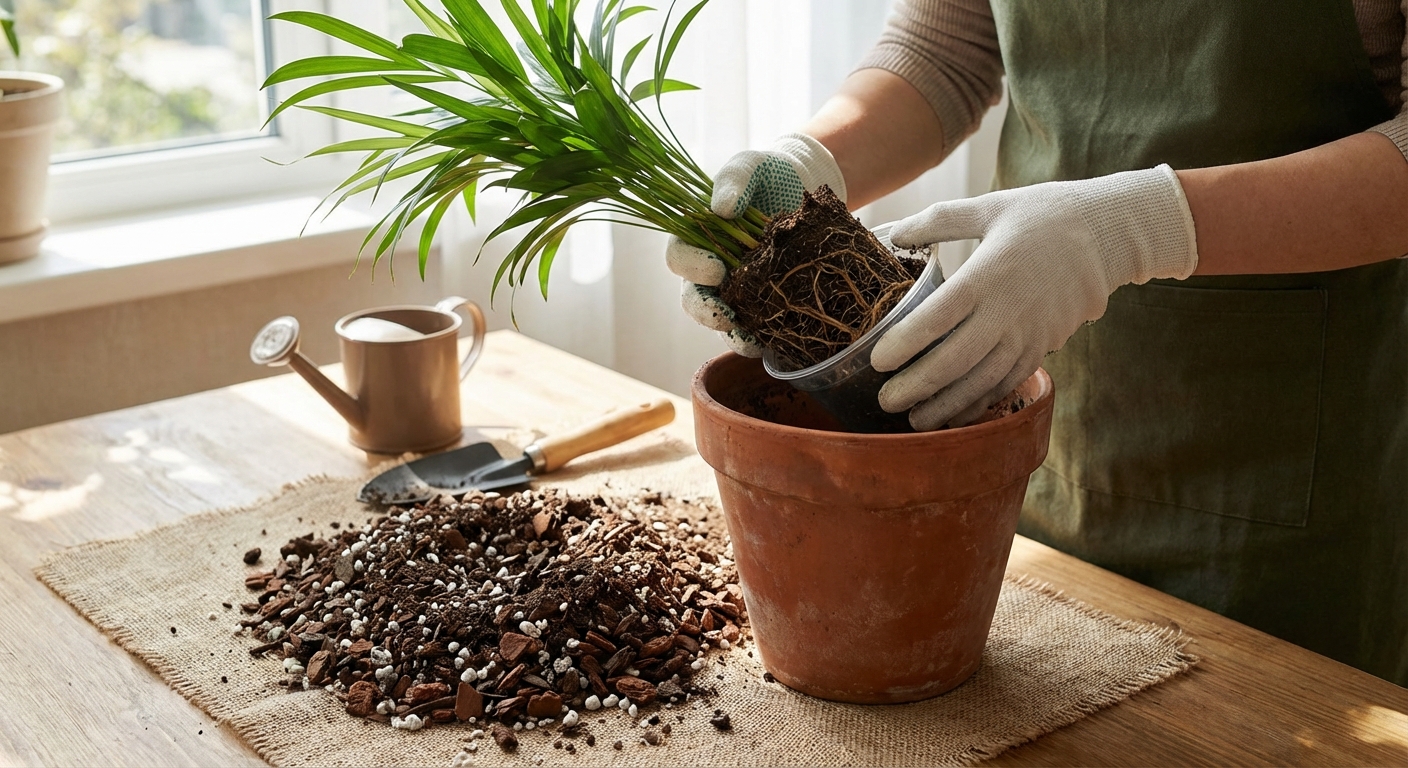
Choose or mix a medium that drains quickly but still holds some moisture. A great beginner blend is:
- 2 parts quality indoor potting mix
- 1 part perlite or pumice
- 1 part orchid bark or fine pine bark
This creates air pockets so roots can breathe. Areca palms like evenly moist soil, not soggy soil.
Pot size guidelines
- Drainage holes are non-negotiable. Decorative cachepots are fine, but keep the palm in a nursery pot inside.
- Size up slowly: When repotting, go 1 to 2 inches wider than the current pot. Oversized pots hold extra wet soil and invite root rot.
- Repot timing: Every 2 to 3 years for most indoor palms, or when roots circle the pot and watering becomes tricky.
Clara tip: Palms do not love being messed with. If it is growing and looks happy, resist the urge to repot just because it has been a while.
Watering rhythm
Areca palms like a steady, gentle routine. The goal is to water thoroughly, then allow a partial dry-down before watering again.
How to water correctly
- Check the top 1 to 2 inches of soil with your finger.
- If it is dry, water slowly until water drains from the bottom.
- Empty the saucer after 10 to 15 minutes so roots do not sit in water.
Adjust the pace: You will water more often in brighter light, warmer rooms, and smaller pots. You will water less often in low light, cooler temps, and larger pots.
Common watering mistakes
- Frequent sips: Tiny little waterings keep the top wet and the lower soil stagnant.
- Letting it fully dry: Repeated full dry-outs can lead to crispy fronds and stalled growth.
- Cold or problematic tap water: If your tap water is heavily chlorinated, letting it sit out overnight can help with chlorine in some areas. It does not remove chloramine, and it does not fix hard water minerals. If you suspect chloramine or very hard water, filtered, distilled, or RO water is often kinder long-term.
Season note: In winter, most homes have lower light. Your palm uses less water, so the soil dries more slowly. Always let the plant and the soil be your guide, not the calendar.
Fertilizing
Areca palms are light feeders indoors. Too much fertilizer can scorch roots and show up as brown tips and leaf edge burn. I prefer a “less, but consistent” approach.
Best fertilizer type
- Option 1: A balanced liquid houseplant fertilizer diluted to half strength.
- Option 2: A slow-release granular fertilizer formulated for palms or foliage plants, used sparingly.
If you can find a palm-friendly fertilizer that includes magnesium and iron, that can help prevent pale new growth in some homes, especially with hard water.
Simple schedule
- March to September: Feed once every 4 weeks with half-strength liquid fertilizer, or apply slow-release according to label once in spring.
- October to February: Pause, or feed at most once every 8 to 10 weeks if your palm is still actively growing under strong light.
Clara tip: If you repot into fresh mix, wait 4 to 6 weeks before fertilizing. Many potting mixes already contain nutrients.
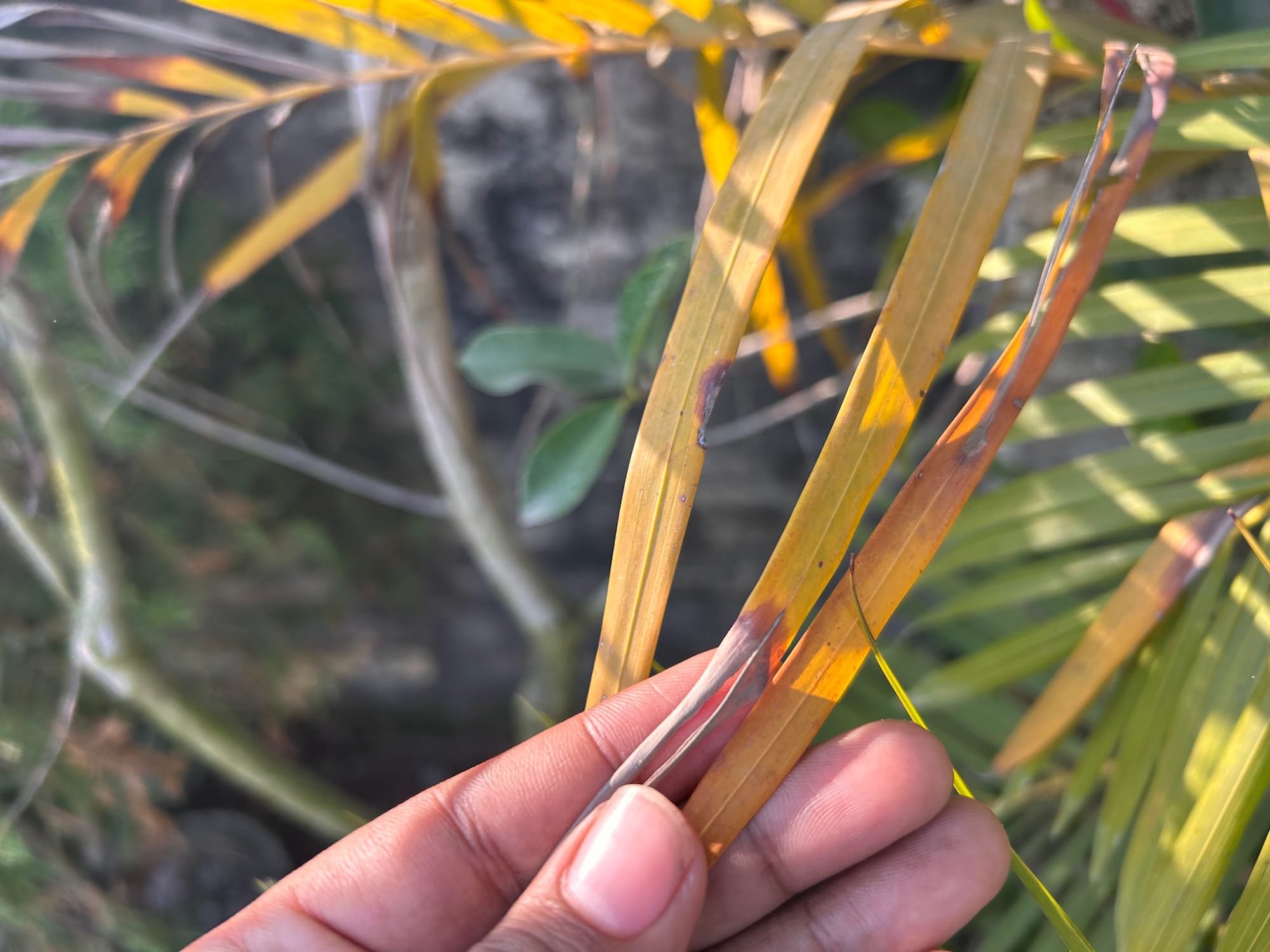
Brown leaf tips
Brown tips are the number one complaint with areca palms, and it is rarely just one thing. Think of it like your palm is asking for slightly better “comfort care.”
Most common causes
- Low humidity: Especially in winter.
- Inconsistent watering: Cycling between very dry and very wet.
- Mineral buildup: Hard water, frequent fertilizing, or never flushing the soil.
- Heat or AC drafts: Constant airflow dries leaf edges.
- Too much direct sun: Leaflets scorch and crisp.
Fix plan
- Check your watering pattern: Aim for “moist but not soggy,” with the top 1 to 2 inches drying between waterings.
- Raise humidity a notch: Try a humidifier nearby for a couple weeks and watch new growth.
- Flush salts periodically: Every 4 to 8 weeks in spring and summer, water deeply until plenty runs out the bottom to wash out salts. Only do this if your pot drains freely, then let it drain fully.
- Review light and drafts: Move it away from harsh afternoon sun and vent blasts.
Can you trim brown tips?
Yes. Use clean scissors and follow the natural shape of the leaflet. Leave a thin line of brown if needed so you do not cut into healthy tissue. Trimming is cosmetic, but it can make the plant look tidier while you solve the real cause.
Spacing and airflow
Areca palms look lush when they are full, but cramming them into a tight corner can invite pests and fungus issues because air cannot move through the fronds.
How much space to give
- From walls and furniture: Leave 6 to 12 inches of breathing room so fronds are not constantly bent or rubbed.
- Between multiple plants: A hand’s width to a foot is usually enough to keep airflow while still enjoying that “indoor jungle” feeling.
If the fronds are always touching a windowpane, you might see cold damage in winter or sun scorch in summer. A small step back from the glass often makes a big difference.
Separating clumps
Most areca palms sold as houseplants are not a single plant. They are a cluster of multiple seedlings grown together to create that full, fountain-like look. You can separate them, but you do not always need to.
Reasons to keep the clump together
- You like the full, bushy look.
- The plant is healthy and you are not fighting constant drying or crowding.
- You want to avoid transplant shock. Palms can sulk after root disturbance.
Good reasons to separate
- Severe crowding: The root mass is so tight that water runs straight through and the plant dries too fast.
- Uneven health: Some stems are declining and you want to rescue healthy ones.
- You want multiple smaller palms: For different rooms or to share.
Best time and method
Best time: Late spring to early summer, when the plant is actively growing.
- Water the palm the day before to reduce stress.
- Slide it out and gently loosen the outer roots.
- Look for natural separations where stems have their own root sections.
- Tease apart with your fingers first. Only cut roots as a last resort, using a clean knife.
- Pot each division into a snug pot with airy mix, then water thoroughly.
- Keep in bright indirect light and higher humidity for 2 to 4 weeks while it recovers.
Clara tip: If you feel like you have to wrestle the clump apart, it is okay to stop. Repot the whole plant one size up instead and revisit separation next year.
Common problems
Yellowing fronds
- Older fronds yellowing at the base: Normal aging. Trim once fully yellow.
- Widespread yellowing: Often overwatering, low light, or nutrient issues. Check soil moisture and light first, then consider a gentle feeding in the growing season.
Droopy fronds
- Soil very dry: Deep water and let it drain. Consider a more consistent watering rhythm.
- Soil constantly wet: Roots may be struggling. Let it dry a bit more between waterings and confirm the mix drains well.
Spider mites
Areca palms can attract spider mites in dry indoor air. If you see fine webbing or stippled, dusty-looking fronds, rinse the plant in the shower and raise humidity. Follow with insecticidal soap as needed, repeating weekly for a few rounds.
Mealybugs and scale
Also keep an eye out for cottony clusters (mealybugs) or small, stuck-on bumps along stems and leaf undersides (scale). Isolate the plant, wipe pests off with a cotton swab dipped in rubbing alcohol, then follow up with insecticidal soap or horticultural oil. Repeat every 7 to 10 days for a few rounds because the next generation always tries to show up uninvited.
Root rot
Root rot usually looks like persistent yellowing, limp growth even after watering, and soil that stays wet for ages. If you slide the plant out and find black, mushy roots or a sour smell, it is time for action: trim damaged roots with clean scissors, repot into fresh airy mix, and make sure the pot drains freely. Then water lightly until you see signs of new growth.
Basic maintenance
- Pruning: Remove fully brown or yellow fronds at the base. Avoid cutting green canes. Palms do not replace a removed cane the way some plants branch.
- Cleaning: Dusty fronds photosynthesize less. Wipe leaves with a damp cloth or give the plant a gentle shower, then let it dry in bright, indirect light.
Beginner routine
- Weekly: Check soil moisture. Rotate the pot a quarter turn. Scan for pests.
- Monthly (spring and summer): Fertilize lightly. Flush salts every 4 to 8 weeks if drainage is excellent.
- Seasonally: Move slightly closer to windows in winter, slightly farther back in intense summer sun.
If you take nothing else from this page, let it be this: an areca palm does not need perfection. It needs consistency. And if you catch yourself apologizing to it, you are in good company. I talk to my ferns. They have never answered, but they do seem to appreciate the attention.