
Amaryllis

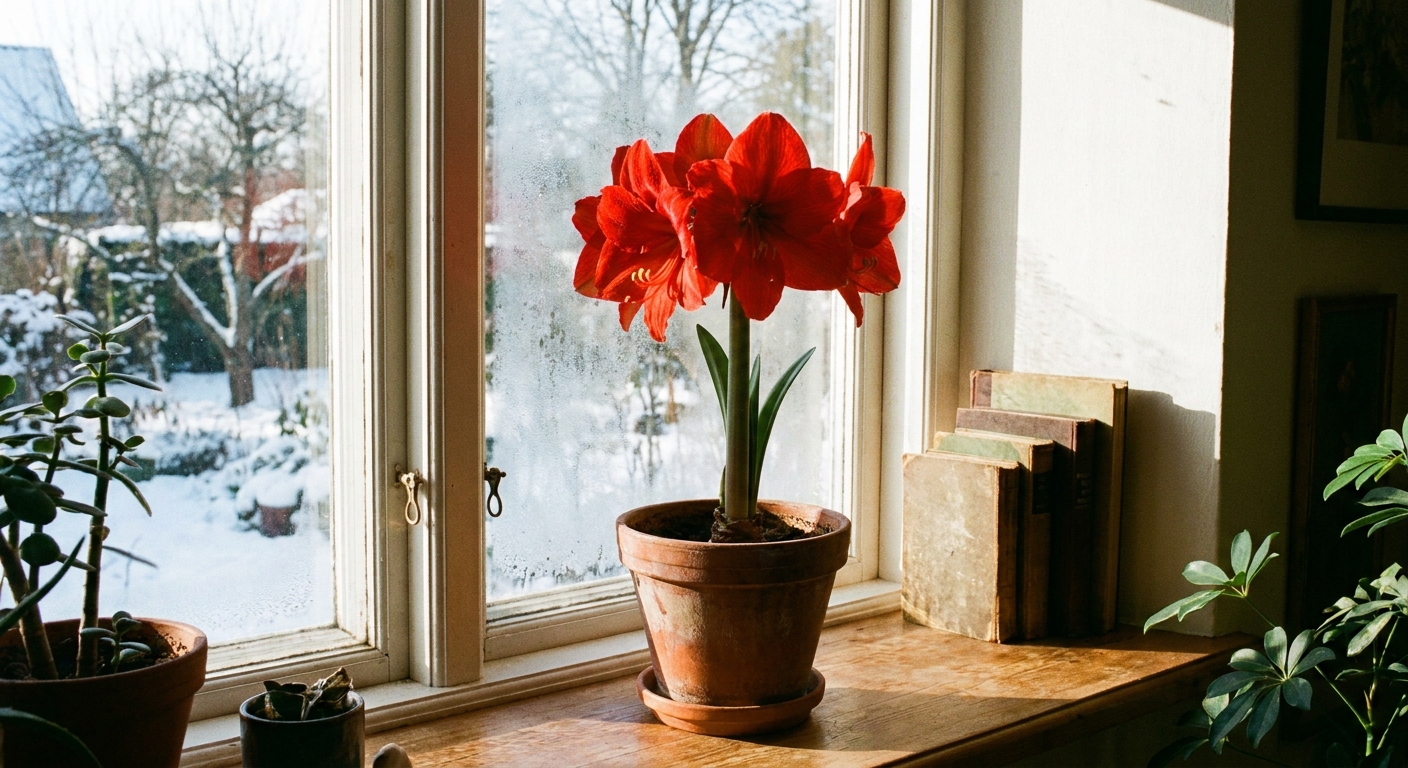
Amaryllis is the houseplant equivalent of lighting a candle on the darkest day of the year. One chunky bulb, a little patience, and suddenly you have trumpet blooms tall enough to make you stop mid-kitchen-task just to stare. If you have ever felt like you have a black thumb, amaryllis is here to lovingly argue with you.
Most of what we call “amaryllis” in stores is actually Hippeastrum, a South American bulb that thrives indoors. True Amaryllis belladonna is a different plant entirely and is usually grown outdoors in mild climates. No worries. The care you want for the holiday bulbs on your counter is the Hippeastrum routine, and that is exactly what this page covers.

Quick facts
- Bloom time indoors: Usually 6 to 10 weeks after planting, depending on bulb size, temperature, and variety
- Light: Bright light, some direct sun is great
- Water: Sparingly until growth starts, then evenly moist but never soggy
- Pet note: Amaryllis bulbs and leaves are toxic to cats and dogs if chewed
Choosing a bulb
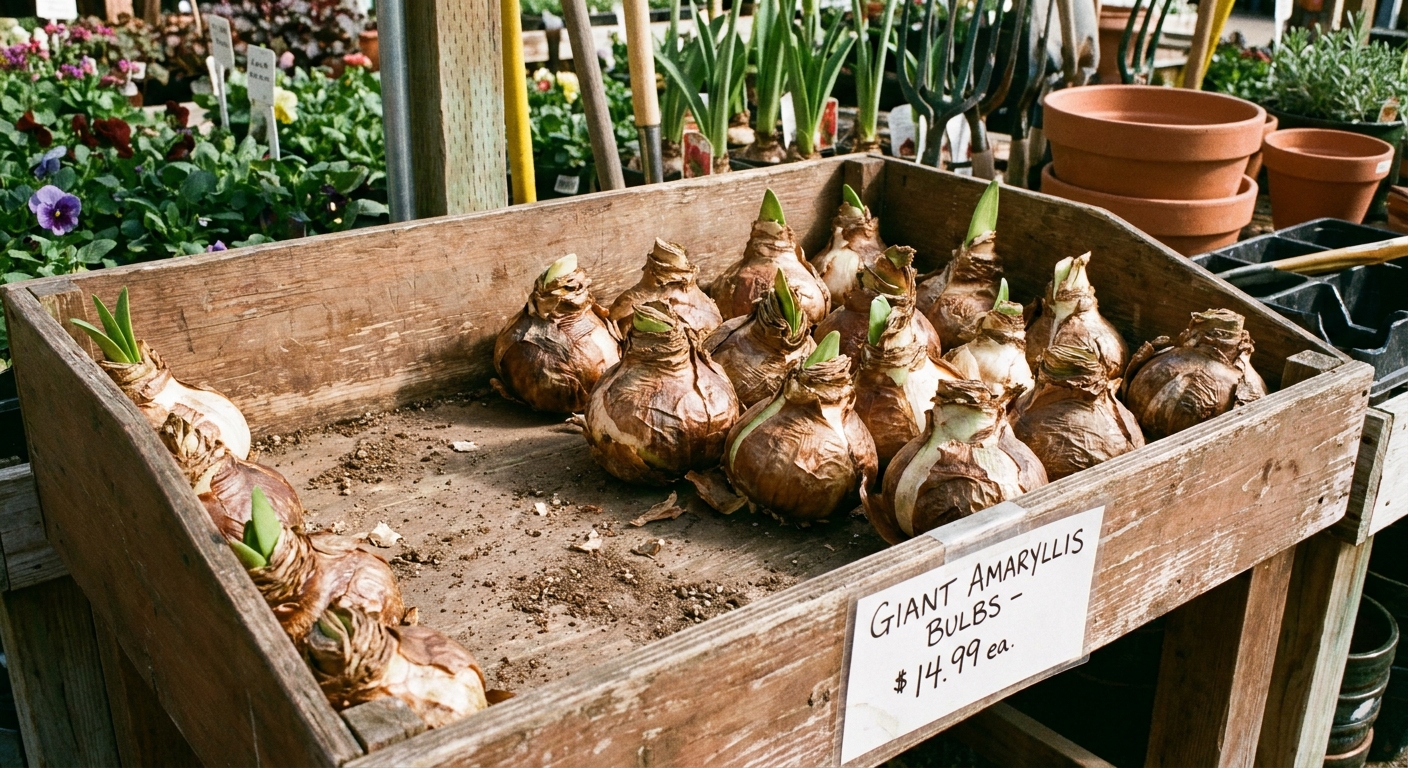
When you are shopping, you are mostly shopping for stored energy. Bigger, firmer bulbs have more “battery power” to push up thicker stems and more flowers.
- Look for: A heavy, firm bulb with papery outer layers intact. Some green at the tip is fine.
- Avoid: Mushy spots, mold, strong sour odor, or bulbs that feel light for their size.
- Size matters: Large bulbs often produce 2 flower stalks, each with multiple blooms.
About waxed bulbs
You will also see wax-coated amaryllis bulbs everywhere around the holidays. They are the definition of low effort: no pot, no soil, no watering. You set them on a dish and watch the show.
- Do not water: The bulb is sealed in wax and relies on stored moisture and energy.
- Consider them mostly single-season: Many are hard to rebloom because roots are removed and the wax stresses the bulb.
- If you want to try saving one: After flowering, peel off wax carefully, check for a basal plate and any root nubs, pot it up like a normal bulb, then baby it through leaf season. Some recover, many do not.
How to plant amaryllis
Amaryllis wants snug quarters. In nature, bulbs wedge themselves into tight, well-drained spaces. A pot that is too large holds extra wet soil, and wet soil is the fastest way to turn a bulb into compost.
What you need
- A pot with drainage holes, about 1 to 2 inches wider than the bulb
- A heavy pot (or a cachepot) because flower stalks can tip lightweight plastic
- Fresh, well-draining potting mix (add perlite if your mix is heavy)
Planting steps
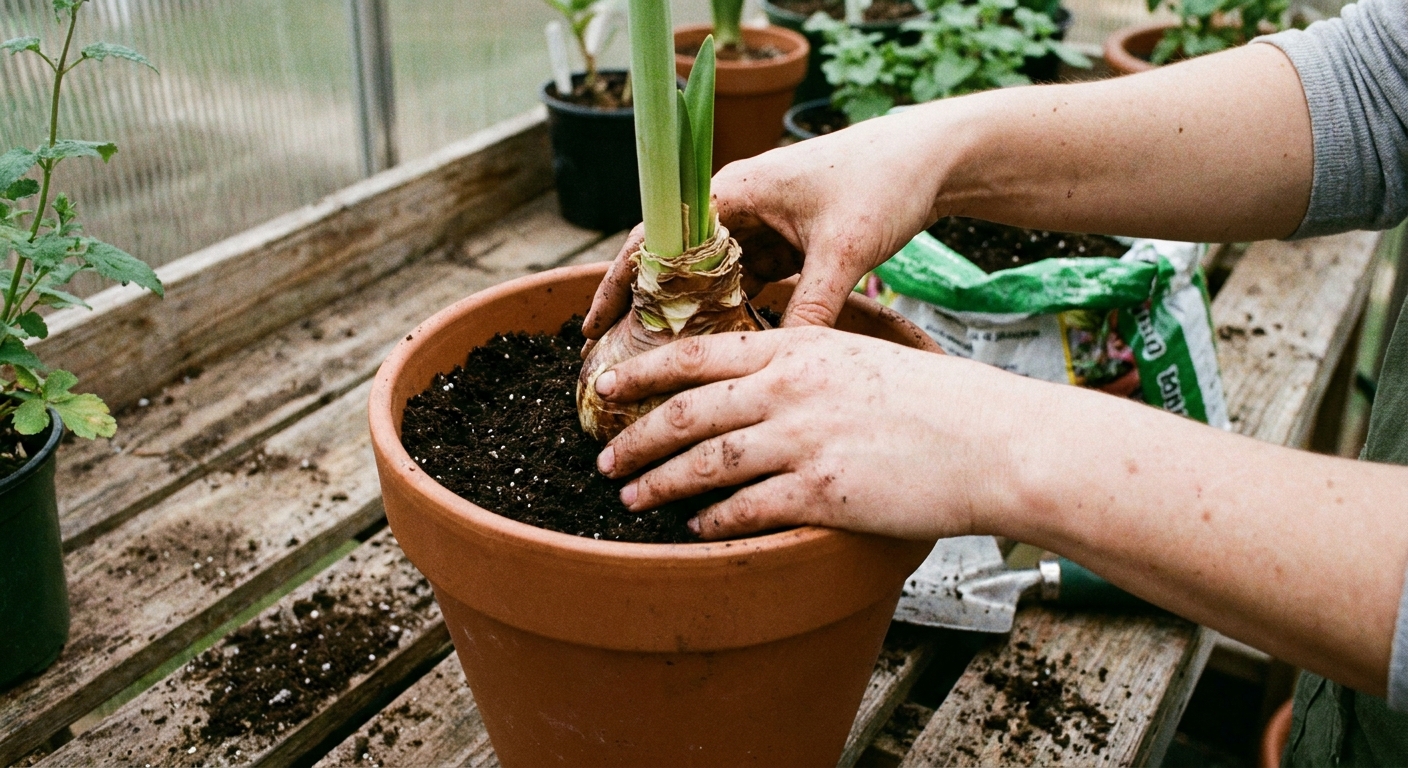
- Add soil so the bulb will sit with the top third to half above the soil line.
- Set the bulb in and firm soil around it. Keep the neck exposed.
- Water once to settle the mix, then let the top inch dry.
- Place in bright light and warmth, ideally 65 to 75°F.
My quirky-but-true tip: After planting, I rotate the pot a quarter turn every few days. It keeps stems straighter because amaryllis leans toward light like it is eavesdropping on the sun.
Light and temperature
Most “floppy amaryllis” problems are not your fault. They are a light problem. Give bright light from the start and you will get shorter, stronger stems.
- Best spot: South or west window with several hours of sun, or the brightest window you have.
- If stems stretch: Move closer to light or add a small grow light.
- Cooler nights help: If you can keep nights a touch cooler (around 60 to 65°F), stems often stay sturdier.
Watering
This is the rhythm: cautious until you see growth, then consistent while leaves and flowers are actively growing.
When you first plant
- Water lightly.
- Wait to water again until the top inch of soil is dry.
Once a shoot is 1 to 2 inches tall
- Water when the top inch is dry, then water thoroughly until it drains.
- Do not let the pot sit in a saucer of water.
Clara confession: I tell people to treat the bulb like a little loaf of bread. You want it warm and cozy, not sitting in a puddle.
Feeding
If your bulb is new and just blooming, it has enough stored energy to flower without fertilizer. Fertilizer becomes important after bloom, when you are rebuilding the bulb for next year.
- Start feeding: After the flowers fade, when you are keeping the leaves growing.
- What to use: A balanced liquid fertilizer at half strength every 2 to 4 weeks.
- Organic-friendly option: A mild fish and seaweed blend works beautifully, just do not overdo it indoors.
Bloom care
Amaryllis flowers can last a couple of weeks per stalk, sometimes longer if your home is not too warm.
- Keep it coolish: Move the plant away from heating vents and hot, sunny glass once blooms open.
- Deadhead smart: Snip off individual spent flowers to keep things tidy.
- After the stalk finishes: Cut the flower stalk down to about 1 inch above the bulb. Keep the leaves.
How to rebloom
Reblooming is not complicated, but it does ask for one thing: healthy leaves for months. Those strap-like leaves are solar panels that recharge the bulb.
Step 1: Grow leaves
- After flowering, leave all green leaves intact.
- Keep in bright light and water when the top inch is dry.
- Fertilize lightly every 2 to 4 weeks.
- When weather is reliably warm, you can move it outdoors to bright shade or morning sun to supercharge growth.
Step 2: Rest
Most Hippeastrum types bloom best after 8 to 12 weeks of rest.
- Stop fertilizing.
- Reduce watering gradually.
- Let leaves yellow naturally, then trim them.
- Store the potted bulb in a cool, dark spot (about 50 to 60°F) for 8 to 12 weeks. Keep it mostly dry.
Step 3: Wake
- Bring it back to warmth and bright light.
- Refresh the top few inches of soil or repot if it is crowded.
- Water lightly, then wait for growth to resume.
Timing tip: If you want blooms around a holiday, count backward about 8 to 10 weeks from your target date, plus the rest period.
Common problems
No blooms, only leaves
- Likely cause: Not enough light or not enough summer feeding, or the bulb skipped a rest.
- Fix: Brighter light during leaf season, regular light feeding, and commit to the rest period next cycle.
Floppy, leaning stems
- Likely cause: Low light or too much warmth.
- Fix: Move to brighter light, rotate the pot, keep slightly cooler, and stake if needed.
Bulb feels soft or smells bad
- Likely cause: Rot from overwatering or poor drainage.
- Fix: Unpot, trim away mushy tissue with a clean knife, dust cuts with sulfur or cinnamon, and repot into fresh dry mix. Water sparingly.
Red blotches on leaves or stalks
- Possible issue: Red blotch (a fungal disease) can show as red streaking.
- Fix: Improve air flow, avoid wetting foliage, remove badly affected tissue, and consider a fungicide labeled for ornamentals if it keeps returning.
Varieties to know
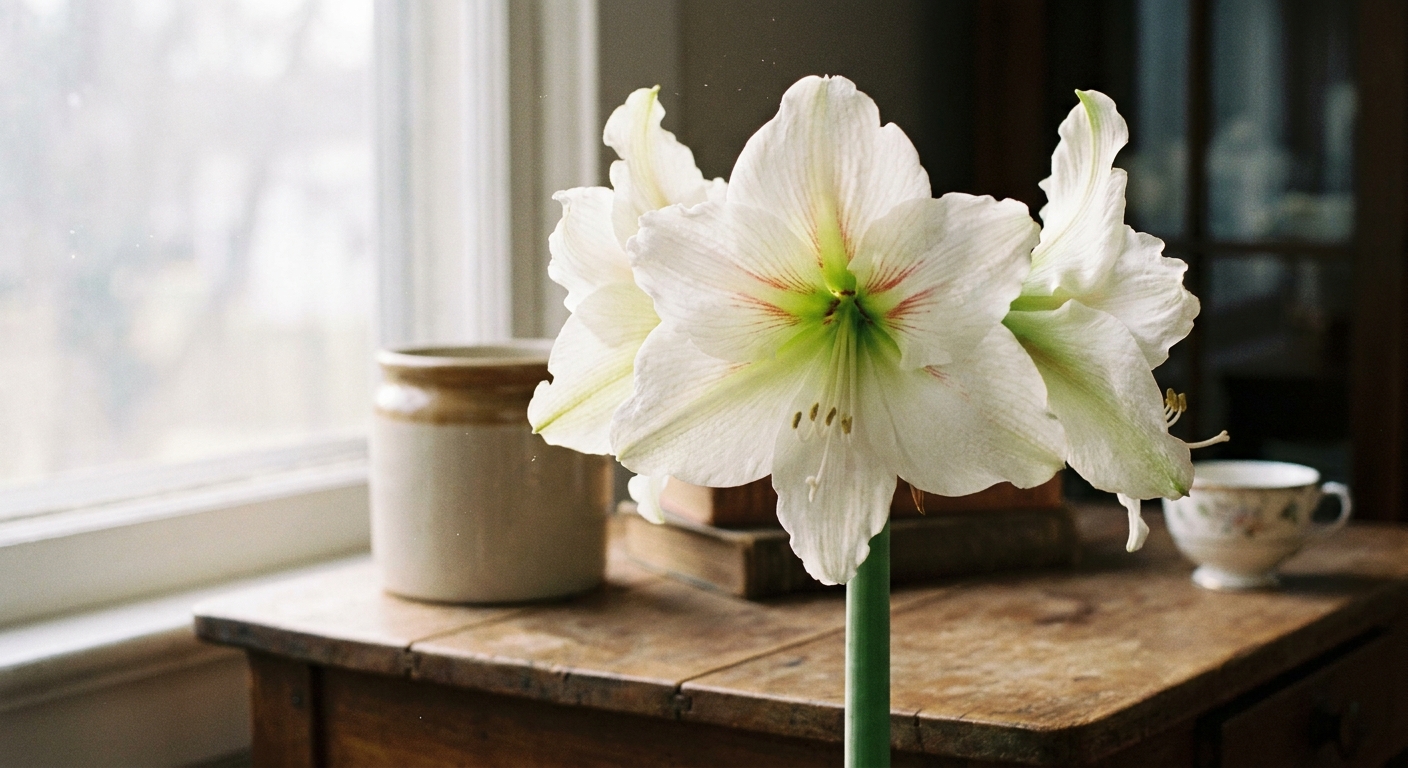
The fun part is choosing the mood you want for winter. Some are classic and bold, others feel like watercolor.
- Single-flowered: Big trumpets, often the easiest and strongest bloomers.
- Doubles: Peony-like layers, extra showy, sometimes slightly heavier blooms.
- Cybisters: Spidery, elegant flowers with narrow petals, often striped or brushed like someone painted them in a hurry.
- Miniature types: Smaller flowers and shorter stature, great for narrow windowsills.
Pet and kid safety
Amaryllis contains compounds that can cause drooling, vomiting, or stomach upset if eaten. The bulb is the most concentrated part.
- Place pots out of reach of curious pets and toddlers.
- Wash hands after handling bulbs, especially if you are trimming or repotting.
- If ingestion is suspected, contact your vet or local poison control promptly.
A seasonal ritual
My favorite thing about amaryllis is that it teaches patience in a way that feels rewarding, not punishing. You plant it, you keep the soil barely damp, and then one day the green spear appears like a promise. If you are new to plants, let this be your win. If you are seasoned, let it be your winter celebration.
If you want, tell me what your bulb looks like right now (shoots, roots, leaves, or just sitting there). I can help you time watering and light so it blooms when you want it to.