
Amaryllis Care After Blooming

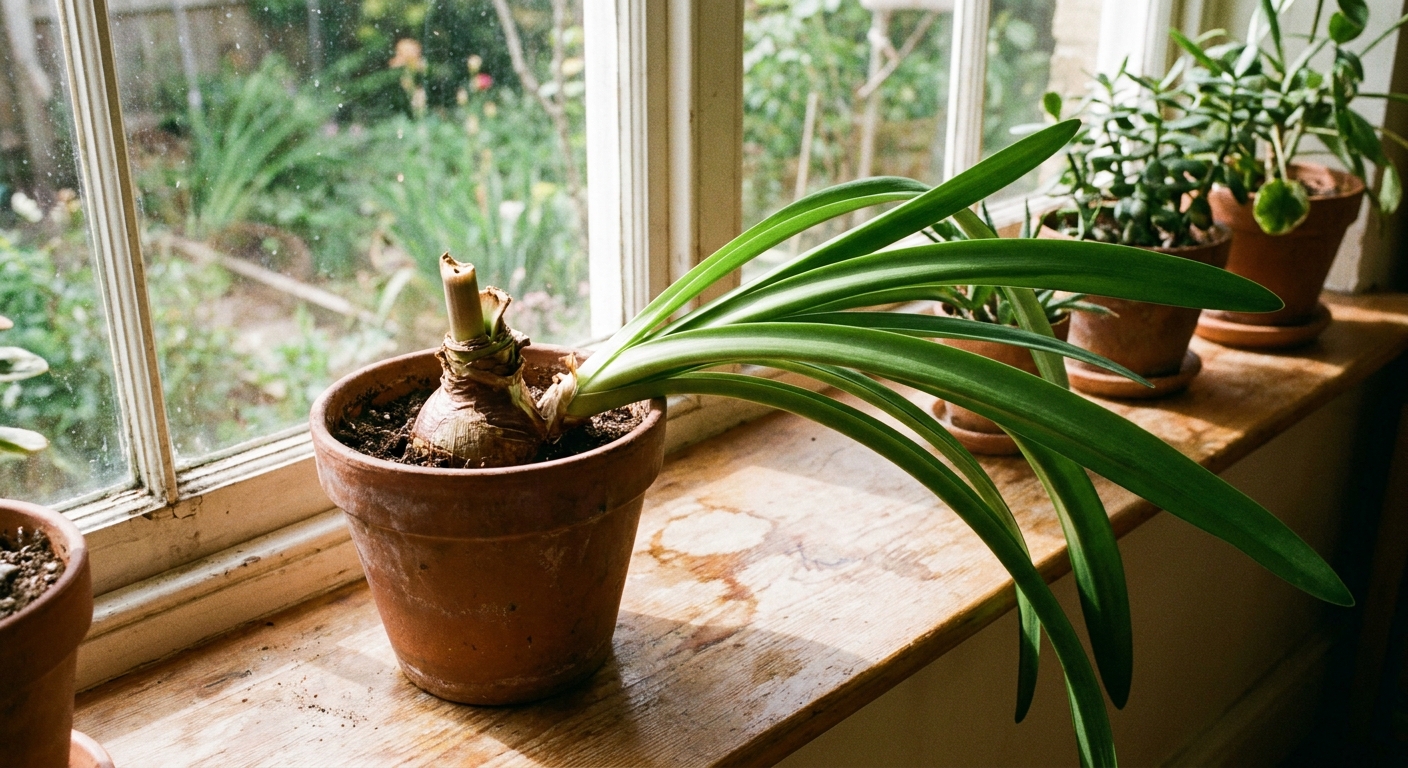
When your amaryllis finishes its big, dramatic show, it can feel a little anticlimactic. But this is actually the most important part of the plant’s year. After blooming, your job is to help the bulb recharge like a solar battery so it has the energy to flower again next season.

Below is the exact routine I use at home, plus a few gentle course-corrections for common hiccups.
Right after the flowers fade
Deadhead the blooms
As each flower wilts, snip it off where it meets the stalk. This keeps the plant tidy and helps prevent it from putting energy into seed production.
- Use clean scissors or pruners.
- Remove only the spent blossoms and the swollen green “seed pod” area behind them if it starts forming.
Decide what to do with the flower stalk
Once all flowers on the stalk are finished, you have two good options. Gardeners do both with success.
- Option A (my go-to): cut the stalk down early. When the last bloom fades, cut the stalk to about 1 to 2 inches above the bulb. This encourages the plant to focus on leaves and bulb building.
- Option B: leave the stalk until it yellows. Some growers let it stay until it turns yellow, then cut it off. The idea is the stalk may photosynthesize a bit, too.
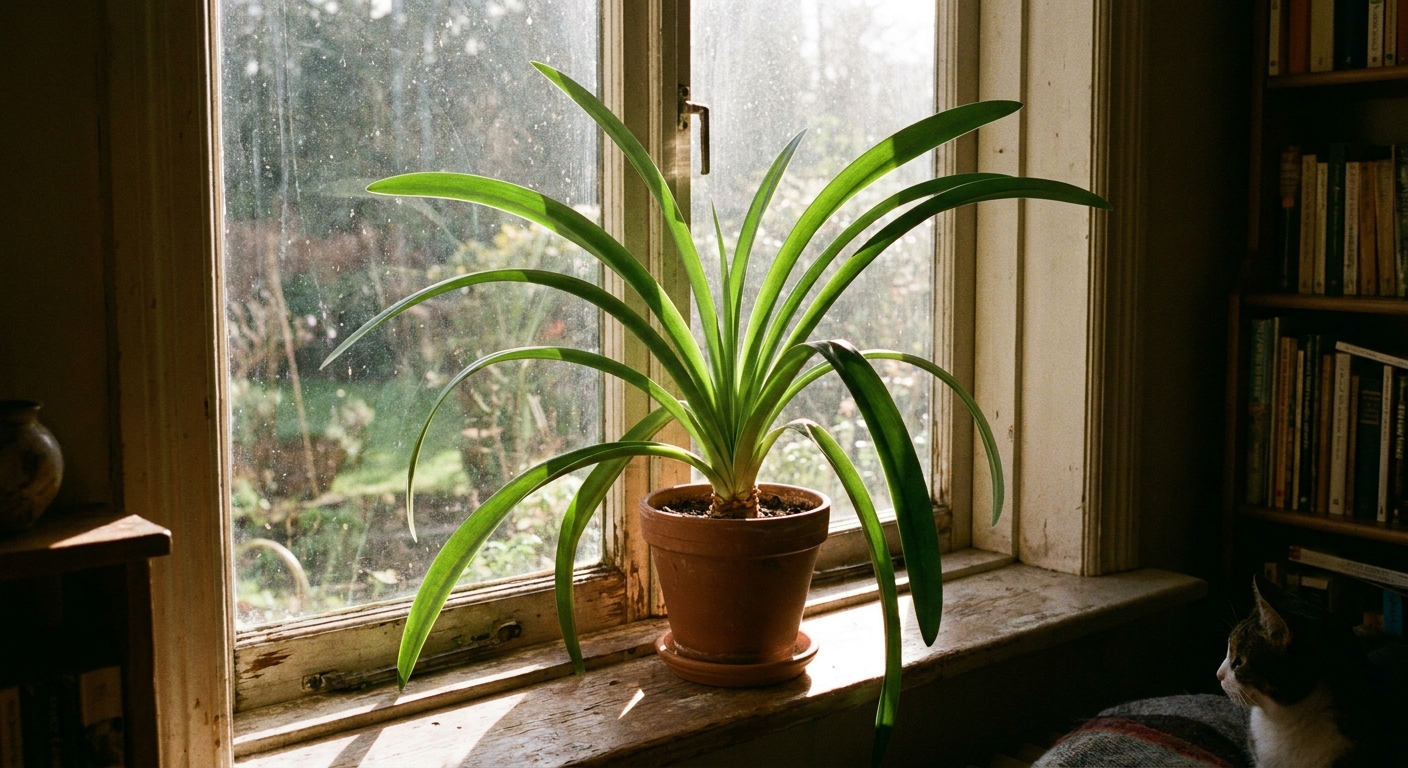
Do not cut the leaves. Those long green straps are the bulb’s recharge system.
Leaf season is bulb-building season
After bloom, amaryllis shifts into a leafy growth phase. Your goal is bright light, steady watering, and regular feeding.
Give it the brightest light you can
Indoors, place your amaryllis in a very bright window, ideally with several hours of sun. Rotate the pot weekly so the leaves grow evenly.
- Best: bright south or west window (in the Northern Hemisphere).
- Good: east window with strong morning sun.
- If light is low: supplement with a grow light 10 to 14 hours per day.
Water like a houseplant, not like a bulb in forcing mode
During active leaf growth, water when the top 1 inch of soil feels dry. Then water thoroughly until it drains, and empty the saucer so the bulb never sits in water.
- Too wet: invites bulb rot.
- Too dry: slows leaf growth, which slows energy storage.
Fertilize regularly (this is where reblooming is won)
Feed your amaryllis every 2 to 4 weeks while it is growing leaves.
- Easy choice: a balanced liquid fertilizer (like 10-10-10 or 20-20-20) at half strength.
- Organic-friendly choice: liquid seaweed and fish emulsion, or a gentle organic houseplant fertilizer, following label rates.
If you repotted into fresh potting mix after bloom, you can wait 2 to 3 weeks before the first feeding.
Keep it slightly snug in its pot
Amaryllis blooms best when it is not overpotted. If you repot, choose a pot only 1 to 2 inches wider than the bulb, with a drainage hole. Plant so the top third of the bulb sits above the soil line.
Summer care: indoors or outside
If your climate allows, summer is when an amaryllis can really bulk up.
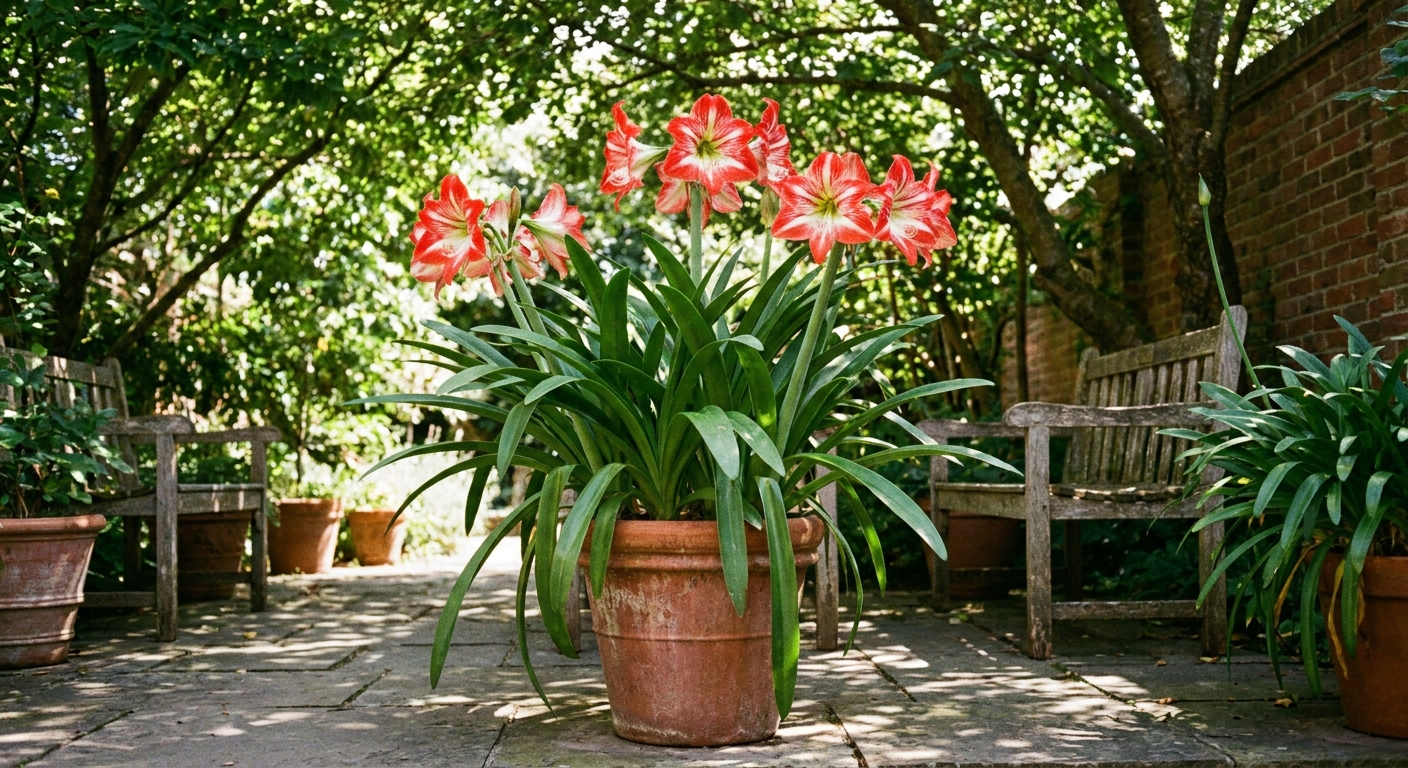
Moving your amaryllis outdoors
Once nights are reliably above 50°F (10°C), you can transition it outside.
- Harden off first: start in bright shade for a week, then gradually introduce morning sun.
- Ideal outdoor spot: morning sun with afternoon shade, or dappled light.
- Watch the pot: outdoor pots dry faster, so check moisture more often.
Pest check
Outdoors can mean hitchhikers. Check leaf bases and undersides for aphids, mealybugs, and spider mites. A strong spray of water or insecticidal soap usually handles early outbreaks.
How to get it to bloom again: dormancy steps
Most amaryllis need a rest period to set buds and rebloom well. Think of dormancy as the plant’s cozy off-season nap.
When to start dormancy
Plan backward from when you want flowers. Amaryllis typically blooms about 6 to 10 weeks after you restart growth, and dormancy usually lasts 8 to 12 weeks.
Example: for December blooms, start dormancy around late August to September.
Step-by-step dormancy routine
- Stop fertilizing about 8 to 10 weeks before you plan to restart it.
- Reduce watering gradually. Let the soil dry more between waterings until you are barely watering at all.
- Let the leaves yellow naturally. As they fade, trim them off near the bulb.
- Store cool and dark: place the pot (or the bare bulb) somewhere around 50 to 55°F (10 to 13°C), like a basement, closet on an exterior wall, or an unheated room.
- Rest 8 to 12 weeks. No watering during this period, or only a tiny sip if the bulb is severely shriveling.
Waking it up
- Bring the pot into warmth and bright light.
- Refresh the top few inches of soil, or repot if it is crowded or the mix is tired.
- Water once to moisten the mix, then wait until you see growth before watering regularly again.
- When the flower stalk is 2 to 3 inches tall, return to a normal watering rhythm.
Once you see active growth, resume feeding every 2 to 4 weeks.
What if my amaryllis makes leaves but no flowers?
This is the most common frustration, and it is almost always fixable.
- Not enough light: leaves can survive in medium light, but flower bud formation needs bright light. Move to a sunnier window or use a grow light.
- Not enough food: a bulb that did not get fertilized after blooming may not have the stored energy to flower. Feed consistently during leaf season.
- No dormancy: some varieties can rebloom without a strong rest, but many need that 8 to 12 week cool, dry pause.
- Bulb is too small or stressed: if it produced offsets (baby bulbs) or was repeatedly forced, it may need a full season of “just leaves” to rebuild.
Clara’s reality check: If you only got one or two leaves this year, do not panic. Treat it like a recovery season. Bright light, steady water, gentle feeding. Next year is where the magic usually returns.
Common problems after bloom
Yellow leaves
- Normal: during the dormancy wind-down, leaves yellow as the plant rests.
- Not normal: yellowing in spring or early summer often points to low light, overwatering, or nutrient issues.
Floppy leaves
Leaves that sprawl dramatically usually mean it is reaching for more light. Increase brightness and rotate the pot weekly.
Soft bulb or bad smell
That is a red flag for rot. Unpot immediately, cut away mushy tissue with a clean blade, dust with sulfur or cinnamon, and let the bulb dry for a day before repotting into fresh, well-draining mix. If rot is extensive, the bulb may not be salvageable.
Red streaks on leaves (possible red blotch)
Red blotch can show up as red streaks or patches. Isolate the plant, remove badly affected tissue, improve airflow, and avoid wetting foliage. In severe cases, a fungicide labeled for ornamental bulbs may be needed.
Quick after-bloom checklist
- Snip off spent blooms.
- Cut flower stalk back to 1 to 2 inches once flowering is done.
- Keep leaves intact and in bright light.
- Water when the top inch of soil is dry.
- Fertilize every 2 to 4 weeks through the leaf-growing season.
- Plan an 8 to 12 week dormancy for best reblooming.
- Restart growth 6 to 10 weeks before you want flowers.
When to give up, and when to keep going
If your bulb is firm, not mushy, and still produces leaves, it is worth continuing. Amaryllis are surprisingly forgiving. I have had bulbs sulk for a season and then come roaring back with the biggest blooms, as if they simply needed a little extra time to rebuild their pantry.
Give it light, give it food, let it rest. The bloom is the reward, but the leafy months are where the relationship is made.