
Air Layering Houseplants

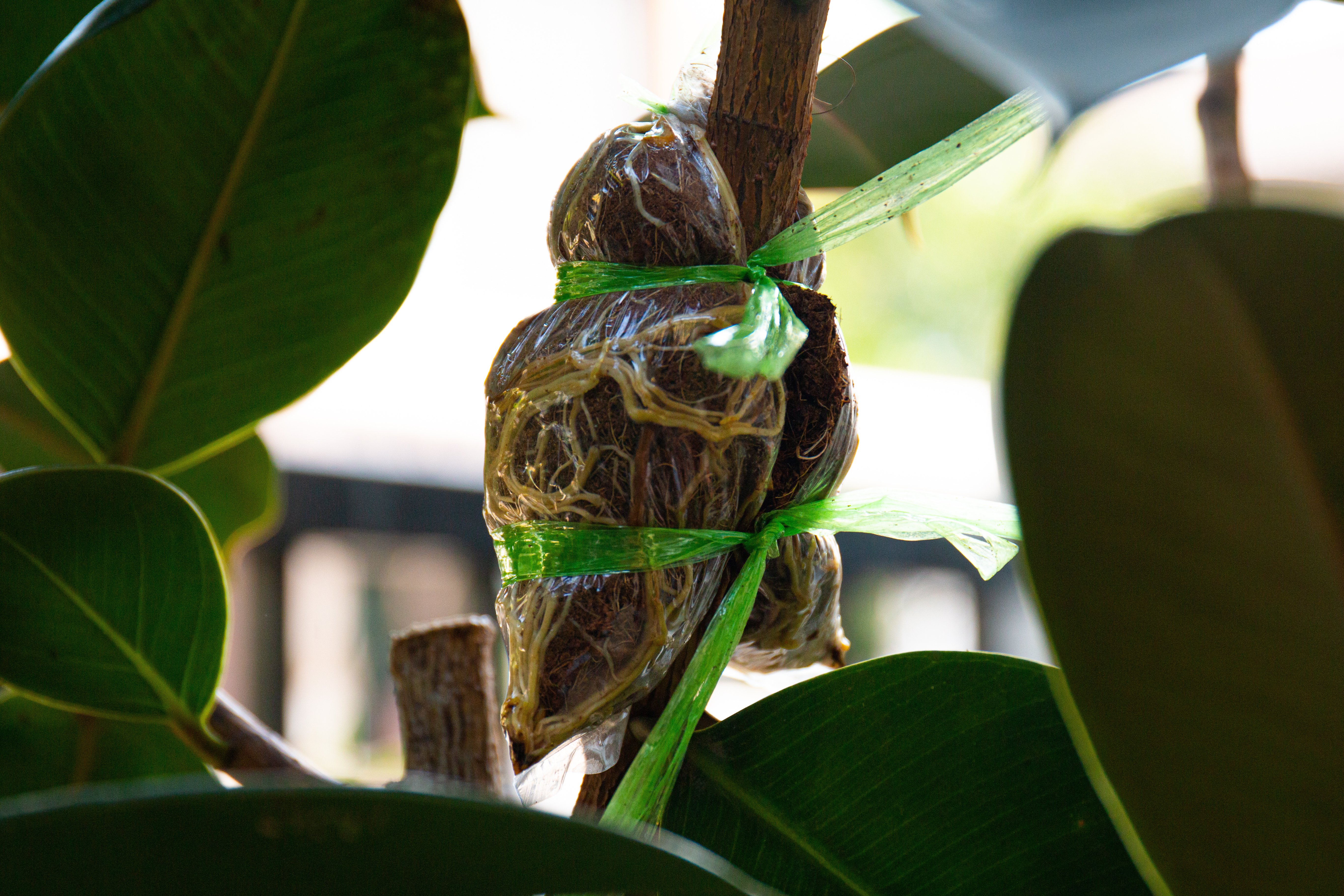
Air layering is my favorite kind of plant magic because it feels almost too gentle to work. You encourage a stem to grow roots while it is still attached to the mother plant, supported by its leaves and steady water supply. Then, once those roots are ready, you make one clean cut and suddenly you have a new, independent plant.
This technique shines for woody, thick-stem houseplants that can be stubborn from cuttings, like fiddle leaf fig (Ficus lyrata) , rubber plant (Ficus elastica), and thick-stem hoyas. If you have a leggy plant you want to shorten, air layering can give you a fuller top plant and a rejuvenated base instead of a sad, bare cane.

When air layering beats cuttings
If you have ever taken a cutting from a woody plant and watched it sit there doing absolutely nothing for weeks, air layering is the upgrade. Because the stem stays connected, it is far less likely to dehydrate or stall out.
Air layering is a great choice when
- The stem is woody or thick. Ficus and thick-stem hoyas root, but they often take longer than softer plants.
- You want to keep the top growth. Instead of sacrificing the leafy crown to make a cutting, you root it first.
- The plant is leggy. Air layer above a bare section, then cut and pot the rooted top. The remaining stump can branch.
- You want a larger, sturdier new plant. Air layered plants are usually bigger at “birth” than cutting-grown babies.
- You have a sentimental plant. For many woody houseplants, the failure rate is often lower than cuttings when the wrap is kept evenly moist and the plant is healthy.
Air layering is not ideal when
- The stem is very thin and flexible. Simple cuttings are easier for tender, non-woody plants.
- The plant is stressed. If it is dropping leaves, battling pests, or recovering from root issues, stabilize it first.
- You cannot keep the moss moist. If your home is very dry and you forget to check it, the layer can dry out and fail.
Best candidates: FLF, rubber plant, and hoya
You can air layer many woody houseplants, but here are three that come up constantly in Leafy Zen messages.
Fiddle leaf fig (Ficus lyrata)
Perfect for tall, single-stem trees that have lost lower leaves. Air layer a few inches below the leafy top. This lets you “reset” the plant into a fuller, shorter tree without the heartbreak of rooting a big cutting in water.
Rubber plant (Ficus elastica)
Rubber plants root readily with air layering. It's a wonderful way to propagate a variegated variety while keeping the exact look of the mother plant. Choose a stem section with several healthy leaves above it.
Thick-stem hoyas
Many hoyas root easily from cuttings, but the thick, older vines can be slow. Air layering is helpful when you want to clone an established vine without chopping it into multiple smaller pieces. It's also handy for woody, “bald” sections you would like to restart. As with any hoya propagation, make sure there are healthy nodes and leaves above the layer so the new plant has places to grow from.
Materials list
You don't need fancy gear. You do need clean tools and a wrap that holds moisture without turning into swamp soup.
- Clean, sharp knife or a fresh razor blade
- Rubbing alcohol for sanitizing blades
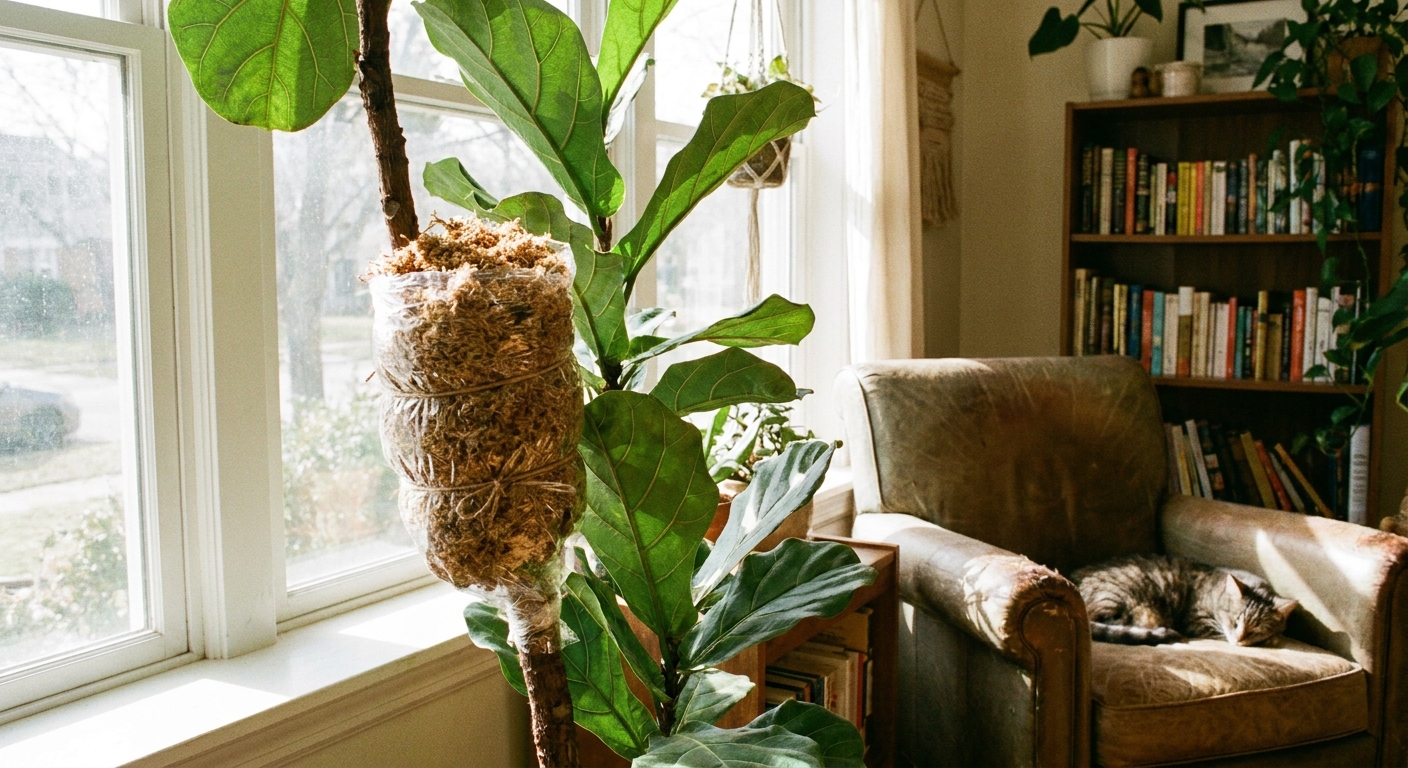
- Sphagnum moss (long-fiber) soaked and wrung out until damp
- Plastic wrap or a clear plastic bag cut open
- Twist ties, plant tape, or soft string to secure the wrap
- Optional: rooting hormone (powder or gel)
- Optional: a small piece of aluminum foil to cover the plastic if you want to block light and reduce algae
- Optional: gloves and a damp paper towel for ficus sap (the milky latex can irritate skin and is messy, so keep it off fabrics and away from pets)
My sustainability note: if you dislike single-use plastic, you can reuse a clear produce bag and secure it with plant tape. Just wash and dry it first.
Step-by-step: how to air layer a woody stem
Pick a time when your plant is actively growing, usually spring through early fall indoors. You can do it in winter, but it often takes longer. In cooler homes, some air layers take a few months, so don't panic if it's slow.
1) Choose the spot
Look for a healthy section of stem that is thick enough to handle a shallow cut. Aim for 4 to 10 inches below the leafy top if you are trying to shorten a leggy plant. If you are simply propagating, choose a spot where the new plant will have several leaves and nodes above the layer.
2) Prep the moss
Soak sphagnum, then wring it so it is damp like a well-squeezed sponge. If water drips when you squeeze, it's too wet.
3) Make the wound (the rooting trigger)
Sanitize your blade. The goal here is to interrupt the plant's ability to “bridge” the wound and seal it back up. For woody plants, that means damaging or removing the cambium layer so the stem is nudged into making roots instead of simply healing over.
Choose one of these beginner-friendly options:
- Ring bark method (common for ficus): remove a narrow ring of outer bark around the stem, about 1/2 inch wide. Then gently scrape the exposed surface to remove the slippery cambium until it looks more matte than glossy. If you're using rooting hormone, apply it to the top edge of the ring (the side closest to the leaves), since that is where roots typically emerge.
- Slant cut method (gentler for smaller stems): make an upward slanting cut about 1/3 of the way through the stem. You can tuck a tiny bit of toothpick in the cut to keep it from closing. If you're using rooting hormone, brush it inside the open cut, coating the exposed inner tissue lightly.
Rooting hormone is optional, but it can help speed things up for stubborn stems.
4) Wrap with moss
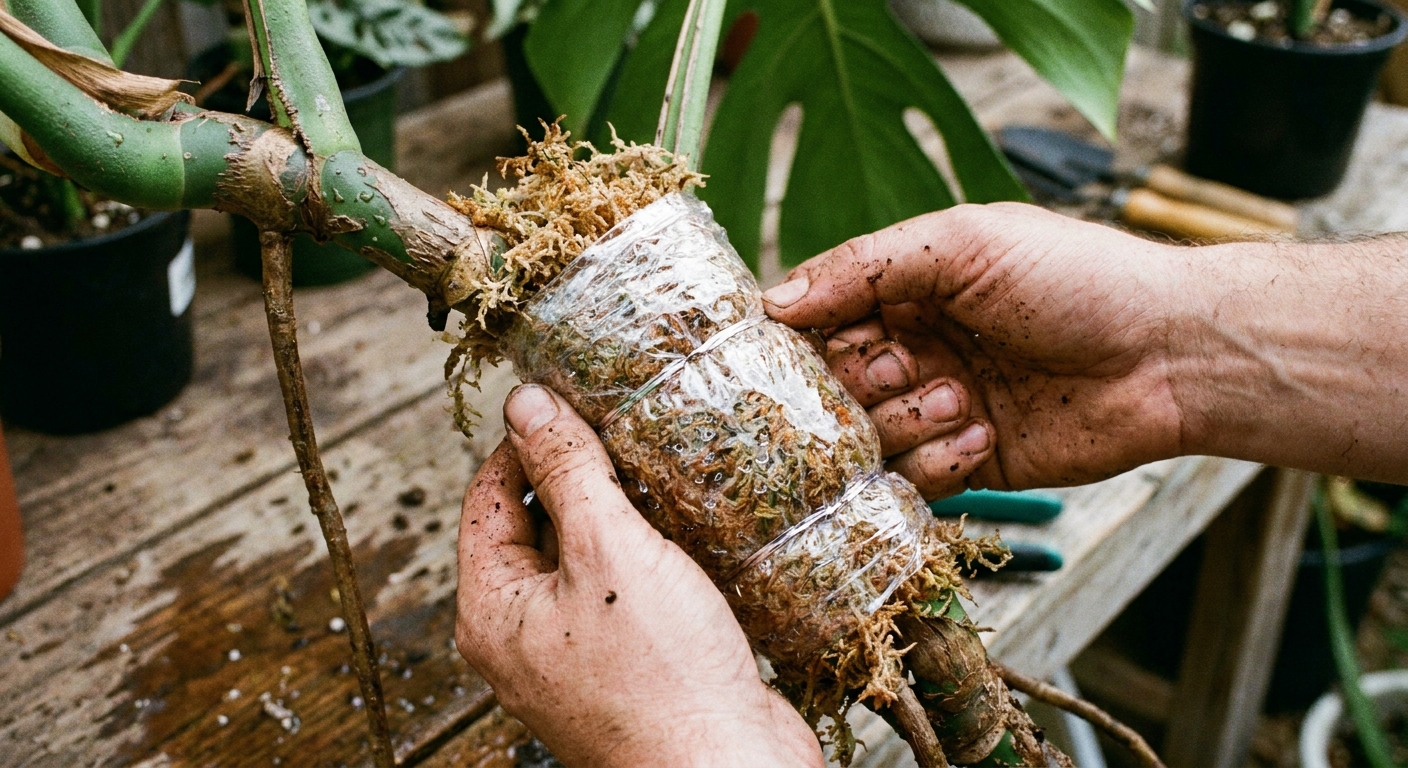
Pack the damp moss around the wound in a plump layer, usually 1 to 2 inches thick. The moss should fully cover the exposed area with a little extra above and below.
5) Seal it up
Wrap plastic around the moss like a little burrito. Secure both ends snugly with ties or tape. You want it sealed enough to hold humidity, but not so tight that you crush the stem.
If the plant sits in strong light, you can wrap foil around the plastic to keep it darker and cooler. Darkness isn't required, but foil can help limit algae and keep the wrap from heating up in sun.
Pro tip: clear plastic makes it easy to watch roots form without unwrapping and disturbing them.
Timing: how long does air layering take?
It depends on the plant, the thickness of the stem, and your home conditions. Warmth and bright indirect light make everything faster. In lower light or cooler rooms, it can take several months.
- Rubber plant: often 4 to 8 weeks
- Fiddle leaf fig: commonly 6 to 12 weeks, sometimes longer on thicker trunks
- Thick-stem hoyas: often 4 to 10 weeks, depending on maturity
Check the moss every week or two. If it feels dry, carefully open one side, mist or add a small splash of water, then reseal. The goal is evenly damp, never dripping.
When to sever the new plant
The hardest part is waiting. The most common mistake I see is cutting too soon, when you have a few tentative root nubs that aren't ready to support the top growth.
Use this “ready to cut” checklist
- You can see multiple roots pressing against the plastic.
- Roots are at least 2 to 4 inches long (longer is better for big-leaf plants like FLF and for thicker stems).
- The moss mass feels firmly rooted, not loose and slippery.
When it's ready, sterilize your pruners and cut the stem just below the rooted moss ball. Make one clean cut. If the top is heavy, support it with your hand so it doesn't tear.
Potting up and aftercare
Fresh air layered roots are tender. Think of them like newborn toes. They can handle gentle potting and steady care, but they hate rough treatment and soggy soil.
How to pot your new plant
- Choose a small pot with drainage holes. For most air layers, start only 1 to 2 inches wider than the moss ball.
- Use a chunky, airy mix. For ficus, I like potting soil cut with bark and perlite. For hoyas, a very airy mix with bark, perlite, and a bit of potting soil works beautifully.
- Remove plastic, keep moss. Gently peel off the plastic wrap. Leave most of the sphagnum in place around the roots to avoid damage. You can loosen the outermost layer if it's excessive, but don't comb through the roots.
- Set at the same height. Plant so the rooted section sits at the soil line, not buried deep.
- Water thoroughly and let it drain completely.
The first month: keep it calm
- Light: bright, indirect light. Avoid harsh midday sun for the first couple of weeks.
- Water: keep the mix lightly moist at first, never waterlogged. Don't let it fully dry out for the first couple of weeks, then ease into your normal routine as you see new growth.
- Humidity: helpful, especially for fiddle leaf figs. If your home is dry, you can loosely tent the plant with a clear bag for a week or two, opening daily for airflow.
- Fertilizer: wait 4 to 6 weeks before feeding.
If a leaf sulks or drops, don't panic. Your new plant is rebalancing roots to leaves. Steady care beats constant tinkering.
What to do with the mother plant after you cut
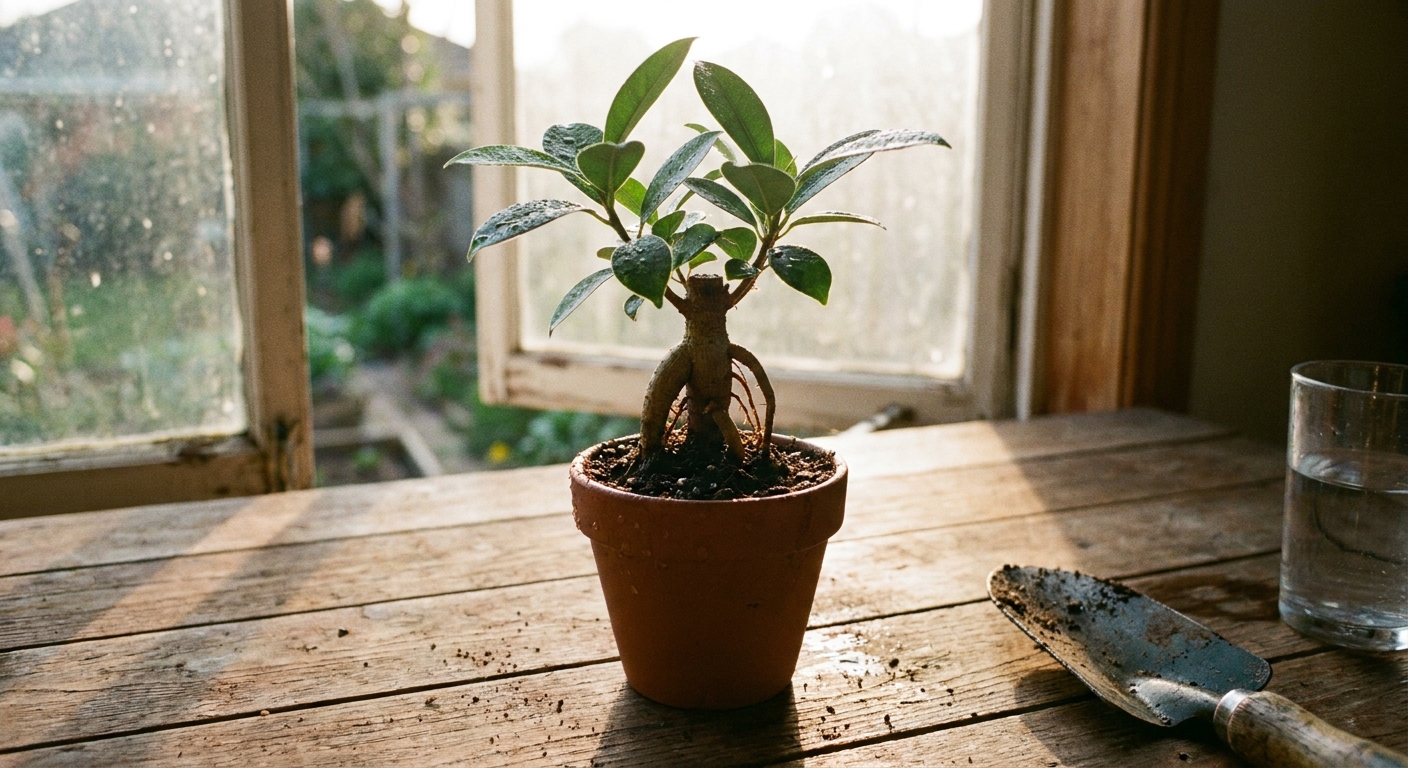
Once you remove the rooted top, you have a stump with a root system and a lot of stored energy. With good light, it often responds by branching.
- Place it in bright light and keep your usual watering rhythm.
- Don't overwater to “make up” for the missing leaves. Less foliage means slower water use.
- Expect new buds along the stem in several weeks to a couple of months, especially on rubber plant and fiddle leaf fig.
I like to think of this as a haircut that encourages a fuller shape. Your plant isn't ruined. It's redirected.
Troubleshooting air layering
No roots after weeks
- Check moisture: moss likely dried out or stayed too wet. Aim for consistently damp.
- Check temperature: warm rooms root faster. Cold windows slow everything down.
- Check the wound: if the plant healed over (bridged the gap), you may need to reopen the wound slightly and rewrap.
Moss smells sour or looks slimy
- Too wet, not enough air. Replace moss with fresh damp sphagnum and reseal a bit less tightly.
- Reduce water additions. Condensation is normal. Puddles are not.
Roots look brown
- Rot from excess moisture is most common. Rewrap with fresh moss and keep it just damp.
Leaves droop after severing
- Normal transplant stress. Move to bright indirect light, keep soil lightly moist, and consider a loose humidity tent for a short period.
A gentle reminder from a gardener who talks to her ferns
Air layering is slow, quiet work. It rewards patience more than perfection. If you keep the moss evenly damp, give the plant good light, and wait for a real nest of roots before cutting, you'll be amazed at how reliable it can be for fiddle leaf figs, rubber plants, and those thick, stubborn hoya vines.
If you want, tell me what plant you're air layering and roughly how thick the stem is. I can help you pick the best wounding method and a realistic timeline for your home.