
Aglaonema Care for Beginners

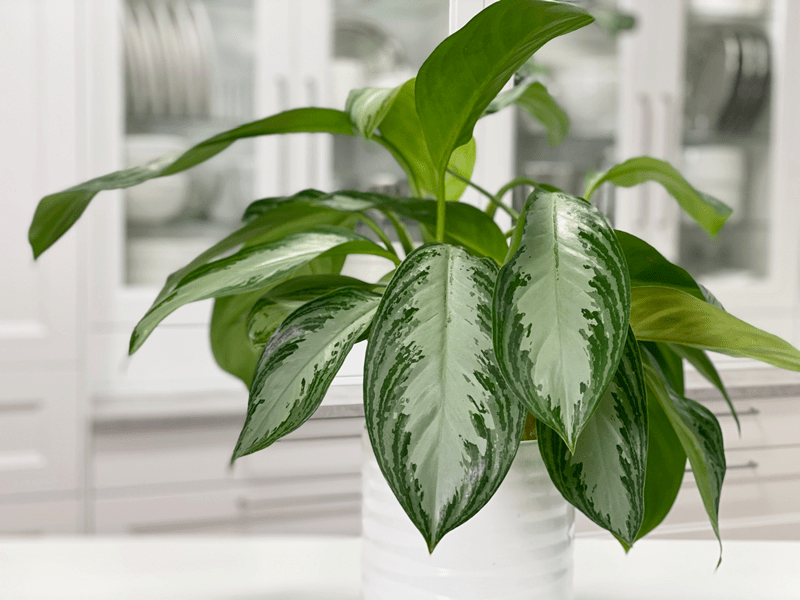
If you have ever wanted a houseplant that basically whispers, “I’ve got this,” Aglaonema, also called Chinese evergreen, is it. It is famous for tolerating low light, forgiving the occasional missed watering, and still looking like you actually know what you are doing. I call it the confidence booster plant, especially if you are recovering from a string of dramatic, high maintenance houseplant relationships.
Below, I will walk you through the few things Aglaonema really cares about, and how to troubleshoot the leaf clues it gives you when something is slightly off.
Quick care snapshot
- Light: Low to medium indirect light, tolerates low light very well (best growth in medium to bright indirect)
- Water: Let the top 1 to 2 inches of soil dry, then water thoroughly
- Humidity: Average home humidity is fine, higher humidity can help prevent crispy tips
- Soil: Airy, well-draining mix that still holds a little moisture
- Growth: Slow to moderate, faster in brighter indirect light
- Beginner-friendly: Yes, one of the easiest houseplants
Light requirements (low light friendly)
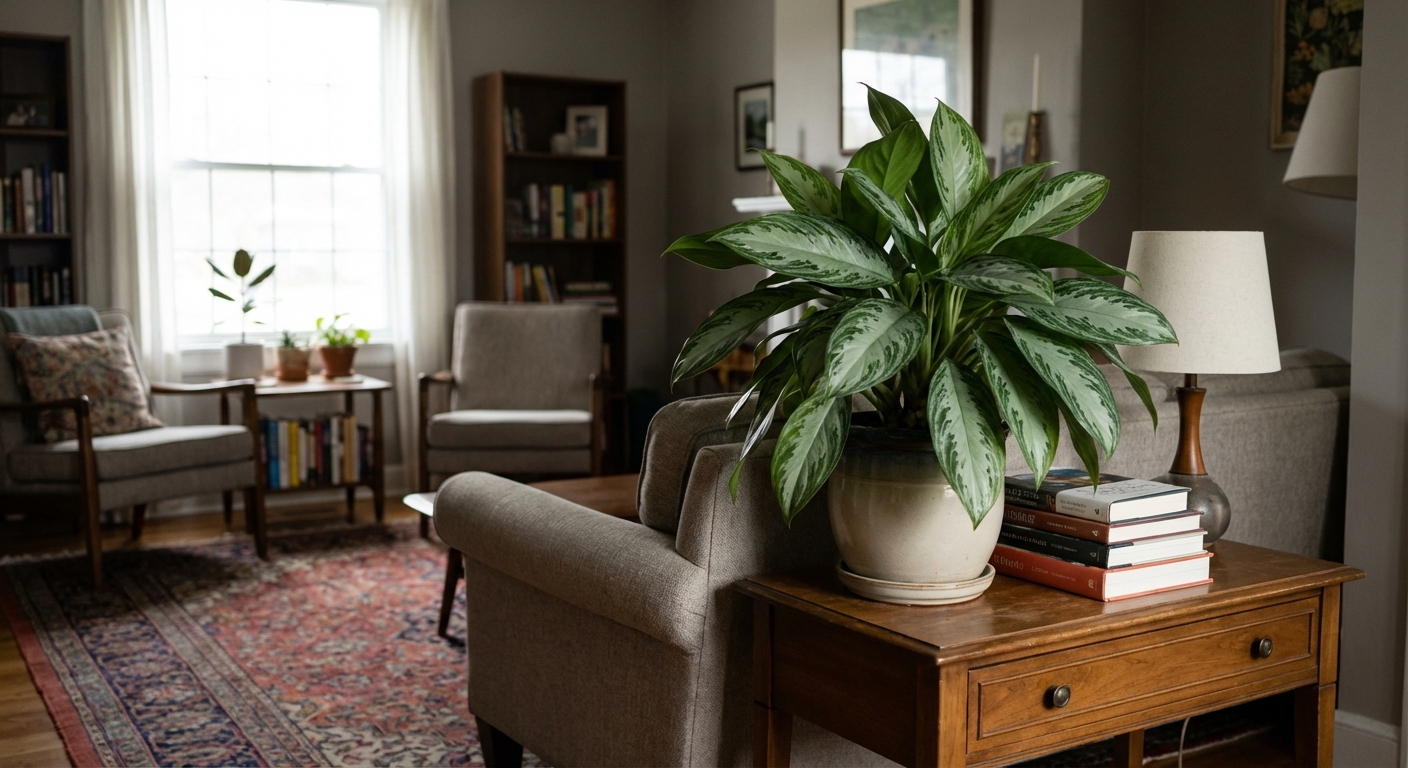
Aglaonema is one of the best options for homes that do not get a ton of sun. It naturally grows in understory conditions, so it is built for softer light.
Best light
Medium, indirect light is the sweet spot for steady growth and strong color. Think: a few feet back from an east or north window, or filtered light near a brighter window.
Low light (what to expect)
In low light, Aglaonema will typically keep its leaves and stay attractive, which is what most beginners want. Growth slows down, but the plant stays stable and forgiving. If you are choosing a plant for a hallway, office, or shaded room, this is a top contender.
Too much light
Direct sun can scorch the leaves, especially in a south or west window. If you see pale patches or crispy, bleached areas, pull it back from the window or add a sheer curtain.
Clara tip: Variegated varieties usually want a bit more light than solid green ones. Many pink or red cultivars especially need brighter indirect light to hold their color. If the pattern starts fading, it is politely asking for brighter indirect light.
Watering (the simplest rule)
If there is one way to upset a Chinese evergreen, it is to keep its roots soggy. Aglaonema prefers a gentle rhythm: water well, then let it dry a bit.
How often to water
Instead of watering by the calendar, water by the soil:
- Check the pot with your finger.
- When the top 1 to 2 inches feel dry, it is time to water.
- Water thoroughly until excess drains out.
- Empty the saucer so the pot is not sitting in water.
In many homes, that ends up being about every 7 to 14 days, and longer in winter. Lower light means slower drying, so low light plants usually need less frequent watering.
Signs you are watering too much
- Yellowing leaves, especially lower leaves
- Soft stems near the base
- Soil that stays damp for days and days
- A musty smell from the pot
If you suspect root rot
If the plant is droopy while the soil stays wet, or you smell funk and see rapid yellowing, do not “just give it time.” Do this instead:
- Unpot the plant and inspect the roots.
- Trim off any brown, mushy roots with clean scissors.
- Repot into fresh, well-draining mix (and a pot that is not oversized).
- Water once to settle it in, then let it dry more than usual before the next watering.
- Skip fertilizer until you see new, healthy growth.
Signs you are watering too little
- Droopy leaves that perk up after watering
- Crispy brown tips or edges
- Soil pulling away from the sides of the pot
Clara tip: If you tend to overwater, choose a pot with a drainage hole and an airy soil mix. Those two things fix more “black thumb” problems than any fancy gadget ever will.
Humidity and temperature
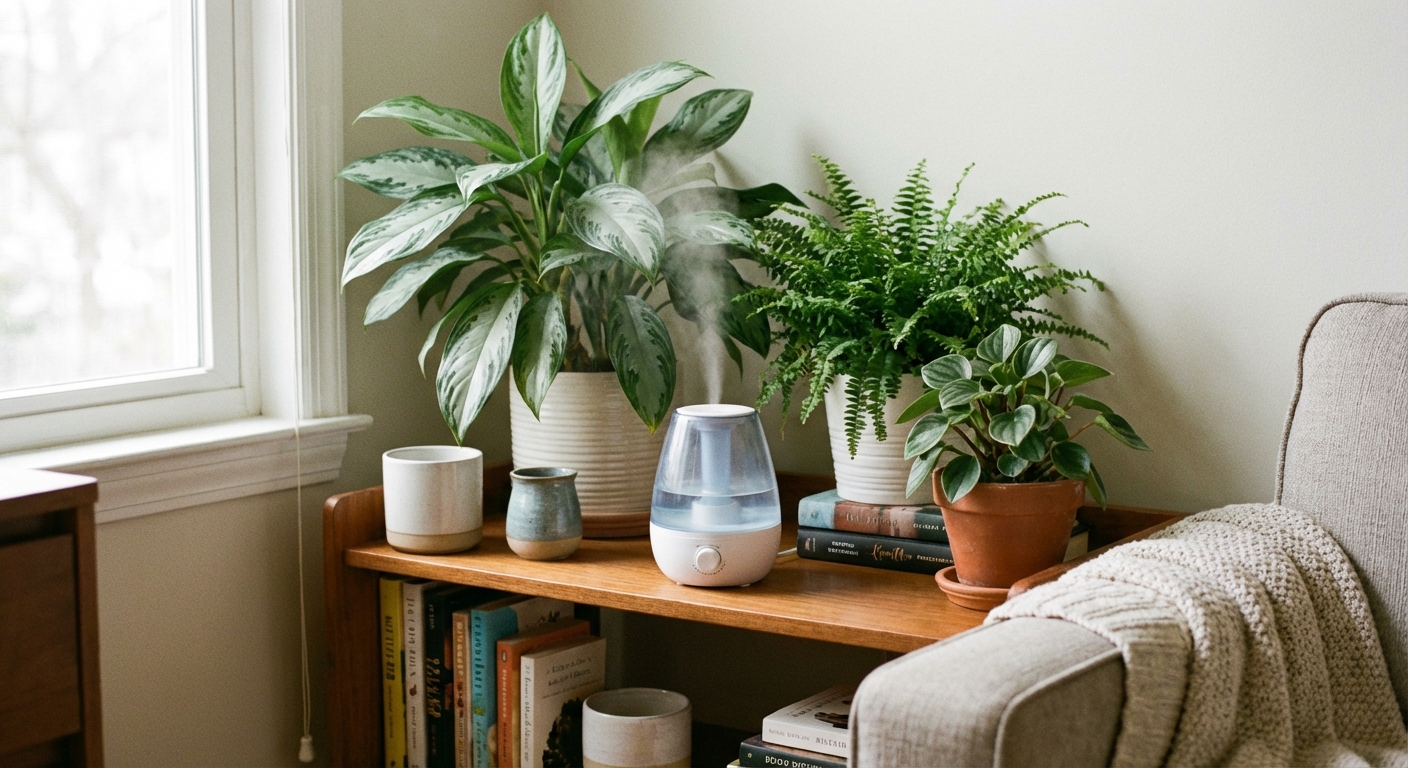
Aglaonema is happily flexible. Average household humidity is usually fine, but it will look its absolute best with a little extra moisture in the air.
Humidity
- Nice-to-have: Moderate to higher humidity (around 40 to 60 percent is lovely)
- Totally fine: Typical indoor air
- May complain: Very dry air can lead to brown tips
If your home is dry in winter, try one of these:
- Group plants together
- Run a small humidifier nearby (this is the most effective option)
- Use a pebble tray under the pot (it may help a little in a small area, keep the pot above the waterline)
Temperature
Keep it in the comfy human range, ideally 65 to 80°F (18 to 27°C). Avoid cold drafts, unheated windowsills in winter, and blasting air vents.
Soil and pot (root health)
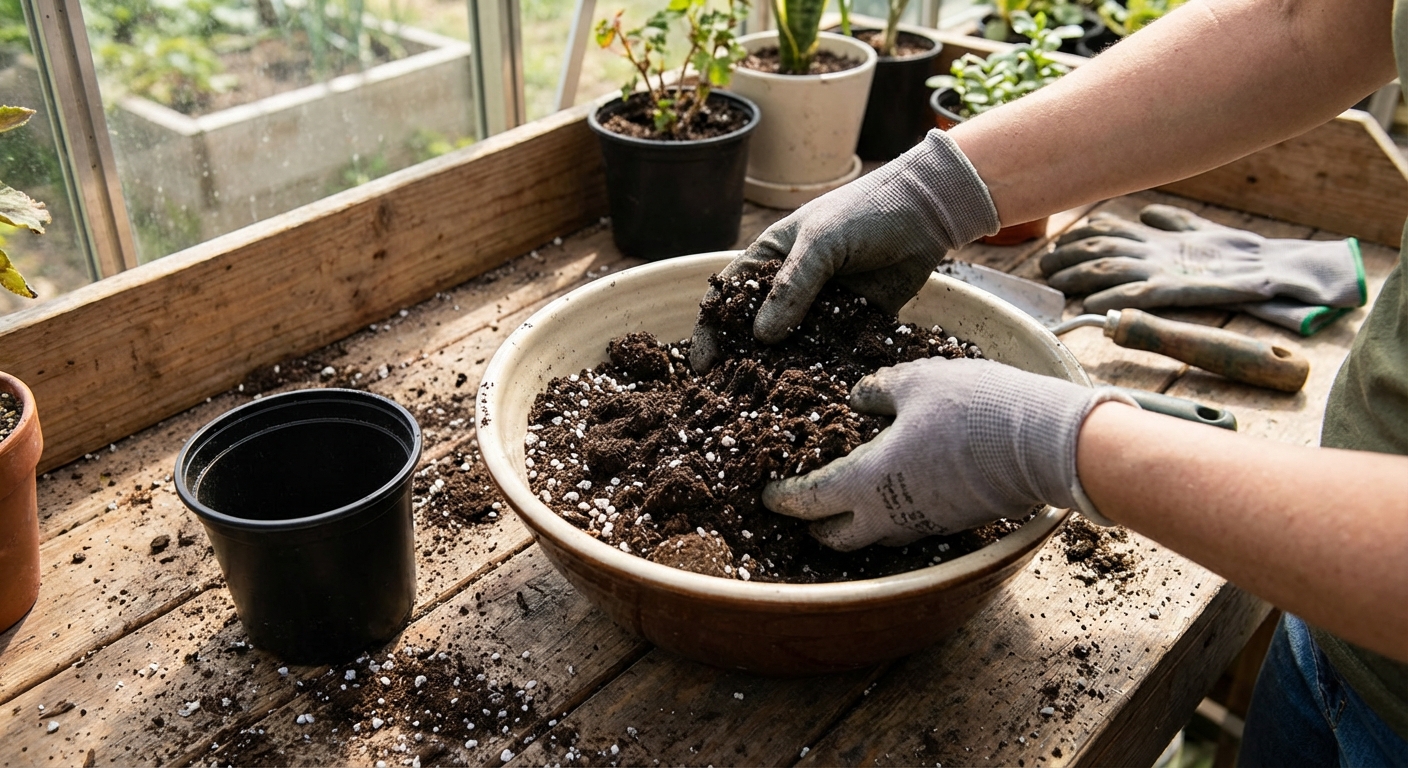
Aglaonema likes soil that drains well but does not dry out instantly. The goal is airy and lightly moisture retentive.
An easy, beginner-friendly mix
You can buy a quality indoor potting mix and improve it like this:
- 2 parts indoor potting soil
- 1 part perlite or pumice (for air and drainage)
- Optional: a small handful of orchid bark or coco chunks for extra chunkiness
Pot and drainage
- Choose a pot with at least one drainage hole.
- Do not oversize the pot. Too much extra soil holds extra water.
- Terracotta helps heavy waterers because it breathes and dries faster.
When to repot
Aglaonema is not in a rush. Repot every 2 to 3 years or when you see roots circling the bottom and watering becomes tricky because it dries too fast.
Common problems (and fixes)
Think of Aglaonema leaves as little status reports. When the color or texture changes, it is usually pointing to something simple.
Yellow leaves
Most common cause: overwatering or soil staying wet too long.
- Let the soil dry further between waterings.
- Confirm your pot drains freely.
- If the soil is dense or smells sour, repot into a chunkier mix.
Also normal: an older bottom leaf yellowing occasionally as the plant grows. If only one or two lower leaves yellow and the rest looks great, that is just aging.
Brown tips or edges
Most common causes: dry air, inconsistent watering, or mineral buildup from tap water.
- Water when the top 1 to 2 inches are dry, not when the pot is bone dry for weeks.
- Raise humidity if your air is very dry.
- Flush the soil periodically (about every 1 to 3 months, depending on water hardness and fertilizing): water until it drains heavily to wash out salts.
- If your water is very hard, filtered, distilled, or rain water is the most reliable fix. Letting tap water sit out overnight can help off-gas chlorine in some areas, but it will not reduce hardness and may not help if your city uses chloramine.
Drooping leaves
- Dry droop: soil is dry and leaves look limp. Water thoroughly and it should perk up.
- Wet droop: soil is wet and plant looks sad. Pause watering, improve drainage, and check for root stress.
Leaf spots
Spots can come from a few things, but moisture sitting on leaves plus low airflow is a common combo.
- Avoid splashing the foliage when watering.
- Do not crowd it against other plants.
- Remove badly damaged leaves with clean scissors.
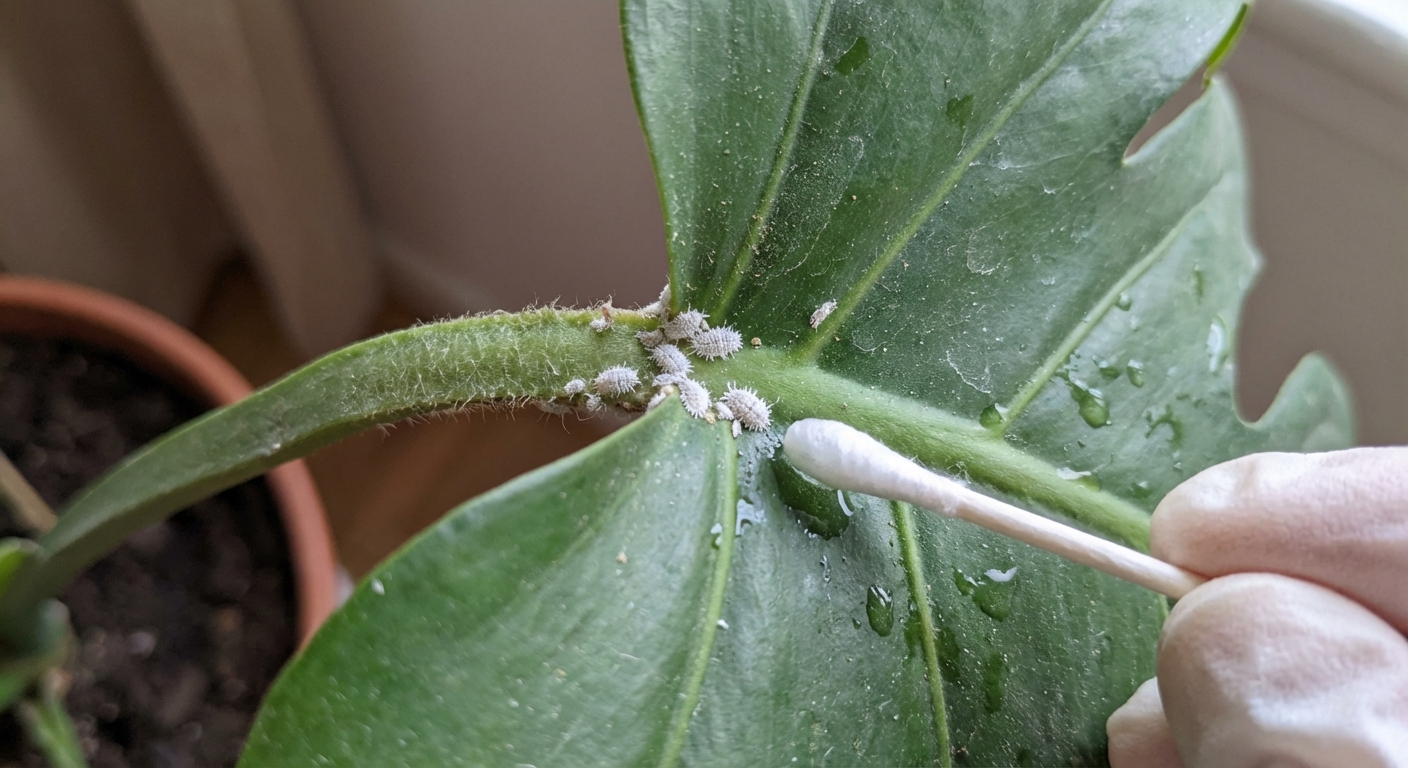
Pests (mealybugs, spider mites, scale)
Aglaonema is not a pest magnet, but it can still get visitors.
- Wipe leaves with a damp cloth.
- Inspect leaf undersides and stems.
- Treat with insecticidal soap or horticultural oil, repeating weekly for a few rounds.
Propagation (division)
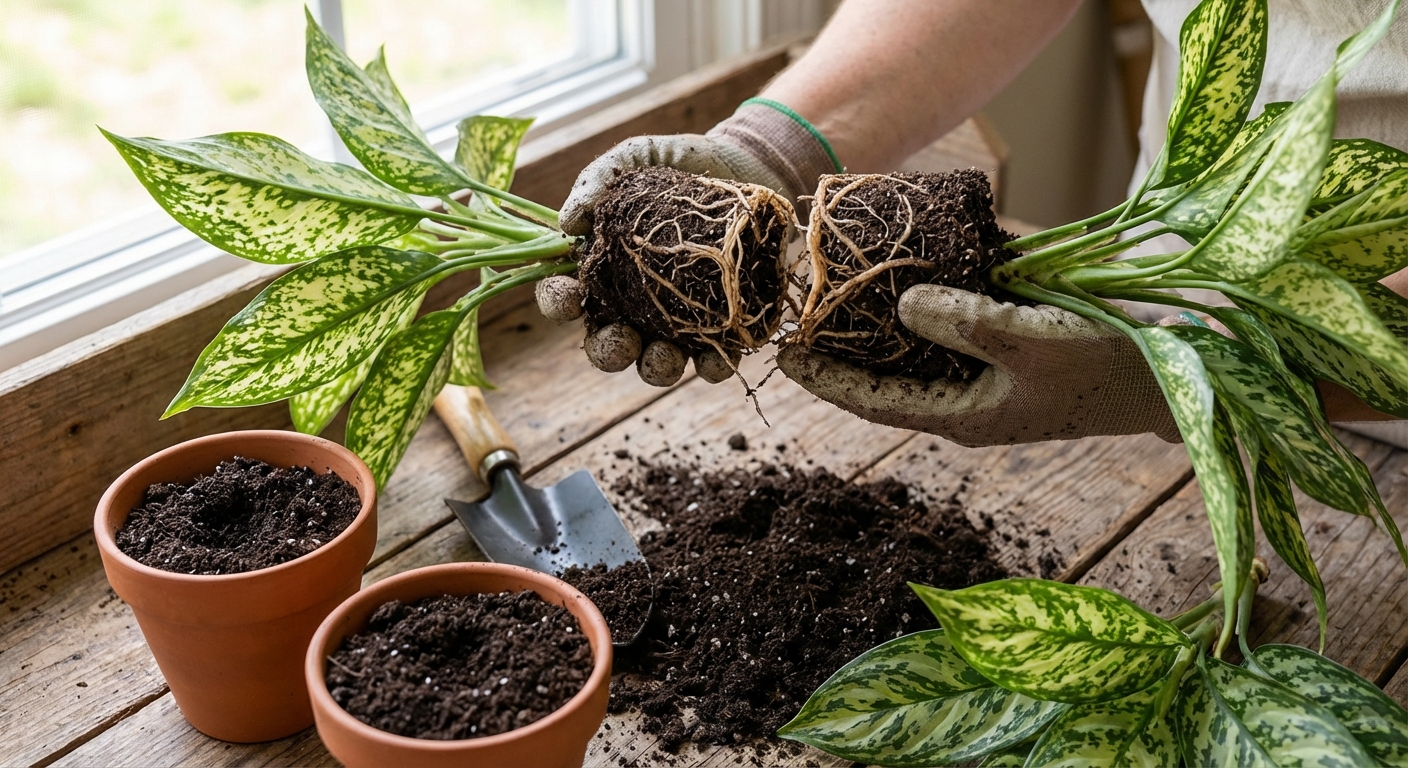
Aglaonema is wonderfully straightforward to propagate because it often grows in clumps. Division means you split one plant into two or more plants, each with its own roots.
When to divide
- During spring or early summer is easiest
- When the plant is full and crowded in the pot
- When you are already repotting
Step by step
- Water the day before so the plant is hydrated and less stressed.
- Slide it out of the pot and gently loosen the root ball.
- Find natural clumps where stems emerge together.
- Separate with your hands first. If roots are tightly fused, use a clean knife to cut between clumps.
- Pot each division into fresh, well-draining mix. Keep the crown at the same soil level as before.
- Water in, then place in bright indirect light for a couple weeks while it settles.
Aftercare: For the first 2 to 3 weeks, keep the soil lightly moist but not soggy. Division is easier on the plant when you avoid extremes.
Fertilizing (optional)
Aglaonema is not a heavy feeder. If you want steadier growth, feed lightly during the brighter months.
- Use a balanced houseplant fertilizer at half strength.
- Fertilize about once a month in spring and summer.
- Skip fertilizing in fall and winter when growth slows.
Clara tip: If your plant is in low light, go extra gentle with fertilizer. Low light plus fertilizer can lead to weak, stretched growth.
Pet and kid safety
Like many popular aroids, Aglaonema contains calcium oxalate crystals and is considered toxic if chewed. It can cause mouth irritation, drooling, and stomach upset. If you have curious pets or tiny humans, place it out of reach and consider safer options for floor level plant stands.
A simple routine
If you want the easiest possible plan, here it is:
- Weekly: Touch the soil. If the top 1 to 2 inches are dry, water.
- Monthly: Rotate the pot so it grows evenly. Wipe dust off leaves with a damp cloth.
- Seasonally: Move it a little closer to the window in winter, a little farther back in summer if sun is strong.
Aglaonema is the kind of plant that rewards steady, low drama care. Give it decent drainage, protect it from harsh sun, and water only when it actually needs it. The rest is just enjoying those glossy leaves and letting your confidence grow right along with it.