
After Phalaenopsis Blooms Fade: What to Do With the Spike

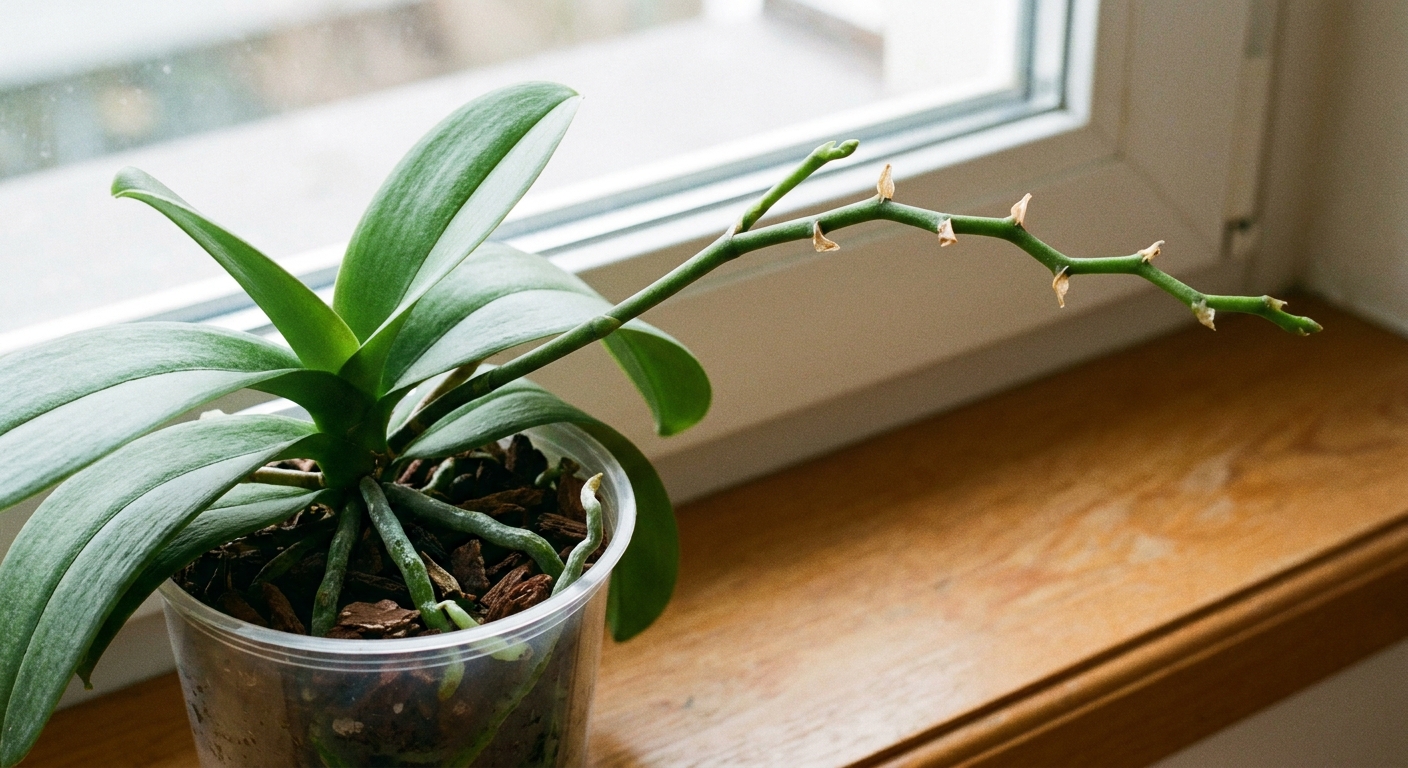
Your Phalaenopsis orchid just finished blooming, and now you are staring at that bare flower spike like it is waiting for a decision. I get it. Post-bloom care is where a lot of people panic-trim (or never trim) and accidentally slow down the next show.
The good news: there is no single “correct” move. There are a couple of smart options depending on what your plant is telling you, and they all start with the same gentle goal: help the orchid rebuild energy, grow healthy roots and leaves, and get set up to bloom again.

Read the spike first
Before you cut anything, take a good look at the spike and the plant as a whole. The spike is basically a mood ring for what your orchid wants next.
What the spike color tells you
- Green and firm: The spike is still alive. You can either keep it (to try for a side branch) or cut it to redirect energy to roots and leaves.
- Yellowing from the tip down: The orchid is slowly retiring that spike. You can wait until the yellow section is clearly dead, or you can trim right away as long as you cut back to green, living tissue.
- Brown and dry: That section is done. Cut it back to living tissue, or remove the spike completely once it is dry.
Quick plant cues
- Leaves: Are they firm and medium green, or limp and wrinkly?
- Roots: Do you see plump green (wet) or silvery (dry) roots, or lots of hollow brown ones?
- Medium: Does bark look fresh and airy, or broken down and spongey?
If the plant is stressed (shriveling roots, limp leaves, sour-smelling medium), it is usually kinder to cut the spike and focus on recovery.
Cut or keep?
Here are the three most common approaches, plus when each one makes sense.
Option A: Keep the spike
If the spike is green and your orchid is healthy, you can leave it in place. Many Phalaenopsis can branch from a node and flower again sooner, often with fewer blooms than the main show.
- Best for: strong plants with good roots, at least 2 to 3 firm leaves, and steady growing conditions.
- What to expect: a new side branch from a node, or occasionally a keiki (baby plant) in warm, humid conditions.
- Tradeoff: the plant may put less energy into new root and leaf growth.
Option B: Partial trim
This is the middle road. You shorten the spike to encourage branching while still reducing the plant’s workload.
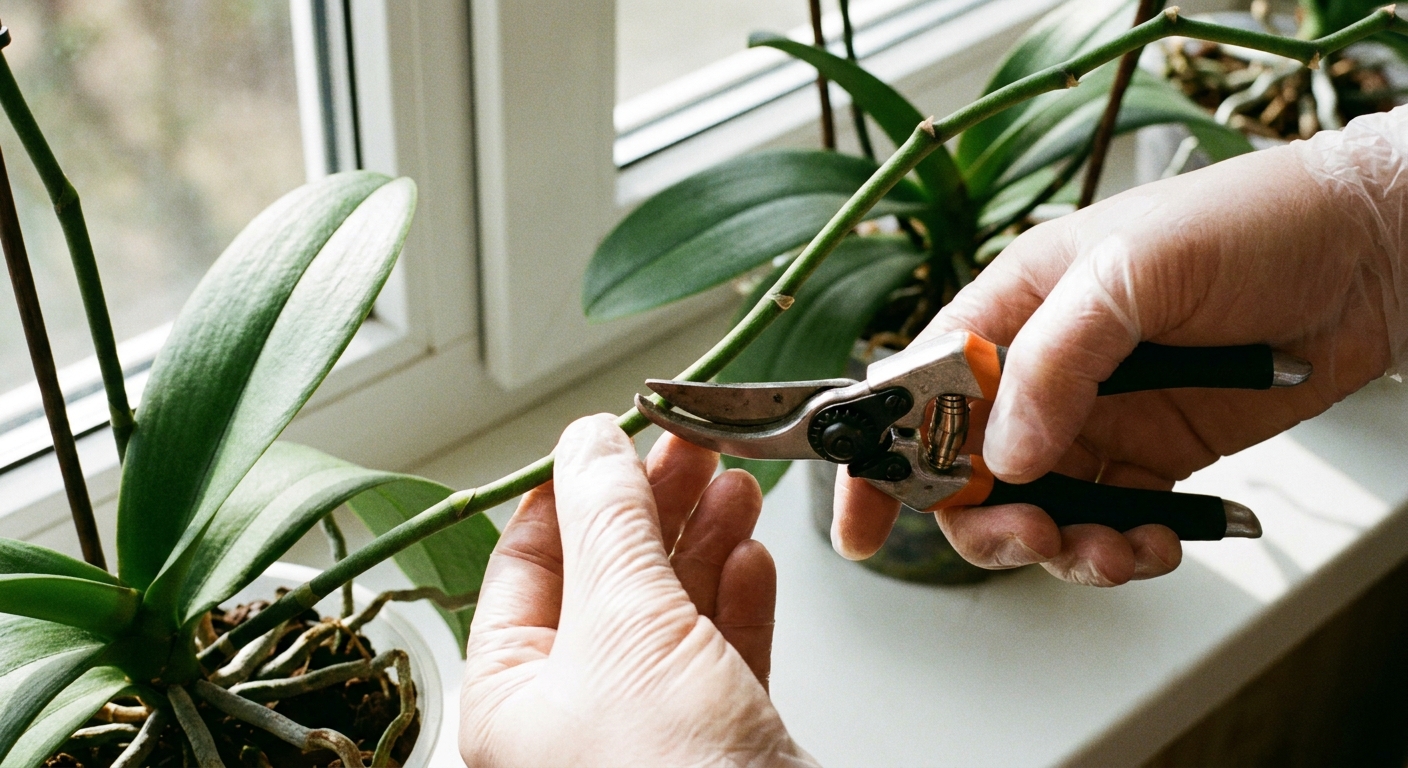
Where to cut: Find a plump node (the little bump under a thin, papery bract) on the spike. Cut about 1/2 inch (1 to 1.5 cm) above the node.
- Common choice: trim above the second or third node up from the base of the spike.
- What to expect: if it works, you may see a side shoot within several weeks.
- Tradeoff: not every orchid branches, and some spikes simply stall.
Option C: Full cut
If you want to prioritize long-term vigor and a fuller bloom later, cut the spike down near the base. This is my favorite choice for orchids that look even slightly tired.
Where to cut: Cut the spike to about 1/2 to 1 inch (1 to 2.5 cm) above where it emerges from the leaves (near the stem). Avoid cutting into the crown or leaf tissue.
- Best for: orchids with weak roots, recent repots, dehydration issues, or plants that bloomed for months and look spent.
- What to expect: more focus on roots and a new leaf or two before the next spike.
Trim safely
Orchid cuts are easy, but cleanliness matters because spikes can be an entry point for pathogens.
What you need
- Sharp snips or pruning scissors
- Rubbing alcohol (70% is perfect) or soap and hot water
- Optional: cinnamon for a tiny dab on a dry, dead cut end (it is drying, so keep it off roots and out of the crown)
Step-by-step
- Disinfect your blades.
- Choose your cut point (above a node for partial trim, or near the base for full cut).
- Make one clean cut without crushing tissue.
- Let it breathe. Keep water out of the crown and avoid misting the cut area.
What happens next
Post-bloom Phals often look a little awkward. That does not mean you did anything wrong.
Normal (and good) signs
- A pause: 2 to 8 weeks of “nothing happening” is common.
- Root tips: bright green points are a great sign the plant is growing again.
- A new leaf: many Phals grow a leaf or two between flowering cycles.
- Old spike fading: even if you kept part of it, it may slowly yellow and dry.
How long until a new spike?
In most homes, a healthy Phalaenopsis tends to bloom about once a year. Some bloom twice. Rebloom timing depends on light, temperature pattern, and plant maturity more than any “magic” product.
Light, water, fertilizer
The biggest mistake I see is treating a post-bloom orchid like it is still in full bloom mode. After flowering, your orchid is trying to recharge. Think steady growth, not constant pampering.
Light
Bright, indirect light is your best rebloom prep. An east window is lovely. A shaded south window can work. If your leaves turn very dark green, that can be a sign the plant is light-hungry (although some varieties are naturally darker).
- Goal: medium green leaves, not deep forest green.
- Avoid: hot midday sun that heats the leaves.
Water
Water when the medium is mostly dry and the roots look silvery. In bark, that might be every 5 to 10 days. In moss, it may be longer.
- Water thoroughly until it runs out the bottom.
- Drain completely. No sitting water in the outer pot.
- Keep water out of the crown (the center where leaves meet).
Fertilizer
After bloom, I like a true “weekly, weakly” approach during active growth. Think small sips, not big meals.
- Frequency: fertilize about weekly at low dose for 3 weeks, then use plain water on week 4 to flush.
- Strength: dilute to 1/4 to 1/2 of label rate.
- Flush: at least monthly, water with plain water to rinse salts.
If your plant is not growing (no new roots, no leaf activity), ease off fertilizer and focus on light and proper watering first.
If the spike stalls
Sometimes you keep a green spike or do a partial trim, and then... nothing. Here are the most common reasons without going into a full rebloom deep-dive.
The spike is green but idle
- Most likely: the plant is choosing rest. Keep care steady and patient.
- Check: is light bright enough to support new growth?
- Also check: night temperatures. A mild drop at night (around 5 to 10°F / 3 to 6°C) often helps signal spike initiation later on. Avoid extreme cold.
The cut end turns brown
A brown, dry cut tip is normal. If browning races downward quickly, check for overly wet conditions and poor airflow.
The spike yellows from the base
This usually means the orchid is fully done with that spike. Let it yellow and dry, then cut it off near the base once it is clearly dry. Do not try to “save” a spike that the plant is actively abandoning.
A node swells but never branches
That happens. Nodes are potential, not a promise. Keep the plant healthy, and remember that a strong root system is what creates bigger bloom shows long-term.
Repot timing (quick note)
If your medium is old or breaking down, the post-bloom window is often a great time to repot. Fresh bark keeps roots airy, which is basically your orchid’s love language.
- Repot after blooming if the mix smells sour, stays wet too long, or has turned to crumbs.
- Wait a bit if the plant is already stressed and you just made a big change. Pick one major stress at a time when you can.
Small habits for rebloom
If you want your Phalaenopsis to rebloom reliably, think like a soil nerd (even though orchids are not in soil). It is all about the root zone.
- Airy medium: bark that drains fast and smells fresh.
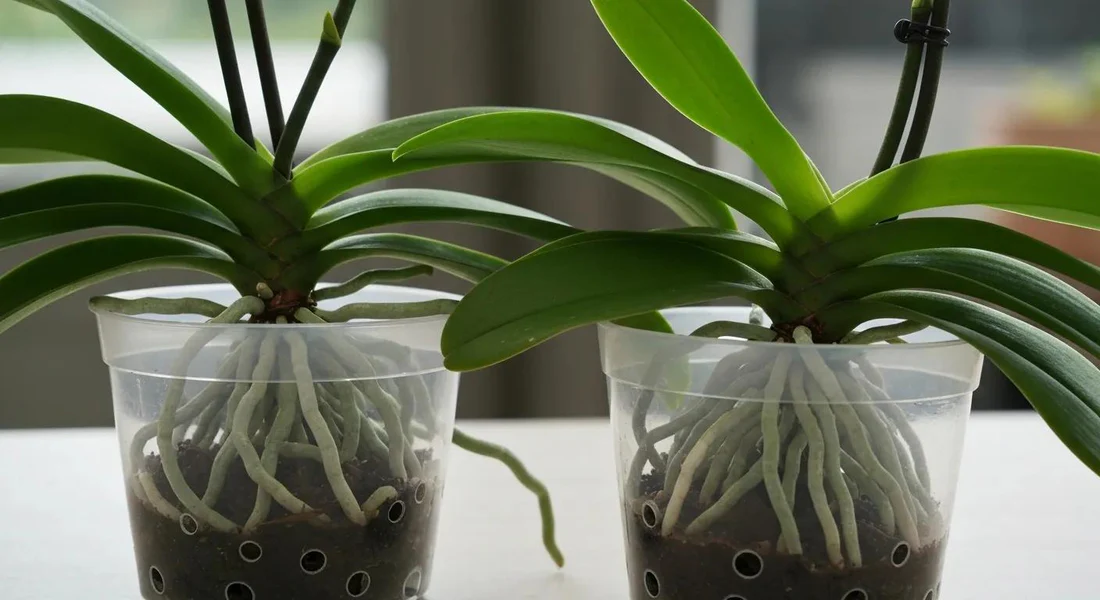
- Clear pot advantage: you can actually see root health and moisture.
- Stable conditions: avoid moving the orchid every few days. Plants like consistency.
- Support new spikes early: if a new spike appears, stake gently while it is flexible.
Quick donts
- Do not use ice cubes as a watering method. Cold plus wet roots is not a cute combo for tropical orchids.
- Do not mist into the crown. Crown rot is fast and dramatic.
- Do not cut healthy aerial roots just for looks. They help the plant.
- Do not leave the pot soaking in an outer cachepot full of water.
Quick FAQ
Should I cut the spike as soon as the last flower drops?
You can, but you do not have to. If the spike stays green, you have options. If your plant looks tired, cutting earlier can help it refocus on recovery.
How short do I cut above a node?
Aim for about 1/2 inch (1 to 1.5 cm) above the node. Too close can damage the node. Too long leaves a bigger stub that can dry back.
Will cutting the spike guarantee more flowers?
No. It just changes where the plant puts its energy. Light, roots, and overall health decide the next bloom cycle.
What if I accidentally cut too low?
Your orchid will be okay. You might lose the chance for a side branch this cycle, but the plant can still grow a brand new spike when it is ready.
A calm next step
If you are not sure which option to choose, do this: check the roots, give the plant bright indirect light, and pick the cut that matches its energy level. Strong plant? Try a partial trim. Stressed plant? Full cut and rebuild.
And if you catch yourself apologizing to your orchid, you are in good company. I talk to my ferns, too. Plants do not need perfection. They need steadiness.