
Aeonium Care: Summer Dormancy, Watering, and Offsets

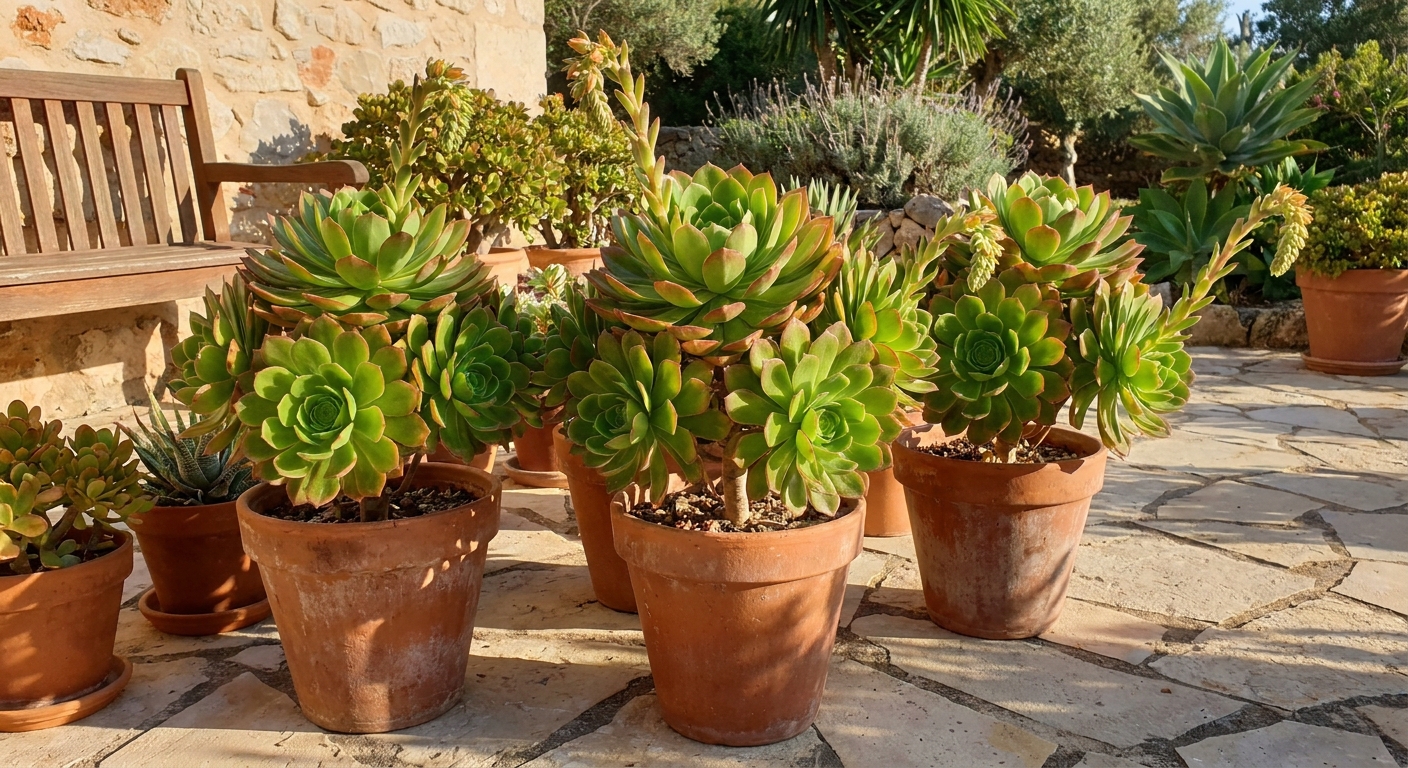
Aeoniums are the succulents that politely refuse to follow the usual “water more in summer” rule. If you have ever watched a gorgeous pinwheel rosette suddenly tighten up, droop, or look like it is having a dramatic fainting spell during a heat wave, you are not alone. Many commonly grown Aeoniums are cool-season growers and summer dormant , which means their care rhythm is basically flipped compared to many other houseplants and even many succulents.
Once you understand their seasonal mood swings, Aeoniums become wonderfully easy. Let’s walk through what is normal, what is not, and how to keep your rosettes looking good without overwatering them into a mushy mess.

Understanding Aeonium seasons
Cool-season growth, summer rest
Many Aeoniums come from the Canary Islands and similar mild, Mediterranean-like climates. Their natural pattern often looks like this:
- Fall through spring: Active growth. You may see new leaves, bigger rosettes, branching, and offset pups forming.
- Late spring through summer heat: Slowed growth or dormancy. Rosettes often tighten, leaves may curl slightly inward, and the plant drinks far less.
This is why Aeoniums can feel “easy” in winter and “fussy” in summer. In hot weather, the roots are not using much water, so wet soil lingers and rot becomes the main risk.
Do all Aeoniums go dormant?
Not every Aeonium follows the script perfectly. Different species and hybrids vary, and local conditions matter. Indoor plants in stable temperatures may only slow down instead of going fully dormant, while outdoor plants in intense heat may shut down hard. Still, it is safest to assume your Aeonium wants less water as temperatures rise , then adjust based on what you observe.
Watering in heat
If Aeoniums had a love language, it would be “please let my soil dry.” Summer is where most people accidentally over-care them.
In active growth (cooler months)
- Water deeply until water runs out the drainage hole.
- Let the potting mix dry out most of the way before watering again.
- In many homes this means roughly every 10 to 21 days during active growth, but always follow the soil, not the calendar.
In summer dormancy (hot months)
When days are hot and your Aeonium has tightened its rosette, switch to a “support sips” mindset:
- Stretch the interval between waterings significantly.
- If the plant looks stable, you may water very lightly or not at all for periods, especially outdoors in humid regions.
- If leaves are shriveling from the bottom and the rosette is noticeably losing volume, give a small drink, then let it dry again.
Optional technique: Some growers give small amounts of water around the edge of the pot during dormancy, rather than soaking the entire root zone. This can reduce the chance of a wet core sitting for days in hot weather. If you try this, keep it truly minimal and watch the plant. Deep watering is still the goal during active growth, and you do not want a chronically damp pot or a severely dehydrated root ball.
Easy watering checks
Use one of these:
- Finger test: Stick a finger about 2 inches into the mix, or as deep as practical. If it feels cool or damp, wait.
- Pot weight: Lift the pot after watering, then again when dry. This becomes surprisingly accurate.
- Wooden skewer: Push it into the soil (especially helpful for deeper pots) and pull it out. Dark or damp means wait.
Watering mistakes that cause the most trouble
- Frequent small splashes that keep the top layer moist and encourage shallow roots.
- Water sitting in the rosette overnight, especially in cool weather. Water the soil, not the crown.
- No drainage or a decorative cachepot that traps runoff.
Light and heat
How much light Aeoniums want
Aeoniums like bright light and many handle sun well, but the best light depends on your climate:
- Mild summers: Morning sun with some afternoon sun can be great.
- Hot, intense summers: Bright shade or morning sun only. Afternoon sun can scorch leaves and push deeper dormancy.
- Indoors: Place them at your brightest window, often a south or west exposure. Rotate weekly so rosettes stay symmetrical.
Signs of too little light
- Stretching between leaves or along stems (etiolation)
- Rosettes that look looser and less “pinwheel” tight during the growing season
- Color fading in naturally darker varieties
Signs of too much sun or heat
- Scorched patches that look tan, dry, and papery
- Rosettes clamping down tightly with downward-curling leaves during heat waves
- Rapid leaf drop from the bottom during extreme heat
Note: rosette tightening by itself is often normal dormancy behavior. Tightening plus scorch, rapid leaf drop, or ongoing softness is more likely stress.
If you move an Aeonium from indoors to outdoors, acclimate it slowly over 7 to 14 days . Sudden sun is a classic recipe for sunburn.
Rosette collapse
“My Aeonium is collapsing” can mean two very different things. One is normal dormancy behavior. The other is a watering problem that needs action.
Normal summer dormancy behavior
- Rosette tightens like a rosebud
- Outer leaves slowly yellow and drop
- Plant looks a bit less plump, especially during heat
- Stem stays firm
In this case, do less. Provide bright light with heat protection, reduce watering, and let it ride out summer.
Warning signs (often rot)
- Rosette suddenly droops and feels soft, not just “sleepy”
- Stem or base feels squishy or looks dark and wet
- Leaves turn translucent or mushy
- Soil stays damp for many days
If you suspect rot, act quickly:
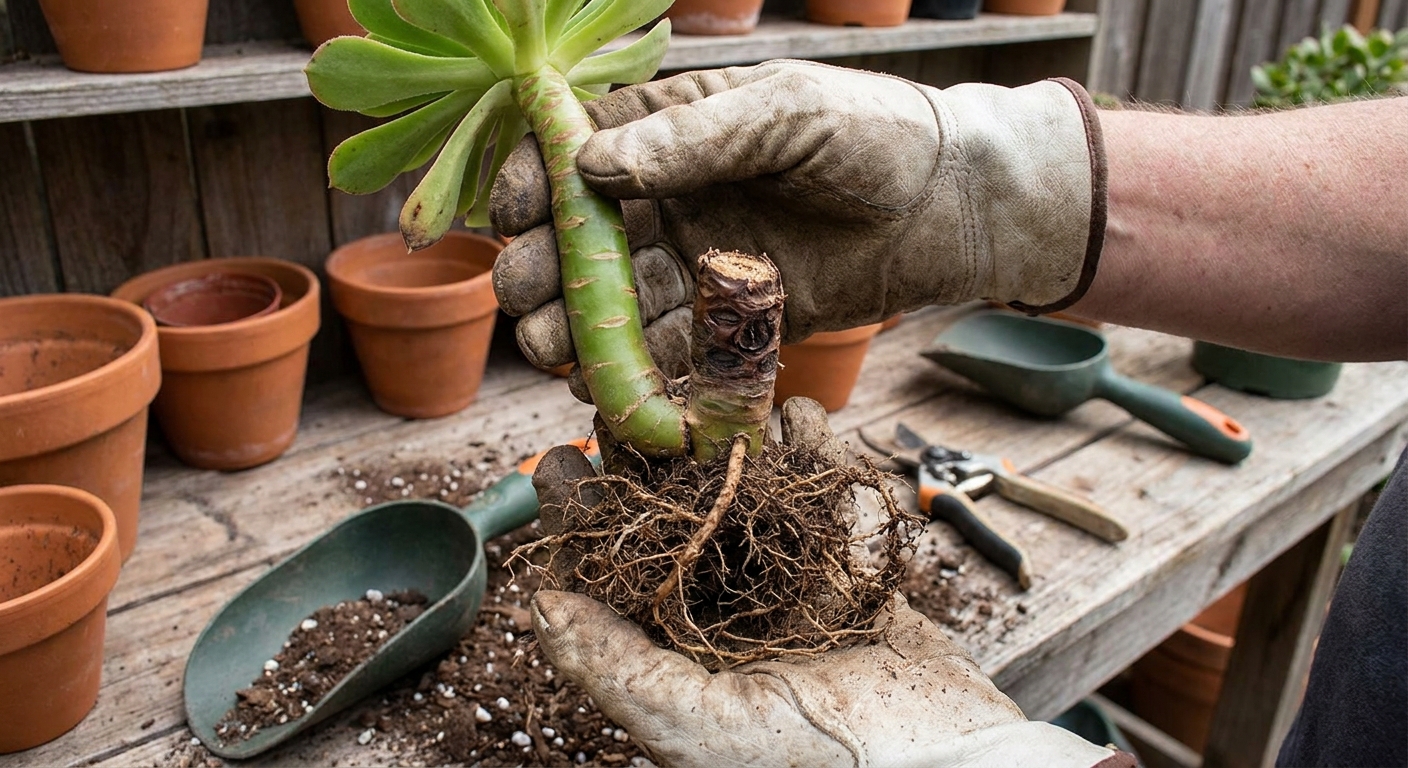
- Unpot the plant and inspect the stem and roots.
- Remove all mushy tissue with a clean blade.
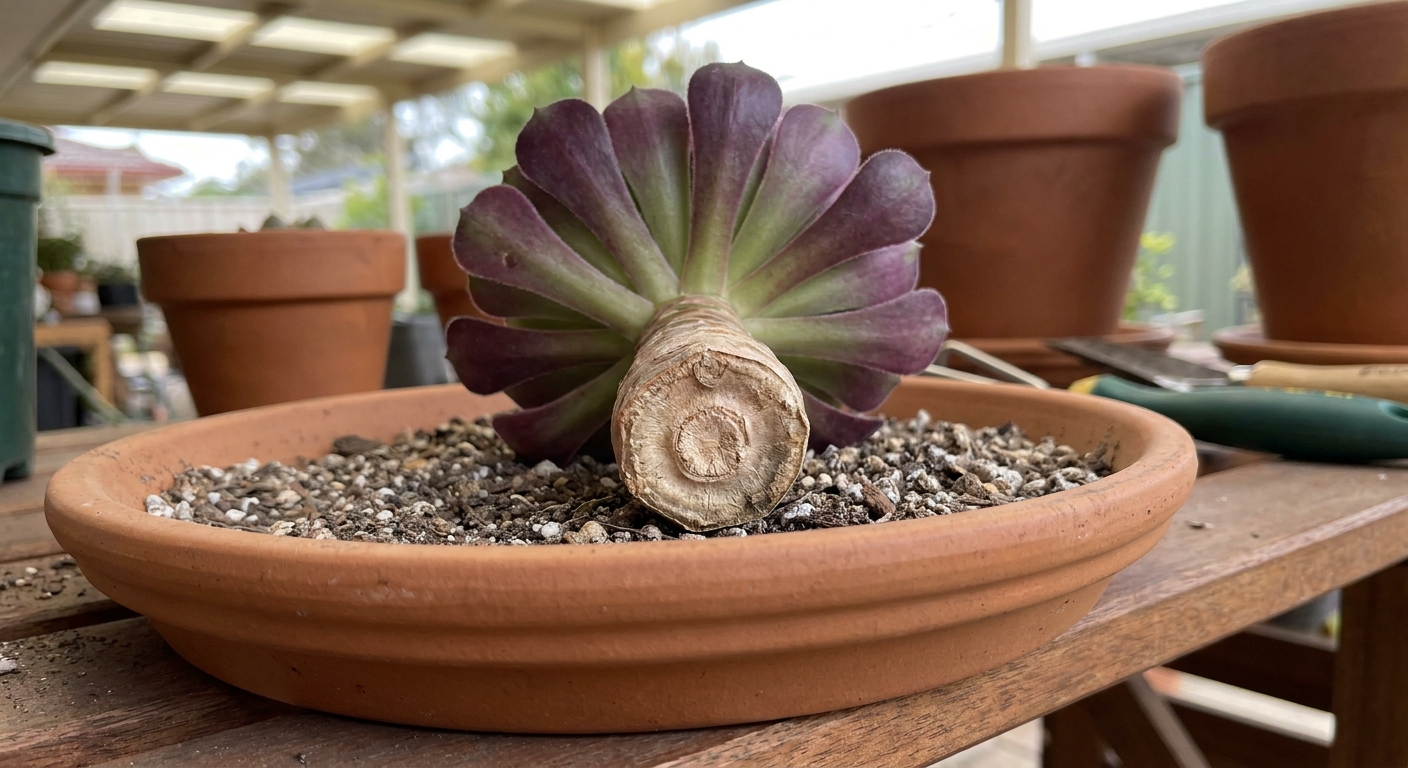
- Let healthy cut areas dry in a shaded, airy spot for several days until callused.
- Re-root in dry, gritty mix and wait about a week before watering lightly.
Think of it like first aid. Dry, airy conditions help Aeoniums recover far better than “one more watering, just in case.”
Soil and pots
Aeoniums are much more forgiving when their roots can breathe.
Potting mix
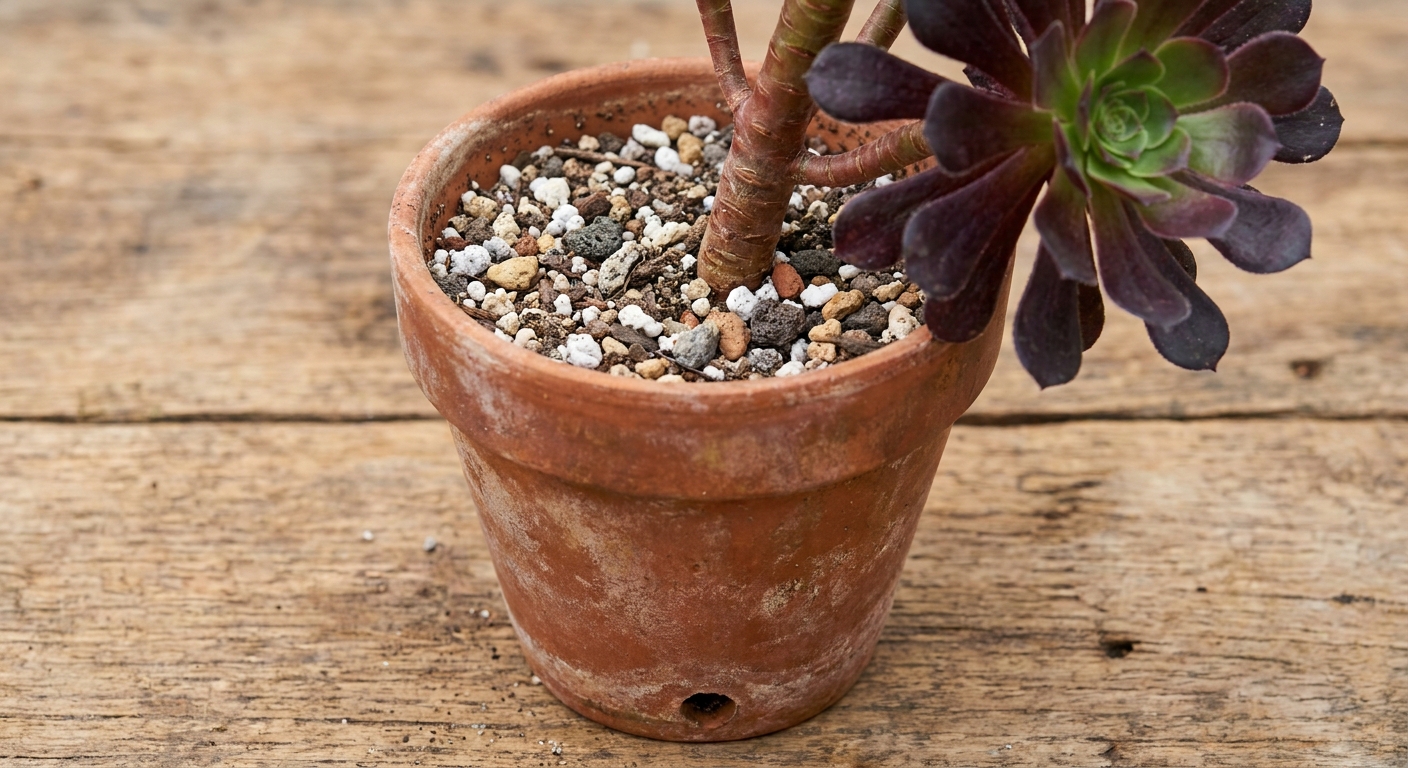
Aim for a fast-draining mix that dries evenly. A reliable approach is:
- 50 percent succulent or cactus mix
- 50 percent mineral grit such as pumice, perlite, or small lava rock
If you live in a humid climate or keep Aeoniums outdoors, lean even grittier.
Pot choice
- Terracotta helps soil dry faster and is very beginner friendly.
- Use drainage holes, always.
- Choose a pot that fits the root ball. Oversized pots hold moisture too long during dormancy.
Feeding
Aeoniums do not need heavy fertilizing. If you want to feed, do it only during active growth:
- Use a diluted, balanced fertilizer (or a cactus fertilizer) about once a month in fall through spring.
- Skip fertilizer during summer dormancy.
Offsets and cuttings
If your Aeonium is happy, it may produce offsets, also called pups. Propagating from offsets is simple, satisfying, and much faster than growing from leaf cuttings, which are unreliable for many Aeoniums.
When to take offsets
The easiest time is during active growth, typically fall through spring. Offsets taken in the heat of summer can still work, but rooting is slower and rot risk is higher if you overwater.
How to separate and root an offset
- Choose a pup that is at least a couple inches wide and has its own little stem.
- Cut cleanly with a sterilized knife or pruners. Try to include a small piece of stem tissue.
- Let it callus for 2 to 5 days in bright shade, longer in humid weather.
- Pot in dry, gritty mix and do not water immediately.
- Wait 5 to 10 days, then water lightly. After that, water only when the mix dries.
Rooting usually takes a few weeks. A gentle tug test is my favorite: if it resists, roots are forming.
Flowering
Aeoniums can bloom with tall, cone-like clusters of small flowers. Here is the important part: many Aeonium rosettes are monocarpic , meaning the rosette that flowers will eventually die.
- On branching plants, the whole plant usually survives because other rosettes and offsets keep going.
- On single-rosette plants, flowering can mean the plant is nearing the end of its lifecycle.
After flowering, focus on bright light, careful watering, and letting offsets (if any) take over.
Cold and overwintering
Aeoniums are not frost-hardy in the way sedums often are. As a rule of thumb, most are happiest above 40°F / 4°C. Cold tolerance varies by species and cultivar. Some handle brief, light frost if kept very dry, while others can be damaged at higher temperatures, especially in wet soil.
Outdoor overwintering tips
- In borderline climates, keep them under an eave or covered patio so winter rain does not soak the soil.
- Protect from frost with a breathable cover, and move pots close to the house for a few extra degrees of warmth.
- Water less when nights are cold, even if the plant is actively growing.
Indoor overwintering tips
- Give the brightest light you have, ideally right at a sunny window.
- Keep them on the cool side if possible, but away from freezing drafts.
- Water when the mix is mostly dry, and empty saucers so roots never sit in water.
If your Aeonium stretches indoors, that is a light issue. A small grow light can make winter growth compact and gorgeous.
Pests
If your plant looks unhappy but the stem is firm and the soil is not staying wet, do a quick pest check. Common Aeonium pests include:
- Mealybugs: white, cottony clusters tucked into leaf joints and rosette centers
- Aphids: especially on flower stalks and tender new growth
Isolate the plant, blast pests off with water when appropriate, and spot-treat with insecticidal soap or diluted isopropyl alcohol (test first, and avoid baking-hot sun right after treatment).
Quick troubleshooting
- Rosette tight and smaller in summer: Likely dormancy. Reduce water, protect from afternoon heat. Tightening alone is usually normal.
- Leaves wrinkling and drying from the bottom: Often normal aging, or mild thirst. Give a small drink and reassess.
- Mushy leaves or soft stem: Overwatering or rot. Unpot, cut back to healthy tissue, callus, re-root.
- Long, leggy growth: Not enough light. Increase brightness and rotate the pot.
- Brown papery patches: Sunburn. Move to bright shade and avoid sudden sun exposure.
- Sticky residue, cottony bits, or distorted new growth: Likely pests (mealybugs or aphids). Treat, then recheck weekly.
- Rosette declining after flowering: May be normal monocarpic behavior. Look for offsets or surviving heads on branching types.
Aeoniums reward you for being observant and a little restrained. When in doubt during summer, I tell my own plants, “I love you, but I am going to leave you alone for a bit.” They seem to appreciate the boundaries.