
ZZ Plant Care

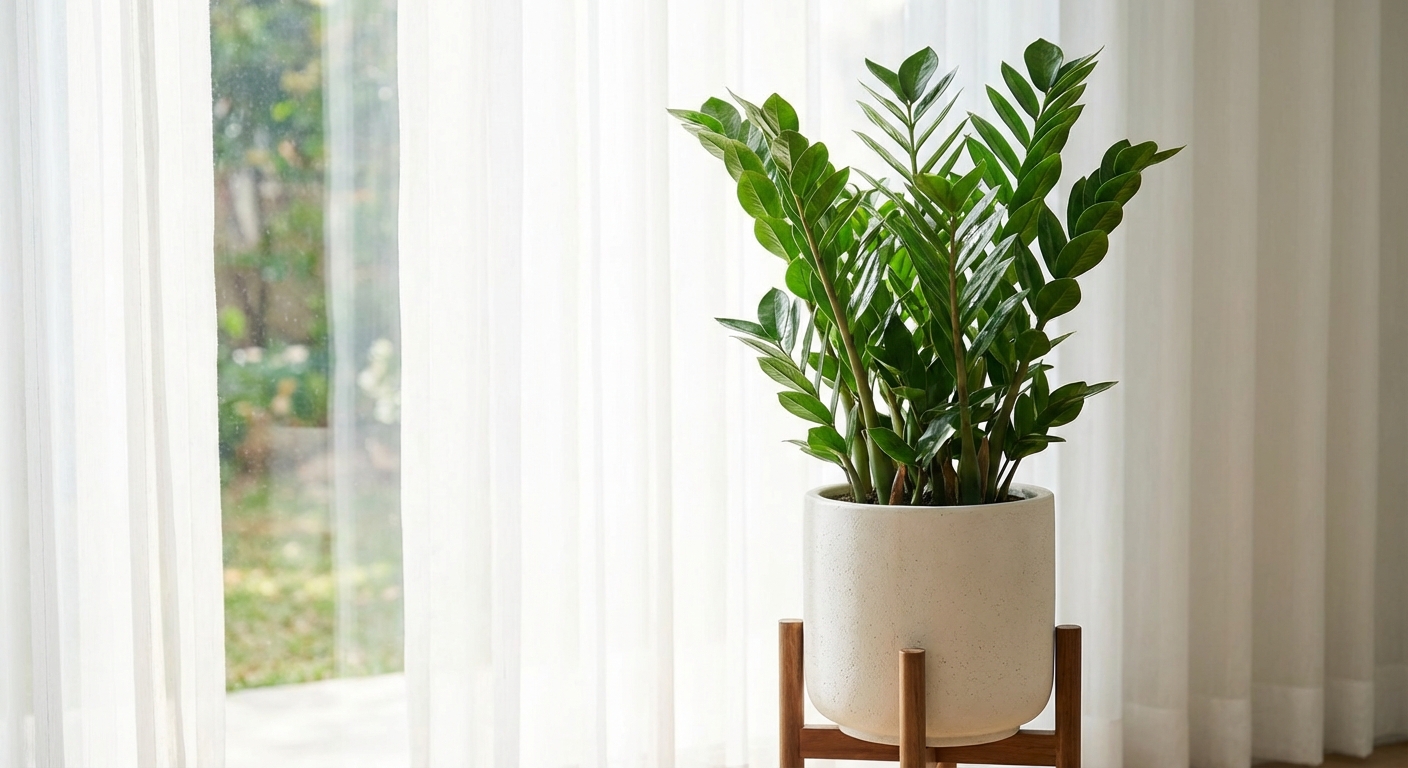
If you have ever wanted a houseplant that forgives missed waterings, tolerates dim corners, and still looks like you have your life together, meet the ZZ plant, Zamioculcas zamiifolia. I call it the “quiet achiever” of indoor gardening. It stores water in chunky underground rhizomes, grows at its own unbothered pace, and stays glossy even when you are busy.
Below is everything you need to keep a ZZ plant thriving, not just surviving, including how to water it (spoiler: less than you think), what soil actually works, how to propagate it (leaves, stems, or division), and what to do when stems get mushy or leaves start yellowing.
ZZ plant basics
ZZ plants are native to Eastern Africa and are built for periods of drought. Those thick, potato-like rhizomes under the soil are water reservoirs. That is why the number one way people accidentally harm a ZZ is with too much love, meaning too much water.
- Growth habit: Upright stems with waxy leaflets. Slow to moderate growth.
- Why it is “low maintenance”: Drought tolerant, adaptable to low light, not fussy about humidity.
- Pet note: ZZ plant is toxic if chewed (calcium oxalate crystals can cause mouth irritation and stomach upset). Keep it out of reach of pets and small kids.
- Handling note: The sap can irritate sensitive skin. If you are prone to irritation, gloves are a nice idea when pruning or repotting.
Light: brighter is better
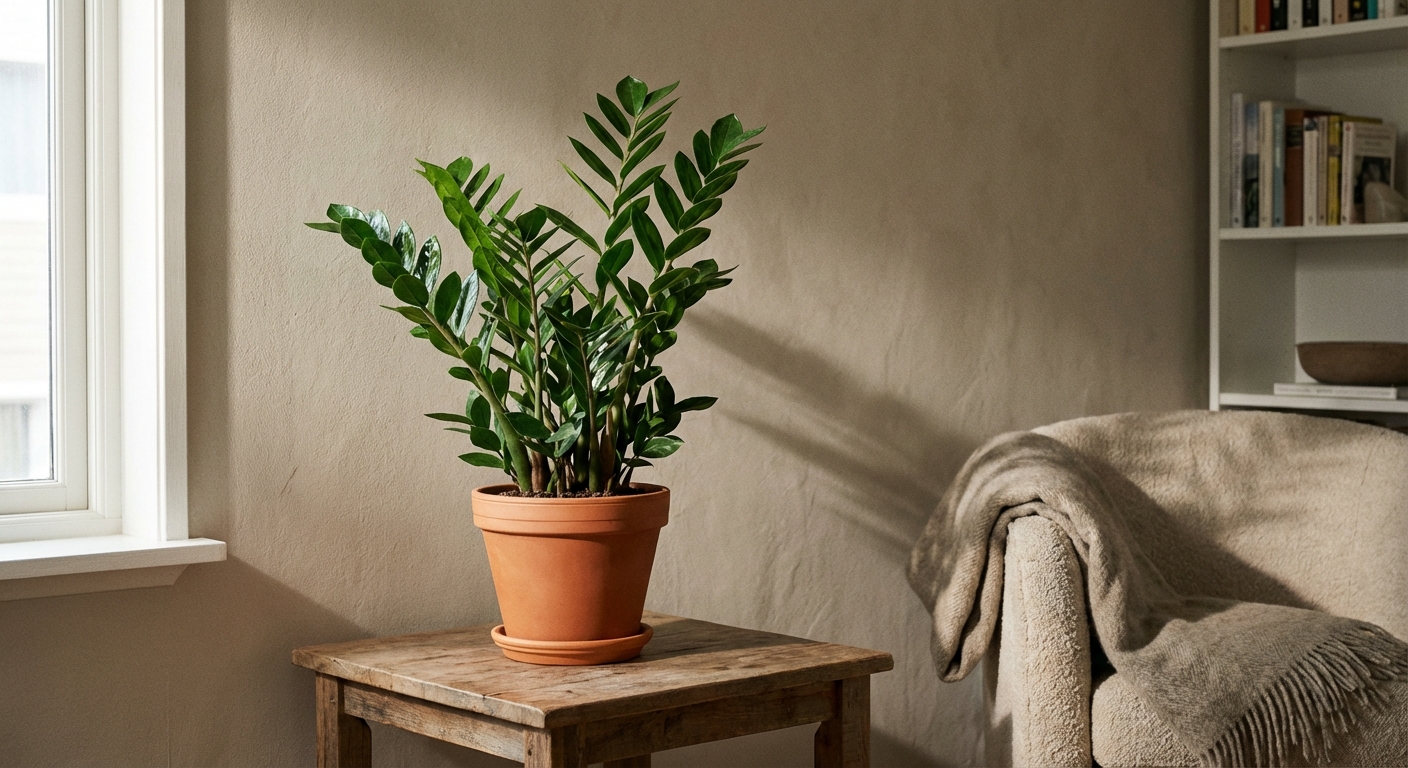
ZZ plants are famously low-light adaptable, which makes them a go-to for offices and apartments. But “tolerates” is different from “loves.” In bright, indirect light, you will see faster growth and sturdier stems.
Best light
- Ideal: Bright, indirect light near an east window, or a few feet back from a sunny south or west window.
- North windows: Can work if the window is unobstructed and the room is bright. If it feels dim to you, it will feel dim to a ZZ, too. Aim for “bright indirect” over any specific direction.
- Okay: Medium to low light rooms. Growth slows, and the plant may stretch a bit.
- Avoid: Harsh direct sun hitting the leaves for hours. That can scorch and dull the shine.
Tip from my own living room jungle: If your ZZ is leaning toward the light, rotate the pot a quarter turn every week or two so it grows evenly.
Watering: let it dry
If there is one ZZ rule to live by, it is this: let the soil dry out completely before you water again. Those rhizomes hold moisture like a camel stores water. Consistently damp soil is what leads to rot. In low light, err on the longer end. Watering too often is the main killer.
How often to water
- Typical homes: Every 2 to 4 weeks.
- Low light or cool seasons: Every 4 to 6 weeks is common.
- Very bright light and warm temperatures: Sometimes every 10 to 14 days, but only if the pot dries fully.
How to check if it is time
- Stick a finger or chopstick deep into the pot. If it comes out clean and dry, you are good to water.
- Lift the pot. A dry ZZ pot feels surprisingly light.
- Look at the soil surface, but do not rely on it alone. The top can look dry while the bottom is still wet.
How to water correctly
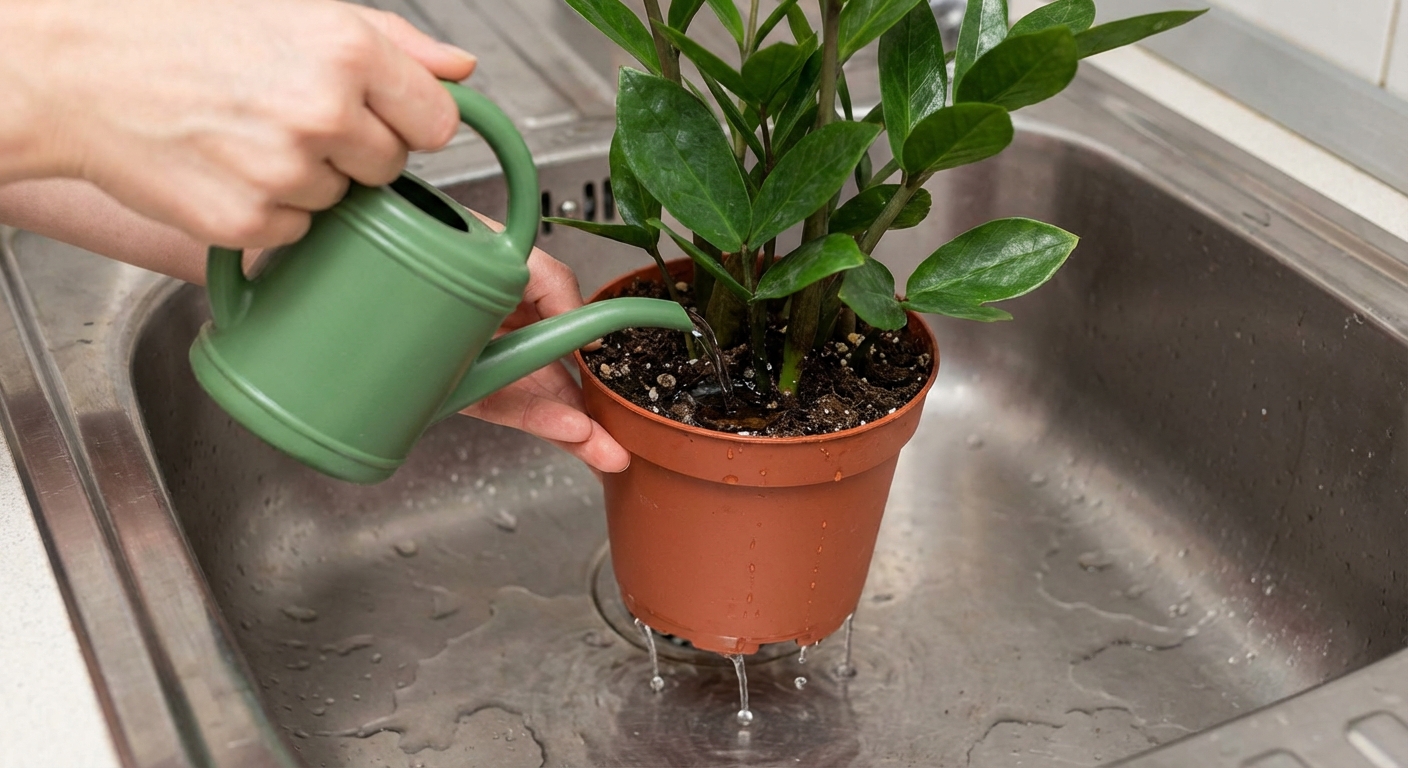
- Water slowly until it runs out the drainage holes.
- Let it drain completely. Never let the pot sit in a saucer of water.
- Do not “sip” water weekly. ZZ plants prefer a full soak followed by a real dry period.
Soil and potting
ZZ plants want oxygen around their roots and rhizomes. Dense, water-holding potting mixes can stay wet for too long, especially in low light.
Best soil mix
- Easy option: A cactus and succulent mix. Since bagged mixes vary, add perlite or orchid bark if yours looks fine-textured or peat-heavy.
- DIY option: 2 parts indoor potting mix + 1 part perlite + 1 part orchid bark.
- Organic boost: A small handful of worm castings is fine, but keep the mix chunky and draining.
Choose the right pot
- Drainage holes are non-negotiable.
- Terracotta helps soil dry faster. Plastic holds moisture longer.
- Pick a pot only 1 to 2 inches wider than the root mass. Too much extra soil stays wet.
When to repot
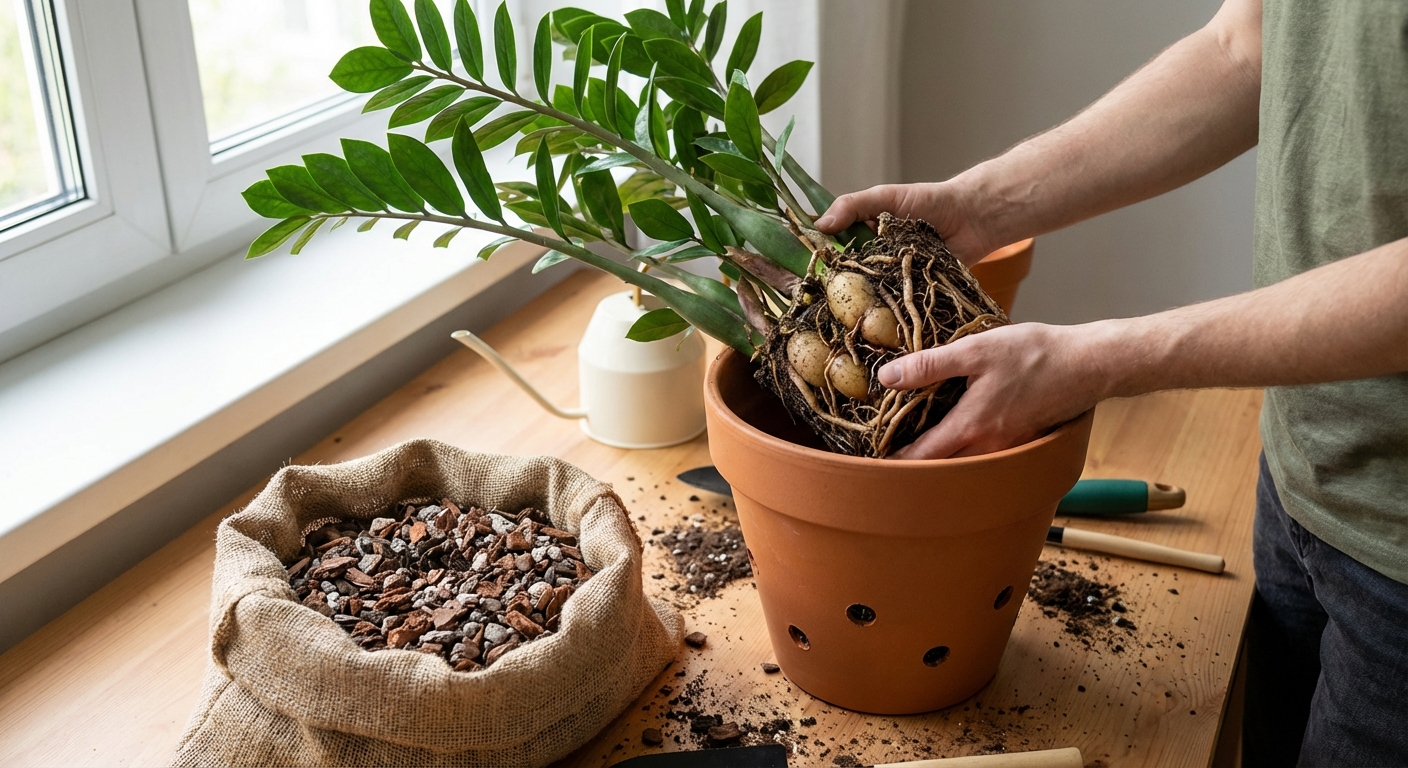
ZZ plants like being a little snug. Repot every 2 to 3 years, or when you see rhizomes pressing hard against the pot or lifting the plant up.
Best timing: Spring through early summer, when the plant is naturally ready to grow.
Also: If roots and rhizomes are healthy but extremely crowded, repotting is a perfect time to divide the plant.
Temperature and humidity
ZZ plants are happy in typical indoor conditions.
- Temperature: 65 to 80°F is the sweet spot. Protect from cold drafts and temperatures below about 55°F.
- Humidity: Average home humidity is fine. No special misting needed.
If your home is dusty, an occasional rinse in the shower or a gentle wipe with a damp cloth keeps leaves glossy and helps the plant photosynthesize efficiently.
Cleaning the leaves
ZZ leaves are naturally shiny, which is part of the charm.
- Best method: Wipe with a damp microfiber cloth or give the plant a lukewarm shower and let it drip-dry.
- Skip: Leaf shine products. They can leave residue that blocks pores and attracts dust.
Fertilizer: light feeding
ZZ plants do not need much feeding. Too much fertilizer can cause salt buildup and leaf stress.
- When: Once in spring and once in summer, or monthly at a very diluted rate during the growing season.
- What: A balanced houseplant fertilizer diluted to half strength.
- Skip feeding: In fall and winter, or if the plant is not actively growing.
Propagation
Propagating a ZZ plant is equal parts science and patience. The plant is slow, but it is wonderfully determined.
Option 1: Leaf cuttings
This method is fun if you like watching tiny miracles happen, slowly.
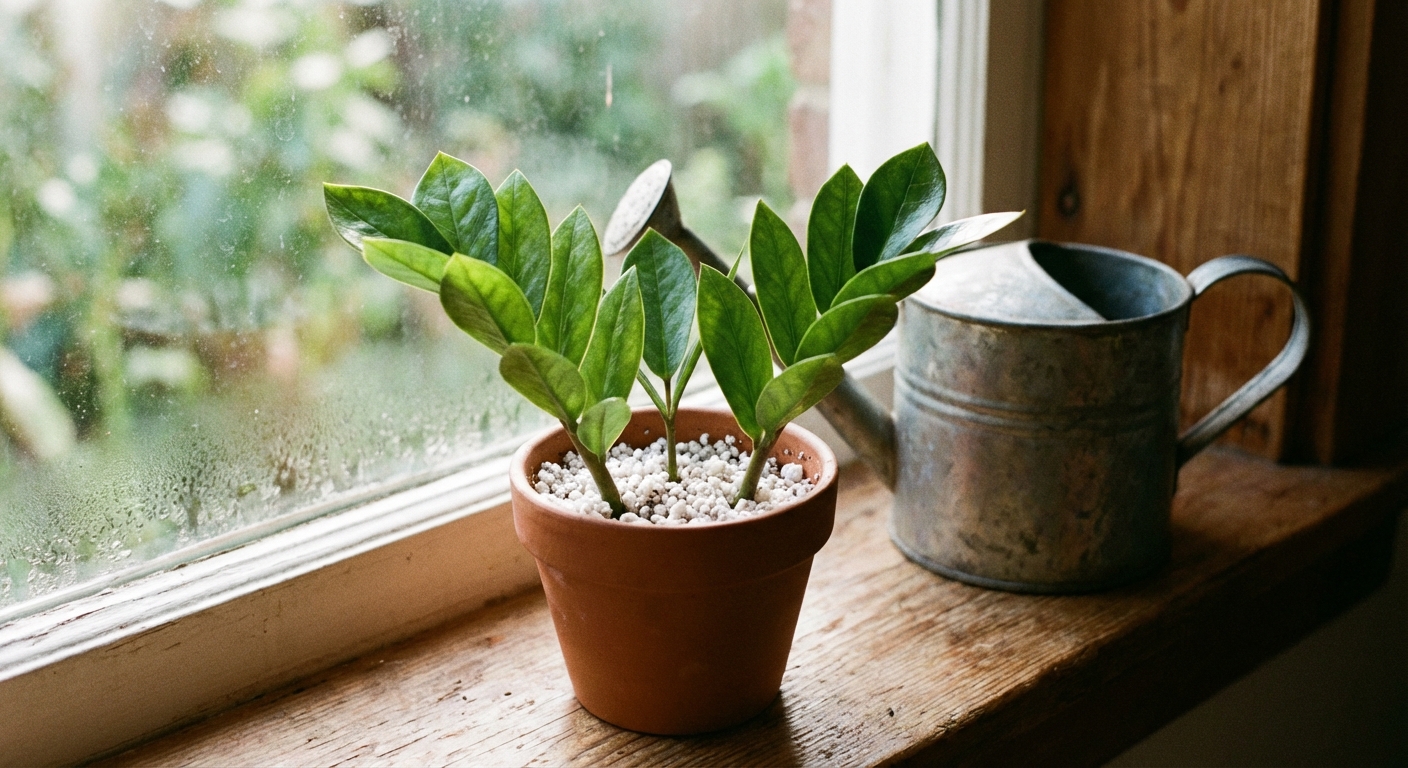
- Choose a healthy stem and gently remove a few leaflets.
- Optional: Let the cut ends dry for a few hours (it can help reduce rot, but it is not mandatory).
- Insert the cut end about 1/2 inch into lightly moist, well-draining mix (or perlite).
- Place in bright, indirect light and keep warm.
- Water sparingly. The medium should be barely moist, never wet.
Timeline: Expect several weeks to a few months before a small rhizome forms, and several months after that before you see new shoots.
Option 2: Stem cuttings
This is the happy middle ground: faster than leaflets, less invasive than dividing the whole plant. You can root a full stem in water or in soil.
- In water: Cut a healthy stem at the base with clean shears. Place it in a jar with the bottom inch or two in water, keeping leaves above the waterline. Put it in bright, indirect light and change the water weekly. Once you see roots and a small rhizome forming, pot it into a chunky mix and water lightly.
- In soil: Plant the cut end a couple inches deep in a fast-draining mix. Water lightly, then let the mix dry mostly between waterings. Keep it warm and bright (indirect).
Timeline: Usually quicker than leaflets, but still expect weeks to months. ZZ does not rush, and that is kind of its thing.
Option 3: Division
This is the fastest and most reliable way.
- Slide the plant out of its pot and gently loosen soil around the rhizomes.
- Find natural separations where you can divide rhizomes with roots attached.
- Use a clean knife only if needed. Let any cut surfaces dry for a few hours.
- Pot each division into a small pot with fresh, chunky mix.
- Wait about a week before watering to reduce rot risk.
Troubleshooting
Most ZZ issues trace back to watering and drainage. The good news is that once you adjust the rhythm, they bounce back surprisingly well.
Overwatered vs underwatered
If you are standing there with the watering can wondering which direction you messed up, this is for you.
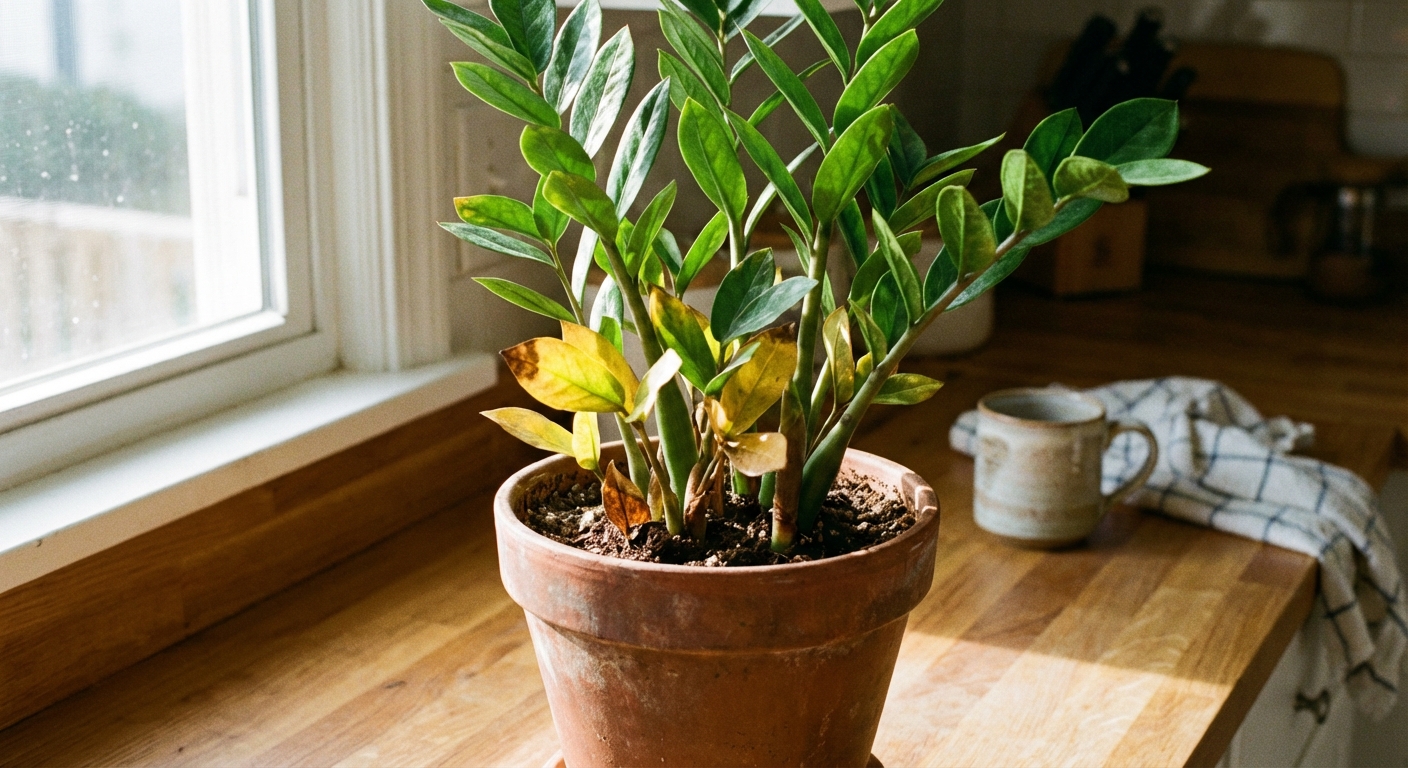
- Overwatering signs: Yellowing leaves (often multiple at once), mushy or collapsing stems, soil that stays damp, musty smell, soft rhizomes.
- Underwatering signs: Wrinkled stems, drooping that improves after watering, very dry mix pulling away from the pot, slower growth (especially in brighter light).
Yellowing leaves
- Most common cause: Overwatering, especially if multiple leaves are yellowing and the soil stays damp.
- Also possible: Natural aging of older leaves, very low light, or a pot that stays wet because the mix is too dense.
What to do: Let the soil dry fully. Check the pot for drainage. If the soil is heavy or smells musty, repot into a chunkier mix and trim any rotten roots.
Mushy stems or collapsing stalks
This is a classic rot signal. Healthy ZZ stems are firm.
What to do right away:
- Stop watering.
- Remove the plant from the pot and inspect rhizomes and roots.
- Cut away any soft, black, or smelly parts with clean scissors.
- Let the healthy rhizomes air-dry for a few hours.
- Repot into dry, fast-draining mix in a pot with drainage.
If rot is advanced, take healthy leaflets or a firm stem section and propagate as a backup plan.
Wrinkled stems or drooping
- Cause: Underwatering can make stems look a bit wrinkled and leaves less perky.
- Fix: Water thoroughly, then let it drain. If the soil has become hydrophobic (water runs straight through), bottom-water once to rehydrate, then consider repotting into a fresher, chunkier mix if the problem keeps happening. Old, peat-heavy soil is often the real culprit.
Brown tips or dull leaves
- Often: Mineral buildup from hard water or too much fertilizer, plus dust buildup that steals the shine.
- Fix: Flush the pot with water occasionally, wipe leaves with a damp cloth, and ease up on feeding.
Pests
ZZ plants are not pest magnets, but you can occasionally see mealybugs or scale.
- Wipe pests off with a cotton swab dipped in rubbing alcohol.
- Rinse the plant and repeat weekly for a few rounds.
- If needed, use insecticidal soap, following the label carefully.
Growth and FAQs
How fast do ZZ plants grow?
Slowly, on purpose. Most ZZ plants put out new stems during spring and summer, especially in brighter indirect light. In low light or winter, they can pause for months and still be totally fine.
If yours is not growing: Check light first (more bright indirect helps), then check watering (too frequent can stall growth), and finally check pot size (they often grow best when slightly snug).
Does ZZ Raven care differ?
Not much. ‘Raven’ (the dark-leaved cultivar) likes the same bright indirect light, soak-and-dry watering, and chunky soil. New growth often emerges greener and darkens as it matures.
Quick care checklist
- Light: Low to bright indirect, brighter means faster growth.
- Water: Only when fully dry, usually every 2 to 4 weeks (longer in low light).
- Soil: Chunky and fast draining, avoid dense mixes.
- Pot: Drainage holes, not oversized.
- Fertilizer: Light feeding in spring and summer.
- Propagation: Division is fastest, stem cuttings are beginner-friendly, leaf cuttings are slow but rewarding.
- Biggest risk: Overwatering leading to mushy stems and rot.
A gentle reminder
If you are nervous about houseplants, a ZZ is an excellent confidence builder. It does not demand perfection. It just wants you to pause, check the soil, and trust that “less often” can be the most loving thing you do.
When you get the watering rhythm right, your ZZ will sit there quietly, shining like it knows a secret. And honestly, it does: slow and steady really does win in the plant world.