
Why Your Orchid Isn’t Reblooming (And How to Fix It)

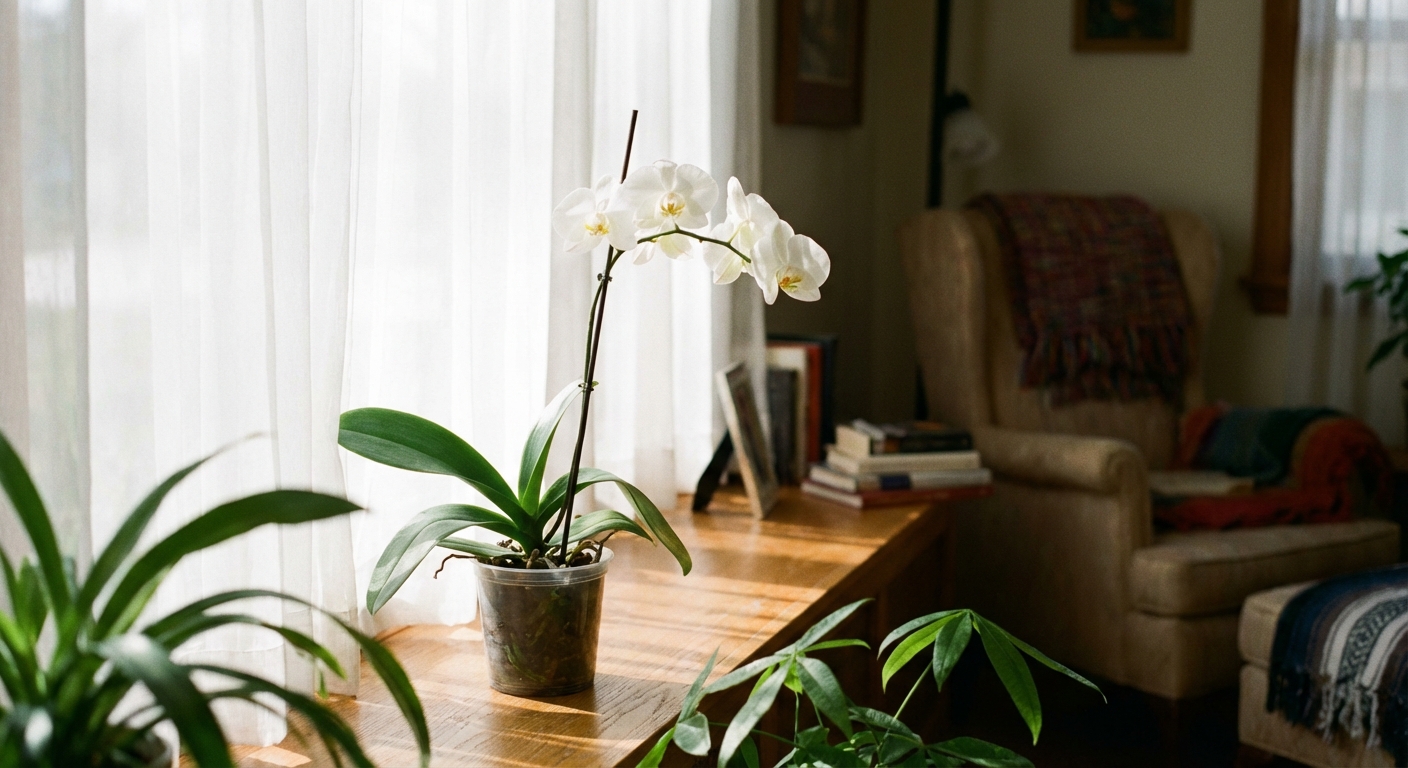
When a phalaenopsis orchid (the classic grocery store orchid) drops its last flower, it can feel like the party is over for good. But most “non reblooming” orchids are not failing. They are just waiting for the right cues.
I like to think of orchids as polite houseguests. They will not make a fuss, but they do want their light, their seasonal temperature shift, and a feeding routine that makes sense. Give them those signals, and many will reward you with a brand new flower spike.
Orchid bloom cycle (what’s normal)
Phalaenopsis orchids do not bloom continuously. In most homes, they follow a loose rhythm:
- Blooming: Flowers often last 6 to 12 weeks, and many hybrids can go longer (sometimes 2 to 4+ months) in cool, steady conditions.
- Rest and leaf growth: After flowering, the plant focuses on leaves and roots. This is when it is building the energy bank it needs to bloom again.
- Spike initiation: A new flower spike is commonly encouraged by slightly cooler nights plus good light.
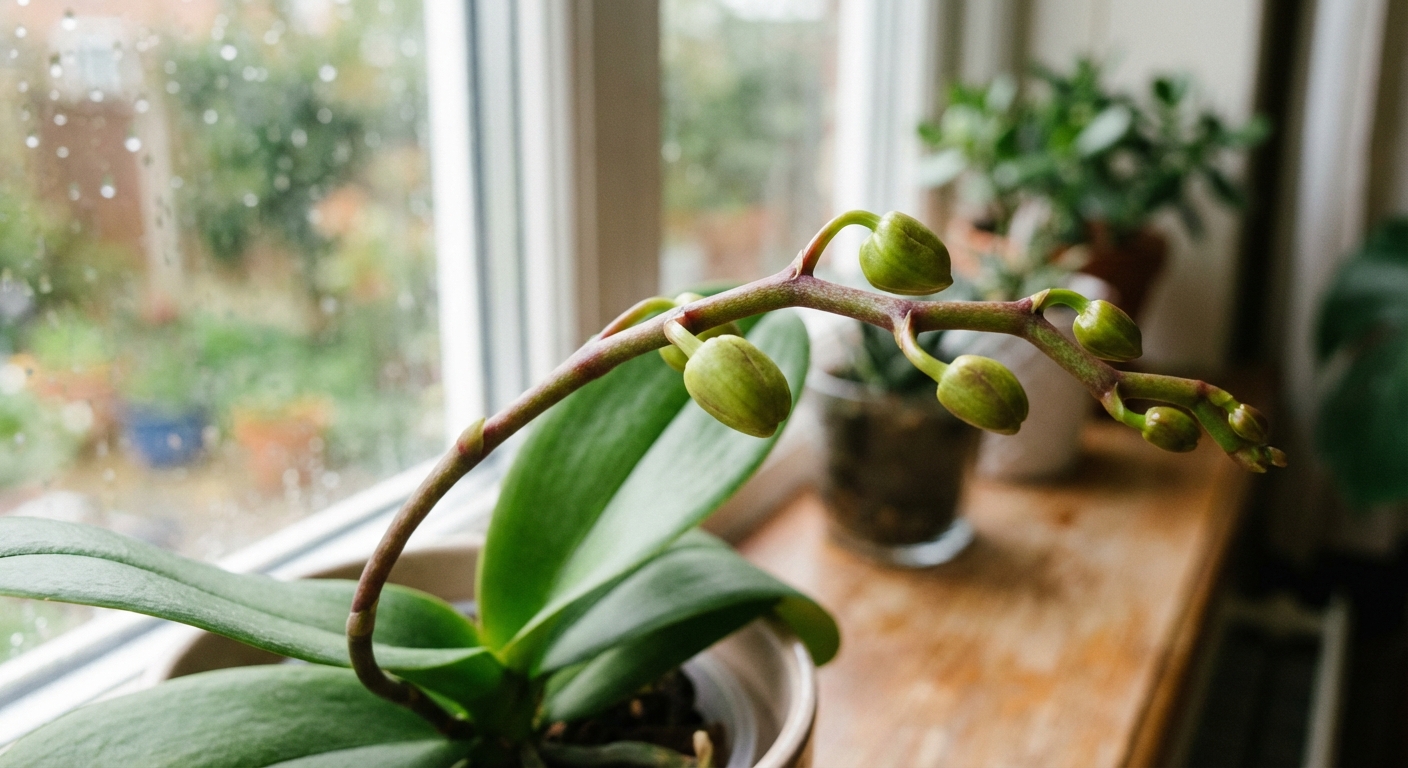
- Bud development and blooming again: Once a spike forms, buds and blooms follow over weeks.
Typical rebloom timing is often every 6 to 12 months, but it varies by hybrid and home conditions. If your orchid bloomed once and has not rebloomed after about a year, that is a good moment to troubleshoot.
Why your phalaenopsis is not reblooming
In my experience, the reasons are usually simple, and they stack. You might have two or three small issues that add up to “no spike.”
1) Not enough light
Light is the most common driver of reblooming problems. Many phalaenopsis survive in low light, but survival is not the same as blooming.
- Good light looks like: bright indirect light. Think “bright enough to read a book comfortably” near the window, with no hard-edged sun patches sitting on the leaves for hours.
- Common mistake: the orchid is set several feet back from a window, or in a room that feels bright to humans but is dim to plants.
Quick clue: if the leaves are very dark green and the plant has not flowered in a long time, it may be asking for more light. That said, leaf color can vary by cultivar, so do not chase the perfect shade of green. Use flowering (or lack of it) as the real signal.
2) No day to night temperature difference
Phalaenopsis often respond to a gentle seasonal cue to start a spike: cooler nights. Many homes stay the same temperature 24/7, especially in apartments.
- Aim for: about a 10°F (5 to 6°C) difference between day and night for a couple of weeks.
- Typical sweet spot: days around 70 to 80°F and nights around 60 to 67°F.
- Nuance: some phals will initiate spikes with a smaller difference if light is strong, so treat this as a helpful target, not a strict rule.
3) Fertilizer issues (too much, too strong, or salt buildup)
Fertilizer is not bloom magic. If you feed heavily, especially with a high nitrogen fertilizer, you can get lush leaves and fewer blooms. Salt buildup from frequent feeding can also stress roots, which slows everything down.
- Common mistake: fertilizing weekly at full strength year-round.
- What orchids prefer: light, consistent feeding and regular flushes with plain water.
4) Root issues, old mix, or staying soggy
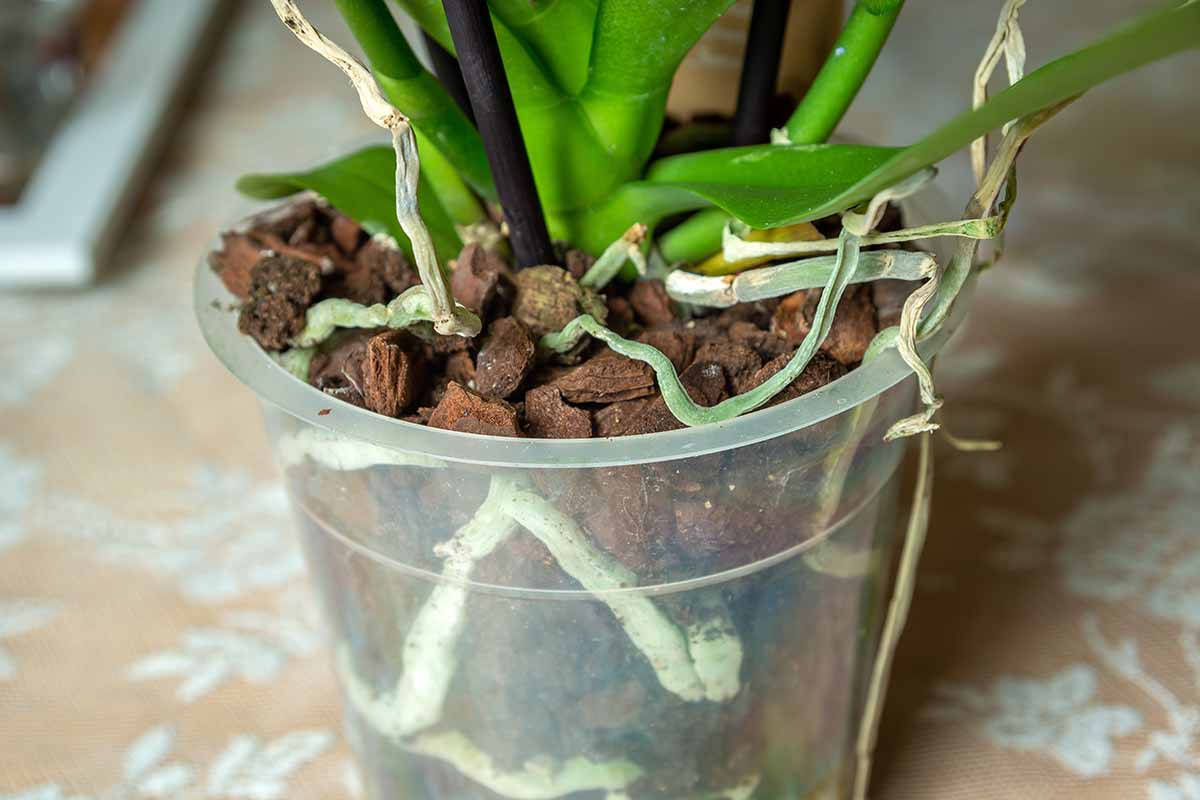
If the roots are unhappy, blooming becomes a low priority. Old potting bark breaks down into smaller particles that hold too much moisture and reduce airflow. Phals want airy roots.
- Signs of trouble: limp leaves, a sour smell from the pot, black or mushy roots, or a mix that looks soil-like instead of chunky.
How to trigger new flowers
If your orchid has firm leaves and at least some healthy roots, you can usually coax it back into blooming with a few focused changes. Here is the routine I use when someone tells me, “It has been all leaves for a year.”
Step 1: Improve the light (without cooking it)
Choose the brightest spot you have where sun is filtered.
- Best window for many homes: east-facing (gentle morning sun).
- South or west windows: can work beautifully with a sheer curtain or the orchid set a foot or two back from the glass.
- Avoid: harsh direct midday sun on the leaves, which can cause sunburn patches.
Tip: rotate the pot a quarter turn every week or two so the plant grows evenly and the spike does not lean dramatically.
Step 2: Give it cooler nights for 2 to 4 weeks
This is the reblooming trigger that surprises beginners because it feels almost too easy.
- Goal: nights around 60 to 67°F.
- How to do it: place the orchid in a slightly cooler room at night, near a closed window (not touching cold glass), or in a bright spot that stays cooler after dark.
- What to avoid: cold drafts, heater blasts, or temperatures below about 55°F.
Keep daytime light bright during this period. That combo of bright days and cooler nights is often what gets a spike moving.
Step 3: Trim the old spike
This depends on what you see, and it is worth taking a clean approach.
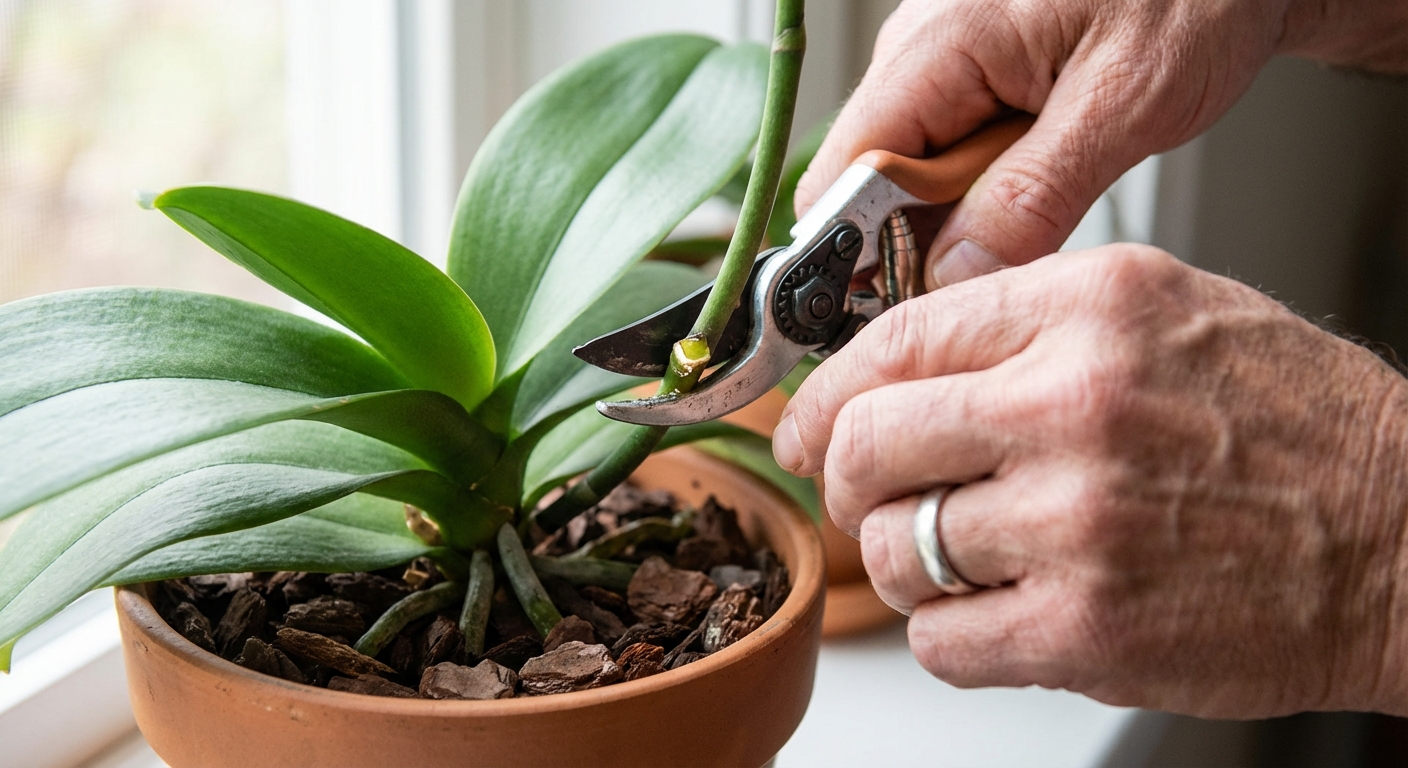
- Before you cut: sterilize scissors or pruners with rubbing alcohol (and let them dry). This helps prevent spreading bacteria and common orchid viruses from plant to plant.
- If the spike is brown and dry: cut it off near the base with clean scissors or pruners.
- If the spike is still green: you have two options.
Option A (often best for long-term strength): cut the green spike down near the base. This encourages the plant to rest, rebuild, and then form a brand new spike when conditions are right.
Option B (sometimes faster, sometimes smaller): cut the spike just above a node (a little bump) about halfway down. Some phals will branch from that node and produce a smaller round of blooms.
If your orchid is young, stressed, or recovering from root problems, I lean toward Option A. If it is robust and you want to gamble on a quick encore, Option B can be fun.
Fertilizer (without the confusion)
If you remember one phrase, make it this: weakly, weekly. It is a popular orchid mantra meaning “tiny doses more often” rather than “big doses occasionally.”
That said, if you are a beginner, you can absolutely use a safer modification: weakly, weekly or biweekly. The goal is gentle consistency, not a perfect calendar.
A beginner-friendly feeding routine
- During active growth (new leaves or roots): fertilize every 1 to 2 weeks at 1/4 strength with a balanced orchid fertilizer. If that feels like too much to manage, every 2 weeks is a great starting point.
- During spike and bud development: keep the same gentle schedule. Consistency matters more than switching formulas.
- Once a month: water with plain water thoroughly to flush the pot and reduce fertilizer salt buildup.
If you suspect you have been over-fertilizing: flush the pot with plain water several times in a row, letting water run freely through the mix each time. Then go back to a lighter schedule.
Important: never fertilize a bone-dry orchid. Water first, then fertilize, so roots are hydrated and less likely to burn.
Water and roots
A phalaenopsis that is watered “on a calendar” is often watered wrong. The right timing depends on your home, your pot, and your mix.
How to water so roots stay healthy
- Water when: the pot feels light and many roots look silvery, not bright green.
- Water method: soak or run water through the pot until it drains freely, then let it drain completely.
- Never leave: the pot sitting in water.
Ice cubes?
If your orchid came with “water with ice cubes” instructions, you are not alone. The problem is that ice can chill tropical roots and often does not wet the mix evenly. A thorough watering with room-temperature water, followed by full draining, is usually more reliable.
When to repot (this can restart blooming)
Repot if any of these are true:
- The bark mix is breaking down and looks fine or soil-like.
- You see many dead, mushy roots.
- Water takes a long time to dry out, and the plant stays soggy.
- It has been 1 to 2 years since the last repot (depending on your mix and how fast it breaks down in your home).
Best timing is usually after blooming or when you see new root tips starting. Use a chunky orchid bark mix and a pot with good drainage.
Quick troubleshooting
It grows leaves but never spikes
- Most often not enough light, or no cooler-night cue.
It started a spike, then stalled
- Often inconsistent watering, a sudden temperature swing, or low light in winter.
Buds form, then drop (bud blast)
- Common triggers: cold drafts, heater vents, very dry air, moving the plant repeatedly, or letting it go too dry while buds are forming.
Leaves are wrinkled or limp
- Check roots first. Limp leaves can mean dehydration from root loss, not just “needs more water.”
Is it a root or a spike?
- Roots usually look rounder with a shiny green tip (especially after watering) and they can point in any direction.
- Spikes often look flatter with a little “mitten” or notched tip, and they tend to angle toward the light.
Humidity and airflow (quick note)
You do not need a greenhouse to rebloom a phal. Average home humidity is usually fine, but do try to keep the plant away from heating vents and blasting air conditioning. Gentle airflow helps, especially if your home runs humid or your mix stays wet for a long time.
Rebloom timeline
Orchids reward patience, not panic. Once you adjust light and provide cooler nights, here is a typical timeline:
- 2 to 6 weeks: you may see a new spike start.
- 6 to 12+ weeks: spike lengthens and may branch.
- 3 to 5 months: buds open into flowers, depending on temperatures, light, and the particular hybrid.
If it has been 6 to 8 weeks with brighter light and cooler nights and there is still no spike, re-check the roots and consider repotting.
My rebloom checklist
- Bright, indirect light near a window
- Cooler nights for 2 to 4 weeks (aim for about a 10°F difference)
- Healthy, airy roots in fresh bark mix
- Water by dryness, not by the calendar
- Light feeding at reduced strength, plus monthly flushing
- Spike trimmed appropriately after flowering (with sterilized tools)
Your orchid is not giving you the silent treatment. It is gathering itself. With a few small tweaks, you can turn that leafy green plant back into a blooming showstopper.