Why Is My Lavender Dying? Causes and Fixes

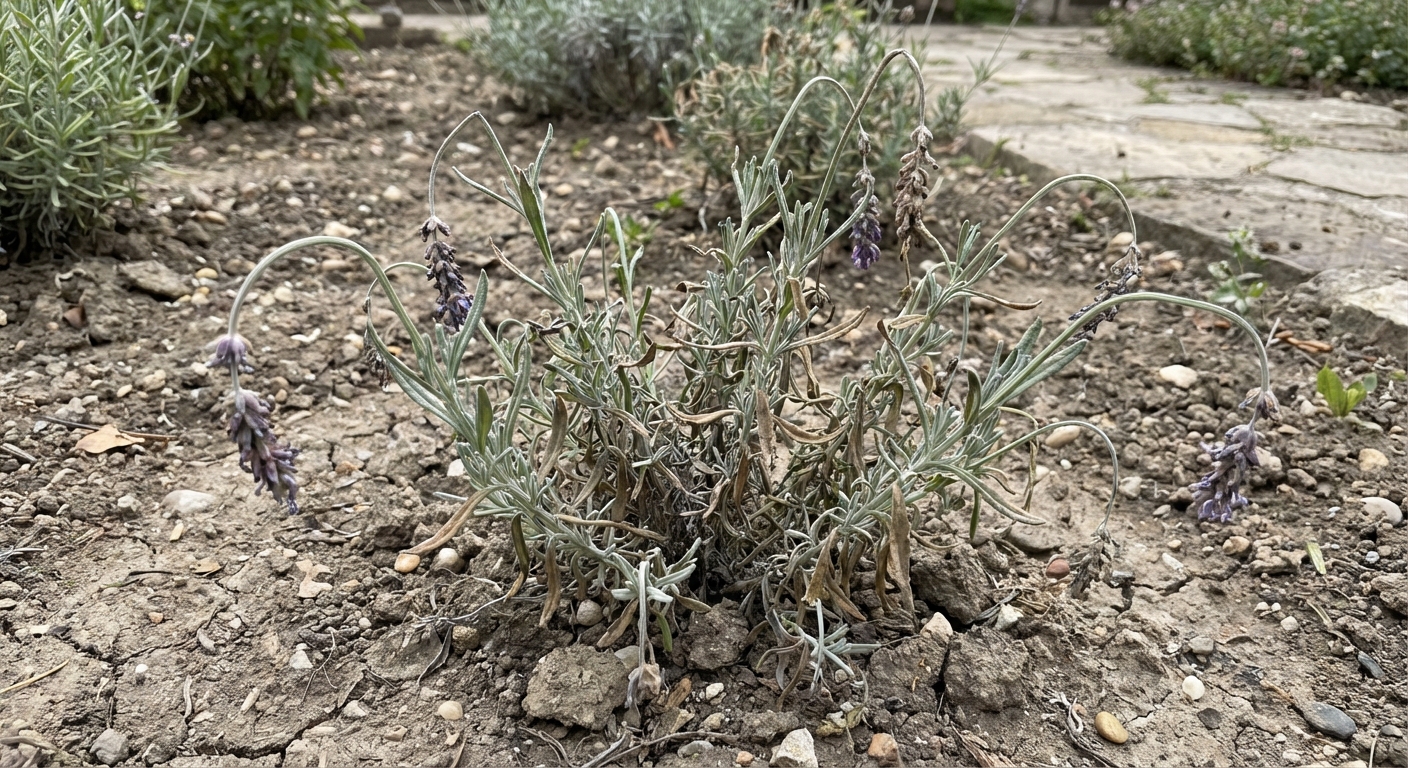
Lavender has a reputation for being “easy,” which is both true and deeply unhelpful when yours is suddenly looking sad. If your plant is drooping, browning, or thinning out, it is usually not random. Lavender is a Mediterranean shrub that loves sun, airflow, and lean, fast-draining soil. When we give it the cozy houseplant treatment, frequent water, rich compost, and a sheltered spot, it tends to protest.
Let’s get your lavender diagnosed and back on track, one likely cause at a time. And if you are reading this in a panic, take a breath. Lavender is surprisingly forgiving once its roots are in the right conditions.
Quick diagnosis: what your lavender is trying to tell you
Before you change anything, look closely. The pattern of damage often points to the problem.
- Droopy stems + soil feels damp: overwatering or poor drainage.
- Leaves yellowing from the base: roots staying wet too long, early root rot.
- Brown, crispy edges + bone-dry soil: underwatering, especially in pots.
- Lots of green growth, few flowers: too much nitrogen or too much shade.
- Gray, fuzzy patches: humidity-related fungal issues.
- Whole plant browns from the crown outward: crown rot or advanced root rot.
- Leggy, woody plant with bare “ankles”: not enough sun and/or improper pruning.
- Dieback after winter, especially with wet soil: winter damage or winter rot.
If you can, also note: is it in the ground or in a pot, and how many hours of direct sun does it actually get?
Cause 1: Overwatering
Lavender hates wet feet. The number one reason it “mysteriously” declines is simply too much water too often, especially when it is newly planted and we baby it.
Signs
- Wilting that looks like thirst, but the soil is still moist
- Yellowing leaves, especially near the base
- Soft, limp stems
- A musty smell near the crown
Fix it
- Water to establish, then back off. New lavender needs more regular watering for a short window while roots settle in. For the first few weeks, water when the top inch or two is dry. After it starts pushing new growth, switch to a dry-cycle approach.
- Stop watering on a schedule. For established plants, water only when the top 2 to 3 inches of soil are dry (in-ground) or when the pot feels noticeably light (containers).
- Water deeply, then wait. When you do water, soak the root zone thoroughly, then let the soil dry down. Lavender prefers a dry cycle.
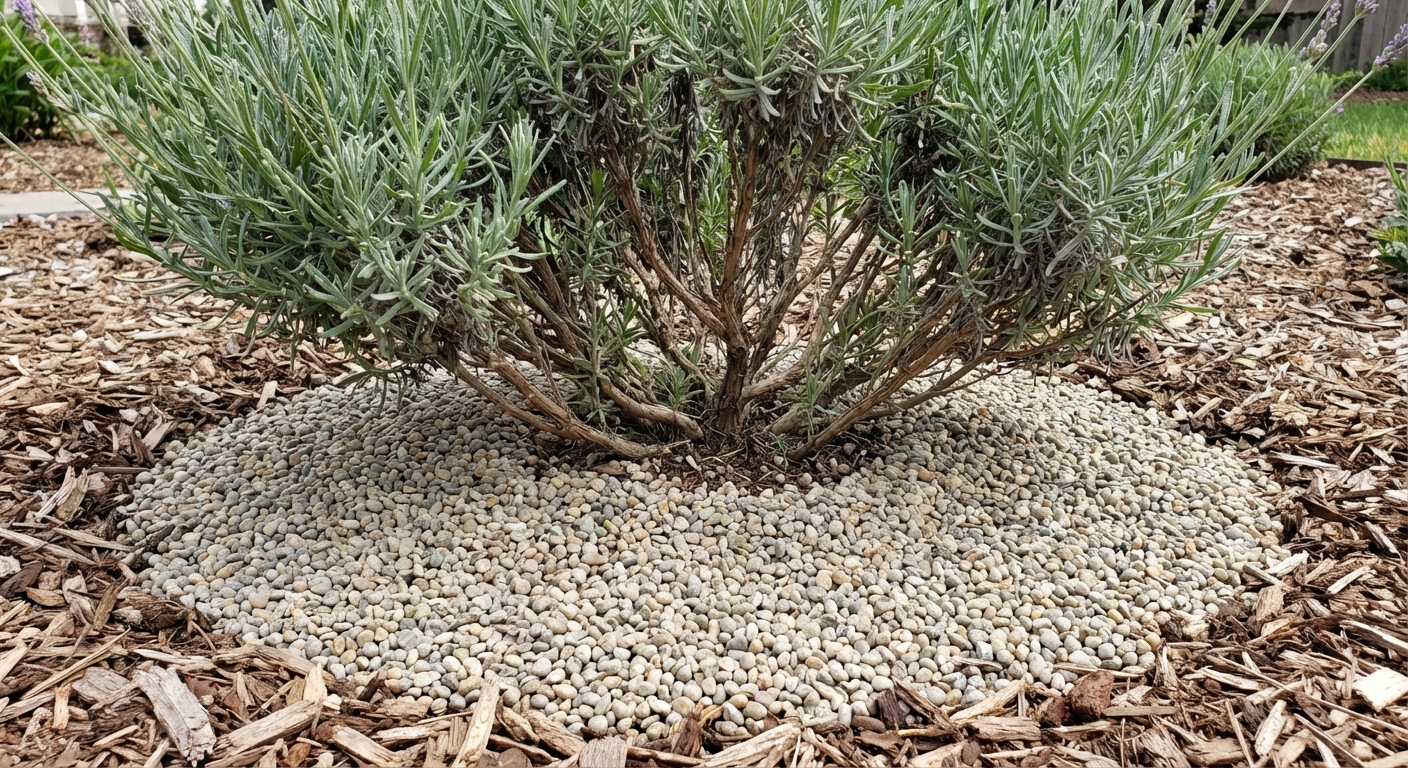
- Check your mulch. Pull mulch back 3 to 6 inches from the crown. Mulch piled against the base traps moisture where lavender is most vulnerable.
- Skip the “spa treatments.” No misting, no frequent sips, no constant moisture.
Rescue tip: If your lavender is in a pot and you suspect it is waterlogged, slide it out and inspect the root ball. If it smells sour or roots look dark and mushy, jump to the root rot section below.
Cause 2: Poor drainage
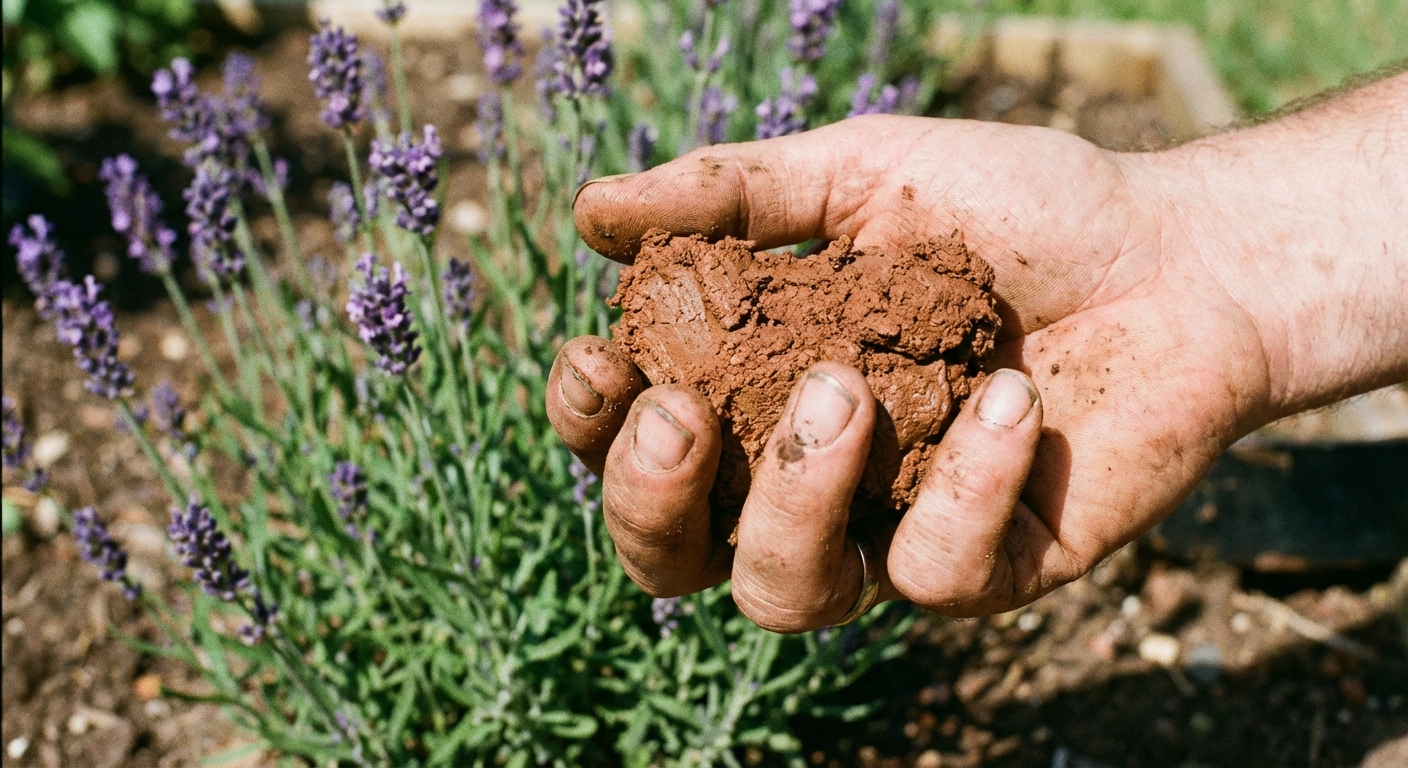
You can water perfectly and still lose lavender if the soil holds water like a sponge. Clay-heavy beds, low spots in the yard, and pots without proper drainage are classic trouble zones.
Signs
- Soil stays wet for days after watering or rain
- Plant declines after storms
- Crown (where stems meet soil) looks darkened or soft
Fix it in the ground
- Prioritize elevation. The most reliable fix is to plant on a mound or in a raised bed so water sheds away from the crown.
- Add grit, not richness. Work in small gravel, crushed stone, pumice, or horticultural grit to improve structure. Avoid lots of compost, which can hold water and add nitrogen.
- Be careful with sand in clay. Fine sand mixed into clay can make things worse and turn soil dense. If you use any sand at all, it should be very coarse, sharp grit, and the safer route is still a mound or raised bed.
- Choose the right spot. If the area puddles after rain, relocate. Lavender would rather be a little thirsty than soggy.
Fix it in containers
- Use a gritty mix. A good blend is potting soil cut with 30 to 50% perlite, pumice, or horticultural grit.
- Confirm drainage holes. Sounds obvious, but many decorative pots trap water. Use a pot with holes or keep the plant in a nursery pot set inside a cachepot and empty excess water.
- Raise the pot. Pot feet or a small stand prevents blocked holes and helps airflow.
Cause 3: Soil pH too low
Lavender generally grows best in neutral to slightly alkaline soil. A practical target range is about pH 6.5 to 8.0, depending on your soil type and the variety. In very acidic soil, roots can struggle to take up nutrients properly, and growth often looks weak and off-color.
Signs
- Slow growth and poor flowering even with enough sun
- General “pale” look despite decent care
- Mossy beds or areas where acid-loving plants thrive (like blueberries)
Fix it
- Test first. Use an inexpensive soil pH test from a garden center or your local extension service.
- If pH is low, add lime. Garden lime can raise pH over time. Follow label rates based on your test results. Recheck in a few months rather than adding more “just in case.”
- Go easy on compost. Compost is wonderful, but too much can make soil hold water and can nudge lavender into leafy, floppy growth.
- Top dress with grit. A thin layer of gravel around the plant helps keep the crown dry and mimics lavender’s natural habitat.
Cause 4: Humidity and low airflow
Lavender loves dry air and breezes. In humid climates, it is more prone to fungal problems and crown issues, especially if planted too close together or tucked into a sheltered corner.
Signs
- Gray or white fuzzy growth on stems or leaves
- Leaf spots that spread after humid stretches
- Dieback starting in dense inner growth
Fix it
- Give it space. Thin or transplant so plants have breathing room. Crowded lavender is unhappy lavender.
- Avoid overhead watering. Water at the base whenever possible. If you must water overhead, do it early in the day so foliage dries quickly.
- Prune for airflow. Lightly thin interior crossing stems after flowering to open the plant up.
- Choose the right type. If humidity is a constant battle, look for varieties noted for tolerance in your region. English lavenders (Lavandula angustifolia) often handle cold well, while some lavandins (Lavandula x intermedia) can be tougher in heat but still dislike muggy, stagnant air. Local nursery recommendations matter here.
When to use an organic fungicide: If you see active fuzzy mold, remove affected stems and dispose of them in the trash. You can follow up with a labeled organic product (like sulfur or copper) only if necessary, and always follow label directions. The real cure is airflow and drier foliage.
Cause 5: Not enough sun
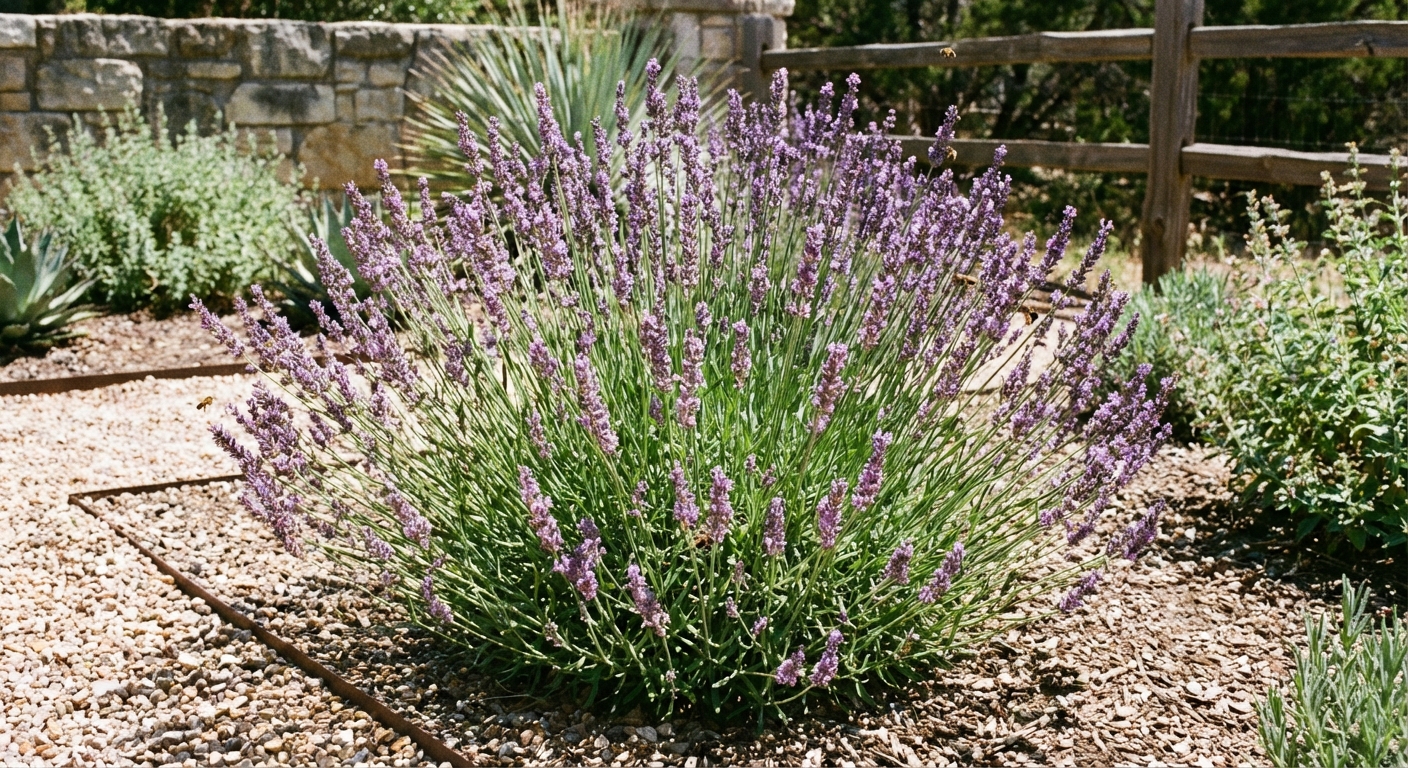
Lavender wants full sun, usually 6 to 8+ hours of direct light. In partial shade, it stretches, gets floppy, flowers less, and stays wetter longer after rain or watering.
Signs
- Long, leggy stems that fall open
- Few blooms or tiny flower spikes
- Plant looks greener and softer than expected
Fix it
- Track real sun. Check the spot morning, midday, and afternoon. Trees leaf out and fences cast longer shadows than we think.
- Move the plant if needed. Lavender transplants best in cooler weather (spring or early fall), but you can move it anytime if it is failing where it sits. Water it in well once, then let it dry between waterings.
- Choose a brighter container location. If it is in a pot, relocate it to the sunniest, breeziest place you have.
Cause 6: Root rot and crown rot
Root rot is usually the end result of overwatering and poor drainage, and it can move fast once it takes hold. The crown, the base where stems meet the soil, is the danger zone. If you read Causes 1 and 2 and thought “that sounds like my setup,” consider this section your next stop.
Signs
- Sudden collapse even when temperatures are mild
- Blackened, mushy roots or a foul smell
- Stems browning from the base upward
Rescue steps (container lavender)
- Unpot immediately. Gently shake off wet soil.
- Trim damaged roots. Use clean scissors to remove mushy, dark roots. Keep firm, pale roots.
- Sanitize and reset. Discard the old mix. Wash the pot and tools. Fresh, gritty soil is not optional here.
- Let it surface-dry briefly. Set the root ball in shade for 30 to 60 minutes so the outside is not dripping wet. This does not cure pathogens, it just helps you repot without sealing in extra moisture.
- Repot into a dry, gritty mix. Use fresh soil amended heavily with perlite, pumice, or grit.
- Water once, then wait. Water lightly to settle soil, then do not water again until the mix has dried well.
Rescue steps (in-ground lavender)
- Fix drainage first. If the site is staying wet, relocation or raised planting is often the only real solution.
- Lift and inspect. If most roots are rotten, success is less likely, but you can try replanting on a mound with gritty amendments.
- Take cuttings as insurance. If the top growth still has healthy, non-woody stems, propagate a few cuttings now. This is my favorite “do not lose the plant entirely” move.
Important: Do not bury the crown deeper when replanting. Set it at the same depth or slightly higher, and keep mulch away from the base.
Cause 7: Pruning issues
Lavender is a shrub, and it gets woody with age. Pruning keeps it compact, improves airflow, and encourages fresh flowering growth. The trick is pruning at the right time and not cutting into old, leafless wood that may not resprout.
Common mistakes
- Cutting back into bare wood. Many lavenders will not push new growth from old, leafless stems.
- Skipping pruning for years. The plant becomes leggy, splits open, and declines from the center.
- Hard pruning late in the season. Tender new growth can be damaged by frost.
How to prune safely
- After flowering: Snip off spent flower stems and lightly shape the plant, removing about 1 to 2 inches of green growth.
- In early spring: Once you see new growth starting, you can do a stronger shaping prune. Aim to remove up to one-third of the plant, but always leave green growth on every stem you cut.
- Never “buzz cut” to sticks. If you only see woody stems with no leaves, step back and prune gradually over time instead.
If your lavender is already woody and sparse: Your best bet is to take cuttings from the healthiest tips and start a new plant, while keeping the old one as long as it still performs.
Cause 8: Winter damage
Many lavenders do not actually die from cold alone. They die from cold plus wet. Winter rain, melting snow, and freeze-thaw cycles can rot the crown or heave roots out of the soil.
Signs
- Brown or hollow stems in spring, with little green returning
- Damage concentrated at the crown
- Plant lifted slightly out of the ground (heaving)
Fix it
- Improve winter drainage. Raised planting and gritty soil matter even more going into winter.
- Avoid late-season fertilizer and hard pruning. Both can encourage tender growth that winter punishes.
- Keep the crown dry. Skip heavy organic mulch against the base. Gravel mulch is often a better choice for lavender.
- Choose hardy varieties. If your winters are severe, select cultivars rated for your zone and buy from local growers when possible.
Cause 9: Pests (less common)
Lavender is not a pest magnet, but it is not pest-proof either. Most pest issues show up when the plant is already stressed (often from shade or wet conditions).
What to look for
- Aphids: clustered on tender tips, sticky residue
- Spittlebugs: foamy “spit” on stems, usually more annoying than fatal
- Root feeders: stunting and decline with no obvious leaf symptoms, more common in pots
Fix it
- Start with a strong rinse. A firm spray of water can knock aphids off.
- Use gentle controls if needed. Insecticidal soap can help with aphids if applied per label. Avoid spraying in hot sun.
- Correct the underlying stress. Sun, airflow, and dry feet do more for long-term pest resistance than any spray.
Indoor lavender note
If your lavender lives indoors, know this: it can be done, but it is easy to accidentally keep it too dim, too still, and too wet. Give it your brightest window (or a strong grow light), excellent airflow, and a gritty mix. Water only when the pot dries significantly. If it is limping along inside, it will almost always perk up outdoors in full sun once temperatures are mild.
Soil and watering reset
If you are not sure which issue is primary, this gentle reset helps most struggling lavenders.
- Check sun. Get it to 6 to 8+ hours of direct light if possible.
- Check drainage. If water sits, raise the plant on a mound, use a raised bed, or move it to a better spot.
- Dry cycle watering. Water deeply, then wait until the soil dries down before watering again.
- Keep the crown dry. No mulch against the base. Consider a gravel top dress.
- Hold fertilizer. Lavender generally does not need feeding. Too much nitrogen causes floppy growth and fewer flowers.
When it cannot be saved
If more than half the roots are mushy, or the crown is black and collapsing, you may be fighting a losing battle. That is not a failure, it is a data point.
- Take cuttings from healthy green tips to start new plants.
- Replace soil in pots and disinfect the container if rot was severe.
- Replant in a better site with full sun and fast drainage, or grow lavender in a pot with a gritty mix if your native soil stays wet.
Lavender wants a little benign neglect. Once you give it sun, airflow, and dry feet, it often rewards you with that silvery foliage and that calming scent that makes you pause in the garden and breathe a little deeper.