
Why Christmas Cactus Segments Turn Red or Purple

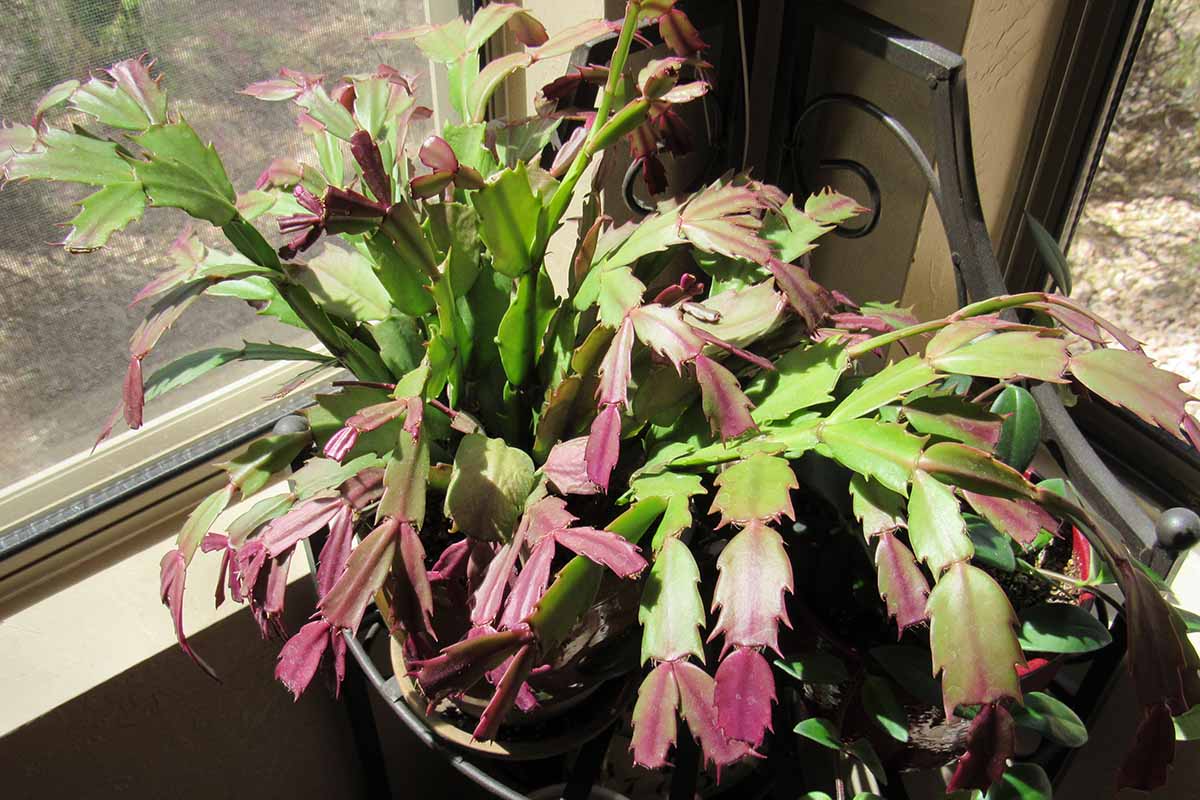
A little green. A lot of curiosity.
If your Christmas cactus segments are turning red or purple, take a breath. This plant can “blush” when conditions shift, especially with brighter light and cooler nights. It is still a stress response, but not all stress is bad. Sometimes the color is a harmless tan line. Sometimes it is your plant quietly asking for a small course correction.
Let’s sort out what that red or purple tint means, how to tell normal coloring from a plant that is headed for segment drop (pads falling off at the joints), and what to do if buds are falling too.
First: is red or purple always a problem?
No. On Christmas cactus (Schlumbergera), red, burgundy, or purplish tones are often caused by pigments called anthocyanins. Plants use these pigments like sunscreen and like a buffer when light and temperature change.
The key is to look at texture and growth, not color alone. A Christmas cactus can be red-tipped and still be healthy if the segments stay firm and it is otherwise stable.
Most common causes of red or purple segments
1) Strong light, especially direct sun
Brighter light is one of the most common reasons segments shift from green to red or purple. Even a few days of stronger sun can bring on a noticeable blush, particularly on the outermost, most exposed segments.
- What it looks like: red or purple edging, reddening on the top surface, color strongest on the sun-facing side.
- What it feels like: segments stay thick, crisp, and springy.
- When it becomes an issue: if you also see pale bleaching, tan scabby patches, or a dry “burnt” look. That points to sunscald rather than a gentle blush.
What to do: move the plant back from hot direct sun. Aim for bright, indirect light. If you want it near a sunny window, filtered light through a sheer curtain can help. Make changes gradually, since sudden moves are what trigger dramatic reactions.
2) Cool nights or chilly drafts
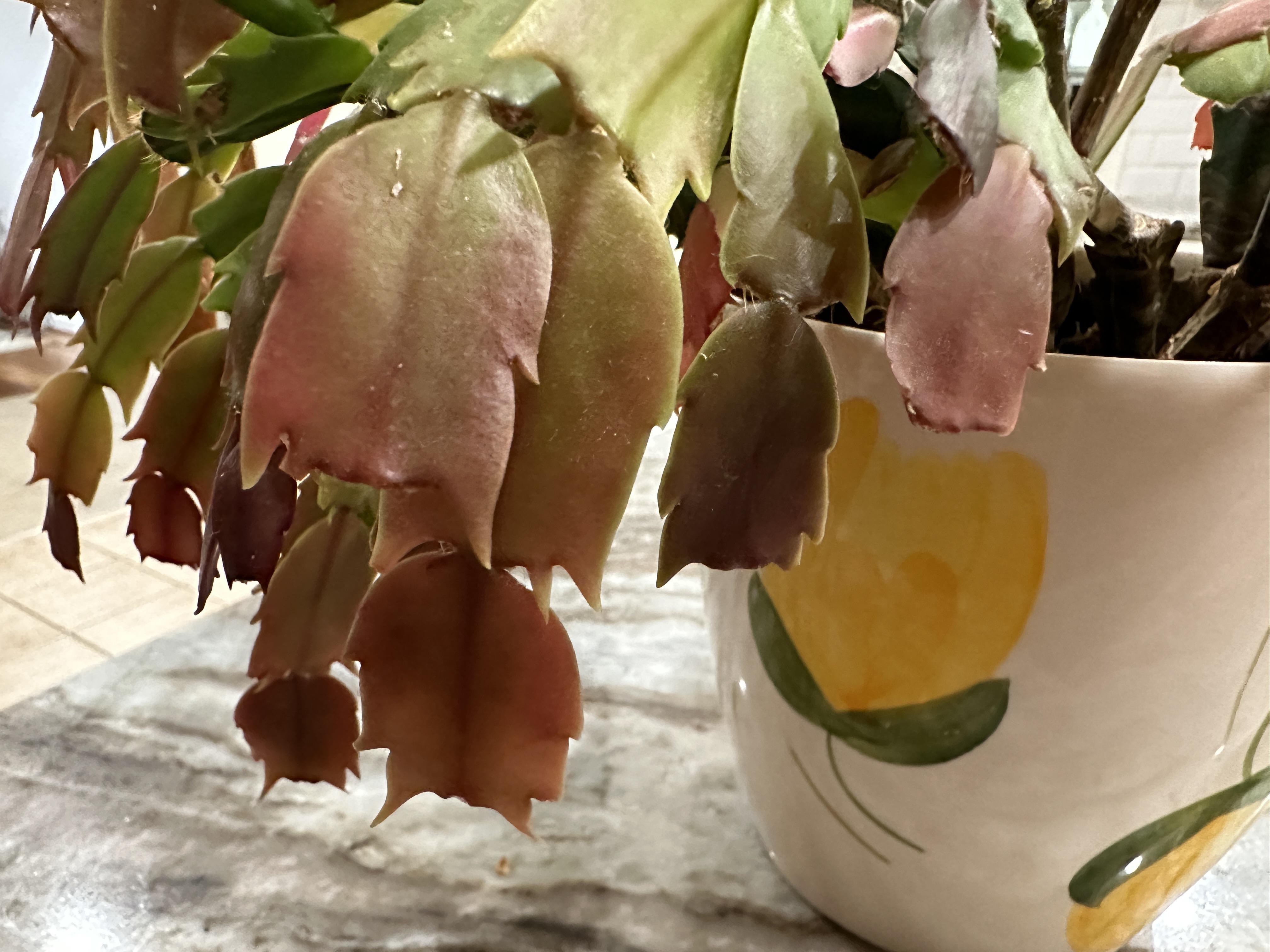
Cooler temperatures can also deepen red and purple pigments. This is especially common in fall and early winter when night temperatures drop near windows, on enclosed porches, or in drafty rooms.
- What it looks like: an overall purplish cast, often appearing after a cold snap or a move to a cooler spot.
- What it feels like: segments usually remain firm if watering is on track.
- Red flag: soft, watery tissue after cold exposure can indicate cold damage. Watch closely if temperatures dip to around 50°F (10°C) or below, especially near cold glass or drafts.
What to do: keep your Christmas cactus away from cold window glass and exterior door drafts at night. Many plants handle cool nights well, but they do not enjoy surprise chills.
3) Dryness and dehydration stress
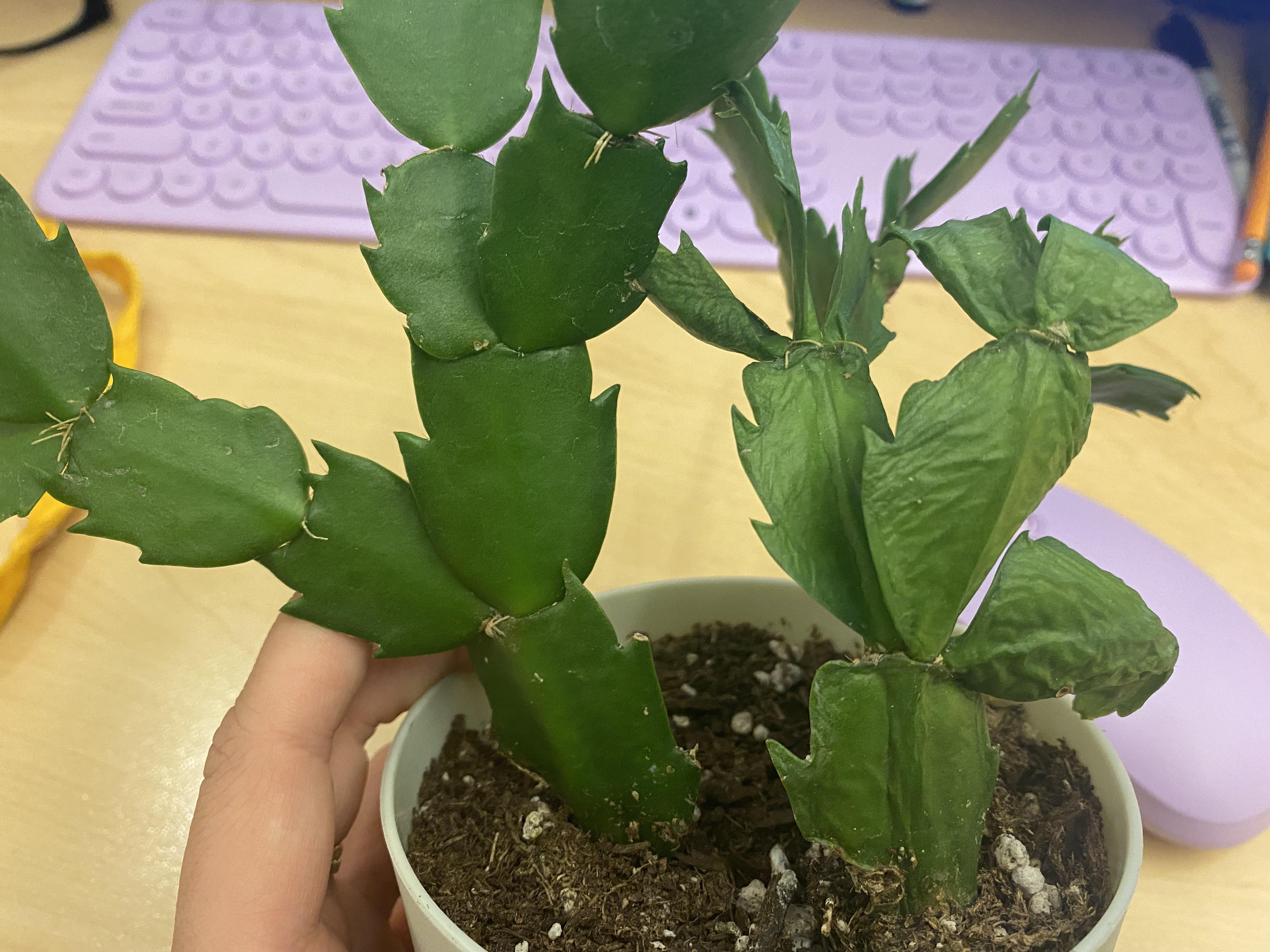
When a Christmas cactus gets too dry for too long, it may color up and look duller. The bigger giveaway is not the red tone. It is the texture.
- What it looks like: darker red or purplish tone plus wrinkling, thinner segments, and sometimes a slightly matte or tired look.
- What it feels like: segments start to feel less plump, sometimes a bit bendy.
What to do: water thoroughly, then let excess drain. After that, aim for a rhythm where the potting mix dries partially but not bone-dry for long stretches. Christmas cactus is not a desert cactus. It likes consistent moisture with air around the roots.
4) Underfeeding or exhausted potting mix
Red or purple is much more reliably tied to light and temperature than to any one nutrient deficiency. Still, if the plant has been in the same potting mix for a long time, low nutrients can contribute by slowing growth and making stress colors more noticeable, especially under brighter light.
- What it looks like: red-tinged segments plus slow growth, smaller new segments, and a general “stuck” feeling.
- What it feels like: segments may still be firm, but the plant does not seem to be actively growing.
What to do: during active growth (typically spring through summer), feed lightly with a balanced houseplant fertilizer at reduced strength. If the mix is old and compacted, repotting into fresh, airy mix helps more than trying to “fertilize it out of trouble.”
5) Root stress (overwatering, poor drainage, or compact mix)
Roots that stay wet too long lose oxygen and start to struggle. When that happens, the top of the plant is more likely to show limpness, yellowing, and eventually segment drop. Color can change too, but it is not the most reliable sign on its own.
- What it looks like: reddish or purplish segments plus softness, yellowing, or segments dropping with only a gentle touch.
- What it feels like: the plant may feel unstable in the pot, or the base segments may feel slightly mushy.
What to do: check drainage. Use a pot with holes, empty the saucer, and make sure the mix is chunky and quick draining. If the soil stays wet for many days, adjust the mix and watering.
Healthy blush vs. trouble
Color is just one clue. Here is the easy way to read what your cactus is saying.
Signs the red or purple is usually normal
- Segments are firm and plump.
- No mushy spots, no wet-looking tissue.
- Color is strongest on sun-exposed edges or surfaces.
- The plant is still growing or holding buds normally.
Signs the plant is stressed
- Segments are limp, thin, wrinkled, or floppy.
- You see yellowing (not just reddening), especially at the base.
- Segments detach easily, or the plant sheds pieces after watering changes.
- Soil is either bone dry for a long time or wet for many days.
Color change vs. sunburn
Sun stress can be a gentle, even blush. Sunburn is tissue damage.
- Blush: red or purple tones, tissue still smooth and hydrated.
- Sunburn: pale bleaching, tan patches, papery or corky areas, and sometimes sharp boundaries where the sun hit.
If you suspect sunburn, move the plant to bright indirect light and keep watering consistent. Damaged patches will not turn green again, but new growth should come in healthy.
Red or purple and bud drop
Bud blast is when buds form, then shrivel or drop before opening. Red or purple segments do not directly cause bud blast, but the same triggers often overlap:
- Sudden temperature swings, especially cool drafts at night
- Sudden changes in light, like moving to a much brighter window
- Watering swings, either drought then soaking, or staying soggy
- Very dry indoor air plus warm heaters
Fall is a common time for mild reddening because the light angle changes and nights get cooler. That can be normal. During bud set, though, stability matters more than perfection. Keep it in one place, avoid drafts and heater blasts, and water when the mix has partly dried.
Gentle fixes that work
When a Christmas cactus colors up, aim for small adjustments instead of big rescues. These plants like calm routines.
- Light: strong, filtered light. If you change windows, do it gradually over 1 to 2 weeks.
- Water: water thoroughly, then let excess drain. Rewater when the top 1 to 2 inches feel dry, or when the pot feels noticeably lighter when you lift it.
- Temperature: avoid cold drafts and hot blasts. Cool nights are fine, surprise chills are not.
- Soil and pot: use a fast draining mix and a pot with drainage holes.
- Feeding: fertilize lightly during active growth, not heavily while it is setting buds.
If you want a practical potting mix that drains well but does not dry like sand, try a blend like 2 parts cactus or houseplant mix, 1 part perlite or pumice, and 1 part orchid bark. The goal is airy and springy, not dense and muddy.
Pests to check
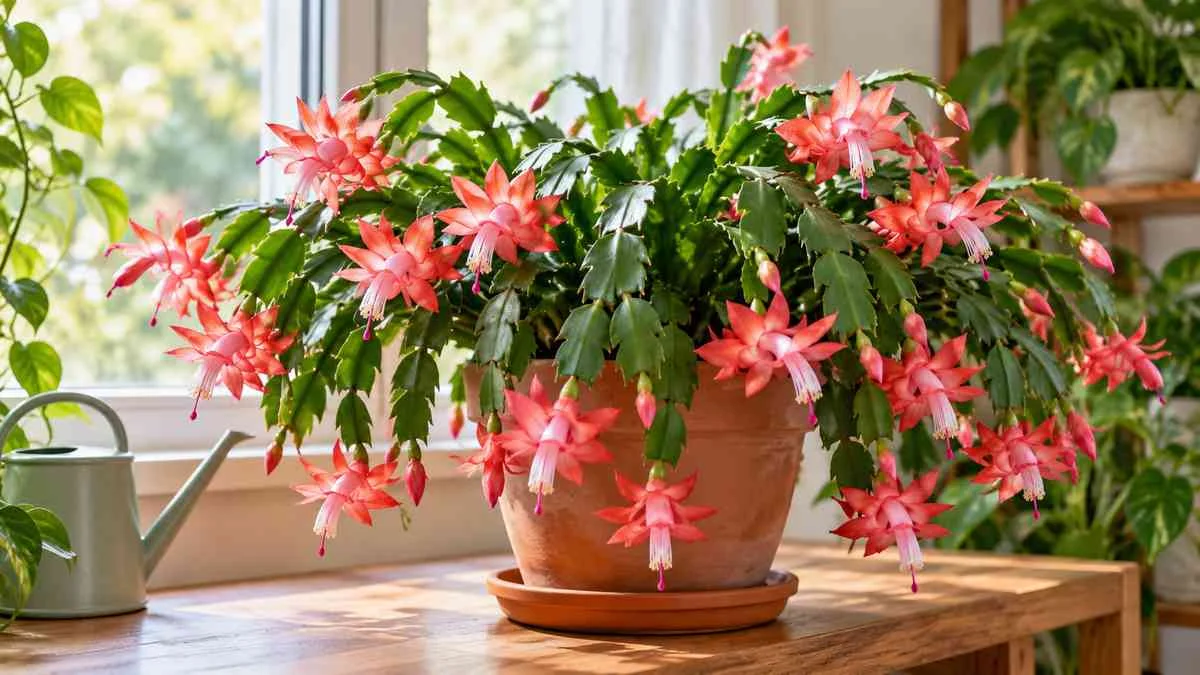
If color change is paired with sticky residue, speckling, or a general decline that does not match your watering, do a quick pest check. Christmas cactus pests tend to hide in joints and undersides.
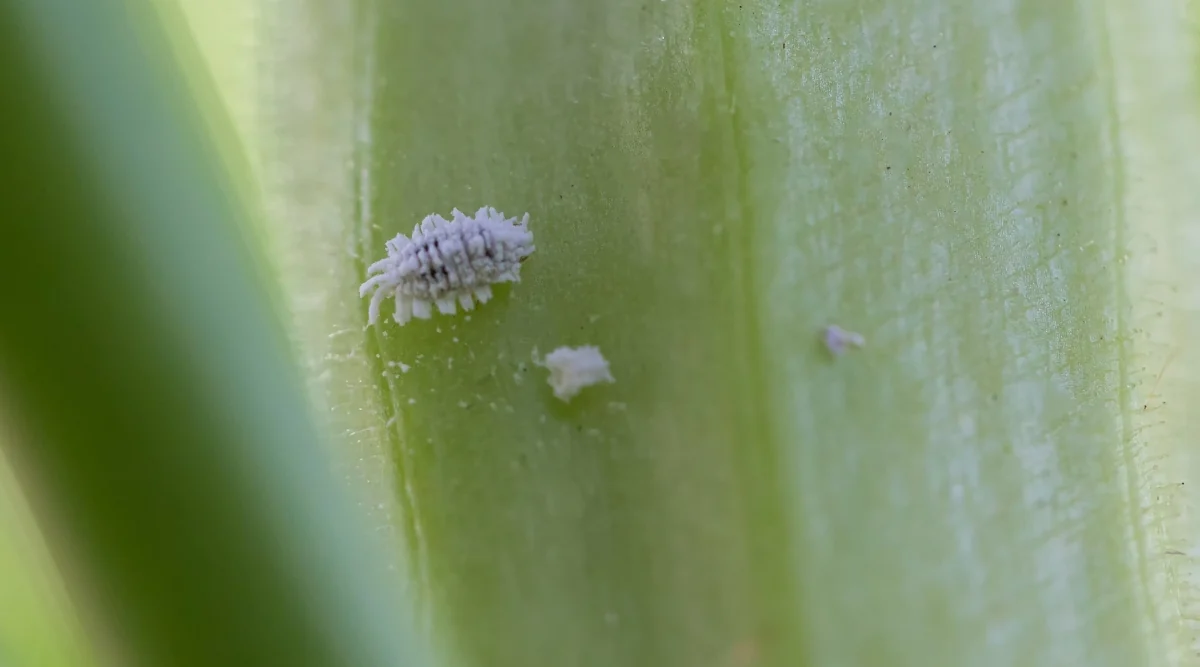
- Mealybugs: cottony clumps in segment joints and on stems, sometimes with sticky honeydew.
- Spider mites: fine webbing and pale speckling, often worse in dry indoor air.
- Scale: small tan or brown bumps that do not wipe away easily.
Start simple: isolate the plant, rinse it gently, and wipe joints with cotton swabs. If pests persist, an insecticidal soap or horticultural oil can help when used carefully and consistently.
When to worry
Red or purple alone is rarely an emergency. It is time to dig a little deeper if you notice any of these:
- Mushy, translucent, or blackened areas on segments
- A persistent yellowing that spreads
- A sour smell from the potting mix or fungus gnat activity that spikes
- Segments dropping rapidly, especially near the base
- No improvement after you correct light and watering for 2 to 3 weeks
Those signs can point to root rot, severe dehydration, or pest issues. When in doubt, check the potting mix moisture and the root condition. Healthy roots should be firm and pale, not brown and mushy.
FAQ
Will red or purple segments turn green again?
Sometimes. If the color came from brighter light or cooler nights, it may fade as conditions soften. Often, the reddest segments stay tinted, and new growth comes in greener once the plant settles.
Is a red Christmas cactus healthier than a green one?
Not automatically. Color can be a normal response to light and temperature. Health is better measured by firm segments, steady growth, and roots that are not staying wet for too long.
My plant is purple and dropping segments. What should I check first?
Check moisture and drainage first. A Christmas cactus that is alternately bone-dry and soaked, or constantly damp, is much more likely to drop segments than one that is simply colorful.
Should I fertilize to fix the color?
Only if the plant is actively growing and you suspect it has been underfed or the mix is exhausted. Fertilizer is not a quick color fix, and overfertilizing can create new stress. Consistent light and watering habits usually matter more.
The calm takeaway
A Christmas cactus that turns red or purple is often reacting to brighter light, cooler nights, or mild stress. If the segments are still firm, consider it a gentle signal, not a crisis.
When the color change comes with limpness, yellowing, or dropping pieces or buds, that is your cue to steady the basics: consistent moisture, filtered light, and a draft-free spot. Your cactus does best when its days are pleasantly boring.