
Why Are My Tomato Leaves Curling? Causes and Fixes

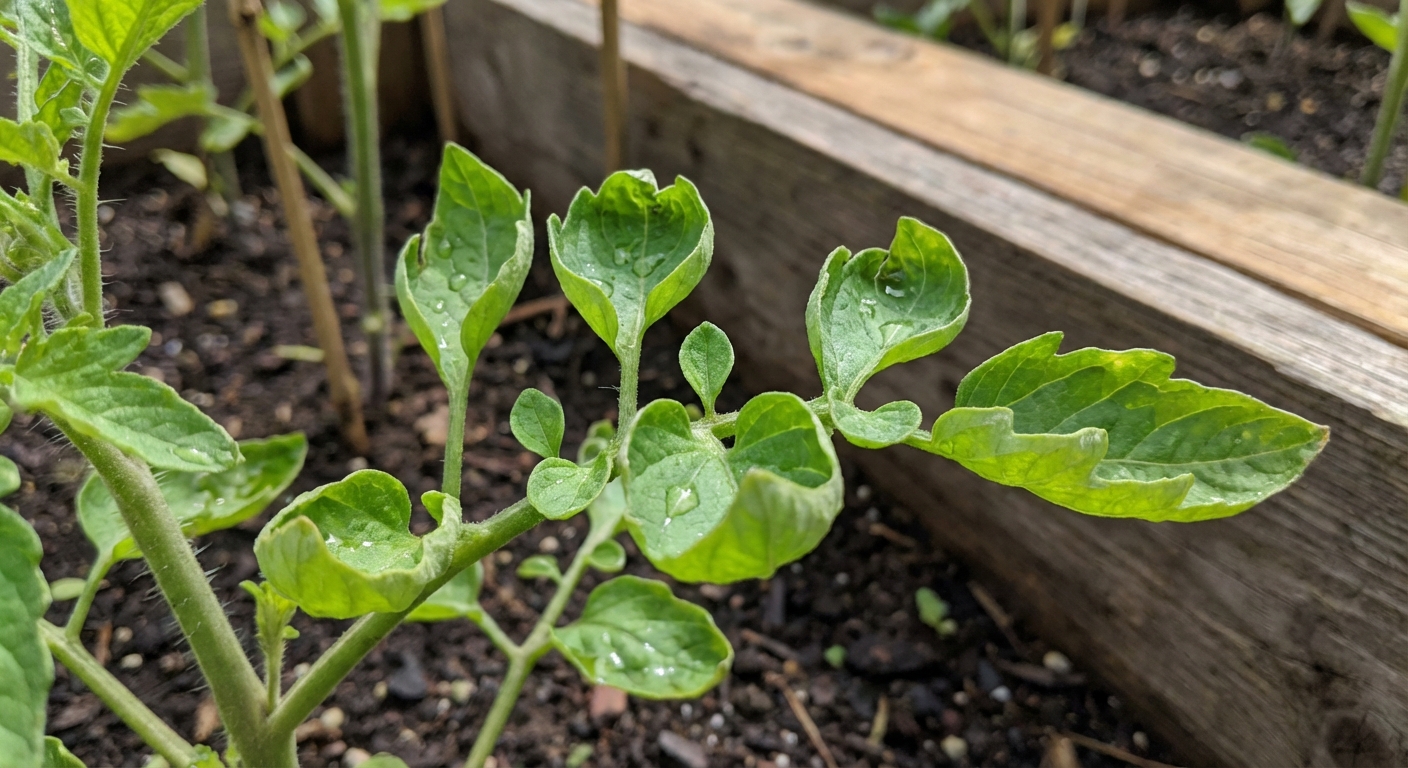
Tomato leaf curl is one of those symptoms that looks dramatic, but it is not always a disaster. Sometimes your plant is simply reacting to a hot, windy afternoon. Other times, curl is an early warning that something is off in the soil, on the leaves, or drifting in from a neighbor’s yard.
I like to troubleshoot tomato problems the same way I troubleshoot my own garden brain: slow down, look closely, and change one thing at a time. Below are the most common causes of tomato leaves curling, how to identify each one, and the most practical fix.
Quick reassurance: Tomatoes are famous for a common, non-disease issue called physiological leaf roll. It can look like upward or downward rolling (sometimes both), and it is often triggered by heat, inconsistent moisture, heavy pruning, root stress, or a big fruit load. It looks alarming, but the plant often keeps producing just fine.
First, check the curl pattern
Before you treat anything, match the curl pattern. This will save you weeks of guesswork.
- Upward cupping on otherwise green leaves can indicate heat, wind, intense sun, irregular moisture, or a nitrogen push.
- Downward rolling or clawing with thicker leaves can indicate physiological leaf roll, irregular watering, root restriction, pruning stress, or sometimes soggy roots.
- Twisted, distorted new growth is a big red flag for herbicide drift, mites, or a viral issue.
- Curl plus sticky residue or visible bugs usually means sap-sucking pests like aphids or whiteflies.
- Curl plus yellowing and stunting can indicate tomato yellow leaf curl virus (TYLCV) or another regional virus.
If you can, check the newest growth at the top of the plant and the oldest leaves near the bottom. Herbicide injury, viruses, and mites tend to show up in new growth first. Some water and nutrition stress shows up lower first, but tomatoes love to surprise us, so use it as a clue, not a verdict.
Cause 1: Heat, wind, and sun
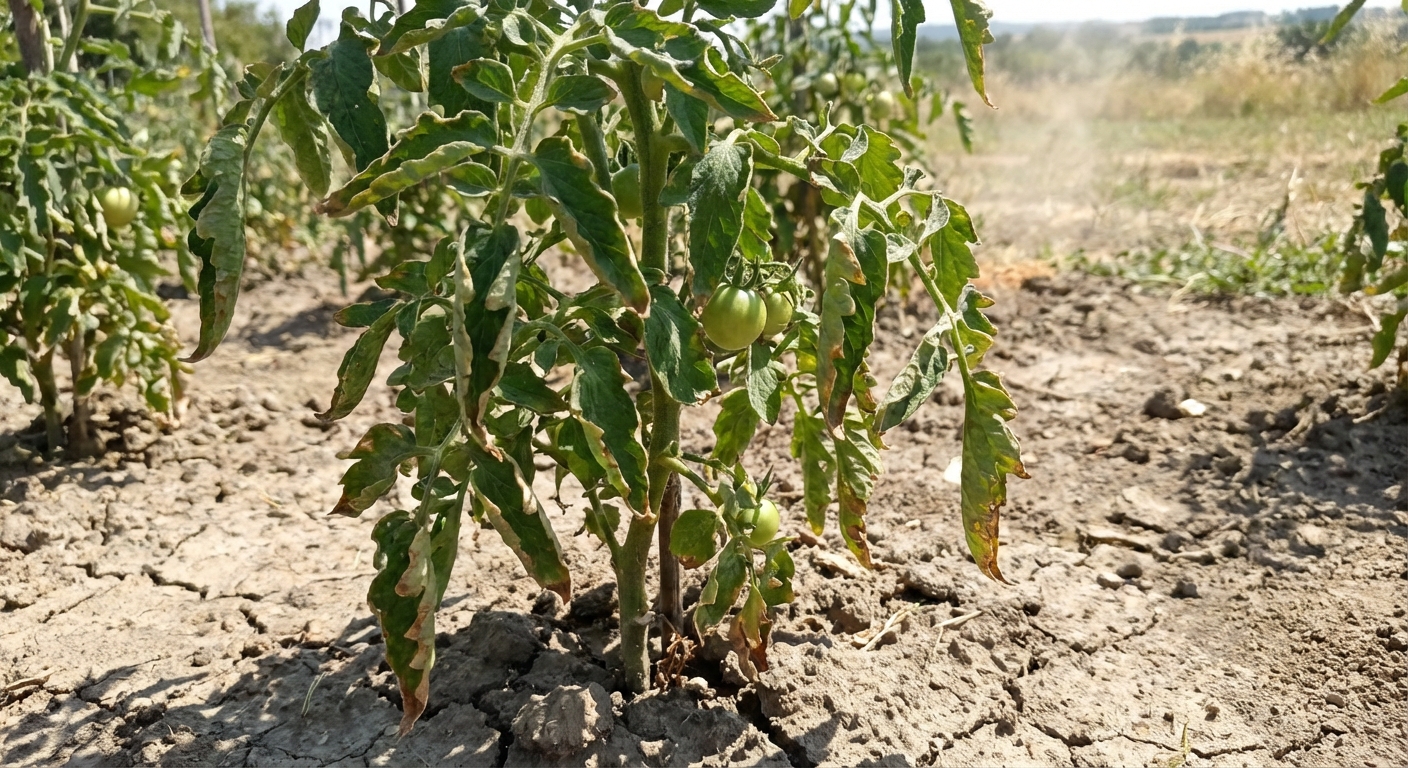
This is the most common and the least scary. Tomatoes respond to heat and drying wind by curling leaves to reduce water loss. It is basically the plant pulling its collar up.
How to identify it
- Leaves cup or roll, often worst in the afternoon.
- Leaves stay mostly green with no major spotting.
- Plant looks a bit droopy during peak heat but recovers by evening or the next morning.
- Often happens after a sudden heat wave, a windy stretch, or when plants are newly transplanted.
The fix
- Water deeply in the morning, aiming for consistent moisture. The “1 to 1.5 inches per week” rule is a good starting point for in-ground plants, but hot weather, sandy soil, and heavy fruiting can increase demand. Containers almost always need more frequent watering.
- Mulch 2 to 3 inches with straw, shredded leaves, or untreated grass clippings to keep roots cool and moisture steady.
- Add temporary shade during heat waves: 30 to 40 percent shade cloth works beautifully.
- Block wind with a fence, trellis screen, or by moving containers to a more sheltered spot.
What not to do: Do not start stripping off curled leaves aggressively. In heat, those leaves are still doing work, and removing them can increase sunscald on fruit.
Cause 2: Too much water
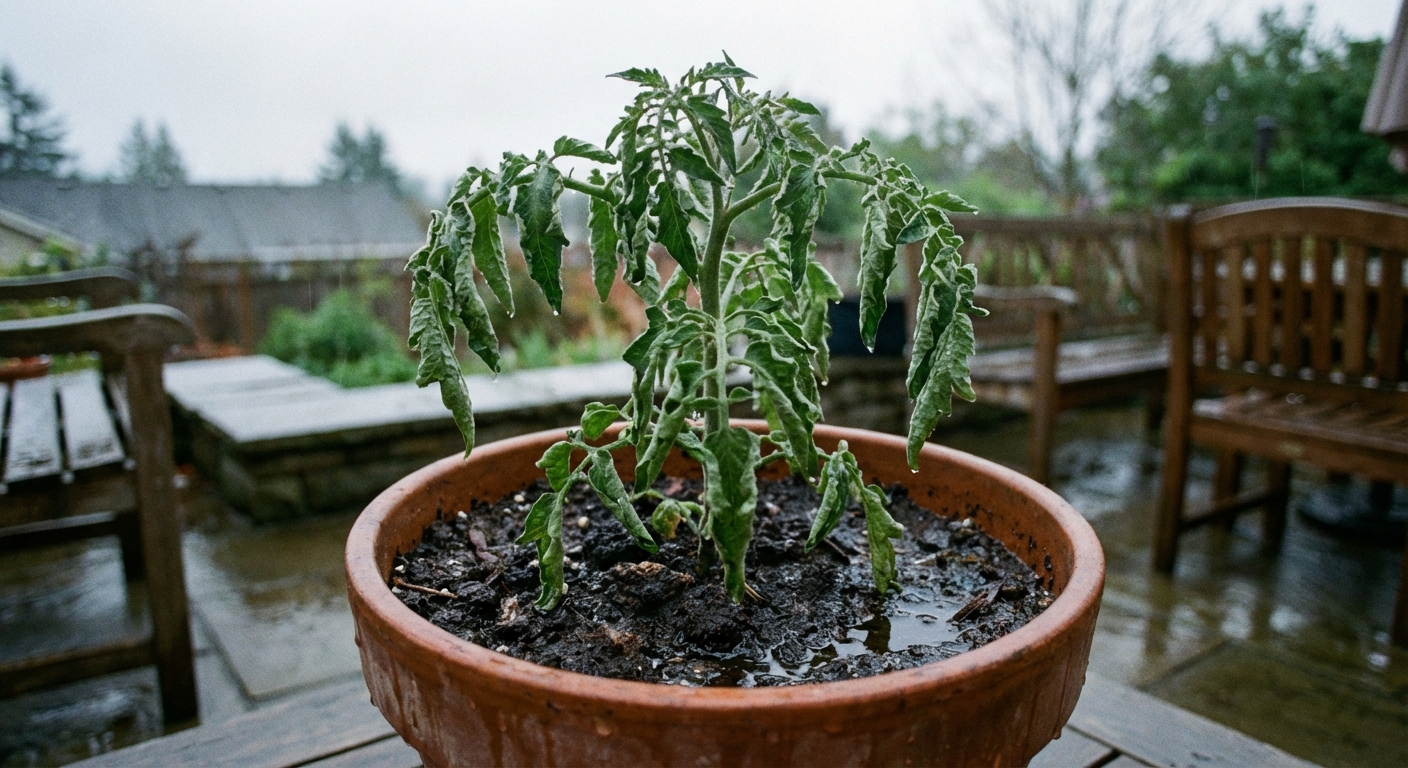
Overwatering can look like “too much love.” When roots sit in wet soil, they struggle to breathe. The plant can respond with rolling leaves, yellowing, and slower growth. That said, thick rolled leaves are not an overwatering-only sign, so use the soil as your tie-breaker.
How to identify it
- Leaves roll downward and may feel thicker or a bit leathery.
- Lower leaves may yellow first.
- Soil stays wet for days, or the bed feels heavy and cool.
- You may notice fungus gnats around containers or a musty smell in the soil.
The fix
- Pause watering and let the soil dry to the right level before you water again. In containers, water when the top 1 to 2 inches are dry. In beds, aim for evenly moist soil, not swampy soil.
- Check drainage. Pots must have holes. Raised beds should not hold water like a bathtub.
- When you do water, water deeply, then wait. Avoid frequent small waterings that keep the root zone constantly damp.
- Avoid watering at night. Morning watering reduces disease pressure.
Soil health note: If your garden bed drains poorly, add compost over time and consider growing tomatoes in raised beds or large containers where you control the soil.
Cause 3: Irregular watering
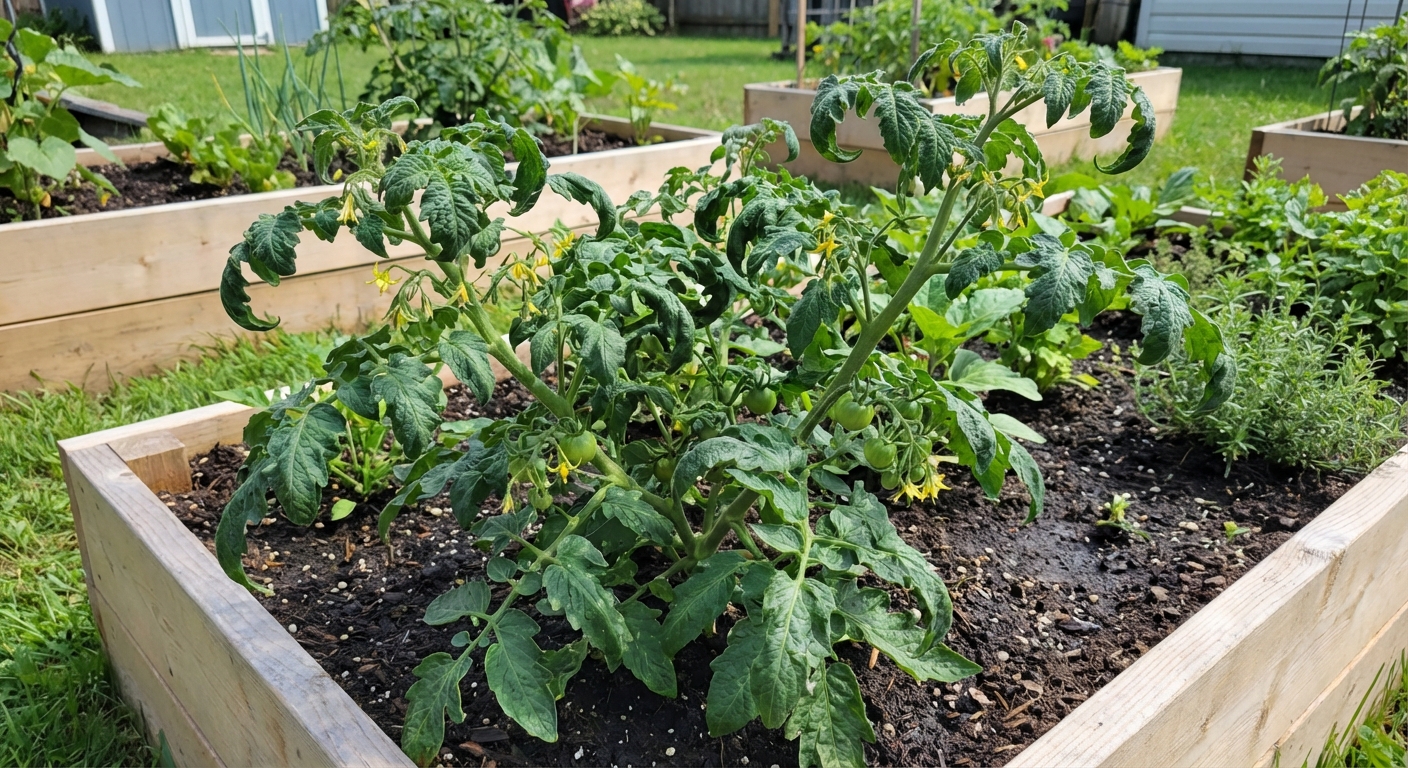
Inconsistent moisture is one of the biggest drivers of physiological leaf roll. A tomato that swings between bone-dry and soaked can curl to protect itself, even if you never technically “overwater” or “underwater.”
How to identify it
- Leaf roll shows up after a missed watering, a sudden downpour, or a big schedule change.
- Leaves may roll upward or downward, often without spotting.
- Soil is dry a few inches down one day, then saturated the next.
- More common in containers, raised beds, and sandy soil.
The fix
- Pick a rhythm: water deeply, then let the top couple inches dry slightly before the next watering.
- Mulch to slow down moisture swings.
- Use drip or soaker hoses if you can. It is hard to beat slow, steady watering at the root zone.
- Do not chase the curl. If new growth looks healthy and the plant is setting flowers, stop tinkering and let it settle.
Cause 4: Herbicide drift
Herbicide injury is one of the sneakiest causes of tomato leaf curl. Tomatoes are extremely sensitive to many weed killers, including some lawn products and “brush killer” sprays. Drift can travel surprisingly far on a breeze, and contaminated grass clippings, manure, or compost can also cause issues.
How to identify it
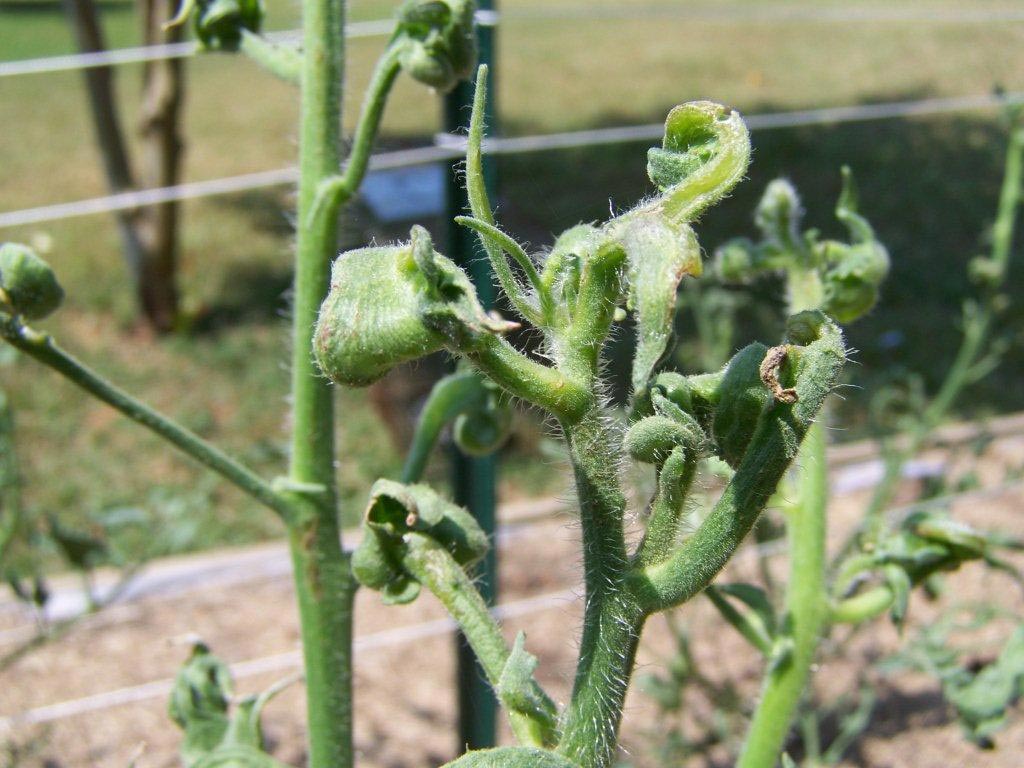
- New growth is twisted, narrow, and distorted. Leaves may look ferny or strapped.
- Stems can bend or grow unevenly.
- Symptoms often appear after nearby spraying, lawn treatment, or using unknown mulch, manure, or compost.
- Usually affects the newest growth first.
The fix
- Stop the source: pause any herbicide use nearby, and ask neighbors or landscapers if they sprayed.
- Rinse foliage with a gentle spray of water as soon as you suspect drift. This can help remove some contact residues, but many problem herbicides are systemic, so rinsing is not a guaranteed undo button.
- Keep the plant steady, not pampered: consistent watering, no heavy fertilizing, and no extra stress.
- Remove contaminated inputs if you suspect compost, manure, or mulch. Unfortunately, persistent herbicides can linger.
If distortion is severe and continues in new growth for weeks, the kindest choice can be to pull the plant and replant in clean soil. I know that hurts. I have done it, and I complained to my ferns the whole time.
Tip: If you suspect herbicide contamination, your local extension office can help you think through likely sources in your area.
Cause 5: TYLCV and other viruses
Tomato yellow leaf curl virus (TYLCV) is a serious disease spread primarily by whiteflies. Once a plant is infected, there is no cure. The goal is fast identification and prevention to protect the rest of your tomatoes. Also, there are other regional viruses (like curly top in some areas) that can look similar, so a local confirmation is worth pursuing when symptoms are severe.
How to identify it
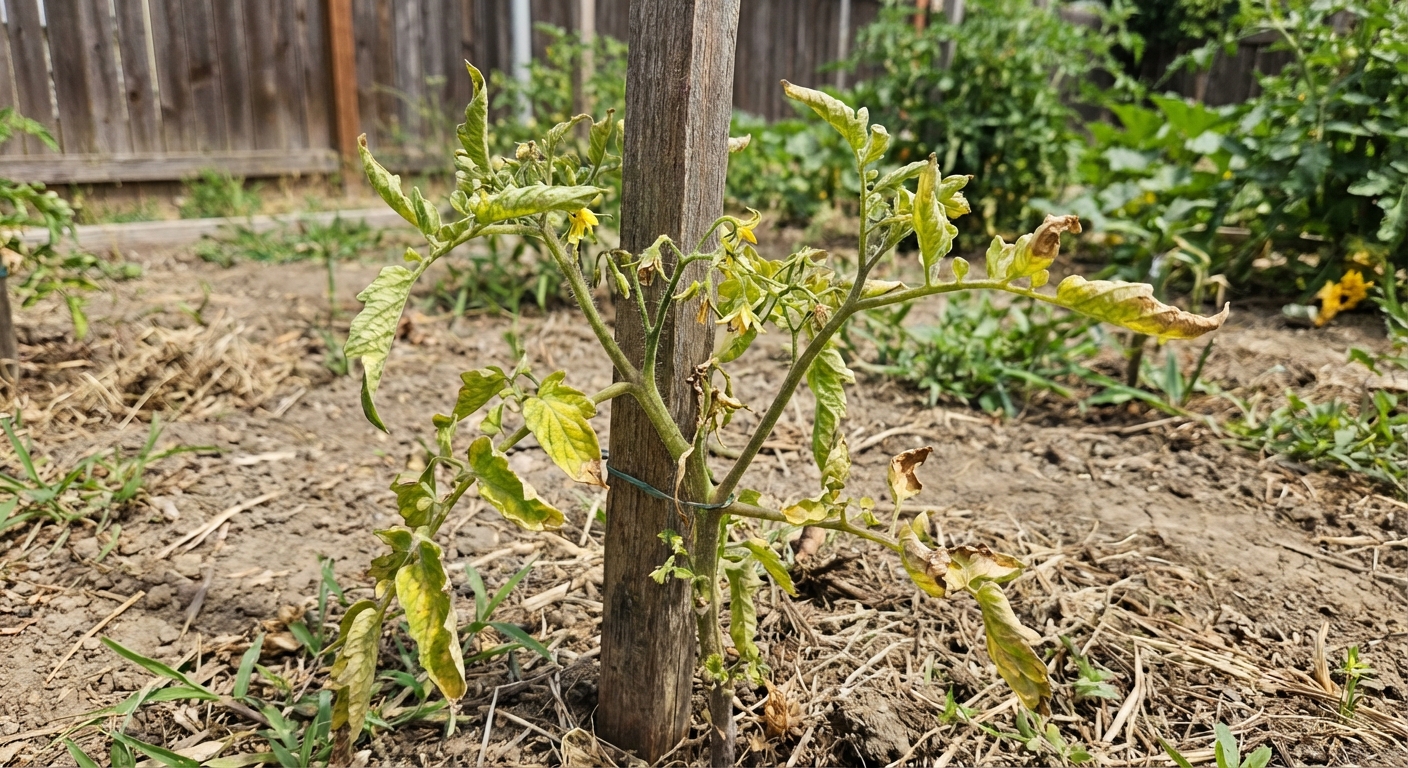
- Leaves curl upward and inward, often with yellowing (often along margins). Symptoms can vary by variety and growing conditions.
- New growth is small and the plant becomes stunted.
- Flowers may drop, and fruit set can be poor.
- Often appears alongside whitefly activity.
The fix
- Remove and bag the plant if TYLCV is likely, especially early in the season. Do not compost it.
- Control whiteflies on nearby plants using yellow sticky traps, insecticidal soap, or horticultural oil. Apply in the early morning or evening and coat leaf undersides.
- Protect healthy plants with floating row cover early in the season, removing it when flowers need pollination.
- Plant resistant varieties next season if TYLCV is common in your area. Look for “TYLCV resistance” on the label.
If you are unsure whether it is TYLCV versus stress, watch the new growth for a week. Heat and moisture stress may look rough for a bit, but the plant usually keeps growing normally. With TYLCV, the newest growth tends to stay small, tight, and unhappy.
When in doubt: If you can, check with your local extension office for virus pressure in your region and help distinguishing look-alikes.
Cause 6: Pests
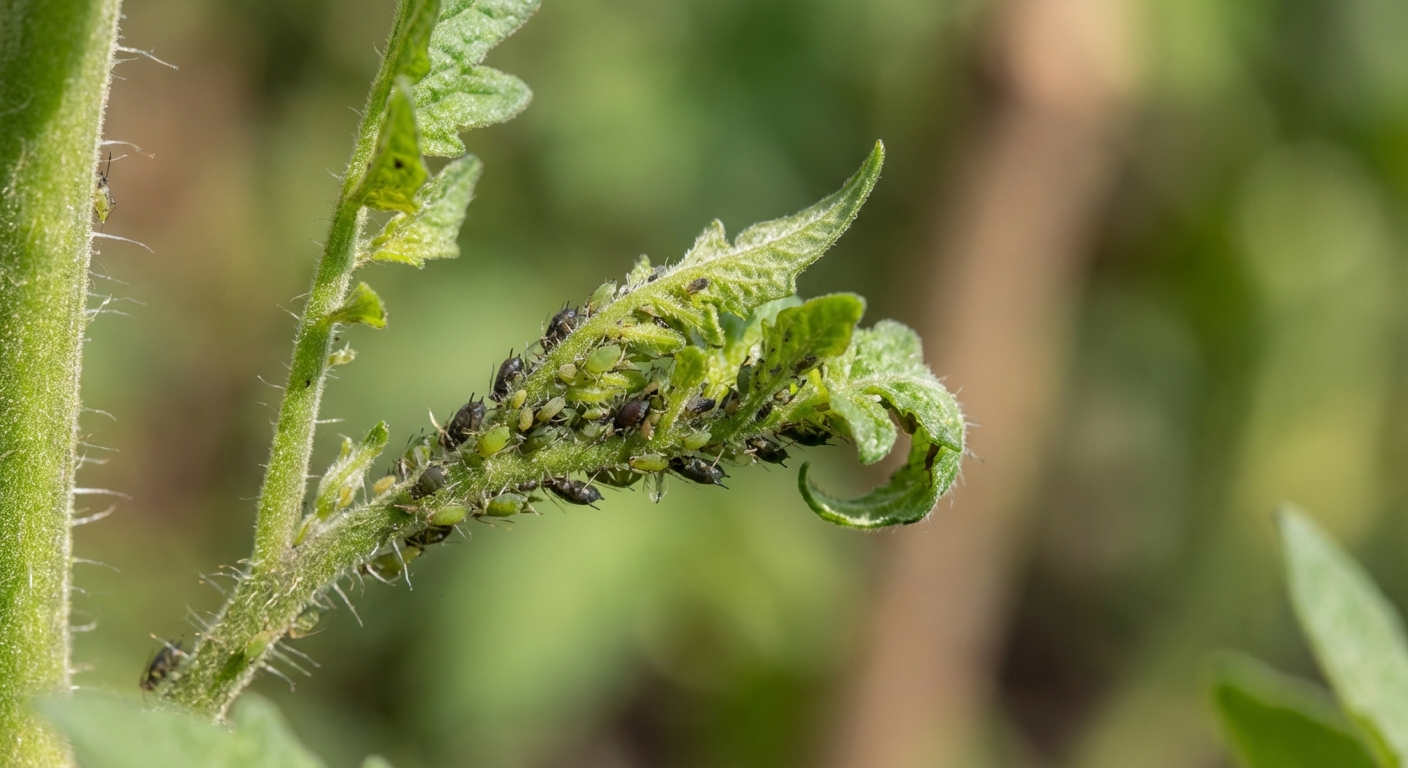
When sap-sucking insects feed, they can cause leaves to curl, pucker, and distort. Aphids and whiteflies also leave behind sticky honeydew that can lead to sooty mold. Tiny mites (including broad mites and spider mites) can also twist and crinkle new growth and are easy to miss without close inspection.
How to identify it
- Leaf curl paired with sticky residue on leaves or nearby surfaces.
- Clusters of aphids on tender stems and new growth, often green, black, or gray.
- Whiteflies flutter up in a little cloud when you shake the plant.
- Fine stippling, bronzing, or very distorted new leaves can suggest mites.
- Ants farming aphids can be a clue, too.
The fix
- Start with a strong water spray to knock pests off, especially aphids. Repeat every couple of days.
- Use insecticidal soap or horticultural oil, coating the undersides of leaves where pests hide. Follow label directions and avoid spraying in midday heat.
- Encourage beneficials: lady beetles, lacewings, and hoverflies love aphids. Let a few dill, alyssum, or cilantro plants flower nearby.
- Manage ants if aphids keep returning. Ants protect aphids, so controlling ants helps the whole system.
Once pests are under control, new growth often comes in normal. Old curled leaves may not flatten completely, and that is okay.
Cause 7: Too much nitrogen
Nitrogen is the “make me big and leafy” nutrient. Too much of it can push lush growth that curls, stays tender, and attracts pests. You can end up with a gorgeous green plant that forgets to make tomatoes.
How to identify it
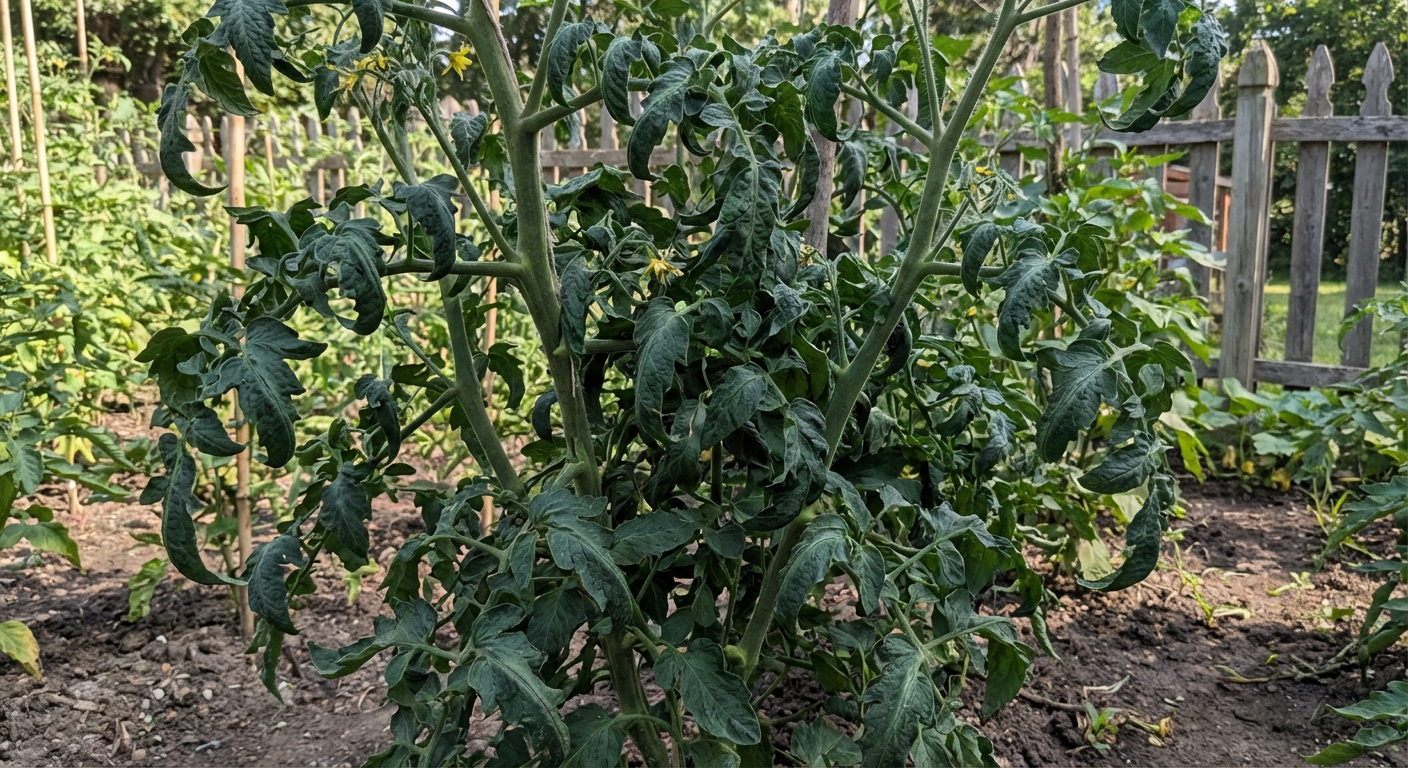
- Deep green, very vigorous foliage with curled or clawed leaves.
- Lots of leafy growth but few flowers or poor fruit set.
- Often follows heavy feeding with a high-nitrogen fertilizer, a lawn-type product, or fresh manure.
The fix
- Stop nitrogen-heavy feeding. Pause fertilizers labeled for lawns or leafy growth.
- Switch to a balanced or lower-nitrogen tomato fertilizer. Something with a modest N and higher K is often a better fit during flowering and fruiting. Do not overdo phosphorus if your soil already has plenty.
- Water normally. Do not try to flush aggressively unless you are in containers and you truly overapplied a soluble fertilizer.
- Add compost, not more fertilizer. Compost supports steady nutrition and soil biology without the nitrogen spike.
If you suspect fresh manure or “hot” compost is the cause, the best move is patience and consistent care while the soil biology settles things down.
When to worry
Leaf curl is worth attention, but it is not automatically a death sentence.
Usually not a big deal
- Curl shows up during hot afternoons and improves overnight.
- Plant is growing steadily and setting flowers.
- Leaves are green with no major distortion, mottling, or stunting.
- New growth looks normal, even if older leaves stay rolled.
Act quickly
- New growth is twisted, narrow, fern-like, or severely distorted.
- Plant is stunted with yellowing and poor flowering.
- You see aphids, whiteflies, sticky residue, or lots of ants.
- Multiple plants suddenly show distortion after a nearby spray day.
Quick checklist
- Feel the soil 2 to 3 inches down. Soggy, bone-dry, or wildly inconsistent tells you a lot.
- Look under leaves for pests, eggs, and fine webbing.
- Think back 7 to 14 days. Heat wave? Missed watering? New fertilizer? Heavy pruning? New mulch? Nearby weed killer?
- Watch the newest growth after you make one change. That is your progress report.
If you want, you can tell me what the curl looks like, whether it is up or down, and what your watering schedule is. I can help you narrow it down like we are standing together in the tomato patch with our hands in the mulch.