
Why Are My Cucumber Leaves Turning Yellow?

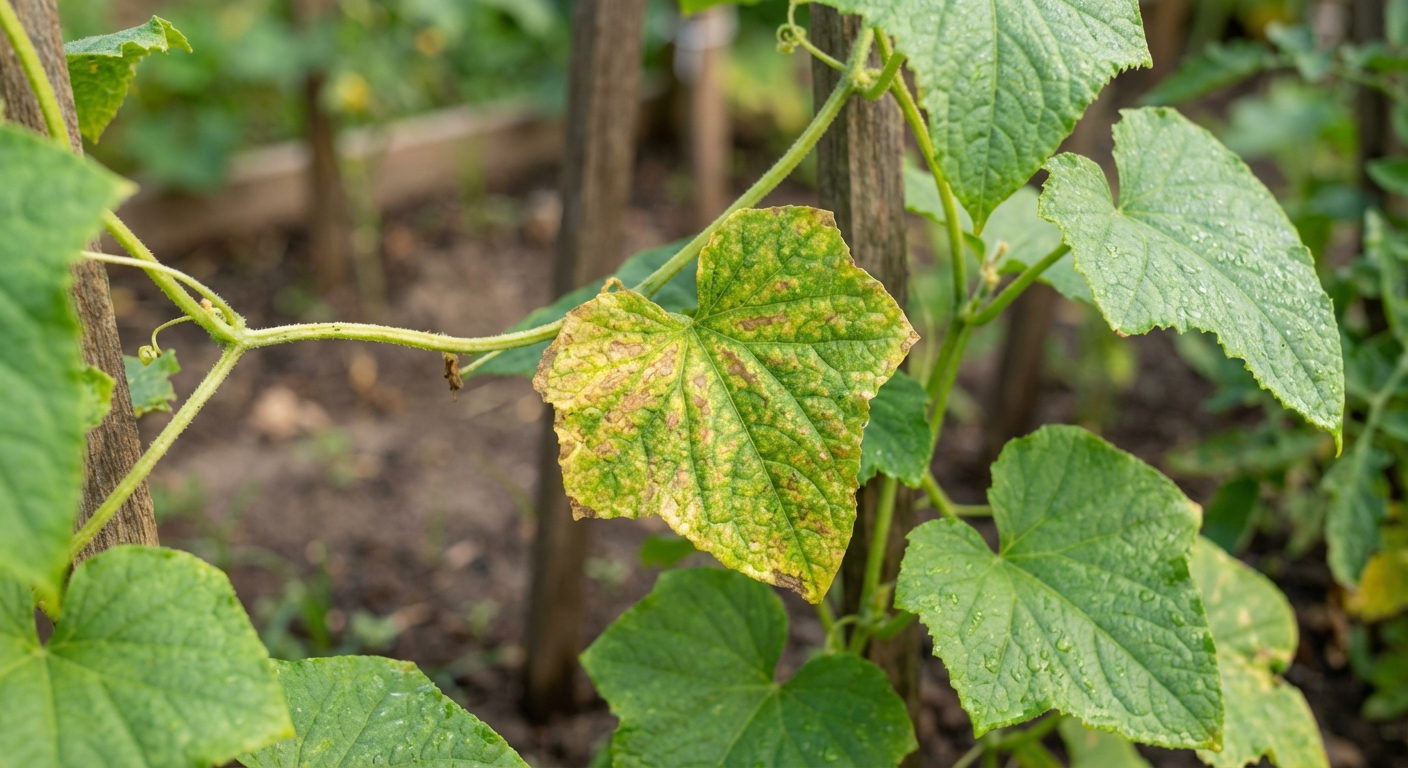
Yellow cucumber leaves can feel like a sudden betrayal, especially when the vines were happily racing up the trellis last week. Take a breath. Cucumbers are dramatic, but they are also very fixable when you match the pattern of yellowing to the cause.
This page is a simple diagnostic flow: what it looks like, a quick test you can do right now, and exactly what to do next. Start with the leaves that changed first (oldest or newest) and whether the yellowing is even, patchy, mottled, or spotted.
First, check normal aging
Cucumbers shed older leaves as they grow, especially once they start setting fruit. If only the lowest, oldest leaves are yellowing and the rest of the plant is vigorous, you may simply be seeing the plant rebalancing itself.
What it looks like
- Yellowing starts on the oldest leaves near the base.
- No spotting or fuzzy growth, just a slow fade from green to yellow.
- New growth at the tip stays green.
Quick test
Look at the overall picture. If it is just the lowest couple of leaves and everything else looks healthy, it is likely normal.
Fix
- Snip off fully yellow leaves with clean pruners to improve airflow.
- Keep watering and feeding consistent (see the prevention checklist at the end).
Cause 1: Overwatering or poor drainage
This is a very common reason in home gardens, especially in containers or heavy clay soil. Cucumber roots need oxygen. When soil stays soggy, roots struggle, nutrients stop moving properly, and leaves yellow.
What it looks like
- General, all-over paling that can start on older leaves.
- Leaves may look a bit puffy, limp, or droopy even though the soil is wet.
- Stems can feel soft, and growth may stall.
Quick test
- Push a finger 2 to 3 inches into the soil. If it is still wet 24 to 48 hours after watering (and it is not cool, rainy weather), you are likely overdoing it.
- If you can, dig a small test hole 4 to 6 inches deep. If it is muddy or smells sour, roots are not getting air.
Fix
- Let the top 1 to 2 inches dry before watering again.
- Water deeply in the morning, not little sips every day.
- If in a pot, confirm drainage holes are open and the pot is not sitting in a saucer of water.
- In-ground, improve drainage with compost and plant on a slight mound or raised bed next season.
Fast rescue tip: If the plant is in a container and truly waterlogged, gently slide it out and check for circling or brown, mushy roots. Repot into fresh, lightly moist mix in a pot with excellent drainage.
Cause 2: Underwatering and heat stress
Cucumbers are mostly water, so they sulk quickly when they get too dry, especially during fruiting. Repeated dry spells can cause yellowing, crisp edges, and a plant that looks tired by midday.
What it looks like
- Leaves droop in the heat, then may perk up at night.
- Yellowing may start as a dull, dusty green that turns yellow.
- Leaf edges can brown or feel papery if stress is strong.
Quick test
- Check soil moisture 3 to 4 inches down. If it is dry at that depth, the roots are running on fumes.
- Look at fruit. Bitter cucumbers and misshapen fruit often ride along with uneven watering.
Fix
- Give a slow, deep soak so water reaches the full root zone.
- Mulch with 2 to 3 inches of straw, shredded leaves, or untreated grass clippings (thin layers) to keep moisture steady.
- During heat waves, water early and consider temporary shade cloth during the hottest afternoon hours.
Cause 3: Nitrogen deficiency
When cucumbers run low on nitrogen, they cannot keep those big, broad leaves green. This often shows up once vines start growing fast or after heavy rains that leach nutrients.
What it looks like
- Older leaves yellow first, starting with an overall pale look.
- New growth may be smaller, and the whole plant looks “washed out.”
- Not much spotting, just fading color.
Quick test
- Think back 2 to 3 weeks. Have you had lots of rain, or have you not fertilized since planting?
- Compare old leaves to new. If the oldest leaves are the most yellow, nitrogen is a prime suspect.
Fix
- Feed with a nitrogen-forward option: fish emulsion, a balanced vegetable fertilizer with a bit more N than P and K, or blood meal used lightly.
- If using blood meal, scratch it into the top inch of soil and water it in. Store it securely, since it can attract pets and wildlife.
- Top-dress with compost, then water it in for steady, gentle support.
- For containers, use a diluted liquid feed every 7 to 14 days during heavy growth.
Clara note: Overfeeding can push lush leaves at the expense of flowers. Aim for steady growth, not a jungle so thick you cannot find your cucumbers.
Cause 4: Iron deficiency
Iron deficiency is sneaky because the soil can contain iron, but the plant cannot access it, often due to high soil pH, cool soil, or waterlogged roots.
What it looks like
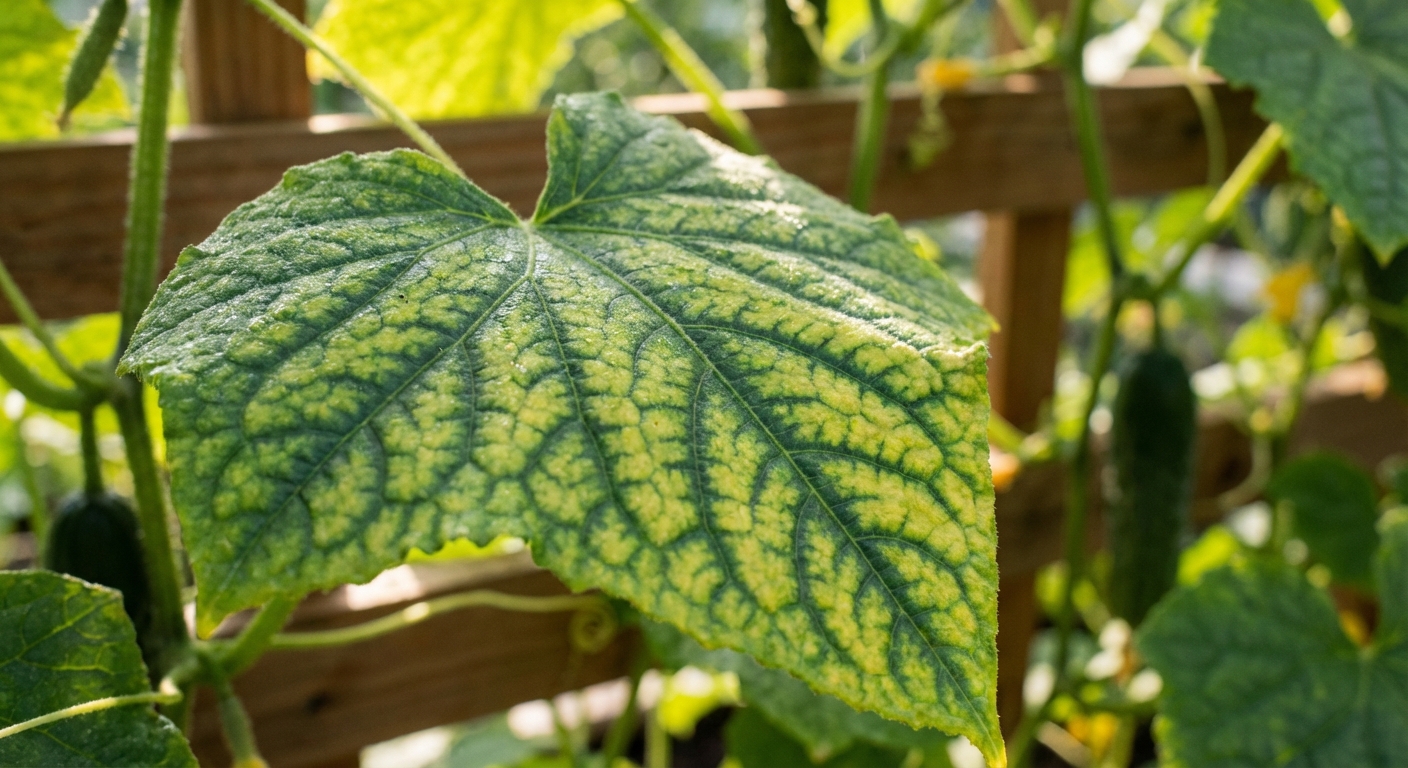
- Newest leaves turn yellow while the veins stay greener, like a delicate green roadmap.
- Older leaves may remain relatively green at first.
Quick test
- If you have a soil test kit, check pH. Iron becomes less available as pH climbs above about 7.0.
- Look for the pattern: yellow between veins on the newest growth is the classic clue.
Fix
- Apply chelated iron (follow label directions) for quicker improvement.
- Address the underlying issue: avoid overwatering, and improve drainage.
- If pH is high, use a soil-test-guided plan to adjust it over time. Compost supports soil health, but pH changes usually take time and are not always dramatic.
Cause 5: Downy mildew
Downy mildew is a common cucumber disease that thrives in humid conditions and spreads quickly once it gets going. It is one of those problems where early action matters.
What it looks like
- Angular yellow patches on the top of leaves, often limited by the leaf veins.
- On the underside, you may see a grayish to purplish fuzz, especially in the morning.
- Leaves eventually brown, curl, and collapse.
Quick test
- Turn a suspicious leaf over and look closely for fuzzy growth.
- Notice timing: outbreaks often follow cool nights, heavy dew, frequent rain, or overhead watering.
Fix
- Remove the worst affected leaves and dispose of them in the trash, not the compost.
- Increase airflow: thin overcrowded vines and keep leaves off the soil with a trellis.
- Water at soil level in the morning.
- If disease pressure is high, consider an approved product for edible crops such as copper (often best as a preventative) or chlorothalonil where permitted. Always follow label instructions and check local regulations and home-garden restrictions.
Important: Many fungicides are preventive, not curative. Once a leaf is badly infected, it will not turn green again.
Cause 6: Powdery mildew
Powdery mildew is the one gardeners recognize by name, but it still causes confusion because yellowing can show up before the white coating looks dramatic.
What it looks like
- White, flour-like patches on leaves or stems.
- Leaves may look dull, then turn yellow, then brown with time.
- Usually starts on older leaves and spreads upward.
Quick test
- Rub a spot gently. Powdery mildew often smears like dust.
- Check spacing and airflow. Crowded vines are a favorite setup for this fungus.
Fix
- Remove heavily affected leaves and trash them.
- Improve airflow and avoid wetting foliage when watering.
- Use a labeled product for powdery mildew on edibles (options vary by region). Apply early and repeat as directed.
Cause 7: Cucumber beetles
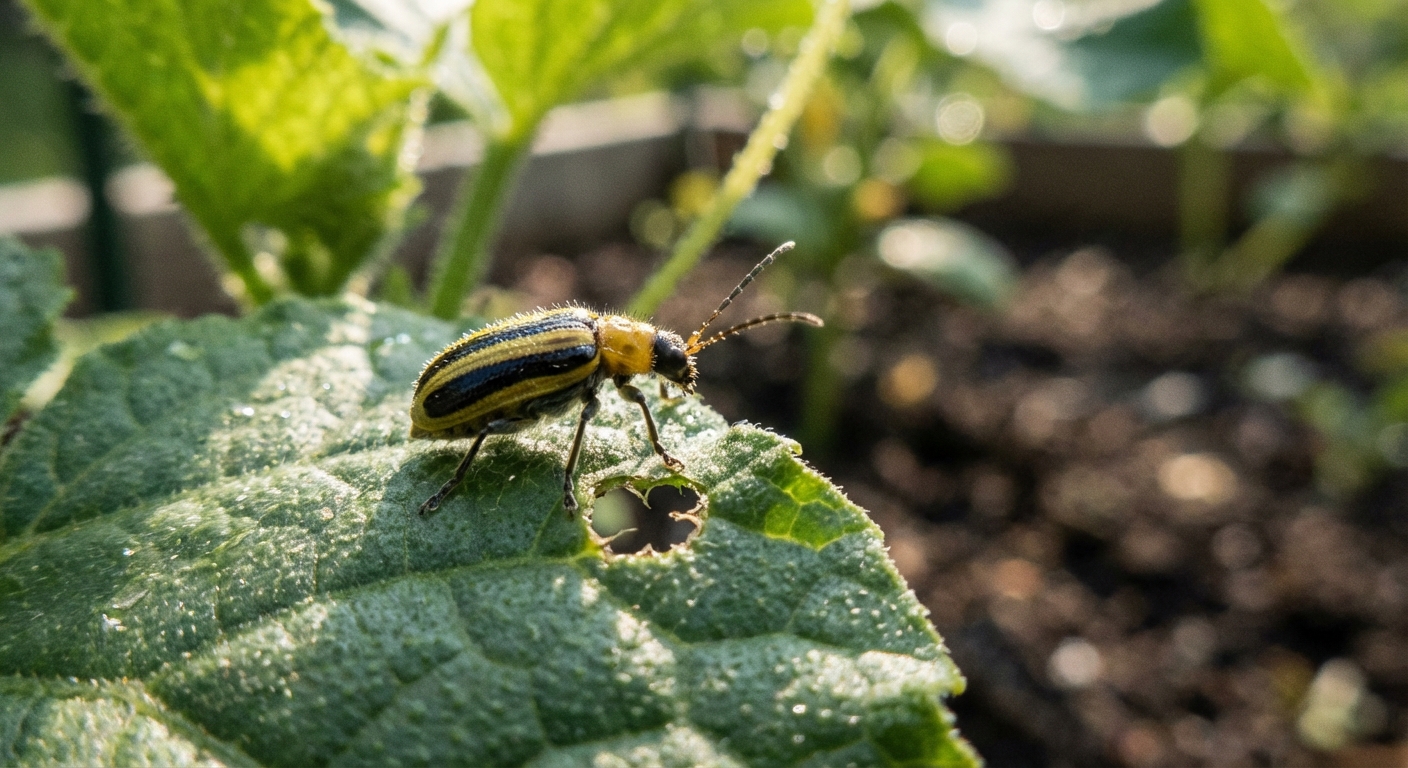
Cucumber beetles chew leaves, spread disease, and stress plants into yellowing. They are small, but their impact is not.
What it looks like
- Yellowing leaves paired with ragged holes or lacy, chewed areas.
- You may see small striped or spotted beetles on leaves and flowers.
- If bacterial wilt is involved, vines can suddenly droop and fail even when watered.
Quick test
- Go out early in the morning and check under leaves. Beetles are slower when it is cool.
- Look for frass (tiny dark specks) and fresh chewing.
Fix
- Hand-pick into soapy water in the morning.
- Use floating row cover early in the season, then remove when plants flower so pollinators can do their job.
- Try deterrents like kaolin clay. For sprays, use products labeled for cucurbits and cucumber beetles. Spinosad may help when applied correctly, but results can vary on adults. Depending on labels in your area, some gardeners use pyrethrins or neem-based products as part of a broader plan. Apply in the evening to protect pollinators and follow the label.
- Keep weeds down around the patch, as they can shelter pests.
Cause 8: Spider mites
If your weather is hot and dry, spider mites can sneak in and slowly drain the life out of cucumber leaves until they look speckled, bronzed, and yellow.
What it looks like
- Tiny pale stippling that builds into a yellow, dusty look.
- Fine webbing, often on the undersides of leaves or between leaf stems.
- Worse on stressed plants in heat.
Quick test
- Tap a leaf over white paper. If tiny specks crawl, suspect mites.
- Check undersides with a hand lens if you have one.
Fix
- Rinse undersides of leaves with a strong spray of water in the morning.
- Reduce stress with consistent watering and mulch.
- If needed, use insecticidal soap or horticultural oil labeled for edibles and mites, and repeat as directed (coverage matters).
Cause 9: Sunscald
Cucumber leaves can burn if a plant is moved from indoors to full sun too quickly, if shade cloth is removed abruptly, or if a heat wave hits when plants are already stressed.
What it looks like
- Bleached, yellow-white patches on the most sun-exposed leaves.
- Patches may turn papery and brown later.
- Damage is often worse on the outer canopy and the top of the plant.
Quick test
- Think about recent changes: transplanting, moving containers, pruning nearby plants that provided shade, or sudden hot weather.
- Check pattern: sunscald favors the side facing afternoon sun.
Fix
- Provide temporary shade during extreme heat, especially from harsh afternoon sun.
- Keep watering consistent so the plant can cool itself through transpiration.
- Do not strip off too many leaves. The plant needs healthy foliage to recover.
Cause 10: Root stress
If roots are cramped in a small pot, damaged during weeding, or slowed by cool soil, the leaves often respond with yellowing and stalled growth.
What it looks like
- Overall yellowing and slow growth without clear spots or pest damage.
- Wilting in the afternoon even when soil seems moderately moist.
- In containers, roots may circle the pot.
Quick test
- For potted cucumbers, gently slide the root ball out. If it is a tight mat of roots, it needs more space.
- If nights are regularly below about 55°F (13°C) or the soil stays cool, cucumbers can look chlorotic and sluggish because nutrient uptake slows.
Fix
- Transplant container plants into a larger pot with fresh mix, handling roots gently.
- Mulch to stabilize soil temperature, and use row cover on chilly nights.
- Weed carefully. Cucumber roots are shallow and easy to nick.
Also possible: Virus or herbicide
If the yellowing looks more like a strange pattern than a gradual fade, these “rule-out” causes are worth a quick look.
Cucumber mosaic virus
- What it looks like: mottled, mosaic yellow and green pattern, leaf distortion, stunted growth, and sometimes misshapen fruit.
- What to do: there is no cure. Remove and trash severely affected plants to reduce spread, control aphids, and clean up weeds that can host viruses.
Herbicide drift
- What it looks like: twisted or cupped new growth, odd yellowing, and general distortion, often after nearby lawn or field spraying.
- What to do: protect plants from drift, avoid using weed-and-feed products nearby, and consider replanting if damage is severe.
When to pull the plant
Sometimes the kindest thing you can do is stop fighting a losing battle.
- Suspected bacterial wilt: if a vine suddenly collapses and does not recover with watering, and you have cucumber beetles present, remove the plant and trash it. Do not compost it.
- Severe downy mildew: if most leaves are infected and collapsing, you may get better results by removing the plant, sanitizing supports, and replanting later with a resistant variety (if your season allows).
Quick decision guide
- Old leaves yellow first, no spots: normal aging or nitrogen deficiency.
- New leaves yellow first, green veins: iron deficiency or root stress affecting nutrient uptake.
- Angular yellow patches, fuzzy underside: downy mildew.
- White powdery coating, then yellowing: powdery mildew.
- Yellowing plus holes and beetles: cucumber beetles (watch for wilt).
- Stippling, bronzing, fine webbing: spider mites.
- Bleached patches on topmost leaves: sunscald.
- Wet soil and droopy plant: overwatering or drainage issues.
- Mottled mosaic pattern and distortion: virus.
Prevention checklist
If you want cucumbers that stay lush and green through harvest, consistency is the secret sauce.
- Water smart: Deep, steady watering at the soil line. Avoid overhead watering when possible.
- Mulch: 2 to 3 inches to stabilize moisture and reduce splash-up disease spread.
- Feed lightly but regularly: Compost at planting, then a balanced fertilizer or gentle liquid feed during heavy growth and fruiting.
- Support the vines: Trellis for airflow and cleaner leaves.
- Scout weekly: Check undersides of leaves for pests and early disease signs.
- Remove sick leaves promptly: Bag and trash them if disease is suspected.
- Disinfect pruners: Wipe blades between cuts when disease is present, especially if you are moving plant to plant.
- Rotate crops: Avoid planting cucumbers or other cucurbits in the same spot each year when possible.
- Choose resistant varieties: If downy mildew is common in your area, look for varieties labeled with disease resistance.
Want a fast second opinion? Leave a comment with which leaves are yellowing first (old or new), whether you see spots, fuzz, webbing, or chewing, and how you have been watering. Those details usually narrow it down in minutes.