
String of Pearls Care and Propagation

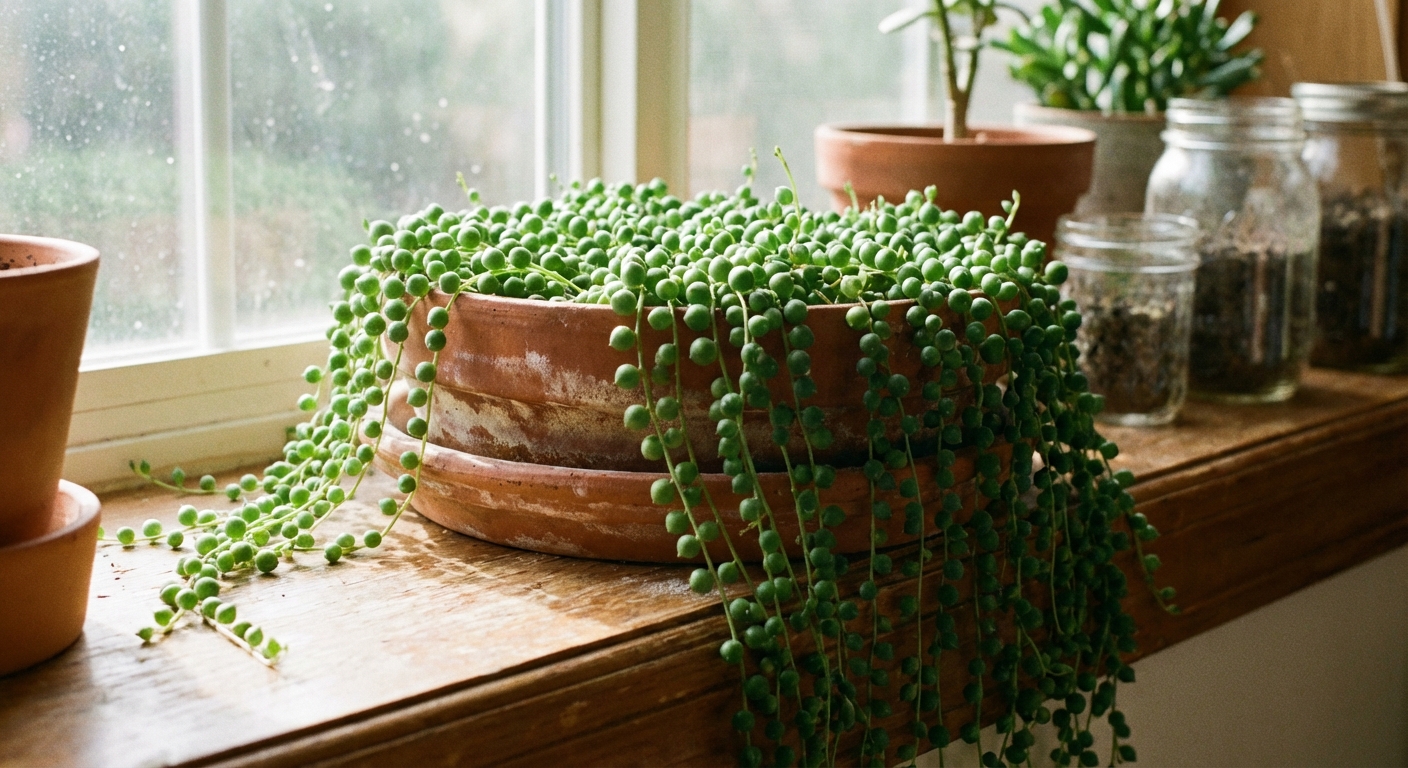
String of pearls is one of those plants that looks like magic the first time you see it: little green beads tumbling over a pot like a living necklace. It is also one of those succulents that can go from “thriving” to “why are you crispy?” surprisingly fast if the light or watering is off.
The good news: once you understand what it wants (bright light, quick-drying soil, and a watering routine that respects its succulent nature), Curio rowleyanus (syn. Senecio rowleyanus) is wonderfully forgiving. And if your plant ever gets sparse, propagation is so easy it feels like cheating.
Quick care snapshot
- Light: Bright light with a few hours of gentle sun (morning is perfect)
- Water: Soak thoroughly, then let soil dry out almost completely
- Soil: Very fast-draining cactus or succulent mix, boosted with extra grit
- Pot: Shallow pot with drainage holes
- Best temperature: 65 to 80°F (18 to 27°C), protect from frost
- Propagation: Stem cuttings placed on soil or lightly tucked in, root in a few weeks
- Pet safety: Toxic if ingested (keep away from pets and kids)
Meet the plant
String of pearls is a trailing succulent native to southern Africa, often cited as Namibia. Those “pearls” are modified leaves designed to store water, which is why the plant prefers a dry-and-breezy root zone and gets unhappy when its pot stays damp.
It also naturally creeps along the ground in habitat, rooting as it goes. That creeping habit is exactly why it propagates so readily in our homes.
What healthy looks like: firm, plump pearls with good color, steady spacing along the stem, and new growth at the crown. (Bonus nerd detail: each pearl has a little “window” or slit that helps light reach the inner tissues.)
Light
Light is the difference between a lush curtain of pearls and a plant that looks like a few lonely strings on a bad hair day.
Ideal light indoors
- Best: A bright spot near an east window, or a south window with a sheer curtain
- Good: West window if you filter the harshest afternoon sun
- Possible: Under a grow light (especially in winter or low-light homes)
String of pearls can take a few hours of gentle direct sun, especially morning sun. Strong midday sun through glass can scorch the beads, leaving pale patches that never quite return to green. If you are moving it into stronger light, do it gradually over a week or two.
Signs your light is off
- Too little light: Long bare sections between pearls, thin weak stems, slower growth, the plant “reaches” toward the window
- Too much hot sun: Bleached beads, crispy tan spots, sudden shriveling even when soil has moisture
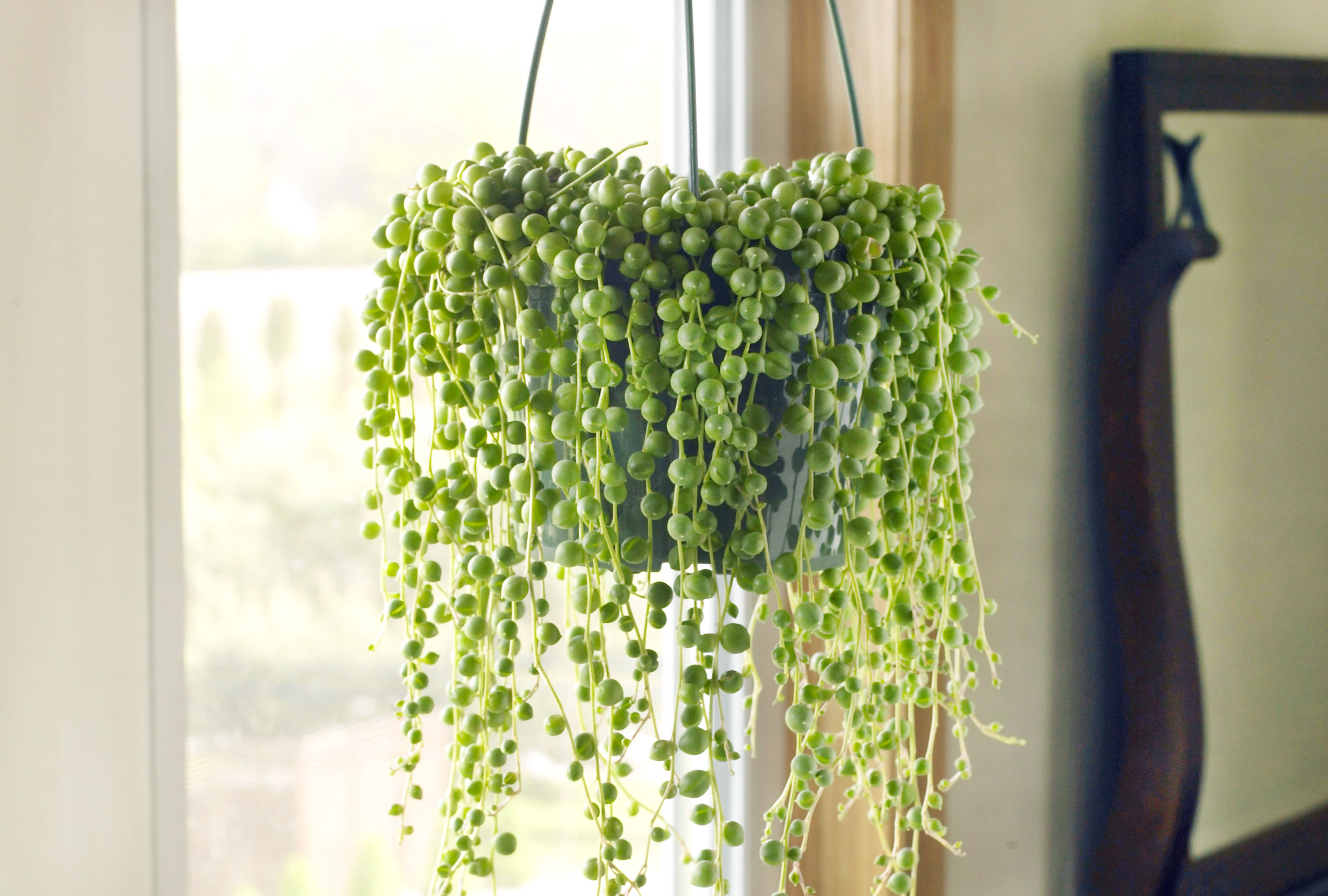
Watering
String of pearls hates two things: bone-dry roots for months and wet roots for days. The sweet spot is a deep drink followed by a thorough dry-out.
How to water
- Check dryness: Feel the soil 2 inches down, or lift the pot. A light pot usually means it is ready.
- Water deeply: Water until it runs from the drainage holes.
- Drain completely: Never let it sit in a saucer of water.
- Wait: Let the mix dry out almost completely before watering again.
How often should you water?
There is no single schedule, but here is a realistic starting point:
- Spring and summer: About every 10 to 21 days
- Fall and winter: About every 3 to 5 weeks, sometimes longer in low light
The range is real. A small terracotta pot in bright light usually needs the shorter end. A larger plastic pot in lower light can push longer. If you only remember one rule, let it be this: water based on dryness, not dates.
Bottom watering vs top watering
Both work. Bottom watering can help when the top of the pot is crowded with stems and you do not want to splash the pearls. Top watering is fine too, as long as the pot drains freely and the mix is fast-drying.
Soil and potting
Most string of pearls struggles are not about you being “bad at succulents.” They are about soil that holds water like a sponge.
The best soil mix
A quality cactus or succulent mix is a good base, but I like to make it even airier:
- Easy upgrade: 2 parts cactus mix + 1 part perlite or pumice
- Extra gritty option: Add a handful of coarse sand or fine gravel (not beach sand)
This creates a root zone that dries quickly and brings oxygen back to the roots between waterings.
Choose the right pot
- Drainage holes are non-negotiable.
- Shallow is better than deep: The roots are not trying to mine for treasure.
- Terracotta helps: It breathes and dries faster than plastic or glazed ceramic.
Temp and airflow
String of pearls is happiest in typical home conditions, with one caveat: it prefers airflow. Stagnant, humid corners can encourage rot, especially if the soil stays moist.
- Temperature: Aim for 65 to 80°F (18 to 27°C). Avoid cold drafts and frost.
- Humidity: Average indoor humidity is fine. Very high humidity plus wet soil is trouble.
- Airflow: A bright spot with gentle air movement keeps foliage and soil surface drier.
Fertilizing
This plant does not need heavy feeding. Too much fertilizer can cause soft, weak growth.
- Feed once in spring and optionally once in early summer with a diluted succulent fertilizer (half strength is plenty).
- Skip feeding in fall and winter when growth slows.
Pruning for fullness
If your string of pearls is getting leggy, pruning is your friend. Cutting encourages branching, and the cut pieces can become new plants.
How to prune
- Use clean scissors or snips.
- Cut a few longer strands back by a couple inches.
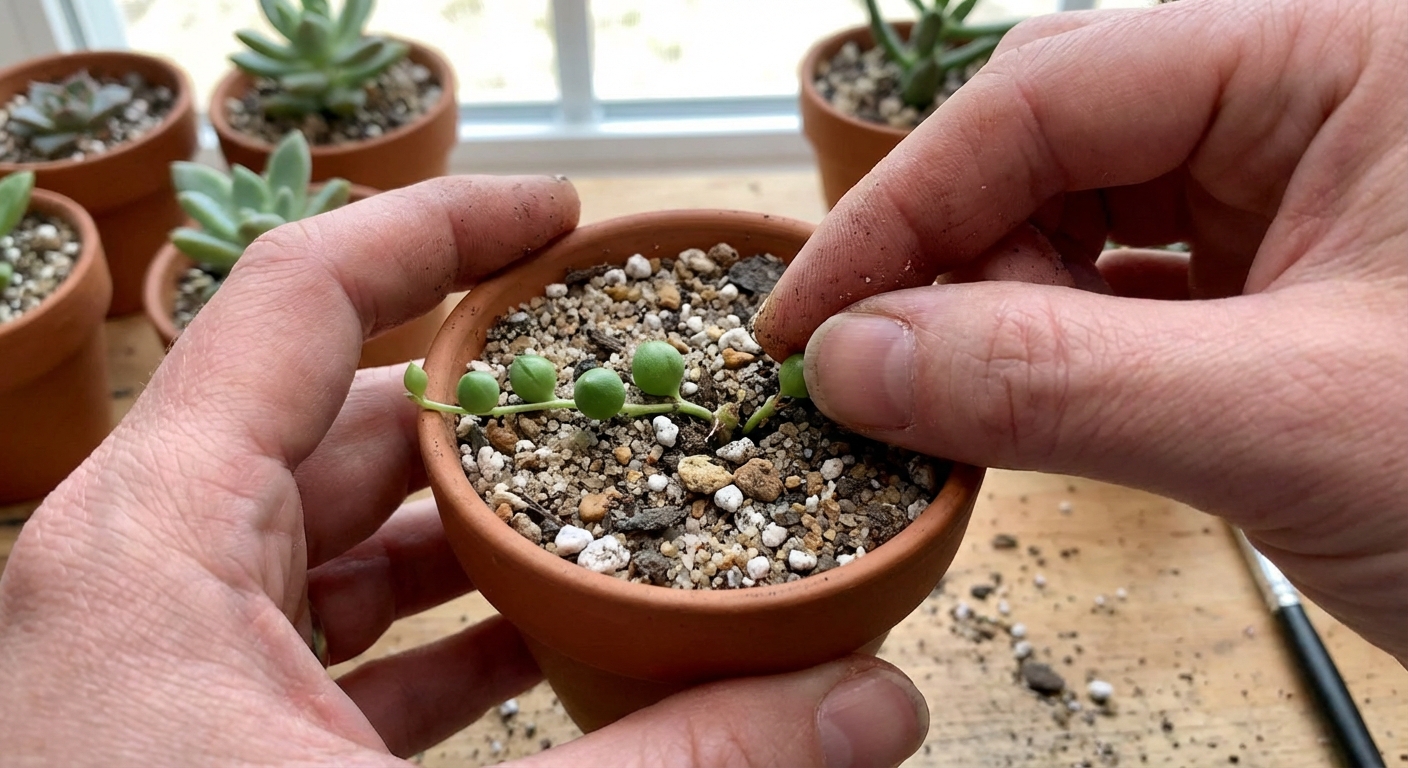
- Pin those cut strands onto the soil surface to root and fill in the top.
That last step is the secret sauce: rooting stems on top of the pot turns a sparse crown into a thick “pearl mop.”
Propagation
Propagating string of pearls is wonderfully beginner-friendly. The goal is simple: get a section of stem in contact with soil so it can grow roots at the nodes.
Best time to propagate
Spring through early fall is easiest because the plant is actively growing. You can propagate in winter, but it usually takes longer.
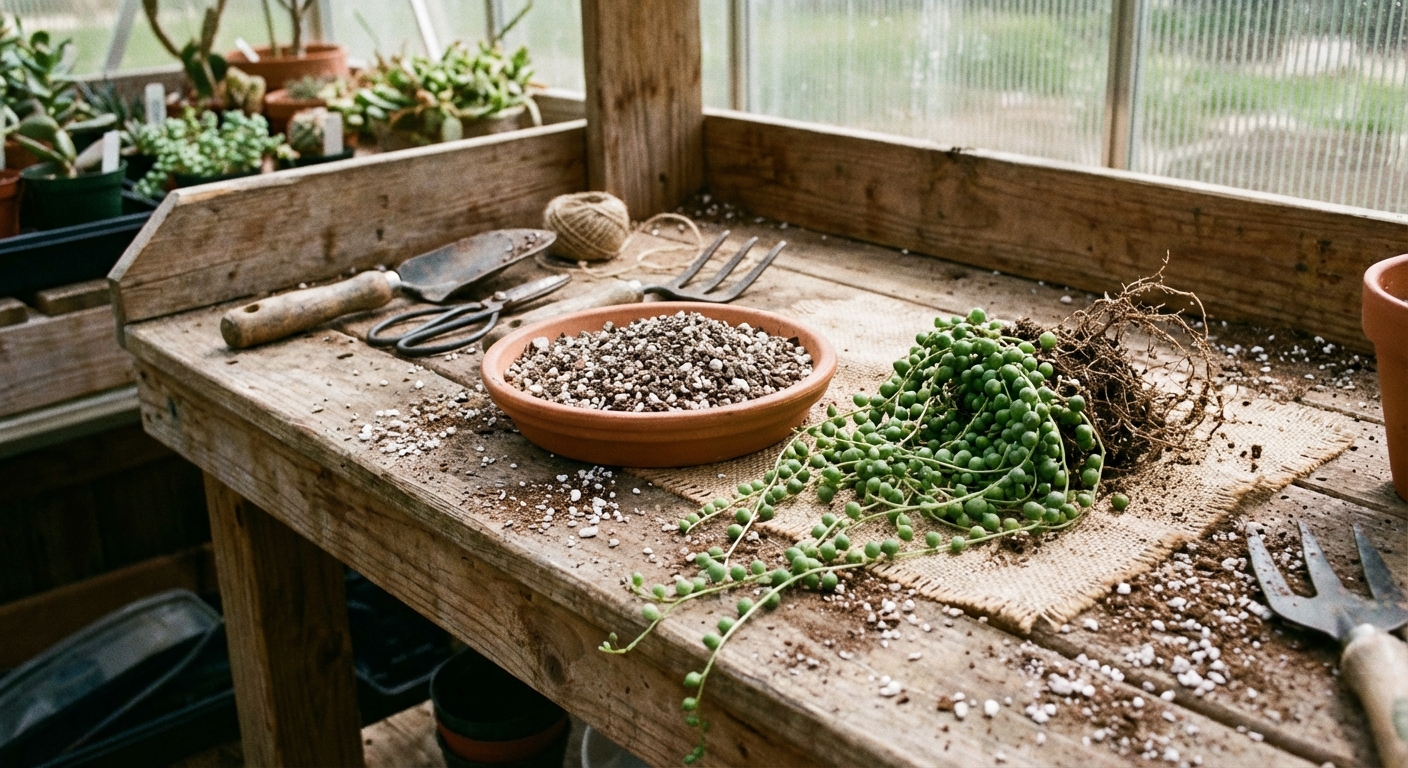
What you need
- A healthy strand or two
- Clean scissors
- A small pot with drainage holes
- Gritty succulent mix
Method 1: Soil propagation
- Snip a strand 3 to 6 inches long.
- Remove a few pearls near the cut end to expose stem nodes.
- Let the cutting sit for a few hours so the cut end can dry slightly.
- Lay the strand on top of soil and gently tuck the bare nodes into the mix, or hold them down with a bent paperclip.
- Keep in bright light.
- Moisture: Lightly moisten the mix once, then let it dry toward dry before re-moistening. Aim for “barely damp sometimes,” not “constantly damp.”
Roots usually form in 2 to 6 weeks. Once you feel a little resistance when you tug, it is rooting. After that, transition to normal soak-and-dry watering.
Method 2: Water propagation
You can root cuttings in water, but moving water roots to soil can be a little bumpy. If you try it:
- Keep the pearls out of the water and only submerge the bare stem nodes.
- Pot up into gritty soil as soon as you see a healthy root system starting.
Shriveling pearls
Shriveling is the number-one panic moment. The tricky part is that both underwatering and overwatering can cause shriveled pearls. The difference is in the texture, stems, and soil.
Common causes
- Underwatering: Pearls look wrinkled and a bit deflated, stems are still firm, soil is very dry and the pot feels light.
- Overwatering or rot: Pearls may shrivel but also feel soft or mushy, stems darken near the soil, soil stays wet and heavy.
- Too much hot sun: Pearls shrivel quickly and show bleaching or crispy patches, especially on the window-facing side.
- Rootbound or hydrophobic soil: Water runs straight through or off the surface, but the root ball stays dry. Pearls remain wrinkled even after watering.
Revive a thirsty plant
- Confirm the soil is dry deep down.
- Soak thoroughly until water drains out.
- If the soil is hydrophobic (repels water), bottom water for 20 to 30 minutes to rehydrate the mix.
- Move the plant to bright, indirect light for a week while it recovers.
When the roots are healthy, pearls often plump back up within a few days to a week.
Overwatering rescue
If you suspect overwatering, act quickly. Succulents do not “dry out” gracefully when the roots are suffocating.
Signs of overwatering
- Soft, translucent, or mushy pearls
- Stems turning brown or black near the soil line
- A musty smell from the pot
- Soil that stays wet for many days
Rescue plan
- Stop watering immediately.
- Unpot the plant: Gently remove it and inspect the roots.
- Trim rot: Cut away black, mushy roots and stems with sterilized scissors.
- Let it dry: Allow healthy cut ends to dry for several hours to a day.
- Repot into dry, gritty mix in a pot with drainage holes.
- Wait before watering: Hold off 5 to 10 days, then water lightly. After that, return to soak-and-dry once you see signs of stability.
- Take insurance cuttings: If any strands still look healthy, propagate them right away.
It sounds dramatic, but think of it like emergency surgery plus cloning. String of pearls usually rewards decisive action.
Common issues
Pearls falling off
- Normal: A few pearls drop during handling or repotting.
- Not normal: Lots of pearls dropping with soft stems. Check for overwatering.
- Fix: Improve light, reduce watering, and make sure the pot drains fast.
Leggy strands
- Cause: Low light
- Fix: Move closer to a bright window or add a grow light, then prune and root cuttings back into the top of the pot.
Pests
Mealybugs are the usual suspects. Check the stems near the crown and the undersides of pearls for cottony clusters.
- Isolate the plant.
- Spot-treat with 70% isopropyl alcohol on a cotton swab.
- Repeat weekly for a few rounds and consider an insecticidal soap if needed.
Flowers and outdoor time
Flowers
Happy plants sometimes bloom with small white flowers that can smell faintly like cinnamon. Blooming is more likely with strong light and a clear seasonal rhythm (brighter summers, drier winters).
Can it go outside?
Yes, it can enjoy a summer vacation outdoors if you are careful. Acclimate it slowly to brighter light, protect it from heavy rain (wet soil is the fastest route to rot), and avoid harsh midday sun. Bring it back inside before nights get cold.
Display ideas
This is a plant that begs to trail. Give it a perch where the strands can spill freely and stay out of splash zones.
Favorite displays
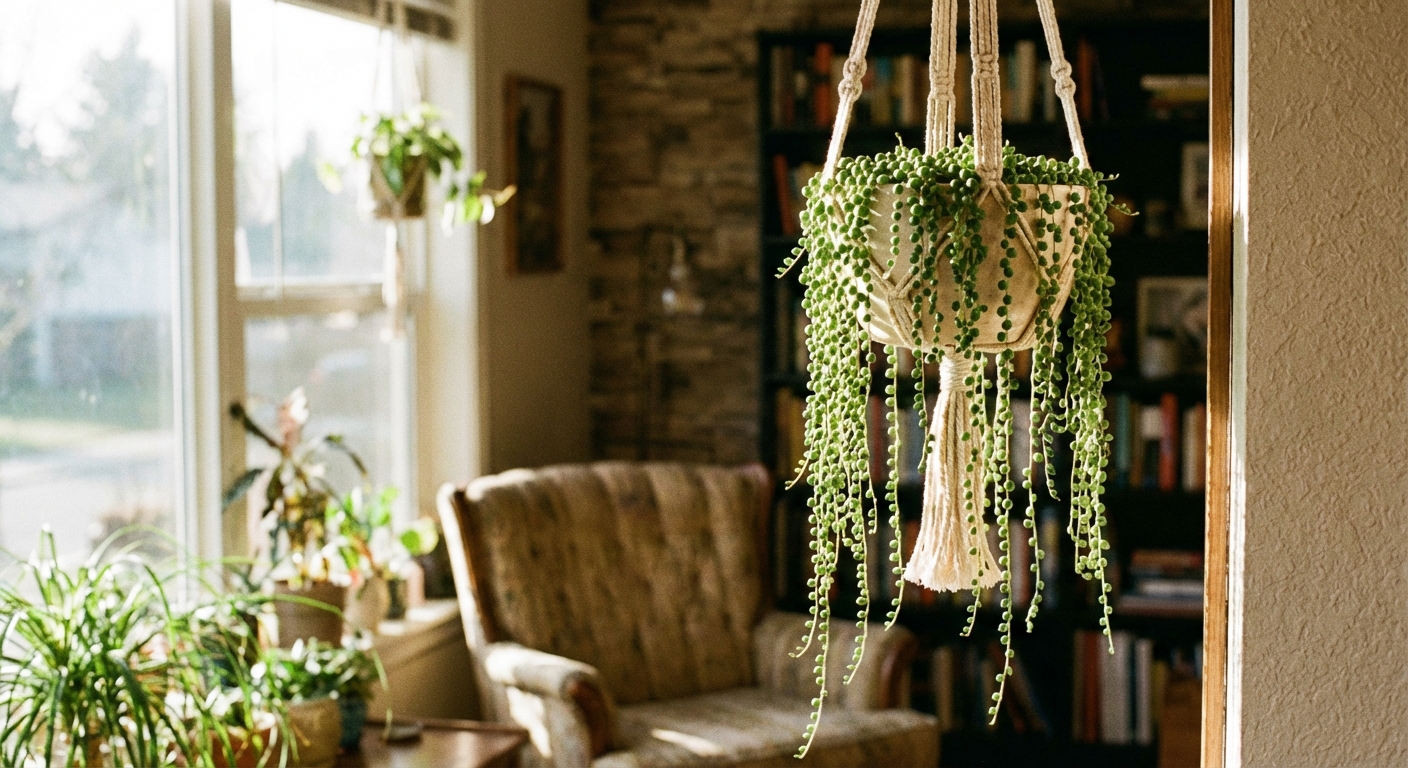
- Hanging basket near a bright window: Classic for a reason. Rotate the pot every couple of weeks so growth stays even.
- High shelf or plant stand: Let strands cascade like a living curtain. Keep it away from heating vents that dry it out too fast.
- Wall planter with drainage: Beautiful, but make sure it can drain fully and is easy to take down for watering.
- Grouped with other trailers: Pair with string of hearts or burro’s tail for a soft, trailing corner.
FAQ
Should I mist string of pearls?
Generally, no. Misting does not replace proper watering and can keep the crown too damp. The exception is propagation, where a tiny bit of moisture management helps. Think “lightly moisten the mix, then let it head back toward dry,” not daily misting.
Does string of pearls like to be rootbound?
It can tolerate being slightly snug, but it does not need to be cramped. Repot every 2 to 3 years, or sooner if the soil has broken down and stays wet too long.
Why are the pearls turning yellow?
Yellowing is often a sign of stress from overwatering, low light, or soil that stays wet. Check moisture first, then adjust light and consider repotting into a grittier mix.
How do I make it look fuller on top?
Take a few longer strands, coil them on the soil surface, and tuck exposed nodes into the mix. Those nodes will root and create new growth at the crown.
Is string of pearls toxic?
Yes. It is considered toxic if ingested, including for cats, dogs, and people. If you suspect a pet has chewed it, contact your veterinarian or a pet poison hotline. If a child ingests it, contact Poison Control.
A gentle pep talk
If your string of pearls is struggling, do not take it as a character flaw. This plant is simply honest about its needs: bright light, fast drainage, and a patient watering hand. Once you get those three right, it becomes a joyful little companion that practically propagates itself.
And if you catch me whispering encouragement to my ferns while I pin down pearl cuttings with a bent paperclip, just know you are in good company.