
Prayer Plant (Maranta) Care

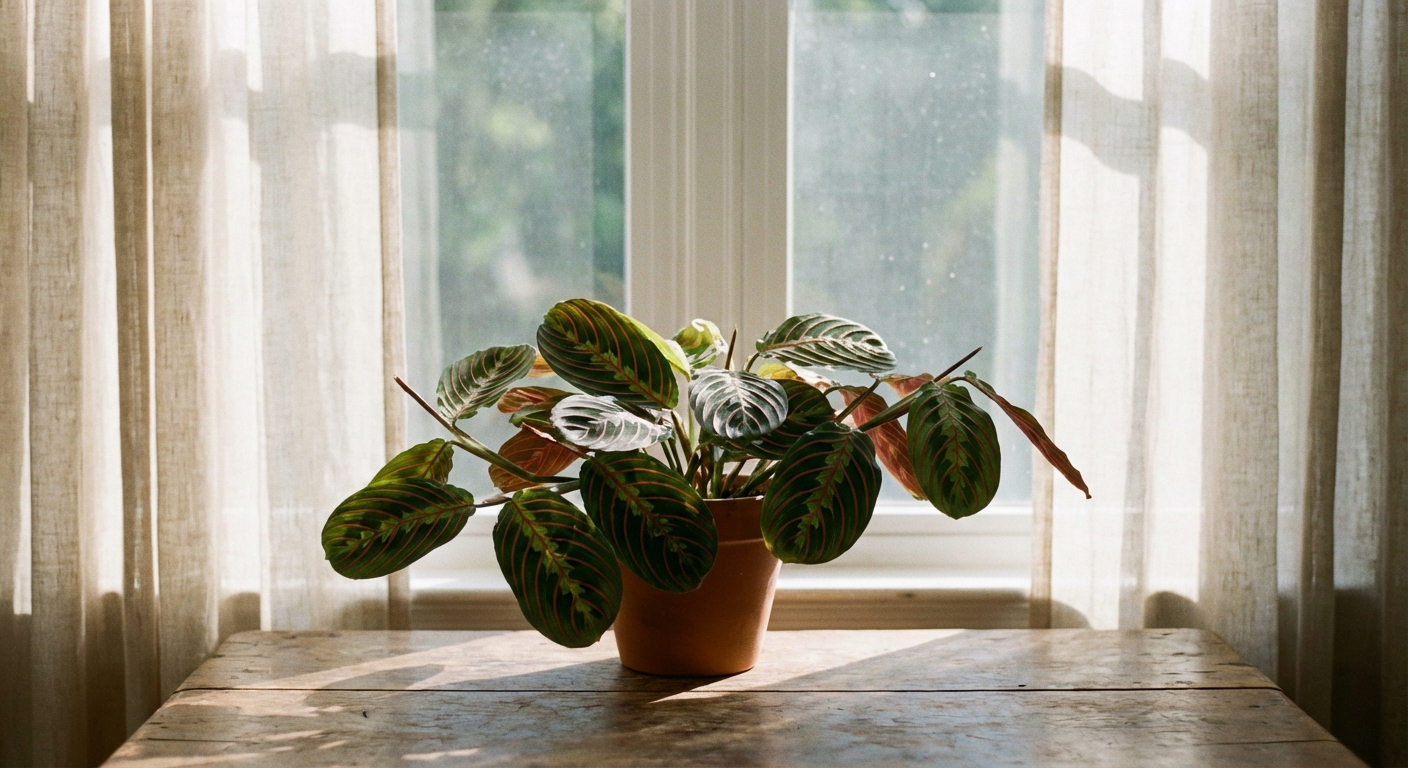
Prayer plants have a way of making people feel like plant whisperers. One minute their leaves are held more horizontally like they are sunbathing, and that evening they lift and fold as if they are settling in for a quiet prayer. That daily movement is part of what makes Maranta leuconeura so lovable. The other part is the leaf patterning, those painterly veins that look almost hand stitched.
This guide will walk you through the exact conditions Maranta prefers, what it is trying to tell you when leaves curl, and how to keep it happy without turning your home into a rainforest (though I will not judge you if you do).
Maranta basics at a glance
- Botanical name: Maranta leuconeura
- Common names: Prayer plant
- Growth habit: Low, spreading, trailing, great for shelves and hanging planters
- Light: Bright, indirect light is ideal
- Water: Evenly moist, not soggy, prefers filtered or low mineral water
- Humidity: High humidity makes it shine, average humidity is survivable with good watering habits
- Temperature: Warm and steady, ideally 65 to 80 F (18 to 27 C); protect from drafts and vents
- Pet safety: Generally considered non-toxic to cats and dogs, but chewing any plant can still cause mild stomach upset in some pets
Light needs
Marantas are understory plants. In nature they grow under the filtered canopy of larger plants and trees, so they want bright, indirect light, not direct sun.
Best placement
- Near an east window is usually perfect, gentle morning light and bright the rest of the day.
- Near a north window can work if the room is bright, but growth may be slower.
- South or west windows can be fine if you pull the plant back a few feet or use a sheer curtain.
Signs the light is off
- Too much light: faded color, crispy edges, leaf scorch patches, especially where sun hits directly.
- Too little light: leggy growth, smaller leaves, slower unfolding, patterns that look less crisp.
If you are using grow lights, aim for a gentle setup and distance, not a spotlight situation. Maranta likes consistent brightness, not intensity.
Humidity (without fuss)
If prayer plants had a love language, it would be humidity. Aim for 50 to 70 percent if you can. They can live in lower humidity, but you will often see more brown tips and more frequent leaf curling.
Easy humidity upgrades
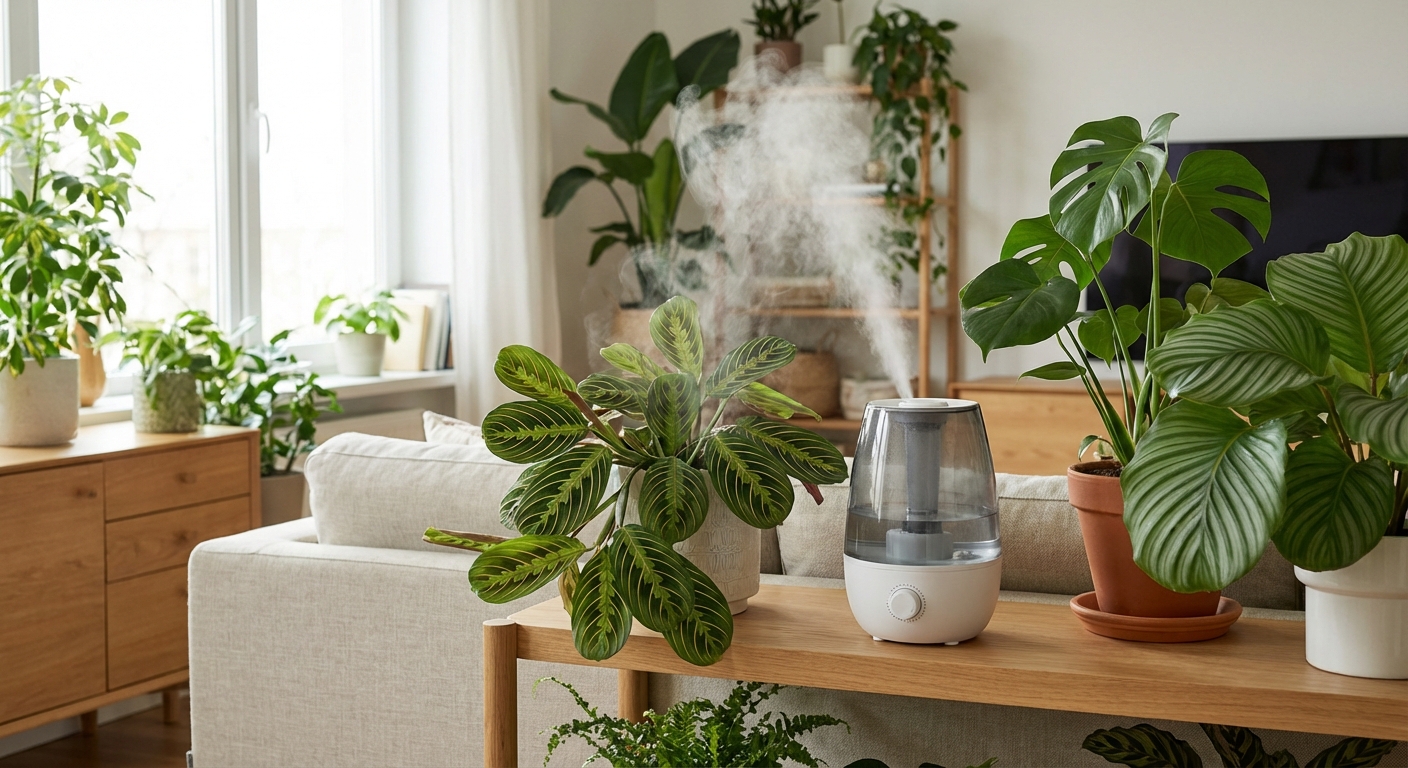
- Group plants together: They create a small humid pocket as they transpire.
- Use a humidifier: The most reliable option, especially in winter.
- Pebble tray: A shallow tray with pebbles and water under the pot can help a bit (just keep the pot above the waterline). The effect is usually modest unless the tray is fairly large and evaporation is meaningful.
I am gentle about misting. A quick spritz can temporarily raise humidity, but it is short lived. If you mist, do it in the morning and make sure air circulates, since constantly wet leaves can invite issues.
Watering and water quality
Marantas are famously particular about water quality. In many homes, tap water contains chlorine, chloramine, fluoride, and dissolved minerals that can build up in potting mix. Over time, that buildup can contribute to browning tips, dull leaves, and general crankiness. (Low humidity and inconsistent watering can do it too, so think of water quality as one piece of the puzzle.)
Best water choices
- Filtered water (from a pitcher filter or under-sink filter)
- Rainwater (my personal favorite when available)
- Distilled water (works well, especially for sensitive plants)
If tap water is your only option, you can still grow Maranta. Letting water sit overnight helps chlorine dissipate, but it does not remove chloramine or minerals. In that case, flushing the pot occasionally becomes more important.
How often to water
Instead of watering by calendar, water by feel. Maranta likes soil that is lightly and consistently moist.
- Water when the top 1 inch of soil feels dry.
- In smaller pots or very airy mixes, check slightly deeper, or use your favorite method: lift the pot. A dry pot feels surprisingly light once you learn its “weight language.”
- Water thoroughly until it drains from the bottom, then empty the saucer.
- Never let it sit in water for hours, soggy roots are the fastest route to decline.
A quick note on flushing
If you use tap water or fertilize regularly, flush the pot with plenty of water every 4 to 8 weeks to rinse excess salts (let it drain fully). If you use rain or distilled water and fertilize lightly, you may only need to do this periodically.
A quick note on pots
Use a pot with drainage holes. Prayer plants are forgiving in many ways, but they are not built for stagnant water at the roots.
Soil: airy and moisture friendly
Think of the ideal Maranta soil as a well-made sponge: it holds moisture but still has plenty of air pockets. Heavy, compacted soil makes it harder for roots to breathe and easier for root rot to start.
What to look for in a mix
- Moisture retention: coco coir or peat moss
- Air flow: perlite, pumice, or orchid bark
- Gentle nutrition: a little compost or worm castings
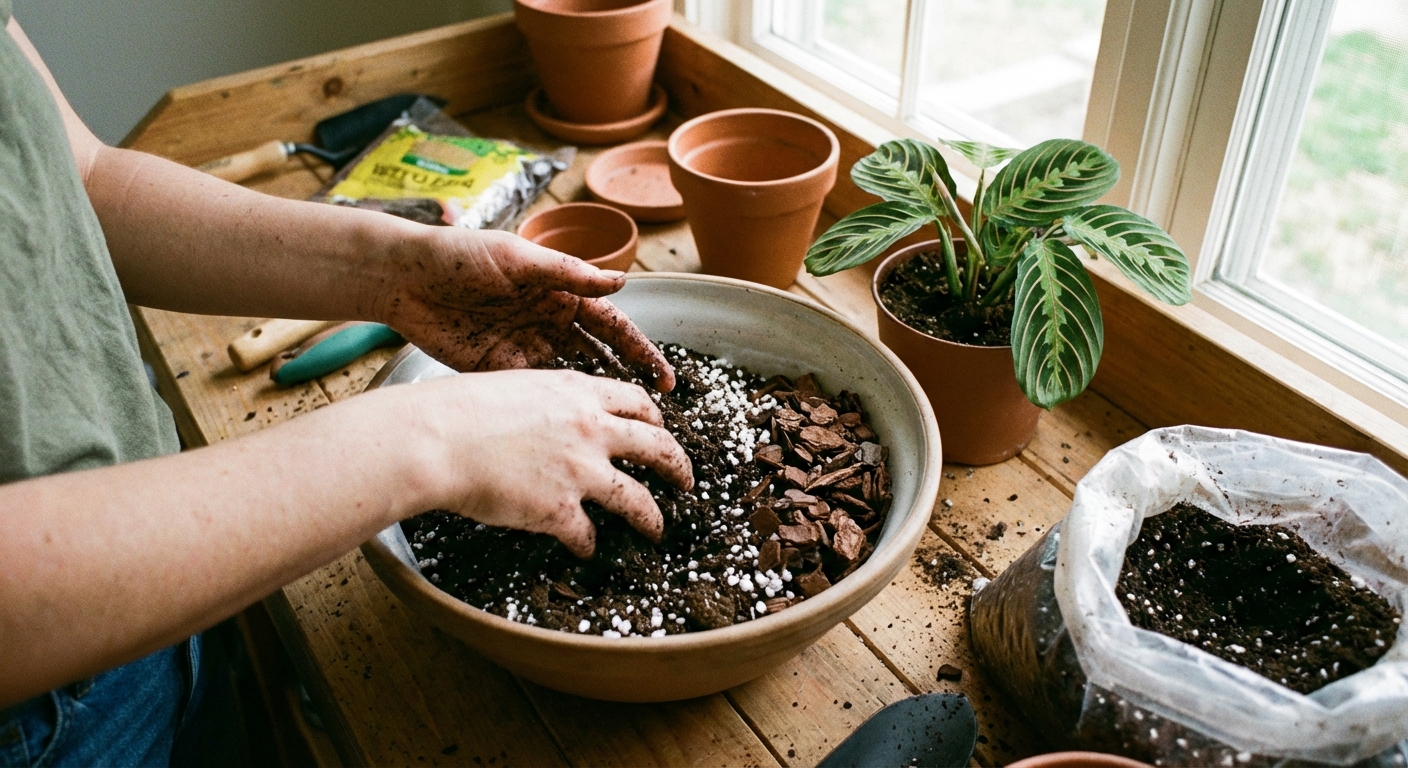
Simple DIY Maranta soil mix
- 2 parts high quality indoor potting mix or coco coir based mix
- 1 part perlite or pumice
- 1 part fine orchid bark
- Optional: a small handful of worm castings
Repot when roots start circling the pot or when soil breaks down and stays too wet. For most homes, that is every 1 to 2 years. Spring is ideal, but a struggling Maranta sometimes needs a mid-season rescue repot, and that is okay too.
Why leaves curl
Leaf curling is one of the most common Maranta questions, and it is also one of the most useful clues your plant gives you. A little curl at night is normal because prayer plants move their leaves with the light cycle. But tight curling during the day, crispy edges, or leaves that stay rolled are usually a stress response.
1) The plant is thirsty
Most common cause. When Maranta dries too much, it curls to reduce moisture loss.
- Fix: Water thoroughly with filtered water, then keep soil evenly moist going forward.
- Tip: If the soil got bone dry, water slowly in two passes ten minutes apart so it rehydrates evenly.
2) Humidity is too low
Dry air pulls moisture from leaves faster than roots can supply it, especially in winter.
- Fix: Add a humidifier or group plants. Keep Maranta away from heating vents, AC blasts, and drafts.
3) Too much sun or heat stress
Direct sun can cause dehydration and curling, plus fading and scorch.
- Fix: Move it back from the window or filter the light with a sheer curtain.
4) Water quality and salt buildup
Mineral buildup can irritate roots, making water uptake less efficient.
- Fix: Switch to filtered, rain, or distilled water. If you suspect buildup, flush the pot periodically (more often if you use hard tap water or fertilize frequently).
5) Root issues from overwatering
Yes, curling can also happen when roots are stressed from staying too wet.
- Clues: soil smells sour, leaves yellowing, stems feel soft, fungus gnats.
- Fix: Let soil dry slightly more between waterings, improve drainage, and consider repotting into a fluffier mix if soil is dense.
If you are not sure which one it is, check the soil moisture first. I do a finger test and then confirm by lifting the pot.
Temperature and airflow
Maranta likes it warm, calm, and consistent. Aim for 65 to 80 F (18 to 27 C) if possible, and try not to let it dip much below 60 F (16 C). The fastest way to make a prayer plant sulk is to park it in the path of a heater, AC vent, or a drafty door.
Feeding and growth
Prayer plants are not heavy feeders, but they appreciate gentle, consistent nutrition during active growth.
- When: spring through early fall
- How often: every 4 weeks is plenty for most homes
- What: a balanced liquid houseplant fertilizer diluted to half strength, or a light top dressing of worm castings
Slow growth in winter is normal. That is their resting season. I like to back off fertilizer then and focus on stable light and humidity.
Common varieties
Red prayer plant (Maranta leuconeura var. erythroneura)
This is the classic: deep green leaves with bold red veins and a slightly lighter, sometimes silvery center pattern. Care is standard Maranta care, but the red veining looks best in bright indirect light. Too little light can make the contrast look muted.
Lemon Lime Maranta
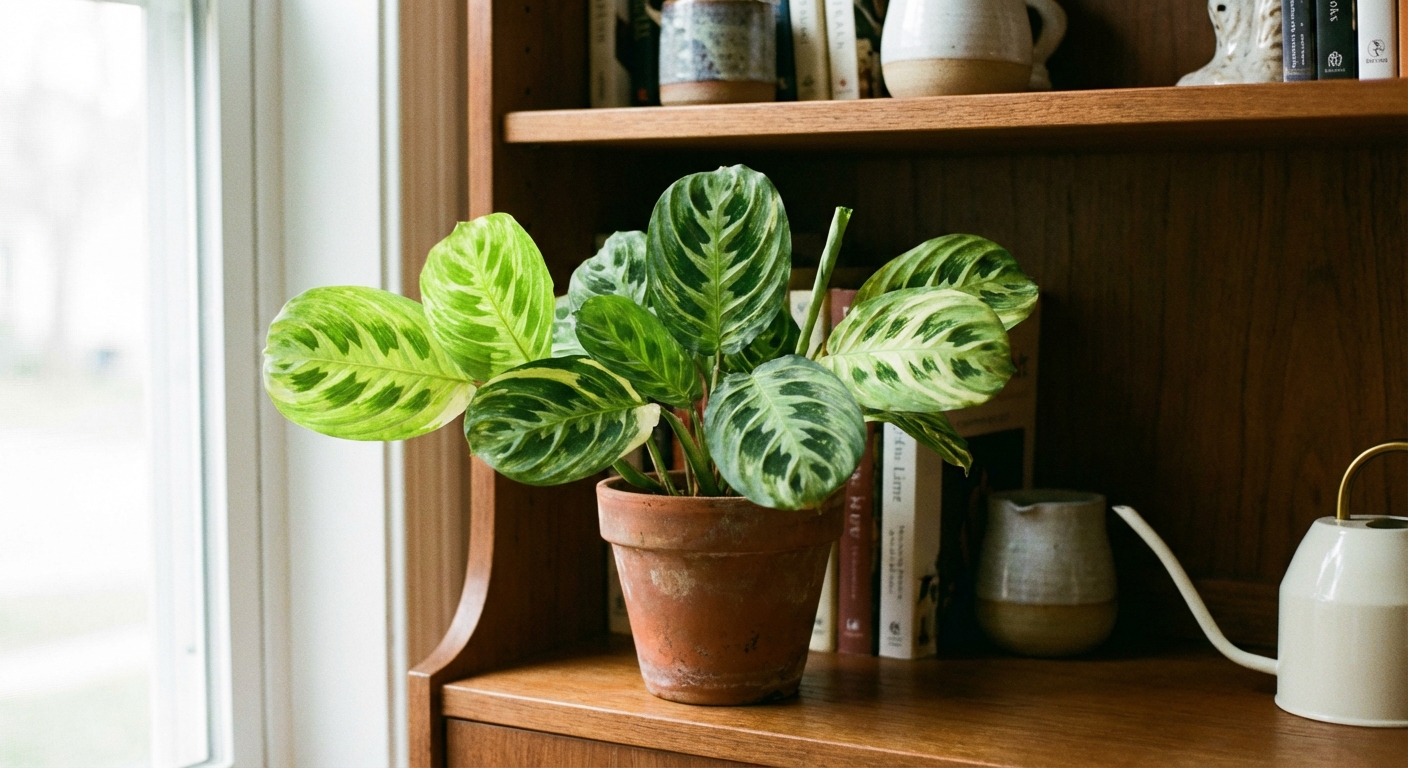
The lemon lime variety glows with chartreuse and lime green tones. Because the foliage is lighter, it can show stress a bit faster.
- Light: keep it bright but indirect so the color stays vibrant without scorching.
- Water and humidity: be consistent, lighter leaves can show browning and crisping sooner in dry air.
Maranta vs Calathea
Maranta and Calathea are close relatives in the Marantaceae family, and both are often called “prayer plants” because many of them raise their leaves at night. But they behave differently in a typical home.
Key differences you will notice
- Growth habit: Maranta tends to be trailing and spreading. Many Calatheas are upright clump formers.
- Leaf feel: Maranta leaves are often thinner and a bit softer. Calathea leaves can be thicker and sometimes more rigid.
- Care difficulty: Many people find Maranta more forgiving than Calathea, especially about minor humidity dips.
- Water sensitivity: Both dislike mineral-heavy water, but Calatheas are notorious for reacting fast. Marantas still prefer filtered water and will reward you for it.
If you have had a Calathea tantrum on your windowsill before, Maranta can feel like the calmer cousin who still has standards but communicates more kindly.
Pruning, propagation, and repotting
Pruning
Snip off yellow or crispy leaves at the base with clean scissors. If stems get long and bare, you can prune just above a node to encourage bushier growth.
Propagation
The easiest method is division when repotting. Gently separate a clump so each section has roots and a few stems, then pot up in fresh mix.
You can also propagate Maranta from node cuttings. Take a cutting with at least one node (and ideally a leaf or two), then root it in water, damp sphagnum moss, or a light soil mix. It is not inherently unreliable, it can just be a little slower depending on warmth, light, and humidity.
Repotting
- Frequency: every 1 to 2 years, or when roots fill the pot
- Pot size: go up one size only. Oversized pots hold extra moisture and can cause root issues.
Troubleshooting
Brown tips
- Likely causes: low humidity, mineral buildup, inconsistent watering
- Fix: switch to filtered water, increase humidity, keep soil evenly moist, flush soil every 4 to 8 weeks if needed
Yellowing leaves
- Likely causes: overwatering, poor drainage, low light
- Fix: check soil moisture, improve mix and drainage, move to brighter indirect light
Leaves fading
- Likely causes: too much direct sun, not enough light (less commonly)
- Fix: protect from direct sun, aim for bright filtered light
Leaf spots
If you see expanding brown or black spots (sometimes with yellow halos), especially after frequent misting or poor airflow, think leaf spot issues.
- Fix: remove badly affected leaves, avoid wetting foliage late in the day, improve airflow, and keep leaves dry where possible.
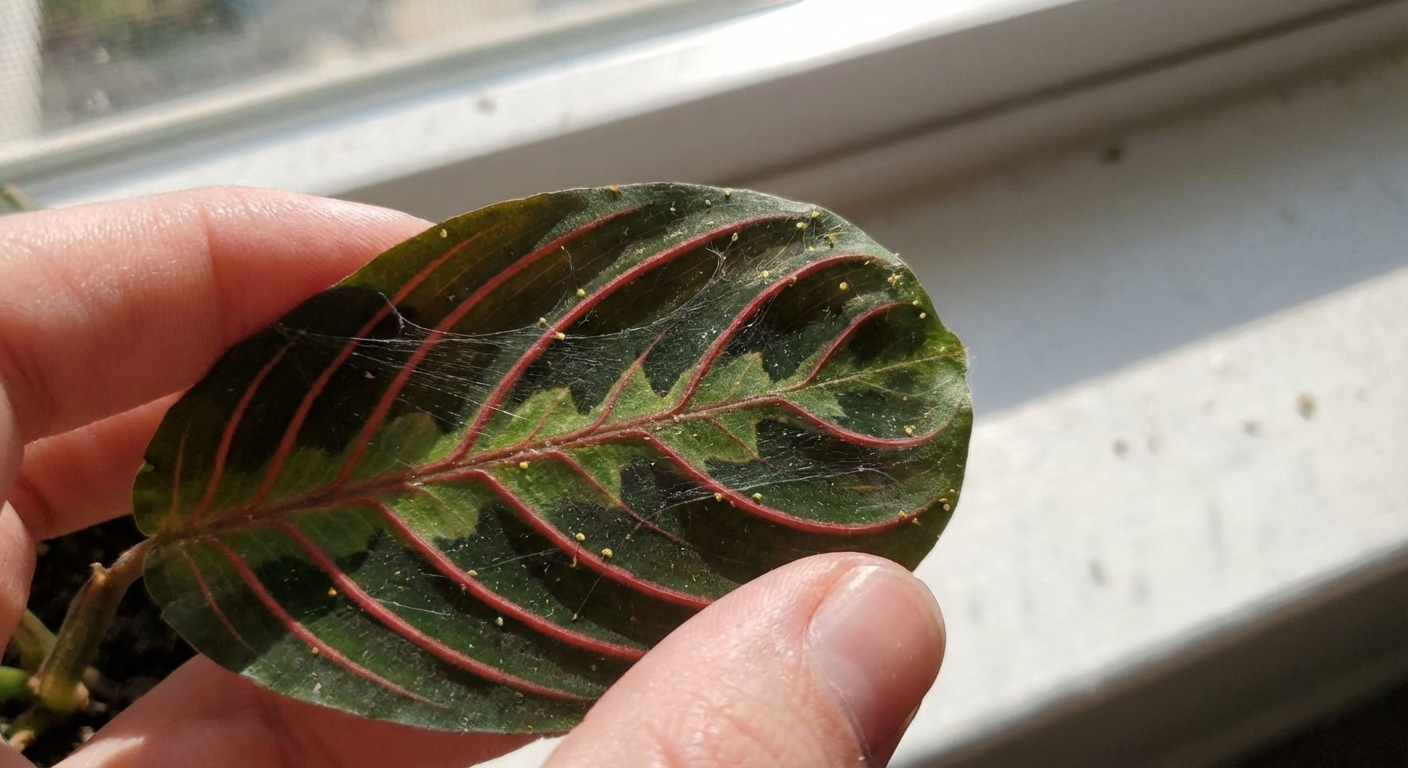
Sticky residue or speckled leaves
Check for common houseplant pests like spider mites, mealybugs, and scale.
- Fix: isolate the plant, rinse leaves, then treat with insecticidal soap or horticultural oil according to the label. Repeat weekly for a few cycles.
Weekly routine
- Check moisture: touch the top inch of soil, water when it is dry (and check slightly deeper for small pots).
- Look at the leaves: curling, crisping, spotting, or fading usually tells you what to adjust.
- Rotate the pot: a quarter turn weekly for even growth.
- Wipe dust: a damp cloth keeps leaves breathing and photosynthesizing well.
If you remember nothing else, remember this: prayer plants love consistency. When you keep their light soft, their soil evenly moist, and their air a little humid, they settle into a rhythm that feels almost like companionship.