Philodendron Care for Beginners

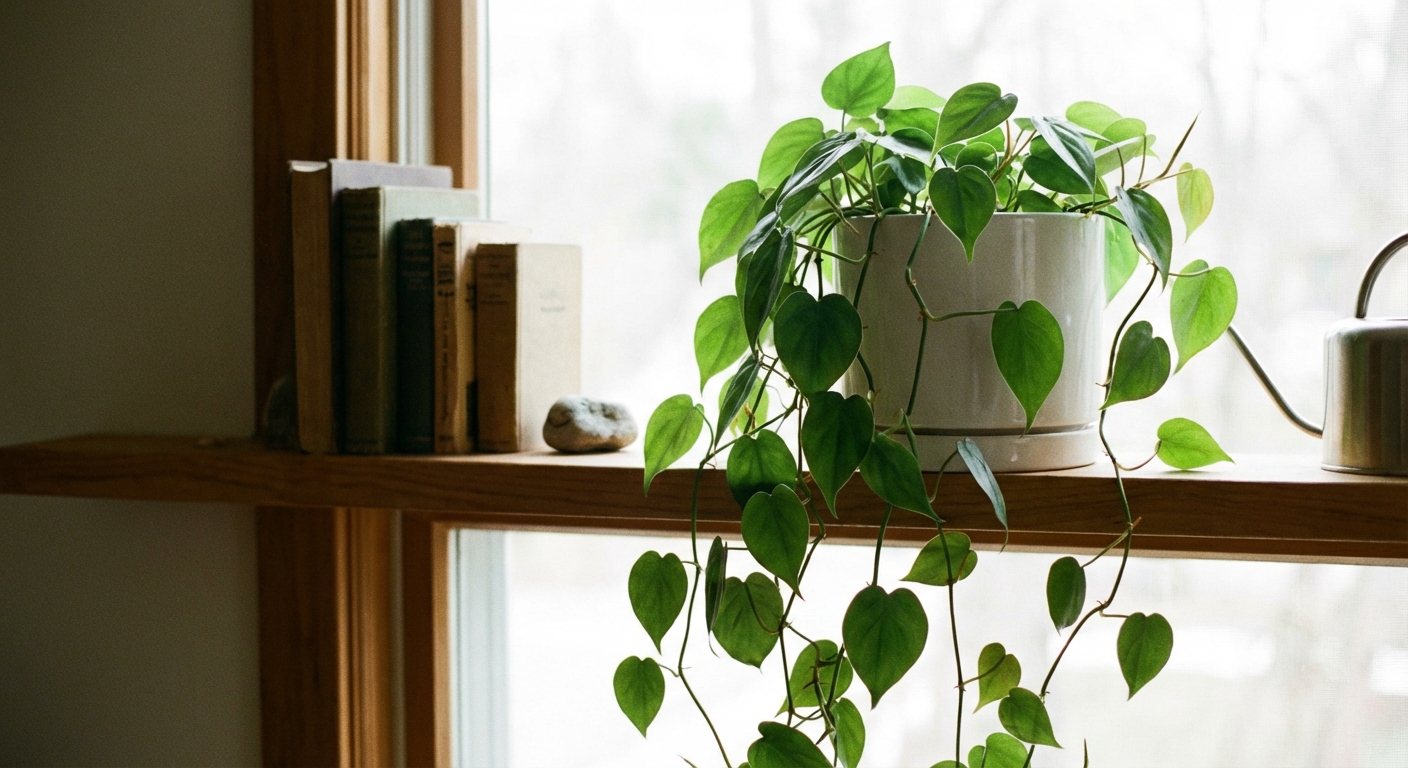
Philodendrons are the kind of houseplants that make people believe they can keep plants alive. They are forgiving, fast-growing, and wildly satisfying once you learn their rhythm. If you have ever stared at a leafy vine and thought, “Please do not die on my watch,” welcome. You are in the right greenhouse aisle.
This guide covers the care basics that work for most beginner-friendly philodendrons, plus notes for four popular varieties: Heartleaf (Philodendron hederaceum, often sold as P. scandens or P. hederaceum var. oxycardium), Brasil (a variegated heartleaf cultivar), Birkin (Philodendron ‘Birkin’), and the famous Pink Princess (Philodendron erubescens ‘Pink Princess’).
Quick philodendron profile
- Difficulty: Easy to moderate (varieties with heavy variegation are fussier)
- Best light: Bright, indirect light
- Water: Let the top 1 to 2 inches dry, then water thoroughly (small pots dry faster than big pots)
- Soil: Chunky, airy, fast-draining mix
- Growth habit: Vining (heartleaf, Brasil), self-heading (Birkin), climbing (Pink Princess)
- Pet safety: Toxic if chewed (calcium oxalate crystals). Typically causes oral irritation, drooling, and vomiting. Keep away from pets and small kids.
Popular varieties and what makes them different
Heartleaf philodendron
The classic beginner vine. It tolerates lower light, bounces back from occasional missed waterings, and grows steadily once it is comfortable.
Philodendron Brasil
Basically a heartleaf with a party stripe. The leaves have lime to yellow variegation. Give it brighter indirect light than a plain green heartleaf so it keeps its color.
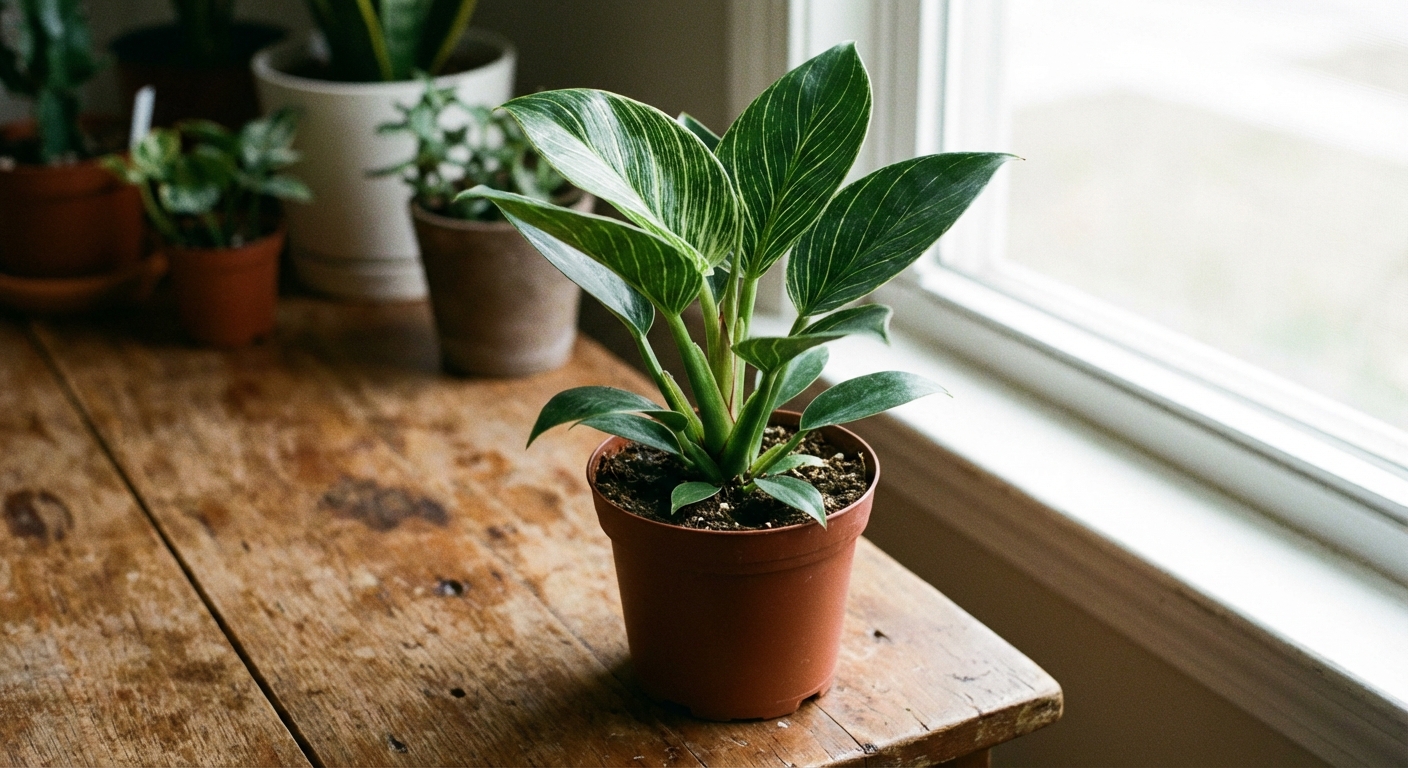
Philodendron Birkin
A compact, upright philodendron with creamy pinstripes. It is slower-growing and prefers consistency. If it suddenly throws mostly green leaves, do not panic. Light is often the culprit, and Birkin can also be a bit unpredictable genetically.
Philodendron Pink Princess
Grown for pink variegation on dark leaves. More light helps maintain pink, but harsh direct sun can scorch. It is not “hard,” exactly, but it is less forgiving because variegation means less chlorophyll, so growth is slower and care mistakes show faster. It is also a climber by nature and usually looks best with support.
Light: the easiest way to level up your philodendron
If I could wave a trowel and fix one thing in most philodendron homes, it would be light. Philodendrons thrive in bright, indirect light, like near an east window, or a few feet back from a bright south or west window with a sheer curtain.
- Best spot: Bright room, filtered sun, no harsh midday rays on the leaves.
- Bonus: A little gentle morning sun is often fine. Midday sun is where crispy regrets happen.
- Low light tolerance: Heartleaf can cope, but growth will slow and leaves may space out.
- Variegated types (Brasil, Pink Princess): Need brighter indirect light to hold color.
- Signs of too little light: Long gaps between leaves, smaller new leaves, dull variegation, leaning toward the window.
- Signs of too much light: Bleached patches, crispy edges, sudden scorched spots.
Tip from my windowsill jungle years: rotate your pot a quarter turn every week or two. Your plant will grow more evenly, and you will avoid the dramatic “one-sided hairdo” effect.
Water: how to avoid the two classic mistakes
Philodendrons like a soak-and-dry routine. Not bone-dry for ages, and not constantly damp either.
How to water
- Check the soil with your finger. If the top 1 to 2 inches are dry, it is usually time (for large pots, also check a little deeper or use a chopstick test).
- Water thoroughly until water runs out of the drainage holes.
- Empty the saucer. Do not let the pot sit in water.
Overwatering vs underwatering
- Too much water: Yellowing leaves (often several), soft stems, soil that stays wet for days, fungus gnats, a sour smell.
- Too little water: Droopy leaves, curling, dry crispy edges, soil pulling away from the pot sides.
My favorite beginner trick: learn the weight of the pot. Lift it right after watering, then lift it again when it is dry. Your hands will become a better moisture meter than any gadget.
Humidity and temperature
Most philodendrons are tropical and appreciate humidity, but you do not need a rainforest to keep them happy.
- Comfort zone: Around 40 to 60% is great for most homes. Higher humidity can help, especially for Pink Princess, but it is not mandatory.
- Easy humidity boosts: Group plants together or run a small humidifier.
- Pebble trays: They may slightly raise humidity right around the plant, but they do not reliably change a whole room.
- Temperature: Aim for 65 to 85°F (18 to 29°C). Avoid cold drafts, AC vents, and chilly windows in winter.
If your plant keeps getting brown tips even with careful watering, dry indoor air is often the quiet culprit.
Soil: airy roots are happy roots
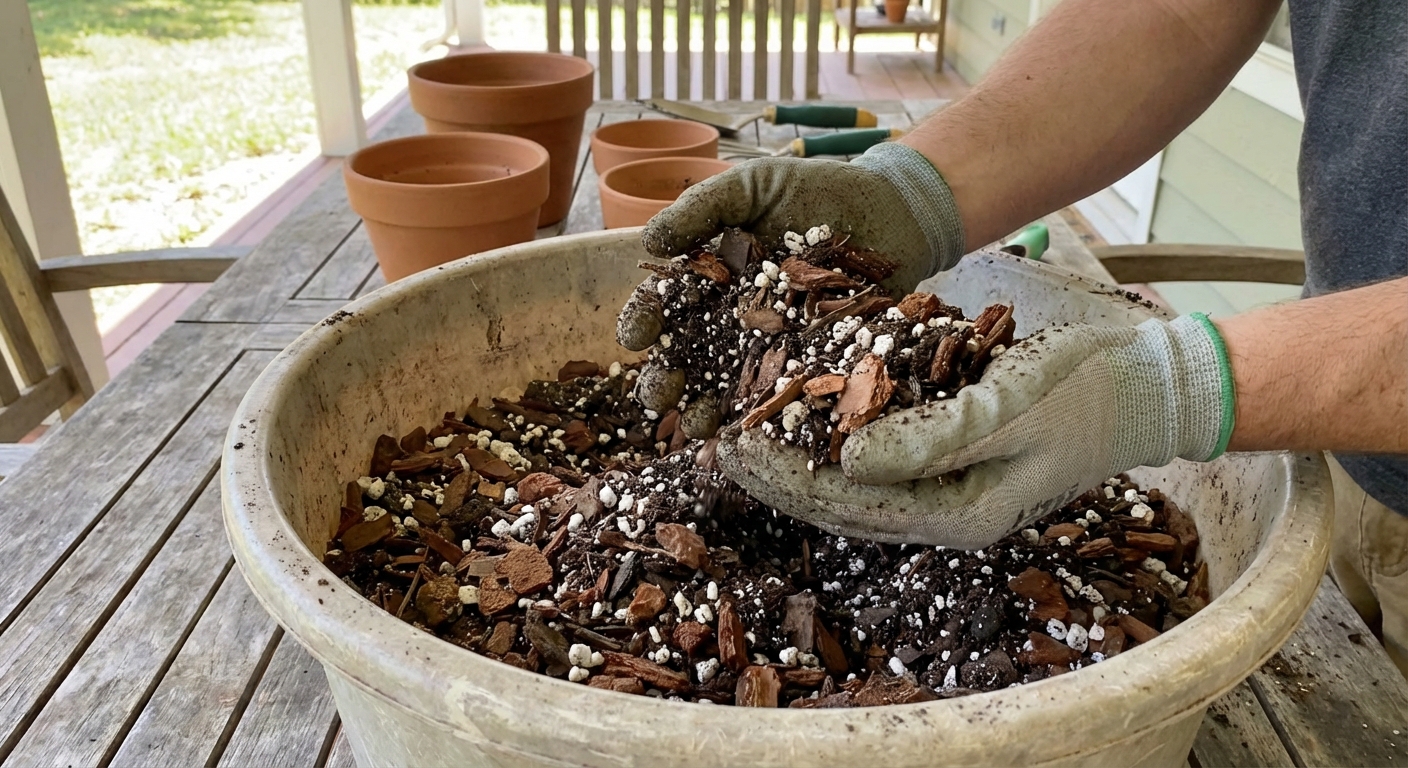
Philodendrons are aroids, and aroids like oxygen around their roots. The goal is a mix that drains fast but does not dry out instantly.
An easy soil mix
- 2 parts indoor potting mix (peat or coco-based)
- 1 part orchid bark
- 1 part perlite or pumice
Optional but helpful: a small handful of worm castings for gentle nutrition, and a pinch of horticultural charcoal if you tend to overwater.
Pot rule: Always use a pot with drainage holes. A pretty cover pot is fine, but keep the plant in a nursery pot inside it so excess water can escape.
Fertilizer: gentle and consistent
Philodendrons are not heavy feeders, but they do appreciate nutrients during active growth.
- When: Spring through early fall
- How often: Every 4 weeks, or every 2 weeks at half strength
- What: A balanced houseplant fertilizer (3-1-2 style ratios are great), or an organic option like fish emulsion diluted for indoor use
- Important: Follow label dilution. Too much fertilizer can cause crispy tips and salt buildup.
Pause feeding in winter if growth slows and light is weaker. For beginners, under-fertilizing is safer than over-fertilizing. If you fertilize regularly, flush the pot with plain water every couple months to rinse excess salts.
Repotting and support
When to repot
- Roots circling the bottom or poking out of drainage holes
- Soil drying out unusually fast
- Growth stalling despite good light
Most philodendrons like to be slightly snug. Size up only 1 to 2 inches wider than the current pot.
Should you use a pole?
Vining philodendrons can trail or climb. If you give them a moss pole or coco coir pole, leaves often get larger and spacing between leaves can improve. Heartleaf and Brasil love to climb. Pink Princess is a climber and usually looks its best with support.
Pruning and training
If your plant is getting leggy, pruning is your secret weapon. It encourages fuller growth and gives you cuttings to propagate.
- Where to cut: Snip just above a node on the mother plant (and just below a node on the cutting you want to root).
- Training tip: Use soft plant ties to gently guide stems onto a pole, or pin vines to the soil surface to root and thicken the pot.
Propagation: the easiest confidence boost in houseplants
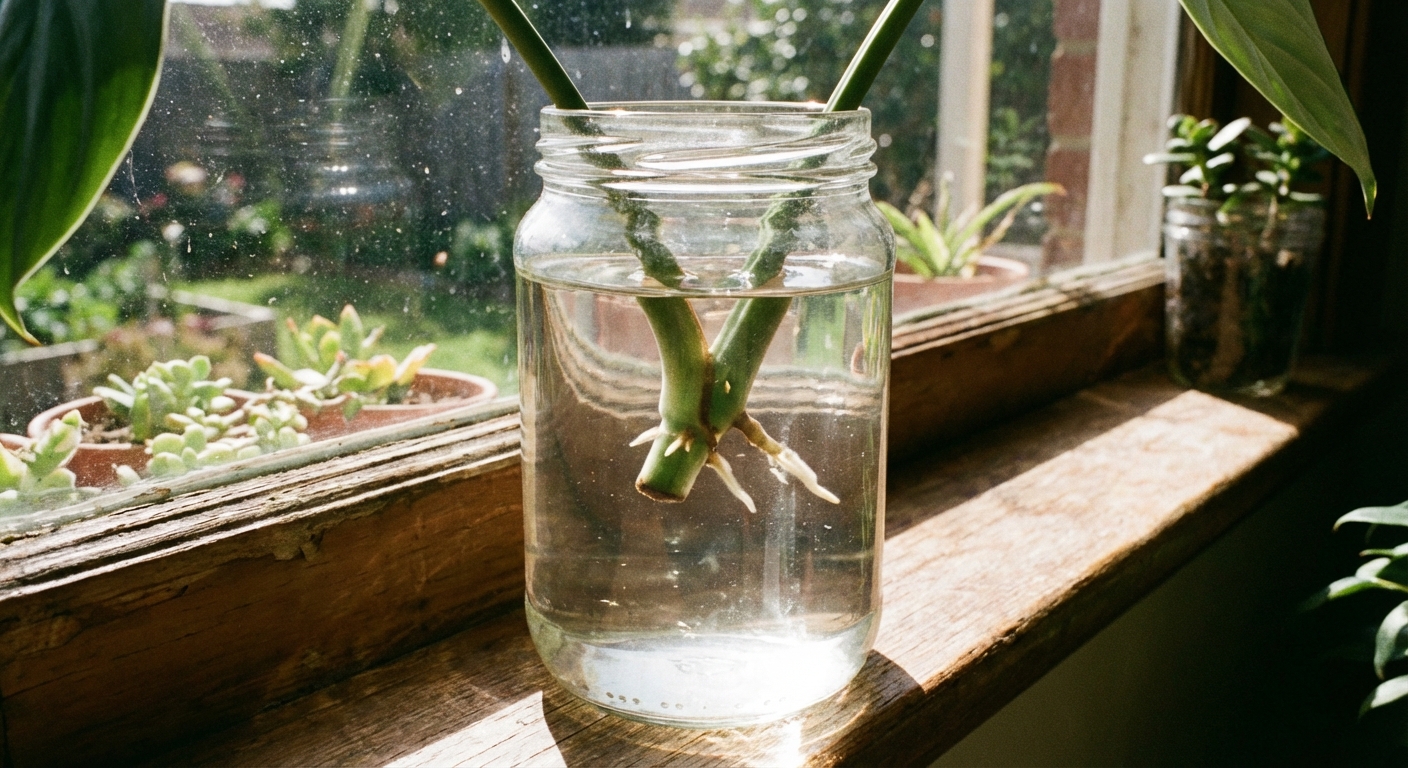
Philodendrons are famously easy to propagate from stem cuttings, as long as you include a node (the little bump where roots and leaves emerge). If you cut a bare piece of stem with no node, it will not root.
Water propagation
- Choose a healthy vine and locate a node.
- Cut just below the node with clean scissors.
- Remove the lowest leaf so the node is exposed.
- Place the node in a jar of water. Keep leaves above the waterline.
- Change water every 5 to 7 days.
- When roots are 2 to 3 inches long (often 2 to 6 weeks), pot into airy soil.
Soil propagation
- Take a cutting with at least one node.
- Place the node into lightly moist chunky mix.
- Cover loosely with a clear bag to hold humidity, and vent daily.
- Keep warm and bright. Tug gently after a couple weeks to check for resistance.
Philodendron vs pothos
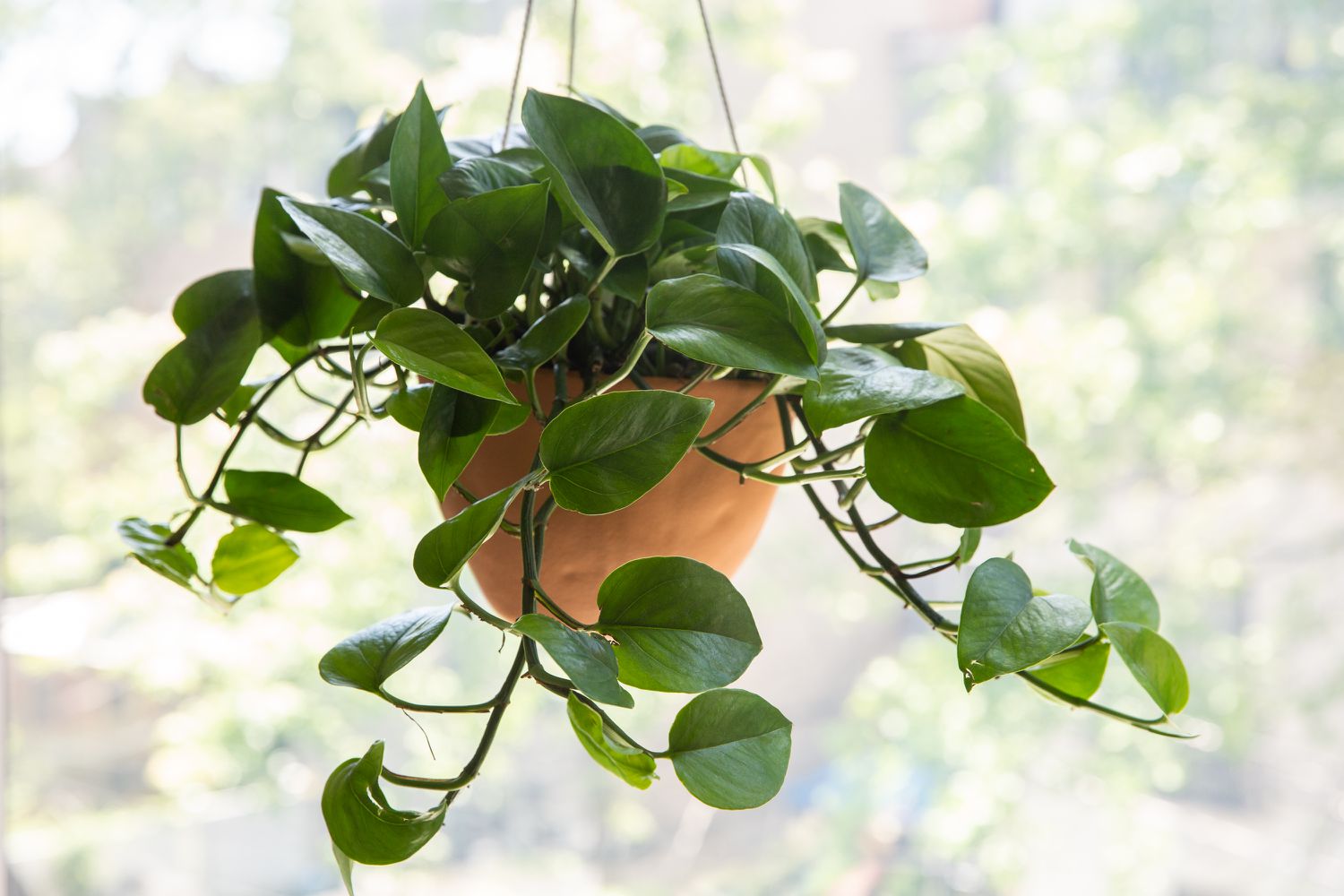
This is one of the most common houseplant identity mix-ups, and honestly, I get it. Both can be vining, both can have heart-ish leaves, and both are easygoing. Here are a few reliable clues.
1) Leaf texture
- Philodendron: Leaves are often thinner, softer, and slightly matte.
- Pothos (Epipremnum aureum): Leaves are usually thicker, waxier, and a bit more rigid.
2) The cataphyll
Many philodendrons push new leaves out of a thin, papery wrapper called a cataphyll. You will often see dried brown papery bits near new growth.
- Philodendron: Common to see that papery sheath.
- Pothos: New leaves typically unfurl without that obvious papery wrapper.
3) Petiole shape
- Philodendron: The leaf stem (petiole) is often rounder and may have a slight groove.
- Pothos: Petioles are often more flattened with a noticeable groove.
4) Growth habit
- Philodendron heartleaf: More graceful, tends to trail with slightly looser spacing in lower light.
- Pothos: Often looks more vigorous and sturdy, with tougher stems.
If you want a deeper dive, you can also check our pothos care guide and compare your plant’s leaves and growth habits.
Common problems and easy fixes
Yellow leaves
- Most common cause: Overwatering or soil staying wet too long.
- Fix: Let soil dry more between waterings, switch to a chunkier mix, confirm the pot has drainage, and increase light slightly.
Brown crispy edges or tips
- Common causes: Dry air, underwatering, sun stress, or fertilizer buildup.
- Fix: Check watering consistency, raise humidity if needed, move out of harsh sun, and flush the pot with plain water every couple months if you fertilize regularly.
Leggy vines with tiny leaves
- Cause: Not enough light.
- Fix: Move closer to a bright window or add a grow light. Then prune and propagate for a fuller pot.
Pink Princess losing pink
- Cause: Light is too low, or the plant is reverting on a stem.
- Fix: Increase bright indirect light. If a stem is producing all-green leaves, you can prune back to a node where variegation was stronger.
Fungus gnats
- Cause: Constantly moist soil.
- Fix: Let the top layer dry more, use yellow sticky traps, and consider a biological control like BTI dunks in your watering can.
Spider mites, thrips, and mealybugs
- Clues: Fine webbing (mites), silvery scarring or tiny black specks (thrips), cottony clumps in leaf joints (mealybugs).
- Fast actions: Isolate the plant, rinse leaves (especially undersides), then treat with insecticidal soap or horticultural oil. Repeat weekly for a few rounds, because pests do not take hints.
A simple care routine
- Weekly: Check soil moisture, rotate the pot, and wipe dust off leaves with a damp cloth.
- Monthly (growing season): Fertilize lightly, inspect for pests, trim leggy growth.
- Every 12 to 24 months: Repot if rootbound, refresh soil, and consider adding a pole for climbers.
Most of all, remember this: philodendrons are communicators. They will tell you what they need through their leaves. The more you look, the more fluent you get. And if you catch yourself chatting with your plant while you water, well, you will get no judgment from me or my ferns.