
Peperomia Plant Care

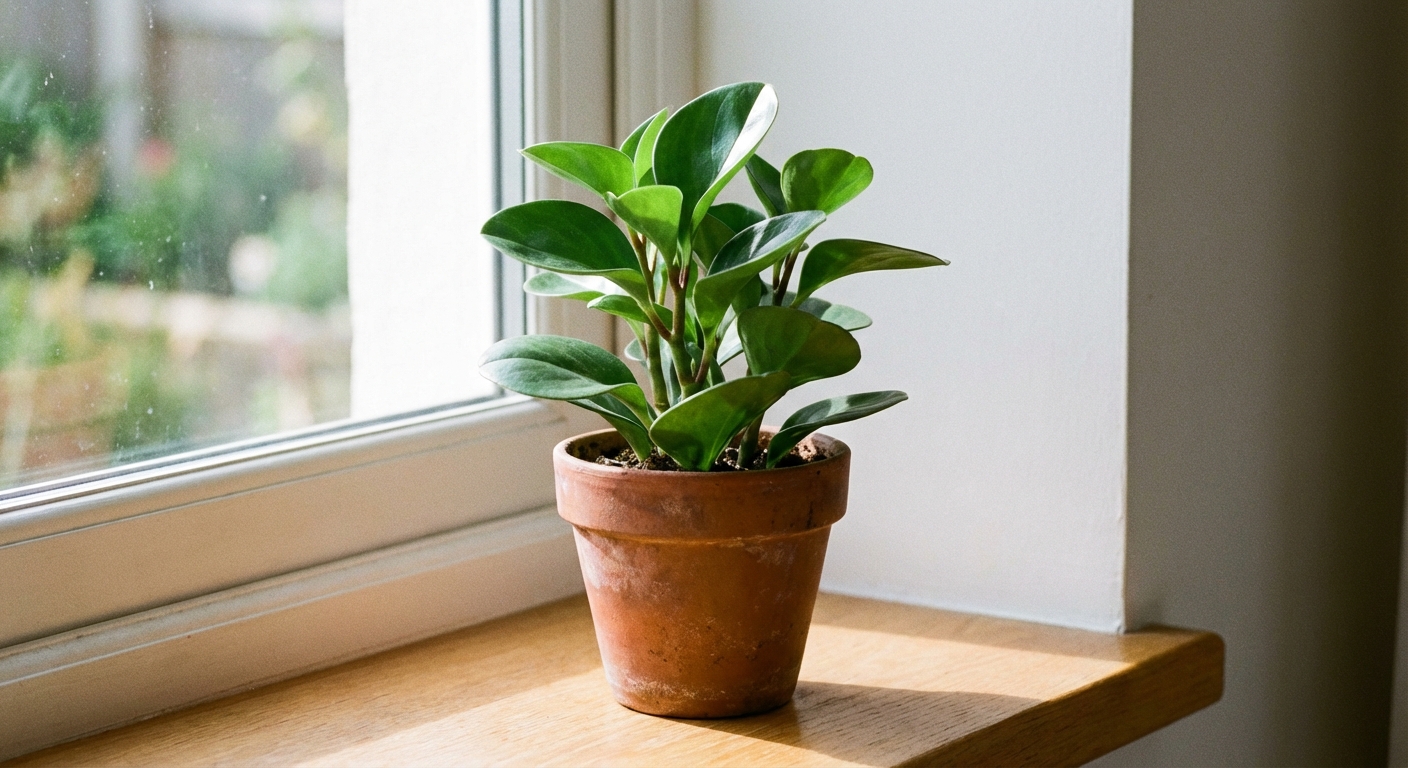
Peperomia is my go-to recommendation when someone whispers, “I kill every houseplant.” These little tropical cuties look fancy, but they live by simple rules: bright, indirect light is ideal (and many tolerate medium), a breathable potting mix, and a watering routine that leans slightly on the dry side. Think of peperomia as a plant that likes consistent kindness, not constant attention.
Bonus: peperomia are generally considered non-toxic to cats and dogs, which makes them an easy yes for pet households. (If your pet is a dedicated plant-muncher or you are unsure of the exact variety, it is still smart to double-check.)
Below you will find beginner-friendly care basics, quick notes on the most popular varieties, propagation steps you can do on your kitchen counter, and a troubleshooting guide for the two biggest peperomia heartbreaks: dropping leaves and mushy stems.
Meet peperomia (and why it is beginner-friendly)
Peperomia is a large genus with hundreds of species, most of them compact and slow-growing. Many have slightly thick, “succulent-ish” leaves that store a bit of water. That is a big reason they tolerate a missed watering better than plants that need constantly moist soil.
- Growth habit: typically small, mounding, or gently trailing
- Roots: fine, shallow, and sensitive to soggy soil
- Big win for beginners: they often give clear signals when something is off, and can recover well if you adjust care early (rot is the exception, it can move fast)
- Pet note: generally considered non-toxic to cats and dogs
Popular varieties (quick snapshots)
Peperomia obtusifolia (Baby Rubber Plant)
Thick, glossy leaves and an easygoing attitude. This is the “start here” peperomia for most beginners.
- Light: bright indirect light is ideal, tolerates medium light
- Water: let the top 1 to 2 inches dry
- Notes: variegated forms need more light to keep their color
Peperomia ‘Rosso’
Deep green leaves with dramatic red undersides. It stays compact and looks like a tiny tropical firework.
- Light: bright indirect light to maintain color
- Water: allow about the top half of the pot to dry slightly between waterings
- Notes: too little light can cause legginess and dull coloring
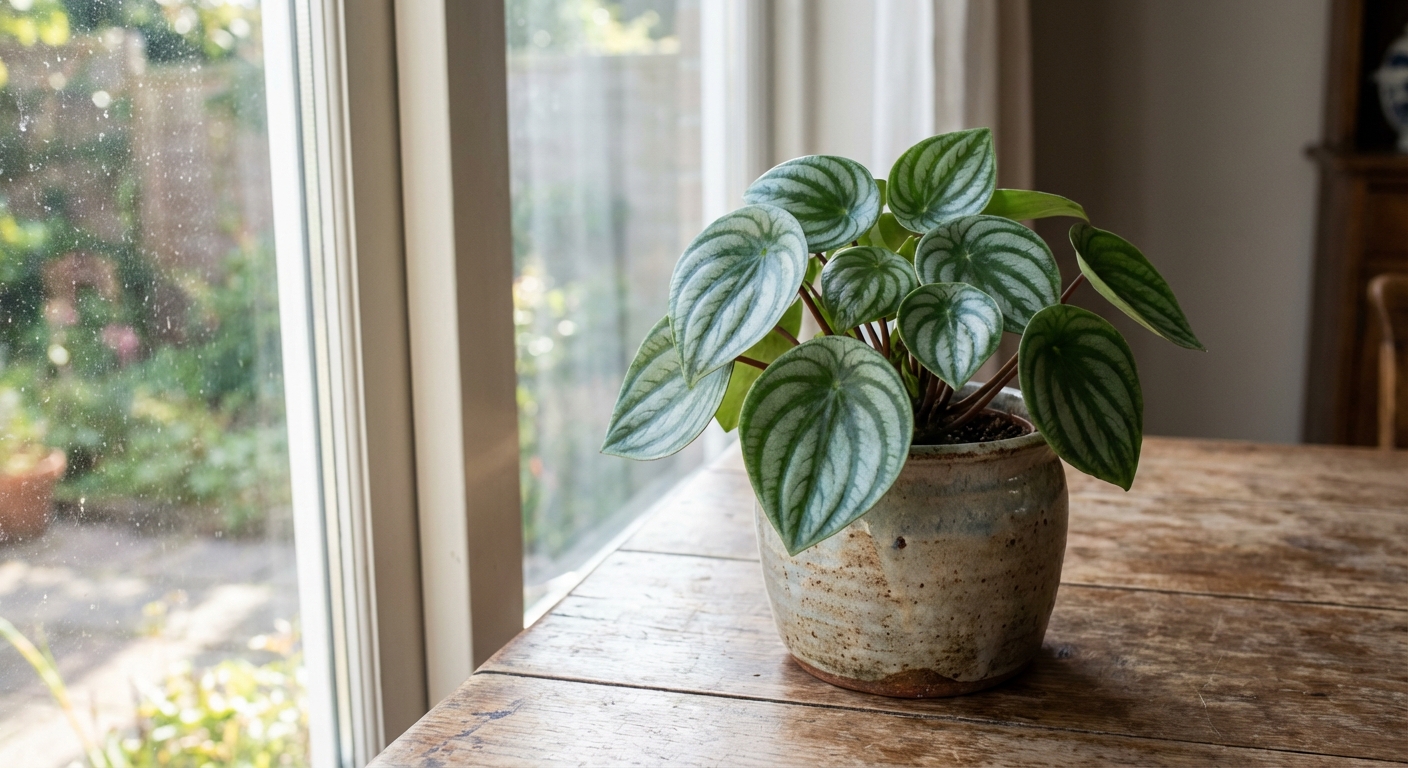
Peperomia argyreia (Watermelon Peperomia)
Those striped leaves really do look like watermelon rinds. It is a little fussier about overwatering than it looks.
- Light: bright indirect light, gentle morning sun is usually fine
- Water: water when the top 2 inches are dry, do not keep it damp
- Notes: prefers a slightly snug pot, hates cold drafts
Peperomia ‘Hope’
A trailing type with round, slightly thick leaves. Lovely in a hanging pot or on a shelf edge.
- Light: bright indirect light for fuller growth
- Water: let the top 1 to 2 inches dry, then water thoroughly
- Notes: pinch tips to encourage branching
Light
Peperomia thrive in bright, indirect light. Picture a spot where you could comfortably read a book during the day without turning on a lamp, but where the sun is not blasting the leaves for hours. Many types will tolerate medium light, just with slower growth.
- Best windows: east window (gentle morning sun) or a few feet back from a south or west window
- If light is too low: stems stretch, leaves get smaller, growth slows
- If light is too harsh: fading, dry patches, or scorched spots, especially on thinner-leaved varieties
If you use a grow light, aim for moderate intensity and keep it on 10 to 12 hours a day. Your peperomia will tell you if it likes the setup by staying compact and upright.
Watering
If peperomia had a motto, it would be: when in doubt, wait a day. Overwatering is the fastest route to root rot and mushy stems.
A simple routine
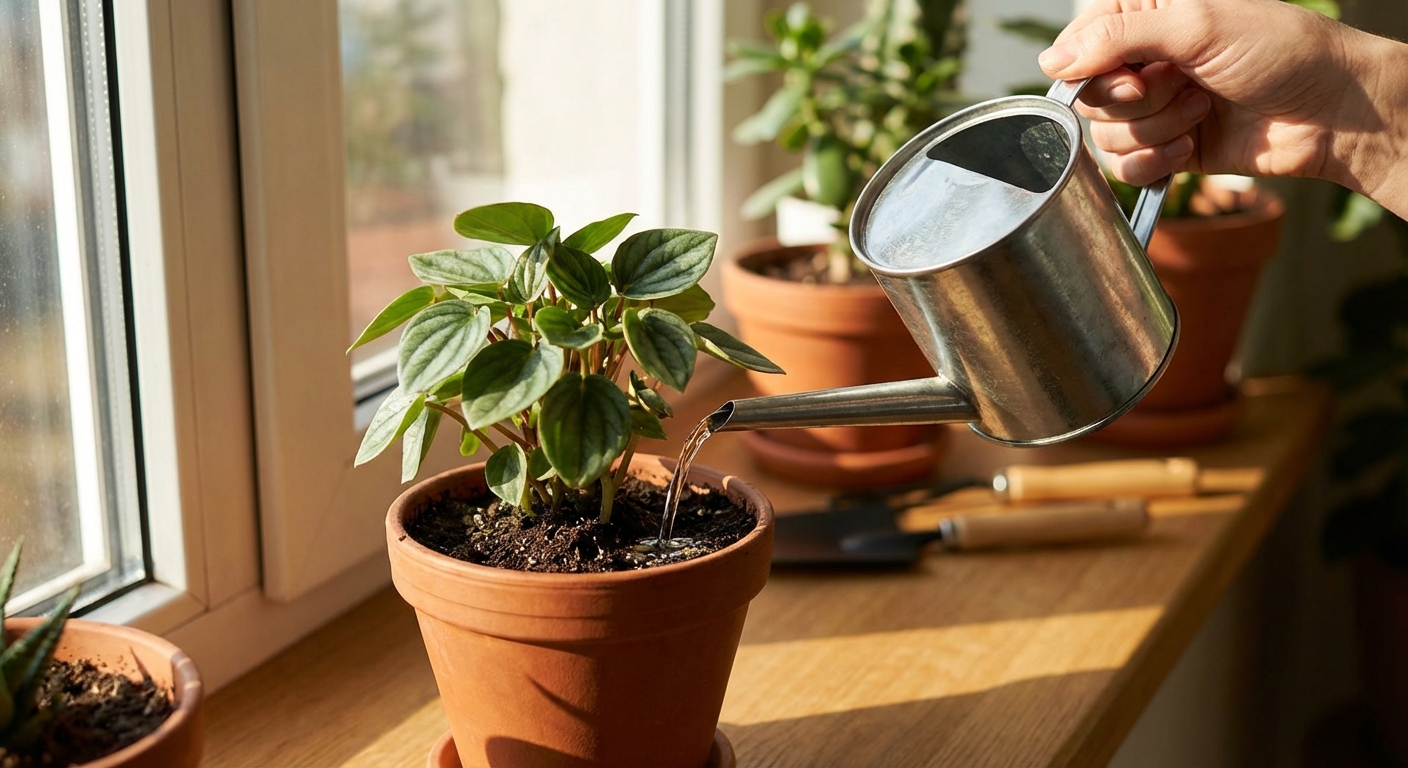
- Check the soil with your finger. For most peperomia, wait until the top 1 to 2 inches are dry (watermelon often prefers closer to 2 inches).
- Want an extra-easy cue: lift the pot. Water when it feels noticeably lighter than it did after a thorough watering.
- Water thoroughly until it runs from the drainage holes.
- Empty the saucer after 10 to 15 minutes so the pot is not sitting in runoff.
How often is that?
It depends on light, pot size, and season. Many homes land around every 7 to 14 days, with less frequent watering in winter. In winter, let it dry a bit more than usual and expect slower uptake. Instead of tracking a calendar, track dryness.
Soil
Peperomia roots want oxygen. A dense, water-holding mix can stay wet too long and invite rot. Choose a potting mix that drains quickly and dries at a reasonable pace.
Beginner-proof mix
- 2 parts quality indoor potting mix
- 1 part perlite or pumice (for air and drainage)
- Optional: a handful of orchid bark for extra chunkiness
Pot choice matters: terracotta helps the mix dry faster and can be a great safety net for heavy-handed waterers. No matter the pot material, always use a pot with drainage holes.
Humidity and temperature
Most peperomia are comfortable in normal household humidity, which is one reason they are so lovable. That said, they look their best with a little extra moisture in the air.
- Ideal humidity: roughly 40 to 60% (they can adapt outside this range)
- Temperature: 65 to 80°F is a happy zone
- Minimum: try not to let temperatures dip below about 55 to 60°F for long
- Avoid: cold windows in winter, blasts from heating vents, and chilly drafts
If your air is very dry and you see crispy edges, try grouping plants together or running a small humidifier nearby. I skip pebble trays for peperomia, mostly because they are more fuss than payoff.
Feeding and repotting
Fertilizer
Peperomia are light feeders. Too much fertilizer can cause weak, floppy growth.
- Feed in spring and summer with a balanced liquid fertilizer at half strength every 4 to 6 weeks.
- Skip fertilizing in fall and winter when growth slows.
Repotting
These plants do not mind being slightly root-bound, and their root systems are often shallow. That is why they rarely need a much larger pot, and why soggy soil can become a problem quickly.
- Repot only when you see roots circling heavily or growing out of the drainage holes, typically every 2 to 3 years.
- Go up one pot size only. Overpotting means extra soil stays wet longer, and that is prime root-rot territory.
- Refresh the mix even if you keep the same pot size.
Propagation
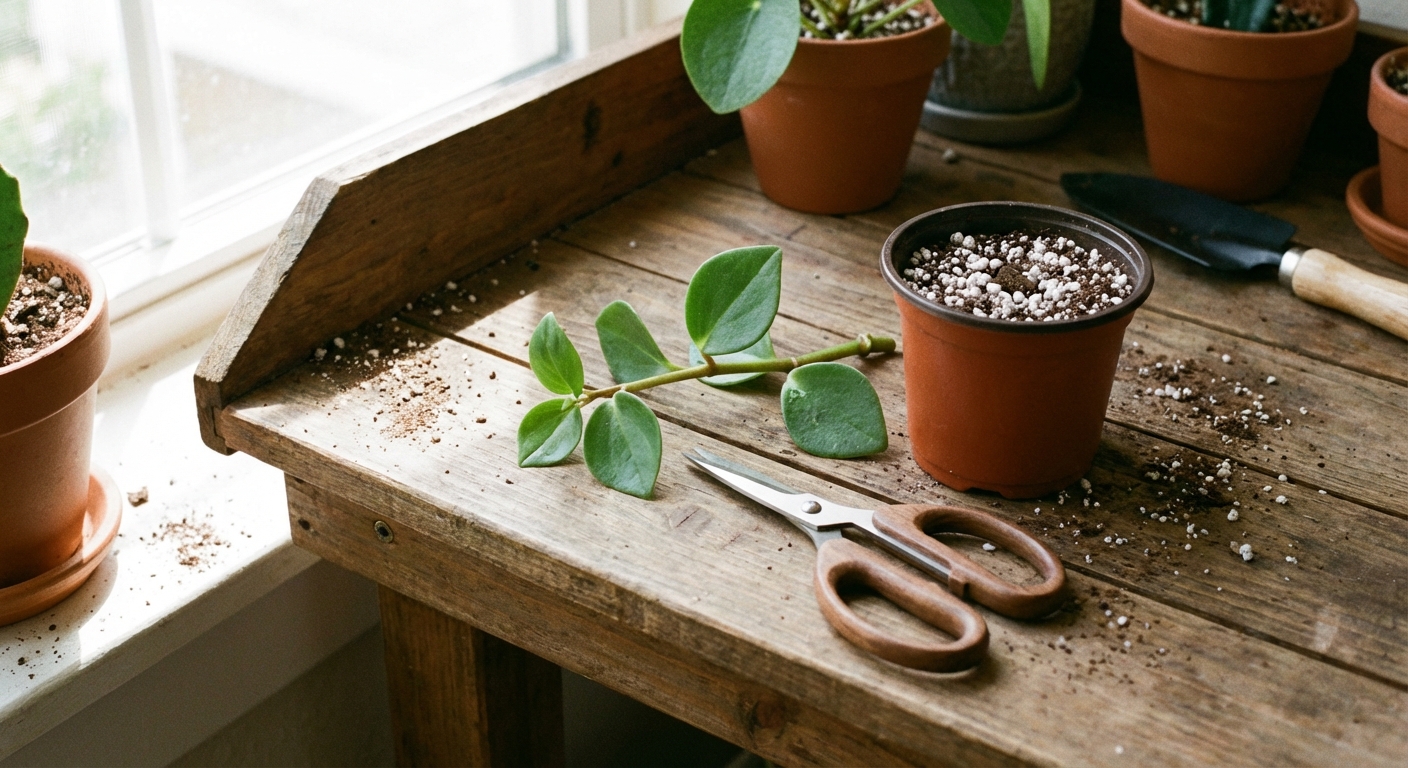
Propagating peperomia feels like plant magic, but it is really just patient consistency. Use clean scissors or pruners. If your cutting is thick and very juicy, letting the cut end dry for 30 to 60 minutes is optional, not required, but it can help reduce the chance of rot.
Stem cuttings (best all-around)
- Choose a healthy stem with 2 to 4 leaves.
- Cut just below a node (the point where a leaf meets the stem).
- Remove the lowest leaf if it will sit in soil.
- Plant the cutting in a small pot of lightly moist, airy mix. Bury the node.
- Cover loosely with a clear plastic bag to raise humidity, leaving a small gap for airflow.
- Keep in bright indirect light. Water sparingly so it never gets soggy.
Roots often form in a few weeks, but new growth is the real confirmation. Give it time.
Leaf cuttings (extra fun for watermelon peperomia)
- Pick a mature, healthy leaf with a bit of petiole (leaf stem) attached.
- Most reliable: insert the petiole into lightly moist mix.
- For watermelon peperomia: you can also cut the leaf into sections (make sure each piece includes a main vein), then place the cut edge into the mix. This tends to be more dependable than laying a whole leaf flat.
- Maintain gentle humidity and bright indirect light.
- Wait for tiny plantlets to emerge near the base.
Leaf propagation is slower, but it is incredibly satisfying when those baby leaves finally pop up.
Common problems
Dropping leaves
A peperomia that is shedding leaves is usually protesting care or environment changes.
- Overwatering: leaves may drop while still soft or look slightly translucent. Let soil dry more between waterings, and confirm the pot drains freely.
- Underwatering: older leaves may yellow and drop after the plant has been bone-dry for too long. Water thoroughly and adjust your check-ins.
- Temperature shock: a sudden cold draft can trigger leaf drop. Move away from chilly windows and exterior doors.
- Low light: slow decline plus leaf loss. Move to brighter indirect light.
Mushy stems (classic rot sign)
If stems feel soft, dark, or collapse at the base, act quickly.
- Unpot the plant and inspect roots. Healthy roots are firm and pale. Rotten roots are brown, slimy, and smell off.
- Trim away all mushy roots and stems with sterilized scissors.
- Repot into fresh, lightly moist (not wet), airy mix in a clean pot with drainage.
- Hold off watering for a few days, then water lightly.
- If the base is too far gone, take healthy stem cuttings and restart the plant.
Wrinkled or curling leaves
- Often underwatering: the plant has used up its stored moisture. Rehydrate with a thorough watering.
- Sometimes too much sun: move it a bit farther from the window if leaves feel hot or look bleached.
Yellowing leaves
- Most common: soil staying wet too long (especially if stems feel soft)
- Also possible: natural aging of the oldest leaves, especially if new growth looks healthy
- Clue check: yellow plus dry, crispy edges can point to underwatering or very dry air
Pests
Peperomia are not pest magnets, but keep an eye out for mealybugs and spider mites, especially in dry air.
- Wipe leaves with a damp cloth.
- Spot-treat with insecticidal soap or diluted rubbing alcohol on a cotton swab for mealybugs.
- Repeat weekly for a few rounds to catch hatchlings.
Simple upkeep
- Dusting: a quick wipe keeps leaves looking glossy and helps the plant use light efficiently.
- Rotate: turn the pot a quarter turn every week or two for even growth.
Quick care cheat sheet
- Light: bright indirect is ideal, many tolerate medium
- Water: let the mix dry partly, then water thoroughly
- Soil: airy, fast-draining mix with perlite or pumice
- Humidity: average home is fine, 40 to 60% is ideal
- Temperature: aim for 65 to 80°F, avoid prolonged dips below 55 to 60°F
- Biggest mistake: keeping soil damp (especially in an oversized pot)
- Pet safety: generally considered non-toxic to cats and dogs
If you remember only one thing, let it be this: peperomia would rather be a little thirsty than a little soggy. Give it bright light, let the mix breathe, and you will be amazed how “easy plant” it truly is.