
Peace Lily Care and Troubleshooting

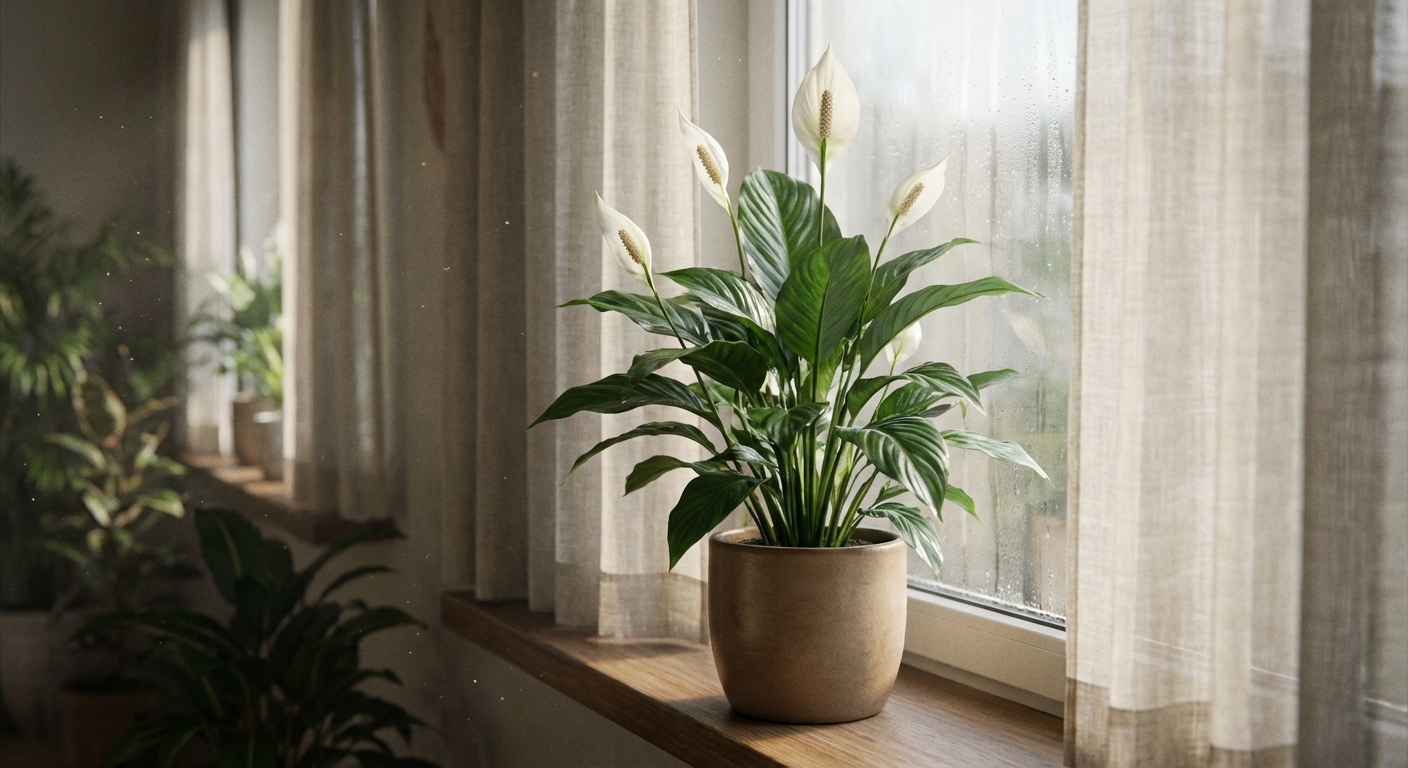
Peace lilies are the houseplants I recommend when someone whispers, “I kill everything.” They are forgiving, dramatic in a way that helps you learn quickly, and deeply satisfying when they settle in and start pushing up those creamy white spathes. The trick is understanding what a Spathiphyllum is actually asking for: steady moisture (not soggy roots), bright but gentle light, and a potting mix that breathes.
Safety note: Peace lilies contain calcium oxalate crystals and are toxic if chewed by pets or children. Keep them out of reach, and if ingestion happens, contact your vet, poison control, or a medical professional.
Meet the peace lily (Spathiphyllum)
Peace lilies are tropical understory plants, meaning in nature they grow beneath taller trees in warm, humid air with dappled light. That background explains almost every care “mystery.” They want:
- Filtered light instead of harsh sun.
- Even moisture instead of long droughts or swampy soil.
- Humidity instead of dry, forced-air heat.
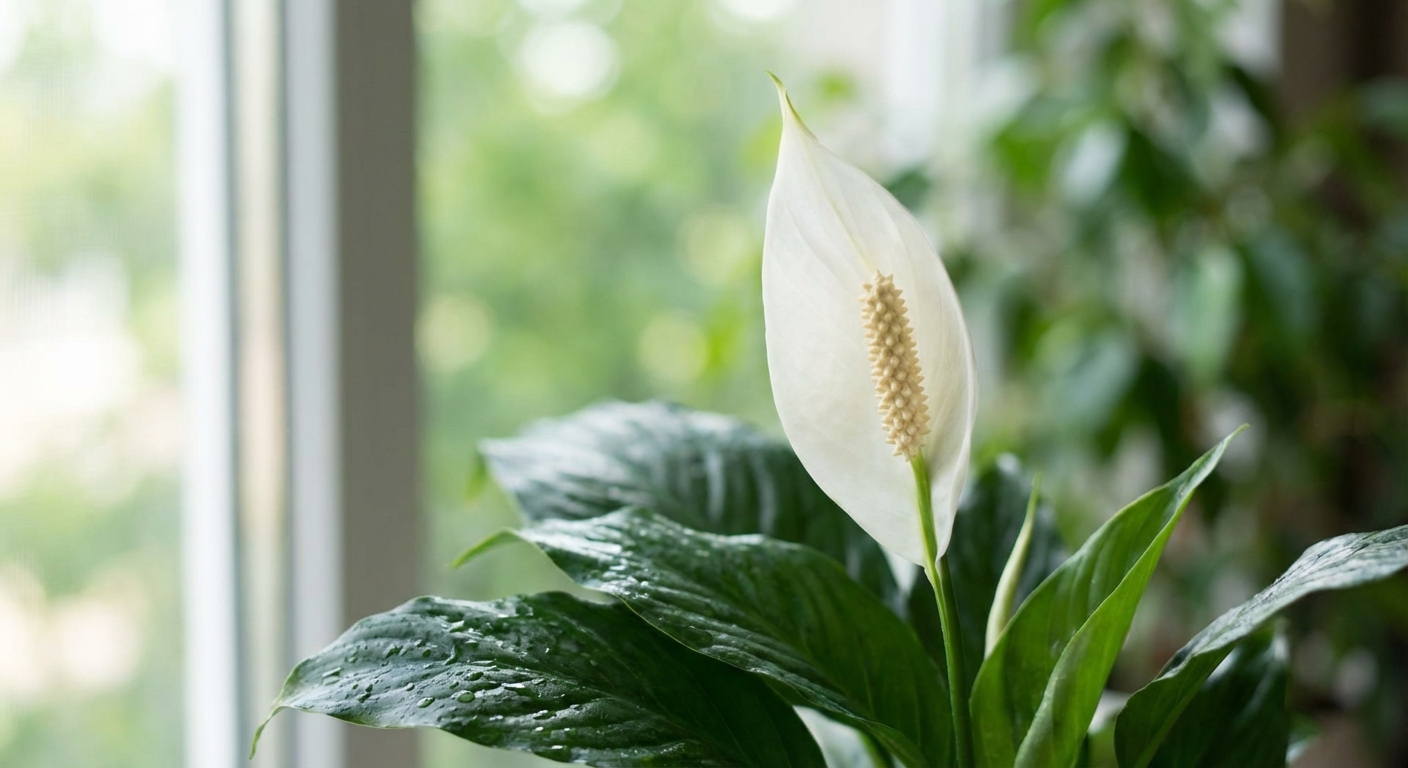
Also, the white “flower” is not a true petal. It is a spathe, a modified leaf that wraps a finger-like spadix where the tiny flowers live. When your plant is happy, you will see new spathes rise up on sturdy stems that stand taller than the foliage.
Light: blooms start here
If your peace lily is alive but not thriving, light is usually the first thing I adjust.
Best light
Bright, indirect light is ideal. Think: a few feet back from an east or north window, or near a south or west window with a sheer curtain.
Low light?
Yes, peace lilies tolerate low light better than many houseplants, but “tolerate” is the key word. In low light you will typically see:
- Slower growth
- Fewer new leaves
- Little to no blooming
Too much light
- Yellowing leaves that look washed out
- Crispy patches or sun-scorched areas
- Soil drying extremely fast
If you suspect sunburn, move the plant back from the window and trim only the fully damaged leaves at the base.
Watering: moist, not wet
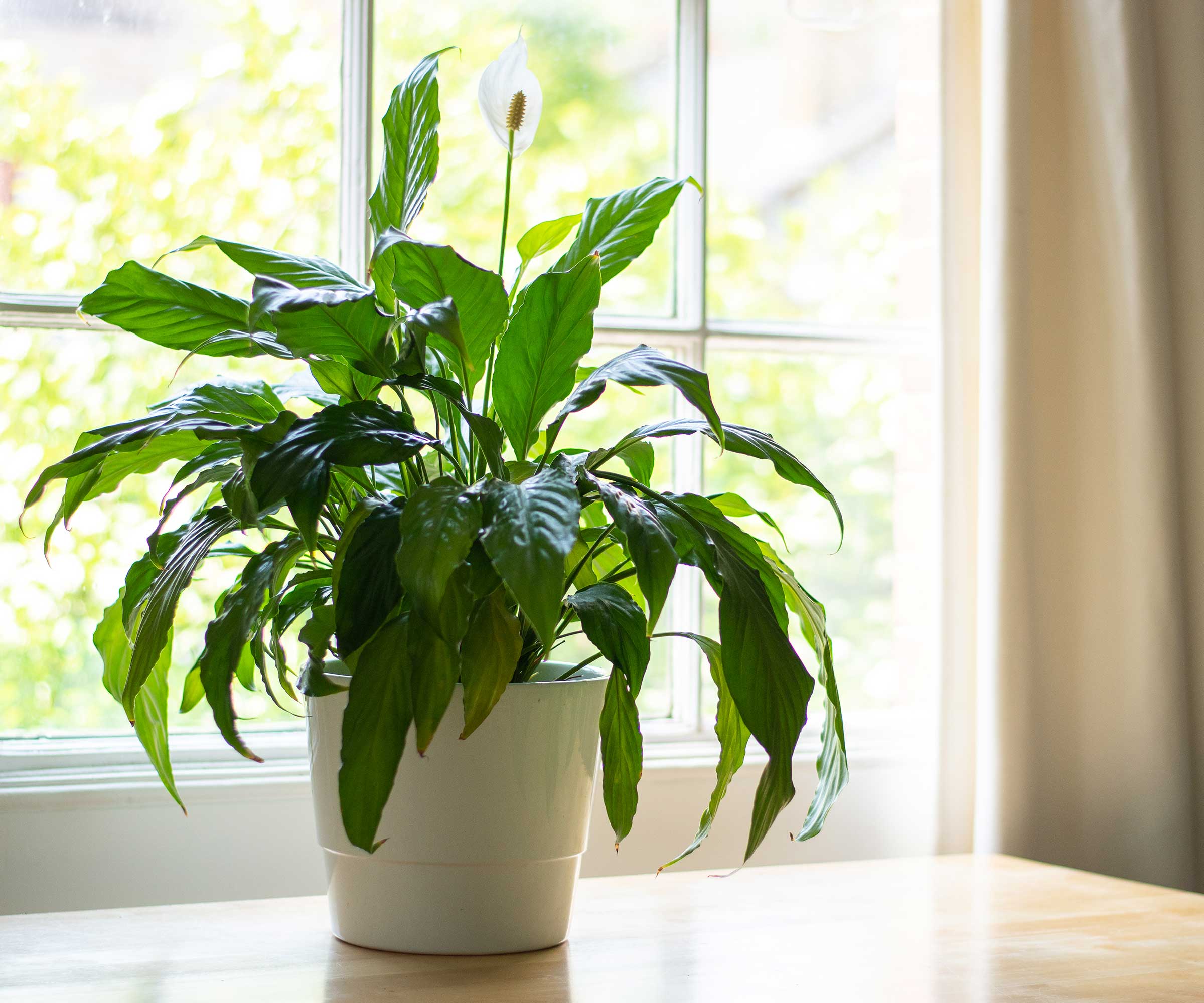
Peace lilies love moisture, but they hate suffocating roots. Your goal is a rhythm where the plant never sits bone-dry for long, and never sits in stagnant water.
How often to water
Instead of watering “every Sunday,” use a simple check:
- Stick your finger into the soil.
- When the top 1 to 2 inches feel dry, water thoroughly.
In many homes that lands around every 7 to 10 days in cooler seasons and every 4 to 7 days in brighter, warmer conditions. Your home, pot size, and light will change that.
How to water correctly
- Water until it runs out the drainage holes.
- Empty the saucer after 10 to 15 minutes.
- Do not let the pot sit in water.
What kind of water?
Peace lilies can be sensitive to minerals, salts, and additives in tap water. If you see persistent brown tips and your care is otherwise solid, try one of these:
- Filtered water
- Rainwater (my favorite, when I can collect it)
- Tap water left out overnight can help only in areas that use chlorine, since it may dissipate. It does not remove chloramine or fluoride, which are common in municipal water and can also contribute to leaf tip burn.
Humidity and temperature
Peace lilies are happiest in the same conditions most humans enjoy, just a touch more humid.
Ideal range
- Humidity: 40% to 60%+ is great
- Temperature: 65°F to 80°F (18°C to 27°C)
Easy humidity boosts
- Group plants together (they create a tiny humid microclimate)
- Run a small humidifier nearby
- Use a pebble tray, making sure the pot sits above the waterline
Avoid blasting your peace lily with heat vents or AC. Dry airflow is a fast track to brown tips.
Soil and pot
The most common peace lily tragedy is root rot, and soil is often the quiet culprit. Many bagged mixes hold too much water for too long, especially in low light.
Best potting mix
Aim for a chunky, breathable mix that still holds some moisture:
- 2 parts quality indoor potting mix
- 1 part perlite or pumice
- 1 part orchid bark or fine pine bark
If you prefer buying instead of blending, look for an aroid mix or add perlite and bark to a standard houseplant mix.
Best pot
- Drainage holes are non-negotiable.
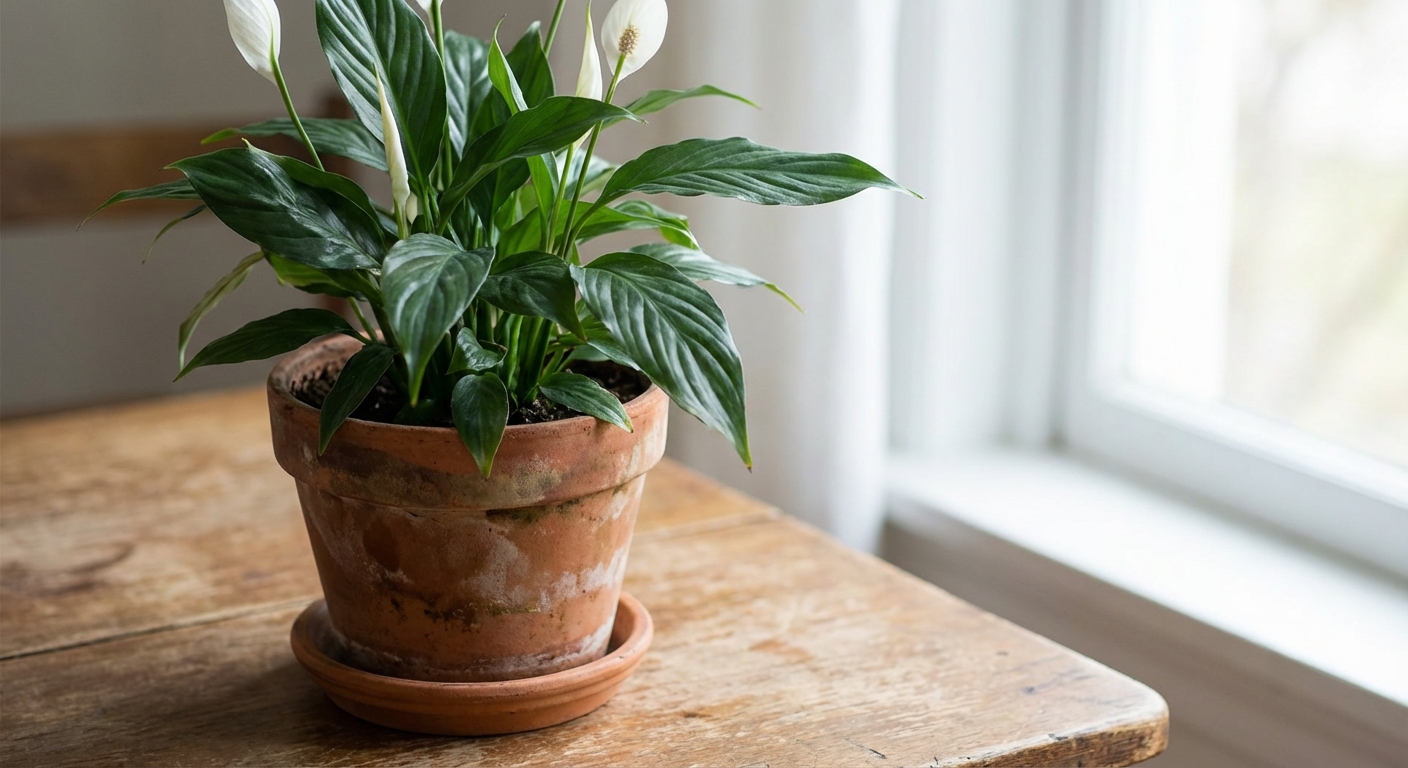
- Terracotta dries faster and can help if you tend to overwater.
- Plastic retains moisture longer and can help if you underwater.
Fertilizing: go gentle
Peace lilies do not need heavy fertilizer. In fact, overfeeding is a common reason for browning and salt buildup.
When to fertilize
Feed during active growth, typically spring through early fall. In winter, many plants slow down and do not want extra nutrients.
What to use
- A balanced houseplant fertilizer (like 10-10-10 or 20-20-20) diluted to quarter to half strength
- Or a gentle organic option like fish emulsion, also diluted
How often
Once a month is plenty for most homes. If your plant is in bright light and growing quickly, every 3 to 4 weeks can work well.
Clara note: If you see crusty white buildup on the soil surface or rim of the pot, flush the soil with plenty of water and pause fertilizing for a month.
Repotting
Peace lilies do not mind being a little snug, and they often bloom best when slightly root-bound. Still, they need fresh soil and space eventually.
Signs it is time
- Roots circling the pot or poking from drainage holes
- Water runs straight through (root mass is too dense)
- Plant dries out very quickly despite proper watering
- It has been 18 to 24 months since the last repot
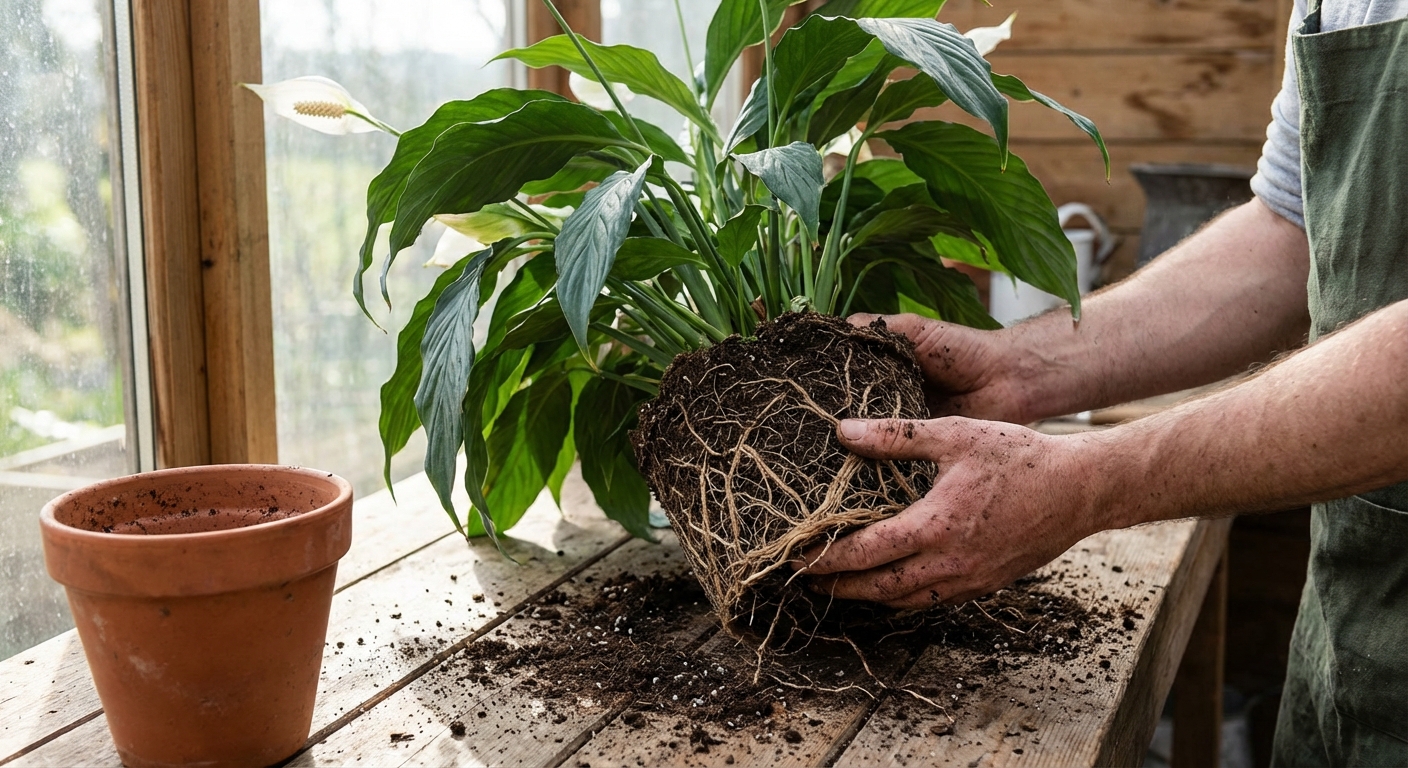
How to repot
- Choose a pot only 1 to 2 inches wider than the current one.
- Use fresh, airy mix.
- Set the plant at the same soil level as before.
- Water thoroughly and let it drain.
If your peace lily is huge, you can also divide it by gently teasing apart clumps with their own roots and leaves.
How to get blooms
“Why won’t my peace lily bloom?” is the number one question I get. The good news is that blooming is usually about a few adjustable conditions, not luck.
Bloom checklist
- Light: Move it to brighter indirect light. This is the biggest lever.
- Age: Very young divisions sometimes need time to mature.
- Feeding: Light monthly fertilizing in spring and summer helps.
- Stress balance: Avoid extremes. No drought cycles, no soggy soil, no cold drafts.
- Pot size: Slightly root-bound can promote blooms. Overpotting often delays flowering.
Bloom booster?
You can try a fertilizer with slightly higher phosphorus, but it will not compensate for low light. If you do switch, do it gently and sparingly. More fertilizer is not more flowers.
Common problems
Peace lilies communicate with their leaves. Sometimes they are a little theatrical about it, but that is part of their charm. Use the symptom below, then follow the quick fix and deeper cause.
Drooping after watering
What it looks like: Leaves are limp and folded, but you watered and nothing perks up within a few hours.
Most likely causes:
- Root rot from staying wet too long
- Hydrophobic soil where water runs down the sides and never soaks in
- Heat stress from hot window glass or a vent
What to do:
- Check the soil. If it is wet and sour-smelling, suspect rot.
- Slide the plant out and inspect roots. Healthy roots are firm and pale. Rotting roots are brown, mushy, and may smell foul.
- If roots are rotting, trim damaged roots with clean scissors, repot into fresh airy mix, and reduce watering until you see new growth.
- If soil is dry but water is not absorbing, bottom-water for 20 to 30 minutes, then let drain fully. After that, consider repotting into a fresher mix.
Brown leaf tips
What it looks like: The leaf ends turn brown and crispy, often while the rest of the leaf stays green.
Most likely causes:
- Low humidity or dry air from heat and AC
- Mineral salts from hard tap water or too much fertilizer
- Chloramine and fluoride in municipal water in some areas
- Underwatering cycles (letting it go too dry too often)
What to do:
- Raise humidity with a humidifier or plant grouping.
- Switch to filtered or rainwater if possible.
- Flush the soil every couple of months: run water through the pot for a minute or two, then drain.
- Trim brown tips with clean scissors following the natural leaf shape. Leave a thin brown edge if needed, do not chase perfection.
Yellow leaves
What it looks like: Entire leaves fade to yellow, sometimes from the bottom up.
Most likely causes:
- Overwatering or poor drainage
- Natural aging of older leaves (a few at a time is normal)
- Too much direct sun
What to do:
- Check moisture and drainage first.
- Remove yellow leaves at the base once they are mostly yellow.
- Adjust light if the plant is in strong sun.
No flowers
What it looks like: Lots of green leaves, no white spathes for months or years.
Most likely causes:
- Not enough light
- Overpotting (too much room, plant focuses on roots and leaves)
- Low nutrition during growing season
- Recent division or repot shock
What to do:
- Move to brighter indirect light for 4 to 8 weeks and watch for new flower stalks.
- Feed lightly monthly in spring and summer.
- Do not size up the pot too often or too drastically.
- Be patient after repotting. Many peace lilies bloom once they re-establish.
Pests
Healthy peace lilies are not magnets for pests, but they do have a few repeat offenders, especially when conditions are a little off.
- Fungus gnats: Tiny black flies that hover near the soil. They thrive in consistently moist, organic mixes. Let the top 1 to 2 inches dry between waterings, remove decaying leaves, and use yellow sticky traps to catch adults. If they persist, consider a soil drench with BTI (often sold as mosquito bits) and repot into a chunkier mix.
- Spider mites: Fine webbing, speckled leaves, and a dull look, often in dry air. Rinse the plant in the shower, wipe leaves, raise humidity, and treat with insecticidal soap or horticultural oil, repeating weekly a few times.
- Mealybugs: White cottony clusters in leaf joints and along stems. Dab with isopropyl alcohol on a cotton swab, then follow with insecticidal soap, repeating until they are gone.
Root rot risk
Why it happens: Peace lilies like moisture, so people understandably water often. In low light or in dense soil, that moisture lingers and roots cannot breathe.
Early warning signs:
- Drooping that does not resolve after watering
- Yellowing leaves plus consistently wet soil
- Musty smell from the pot
- Blackened leaf bases in severe cases
How to prevent it:
- Use a pot with drainage and an airy mix.
- Water only when the top 1 to 2 inches are dry.
- Match watering to light and season. Less light means less water.
- Never let it sit in a full saucer.
How to save a rotting plant: Unpot, rinse roots gently, trim all mushy roots, repot into fresh mix, and keep in bright indirect light. Water sparingly at first, then resume normal watering once you see new growth.
Quick care summary
- Light: Bright indirect for best growth and blooms
- Water: When top 1 to 2 inches are dry, then soak and drain
- Humidity: Average is okay, higher is better
- Soil: Airy, well-draining mix
- Fertilizer: Diluted monthly in spring and summer
- Blooms: More light, gentle feeding, slightly snug pot
- Maintenance: Wipe leaves with a damp cloth every few weeks so dust does not block light
- Safety: Toxic if chewed, keep away from pets and kids
If you take one thing from this page, let it be this: peace lilies are not hard. They are just honest. Give them steady care, and they will reward you with glossy leaves, cleaner-feeling indoor air, and those serene white blooms that look like little flags of “you’ve got this.”