
Jade Plant Care and Propagation

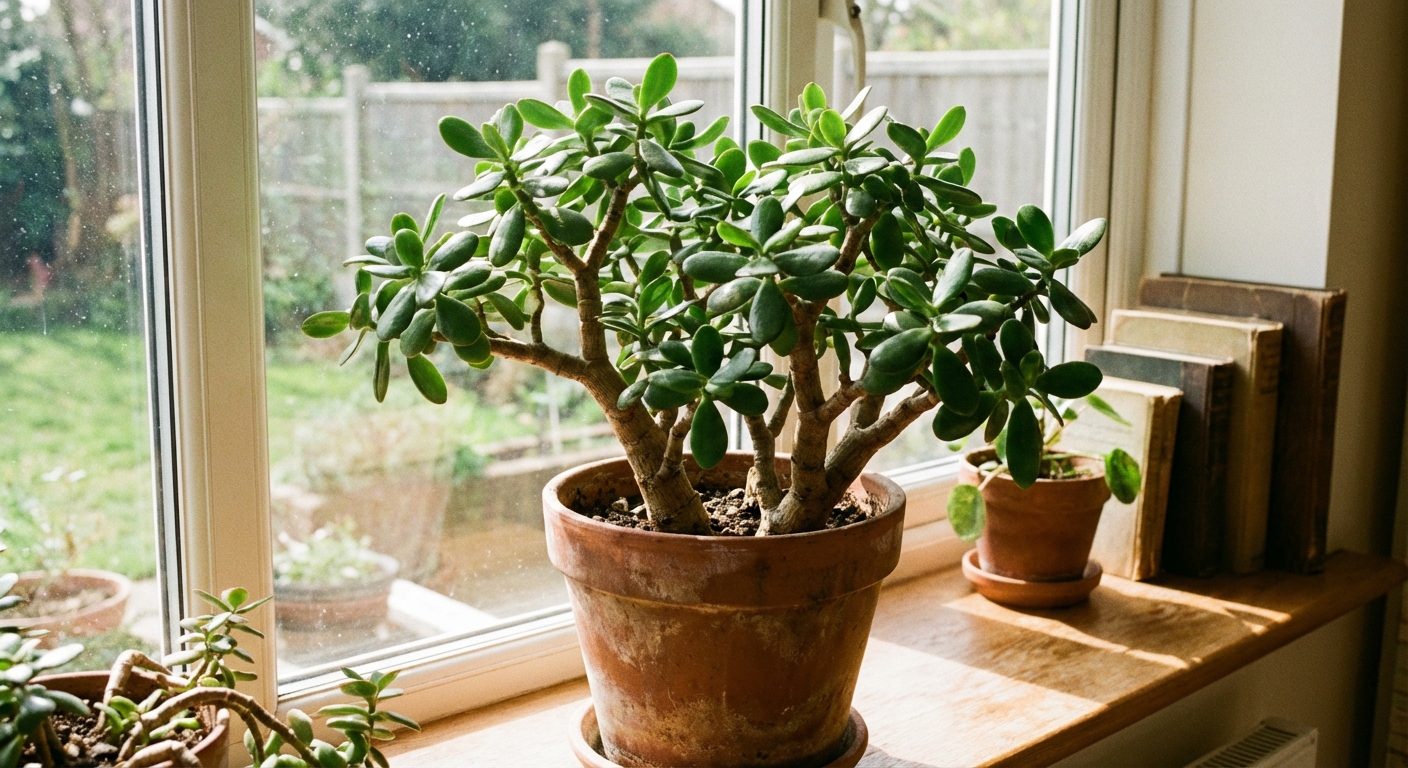
Jade plant (Crassula ovata) is the kind of houseplant that quietly builds confidence. Give it bright light, let the soil dry between waterings, and it rewards you with plump, glossy leaves and sturdy, woody stems that can eventually look like a tiny tree. It is also one of the easiest plants to propagate, which means one jade can become three, then six, then a whole windowsill forest if you are not careful. I say that with love.
Below you will find the care basics, my favorite propagation methods, and how to troubleshoot the three big jade complaints: leaf drop, leggy growth, and overwatering. We will also talk about the long game of training jade into that classic, tree-like shape.
Quick care snapshot
- Light: Bright light, including several hours of direct sun if you can manage it.
- Water: Drench, then let soil dry out fully. Less in winter.
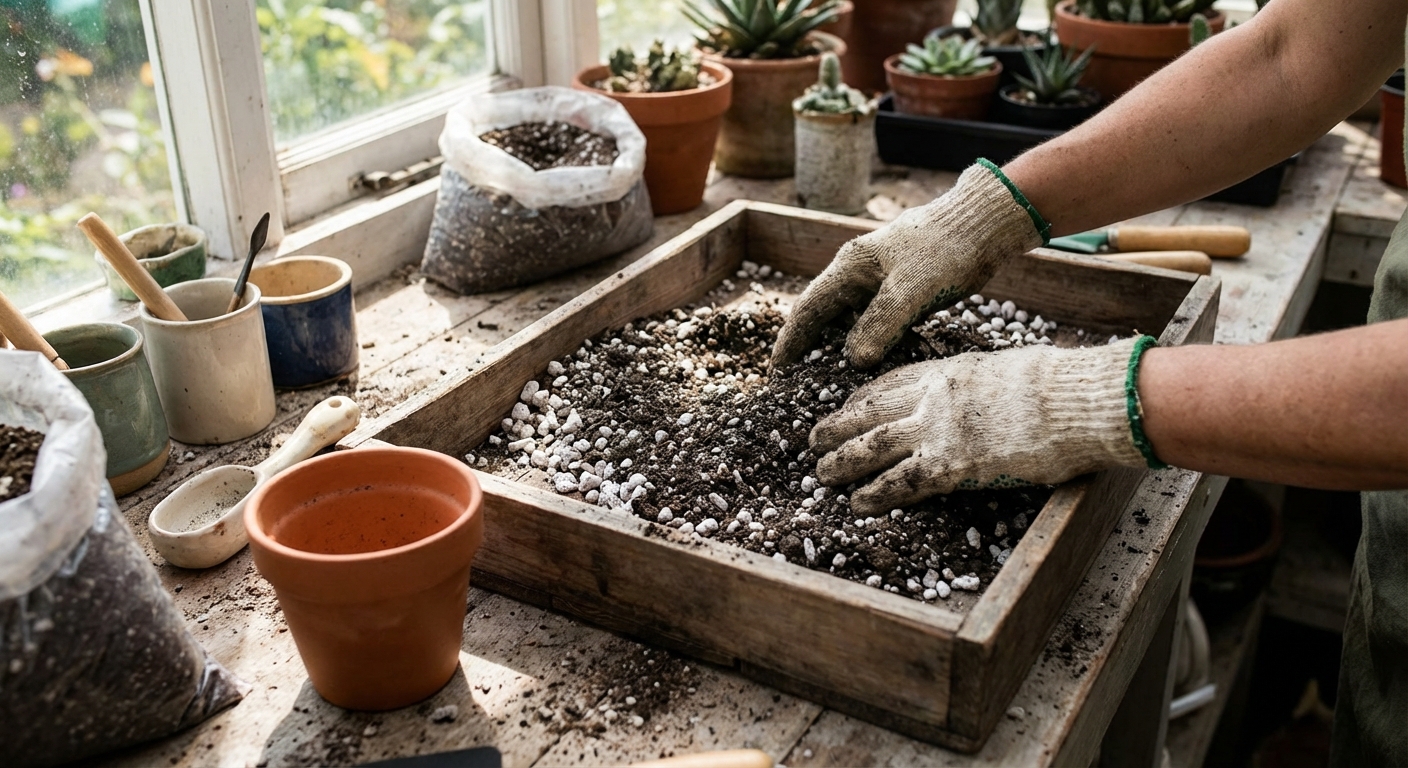
- Soil: Fast-draining cactus and succulent mix, amended for extra drainage.
- Pot: Drainage holes are non-negotiable. Terracotta makes life easier.
- Growth speed: Slow to moderate. It thickens over years, not weeks.
- Propagation: Stem cuttings are most reliable. Leaves work too, just slower.
- Pet safety: Toxic to cats and dogs if chewed.
Light: the secret to a compact, sturdy jade
If there is one thing jade plants ask for, it is more light than most people think. Low light will not necessarily kill a jade quickly, but it will stretch and thin out until it looks like it is reaching for help.
Best indoor light
- South or west window: Often ideal. A few hours of direct sun helps keep growth tight and the trunk sturdier.
- East window: Great for gentle morning sun. You may need to rotate the pot regularly.
- North window: Usually too dim long-term unless it is very bright and unobstructed.
How to avoid sun stress
If your jade has been living in medium or low light, do not shove it straight into blazing afternoon sun. Increase light over 7 to 14 days so leaves can acclimate.
- Sunburn signs: Pale, bleached patches or tan, papery spots on the leaf surface.
- Happy sun signs: Compact growth and, in strong light, a soft red edge on leaf margins.
Clara tip: Rotate your jade a quarter turn weekly. It is the simplest way to prevent the “lean” and keep a balanced, tree-like silhouette.
Watering: soak, dry, repeat
Jade is a succulent, which means it stores water in its leaves and stems. The fastest way to upset it is frequent sips. Instead, water thoroughly, then let the soil dry out completely.
How to know when to water
- Finger test: Stick a finger 2 inches into the soil. If it is dry down there, you can water.
- Pot weight: Learn the feel of a dry pot versus a freshly watered one. This is my favorite method once you get used to it.
- Leaf feel: Slightly softer, less “snappy” leaves can mean it is ready for water. Wrinkling is a later sign.
How to water correctly
- Water until it runs freely out of the drainage holes.
- Let it drain fully. Never let the pot sit in a saucer of water.
- Wait until the mix is dry again before repeating.
Seasonal rhythm
- Spring and summer: Water more often as light and temperatures increase.
- Fall and winter: Water much less. Growth slows and soil stays wet longer.
Rule of thumb: When in doubt, wait a few more days. Jade is more forgiving of slight underwatering than lingering wet roots.
Soil and potting: drainage is everything
In nature, jade grows in gritty, fast-draining conditions. Indoors, it needs a mix that dries out reliably, especially if your home runs cool or you are a generous waterer.
The best soil mix
Start with a cactus and succulent mix, then boost drainage:
- Easy upgrade: 2 parts cactus mix + 1 part pumice or perlite.
- Extra-sturdy for heavy watering habits: 1 part cactus mix + 1 part pumice + 1 part coarse orchid bark.
Choosing the right pot
- Drainage holes: Absolutely required.
- Terracotta: Breathable and helps soil dry faster. Excellent for jade.
- Pot size: Slightly snug is fine. Oversized pots hold moisture too long.
Repotting timing: Every 2 to 4 years, or when the plant becomes top-heavy or roots fully circle the pot. Repot in spring for the smoothest recovery.
Temperature, humidity, and feeding
Temperature
Jade likes typical home temperatures. Protect it from cold drafts and avoid letting it sit against icy window glass in winter.
- Comfort zone: Roughly 65 to 80 F (18 to 27 C).
- Cold stress: Droopy, darkened leaves or sudden leaf drop after a chill.
Humidity
Average indoor humidity is perfect. No misting needed.
Fertilizer
Jade does not need heavy feeding. Too much fertilizer can cause weak, fast growth.
- When: Spring through early summer.
- What: A balanced houseplant fertilizer diluted to half strength, or a succulent fertilizer.
- How often: About once a month during active growth.
Pruning and shaping: growing jade into a tree
That “miniature tree” jade look is not magic. It is a mix of strong light, patience, and selective pruning. Jade responds beautifully to pruning by branching at the cut, which is exactly what you want for a fuller canopy.
When to prune
Prune in spring or early summer when the plant is actively growing. Avoid major pruning in winter.
How to prune for a tree-like form
- Pick a trunk: Choose one main stem to be the central leader. Remove or shorten competing stems near the base over time.
- Raise the canopy gradually: As the plant grows, remove a few of the lowest branches to reveal trunk. Do this slowly so you do not shock the plant.
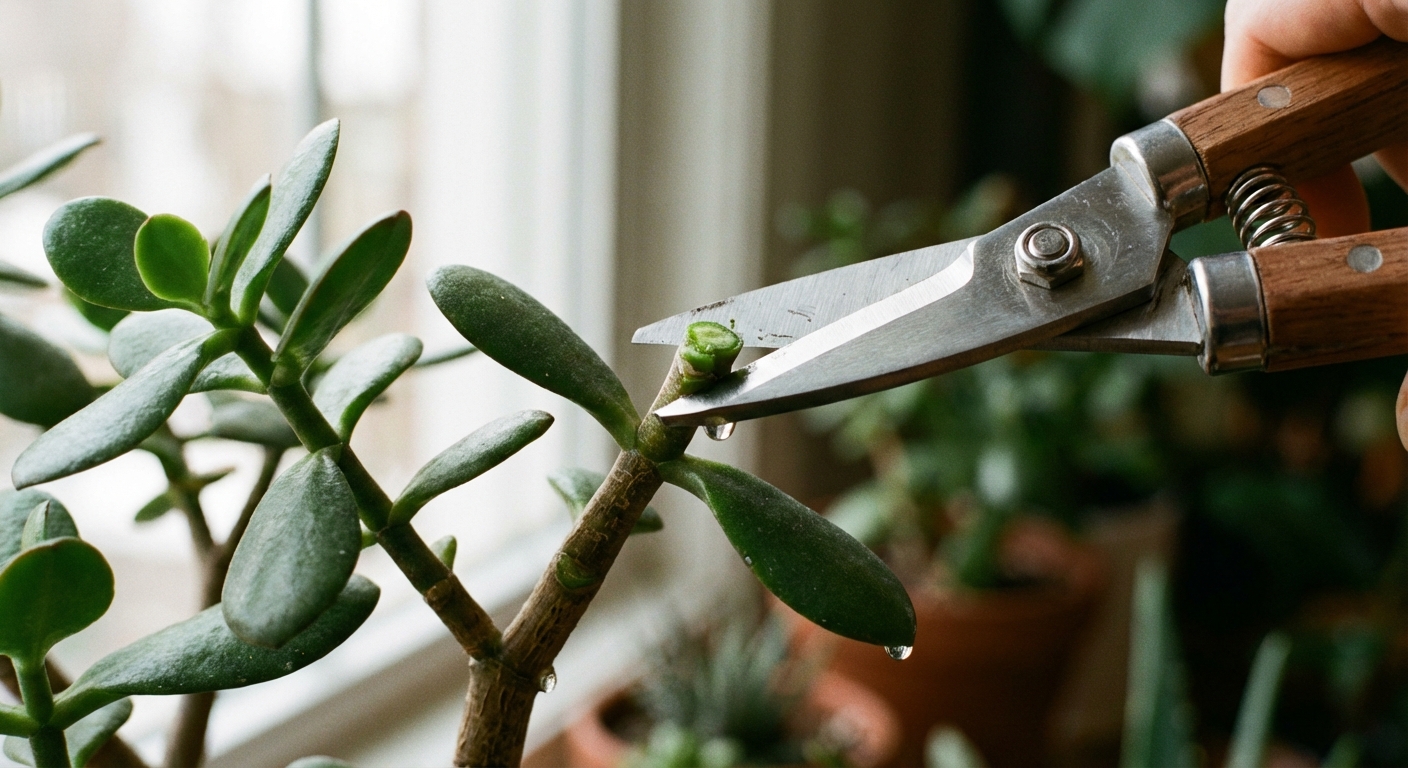
- Encourage branching up top: Pinch or snip the tips of branches in the upper half of the plant. Each cut encourages two new growing points.
- Balance the shape: Step back and rotate the pot as you prune. Aim for even weight so the plant does not topple.
Where to cut
Use clean, sharp pruners. Cut just above a leaf pair or a node. New branches often emerge below the cut.
Support for top-heavy jades: If your jade is leaning, you can stake it temporarily, but long-term the fix is brighter light and pruning for balance. A heavier terracotta pot also helps.
Propagation: turn one jade into many
Jade propagation is wonderfully forgiving, as long as you respect one key step: let cuttings callus. Planting fresh, wet cuts is an invitation for rot.
Method 1: Stem cuttings (most reliable)
- Take a cutting: Snip a healthy stem 3 to 6 inches long. Choose firm growth, not mushy or shriveled stems.
- Remove lower leaves: Clear the bottom inch or two of leaves so you have bare stem to plant.
- Let it callus: Set the cutting in a dry spot out of direct sun for 2 to 5 days, until the cut end feels dry and sealed.
- Plant in dry mix: Insert the callused end into barely moist or dry succulent mix.
- Wait to water: Hold off watering for about a week, then water lightly. After roots form, switch to soak-and-dry watering.
Rooting time: Often 2 to 6 weeks, depending on warmth and light.
Method 2: Leaf propagation (slower, but fun)
- Twist a healthy leaf off cleanly so the base comes with it. A torn leaf often fails.
- Let the leaf callus for 2 to 3 days.
- Lay it on top of dry succulent soil, or set the base just barely against the mix.
- Give bright, indirect light. Mist sparingly only if your air is very dry, and avoid soaking the soil.
You may see tiny roots first, then a baby plant. The original leaf eventually shrivels as it feeds the new growth.
Method 3: Water propagation (possible, but riskier)
Yes, jade can root in water, but the transition to soil can be tricky and rot is more likely. If you try it, keep only the cut end in water and change water often. I still prefer soil for sturdier roots.
Common problems and how to fix them
Leaf drop
A jade dropping leaves is usually responding to stress. The goal is to identify which kind.
- Sudden leaf drop after a move: Light and temperature change. Put it in the brightest stable spot you have and stop watering until soil is dry.
- Leaves dropping and soil stays wet: Overwatering or poor drainage. Let it dry completely, then reassess soil and pot.
- Leaves shriveling then dropping: Underwatering for too long. Rehydrate with a thorough soak, then return to a steady soak-and-dry routine.
Leggy growth (stretching)
Leggy jade has long gaps between leaves and thin, bending stems. This is nearly always a light issue.
- Fix: Move to brighter light, ideally some direct sun. Rotate weekly.
- Prune: Cut back stretched branches in spring to encourage bushier regrowth.
- Propagate: Use the healthy cut pieces as stem cuttings.
Signs of overwatering
- Leaves feel soft, squishy, or translucent
- Black spots on leaves or stems
- Leaves yellowing and dropping easily
- Soil smells sour or stays wet for many days
What to do right away:
- Stop watering.
- Move to brighter light and warm airflow, but avoid blasting heat.
- If the soil is soggy, unpot and inspect roots. Trim mushy roots with clean scissors.
- Repot into fresh, dry, fast-draining mix in a pot with drainage.
Wrinkled leaves
Wrinkling usually means the plant is using stored water. If the soil is bone dry, water deeply. If the soil is wet and leaves are wrinkled, roots may be compromised from overwatering, and the plant cannot drink.
Pests
Jade can occasionally get mealybugs or scale.
- Mealybugs: White cottony clusters in leaf joints. Dab with rubbing alcohol on a cotton swab, then follow with insecticidal soap if needed.
- Scale: Small brown bumps on stems and leaf undersides. Scrape gently and treat repeatedly.
Quarantine new plants for a couple of weeks if you can. It saves so much trouble later.
How to get a thicker trunk
Everyone wants that chunky, bonsai-like jade trunk. Here is the honest truth: thickness comes from time. You can help the process along, but you cannot rush woodiness the way you can rush leafy growth.
What actually helps
- Strong light: More light encourages sturdier, denser growth.
- Pruning: A well-pruned canopy encourages the plant to support more branching and weight.
- Let it grow between prunings: Alternating growth periods with pruning cycles builds structure.
- Correct watering: Deep, infrequent watering supports healthy roots and steady growth.
What does not help (and can backfire)
- Over-fertilizing: Can cause weak, floppy stems.
- Keeping it too wet: Produces soft growth and invites rot.
- Low light: Makes stems long and thin, no matter how much you wish otherwise.
Jade plant FAQs
How often should I water my jade plant?
Water when the soil has dried out completely. That could be every 7 to 14 days in bright summer light, and every 3 to 5 weeks in winter, depending on your home. Use the soil dryness and pot weight as your guide.
Can jade live outdoors?
In warm climates, jade can thrive outdoors in bright light, including sun, as long as it is protected from frost and extreme midday scorch. Acclimate it gradually to outdoor sun.
Why are my jade leaves turning red?
A red edge is often a sign of bright light and can be normal. If leaves look stressed, scorched, or bleached, reduce intense sun and acclimate more slowly.
Can I make my jade bushier?
Yes. Give it brighter light and pinch or prune the growing tips in spring. Pruning tells jade to branch, which fills it out.
A calm, steady plant for patient growers
Jade plants are not fussy, but they are honest. If they are stretching, they need more light. If they are soft, they need less water and more air around their roots. If they are thriving, they will keep quietly stacking leaf after leaf, year after year, until one day you look at it and realize you grew a little tree in a pot.
If you want, tell me where your jade lives right now (window direction and how often you water), and I will help you dial in the simplest routine for your home.