Hoya Plant Care for Beginners

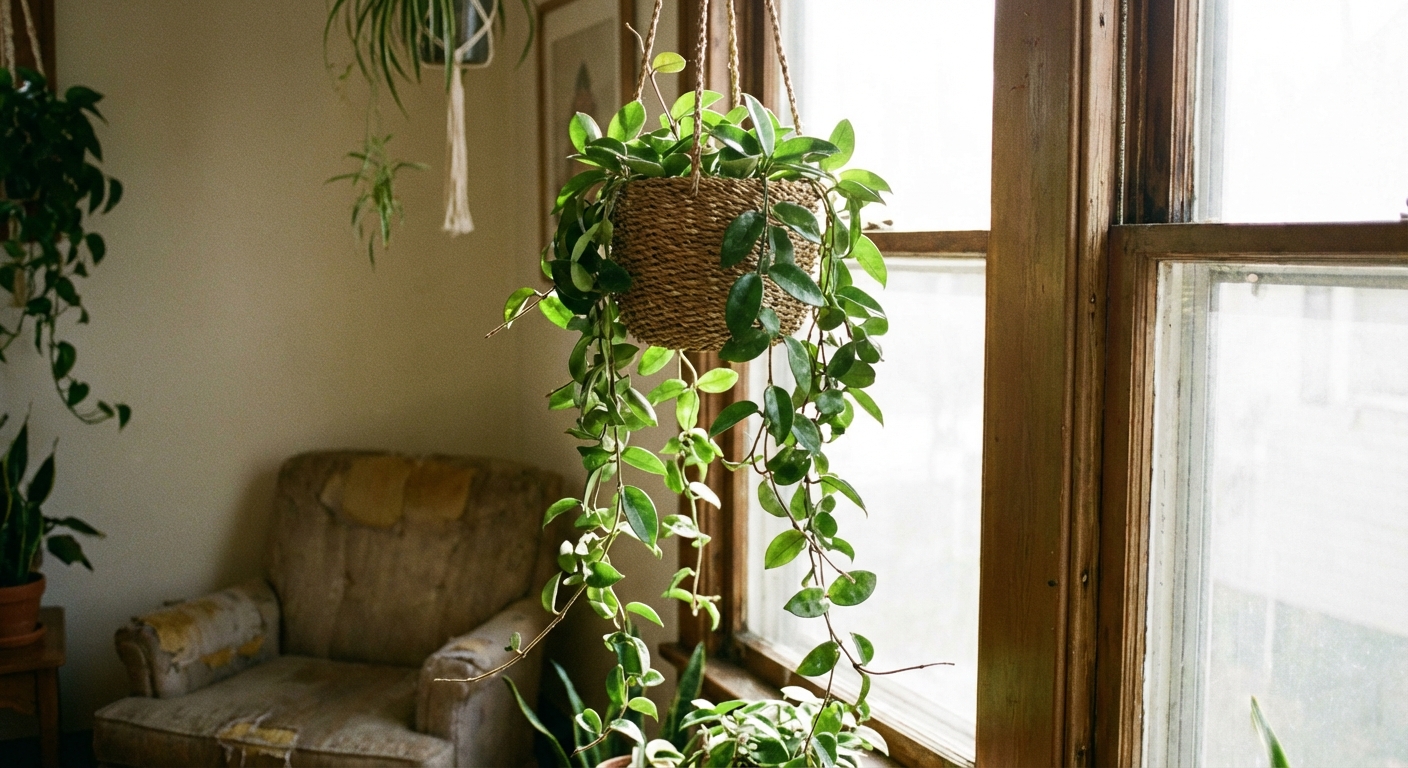
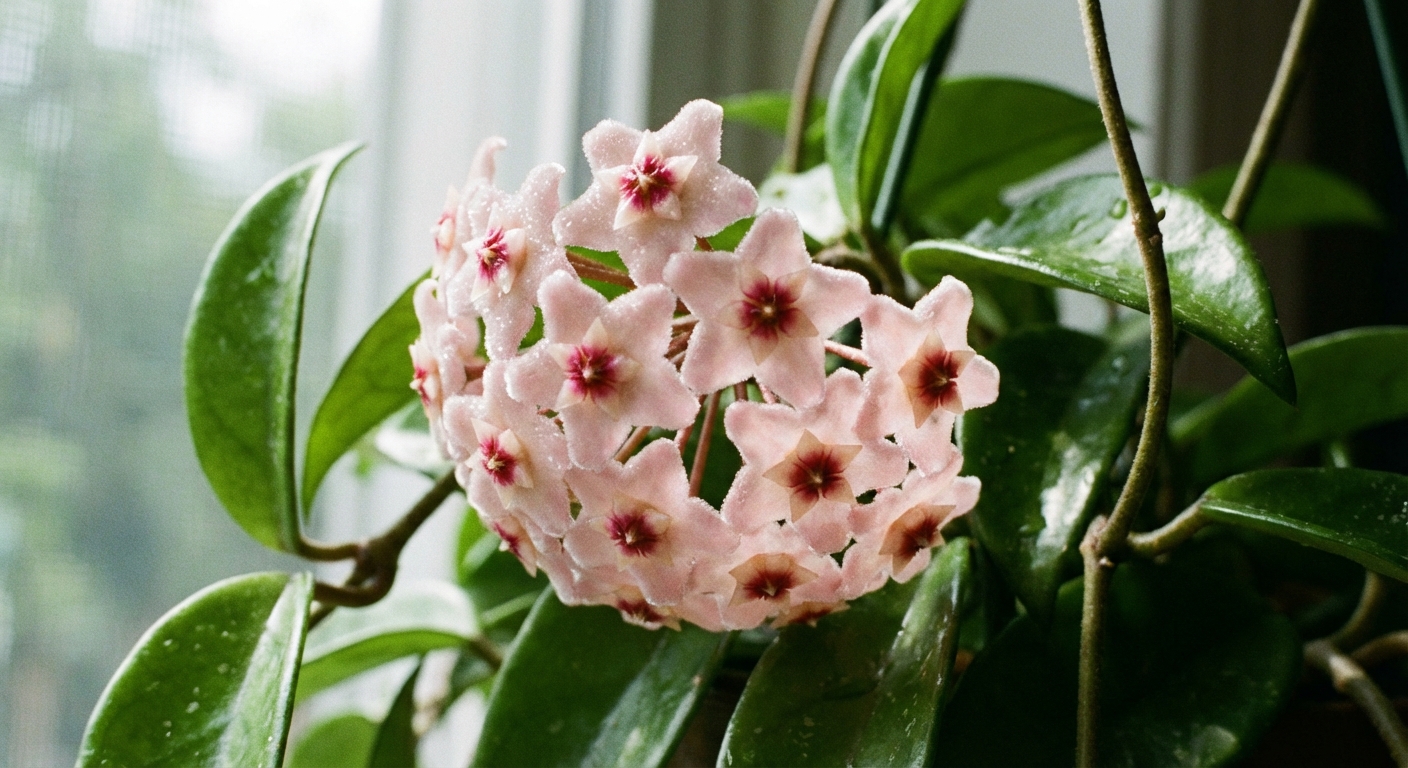
Hoyas are the kind of houseplant that makes you do a double take. Thick, glossy leaves. Vines that drape like living garland. And when they’re happy, little clusters of waxy star-shaped flowers that are often sweetly scented. Some smell like honey or vanilla, some smell different, and some barely smell at all. If you’re new to hoyas, here’s the good news: they’re forgiving, and they tend to grow at a slow to moderate pace in most homes. They’ll also tell you what they need if you learn their cues.
This guide will walk you through the basics of indoor hoya care, introduce beginner-friendly varieties, and help you troubleshoot common hiccups like leaf drop and leggy growth.
Pet note: Hoyas are widely considered pet-friendly compared to many houseplants, but their milky sap can be mildly irritating and may cause stomach upset if chewed. If you have curious pets or kids, keep plants out of reach and wash hands after pruning.
Meet the hoya (wax plant)
Hoya is a large genus of tropical and subtropical plants, many of them epiphytes in nature. That means they often grow on trees or rocky surfaces where water drains quickly and air circulates around the roots. This background explains almost all hoya care rules:
- They like bright light, including some direct sun when acclimated.
- They prefer to dry a bit between waterings.
- They want air in the root zone, not dense, soggy soil.
Most hoyas are grown indoors for their foliage and their blooms. Some are fast vines, some are compact and shrubby, and some look like quirky little aliens (in the best way).
Beginner-friendly hoya varieties
If you’re standing in a nursery aisle feeling overwhelmed by all the Latin names, start with one of these. They’re widely available and generally tolerant of normal home conditions.
Hoya carnosa
The classic wax plant. Tough, adaptable, and one of the most reliable bloomers indoors once mature. Common forms include plain green, 'Krimson Queen' (cream and pink variegation), and 'Krimson Princess' (lighter centers).
Hoya pubicalyx
Often more vigorous than H. carnosa in bright light, with speckled leaves and fragrant flowers. A great first vining hoya if you want visible progress.
Hoya australis
Glossy, vigorous, and typically unfussy. It can climb a trellis beautifully.
Hoya obovata
Thick, rounded leaves that look like little green paddles. Slow and steady, very forgiving about missed waterings.
Hoya kerrii (sweetheart hoya)
The heart-leaf hoya. It’s adorable, but note: those single-leaf pots are sometimes just a rooted leaf and may never vine unless there’s a node. If you want a full plant, look for a pot with a visible stem node.
Light: the bloom trigger
If hoyas had a love language, it would be bright, consistent light. Many beginner issues like slow growth, long bare vines, and no blooms trace back to light.
Best indoor light
- Bright indirect light near an east, south, or west window is ideal.
- Gentle morning sun is usually welcomed, especially in an east window.
- Direct sun can be great for many hoyas, especially H. carnosa types, if the plant is acclimated slowly.
- Hot midday and harsh afternoon sun through glass can scorch leaves, especially in summer or in very bright, unshaded south or west windows.
Signs your hoya needs more light
- Long stretches of vine with wide spacing between leaves
- Small leaves compared to older growth
- Little to no new growth during the growing season
- No blooms after a year or two of good care (especially in mature plants)
If your home is low light, a simple grow light can be a game-changer. Aim for about 8 to 12 hours a day, and adjust based on intensity and distance. Close enough to be effective, far enough to avoid heating the leaves.
Watering: soak and dry
Hoyas like a pattern that mimics tropical rain and quick drying. Think: water thoroughly, then let the potting mix dry out partway before watering again.
How often to water
There is no perfect calendar schedule, but here is a beginner-friendly baseline:
- Spring and summer: water when the top 1 to 2 inches of mix are dry, often every 7 to 14 days depending on light and temperature.
- Fall and winter: water less often, often every 14 to 21 days.
As a rule, smaller pots dry faster and larger pots dry slower. Also, a chunky mix in terracotta can dry much faster than a denser mix in plastic.
The best habit is a quick finger test. If the top layer is dry but the pot still feels slightly heavy, wait a few more days. In deeper pots, you can also check a little deeper with a wooden skewer.
How to water correctly
- Water until it flows from the drainage holes.
- Let it drain fully. Do not let the pot sit in water.
- Empty cachepots or saucers after 10 to 15 minutes.
Common watering mistakes
- Frequent sips: small amounts of water too often can leave the root zone constantly damp.
- Bone-dry for too long: extended drought can cause leaf drop, especially in thinner-leaved hoyas.
Humidity and temperature
Most hoyas do well in average household humidity, but they grow faster and bloom more readily when humidity is moderately higher.
Ideal ranges
- Humidity: 40 to 60 percent is a sweet spot for many common hoyas.
- Temperature: 65 to 85°F (18 to 29°C) is ideal.
Keep hoyas away from cold drafts and heating vents. Sudden temperature swings can trigger bud drop or leaf drop.
If your air is very dry in winter, try grouping plants, running a small humidifier nearby, or placing the plant in a brighter kitchen or bathroom window if you have one.
Soil and pots
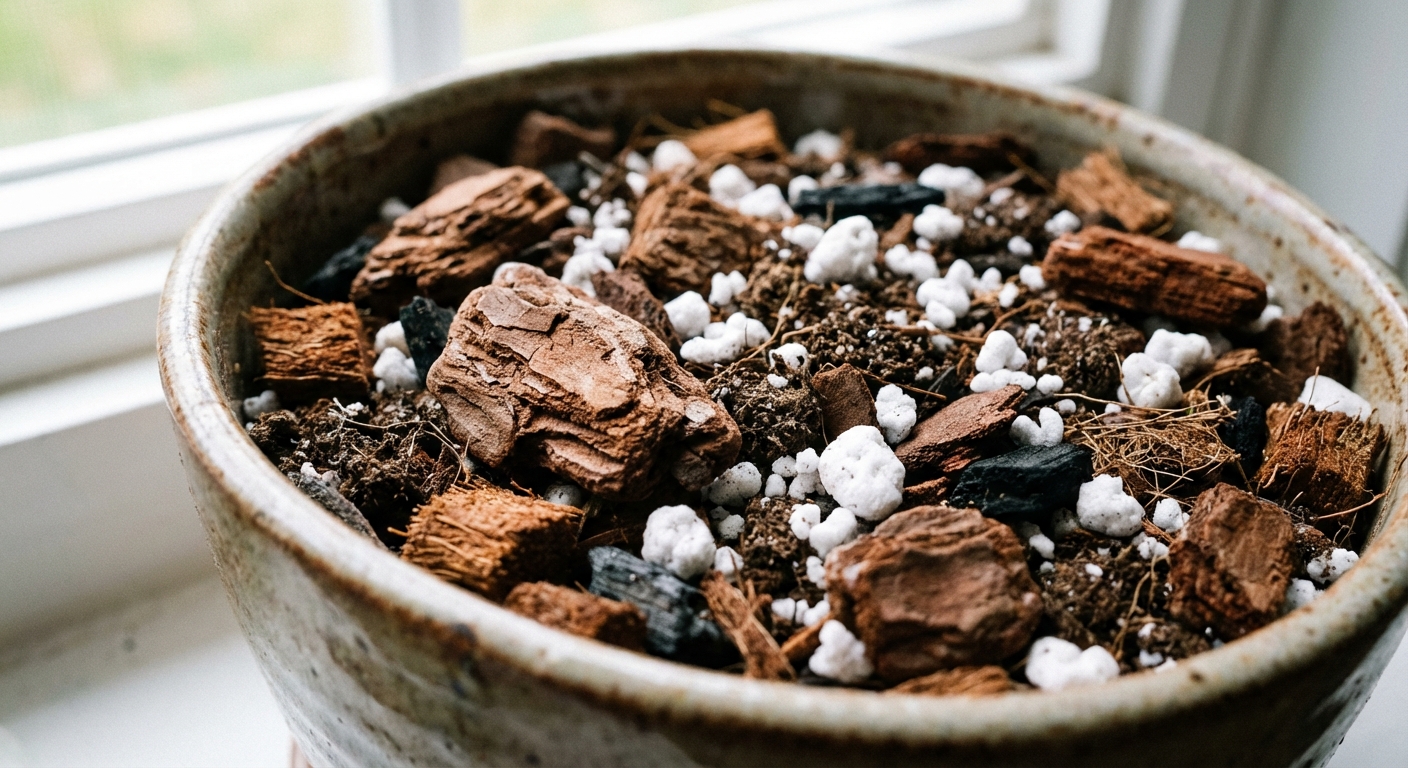
In nature, hoyas often cling to bark or grow in very chunky debris. Indoors, they do best in a mix that drains quickly and lets roots breathe.
An easy hoya potting mix
- 2 parts indoor potting mix
- 1 part orchid bark
- 1 part perlite or pumice
If you tend to overwater, increase the bark and perlite. If you tend to forget watering, keep a bit more potting mix for moisture retention.
Pot choice
- Drainage holes are non-negotiable.
- Hoyas often prefer to be slightly rootbound.
- Terracotta helps mixes dry faster. Plastic retains moisture longer. Choose based on your watering style and your home’s humidity.
Feeding: light and steady
Hoyas are not heavy feeders, but they do appreciate a little nutrition during active growth.
Simple fertilizer routine
- Spring through early fall: fertilize every 4 to 6 weeks with a balanced houseplant fertilizer at half strength.
- Winter: pause or fertilize very lightly only if the plant is actively growing under strong light.
For blooming, consistency matters more than special formulas. Some growers use a higher-phosphorus “bloom” fertilizer occasionally, but it is not required and the bloom boost is not guaranteed. If you try one, use it sparingly and do not overapply.
How to encourage blooms
Hoya flowers are worth the wait, and yes, sometimes it is a wait. Many hoyas bloom once they’re mature, receiving bright light, and kept in a stable routine.
Bloom basics
- Give brighter light than you think. This is the big one.
- Do not overpot. Slightly snug roots often help blooming.
- Keep conditions steady. Big changes can cause buds to drop.
- Feed lightly during the growing season.
Do not cut peduncles
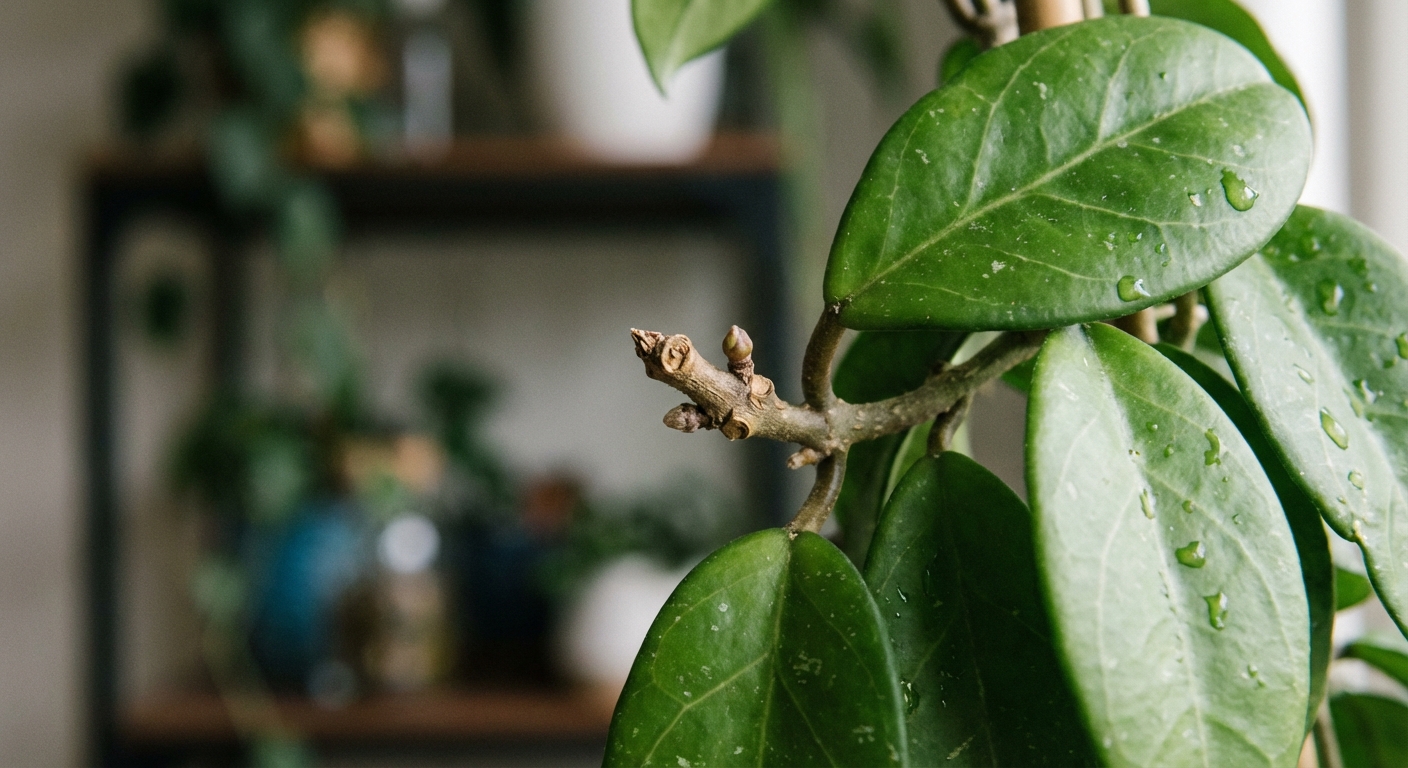
This is the most important hoya blooming tip: hoyas bloom from little woody spurs called peduncles. They look like tiny stems that stick out from the vine. They can look like bare nubs after the flowers drop, but many hoyas rebloom from the same peduncle again and again, so do not prune them off.
Patience and seasons
Some hoyas bloom in summer, some in fall, and some are sporadic. If your plant is healthy and growing, you’re building the energy reserve that leads to flowers.
Pruning and training
Hoyas are natural climbers. You can let them trail from a shelf, or train them up a hoop trellis or a simple wire circle.
When to prune
- Prune in spring or early summer if you want a fuller plant.
- Avoid heavy pruning right before bloom season if you suspect buds are forming.
How to make a hoya fuller
If your hoya is sending out long “searching” vines with few leaves, you can pinch the tip to encourage branching. Just remember: more light will also naturally reduce legginess. Training vines onto a trellis can also help the plant fill out more evenly.
Propagation
Propagating hoya is a gentle way to learn the plant’s growth habits. Most common hoyas root readily from stem cuttings.
Stem cutting method
- Choose a healthy vine with 2 to 4 leaves and at least 2 nodes.
- Cut just below a node.
- Remove the lowest leaves so a node can sit in water or damp medium.
- Root in water, perlite, or a chunky mix kept lightly moist.
- Pot up once you have several inches of roots.
Warmth and bright indirect light speed things up. Cold, dim rooms slow everything down. If you have had transplant shock moving water-rooted cuttings to soil, try rooting in perlite or a chunky mix instead. The transition is often smoother.
Repotting and upkeep
Hoyas do not need frequent repotting. They usually prefer a snug pot, and a too-large jump can keep the mix wet for too long.
- When to repot: every 2 to 3 years, or when the mix has broken down and stays soggy.
- Signs it is time: roots circling heavily, roots pushing out drainage holes, water rushing straight through, or a sour smell from old mix.
- Best season: spring through early summer.
- How much to size up: go up 1 to 2 inches in diameter, not more.
- Bonus maintenance: wipe leaves occasionally and rotate the pot weekly for balanced growth.
Common problems
Leaves dropping
Leaf drop is usually a response to stress. Narrow down the cause with these checks:
- Sudden cold or drafts: move away from doors, AC, or chilly windows.
- Overwatering: soft yellowing leaves and a musty pot are clues. Let the mix dry more between waterings and consider repotting into a chunkier mix.
- Underwatering: wrinkled leaves or dry, crispy leaf drop points to extended drought. Water deeply and adjust your routine.
- Low light: plants in dim corners often shed older leaves. Move closer to a bright window or add a grow light.
Leggy vines with few leaves
This is almost always not enough light. Move the plant to brighter conditions and rotate the pot weekly so growth stays balanced. If it’s already very sparse, prune back a little and propagate the cuttings to replant into the same pot for a fuller look. Also consider whether the plant needs support to climb, and go easy on high-nitrogen fertilizer, which can encourage lots of vine with less satisfying structure in some setups.
No blooms
- Increase light first.
- Check pot size. Overpotting can delay blooming.
- Confirm you are not cutting peduncles.
- Be patient with young plants. Many hoyas need time to mature.
Buds forming, then falling off (bud blast)
Bud blast is common and heartbreaking, but usually fixable. The biggest culprits are moving the plant, inconsistent watering, cold drafts, or very dry air. Once buds appear, try to keep conditions as steady as possible.
Wrinkled or puckered leaves
Often a sign of thirst or root stress. Check the mix moisture and also check roots if the plant isn’t perking up after a thorough watering. Roots that are mushy, dark, or smelly indicate rot and need trimming and fresh chunky mix.
Pests: mealybugs, scale, spider mites
Hoyas can attract sap-suckers, especially in dry indoor air.
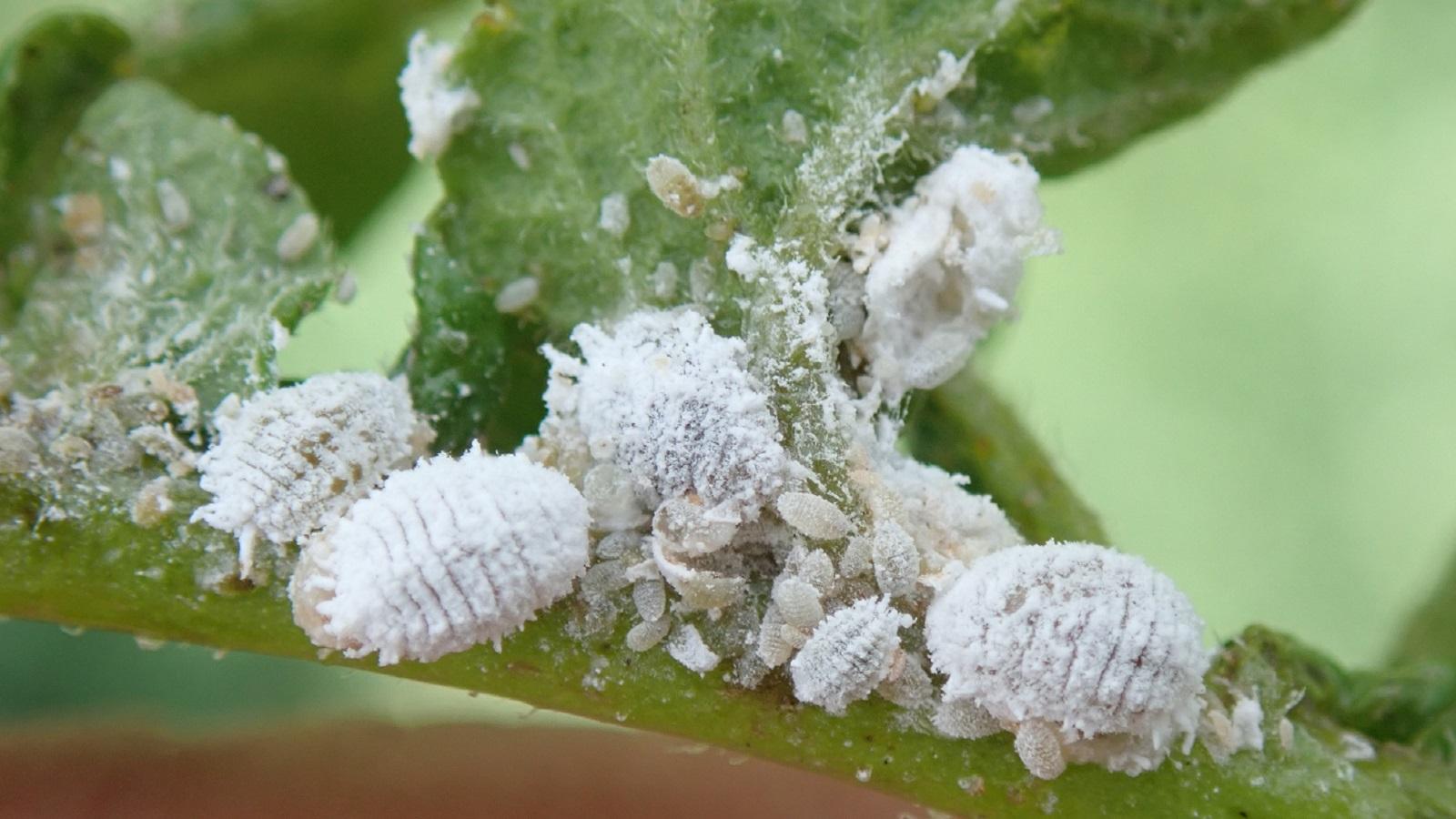
- Mealybugs: white, cottony clusters in leaf joints.
- Scale: brown or tan bumps that cling to stems and leaf veins.
- Spider mites: fine webbing and stippled, dusty-looking leaves.
- Inspect leaf undersides and stem joints regularly.
- Isolate new plants for a week or two if you can. It saves headaches later.
- Wipe pests off with a cotton swab dipped in rubbing alcohol.
- Follow with insecticidal soap or horticultural oil as needed, repeating weekly for a few cycles.
Care checklist
- Light: bright indirect, plus gentle direct sun if acclimated
- Water: soak thoroughly, then let the mix partially dry
- Soil: chunky, airy, fast-draining
- Pot: drainage holes, slightly snug is fine
- Humidity: average home is okay, 40 to 60 percent is lovely
- Blooming: more light, steady routine, never cut peduncles
- Pets: generally considered low-tox, but sap can irritate, discourage chewing
If you take one thing from this page, let it be this: hoyas reward consistency. Give them a bright spot, don’t drown their roots, and let them do their slow, steady thing. One day you’ll catch a hint of scent first, then spot the blooms, and you’ll feel like you just got invited into a secret garden club.