
How to Treat Black Spot on Roses

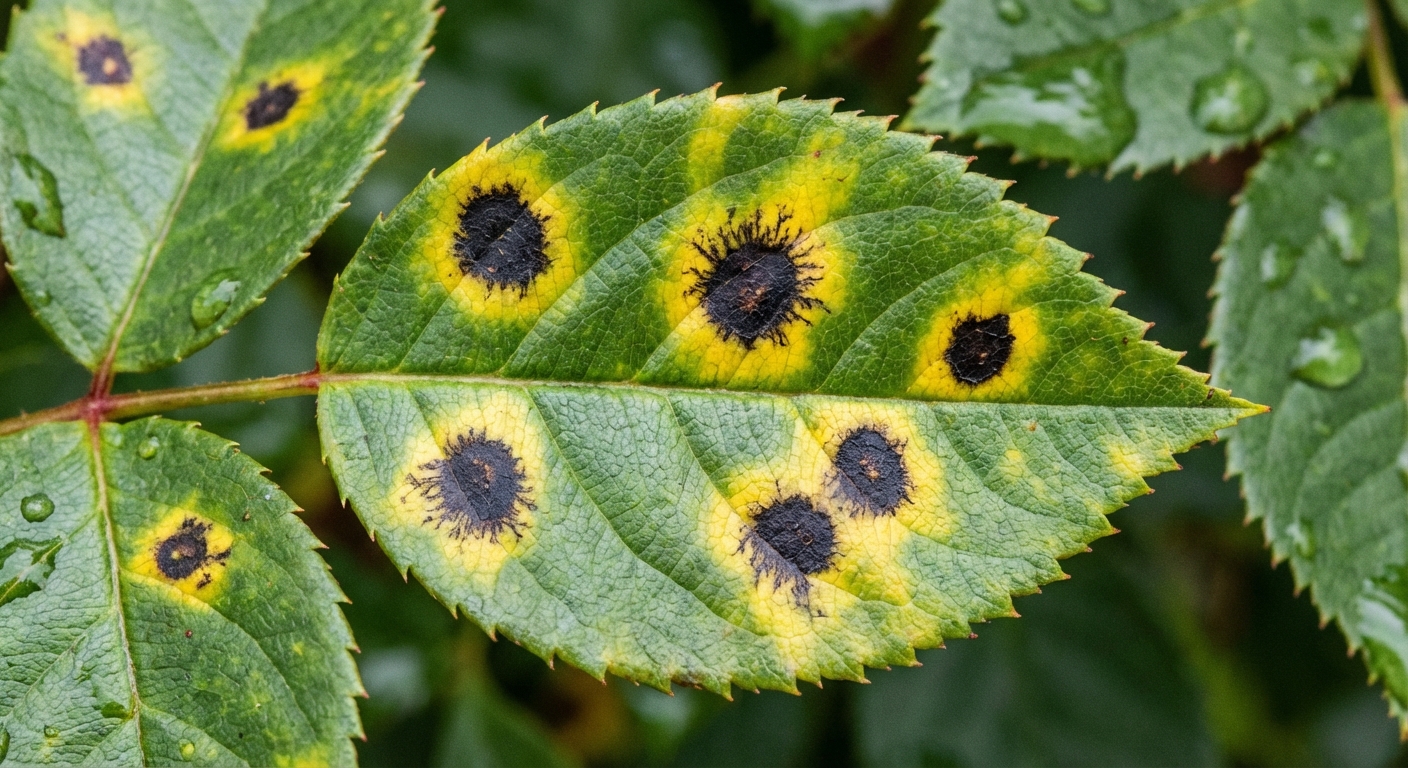
If your rose leaves are suddenly freckled with inky spots and turning yellow like they are giving up on the whole season, you are not alone. Black spot is one of the most common rose diseases, and it can spread quickly when weather stays warm and wet. The good news is that you can usually get it under control with a simple routine: clean up what is infected, improve airflow and watering habits, then spray consistently.
Let’s walk through what black spot is, how to confirm it, and how to treat it using both organic and conventional options.
What black spot is (Diplocarpon rosae)
Black spot is a fungal disease caused by Diplocarpon rosae. It survives on infected leaves and canes, then spreads mainly by splashing water and wind-driven rain. It can also be moved around on hands, gloves, and pruners as we brush through plants, which is why cleanup and tool hygiene help.
It loves:
- Wet leaves (especially when foliage stays wet for many hours)
- Warm days (often in the 65 to 80°F range, depending on conditions)
- Crowded growth with poor airflow
- Susceptible varieties (some roses are simply more prone)
Once established, it causes defoliation. A defoliated rose can still live, but it becomes stressed, blooms less, and is more vulnerable to winter damage and other pests and diseases.
How to identify black spot early
Classic symptoms
- Black to dark brown spots on upper leaf surfaces, usually round with feathery or fringed edges
- Yellowing around spots, often starting at the lower leaves and moving upward
- Leaf drop, sometimes dramatic, leaving bare canes
- In heavier cases, purple or black blotches on young canes
What it is not
A quick way to avoid the wrong treatment is to compare the pattern:
- Cercospora leaf spot often has smaller spots with a lighter center and a darker margin.
- Powdery mildew looks like white flour dusted on leaves and buds, often in drier conditions with cool nights.
- Rust shows orange pustules on the undersides of leaves.
- Spray burn or sunscald tends to look more like irregular browning, not round black lesions with fringed edges.
If you are seeing black spots with yellow halos and the plant is dropping leaves from the bottom up, you are very likely dealing with black spot.
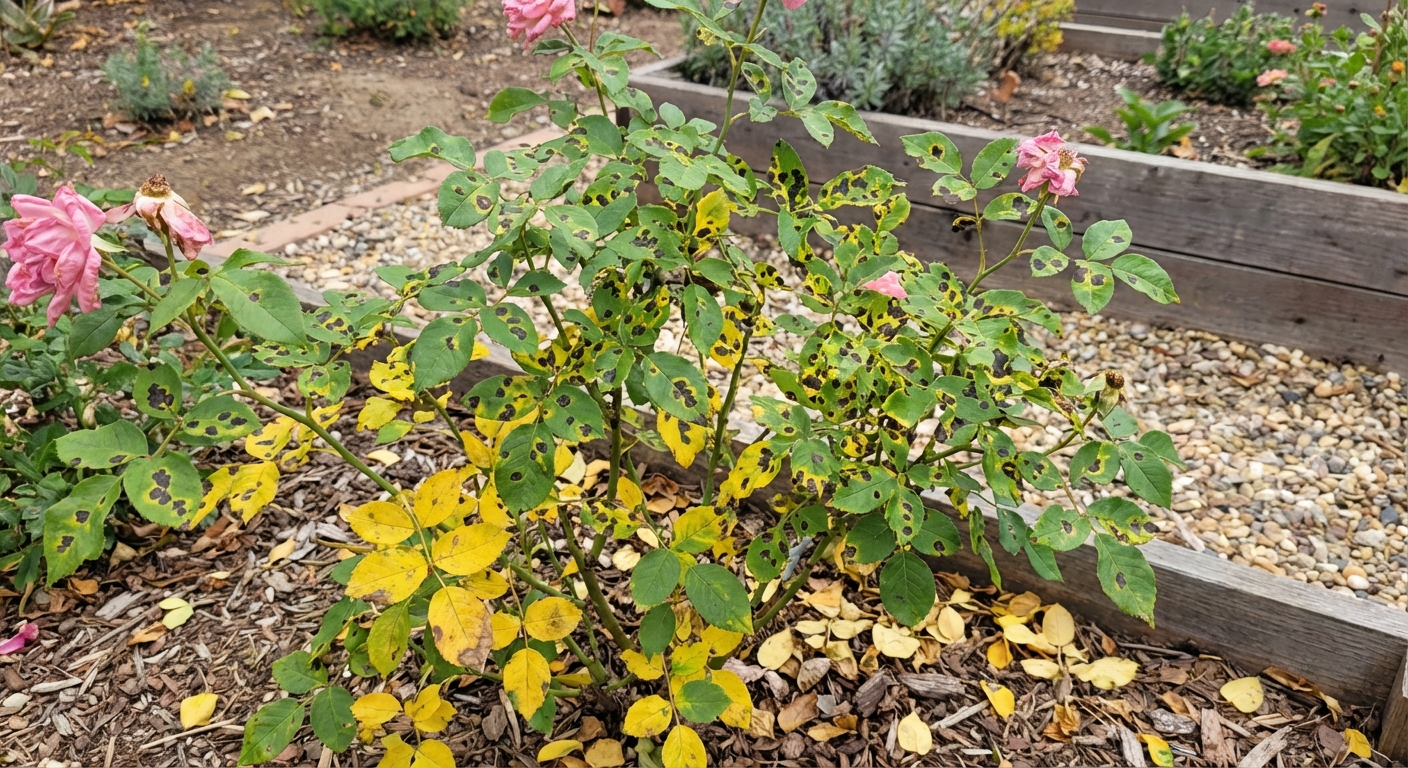
Do this first: prune and clean up
Sprays work best when you also remove the fungus source. If you only spray but leave infected leaves to keep shedding spores, you are trying to mop the floor while the sink overflows.
Step-by-step cleanup
- Pick off infected leaves on the plant if you can do it without stripping it bare.
- Rake and remove fallen leaves from the soil surface under the rose.
- Prune out infected canes if you see dark lesions on stems, cutting back to clean, healthy wood.
- Bag and trash the debris. Do not compost it unless you have a reliably hot compost system that reaches sustained high temperatures.
- Disinfect pruners between plants, and especially after cutting diseased tissue (70% isopropyl alcohol wipes work well, or a disinfectant dip).
How hard should you prune?
During the growing season, aim for targeted pruning, not a full haircut. Remove what is clearly infected and open the center of the plant a bit for airflow. Save major structural pruning for your normal late winter or early spring rose pruning window.
What sprays can and cannot do
Here is the part that saves a lot of frustration: fungicide sprays protect new growth and slow new infections. They do not erase existing spots. Those leaves will stay spotted until they drop or you remove them.
Your goal is simple: clean new leaves that stay clean.
Organic treatment options
Organic sprays tend to work best as preventatives and for early infections. If your rose is already heavily defoliating, organic methods can still help, but you will need a stricter schedule plus cleanup and airflow improvements.
1) Neem oil (and other horticultural oils)
Neem can help reduce fungal pressure when used correctly, but results for black spot can be inconsistent. Neem is often more reliable for certain insects and some surface diseases than it is for established black spot, so think of it as a support tool, not a reset button.
- Spray in cooler parts of the day (morning or evening).
- Avoid spraying when temperatures are high, often above 85 to 90°F, to reduce risk of leaf burn.
- Cover both upper and lower leaf surfaces.
- Follow label rates carefully.
2) Potassium bicarbonate
Potassium bicarbonate products change leaf surface conditions in a way that makes it harder for fungus to thrive. They can be helpful for black spot, especially when applied at the first sign of disease.
- Apply on a schedule, especially after rainy periods.
- Thorough coverage is key.
3) Sulfur (wettable sulfur)
Sulfur can be an effective organic fungicide for many common plant diseases. It is usually used as a preventative.
- Do not apply sulfur within a couple of weeks of using an oil spray (and vice versa), because that combination can damage leaves.
- Avoid use during very hot weather.
4) Copper-based fungicides
Copper products can suppress fungal diseases, but they can also build up in soil over time. If you garden organically for the long haul, I recommend using copper sparingly and focusing heavily on prevention, resistant varieties, and sanitation.
Important: Skip DIY home remedies like baking soda plus dish soap unless you are following a tested, labeled product approach. Homemade mixes can easily cause leaf burn or harm beneficial insects if misused.
Chemical fungicides
If black spot returns every year, spreads rapidly in your climate, or your rose is already losing lots of leaves, a labeled fungicide can be the most straightforward way to slow the cycle.
You will see two main types:
Protectant (contact) fungicides
These sit on the leaf surface and help prevent new infections. They need to be reapplied regularly, especially after rain.
- Common protectants include products based on chlorothalonil or mancozeb, but home-garden availability varies widely and some regions restrict certain ingredients. Always check your local labels and regulations.
Systemic fungicides
Systemics move within plant tissue and can protect new growth. They are often more effective under heavy disease pressure, but they should be used carefully and rotated to reduce resistance.
- Look for ingredients in fungicide classes such as triazoles (often labeled for black spot) or strobilurins, depending on what is approved for home use in your area.
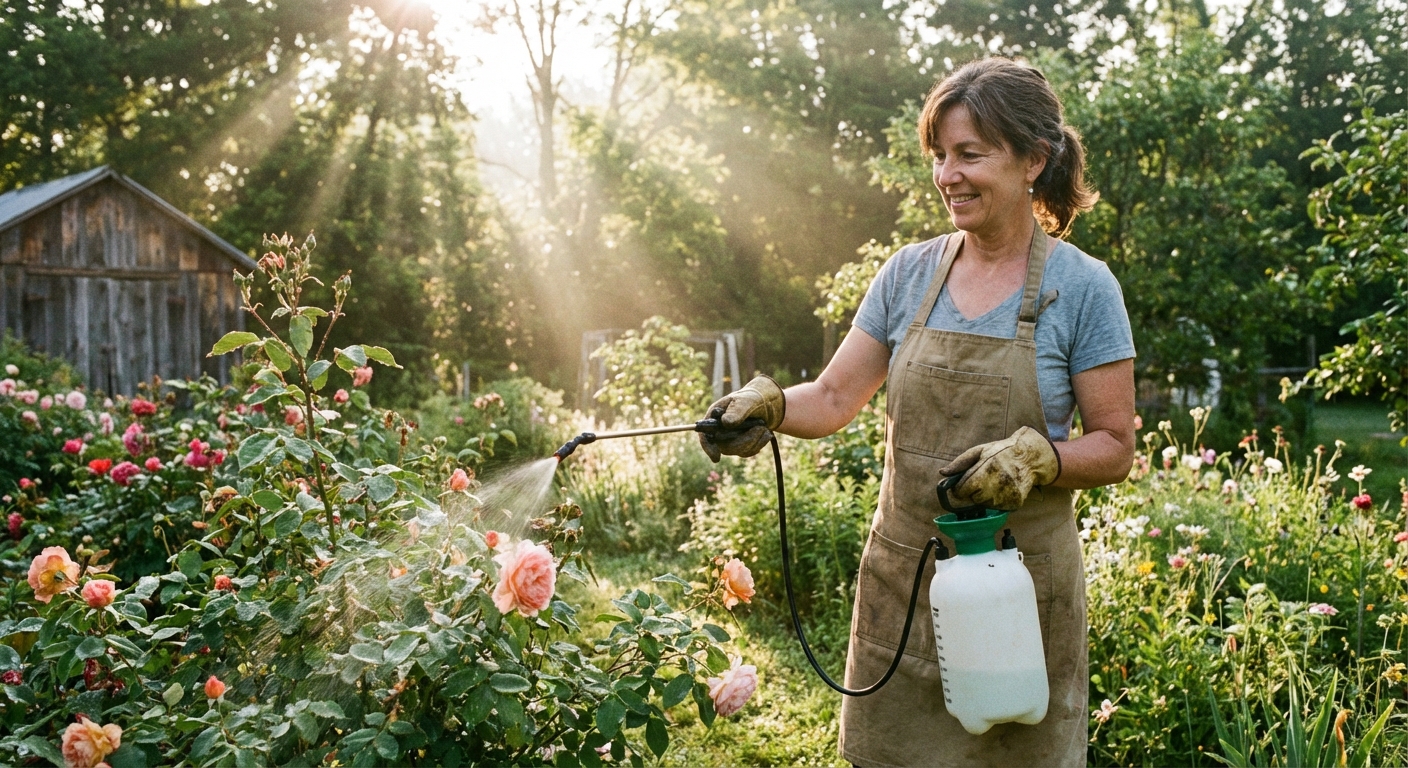
How to spray for best results
- Start early: at first spotting, or earlier if your roses get black spot most years.
- Spray thoroughly: coat tops and undersides of leaves and young canes.
- Repeat on schedule: follow the label. Many programs run every 7 to 14 days, tightened during rainy stretches.
- Rotate modes of action when using systemics to help prevent fungicide resistance.
- Protect pollinators: avoid spraying when bees are actively foraging, and follow any bee precaution statements on the label. When possible, avoid spraying open blooms.
Label always wins. Choose a product labeled for roses and black spot, and follow all safety directions.
Practical safety reminder: wear gloves and eye protection, avoid spraying on windy days to prevent drift, and do not spray in heat-stress conditions. Use extra caution near ponds, waterways, and edible plants nearby, because some products have specific restrictions.
A simple treatment plan
If you are feeling overwhelmed, try this straightforward plan:
Week 1 (today)
- Remove and bag fallen leaves.
- Pick off the worst infected leaves on the plant.
- Lightly thin crowded stems for airflow.
- Begin spraying with your chosen fungicide option.
Weeks 2 to 6
- Respray on schedule (and after heavy rain, if the label recommends).
- Keep cleaning up new fallen leaves weekly. Black spot cleanup is not just a fall chore.
- Monitor new growth. You are aiming for clean new leaves.
Midseason check-in
- If new growth is still spotting quickly, increase your focus on airflow and watering habits.
- If you are using an organic spray and results are minimal under high disease pressure, consider stepping up to a labeled fungicide for the rest of the season.
- If nearby roses (yours or a neighbor’s) are heavily infected, expect reinfection pressure and stay consistent with sanitation and spray timing.
Prevention: keep it from coming back
Black spot is one of those problems where prevention is genuinely easier than cure. Think of it as setting your roses up with the kind of daily life that fungi hate.
Space and airflow
- Give roses enough room so leaves dry quickly after rain.
- Prune for an open center (especially for shrub and hybrid tea forms), removing crossing and crowded stems.
- Avoid planting roses tight against fences or dense hedges where air stagnates.
Watering habits
- Water at the base, not over the leaves.
- Use drip irrigation or soaker hoses when possible.
- If you must use a hose or sprinkler, water early in the morning so foliage dries quickly.
Mulch and soil health
- Add a 2 to 3 inch layer of mulch to reduce soil splash onto leaves.
- Keep mulch a couple inches away from the crown and canes to prevent moisture issues.
- Feed roses appropriately so they can replace foliage and resist stress. Compost, worm castings, and slow-release organic fertilizers are great steady options.
Sanitation in fall and spring
- In fall, remove fallen leaves and any infected debris around the base.
- In late winter or early spring, prune and remove any questionable canes.
- Clean up before new growth starts so you begin the season with a fresh slate.
Choose resistant varieties
If black spot is a yearly battle in your garden, consider adding (or replacing with) disease-resistant roses. Many modern shrub roses and landscape roses are bred for strong resistance and can look gorgeous with far less spraying.
When shopping, look for labels mentioning black spot resistance. Some gardeners have good results with lines like Knock Out®, Drift®, and many Kordes roses (often marketed with strong disease resistance). In some regions, roses with ADR ratings also tend to perform well. That said, performance varies by climate, so ask local rose growers what thrives in your area.
Common questions
Will black spot kill my rose?
Black spot usually does not kill an established rose outright, but repeated severe defoliation can weaken it over time. Treating it matters because it protects the plant’s long-term vigor and blooming.
Should I remove all spotted leaves?
Remove the worst ones, especially lower leaves that are heavily infected, and always remove fallen leaves. But do not strip the plant bare if it is already stressed. The goal is to reduce spore load while keeping enough foliage for the plant to photosynthesize and recover.
Can I compost infected leaves?
It is safest to bag and trash them unless you maintain a consistently hot compost pile. In many home compost setups, the fungus can survive and reintroduce itself later.
How long until I see improvement?
Spotted leaves will not “heal,” but you should see cleaner new growth within a couple of weeks once spraying and sanitation are consistent. The real win is stopping the rapid spread and leaf drop.
A quick pep talk
Black spot can make even confident gardeners feel like their roses are judging them. They are not. This fungus is just opportunistic, and roses are sometimes a bit dramatic about it.
Focus on the basics: clean up the spores, keep leaves dry, open up airflow, and spray with consistency. Do those four things and your roses often respond with fresh green growth that feels like a real turning point.