
How to Prune Hydrangeas

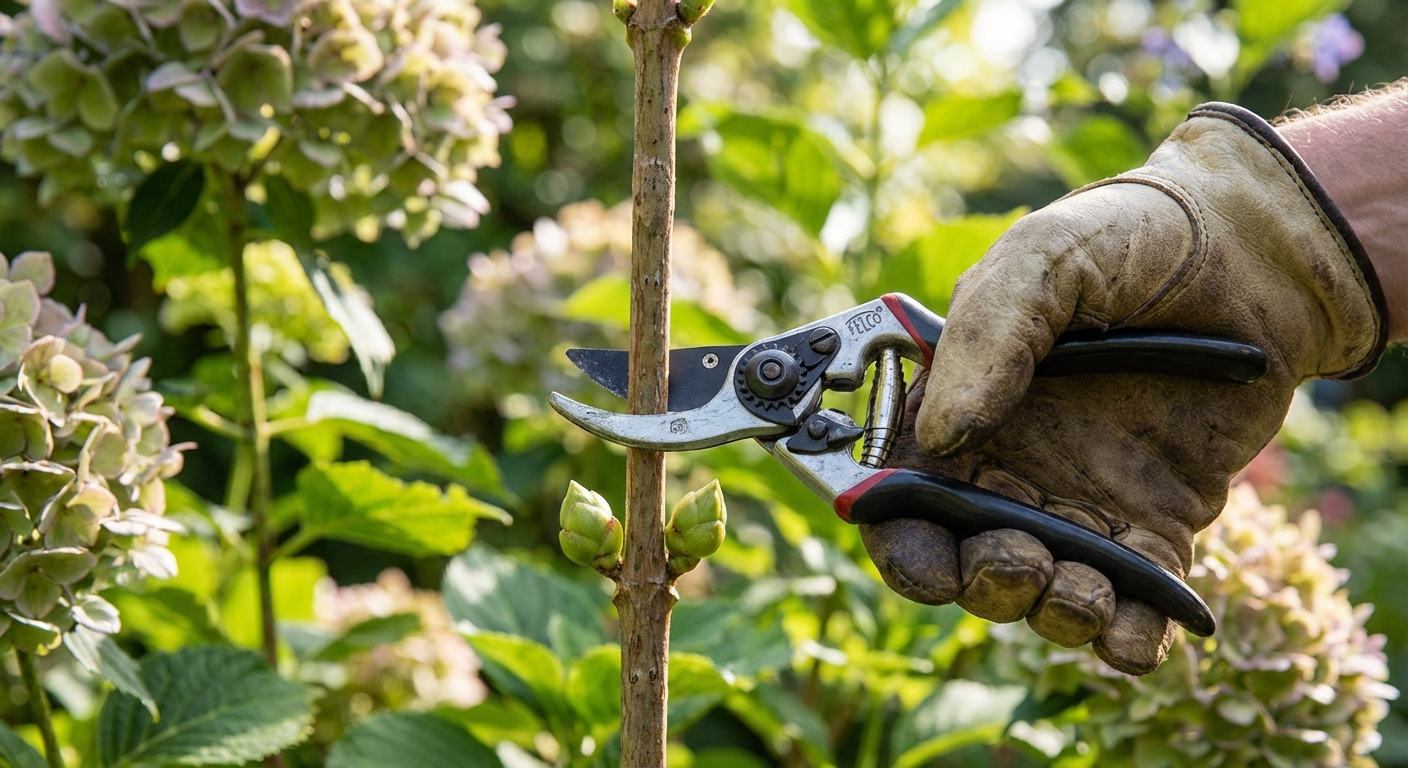
Hydrangeas have a funny way of making confident gardeners feel nervous. Those big, dreamy blooms come with one big question: when do I prune without sacrificing flowers?
Take a breath. You do not need a perfect plan, you just need the right timing for your hydrangea type. In this guide, I will walk you through bigleaf (mophead and lacecap), smooth, panicle, oakleaf, and climbing hydrangeas, plus the simple “old wood vs. new wood” trick that makes pruning make sense.
The one rule that matters: old wood vs. new wood
Hydrangeas set buds either on last year’s stems (old wood) or on this year’s growth (new wood). Prune at the wrong time and you can remove the buds you were hoping to see.
Old wood bloomers
These set flower buds on stems that grew last season. If you prune hard in late winter or spring, you can cut off this year’s blooms.
- Bigleaf hydrangea (Hydrangea macrophylla), including mophead and lacecap forms
- Oakleaf hydrangea (Hydrangea quercifolia)
- Climbing hydrangea (Hydrangea anomala subsp. petiolaris)
New wood bloomers
These bloom on fresh growth made in spring and early summer. You can prune them in late winter to early spring without losing flowers.
- Panicle hydrangea (Hydrangea paniculata)
- Smooth hydrangea (Hydrangea arborescens), including ‘Annabelle’ types
Quick reality check: Some newer bigleaf hydrangeas are “reblooming” (often sold as “Endless Summer” types). They can bloom on both old and new wood, which gives you more wiggle room, but gentle pruning is still the safest approach.
Before you prune: tools and a 60-second check
Tools you actually need
- Bypass pruners for stems up to about pencil thickness
- Loppers for older, thicker canes
- Rubbing alcohol (or disinfecting wipes) to clean blades between plants, especially if disease is suspected
How to make each cut
- Cut about 1/4 inch above a pair of healthy buds (or above a branching point).
- If you like, angle the cut slightly so water sheds off. It is a nice habit, not a make-or-break detail on shrubs.
- Remove crossing stems that rub, but keep the plant’s natural shape.
The 60-second check
Stand back and ask: Is it alive, damaged, too crowded, or just messy? Most hydrangeas need less pruning than we think. Cleaning up dead wood and a little thinning often makes a bigger difference than a dramatic haircut.
How to spot dead wood
Dead wood is the one thing you can remove with confidence on any hydrangea. If possible, avoid major pruning during an active hard freeze or when the plant is under extreme heat or drought stress.
What dead wood looks like
- Dry, brittle stems that snap instead of bend
- Gray-brown, dull bark that looks shriveled or peeling
- No buds along the stem when neighboring stems have them
- Hollow or pithy interior at the cut end
The scratch test (gentle, not aggressive)
Use your fingernail to lightly scratch the outer bark. Green tissue underneath means alive. Tan or brown all the way through usually means dead.
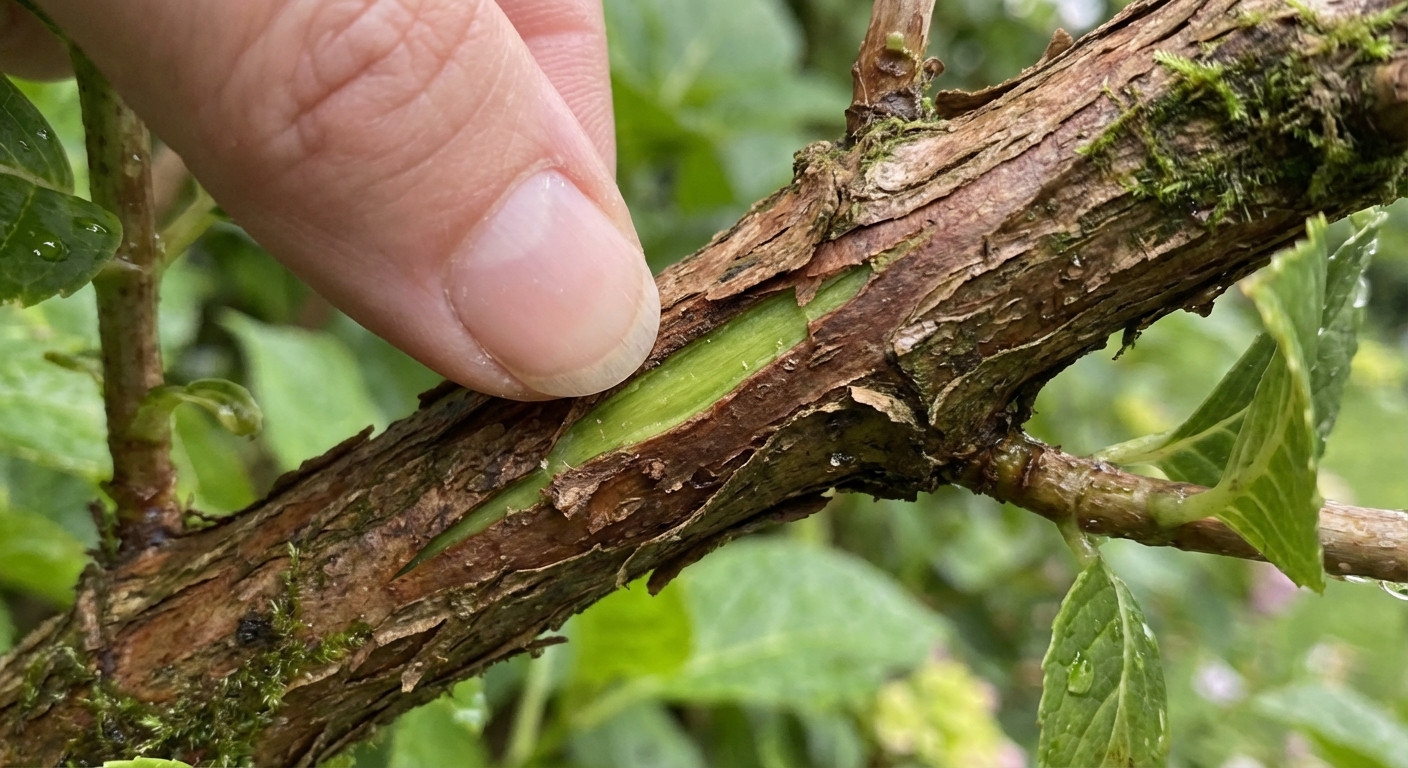
Tip from my own garden: After winter, some stems are alive near the base but dead at the top. Prune back gradually until you reach healthy buds or green tissue.
Bigleaf hydrangea: when and how to prune
Bigleaf hydrangeas (Hydrangea macrophylla) include both the round mophead blooms and the flatter lacecap style. Many bloom on old wood, which is why spring pruning can lead to “all leaves, no flowers.”
Best time to prune
- Right after flowering, typically mid to late summer, within a few weeks of bloom fade.
- In spring, stick to dead wood removal only.
- Avoid heavy pruning by late summer or early fall. Next year’s buds are often forming then.
How to prune bigleaf (step by step)
- Remove dead stems down to the base or to the first healthy buds.
- Deadhead spent blooms by cutting just above the first strong pair of buds below the flower head.
- Thin for airflow: remove 1 to 3 of the oldest, woodiest canes at ground level if the shrub is dense. This encourages fresh stems without sacrificing all the bloom wood at once.
- Stop heavy pruning after late summer. Buds for next year form as the season winds down.
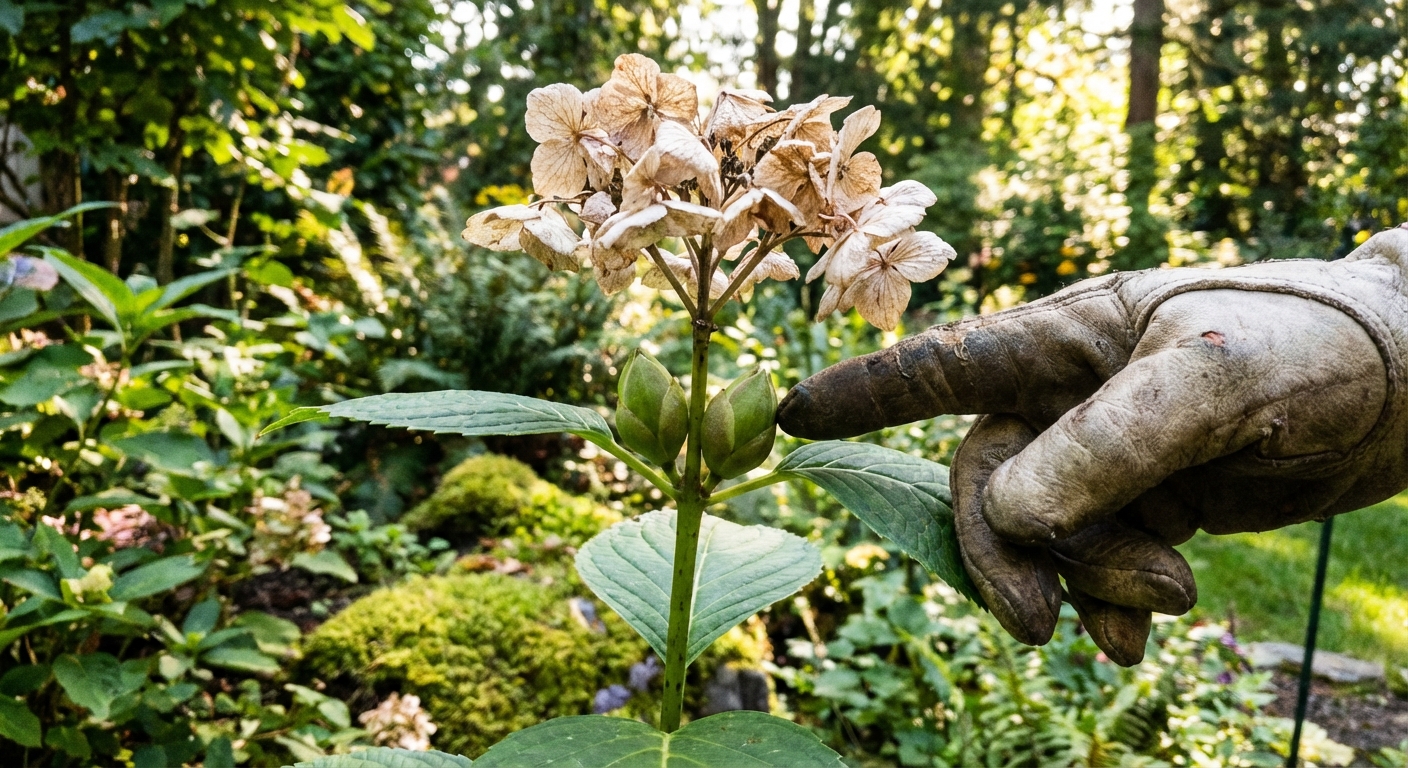
What happens if you prune bigleaf at the wrong time?
If you cut back hard in late winter or early spring, you often remove the stems holding this year’s flower buds. The plant will usually survive just fine, but it may bloom sparsely or not at all that summer.
Aftercare note: After pruning, keep watering steady (especially in summer) and go easy on high-nitrogen fertilizer. Too much nitrogen can push leafy growth at the expense of blooms.
Smooth hydrangea: the ‘Annabelle’ approach
Smooth hydrangeas (Hydrangea arborescens) are classic, tough shrubs with big white blooms in summer. They bloom on new wood, which makes pruning less stressful.
Best time to prune
- Late winter to early spring, before strong new growth takes off.
- You can also tidy and remove dead stems anytime.
How to prune smooth hydrangea (two simple options)
- Option A: Medium cutback (often the sweet spot): Reduce stems to about 12 to 24 inches. This encourages strong new growth and plenty of blooms.
- Option B: Low cutback (tidy, but can flop): Cut stems back to 6 to 12 inches. You may get very large blooms, but those heavy flower heads can flop, especially after rain.
My honest tip: If your smooth hydrangea flops every year, prune a little higher and consider a discreet support ring in late spring.
Panicle hydrangea: the pruner-friendly type
Panicle hydrangeas (Hydrangea paniculata) are the ones with cone-shaped blooms, often starting white and aging to pink or green. They bloom on new wood, so you can prune while they are dormant without losing flowers.
Best time to prune
- Late winter to early spring, before leaves emerge.
How to prune panicles
You have two good options, depending on whether you want a more natural look or a more controlled structure.
Option A: Light shaping (natural look, lots of blooms)
- Remove dead and crossing stems.
- Shorten last year’s growth by about 1/3, cutting above strong buds.
Option B: Harder cutback (bigger blooms possible)
- Cut back to 12 to 24 inches high (or reduce by up to about 1/2 to 2/3), keeping a framework of strong stems.
- You may get larger flower clusters, but some cultivars can produce long, heavy shoots that flop. If yours tends to lean, plan on support or choose the lighter cut instead.
My soil-health note: After pruning panicles, top-dress with compost and a light mulch. Panicles respond beautifully to steady moisture and rich, living soil.
Oakleaf hydrangea: prune sparingly
Oakleaf hydrangea (Hydrangea quercifolia) is a four-season star: bold leaves, creamy blooms, fiery fall color, and gorgeous peeling bark in winter. It blooms on old wood.
Best time to prune
- Right after flowering if you need to reduce size or tidy, ideally within a few weeks of bloom fade.
- Otherwise, prune only as needed for health and shape.
How to prune oakleaf (step by step)
- In spring, remove dead tips and winter damage only.
- After flowering, remove spent blooms and any awkward stems that disrupt the shrub’s form.
- If it is crowded, thin one or two older canes at ground level. Avoid shearing.
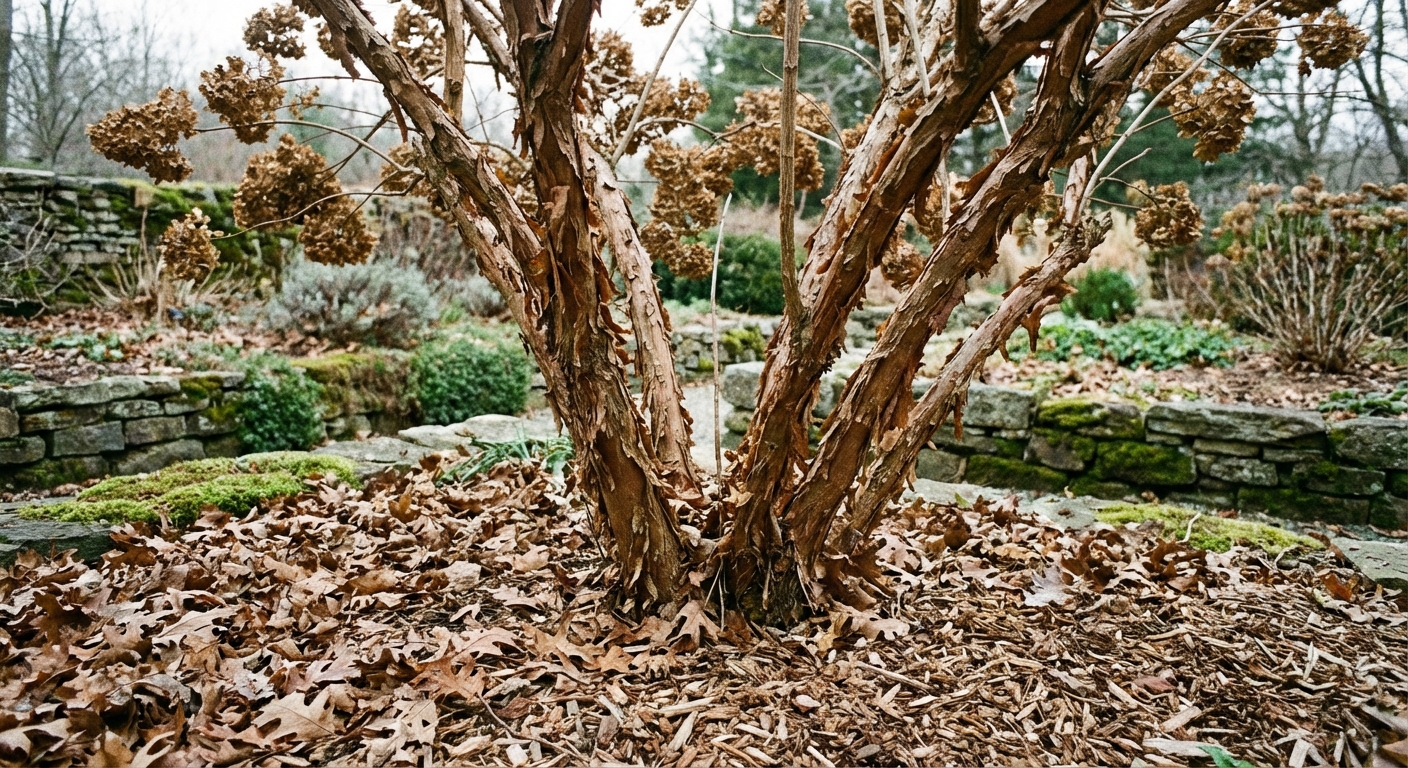
Common mistake
Hard pruning in late winter often removes the stems holding the next season’s blooms. With oakleaf, less is almost always more.
Climbing hydrangea: prune for control
Climbing hydrangea (Hydrangea anomala subsp. petiolaris) is a woody vine with lacecap flowers and aerial rootlets that cling to surfaces. It blooms on old wood and is famously slow to establish, then suddenly vigorous.
Best time to prune
- Right after flowering for shaping.
- Any time to remove dead, damaged, or hazardous growth.
How to prune climbing hydrangea (step by step)
- Start by removing dead wood at its origin.
- Cut back wayward shoots that are heading into gutters, windows, or rooflines.
- Thin lightly to improve airflow if growth is dense against a wall or fence.
- Keep the main framework. Think “train and tidy,” not “cut it to the ground.”
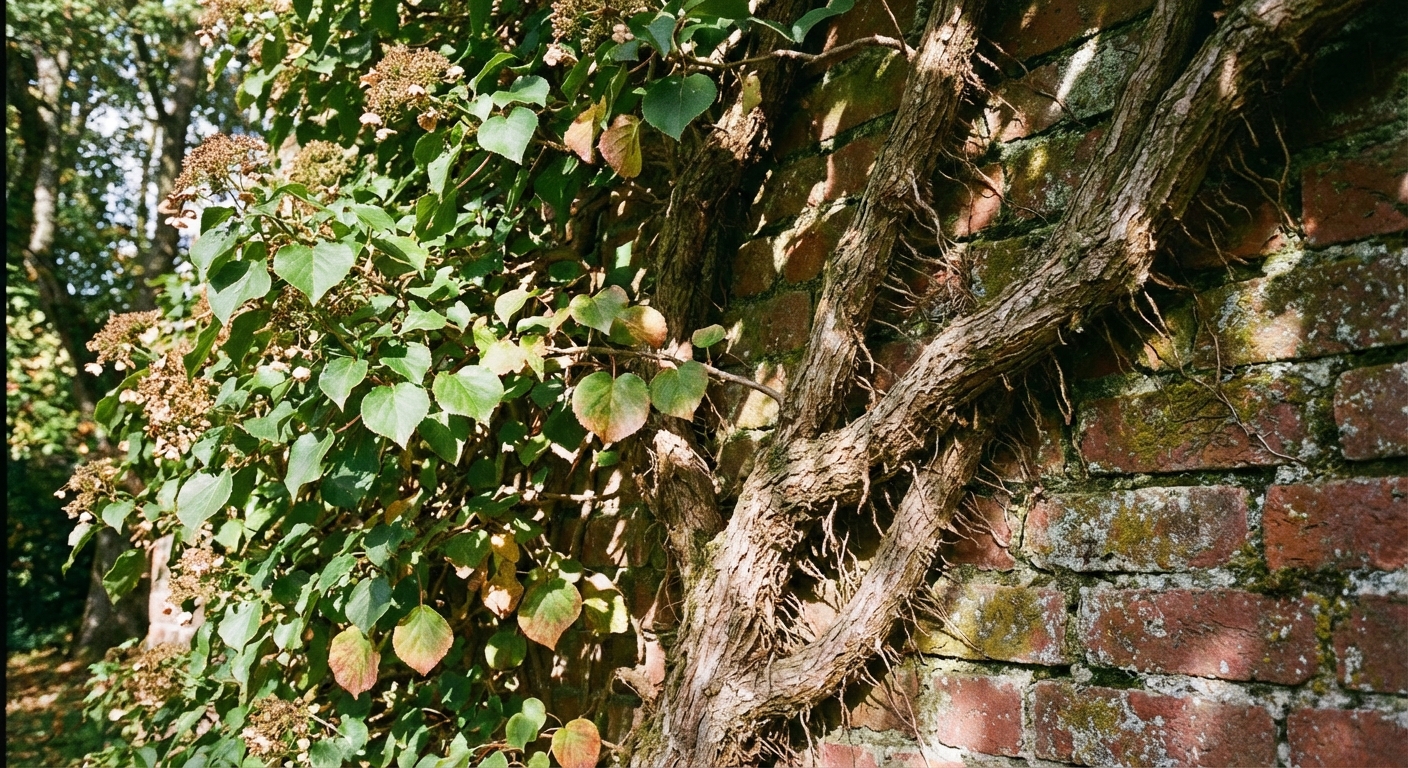
Heads up: Climbing hydrangeas can get heavy. If you are pruning a mature vine high up, prioritize safety and consider professional help for major reductions.
If you do not know your hydrangea
You are not alone. Plant tags vanish, memories fade, and hydrangeas all look like hydrangeas until you learn the tells. Here are quick clues you can use without becoming a botanical detective.
- Bigleaf (mophead or lacecap): Rounded mopheads or flat lacecaps; broad, often glossy leaves; in late winter you may see plump buds sitting along last year’s stems.
- Panicle: Cone-shaped flowers that usually arrive later in summer; a woody, multi-stem shrub that handles pruning well.
- Smooth: Often large white summer blooms (many are ball-shaped); stems may die back in winter in cold climates and regrow strongly from the base.
- Oakleaf: Leaves shaped like oak leaves; fall color is often stunning; peeling bark on older stems.
- Climbing: A vine that clings to surfaces; white lacecap blooms; thick, rope-like stems with rootlets.
If you are still unsure, use the safest universal approach: prune only dead wood in early spring, then watch when it blooms. If it flowers on last year’s stems early in summer, treat it like an old wood bloomer going forward.
One more common type: Mountain hydrangea (Hydrangea serrata) is often pruned like bigleaf. Many bloom mostly on old wood, and some are rebloomers, so a gentle approach is still the safest bet.
Pruning mistakes that mean fewer blooms
- Cutting old wood bloomers in late winter or spring: You remove flower buds.
- Shearing like a hedge: Creates weak, crowded growth and fewer quality blooms.
- Removing all old canes at once: Especially on bigleaf and oakleaf, this can mean little to no bloom for a season or two.
- Pruning too late in the season: Old wood bloomers set next year’s buds by late summer to early fall.
- Ignoring dead wood: Dead stems waste space and invite disease pressure by reducing airflow.
A simple pruning calendar
If you remember nothing else, remember this timing.
- Panicle: Late winter to early spring
- Smooth: Late winter to early spring
- Bigleaf (mophead and lacecap): After flowering (plus dead wood anytime)
- Oakleaf: After flowering, very lightly (plus dead wood anytime)
- Climbing: After flowering for shaping (plus dead wood anytime)
Gentle encouragement
If you have ever pruned a hydrangea and then spent the next three months squinting at it like it might hold a grudge, welcome to the club. Hydrangeas are tougher than they look. The real secret is not perfection. It is learning what your plant blooms on and keeping your cuts simple, clean, and well-timed.
And if you make a mistake? You will still have a healthy shrub, better knowledge next season, and a garden that keeps teaching you as long as you keep showing up.