
How to Grow Roses for Beginners

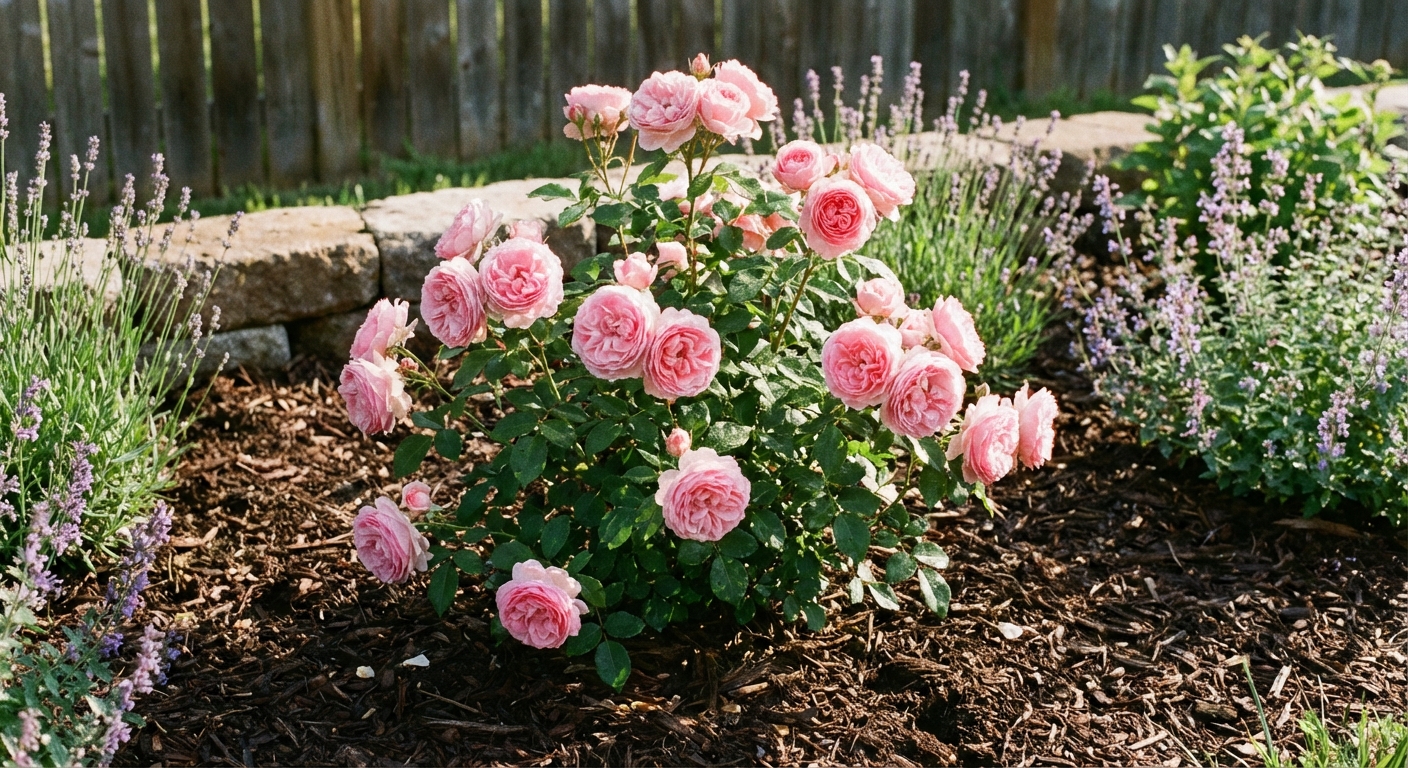
Roses have a reputation for being fussy, but most “black thumb” stories come from one of two things: buying a rose that is too high-maintenance for the spot, or planting it in a place that does not get enough sun and airflow. Pick the right type, give it the basics, and a rose will reward you for years with repeat blooms and that unmistakable perfume that makes you lean in close.
This beginner guide walks you through choosing an easy rose, planting it well, then keeping it healthy with simple pruning, a no-drama feeding schedule, and practical solutions for common problems like black spot and Japanese beetles.
Quick reality check before you buy: roses are not one-size-fits-all. Check your USDA zone (or local equivalent) and pay attention to summer heat and humidity. A rose that is “easy” in a dry climate can be a diva in a muggy one.
Start with the easiest roses
If you want the quickest path to success, choose modern, disease-resistant roses bred for repeat blooming. You can absolutely grow classic hybrid teas later, but I like beginners to get a few seasons of wins first.
Knock Out roses
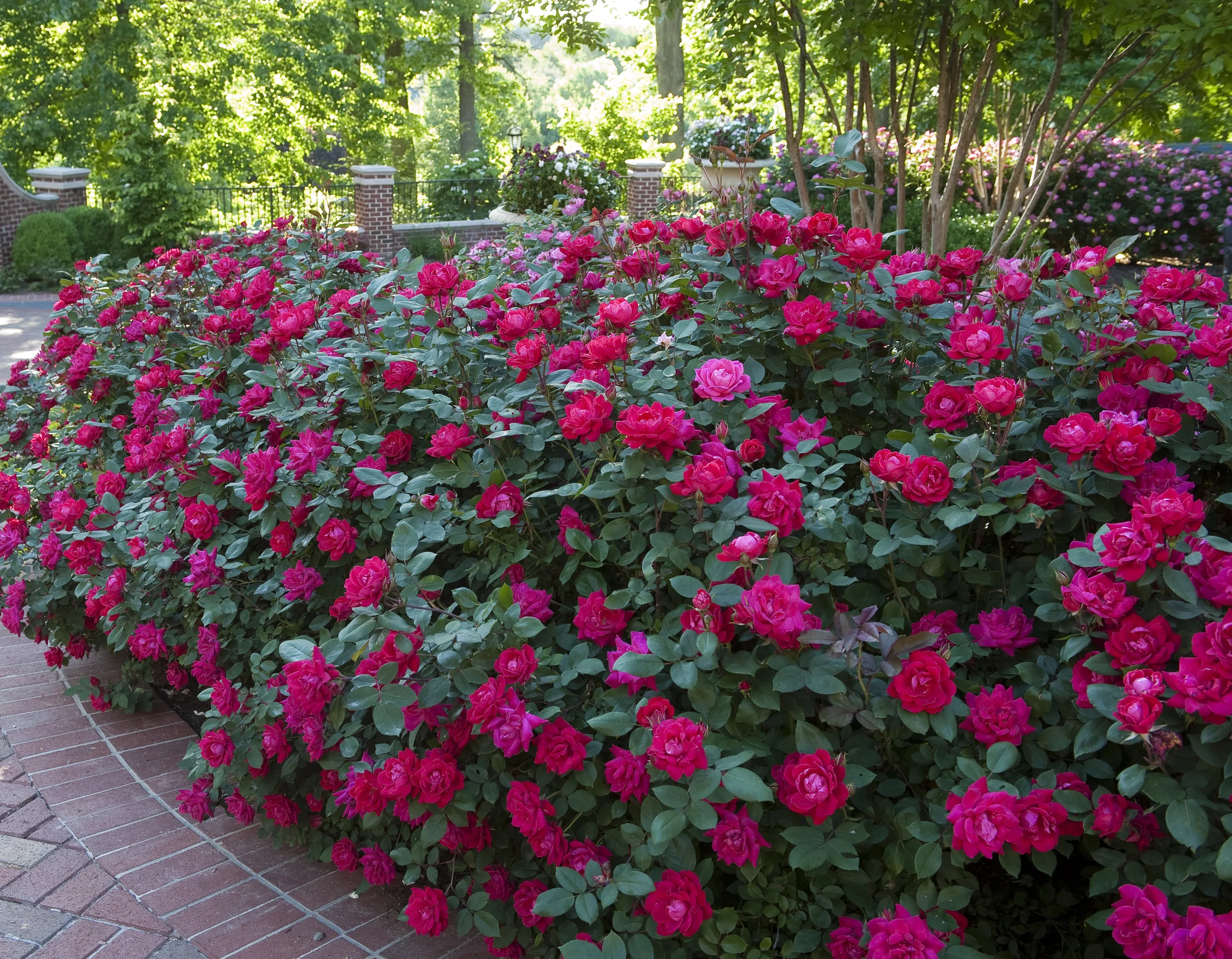
Knock Out roses are the poster child for low-maintenance landscaping. They bloom for a long season, shrug off many common diseases, and do not demand perfect pruning to look good.
- Best for: Beginners, hedges, foundation plantings, “set it and enjoy it” gardens
- Growth habit: Bushy shrubs, typically 3 to 5 feet tall depending on variety and climate
- Why they are easy: Strong disease resistance, constant rebloom, forgiving pruning
Drift roses
Drift roses are like a compact, groundcover-style cousin to Knock Outs. They are wonderful if you want rose color without a tall shrub.
- Best for: Front of borders, slopes, containers, edging paths
- Growth habit: Low and spreading, often 1.5 to 2 feet tall and wider than tall
- Why they are easy: Great coverage, repeat bloom, tidy size
David Austin (English) roses
David Austin roses are famous for lush, romantic blooms and fragrance. They can be a little more involved than Knock Outs, and in humid climates some varieties are more prone to black spot and mildew than the label suggests. If you love a “cottage garden” look, start with one healthy plant in a sunny spot and choose a variety that performs well locally.
- Best for: Fragrance lovers, cottage gardens, cutting gardens
- Growth habit: Shrubs and climbers, often 3 to 6 feet or more
- Why they can still work for beginners: Many newer varieties are bred for better health, and they respond well to steady care when matched to the right climate
Buying tip: Look for words like “disease resistant,” “own-root,” and “repeat blooming” on the tag. In humid climates, disease resistance matters as much as flower color. If you are unsure, ask a local nursery which varieties stay clean in your area.
Pick the right spot
Roses are sun lovers. If I could stand behind you at the garden center and whisper one thing, it would be: give them more sun than you think.
- Sun: Aim for 6 to 8+ hours of direct sun. Morning sun is especially helpful because it dries leaves quickly and reduces disease.
- Airflow: Plant where breezes can move through the plant. Crowded, still corners invite black spot and mildew.
- Soil: Roses like rich, well-draining soil that holds moisture but does not stay soggy. Most do best around slightly acidic to neutral (roughly pH 6.0 to 7.0), but drainage matters more than a perfect number.
- Space: Give shrubs room to reach their mature width. Crowding increases disease pressure and makes pruning miserable.
Quick drainage test: If water puddles for hours after rain, fix drainage before you plant. Raise the bed, amend with compost, or choose a better spot.
Container option: Yes, you can grow roses in pots. Choose a large container and plan to water more often in summer. As a safe default, many shrub roses are happiest in 15 to 20 gallons, smaller patio types can often do well in 10 to 15, and climbers usually need larger.
How to plant roses
Planting well is like tucking a rose into a good bed with clean sheets. It sets the tone for everything that comes next.
When to plant
- Spring: Great for most regions, once the ground is workable.
- Fall: Excellent in many climates because roots establish in cool soil. Plant 6 to 8 weeks before hard freezes.
What you need
- Compost
- Shovel and watering can or hose
- Gloves (your hands will thank you)
- Mulch (shredded bark, leaf mold, or clean wood chips)
- Optional: slow-release organic rose fertilizer
Planting steps
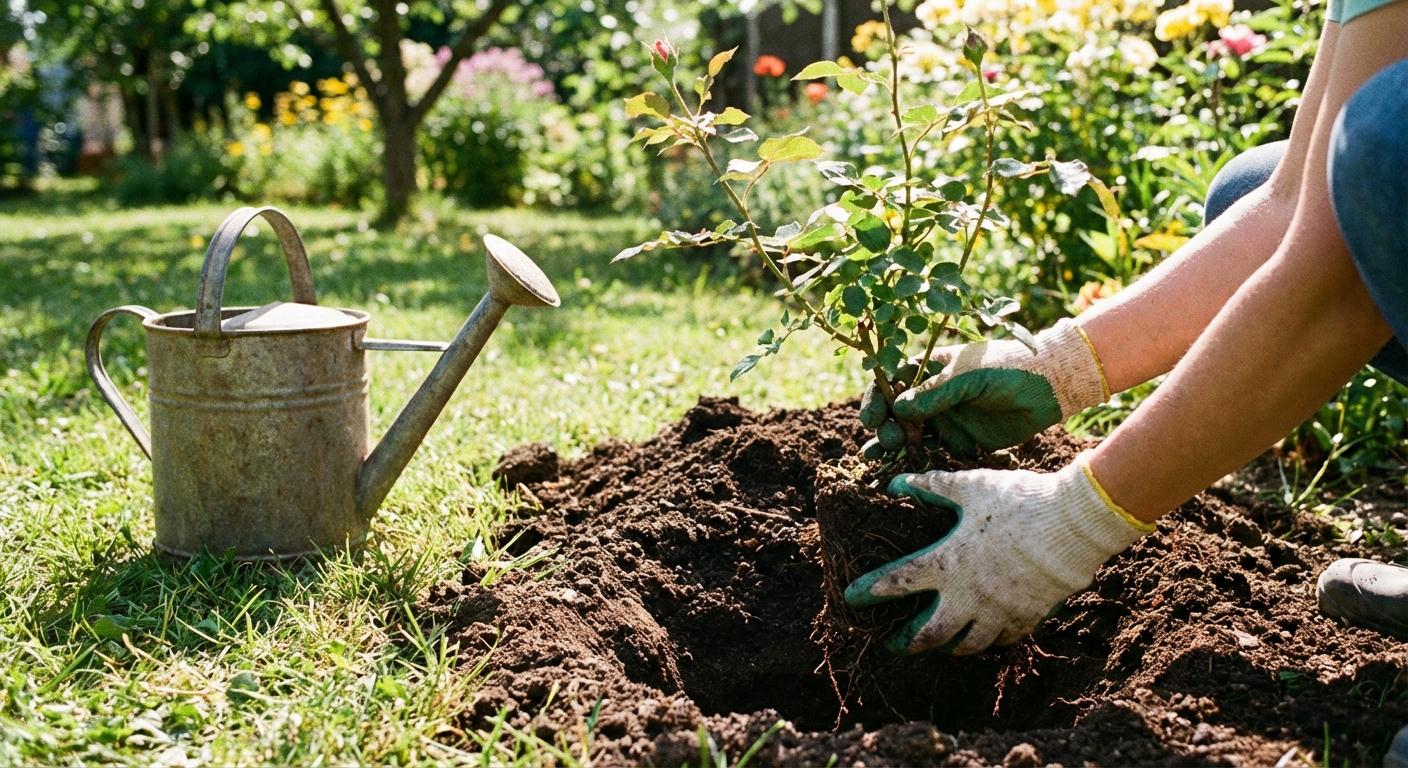
- Dig a wide hole. Aim about twice as wide as the root ball and about as deep.
- Loosen the soil. Break up the sides and bottom so roots can expand easily.
- Mix in compost. Blend a few inches of compost into the soil you removed. Skip heavy doses of quick fertilizers at planting time.
- Set the rose at the right depth. For own-root roses (grown on their own roots, not attached to another rose), plant at the same depth as in the pot. For grafted roses (a flowering variety joined to a different rootstock), planting depth varies by region and soil. In colder climates, gardeners often plant the graft union a bit below soil level for winter protection. In warmer or wetter areas, local practice may be at soil level or slightly below for stability. If you are unsure, follow what trusted local nurseries recommend.
- Backfill and water deeply. Water to settle soil around the roots, then top up as needed.
- Mulch. Add 2 to 3 inches of mulch, keeping it a few inches away from the stem base to prevent rot.
Watering right after planting: Keep the soil evenly moist (not swampy) for the first few weeks. New roots need steady moisture to explore.
Rose care basics
Watering
Deep, infrequent watering beats frequent sprinkles. You want water to reach the deeper roots.
- How often: Roughly 1 to 2 inches of water per week from rain and irrigation combined, more in heat or containers.
- How to water: Water at the base. Try not to soak the leaves, especially in the evening.
- Morning is best: Wet foliage dries faster, reducing disease.
Mulching
Mulch is rose insurance. It stabilizes soil moisture, reduces stress, and helps keep soil life thriving.
- Depth: 2 to 3 inches
- Keep it back: Leave a small mulch-free ring around the canes
Deadheading
Removing spent blooms encourages many roses to rebloom faster and keeps the plant looking tidy. Snip just above a set of healthy leaves. If it is late in the season and you want the plant to slow down and harden off for winter, you can stop deadheading.
Pruning basics
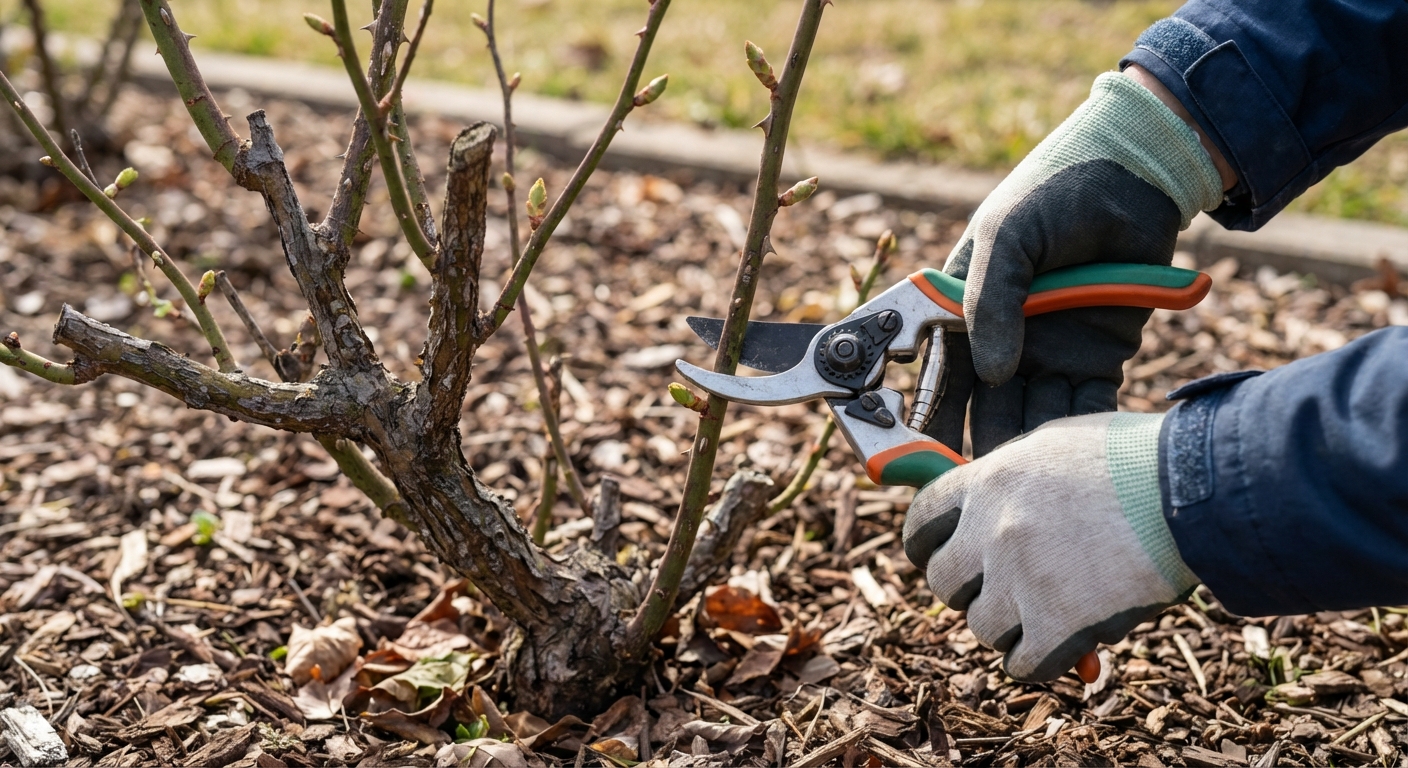
Pruning roses can feel like a test you did not study for, but here is the truth: most beginner roses are forgiving. The goal is a plant with good airflow, healthy canes, and blooms at a comfortable height.
When to prune
- Late winter to early spring: The classic timing, as buds begin to swell. Many gardeners use the bloom of forsythia as a cue.
- After a bloom flush: Light trimming and deadheading through the season.
- Fall: In cold climates, avoid heavy pruning in fall. You can remove dead or broken canes and tidy lightly.
What to cut
- Dead, damaged, diseased: Remove it first, cutting back to healthy tissue.
- Crossing canes: Keep the strongest, remove the one that rubs.
- Too-crowded center: Open the middle so air can move through.
- Spindly growth: Thin weak stems that will not support good blooms.
How much to prune
- Knock Out and Drift roses: In early spring, many gardeners simply reduce height by about one-third and shape the plant. Remove dead wood anytime.
- David Austin roses: In spring, prune for shape. Many varieties do well with a moderate cut back (often around one-third), plus thinning to improve airflow.
- Climbers: Preserve the main “framework” canes. Prune side shoots to encourage flowering spurs and tie canes horizontally for more blooms.
Tool tip: Use sharp, clean pruners. If you are dealing with visible disease, wipe blades with alcohol between plants.
A simple feeding schedule
Roses are hungry plants, but they do not need complicated chemistry. Think of feeding as supporting steady growth and flowering, not forcing it.
What to use
- Compost: The best baseline. Top-dress in spring and again mid-season if your soil is lean.
- Organic rose fertilizer: Look for a balanced or rose-specific blend. Slow-release options are beginner friendly.
- Alfalfa meal (optional): A favorite among rose growers for gentle growth support.
Beginner schedule
- Early spring: When new growth starts, top-dress with compost and apply a slow-release organic fertilizer according to label.
- After the first big bloom flush: Feed again lightly to support rebloom.
- Mid to late summer: One more feeding if the plant is actively blooming and healthy.
- Late season: In places with real winters, stop fertilizing about 6 to 8 weeks before your expected first frost so the plant can slow down and prepare for winter. In warm climates with a long growing season, local timing may be different.
Water after feeding: Always water fertilizer in to prevent root burn and to move nutrients into the root zone.
Common rose problems
Most rose issues are manageable when you catch them early. Take a slow walk past your roses a couple times a week. Flip a leaf or two. Peek at the new growth. It is the easiest “treatment” there is.
Black spot
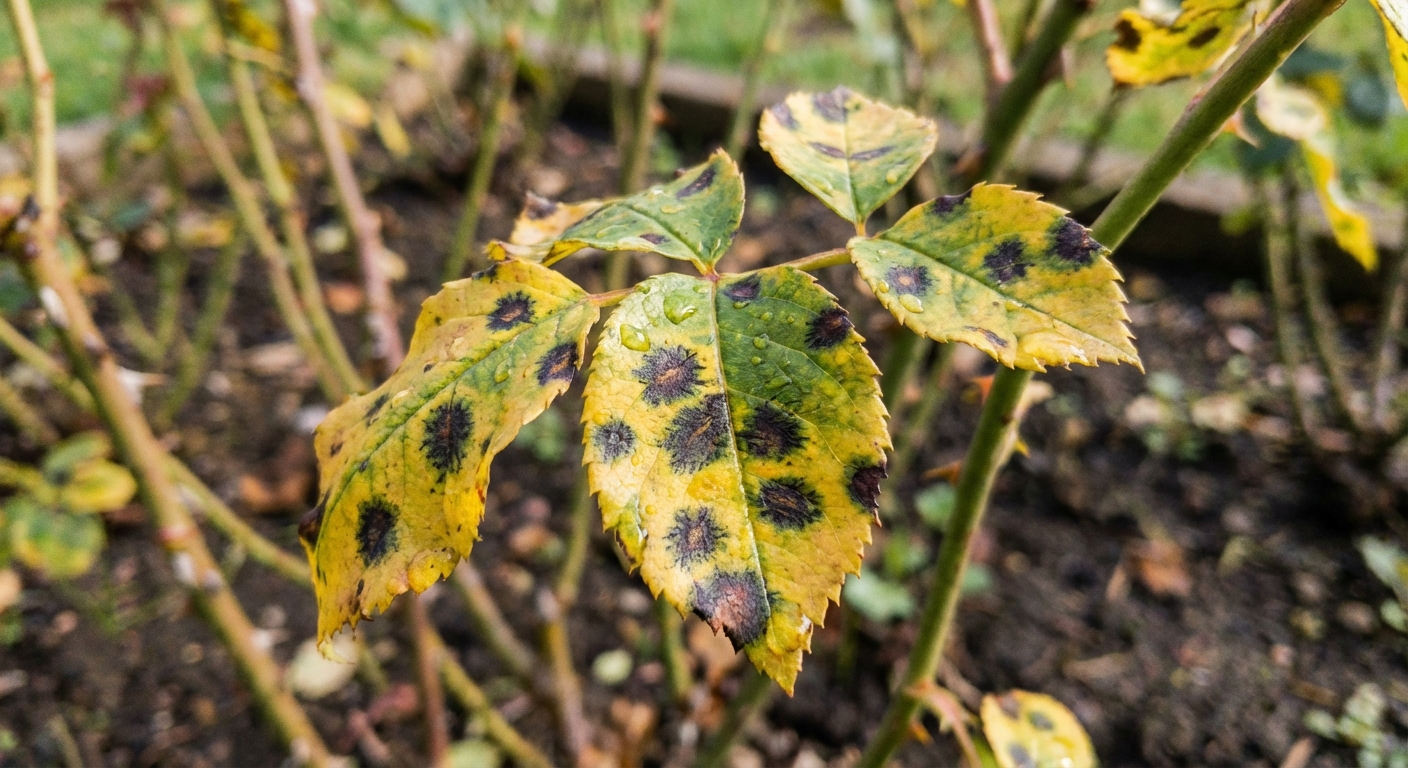
What it looks like: Black, round spots on leaves, often with yellowing around them. Leaves may drop, starting from the bottom of the plant.
Why it happens: A fungal disease encouraged by humidity, wet leaves, and poor airflow.
Prevention and control:
- Choose resistant varieties when possible (one reason Knock Outs are so popular).
- Water at the base and avoid overhead watering.
- Mulch to reduce soil splash onto leaves.
- Clean up fallen leaves promptly. Do not compost heavily infected leaves.
- Prune for airflow so foliage dries quickly.
- If needed, use a fungicide labeled for roses and black spot, following all label directions. In many gardens, cultural steps plus resistant varieties are enough.
Japanese beetles
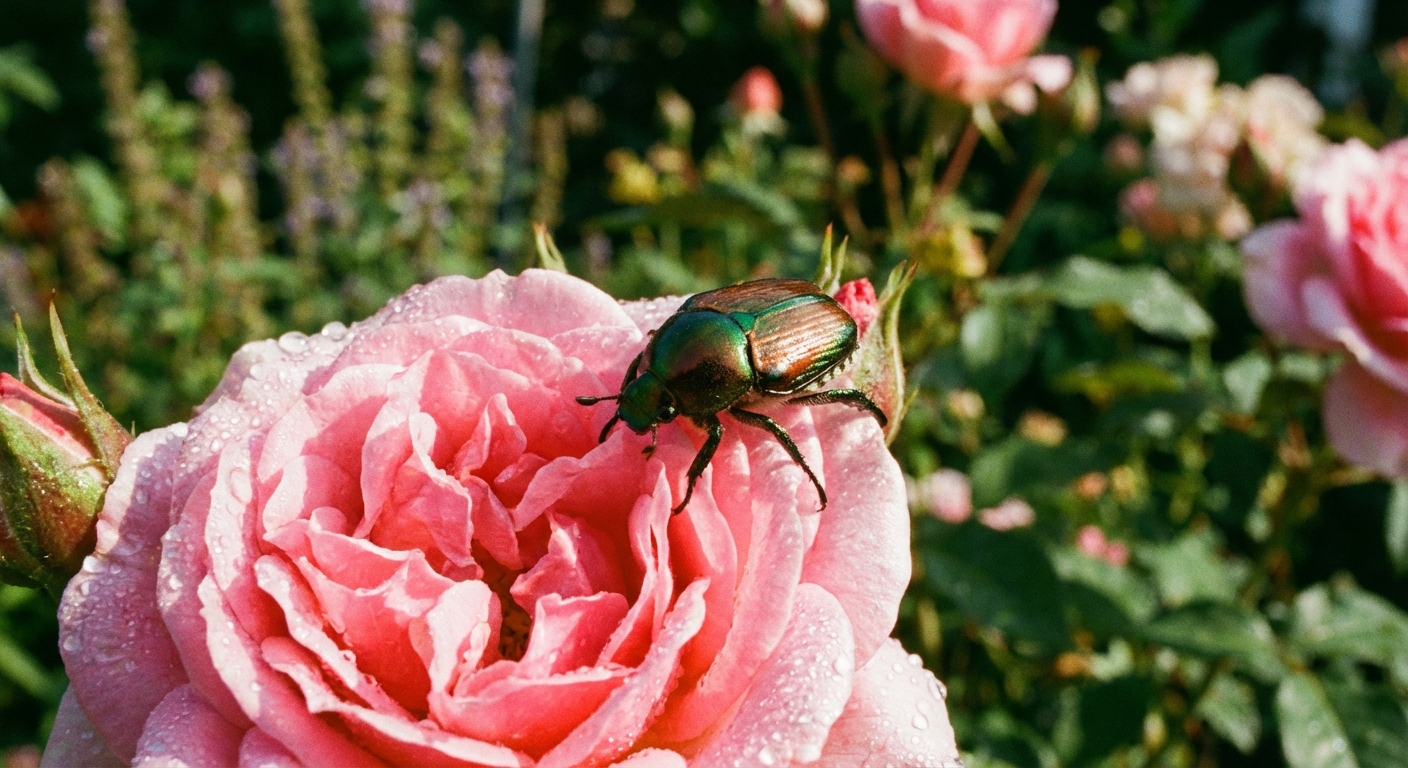
What they do: They chew flowers and skeletonize leaves, often arriving in groups and causing sudden damage.
Beginner-friendly control:
- Hand-pick in the morning: They are sluggish early. Knock them into a bucket of soapy water.
- Protect blooms carefully: If pressure is intense, consider a product labeled for Japanese beetles and roses. Apply in the evening when pollinators are less active, and avoid spraying open blooms whenever possible. Always follow the label.
- Avoid beetle traps near roses: Traps can attract more beetles into your yard if placed too close to the plants you want to protect.
- Support plant recovery: Keep roses watered during beetle season. Stress makes damage worse.
Aphids
What they look like: Clusters of small green, black, or brown insects on new growth and buds.
- Blast with water: A firm spray from a hose often solves it.
- Encourage beneficial insects: Lady beetles and lacewings love aphids.
- Use insecticidal soap if needed: Spray in the cool part of the day and cover leaf undersides.
Powdery mildew
What it looks like: White, powdery coating on leaves, often during warm days and cool nights.
- Increase sun and airflow: Prune and space plants properly.
- Avoid excess nitrogen: Overfeeding can push tender growth that mildews easily.
- Water consistently: Stress can make plants more susceptible.
Seasonal care
Spring
- Prune and remove winter damage
- Top-dress with compost and apply slow-release fertilizer
- Refresh mulch
- Start monitoring for black spot as leaves expand
Summer
- Water deeply, especially during heat
- Deadhead for more blooms
- Feed after a major bloom flush
- Watch for Japanese beetles and aphids
Fall
- Reduce feeding and let growth slow down
- Keep watering if fall is dry
- Clean up fallen leaves to reduce disease next year
Winter
- In cold regions, add extra mulch around the base after the ground begins to freeze
- Protect from harsh wind if your site is exposed (burlap screens can help)
- Rose cones are optional. If you use one, vent it on warmer days so moisture does not build up inside
- Avoid heavy pruning until late winter or early spring. Some cane dieback is normal
Shopping checklist
- Pick a low-maintenance type: Knock Out roses, Drift roses, or a locally proven David Austin variety
- Confirm sun: 6 to 8+ hours where you plan to plant
- Check your climate fit: USDA zone, heat, and humidity tolerance
- Check the tag: Mature size, disease resistance, and whether it is shrub, groundcover, or climber
- Inspect leaves: Avoid plants with heavy spotting, yellowing, or lots of pests
- Look for healthy canes: Firm, not shriveled or cracked
- Buy from a nursery you trust: Strong plants are half the battle
Roses can be simple
If you remember three things, remember these: sun, soil, and airflow. Choose a rose bred to succeed, plant it in a bright spot, feed it gently, and prune just enough to keep the center open. The rest is small, steady attention, the kind that feels more like a peaceful routine than a chore.
And if you make a mistake, welcome to the club. Roses are more forgiving than their reputation. They want to grow. We are just learning how to get out of their way.