
How to Grow Peppers in Pots

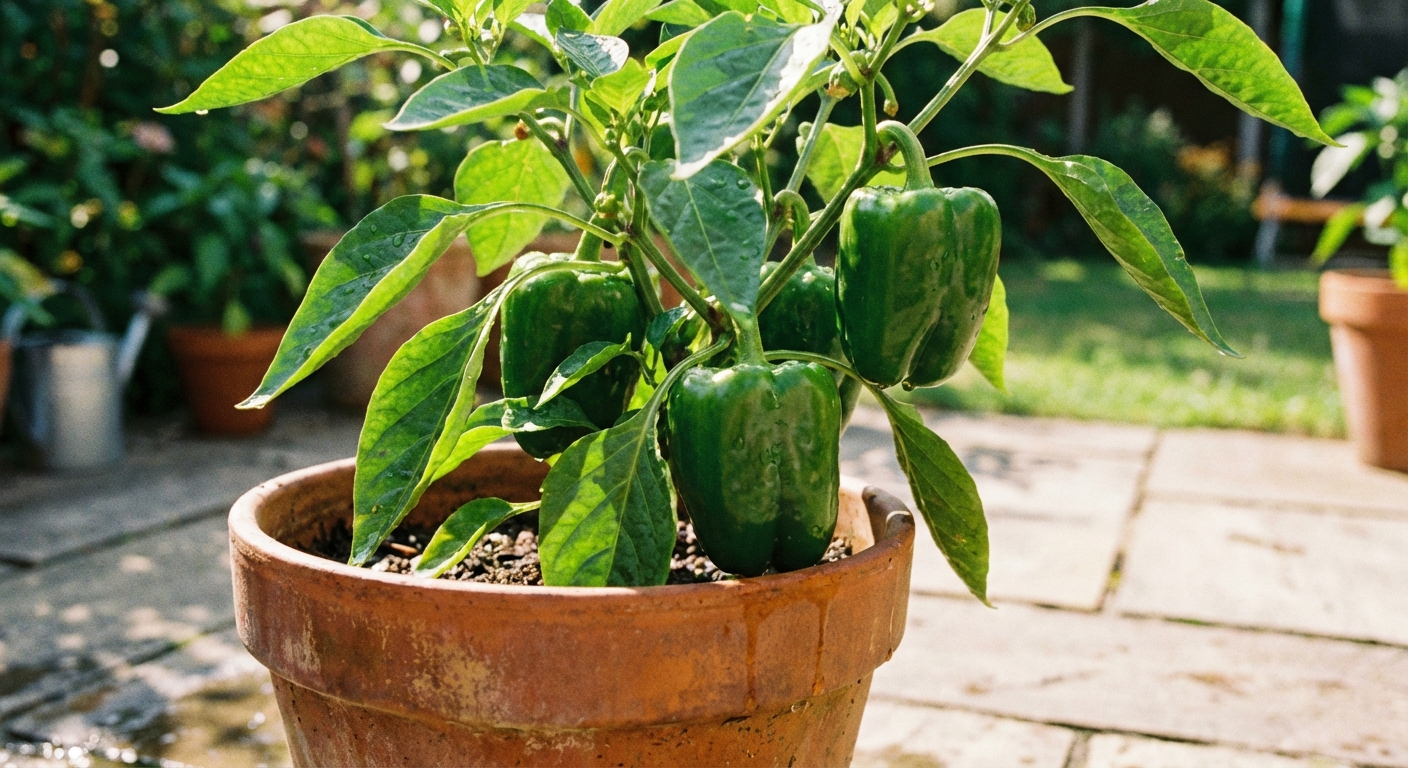
Peppers are the overachievers of the container garden. Give them warm sun, a roomy pot, and a steady snack schedule, and they will happily turn a patio into a little salsa factory. If you have ever felt intimidated by peppers, I promise they are less “finicky diva” and more “needs a consistent routine.”
This guide covers everything you need to grow peppers in pots, from choosing varieties (bell, jalapeño, habanero) to dialing in soil, heat, fertilizer, and common issue fixes like blossom end rot and aphids.
Picking pepper varieties that love containers
Most peppers can grow in containers, but you will get the easiest success with varieties that match your pot size and your heat tolerance. When you shop, look for tags that say “compact,” “patio,” or “container friendly.”
Bell peppers
- Why they are great: Thick-walled, productive, and versatile in the kitchen.
- Container notes: Many bells want a bigger pot and consistent moisture to prevent stress.
- Good picks: ‘California Wonder’ (classic), ‘Ace’ (cooler tolerant), ‘Lunchbox’ mini bells (compact and adorable).
Jalapeño peppers
- Why they are great: Reliable yields, great for beginners, excellent in pots.
- Container notes: Usually easier than bells and forgiving if you miss a watering once.
- Good picks: ‘Early Jalapeño’ (faster), ‘Jalapeño M’ (classic), ‘Senorita’ (early and compact).
Habanero and other super hots
- Why they are great: A little plant can produce a surprising number of fiery pods.
- Container notes: They crave warmth and a longer season, so they shine on hot patios and against sunny walls.
- Good picks: ‘Orange Habanero’ (classic heat), ‘Red Savina’ (very hot), ‘Caribbean Red’ (hot, fruity).
Clara tip: If your summers are short or nights are cool, choose “early” or “short season” pepper varieties. They set fruit faster and feel less cranky about temperature swings.
Container size and the best pots for peppers
Pepper roots are not enormous, but they do want consistent moisture and oxygen. A too-small pot dries out fast, stresses the plant, and invites problems like blossom end rot.
Minimum pot sizes (use bigger if you can)
- Compact peppers (many jalapeños, shishitos, small chiles): 3 to 5 gallons per plant.
- Bell peppers: 5 to 7 gallons per plant.
- Large plants or long-season super hots: 7 to 10 gallons per plant for steadier growth.
What to look for in a pepper pot
- Drainage holes: Non-negotiable. If the pot has one tiny hole, add more or choose another container.
- Depth: Aim for at least 12 inches deep. Deeper is steadier in summer heat.
- Material:
- Fabric grow bags: Great aeration, cooler roots, dries faster.
- Plastic or resin: Holds moisture well, lightweight, can heat up in full sun.
- Terracotta: Beautiful and breathable, dries quickly, needs more frequent watering.
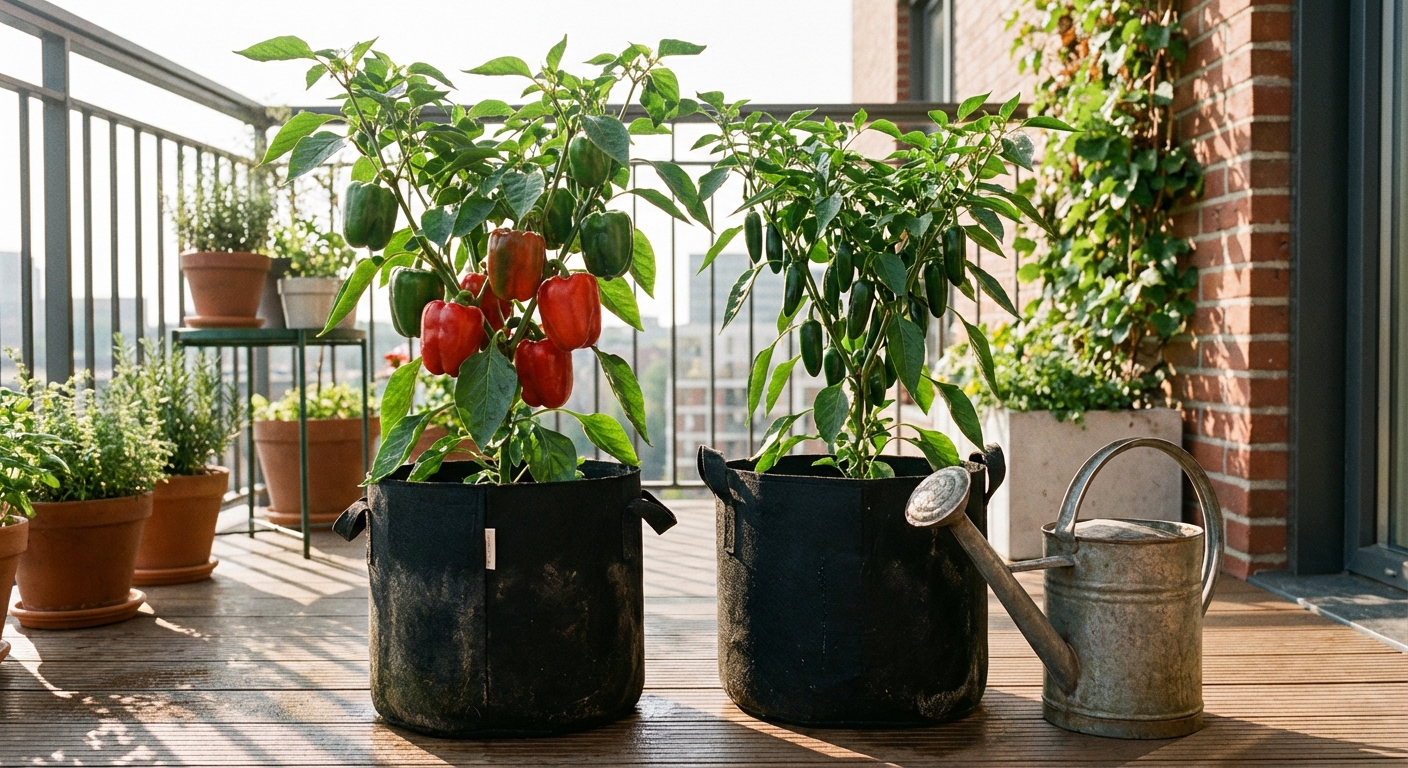
Staking note: Many peppers need support once fruit loads up. Put a stake or small tomato cage in at planting time so you do not spear roots later.
Soil mix for container peppers
Garden soil in a pot tends to compact and suffocate roots. For peppers in containers, you want a mix that holds moisture but still drains quickly.
My simple organic pepper potting mix
- 60% high-quality potting mix (peat-free if you can find a good one)
- 25% finished compost
- 15% aeration (perlite, pumice, or rice hulls)
Optional amendments (use lightly)
- Worm castings: A handful mixed into the top few inches at planting.
- Slow-release organic fertilizer: Mixed in per label directions.
- Calcium support: If you have had blossom end rot before, add a small amount of gypsum or use a potting mix that includes calcium. Avoid overdoing lime unless you know your pH is low.
Target pH: Peppers like slightly acidic to neutral soil, roughly pH 6.0 to 6.8. Most quality potting mixes land in the sweet spot.
Sun and heat: what peppers really want
Peppers are sun lovers, and warmth is what turns flowers into fruit. If tomatoes are the extroverts of summer, peppers are the ones quietly soaking up heat against a brick wall.
Light requirements
- Best: 8+ hours of direct sun.
- Minimum: 6 hours, but fruiting may be slower and yields smaller.
Temperature sweet spot
- Ideal daytime: about 70 to 85°F (21 to 29°C).
- Ideal nighttime: above 55°F (13°C).
When it is too hot
Above roughly 90 to 95°F (32 to 35°C), peppers may drop blossoms or pause fruit set. If your patio turns into a skillet in late afternoon, offer light shade during the hottest window.
- Use 30 to 40% shade cloth for heat waves.
- Move pots to morning sun and afternoon shade if possible.
- Mulch the soil surface to keep roots cooler.
Planting peppers in containers
You can grow peppers from seed, but most container gardeners get a head start with healthy nursery seedlings. Either way, wait for warm weather. Peppers hate cold feet.
When to plant outside
- After your last frost date, and nighttime temperatures are reliably above 55°F (13°C).
- If it is still chilly, keep plants in a bright spot indoors or in a sheltered area and harden them off slowly.
Step-by-step planting
- Fill your pot with pre-moistened potting mix, leaving 1 to 2 inches at the top for watering space.
- Remove the pepper from its nursery pot and gently loosen circling roots.
- Plant at the same depth it was growing in the pot. Peppers can be planted slightly deeper, but do not bury half the stem like you might with tomatoes.
- Water thoroughly until you see steady drainage.
- Add a stake or small cage now, before fruiting begins.
- Mulch the surface with straw, shredded leaves, or fine bark to slow moisture swings.
Watering: the secret to big, happy peppers
If there is one “make or break” habit for container peppers, it is watering consistency. Not overwatering, not underwatering. Consistency.
How often to water peppers in pots
- Spring: Often 2 to 4 times per week, depending on pot size and sun.
- Summer heat: Many patio peppers need daily watering. In heat waves, small pots can need water morning and evening.
A simple test
Stick your finger 2 inches into the soil. If it feels dry at that depth, water deeply. If it is still moist, wait.
How to water well
- Water slowly until excess runs from the bottom.
- Empty saucers after 15 to 30 minutes so roots are not sitting in water.
- Try to water the soil, not the leaves, especially in humid climates.
Clara tip: If your pot dries out constantly, do not just water more. Upgrade the pot size, add mulch, and consider moving from terracotta to plastic or fabric for better moisture control.
Fertilizing schedule for container peppers
In the ground, roots can roam for nutrients. In a pot, your pepper depends on you like a houseplant that happens to make fajitas. A steady, moderate feeding schedule beats big “feast” doses.
At planting
- Mix in a balanced slow-release organic fertilizer (follow the label).
- Or plan to start liquid feeding after the plant settles in (about 10 to 14 days).
Weeks 2 to 6 (leaf and root growth)
- Feed every 10 to 14 days with a gentle liquid fertilizer (fish and seaweed blends are great), diluted to label directions.
- Aim for a balanced formula, not super high nitrogen.
Once flowering begins (fruiting mode)
- Continue feeding every 10 to 14 days, but lean slightly toward a “tomato” or “bloom” fertilizer with more potassium and phosphorus than nitrogen.
- If growth looks lush and dark green but you see few flowers, reduce nitrogen.
Mid-season refresh
- Every 4 to 6 weeks, top-dress with a thin layer of compost and water it in.
- If using a slow-release product, reapply per label timing.
Do not overdo it: Over-fertilized peppers can grow big leafy plants with fewer peppers, and excess salts can build up in containers. If you see a white crust on soil, flush the pot with plain water until it drains freely, then resume lighter feeding.
Pollination help for patio and balcony peppers
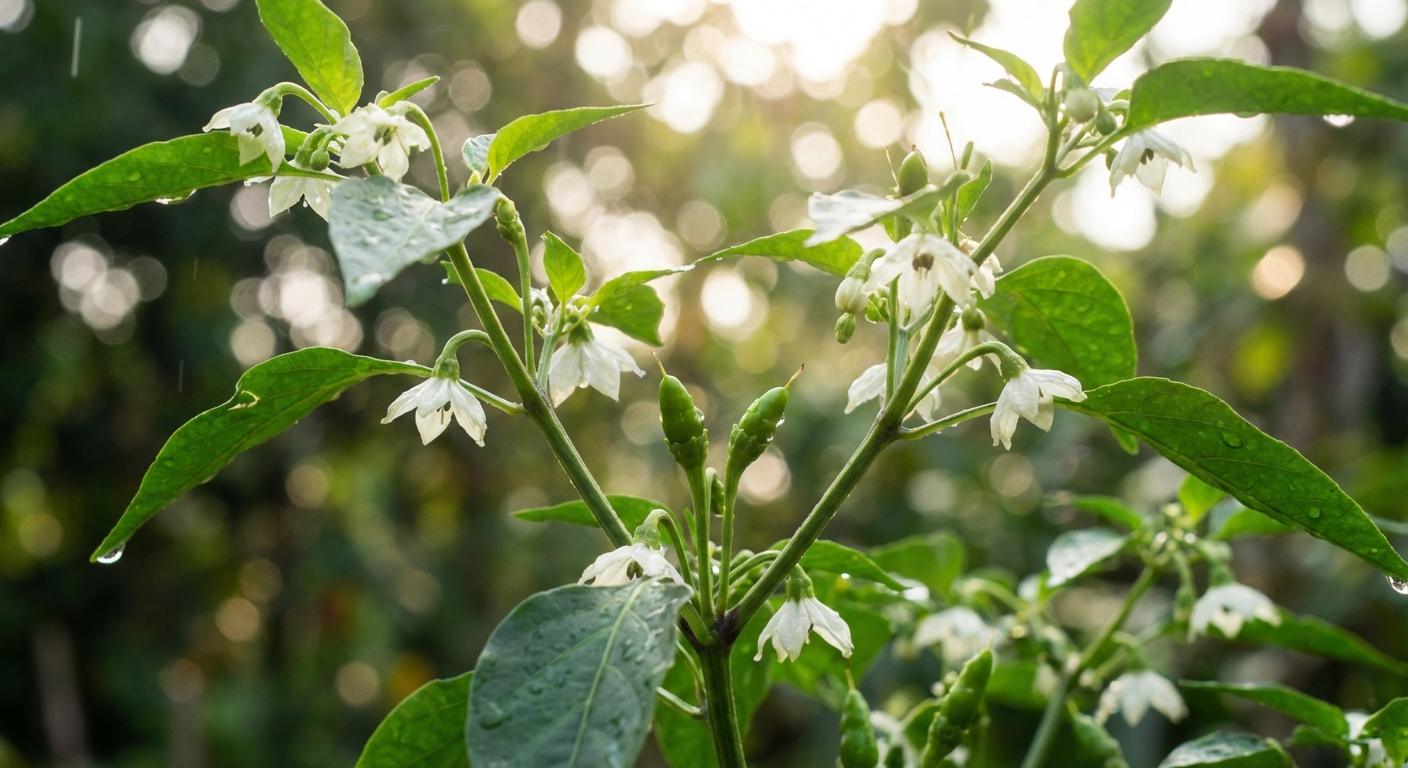
Peppers are mostly self-pollinating, but they still benefit from a little movement. Outdoors, wind and bees handle it. On a sheltered balcony, you might need to be the breeze.
- Gently tap the main stem or flower clusters a few times a week.
- Brush flowers lightly with a clean, dry paintbrush.
- Encourage pollinators with nearby herbs like basil, thyme, and oregano in small pots.
Common problems (and exactly what to do)
Most pepper issues are fixable with a small adjustment. The plant is not judging you. It is just sending notes.
Blossom end rot
What you see: A dark, sunken spot on the bottom of developing fruit.
What causes it: Usually inconsistent watering that prevents calcium uptake, not a lack of calcium in the soil.
- Water consistently. Avoid the dry-soak-dry cycle.
- Use a larger pot (5 to 10 gallons) for steadier moisture.
- Mulch the soil surface.
- Avoid heavy nitrogen feeding that pushes fast growth.
- If you suspect low calcium, add a small amount of gypsum or use a calcium-containing fertilizer, but treat watering consistency as the main fix.
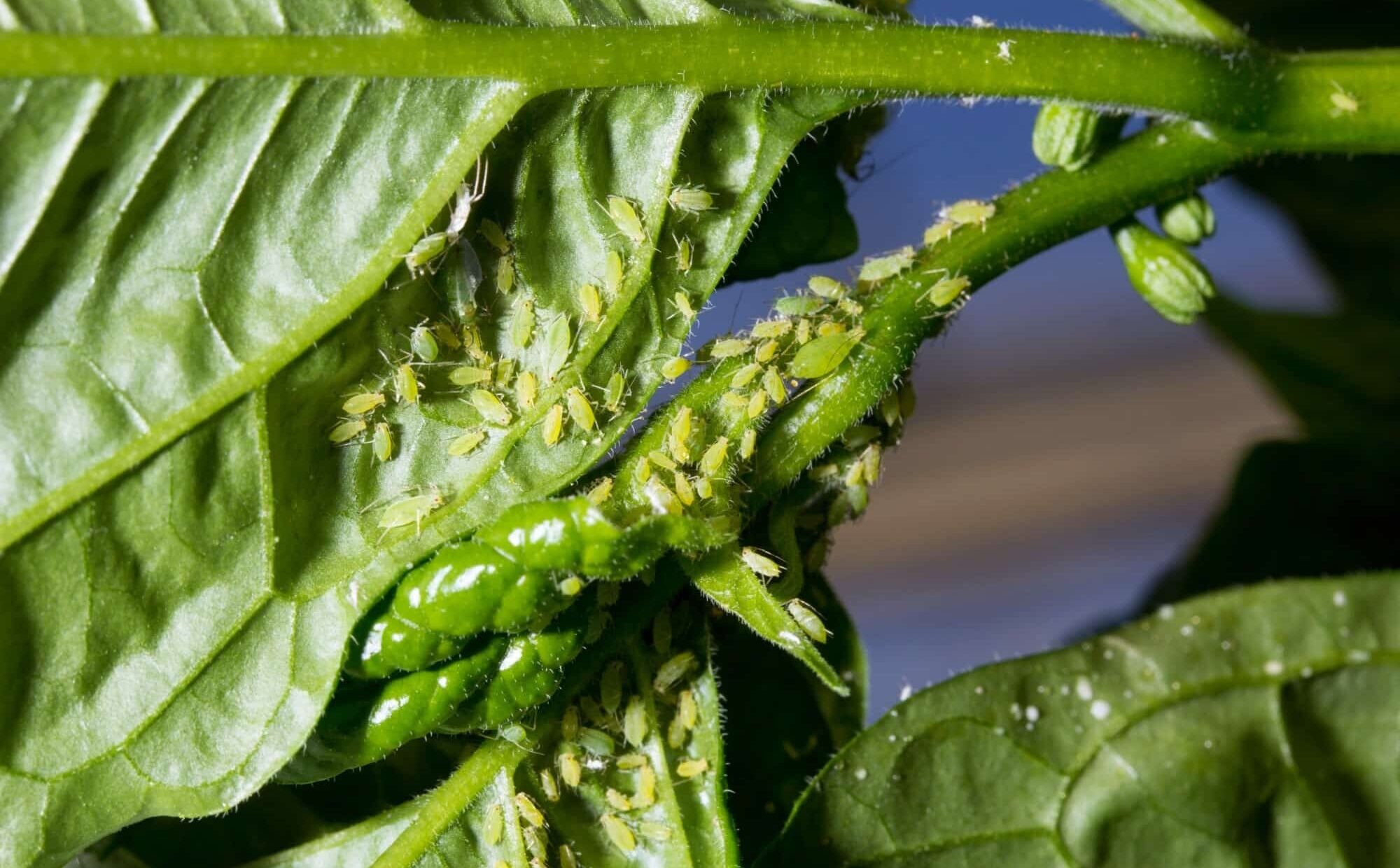
Aphids
What you see: Clusters of tiny green, black, or gray insects on new growth, curled leaves, sticky honeydew.
- Blast them off with a strong spray of water in the morning.
- Follow with insecticidal soap or neem oil, applied in the evening and per label directions.
- Check undersides of leaves every few days for two weeks.
- Control ants, which “farm” aphids and protect them.
Yellow leaves
- If older leaves yellow slowly: Often normal aging or mild nitrogen deficiency. Feed lightly.
- If leaves yellow and soil stays wet: Overwatering or poor drainage. Let soil dry slightly, ensure holes are clear, and avoid saucer puddles.
- If yellowing happens between leaf veins: Possible magnesium deficiency. Try a gentle magnesium supplement (or a small amount of Epsom salt only if you are confident it is magnesium, not a watering problem).
Dropping flowers
- Heat: Provide afternoon shade during extreme temperatures.
- Cold nights: Move pots closer to the house or cover overnight.
- Overfeeding nitrogen: Switch to a fruiting-friendly fertilizer.
- Water swings: Keep moisture consistent.
Small holes in leaves or ragged chewing
- Check at dusk for caterpillars and hand-pick.
- For persistent caterpillars, use Bt (Bacillus thuringiensis) following label directions.
- If you see tiny jumping beetles (flea beetles), use fine insect netting early in the season and keep plants vigorous.
Harvesting: when to pick your peppers
Peppers are generous because you can harvest them at different stages. Most start green and change color as they fully ripen. Fully colored peppers are usually sweeter (and often more nutritious), but harvesting earlier can increase total yield.
- Bell peppers: Pick green for classic crunch, or wait for red, yellow, or orange for maximum sweetness.
- Jalapeños: Pick firm and glossy. Red jalapeños are riper and often a bit sweeter.
- Habaneros: Harvest when fully colored and aromatic. Wear gloves if you are sensitive to heat.
Use pruners or scissors to cut peppers off with a short stem. Tugging can snap branches and set your plant back.
End-of-season care and overwintering (optional but fun)
In warm climates, peppers can live for years. In colder areas, you can overwinter hot peppers indoors if you have bright light and patience.
- Before first frost, check thoroughly for pests.
- Cut back the plant by about one-third to one-half and move it indoors to a sunny window or under a grow light.
- Water sparingly in winter. Think “just barely moist,” not “summer drink.”
- In spring, gradually increase watering and begin feeding again once new growth starts.
Quick container pepper checklist
- Pot size: 5 to 7 gallons is the happy place for most peppers.
- Soil: Potting mix plus compost plus aeration.
- Sun: 6 to 8+ hours, with heat protection in extreme temps.
- Water: Deep and consistent, mulch helps.
- Feed: Light, regular fertilizing. Less nitrogen once flowering starts.
- Support: Stake or cage early.
If you try peppers in pots this season, start with one plant you love to eat. That is the easiest way to build confidence. One good jalapeño harvest has cured more “black thumb” anxiety than any pep talk ever could.