
How to Grow Peonies

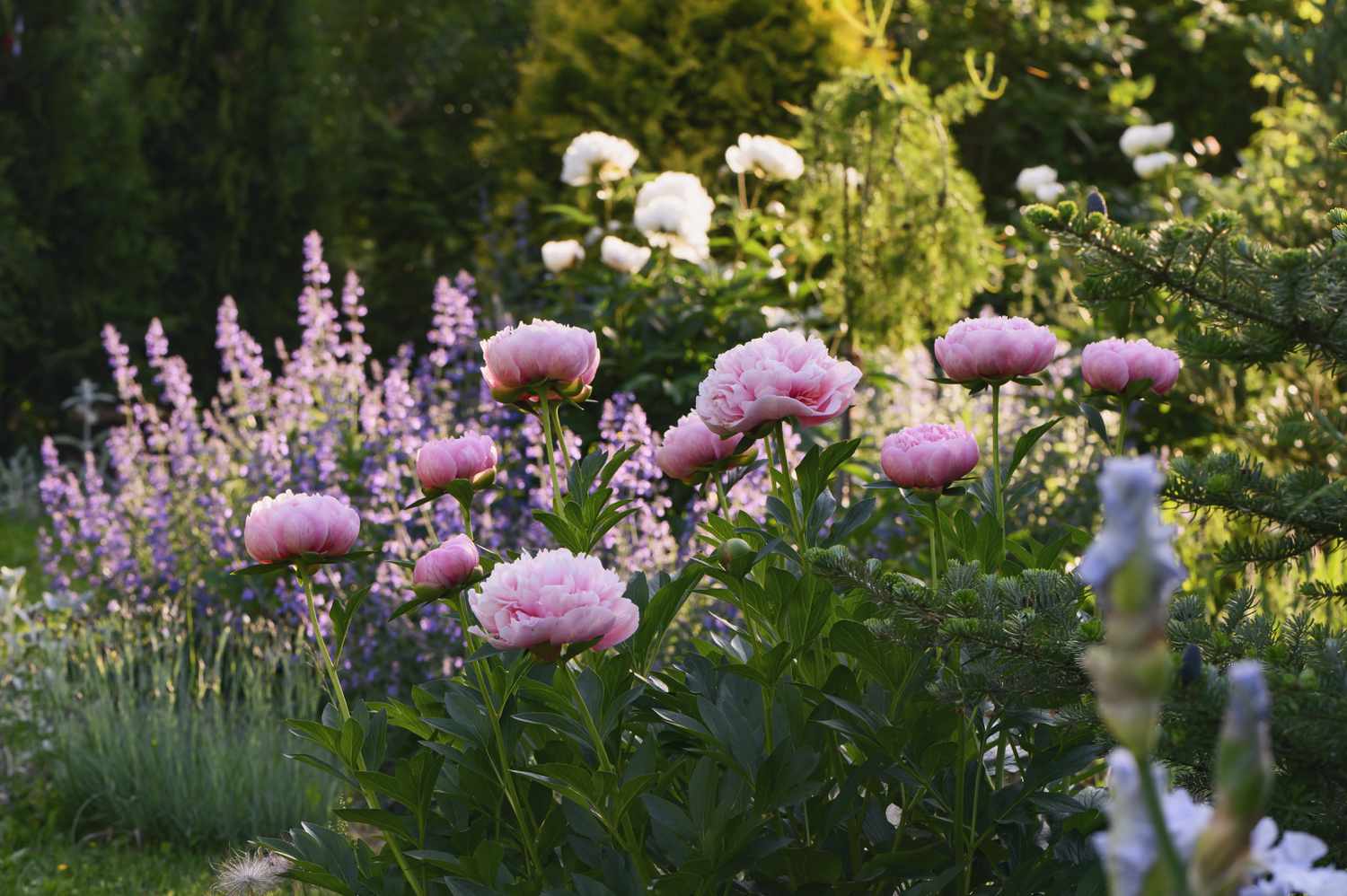
Peonies are the kind of flower that makes you stop mid-walk and lean in for a sniff. Big, ruffled blooms, dreamy fragrance, and a plant that can live for decades if you let it settle in. The funny thing is, many peony “failures” come down to one small detail: planting depth. Get that right, and you are halfway to armfuls of flowers.
Below, I will walk you through the main peony types, how to plant them (with depth numbers you can trust), what they need to bloom, and what to do when they stubbornly refuse to flower.
Know your peony type
“Peony” is a broad umbrella. The care overlaps, but planting depth and growth habit depend on which kind you have.
Herbaceous peonies (Paeonia lactiflora and hybrids)
These are the classic old-fashioned peonies. Stems die back to the ground in winter and return in spring. They are extremely long-lived and often the most fragrant.
- Height: usually 2 to 3 feet
- Bloom time: spring to early summer (variety dependent)
- Best for: borders, cutting gardens, and low-maintenance perennial beds
Tree peonies (Paeonia suffruticosa and hybrids)
Despite the name, they are woody shrubs, not trees. They keep a permanent framework of stems, then leaf out and bloom on that wood.
- Height: often 3 to 6 feet over time
- Bloom time: typically a bit earlier than herbaceous types
- Best for: focal points, shrub borders, and gardeners who want huge blooms
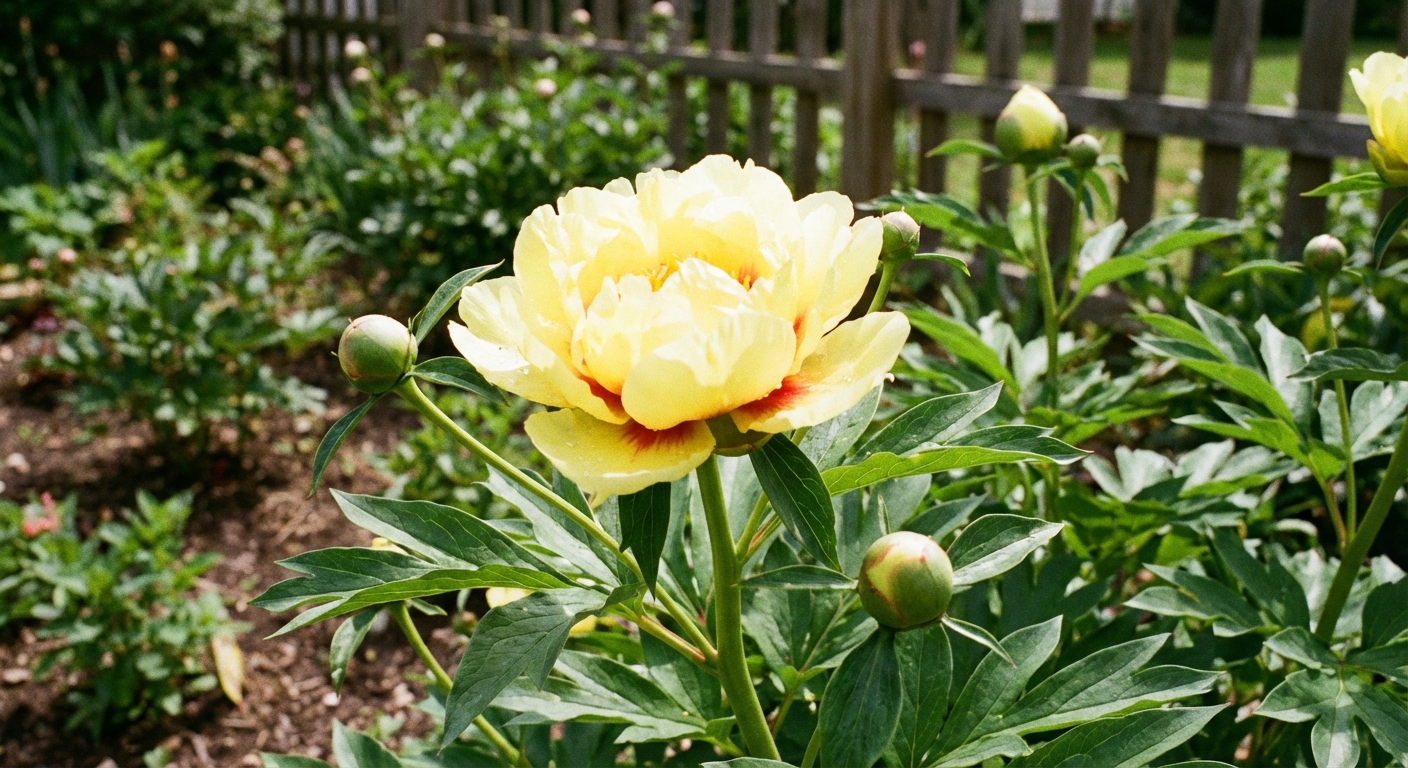
Itoh peonies (Intersectional hybrids)
Itoh peonies are a cross between herbaceous and tree peonies. They die back like herbaceous peonies, but they often have sturdier stems, abundant blooms, and excellent disease resistance.
- Height: commonly 2 to 3 feet
- Bloom time: often long and generous
- Best for: gardeners who want strong stems and lots of flowers without fuss
Sun and soil
Light
Peonies bloom best with at least 6 hours of direct sun per day. In hotter climates, a little afternoon shade can protect petals from scorching, but too much shade leads to lush leaves and few or no flowers.
Soil
Peonies love soil that is:
- Well-drained (they hate wet feet in winter)
- Fertile and loamy
- pH-flexible (they do well in many gardens; a common sweet spot is roughly pH 6.5 to 7.5)
If your soil is heavy clay, you do not need to replace it all. Improve drainage by working in compost and, if needed, planting on a slight mound or in a raised bed so water does not pool around the crown.
My soil rule: If a hole fills with water and still has water sitting in it an hour later, choose a different spot or build up the bed. Peonies will tolerate many things, but they will sulk in soggy soil.
When to plant
Fall is prime peony planting season. Aim for roughly 4 to 6 weeks before the ground freezes. This gives roots time to settle in while the plant is naturally shifting energy underground.
- Cool climates: early fall into mid-fall is ideal
- Mild climates: late fall into early winter is often fine, as long as soil is workable
Spring planting can work, especially for container-grown peonies, but it often means fewer blooms the first year because the plant is busy building roots.
Planting depth
If you remember one thing from this page, let it be this: peonies that are planted too deep often will not bloom. They will usually survive, grow leaves, and still refuse to flower. It feels personal, but it is just how peonies work.
Herbaceous peonies: how deep to plant
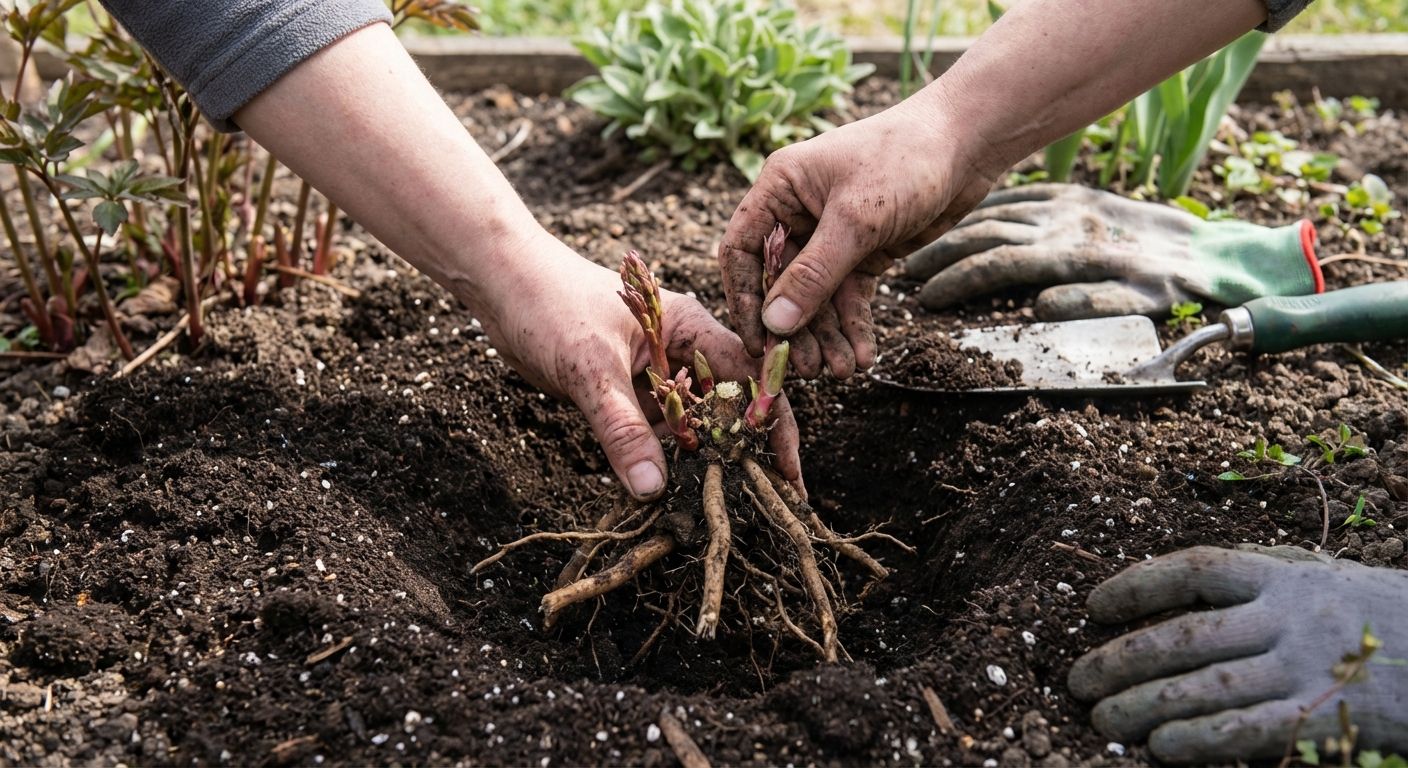
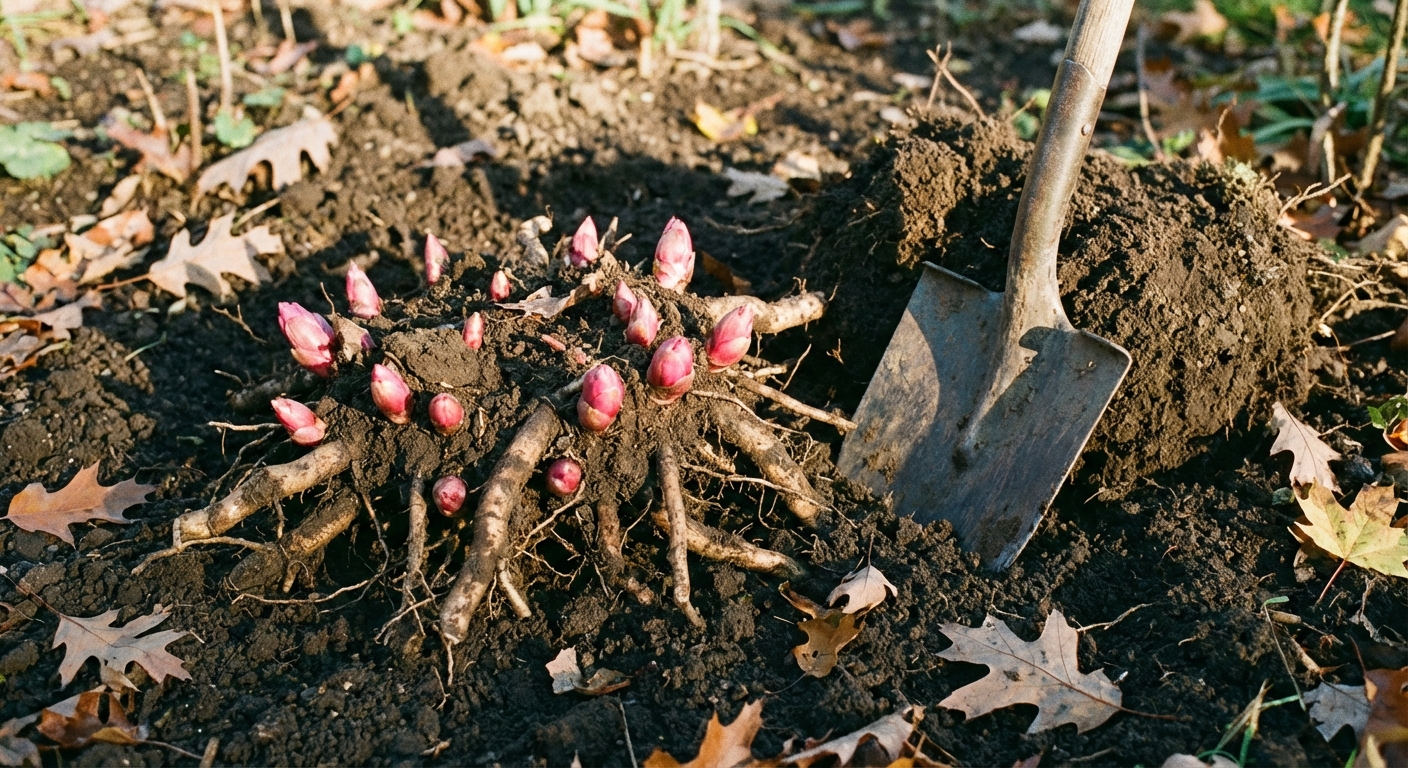
Look for the little pink or white growth buds (often called “eyes”) on the crown. Those buds should sit only:
- 1 to 2 inches below the soil surface in colder zones
- About 1 inch below in warmer zones
Deeper than 2 inches is the classic “no blooms” setup.
Itoh peonies: how deep to plant
Itohs are a bit more flexible, and recommendations vary by cultivar and climate. A good general target is to plant the crown so the buds are roughly:
- About 1 to 2 inches below the soil surface (similar to herbaceous)
- Up to 2 to 3 inches in colder zones or very light soils
Best rule: follow the nursery tag if it gives a specific depth. And even with Itohs, too deep can still reduce bloom.
Tree peonies: different rules
Most tree peonies are grafted. You will see a knobby graft union near the base. For grafted tree peonies, plant so the graft union is:
- About 3 to 6 inches below the soil surface
In heavier or wetter soils, aim for the shallower end of that range. In colder areas, slightly deeper planting can improve hardiness. If you are not sure whether it is grafted, check the nursery tag or look closely at the base for a noticeable transition in stem texture.
Spacing
Give peonies room. Airflow helps with bloom, reduces disease, and keeps plants from turning into a tangled crowd later.
- Herbaceous and Itoh: space about 3 feet apart
- Tree peonies: space about 4 to 5 feet apart
Step-by-step planting (bare root)
- Choose the spot with sun and good drainage. Peonies dislike being moved, so pick carefully.
- Dig wide (about 18 inches) and loosen the soil. Roots like room.
- Amend lightly with compost. Skip heavy manure in the planting hole; it can burn new roots.
- Make a small mound of soil in the center of the hole and drape roots over it.
- Set depth carefully using the measurements above.
- Backfill and water to settle soil around roots.
- Mulch lightly the first winter if you need it, but keep mulch pulled back from the crown in spring so you do not accidentally “plant deeper” with mulch.
What about container peonies?
Container-grown peonies can be planted in spring or fall. Plant at the same depth they were growing in the pot (then double-check the bud depth rules above). Try not to break up the root ball too aggressively. Peonies like a gentle approach.
Watering and feeding
Water
During the first growing season, water deeply when the top few inches of soil dry out. Once established, peonies are fairly drought-tolerant, but they bloom best with consistent moisture in spring.
- Best method: water at the base, not over the leaves
- Goal: moist soil, never soggy
Fertilizer
Peonies are not heavy feeders. Too much nitrogen can produce leafy growth with fewer flowers.
A gentle routine that works for most gardens:
- Early spring: top-dress with compost
- Optional: a light application of a balanced or bloom-leaning fertilizer (for example, something like 5-10-10) around the drip line, not directly on the crown
If your soil is already rich, compost alone is often plenty.
Support rings
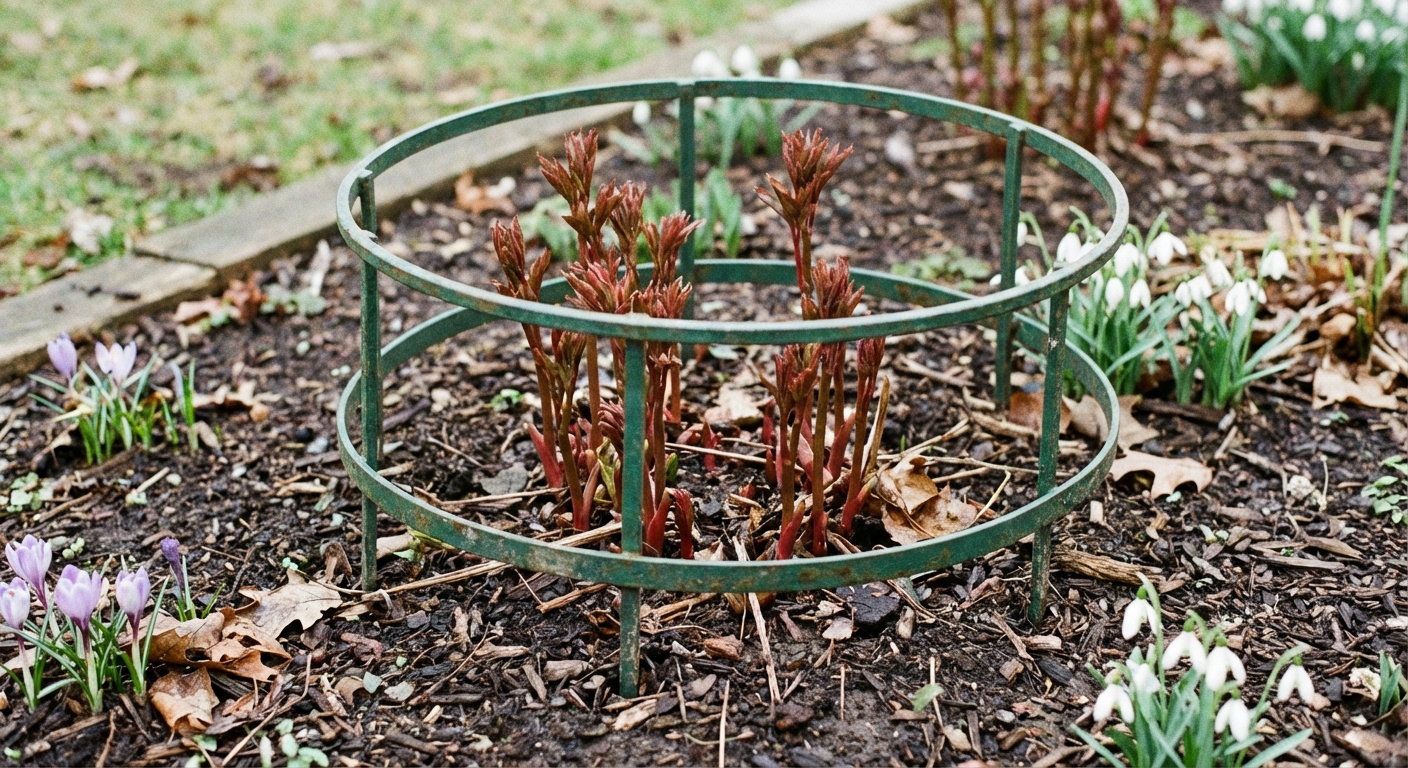
Those giant flowers get heavy fast, especially after rain. A support ring is not cheating, it is good planning.
- When to install: early spring, when shoots are 6 to 10 inches tall
- What to use: peony rings, grow-through grids, or discreet bamboo stakes and twine
Put supports on early so foliage grows through and hides them. If you wait until the plant is already sprawling, you will feel like you are wrestling an octopus made of stems.
Pruning and winter care
Deadheading
Snip spent blooms off just above a leaf. This tidies the plant and keeps it from spending energy on seed production (especially on single-flowered types that set seed more readily).
Herbaceous and Itoh peonies in fall
After frost blackens the foliage, cut stems back to a few inches above ground and remove the debris. This helps reduce disease carryover.
Tree peonies
Do not cut tree peonies to the ground. They bloom on woody structure. In late winter or early spring, prune lightly to remove dead wood and shape, but keep the main framework.
Common pests and diseases
Peonies are generally sturdy, but two issues pop up often enough to deserve a quick mention:
- Botrytis (gray mold): buds and stems can brown or collapse in cool, wet springs. Prevention is simple: good airflow, avoid overhead watering, and clean up dead foliage in fall.
- Powdery mildew: a white, dusty coating on leaves later in summer. It is usually cosmetic. Give plants space, keep them in sun, and remove heavily infected foliage at season’s end.
No blooms?
If your peony looks healthy but refuses to flower, you are not alone. Here are the most common causes, in the order I check them in my own garden.
1) It is planted too deep
This is the top culprit for herbaceous peonies. If buds are more than 2 inches below the surface, gently lift and replant at the correct depth in fall.
2) Not enough sun
Peonies need real sun, not bright shade. If nearby trees grew larger over the years or a fence now casts shade, blooms can fade away.
3) Too much nitrogen
High-nitrogen lawn fertilizers drifting into the bed can cause gorgeous leaves and zero flowers. Keep lawn feeding away from peony root zones and focus on compost or a bloom-supporting fertilizer.
4) The plant is still settling in
New peonies often take 2 to 3 years to hit their stride. You might get a few blooms the first year, or none at all, especially after transplanting.
5) Late frost damage
A late cold snap can zap buds, turning them brown or mushy. The plant usually rebounds next year. If late frosts are common where you live, plant in a spot with a bit of protection from harsh morning sun, which can worsen freeze-thaw stress.
6) Crowding and low airflow
An old clump can bloom less if it is crowded, shaded by neighbors, or not getting good airflow. This is less common than depth or sun issues, but it does happen, especially in mature beds.
7) Ants are not the problem
Ants on peony buds are normal. They are sipping sugary nectar. They do not prevent blooming, and they are not required for blooming either. They are just enthusiastic visitors.
Dividing peonies
Peonies do not need frequent division like some perennials. Think of it as a “once in a long while” task, usually for plants that are overcrowded, need to be moved, or have declining bloom.
Best time to divide
Early fall is ideal, around the same time you would plant new bare-root peonies. The plant has time to root before winter.
How to divide herbaceous peonies
- Cut stems back to a few inches in fall.
- Dig wide around the clump to avoid slicing roots.
- Lift gently and wash or shake off soil so you can see the crown and buds.
- Divide into sections with a clean knife, aiming for 3 to 5 buds per division and a healthy chunk of roots.
- Replant immediately at the correct depth (buds 1 to 2 inches below soil).
- Water in and mulch lightly for winter, then pull mulch back in spring.
After division, it is normal for blooms to pause or be sparse for a season while roots reestablish. I call it the peony’s “settling back into its chair” phase.
Can you divide Itoh peonies?
Yes, but they can be tougher to divide because crowns can be dense and woody. Use a very sharp tool, and only divide large, well-established plants. Replant pieces with viable buds and strong roots, and expect a slower rebound than herbaceous types.
What about dividing tree peonies?
Tree peonies are usually propagated by grafting and are not commonly divided like herbaceous peonies. If you need more, it is typically done by layering or cuttings by experienced growers. For most home gardens, focus on correct planting and gentle pruning instead.
Quick checklist
- Plant in fall when possible.
- Full sun is your bloom insurance.
- Well-drained soil prevents winter rot.
- Give them space for airflow and easy care.
- Herbaceous depth: buds 1 to 2 inches below soil.
- Itoh depth: usually 1 to 2 inches, sometimes up to 2 to 3 inches (follow the tag).
- Tree peony depth: graft union about 3 to 6 inches below soil (follow the tag; go shallower in heavy soils).
- Support early with rings or grids before flopping starts.
- Skip heavy nitrogen if you want flowers, not just leaves.
If your peony still will not bloom, do not give up. Nine times out of ten, a small adjustment in depth or light turns a “green only” plant into a bloom machine by the next spring or the one after. Peonies teach patience, and then they reward it in petals.