How to Grow Lavender at Home

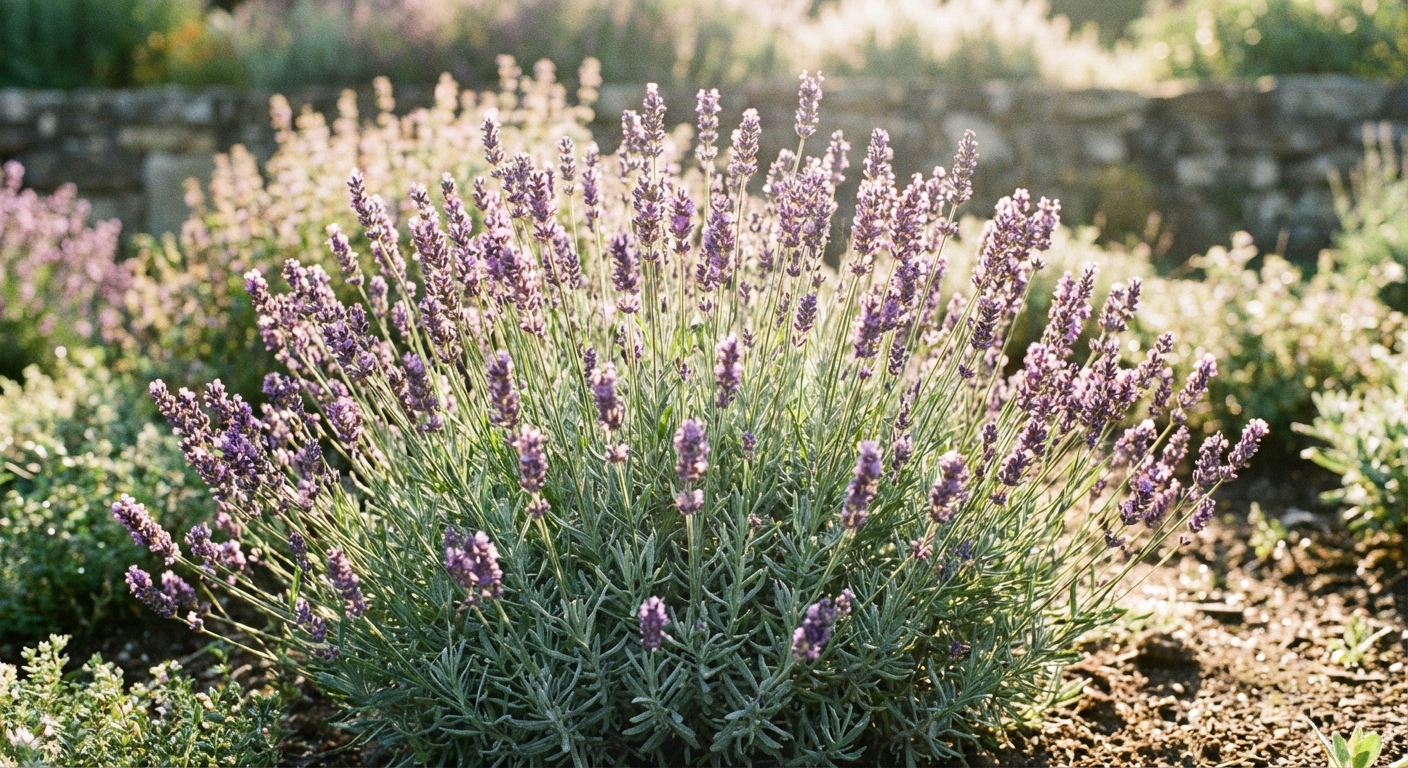
Lavender is one of those plants that makes a home feel like a home. Brush past it on a warm afternoon and the air changes, suddenly sweet and herbal, like you just opened a linen drawer in a little stone cottage somewhere. And the best part is that lavender is not fussy once you understand its one true love: excellent drainage.
I have grown lavender in city pots, in lean backyard beds, and in that “probably too wet” corner I thought I could improve with optimism. The lavender always tells the truth. Give it sun and fast-draining soil, and it will reward you for years.
Pick your lavender: English vs French
Not all lavender is created equal. Most beginner frustrations come down to choosing a variety that does not match your winter, humidity, or goals for fragrance and cooking.
English lavender (Lavandula angustifolia)
- Best for: cold winters, strong classic scent, cooking, sachets, dried bundles
- Cold hardiness: commonly listed for USDA Zones 5 to 9, with best performance often in 5 to 8. Hardiness varies by cultivar, winter wetness, and drainage (some can be reliable in Zone 4 with excellent drainage and protection).
- Bloom time: late spring into summer, with a possible second flush if you deadhead
- Great cultivars to look for: ‘Hidcote’, ‘Munstead’, ‘Vera’, ‘Royal Velvet’
If you want that true lavender perfume and you live where winter actually happens, start here.
French (L. dentata) and Spanish (L. stoechas)
- Best for: mild winters, long blooming, ornamental containers and patios
- Cold hardiness: less hardy, usually best in Zones 8 to 10 (some can manage Zone 7 in very sheltered, dry sites). In colder regions they are often grown as annuals or overwintered in a protected spot.
- Look: French lavender has toothed leaves, Spanish lavender has “bunny ear” bracts on top of the blooms
These are gorgeous and generous bloomers, but they dislike freeze-thaw cycles and winter wet. If your winters are cold or soggy, containers you can move are your best friend.
Lavandin (Lavandula x intermedia)
- Best for: big plants, lots of stems for drying, hedges, strong scent
- Cold hardiness: typically Zones 5 to 8 (sometimes 9), depending on cultivar and site. Zone 5 can be marginal in wet winters, so drainage and airflow really matter.
- Great cultivars: ‘Grosso’ (excellent for drying), ‘Provence’ (sweet scent, popular in gardens)
Lavandin is the workhorse for bundles and sachets because it produces long stems and plenty of blooms.
Sunlight: full sun
Lavender wants at least 6 hours of direct sun per day, and 8 hours is even better. In shade, it gets lanky, flops open, and becomes more vulnerable to rot and pests.
- In hot climates: morning sun with a little late afternoon shade can prevent stress, especially in containers.
- In cool climates: choose the sunniest, warmest spot you have, preferably near a south or west-facing wall that reflects heat.
Soil and drainage: the secret
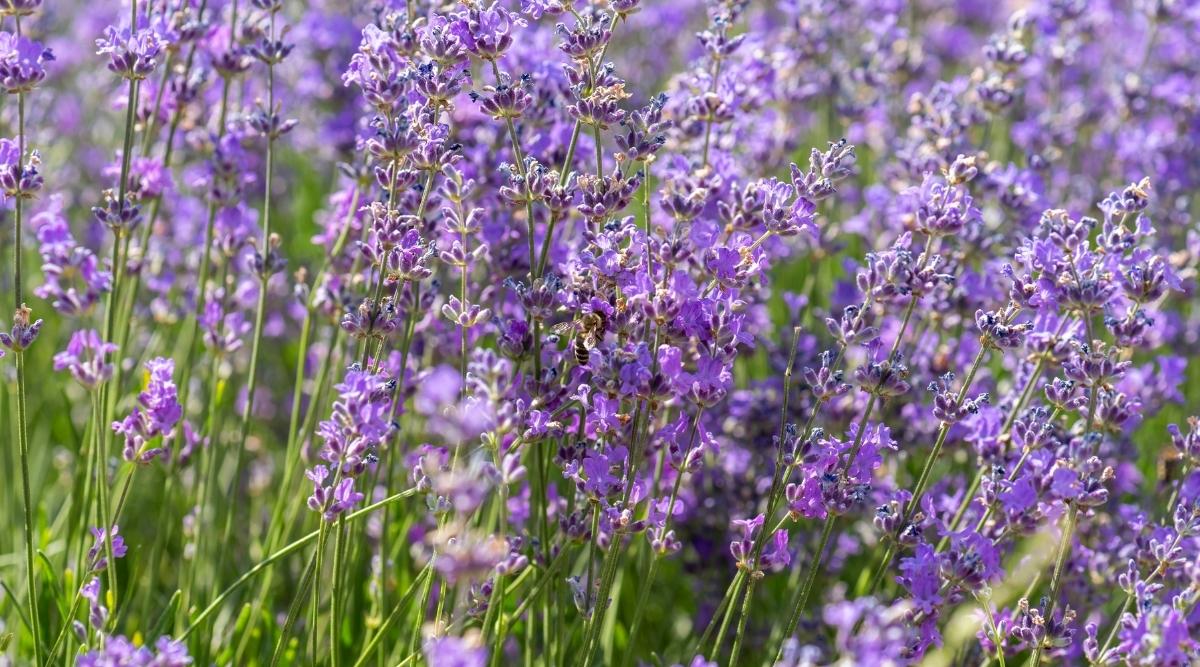
If lavender had a motto, it would be: dry feet, sunny head. It is native to Mediterranean conditions where soils are lean, rocky, and quick to drain. Heavy, wet soil is the fastest path to a sad, short-lived plant.
What lavender prefers
- Texture: sandy or gravelly loam that drains quickly
- Fertility: modest. Too much fertilizer makes lush, weak growth with fewer blooms.
- pH: slightly alkaline to neutral, roughly 6.5 to 7.5
Quick drainage test
Dig a hole about 12 inches deep, fill with water, and let it drain. Fill again. If the second fill takes longer than a few hours to drain, that spot is too wet for lavender unless you amend heavily or plant in a raised mound.
Fix heavy soil (organically)
- Plant on a mound or raised bed: even 6 to 10 inches higher makes a big difference.
- Amend for drainage: in clay soil, prioritize fine gravel, pumice, or perlite. If you use sand, make it coarse horticultural sand (avoid fine play sand, which can pack and worsen drainage). Compost is useful, but in clay it can hold water, so use it lightly.
- Mulch with mineral mulch: use pea gravel or small stone around the crown instead of bark mulch, especially in humid climates.
One more little trick: keep the crown of the plant slightly above the surrounding soil line. Lavender hates being buried.
Growing lavender in containers
Containers are perfect for lavender, especially if your native soil is heavy or your winters are unpredictable. The key is choosing the right pot and resisting the urge to overwater.
Pot and soil setup
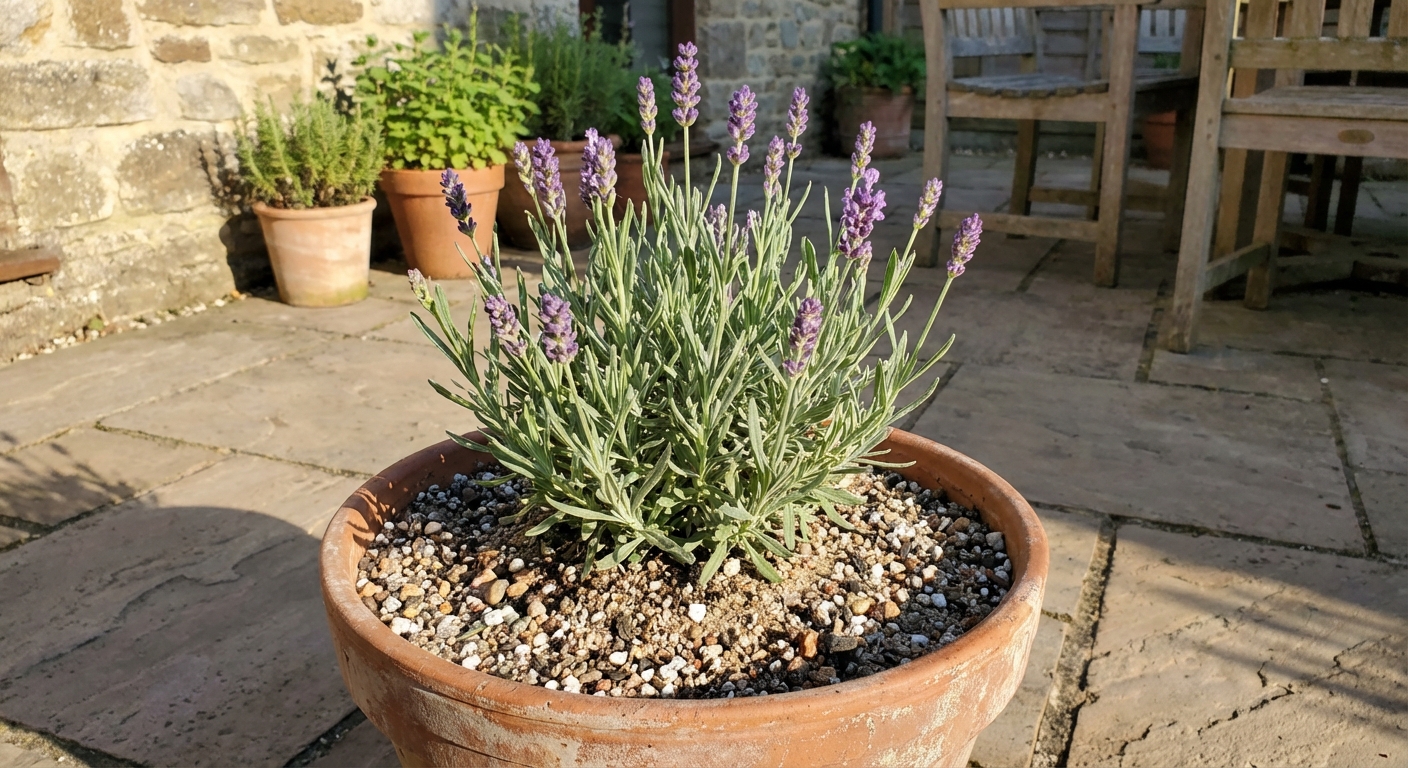
- Pot size: start with at least a 12 to 16 inch wide container for one plant. Bigger pots buffer temperature swings and dry out more evenly.
- Material: terracotta breathes and helps prevent soggy soil. Glazed pots work too, but be extra mindful of watering.
- Drainage hole: non-negotiable.
- Potting mix: use a high-quality potting mix and add 30 to 40 percent perlite, pumice, or fine gravel for faster drainage.
Container watering rhythm
Water deeply, then let the top few inches dry. In summer heat, that may be every few days. In spring and fall, it may be weekly or less. If you are unsure, wait a day. Lavender forgives drought far better than soggy roots.
Planting in the ground
Plant lavender in spring after the last hard frost, or in early fall where winters are mild. The goal is to give roots time to settle without sitting in cold, wet soil.
Spacing and airflow
- English lavender: space about 18 to 24 inches apart
- Lavandin: space about 24 to 36 inches apart
That airflow is not just aesthetics. It helps prevent fungal issues, especially in humid regions.
Planting steps
- Dig a hole about as deep as the root ball and a bit wider.
- Rough up circling roots gently so they can grow outward.
- Set the plant so the crown sits slightly above grade.
- Backfill with your native soil amended for drainage if needed.
- Water once to settle soil, then let it dry between waterings.
Watering and feeding
Once established, lavender is wonderfully low maintenance.
Watering guidelines
- First season: water when the top few inches of soil are dry. The first year is about root building.
- Established plants: water during prolonged drought or extreme heat, especially in sandy soils and containers.
- Avoid overhead watering: wet foliage plus poor airflow invites problems.
Do you need fertilizer?
Usually, no. Lavender in rich soil grows soft and leafy, then flops and blooms less. If your soil is extremely poor, top dress lightly with compost in spring, keeping it away from the crown.
Pruning for long life
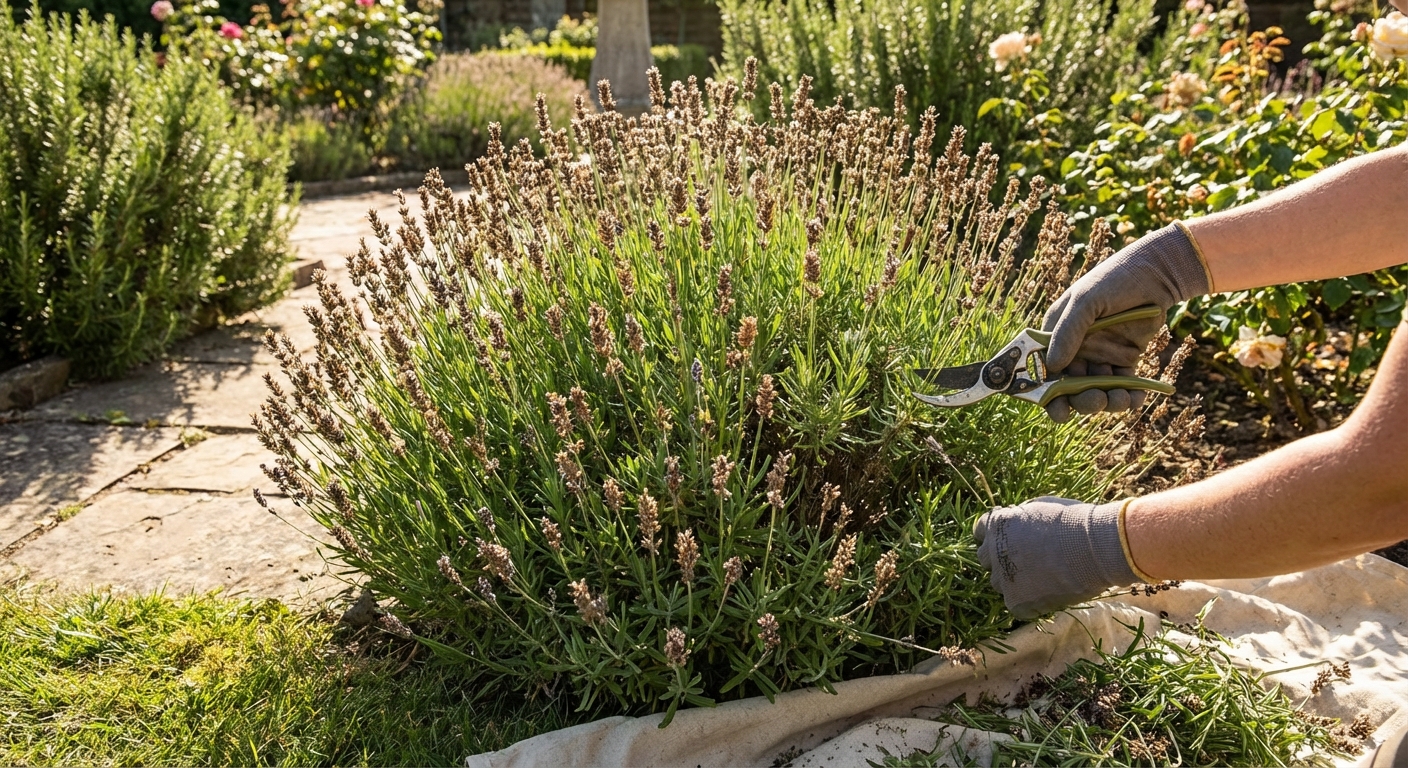
Pruning is where lavender goes from “cute for a year” to “beautiful for a decade.” The goal is a tidy, rounded mound with lots of young growth. Lavender gets woody with age, and pruning helps delay that.
When to prune
- After the main bloom: shear off spent flower stems and a bit of green growth to keep it compact.
- In early spring: do a shaping prune once you see fresh green growth starting.
How much to cut back
Cut back about 1/3 of the green growth. Try not to cut into old, leafless wood, especially on older plants, because lavender does not always resprout from bare wood.
A simple method
- Gather stems in your hands like you are giving the plant a gentle ponytail.
- Snip across the top to remove blooms and soften the outline.
- Step back, rotate around the plant, and round the sides.
Lavender responds best to regular, light shaping rather than one big rescue haircut.
Overwintering
Winter success with lavender is mostly about avoiding wet roots and freeze-thaw stress.
In the ground
- Choose hardy types: English lavender is your safest bet in colder zones.
- Skip heavy organic mulch at the crown: it can trap moisture. Use gravel mulch instead.
- Protect from wind: in very exposed sites, a simple burlap windbreak helps prevent drying out.
- Do not prune hard in late fall: leave a little structure to protect the plant. Save shaping for spring.
In containers
- Option 1: Move pots to an unheated garage, shed, or cold frame where temperatures stay above about 20 to 25°F. Water sparingly, just enough to keep roots from fully desiccating.
- Option 2: Sink the pot into the ground for winter insulation, then pull it back out in spring.
- Option 3: In mild climates, group pots against a sheltered wall and wrap containers with burlap to reduce freeze-thaw stress.
A quick container note: repeated freeze-thaw is what cracks pots, especially terracotta. If your winters swing wildly, protect the pot as much as the plant. And while we are here, indoor living room overwintering is usually a struggle because lavender wants cool temperatures and bright sun. If you bring it inside, put it in your sunniest window and keep watering light.
Common problems
Yellow leaves and limp growth
- Most common cause: overwatering or poor drainage
- Fix: reduce watering, improve drainage, switch to a grittier mix in containers, or replant on a mound
Splitting open in the middle
- Cause: not enough sun, not enough pruning, or too much nitrogen
- Fix: prune for a tighter mound and avoid fertilizer
Few blooms
- Cause: shade, overfeeding, or pruning at the wrong time
- Fix: increase sun, stop fertilizing, prune after flowering and lightly in spring
Root rot
- Cause: consistently wet soil, especially in winter
- Fix: improve drainage and consider containers or raised beds; sadly, severely rotted plants usually do not recover
Spittlebugs and aphids
- What you will see: frothy “spit” on stems (spittlebugs) or clusters of small insects on tender tips (aphids)
- Fix: hose off with a strong spray of water, remove heavily infested tips, and focus on sun and airflow. Lavender usually shrugs off minor pests when it is not stressed.
Fungal issues in humidity
- What you will see: leaf spot, grayish mold, or stems dying back after wet weather
- Fix: improve airflow, avoid overhead watering, prune lightly for an open shape, and use mineral mulch instead of bark around the crown.
Harvesting
Harvesting is the fun part, when you bring that whole sunny, herbal feeling indoors. Timing matters for scent, color, and flavor.
When to harvest
- For drying and sachets: harvest when buds are plump and just starting to open, usually when about 10 to 30 percent of the florets have opened.
- For fresh bouquets: harvest when more flowers are open for maximum show.
- For cooking: choose English lavender and harvest buds just before full bloom for the sweetest flavor.
How to harvest
- Cut stems in the morning after dew dries, before the heat of the day.
- Use clean snips and cut above a set of leaves, leaving green growth behind.
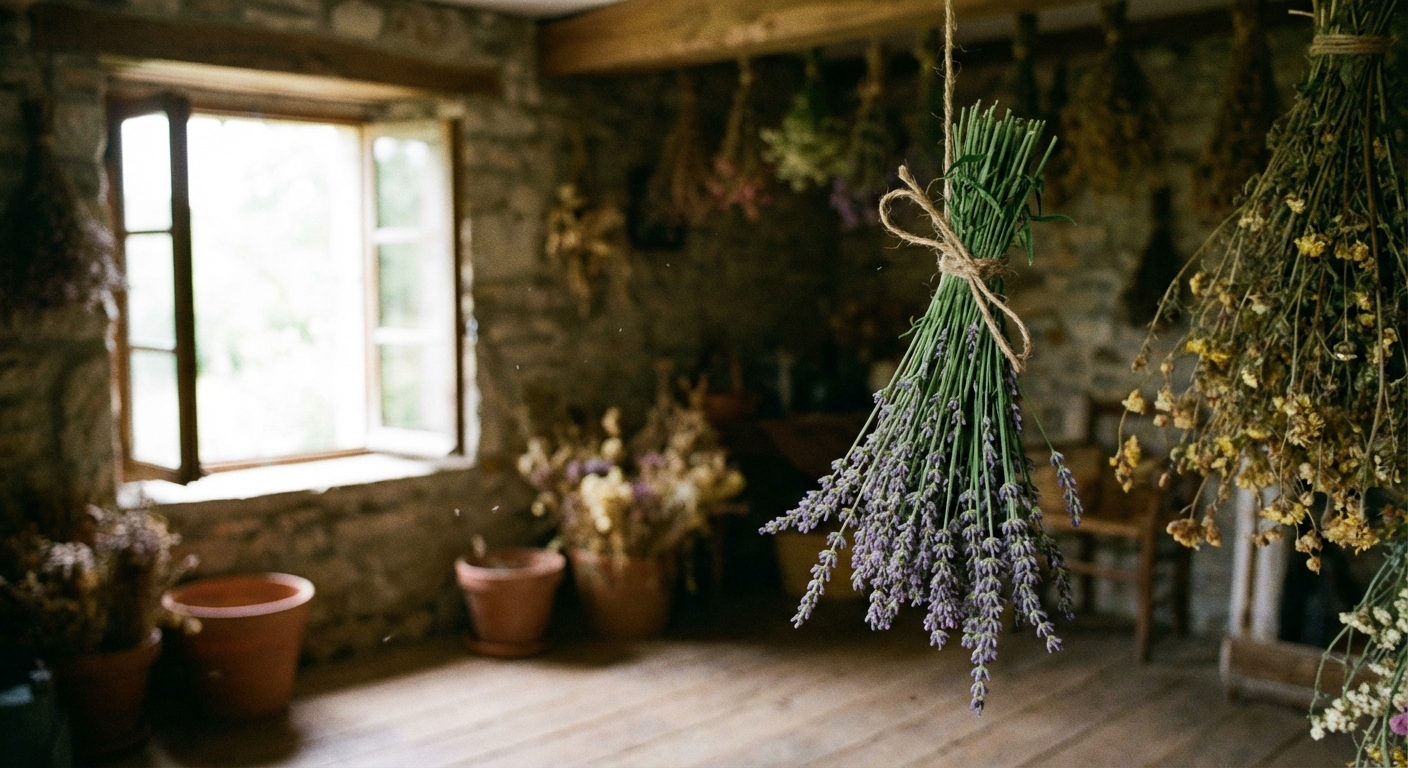
- Bundle stems loosely with a rubber band or twine.
- Hang bundles upside down in a dark, airy place for 1 to 2 weeks.
Storing dried lavender
- Strip buds into a clean, dry jar with a tight lid.
- Store away from light and heat to preserve fragrance and color.
Using lavender in food
Use Lavandula angustifolia (English lavender) for culinary uses, and start small. Lavender is powerful, and a little goes a long way.
- Best practice: choose food-grade culinary lavender, or harvest from plants you have grown without pesticides that are not labeled for edibles.
- Easy ideas: lavender sugar, shortbread cookies, honey infusion, lemon lavender tea
- Quick tip: if a recipe tastes “soapy,” you likely used too much or used a more camphor-scented variety.
Propagation and lifespan
Easy propagation
If you fall in love with a particular plant, take cuttings. It is the easiest way to make a “backup” that matches the parent.
- In late spring or early summer, snip 3 to 5 inch non-flowering stems.
- Strip the lower leaves, dip in rooting hormone if you have it, and stick into a gritty mix (half potting mix, half perlite or pumice).
- Keep lightly moist (not wet) in bright shade until rooted, then gradually move into more sun.
How long lavender lasts
Even with great care, many lavenders look their best for about 5 to 10 years. In humid climates or winter-wet soils, they can be shorter-lived. Regular pruning helps, but it is normal to refresh a planting over time.
Care checklist
- Sun: 6 to 8+ hours daily
- Soil: lean and fast-draining, slightly alkaline if possible
- Water: deep but infrequent, let soil dry between
- Prune: shape after bloom, tidy in spring, avoid cutting into bare wood
- Winter: protect from wet, consider containers in cold climates, reduce freeze-thaw stress
- Harvest: buds just starting to open for best drying and scent
If you remember just one thing, let it be this: lavender is not impressed by rich soil or constant attention. Give it sunshine, airflow, and drainage, then step back and let it do what it does best.