How to Grow Hydrangeas

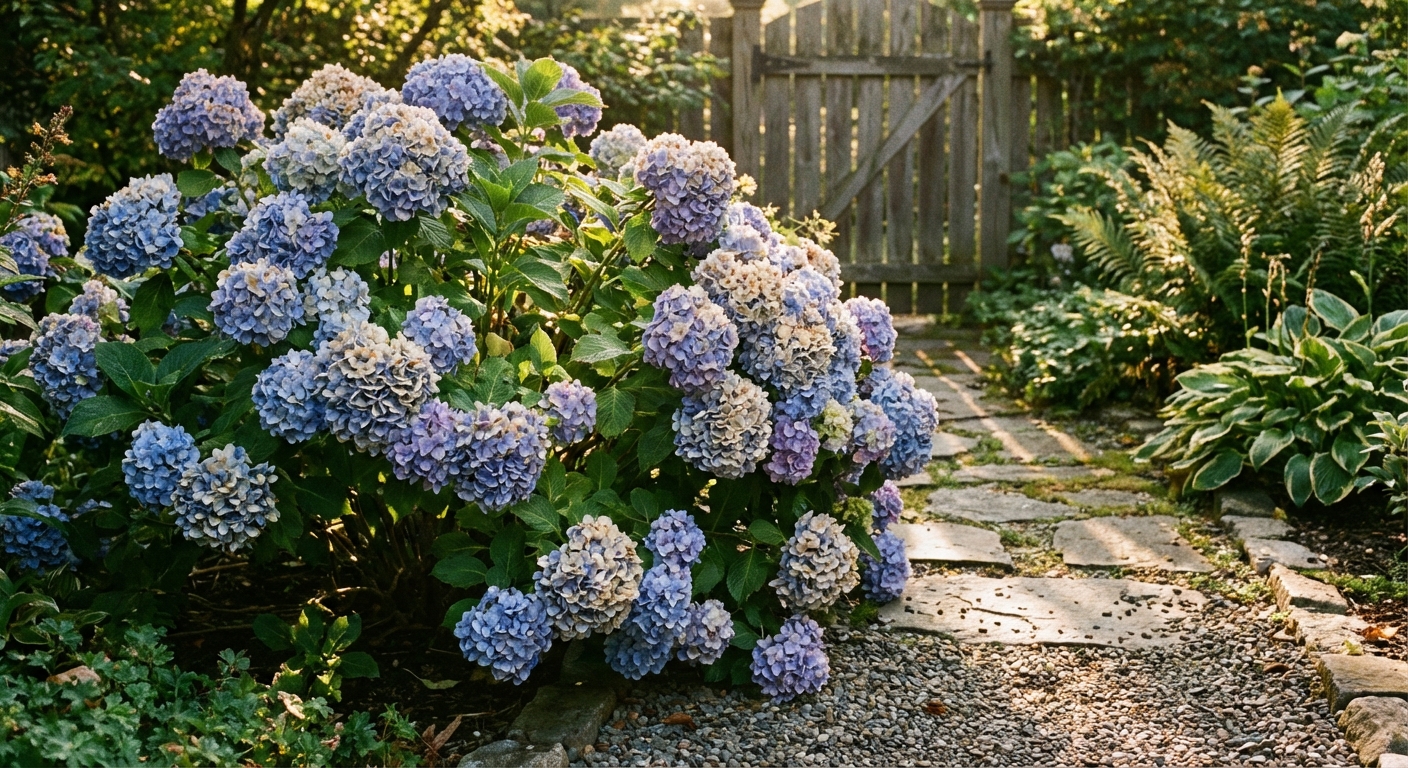
Hydrangeas are the kind of shrub that make people stop mid-walk and stare. Big, blousy flower heads, lush leaves, and that dreamy cottage-garden energy even if your “cottage” is a second-floor balcony with two pots and a hopeful heart.
The secret to easy hydrangeas is not a mysterious green thumb. It is matching the right type to your space, planting them where they are comfortable, and pruning only when it truly helps. Then, if you want to get a little witchy in the best way, you can play with bloom color by adjusting soil acidity.
Meet the main hydrangea types
When someone says “hydrangea,” they might mean a few different species. The pruning rules and sun tolerance change depending on which one you have, so this step matters.
Mophead hydrangea (Hydrangea macrophylla)
- Flowers: Big round “snowball” clusters.
- Color: Often changes between pink and blue depending on soil pH and aluminum availability.
- Best for: Part shade gardens, coastal climates, and anyone who wants classic hydrangea looks.
- Pruning note: Many bloom on old wood (last year’s stems), so timing is crucial.
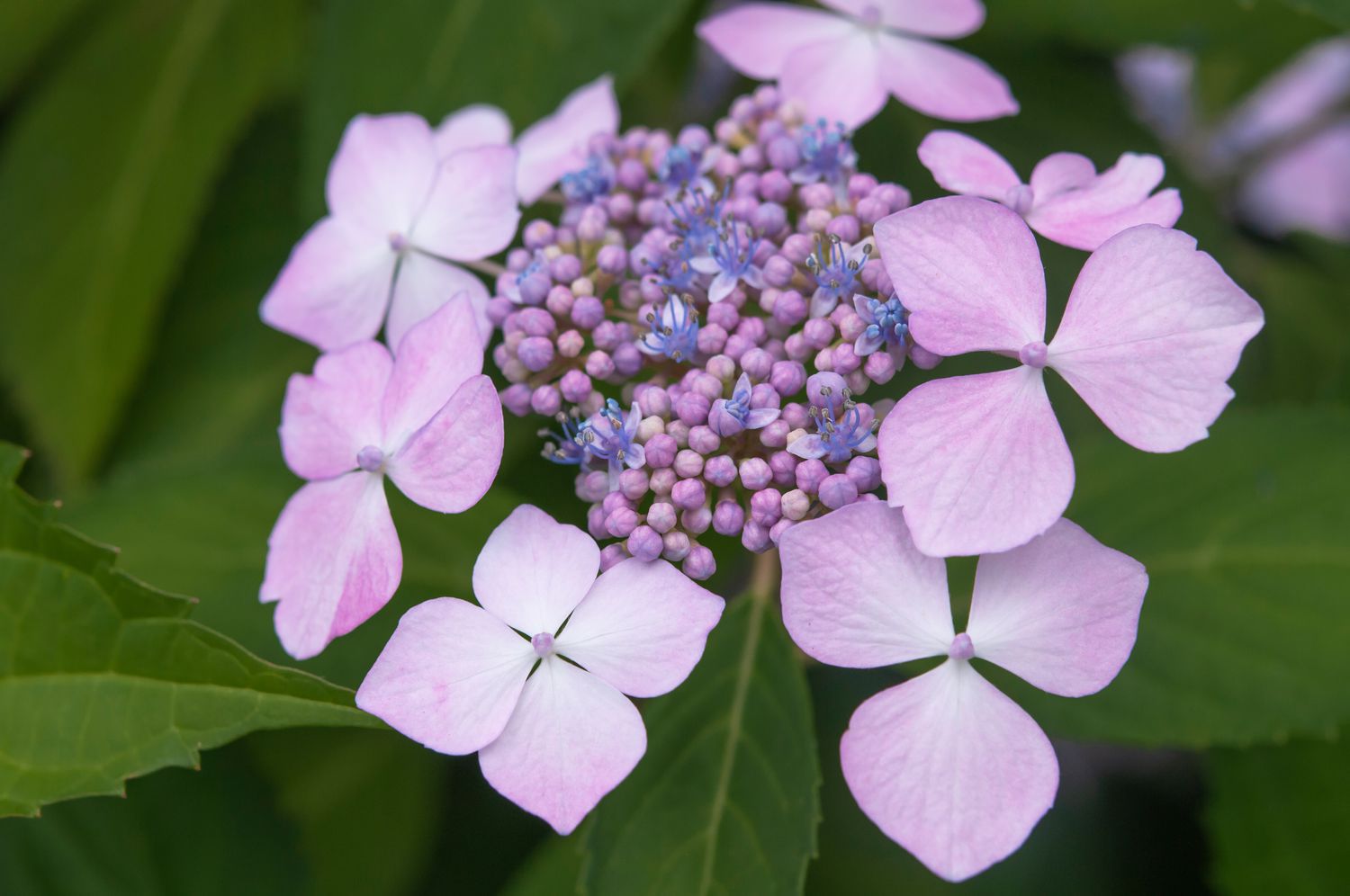
Lacecap hydrangea (Hydrangea macrophylla, lacecap forms)
- Flowers: Flatter clusters with tiny fertile flowers in the center and showy florets around the edge.
- Color: Also pH sensitive like mopheads.
- Best for: A slightly wilder, more natural look, and pollinator-friendly gardens.
- Pruning note: Usually the same “old wood” caution as mopheads.
Panicle hydrangea (Hydrangea paniculata)
- Flowers: Cone-shaped clusters that often age from white to blush pink.
- Color: Not truly pH-changeable like mopheads. Their shift is driven by cultivar and bloom age, not soil chemistry.
- Best for: Colder zones, sunnier spots, and gardeners who want a forgiving shrub.
- Pruning note: Blooms on new wood (this year’s growth), so it is much more prune-friendly.
Smooth hydrangea (Hydrangea arborescens)
- Flowers: Big rounded clusters, often white or green-tinted (think ‘Annabelle’ style).
- Color: Not a pH color-changer like bigleaf types.
- Best for: Cold climates, woodland edges, and gardeners who want a reliable bloomer.
- Pruning note: Blooms on new wood. You can prune in late winter or early spring.
Oakleaf hydrangea (Hydrangea quercifolia)
- Flowers: Cone-shaped blooms, plus gorgeous oak-shaped leaves and strong fall color.
- Color: Blooms typically age from white to pink tones depending on cultivar and season.
- Best for: Part shade, woodland gardens, and anyone who wants four-season drama.
- Pruning note: Typically blooms on old wood, so prune right after flowering if needed.
If you are not sure what you have, a quick clue is flower shape. Round balls often suggest mophead, flat “doily” clusters often suggest lacecap, and cones often suggest panicle or oakleaf.
Where hydrangeas grow best (zones 3 to 9)
Across the different hydrangea species, you can grow them in USDA zones 3 to 9. The key is matching the type to your winters and summers. Panicle hydrangeas can be hardy down to zone 3, while bigleaf hydrangeas (mophead and lacecap) are typically happiest in milder zones and may need winter protection in colder areas.
Light
- Mophead and lacecap: Aim for morning sun and afternoon shade. In hotter climates, they appreciate bright shade all day.
- Panicle: Can handle more sun. In cool climates they often bloom best in full sun. In warmer climates, give them afternoon shade if leaves look stressed.
- Smooth: Full sun to part shade. In hot regions, part shade keeps leaves happier.
- Oakleaf: Part shade is the sweet spot, especially where summers are intense.
My favorite “goldilocks” placement is east-facing: gentle sun early, then shade when the day turns spicy.
Soil
Hydrangeas want soil that stays evenly moist but never swampy. Think of a wrung-out sponge, not a wet towel.
- Texture: Loam is perfect, but you can improve most soils with compost.
- Organic matter: Compost is your best friend for root health and bloom power.
- Drainage: If water sits longer than a few hours after rain, consider planting on a slight mound or improving the soil structure.
Soil pH basics
For bigleaf hydrangeas (mophead and lacecap), pH influences how the plant can access aluminum in the soil. That aluminum is what helps shift pigment toward blue. If your soil has very little aluminum to begin with, pH changes alone may not create dramatic blues.
- More acidic soil (about pH 5.0 to 5.5): more likely to produce blue blooms.
- More neutral to slightly alkaline soil (about pH 6.0 to 7.0): more likely to produce pink blooms.
White hydrangeas do not reliably change color with pH. Panicles mostly do their own thing.
Planting hydrangeas step by step
Hydrangeas are surprisingly easy to plant well, and planting well is half the battle. The other half is watering during the first season while roots settle in.
Best time to plant
- Spring: Ideal in cold-winter regions. Gives roots a full season to establish.
- Fall: Great in mild-winter regions. Cooler temps reduce stress and watering needs.
Spacing
Crowding is the quiet hydrangea saboteur. Give your plant room to reach its mature size, and leave space for airflow so leaves dry faster after rain. Check the plant tag for mature width and use that number as your minimum spacing guide.
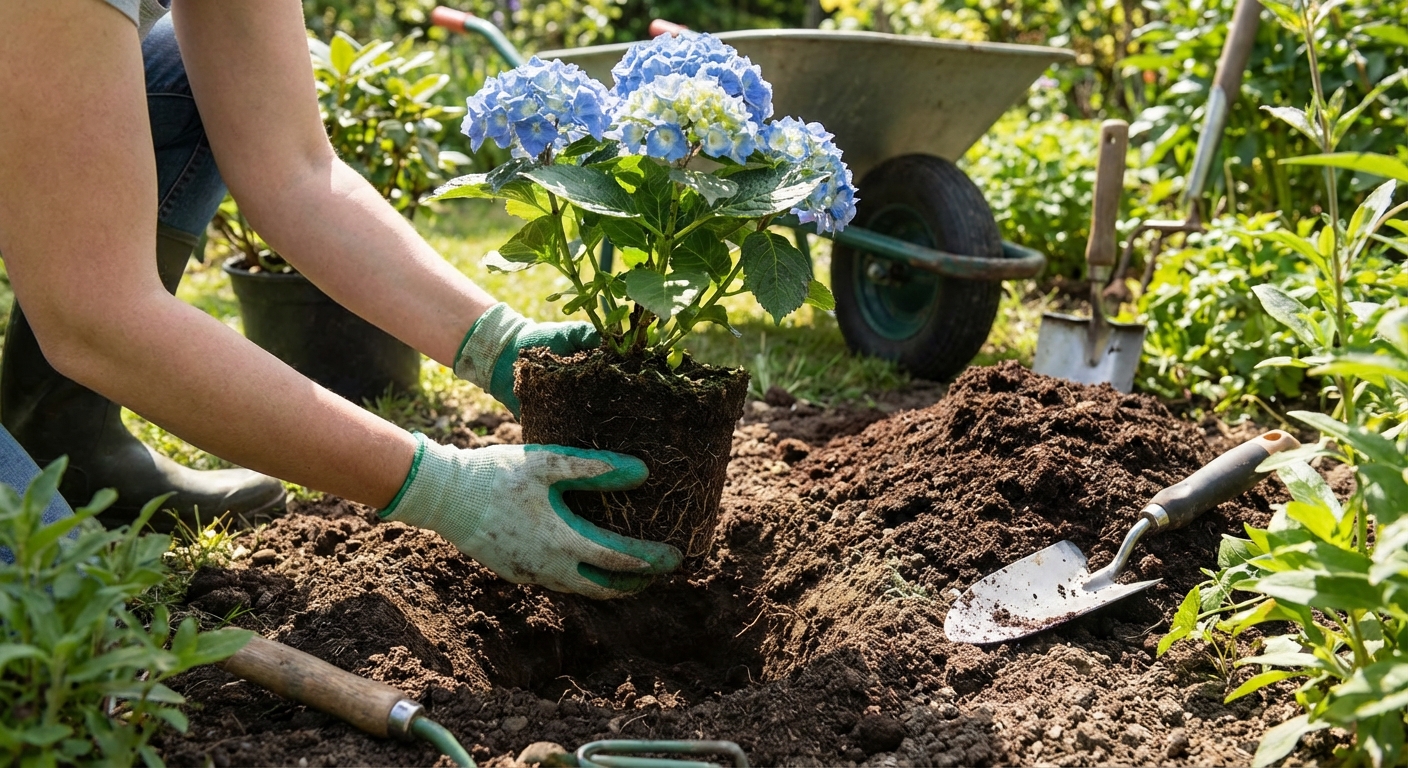
How to plant (ground)
- Choose the right spot based on your variety’s sun needs.
- Dig a wide hole about 2 to 3 times the width of the root ball, and about the same depth.
- Loosen the roots if the plant is pot-bound. Gently tease or slice the outer roots in a few places.
- Set the plant at the right height. The top of the root ball should sit level with the surrounding soil, not buried.
- Backfill with native soil plus compost. A simple blend is 80 percent native soil and 20 percent finished compost.
- Water deeply to settle soil around roots.
- Mulch 2 to 3 inches with shredded leaves, bark, or pine needles, keeping mulch a few inches away from the stems.
How to plant (containers)
Yes, hydrangeas can live in pots, especially compact bigleaf cultivars and some panicles. Choose a container with drainage holes and go larger than you think. Hydrangeas hate drying out.
- Pot size: Start with at least 16 to 20 inches wide for most varieties.
- Soil: Use high-quality potting mix with compost added. Avoid heavy garden soil in pots.
- Water: In summer, you may water daily. I know. They are thirsty divas.
Watering and feeding
Watering
Hydrangeas are shallow-rooted shrubs, so they feel drought quickly.
- Newly planted: Water deeply 2 to 3 times per week for the first few weeks, then weekly depending on rain and heat.
- Established: Deep soak weekly in dry weather. More often in heat waves or sandy soil.
- Tip: Morning watering is best. Wet leaves overnight can encourage fungal disease.
Fertilizing
Too much nitrogen can mean enormous leaves and fewer flowers. I aim for “steady and gentle.”
- In-ground: Top-dress with compost in spring. If needed, add a balanced slow-release fertilizer in early spring.
- Containers: Use a slow-release fertilizer labeled for flowering shrubs, or a diluted liquid feed during active growth.
If your hydrangea looks healthy but refuses to bloom, the culprit is often pruning timing, winter bud damage, or too much shade, not a lack of fertilizer.
Pruning hydrangeas
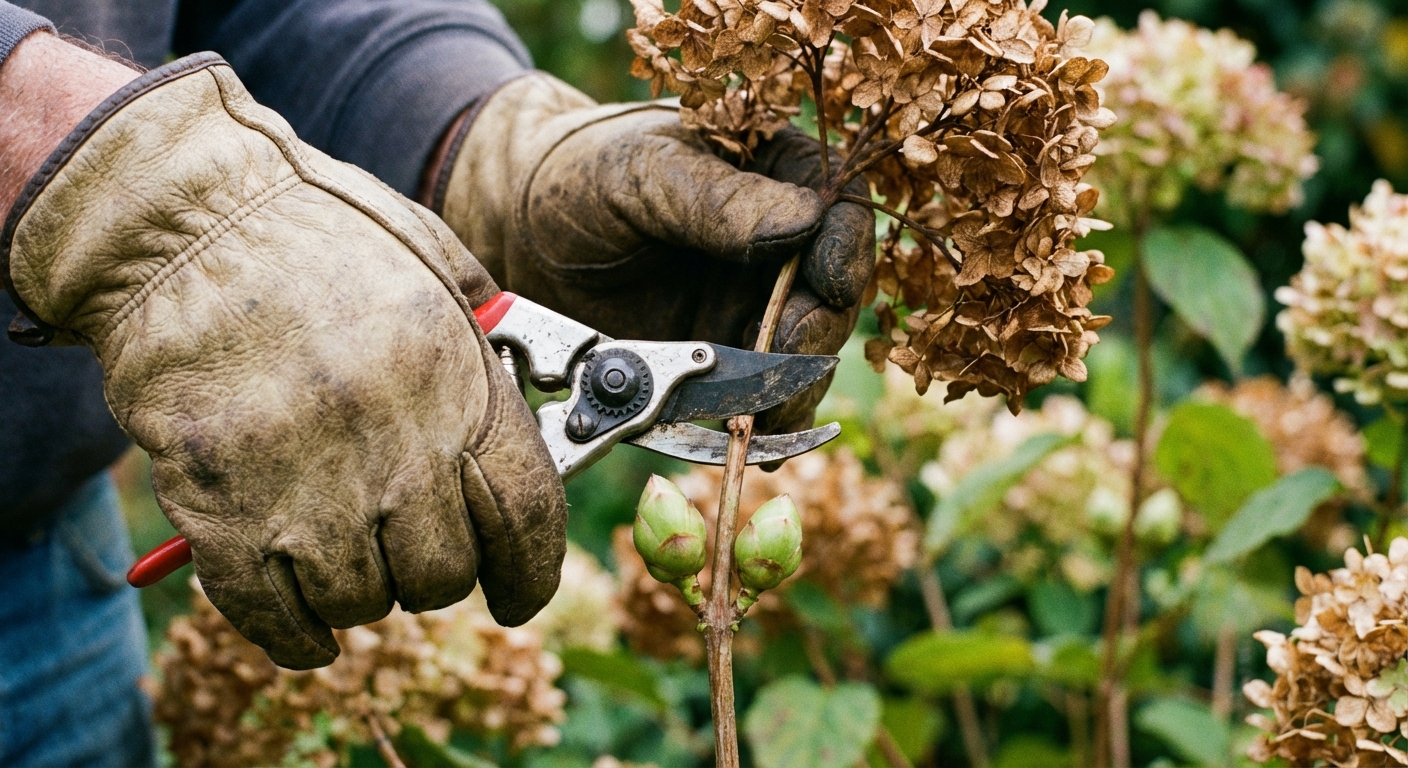
This is where most hydrangea heartbreak happens, so let us make it gentle and clear. The main question is: Does your hydrangea bloom on old wood or new wood?
Old wood bloomers
Old wood means the flower buds were formed on last year’s stems. If you cut those stems at the wrong time, you cut off this year’s blooms.
- Often includes: Mophead, lacecap, and oakleaf hydrangeas.
- When to prune: Right after flowering, usually mid to late summer.
- What to prune: Remove spent blooms, and only shape lightly. Take out dead or damaged stems anytime.
- How much: Minimal. Think tidy, not haircut.
Clara rule: If you are not sure and it is early spring, put the pruners down and back away slowly.
New wood bloomers
New wood means flowers form on fresh growth in the current season. These are the forgiving ones.
- Often includes: Panicle and smooth hydrangeas.
- When to prune: Late winter to early spring, before new growth takes off.
- What to prune: Remove weak, crossing, or crowded stems. You can shorten stems to encourage strong new shoots.
- How much: Often 1/3 is safe. Hard pruning can be done for size control, but it may produce fewer, larger blooms on strong shoots.
Reblooming varieties
If you have a modern rebloomer (like the Endless Summer series), you are dealing with a plant that can flower on old and new wood. Translation: it is more likely to bloom even after winter damage, but you can still prune away early-season flowers if you get too snip-happy.
- Best approach: In early spring, remove only dead wood and do light shaping.
- After the first flush: You can lightly deadhead and tidy to encourage more blooms.
Quick pruning cheat sheet
- Mophead and lacecap: Prune after flowering, lightly (unless reblooming, then go extra gentle in spring).
- Oakleaf: Prune after flowering, lightly.
- Panicle and smooth: Prune late winter or early spring, more confidently.
Hydrangea color guide
Let us talk about the magic trick. Color shifting mostly applies to bigleaf hydrangeas (mophead and lacecap). Panicles typically bloom white and then blush as the season progresses, and that change is not controlled by pH in the same way.
What changes bloom color
In bigleaf hydrangeas, bloom color is influenced by:
- Soil pH (acidity vs alkalinity)
- Available aluminum in the soil
- Plant genetics (some cultivars shift more dramatically than others)
Some cultivars are bred to stay reliably pink, red, or purple and may not swing wildly no matter how much you fuss with the soil. Also, expect a slow transition. Color change usually shows up over a season, sometimes two, because you are altering the soil environment, not painting petals.
How to turn hydrangeas blue
Aim for acidic soil, roughly pH 5.0 to 5.5, and supply a form of aluminum the plant can access.
- Use: Aluminum sulfate is the classic option for bluer blooms.
- Support with: Organic mulches that gently acidify over time, like pine needles or leaf mold.
How to turn hydrangeas pink
Aim for a higher pH, roughly pH 6.0 to 6.5, which reduces aluminum availability.
- Use: Garden lime (dolomitic lime is common) to raise pH gradually.
- Avoid: Adding aluminum sulfate if you are chasing pinks.
Purple blooms
Purple is usually the happy middle: soil that is neither strongly acidic nor strongly alkaline, and cultivars that like to show off a gradient.
Soil amendments for color
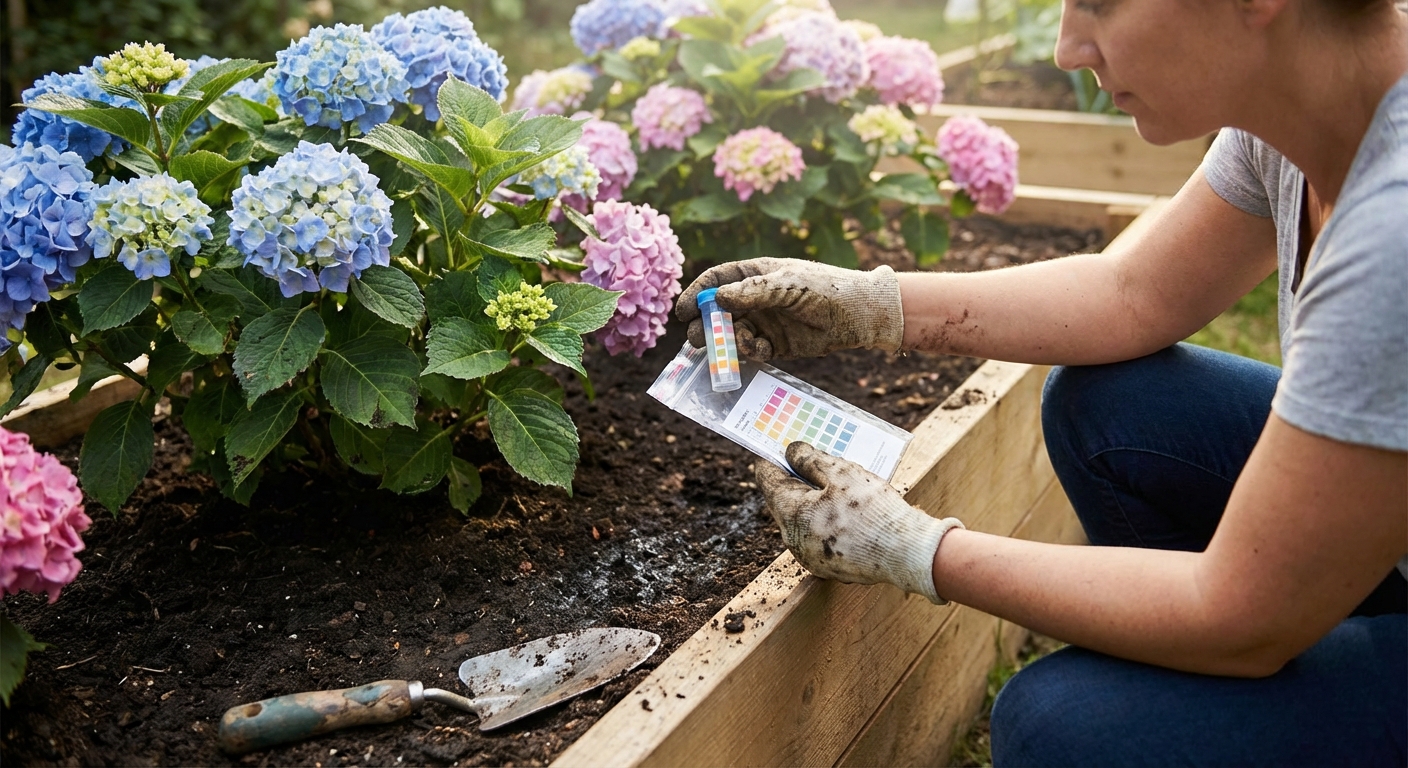
Before you amend anything, test your soil. A basic home pH test kit works, and your local extension office can do more detailed tests if you want to get fancy. Also, always read and follow label directions for any product you use. Soil type, existing pH, rainfall, and plant size all change what “the right amount” looks like.
Recipe A: Nudge blooms toward blue
- What you need: Aluminum sulfate, finished compost, water
- Mild starting mix: Dissolve 1 tablespoon aluminum sulfate in 1 gallon of water.
- Apply: Drench the soil around the drip line (not the leaves) once every 4 weeks in spring and early summer, for up to 3 applications.
- Top-dress: Add a 1 inch layer of compost and mulch to keep moisture even.
Safety and sanity notes: This is a gentle starting point for one established shrub, not a universal prescription. Do not overdo aluminum sulfate. More is not better. Excess salts can stress roots, especially in containers. If your plant is already stressed from heat or drought, focus on watering first, color second.
Recipe B: Nudge blooms toward pink
- What you need: Garden lime, finished compost, water
- Apply: Sprinkle 1 to 2 tablespoons of garden lime per square foot around the root zone in early spring, unless a soil test suggests otherwise.
- Water in: So it begins working into the soil.
- Re-test pH: After 6 to 8 weeks, then repeat lightly if needed.
If you are growing in containers, go extra gentle with amendments and always re-test. Pots change quickly, sometimes dramatically.
Seasonal care
Spring
- Top-dress with compost and refresh mulch.
- Water consistently as growth starts.
- Prune new wood bloomers (panicle and smooth) in late winter or early spring.
- Start color-change amendments early in the season if desired.
Summer
- Deep water during dry spells, especially during bloom.
- Deadhead if you like a tidy look (optional).
- Prune old wood bloomers right after flowering if shaping is needed.
Fall
- Keep watering until the ground freezes in cold zones.
- Stop fertilizing late in the season so plants can harden off.
- In windy or exposed spots, consider a protective mulch ring for winter.
Winter
- Do not prune bigleaf hydrangeas in winter unless removing dead wood.
- In colder zones, protect bigleaf buds with a thick mulch layer over the root zone and a breathable burlap windbreak if needed. Skip plastic coverings, they can trap moisture and cause trouble.
Troubleshooting
Lots of leaves, no flowers
- Most common causes: Pruned at the wrong time (old wood types), winter bud damage, too much shade, or heavy nitrogen feeding.
- Fix: Adjust pruning timing, move or thin for more light, feed gently, and protect buds in winter if you are on the edge of your zone.
Wilting in afternoon
- Cause: Heat stress, shallow roots, or dry soil.
- Fix: Deep water early, add mulch, and consider more afternoon shade.
Brown leaf edges
- Cause: Hot sun, wind, drought, or excess fertilizer salts.
- Fix: Shade from harsh afternoon sun, water consistently, and avoid over-fertilizing.
Flowers turn brown fast
- Cause: Intense sun, drought, or heavy rain battering blooms.
- Fix: More consistent moisture and a slightly more protected planting spot.
Pet safety
Hydrangeas can be toxic to pets if eaten. If you have a dedicated leaf-snacker, consider placement, barriers, or choosing a different shrub for that spot.
Hydrangea checklist
- Pick the right type for your climate and sun.
- Plant in rich, well-drained soil and mulch like you mean it.
- Water deeply and consistently, especially the first year.
- Give the plant space for airflow and mature size.
- Prune based on old wood vs new wood, not the calendar alone.
- If you want blue or pink, test soil pH first and adjust slowly (and gently).
If you take nothing else from me, take this: hydrangeas are forgiving when their roots are comfy. Start with soil health and steady moisture, and the blooms will usually follow.