
How to Grow Dahlias from Tubers

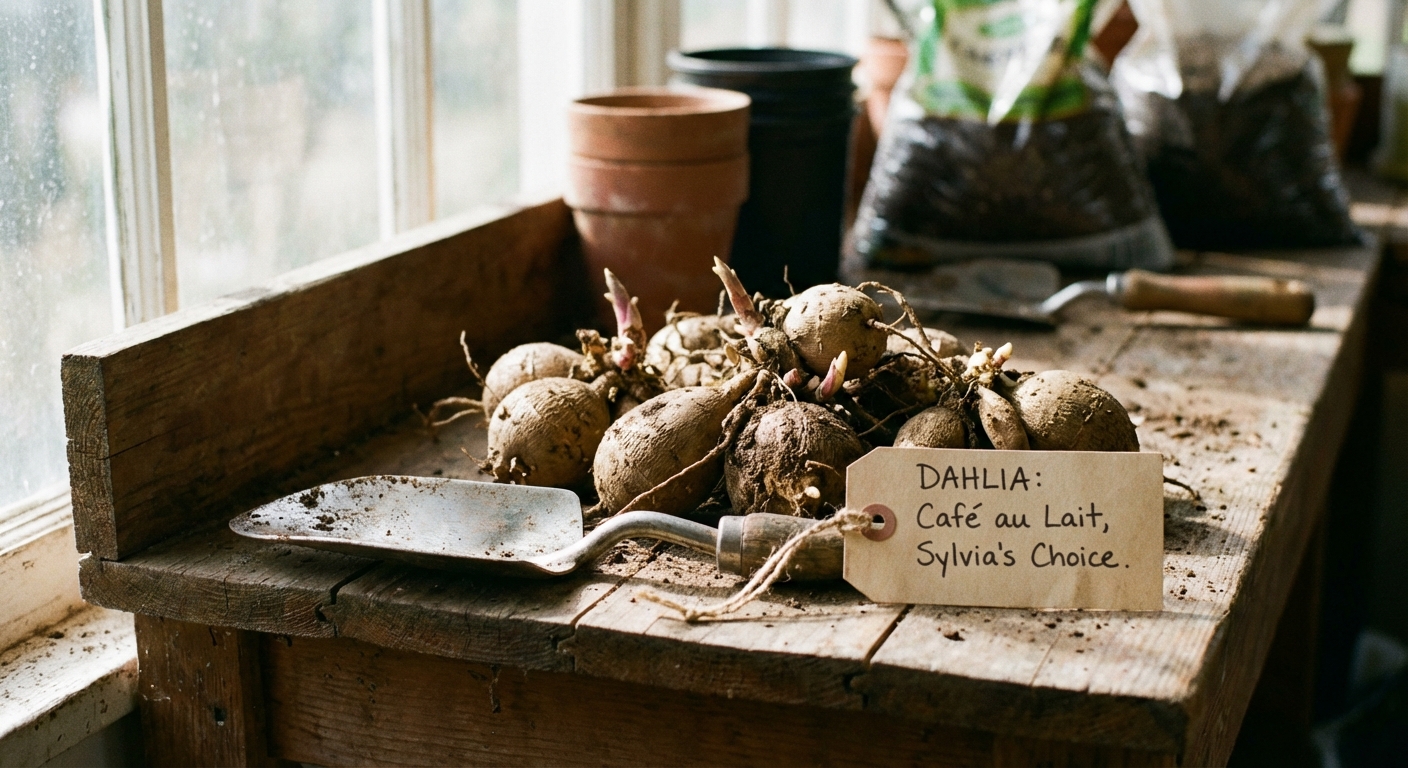
Dahlias are the kind of flower that makes you stop mid-walk and stare. Dinner-plate blooms the size of your face, pom-poms that look too perfect to be real, and colors that seem to glow at dusk. Best of all, you can grow them from tubers with a little timing, a little support, and a whole lot of sunshine.
I like to think of a dahlia tuber as a sleepy little battery. Plant it right, wake it up gently, and it will pay you back all summer with armfuls of blooms.
What a dahlia tuber is (and why the neck matters)
Dahlias grow from tubers, which are swollen underground storage roots. A tuber looks a bit like a clump of tan carrots attached together. The important detail is this: new growth comes from the crown, where the tubers join, and especially from the neck connecting each tuber to the crown.
- Crown: the central, knobby top where last year’s stem was attached.
- Eye: a small bud on the crown that will sprout.
- Neck: the narrow connection between a tuber and the crown. If it snaps off, that individual tuber often will not sprout.
If you are buying tubers, choose firm ones with an intact crown. If you are dividing your own, we will cover how to do it safely later.
When to plant dahlia tubers
Dahlias hate cold soil. Plant too early and they can fail before they ever wake up. The sweet spot is:
- After your last spring frost.
- When soil is about 55 to 60°F a few inches down. I treat 60°F as the conservative, play-it-safe target.
- When nights are mostly above 50°F, which is a nice real-life rule of thumb.
In many areas, that means mid to late spring.
If you are itching to get a head start, you can pre-sprout tubers indoors in pots about 4 to 6 weeks before planting outside.
- Use a small pot (about 1 to 2 gallons) with a well-draining mix.
- Set tubers just under the surface, keep them on the dry side, and water lightly only when the mix is nearly dry.
- Give very bright light (a sunny window or grow light) so sprouts stay sturdy, not stretched.
Sun, soil, and bed prep (the bloom-makers)
Light
Dahlias want full sun, ideally 6 to 8 hours a day. In very hot climates, afternoon shade can prevent stress, but too much shade equals tall plants with fewer flowers.
Soil
The dream is soil that drains well but still holds moisture, like a wrung-out sponge. Heavy clay plus spring rains is a classic tuber trouble recipe, so improve drainage before planting.
- Aim for slightly acidic to neutral soil (around pH 6.5 to 7.0 is great).
- Loosen soil 10 to 12 inches deep so roots can explore.
- Mix in compost for structure and gentle nutrition.
Fertilizer, but keep it bloom-friendly
Dahlias need nutrients, but too much nitrogen makes lush leaves and fewer flowers. Before planting, I like to work in compost and, if needed, a balanced organic fertilizer or one a bit lower in nitrogen.
If you are unsure, choose something close to 5-10-10 or similar, and go easy. You can always feed later, but you cannot un-leaf a dahlia.
How to plant dahlia tubers step by step
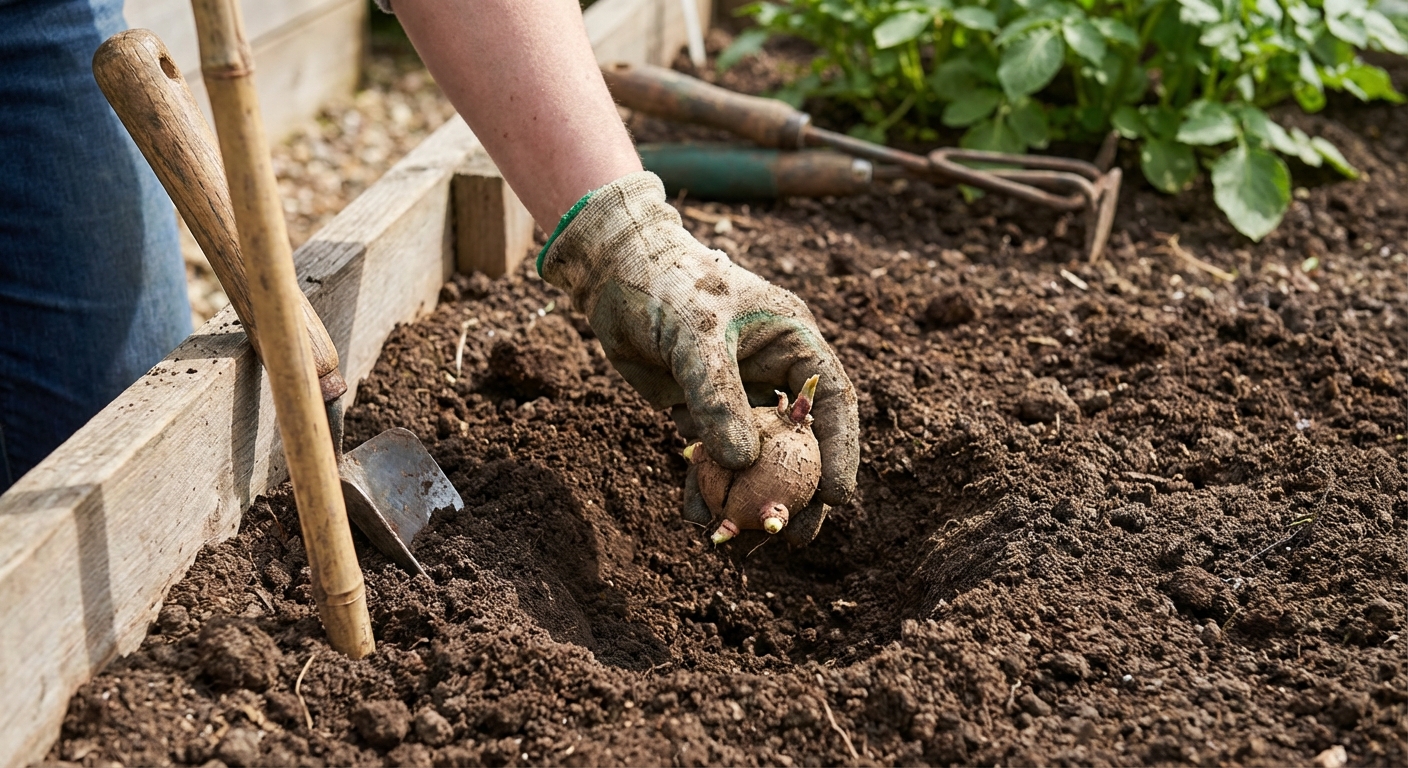
- Dig a hole about 4 to 6 inches deep. In very sandy soil you can go a touch deeper. In heavy soil, stay closer to 4 inches.
- Add a stake now if the variety will be tall. Staking after sprouting risks spearing the tuber. (More on staking below.)
- Place the tuber:
- For a clump: lay it on its side with the crown and eyes oriented upward.
- For a single tuber: lay it horizontally with the eye or crown end slightly angled up. If you cannot find the eye, plant it anyway. It usually figures it out.
- Backfill with soil and gently firm it in. No need to tamp like you are setting a fence post.
- Water lightly once to settle soil, then pause on frequent watering until you see sprouts.
One important caveat: if your soil is very dry or sandy, do not let it turn to dust. Keep it barely, lightly moist while you wait for growth, not wet.
Label everything. Dahlias are famous for making us think we will remember. We will not. A simple variety tag saves so much confusion later.
Spacing
Dahlia spacing depends on their mature size, but overcrowding is one of the fastest ways to invite mildew and weak, floppy stems.
- Border and compact dahlias: 12 to 18 inches apart
- Medium dahlias: 18 to 24 inches apart
- Tall and dinner-plate types: 24 to 36 inches apart
If you are growing for cut flowers, wider spacing also makes it easier to walk around plants and harvest without snapping stems.
Quick note: “Dinner-plate” describes bloom size, not plant height. Plenty of dinner-plate varieties still grow tall and need strong support.
Staking and support
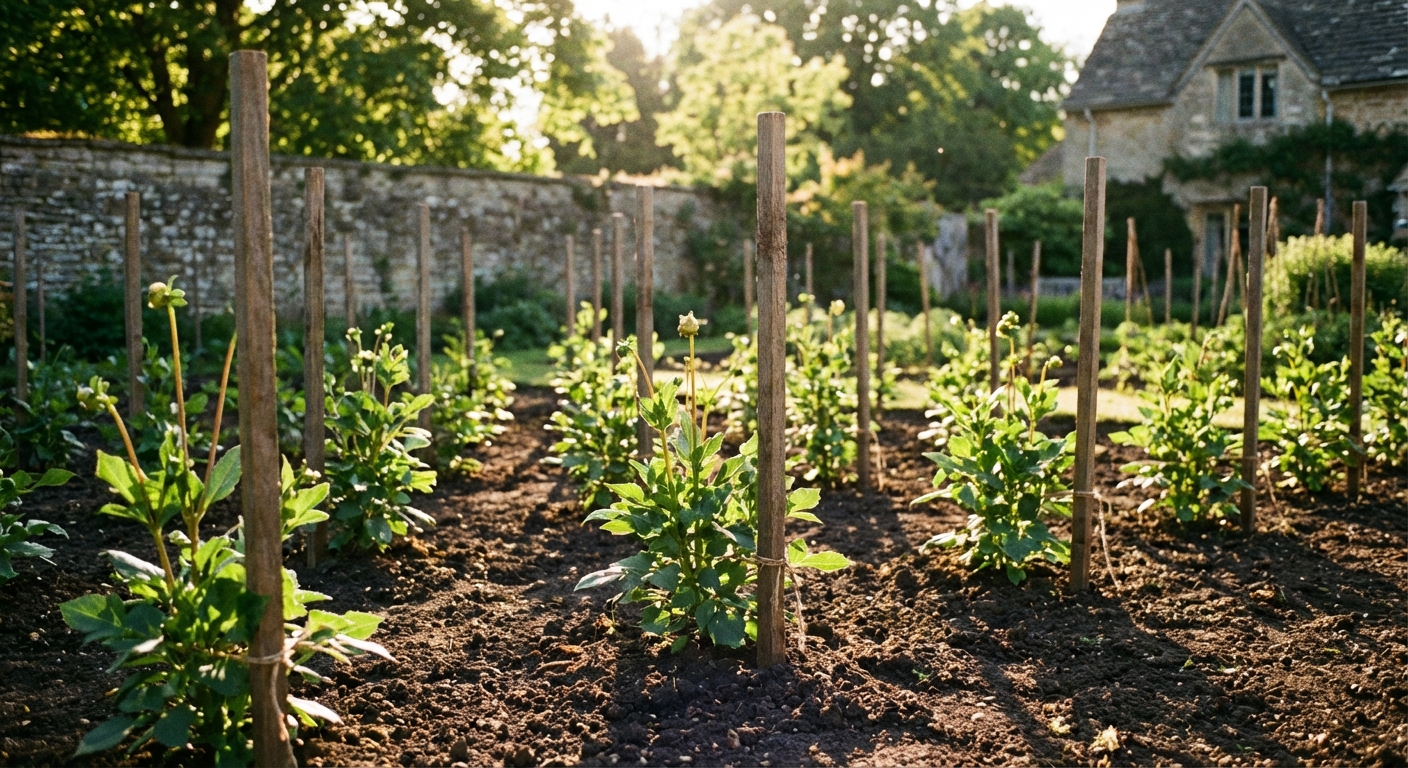
Many dahlias grow tall and top-heavy, especially once they start flowering. A summer storm can turn a proud dahlia into a sprawled mess in minutes.
Simple support options
- Single sturdy stake (wood, metal, or bamboo): tie stems loosely with soft garden tie.
- Tomato cage: works for shorter or bushy varieties, but choose a strong one.
- Corral method: several stakes around the plant with twine wrapped as it grows.
Install stakes at planting time. Tie stems as they grow, using a figure-eight tie so the stem does not rub.
Watering and mulching
Once sprouts are up and growing steadily, dahlias like consistent moisture. They do not want to sit in soggy soil, but they also resent drying out right when buds are forming.
- Water deeply when the top inch or two of soil is dry.
- Avoid overhead watering in the evening if powdery mildew is common in your area.
- Mulch after the soil warms with straw, shredded leaves, or untreated grass clippings. Mulch keeps roots cooler and reduces watering.
If you mulch too early in cold climates, you can slow soil warming. I usually wait until plants are 6 to 10 inches tall.
Pinching for more blooms
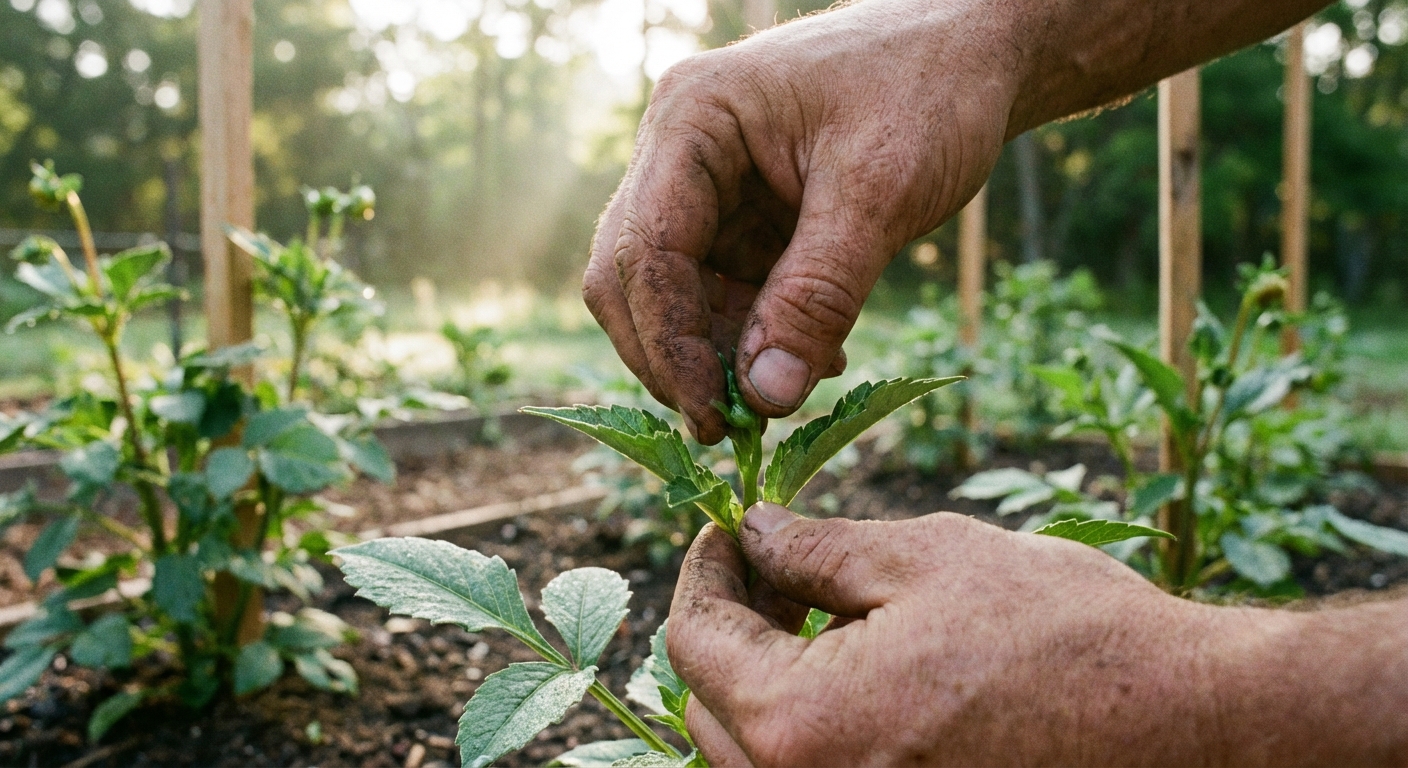
If you want more flowers, pinch early. It feels mean for about five seconds, then the plant branches and becomes a bloom machine.
When to pinch
When the main stem is about 12 to 16 inches tall and has 3 to 4 sets of leaves.
How to pinch
- Find the top growing tip.
- Snip or pinch it off just above a set of leaves.
- The plant will send out side shoots from below the pinch point.
Result: a bushier plant with more flowering stems. You might delay the first bloom slightly, but you will get many more over the season.
Feeding through the season
Dahlias are enthusiastic growers, especially in midsummer. If your soil is decent, compost at planting may be enough. If growth is pale, slow, or bloom production stalls, a light feeding helps.
- At 4 to 6 weeks after sprouting: side-dress with compost or use a low-nitrogen fertilizer.
- When buds appear: a bloom-leaning fertilizer can support flowering.
Skip heavy nitrogen. If your dahlia looks like a leafy shrub with no flowers, it is often being overfed or shaded, or both.
Deadheading and cutting flowers
Dahlias bloom more when you harvest and tidy. The plant is always choosing between making seeds and making more flowers. We want flowers.
- Deadhead spent blooms by cutting back to a leaf node or side bud.
- Cut for bouquets early morning or evening, and place stems in water right away.
- Cut deep into the plant when harvesting, which encourages longer stems and more branching.
A little quirky Clara tip: I talk to my dahlias while I deadhead. Not because they need it. Mostly because I do.
Common problems (and calm fixes)
Slugs and earwigs on young growth
These can chew new shoots quickly. Hand-pick at dusk, use traps, and keep mulch pulled back from tiny plants until they are sturdier. If slugs are a regular problem in your garden, protect sprouts early with a collar or an iron phosphate bait, used as directed.
Powdery mildew
Improve airflow with proper spacing, water at the base, and avoid excessive nitrogen. Remove heavily affected leaves and consider organic options like potassium bicarbonate sprays if needed.
Aphids
A strong spray of water often knocks them off. Ladybugs help. Insecticidal soap can be used if pressure is high.
No sprouts
Give it time. Cool soil slows everything down. If the area is very wet, check for rot. If it is warm and dry, a little moisture can help wake the tuber.
Skin sensitivity (optional but real)
Some gardeners find dahlia foliage irritating. If you are sensitive, gloves and long sleeves make cleanup and pinching more comfortable.
Overwintering: digging and storing tubers
If you live where winters freeze, dahlias usually will not survive in the ground. The good news is you can store tubers and replant them next year, which feels like getting free plants in spring.
In many climates, this is easiest to think of by zone: in USDA zones 7 and colder, most gardeners lift tubers for winter. In warmer zones, dahlias can sometimes overwinter in the ground with good drainage and a little protection, but cold snaps and wet winters can still cause losses.
When to dig
Wait until after a hard frost blackens the foliage, then dig within 1 to 2 weeks, weather permitting. You want time for the plant to move energy back into the tubers, but you also want to dig before prolonged wet or deep freezing conditions move in.
How to dig without heartbreak
- Cut stems down to 4 to 6 inches.
- Dig wide, about 8 to 12 inches away from the stem, so you do not slice tubers.
- Lift gently and shake off excess soil.
- Rinse if needed, then let tubers dry in a well-ventilated spot out of direct sun for 1 to 3 days.
Drying is important. Damp tubers in storage are an open invitation to rot.
How to store
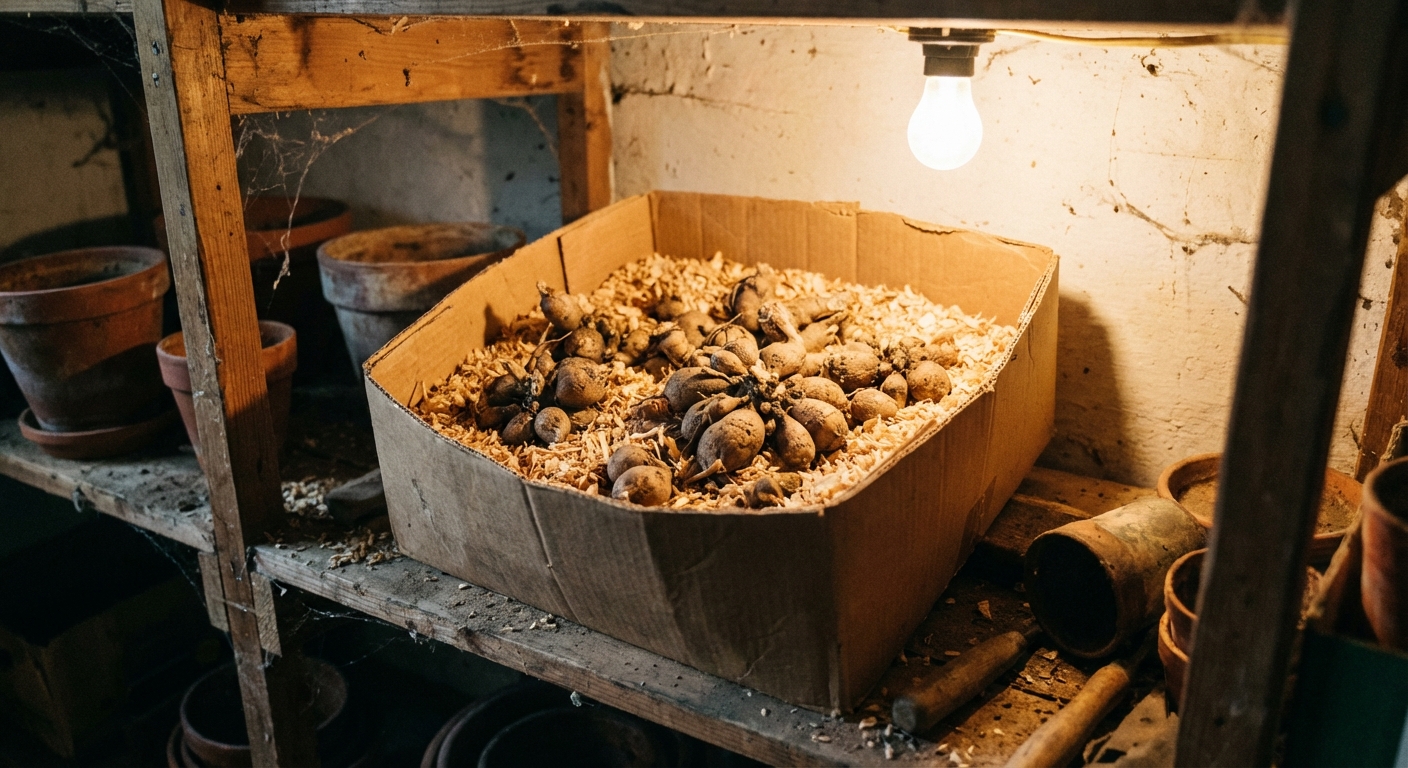
Store tubers in a cool, dark place that stays roughly 40 to 50°F with fairly high humidity (often around 70 to 80% RH). If you do not measure humidity, use this simple test: your packing material should feel barely damp, like it has a whisper of moisture, not wet.
- Place tubers in a box with slightly damp packing material like wood shavings, peat-free coco coir, or shredded paper.
- Do not seal them airtight. They need a little airflow.
- Check monthly. Remove any that are rotting, and lightly mist packing material if tubers are shriveling. If tubers look sweaty or soft, increase airflow and let the packing material dry a bit.
Dividing tubers for next season
Division is how you get more plants and keep clumps healthy. You can divide in fall right after digging or in spring before planting. I prefer spring because the eyes are often easier to spot once they start waking up.
Rules of a successful division
- Each division should have at least one eye on the crown.
- Each tuber must stay attached to a piece of crown via an intact neck.
- Use a clean, sharp knife or pruners.
Simple steps
- Inspect the clump and locate eyes on the crown.
- Slice the crown so each piece has an eye and at least one healthy tuber.
- Let cuts dry and callus for a day or two before storing or planting.
If you cannot see any eyes in fall, store the whole clump and divide in spring.
Quick planting checklist
- Plant after last frost in warmed soil (about 55 to 60°F).
- Full sun, compost-amended, well-draining soil.
- Hole 4 to 6 inches deep; clumps on their side, single tubers horizontal with the eye end slightly up.
- Stake at planting time for tall varieties.
- Water lightly at planting, then wait until sprouts to water regularly (keep barely moist in very dry soil).
- Pinch at 12 to 16 inches tall for more blooms.
- In freezing-winter areas (often zone 7 and colder), dig and store tubers after frost.
If you take nothing else from this page, take this: dahlias are generous. They forgive a lot, and they reward steady care. Plant them, support them, cut them often, and let them turn your summer into a bouquet.