
How to Grow Blueberries in Pots and Containers

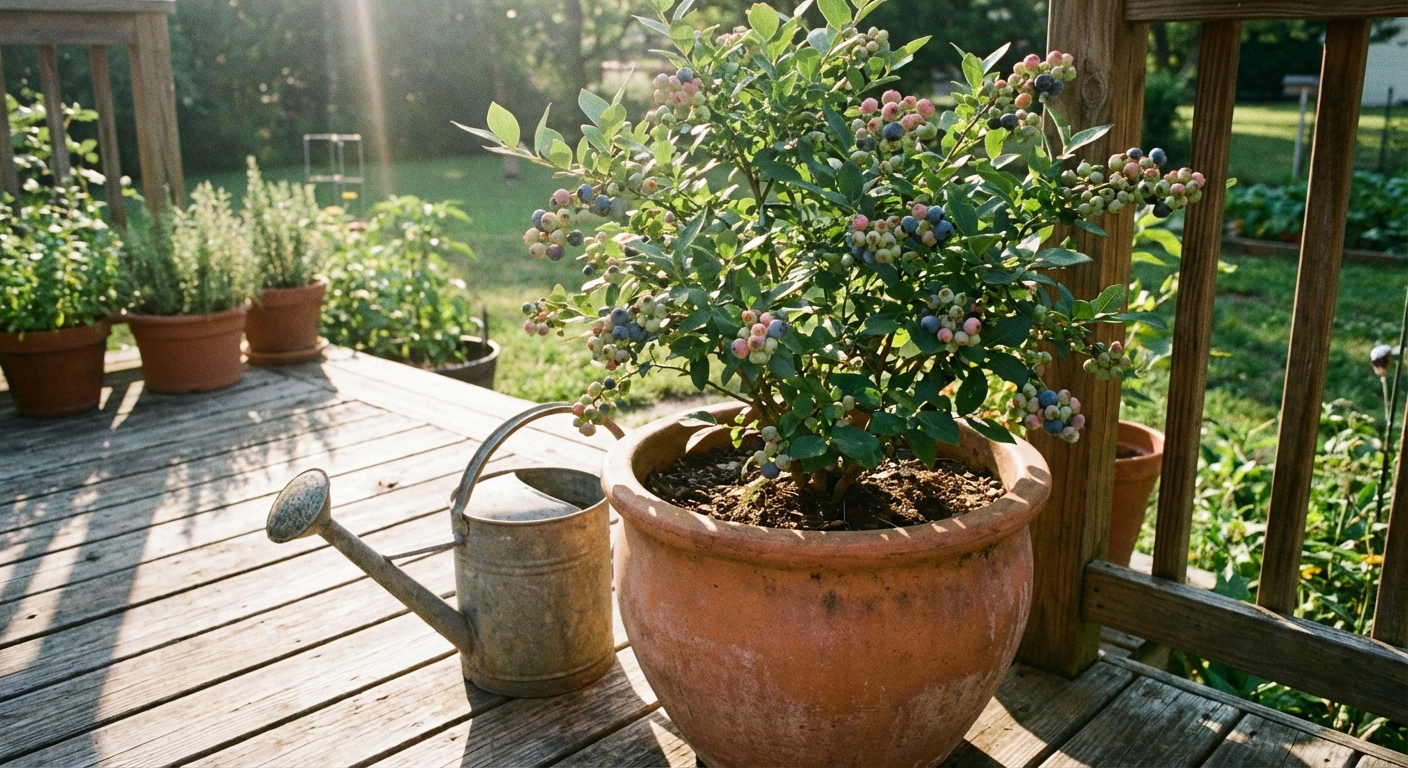
If you have ever wished you could wander outside and pluck a handful of blueberries straight from the bush, but you are working with a patio, balcony, or tiny yard, I have good news. Blueberries are surprisingly happy in containers, as long as you give them what they crave most: acidic soil, steady moisture, and plenty of sun.
Container blueberries are one of my favorite “black thumb cure” plants. If that phrase is new to you, it just means: a plant that feels intimidating, but becomes easy once you know the handful of rules that matter. Let’s walk through it together, step by step.
Choose a compact variety
Not all blueberries are built for container life. You want a variety that stays reasonably small, produces well in a pot, and matches your climate.
Great container varieties
- Top Hat: A true dwarf blueberry, usually 18 to 24 inches tall. Great for small patios and even larger balconies. Reliable and adorable.
- Sunshine Blue: A compact semi-evergreen (in mild climates), typically around 3 feet tall. Self-fertile and a favorite for warmer regions.
- Patriot: A hardy northern highbush type that tolerates colder winters better than many. Heads up: it can reach 4 to 6 feet if you let it, so it needs a roomy pot and occasional pruning to keep it tidy.
Quick tip: Before you buy, check that the variety fits your USDA zone and chilling hours. Northern highbush types generally need more winter chill, while southern highbush and rabbiteye types tend to need less. A local nursery or extension office can point you to varieties that reliably fruit where you live.
Pick the right pot size
Blueberries have shallow, fibrous roots, but they still need space. A too-small pot dries out fast, stresses the plant, and reduces fruit.
Best container size
- Minimum: 12 to 16 inch wide pot (roughly 5 to 10 gallons) for a young plant
- Ideal long-term: 18 to 24 inch wide pot (15 to 25 gallons)
- Depth: 12 inches or more is usually plenty, but wider is better than deeper
My honest take: If you can, go straight to a 15 to 25 gallon container. Starting small is fine, but only if you plan to pot up within a year or two.
Choose a container with drainage holes. Blueberries like consistent moisture, not soggy feet. If you use a saucer, do not let it hold standing water.
Pot material and heat
- Plastic or resin: Holds moisture well and is lightweight.
- Terracotta: Breathable, but dries out faster (you will water more).
- Fabric grow bags: Great drainage and root health, but can dry quickly in windy spots.
In hot climates, dark pots can overheat roots. A lighter-colored container, some afternoon shade, or a simple wrap (even burlap) can help keep the root zone calmer in summer.
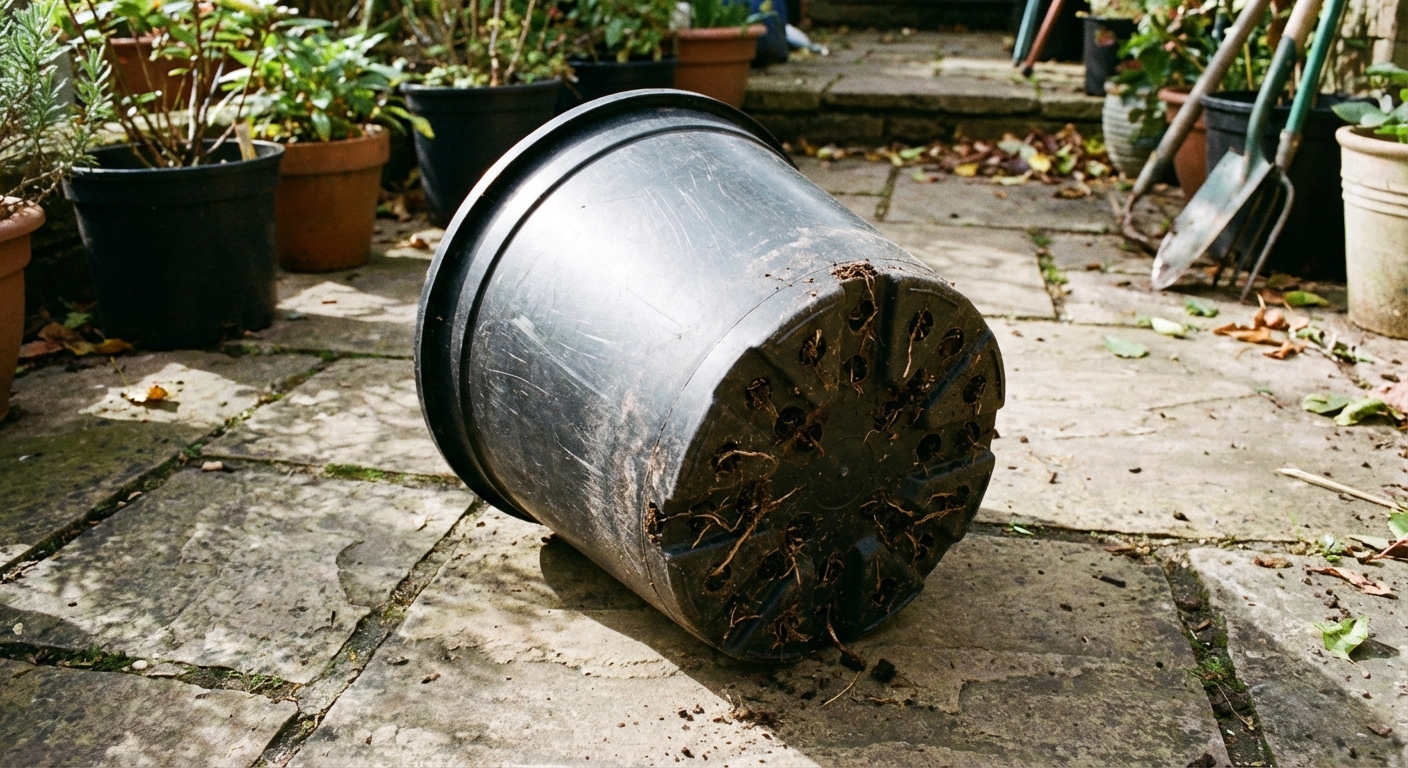
Make an acidic soil mix
Blueberries are acid-lovers. In the ground, gardeners often fight their native soil to get the pH low enough. In a container, we get to build the perfect little blueberry world from scratch.
Target soil pH
Aim for pH 4.5 to 5.5.
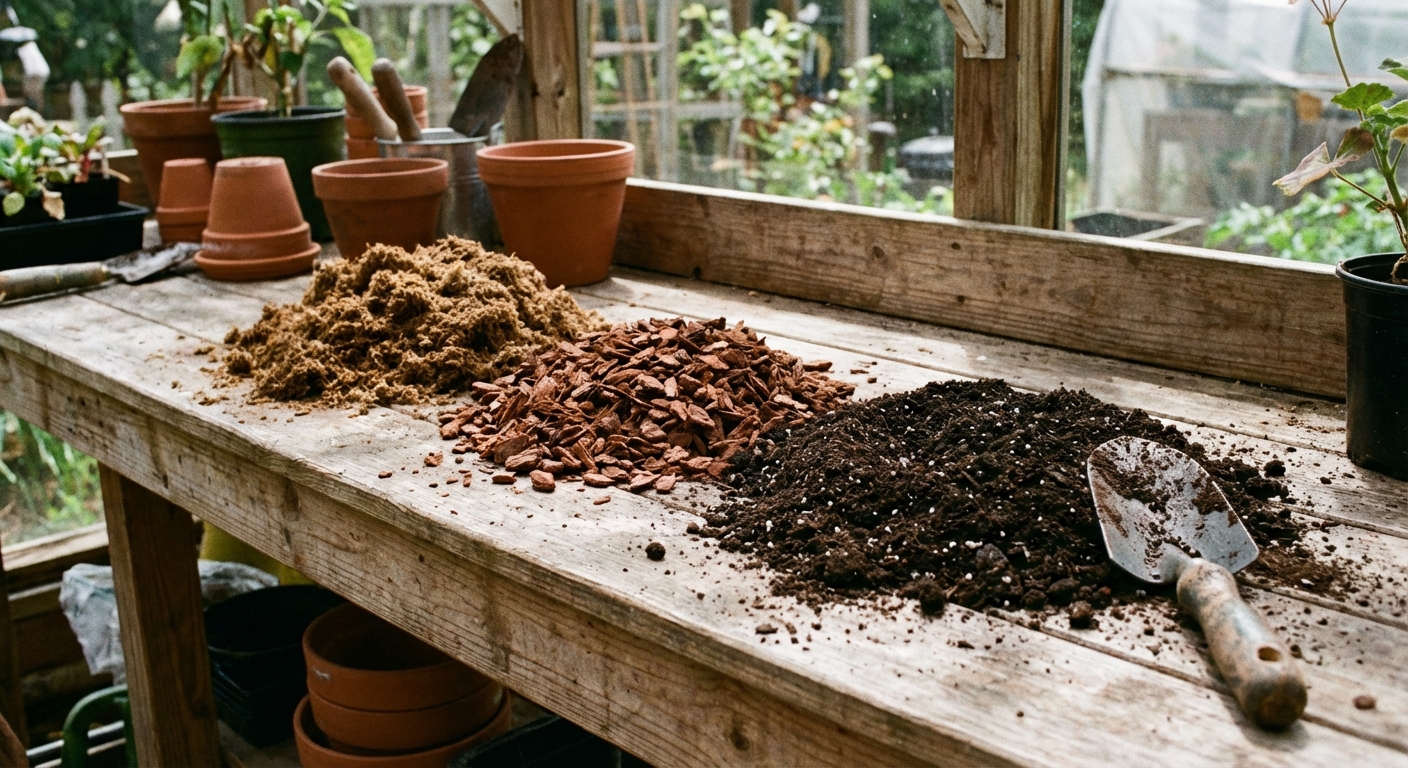
Easy container soil recipe
- 50% peat moss (or a peat-free acid option if you can source one locally)
- 25% pine bark fines (or orchid bark partially chopped smaller)
- 25% quality potting mix (not garden soil)
This blend stays airy, holds moisture, and trends acidic. If you have pine needles, a light mulch layer on top is wonderful for moisture and acidity.
Do you need sulfur?
Sometimes, yes. If your water is alkaline or you are starting with a potting mix that is closer to neutral, you may need to add elemental sulfur to nudge the pH down. Follow label rates for containers, mix thoroughly, and be patient. Sulfur changes pH gradually.
My practical advice: Use a simple soil pH test once or twice a season. Container mixes can drift over time, especially if your tap water is hard.
Planting step by step
- Soak the root ball for 10 to 20 minutes if it is dry.
- Fill the pot about two-thirds full with your acidic mix.
- Loosen circling roots gently with your fingers. Blueberry roots are delicate, so be kind.
- Set the plant so the top of the root ball sits about 1 inch below the rim. This helps with watering.
- Backfill and lightly firm the mix. Do not pack it hard.
- Water deeply until water runs out the bottom.
- Mulch with pine needles, shredded bark, or fine wood chips (keep mulch an inch away from the main stem).
If the plant is flowering at planting time and it is small, consider pinching off most flowers the first season. It feels cruel, but it helps the plant put energy into roots and branches, which means more berries later.
Mulch depth: 1 to 2 inches is usually perfect. You want moisture protection, not a constantly wet crown.
Sun and placement
Blueberries are sun-lovers. For a container, that sun also means faster drying, so we balance light with consistent moisture.
- Best: 6 to 8+ hours of direct sun
- Okay in hot climates: Morning sun with light afternoon shade
- Avoid: Deep shade, windy corners that dry pots quickly, spots under roof overhangs where rain never reaches
Rotate the pot every week or two if one side leans toward the light.
Watering
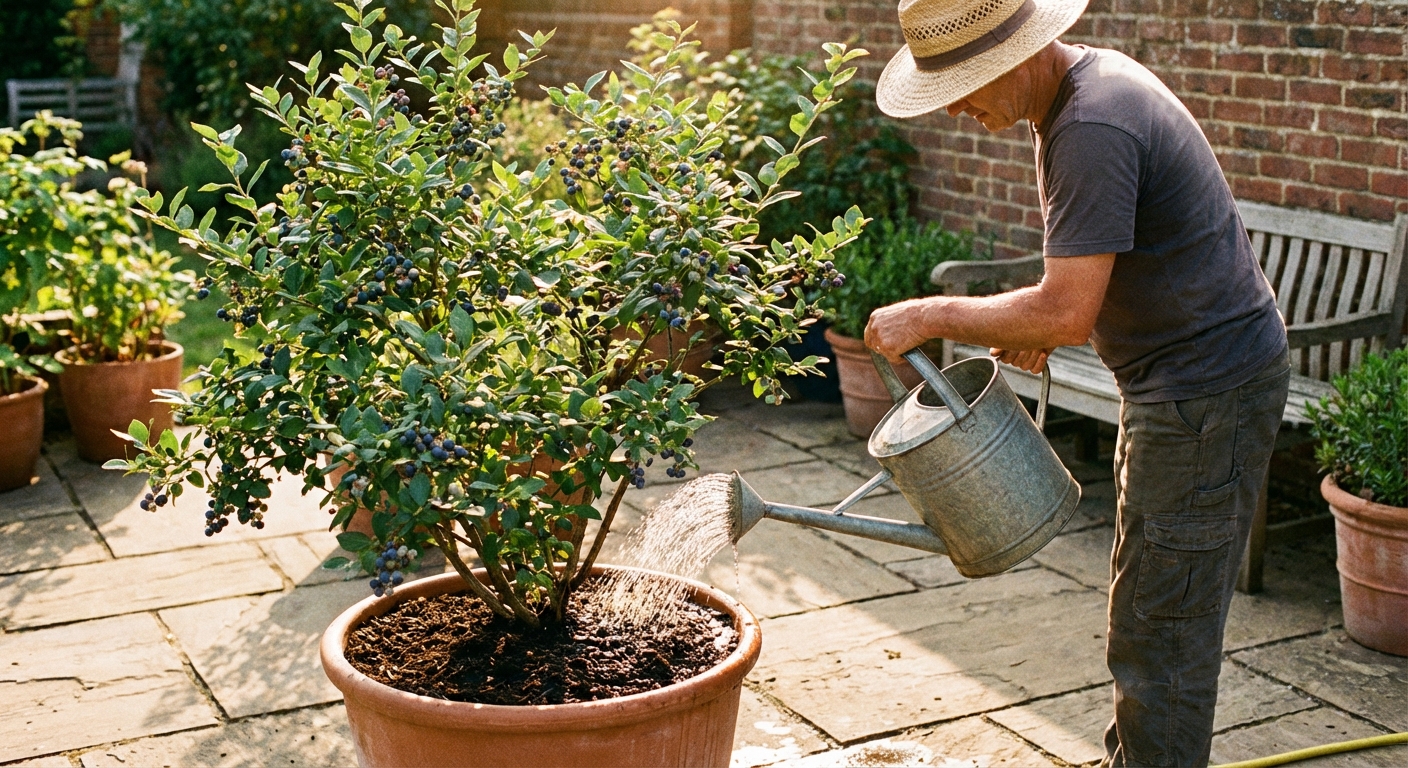
Blueberries want evenly moist soil, like a wrung-out sponge. In containers, the two classic mistakes are letting the pot dry to dust, or watering so often the roots stay waterlogged.
How often to water
- Spring: usually 2 to 4 times per week depending on wind and pot size
- Summer heat: often daily, especially for smaller pots
- Fall: taper as growth slows, but do not let the pot dry out completely
How to check
Stick a finger 2 inches down. If it is dry at that depth, water. If it is still cool and damp, wait.
Water quality note
If your tap water is very hard or alkaline, your soil pH can creep upward. When possible, use rainwater, filtered water, or occasionally acidify irrigation water with a product made for acid-loving plants (follow label instructions carefully).
Fertilizing (acid-lover only)
Blueberries are not heavy feeders, but they are picky. Use a fertilizer labeled for acid-loving plants (often sold for azaleas, camellias, and blueberries). Avoid strong all-purpose fertilizers and avoid fresh manure in containers.
Simple plan
- Early spring (as buds swell): Apply acid-lover fertilizer at label rate for containers.
- Late spring (after flowering begins): Apply a second, lighter feeding if growth looks pale or slow.
- Early summer (after fruit set): One more light feeding can help, especially in containers.
- Stop by mid-summer in most climates so the plant can harden off before winter (in short-season cold climates, stopping earlier is often better).
Watch the leaves: Deep green is the goal. Yellowing between veins can point to iron chlorosis, often caused by soil that is not acidic enough.
Pollination tips
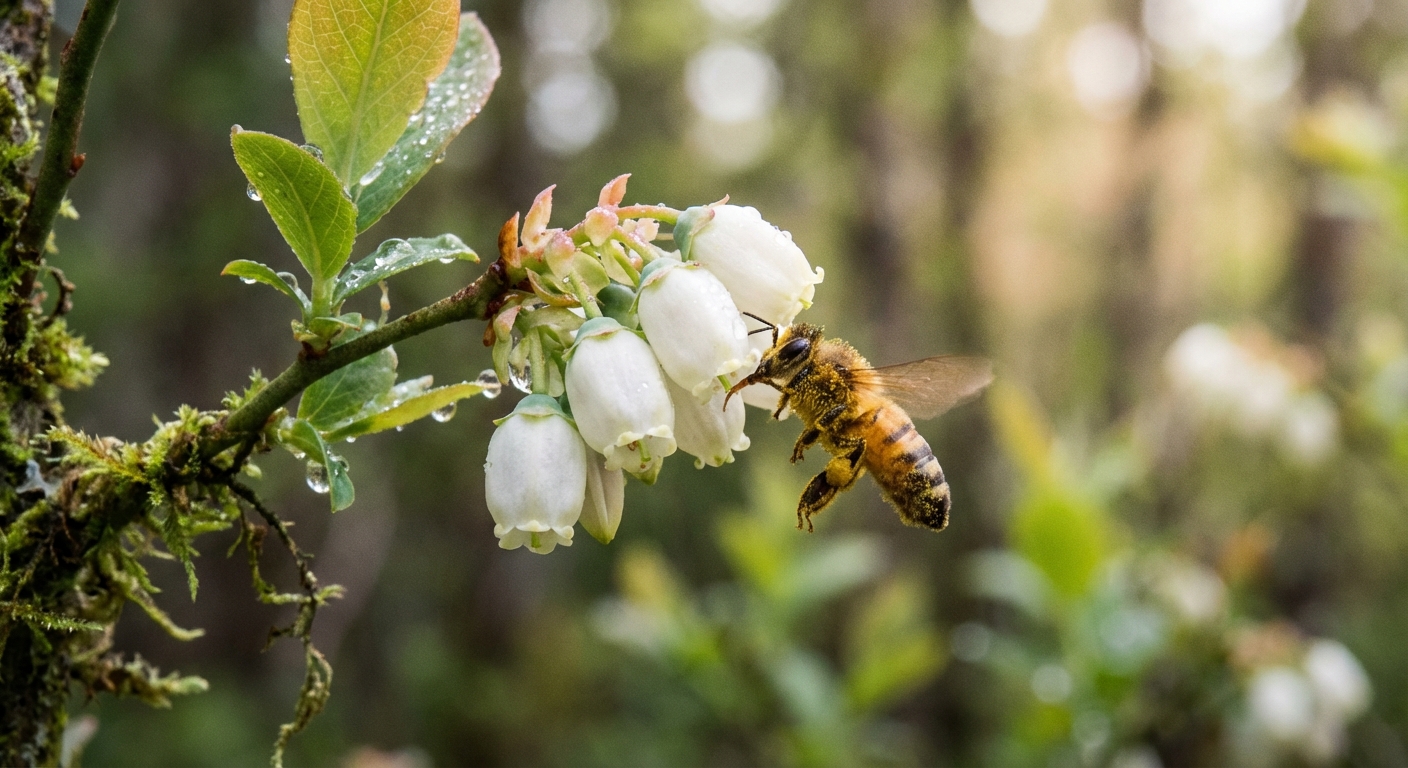
Many blueberries are self-fertile, including Sunshine Blue, but you almost always get bigger harvests when you provide a pollination partner and invite more bees into your space.
What to do
- Grow two varieties if you have space. Even two pots close together can improve fruit set.
- Match bloom times so flowers overlap (a local nursery can confirm what pairs well in your region).
- Bring in pollinators by planting nearby nectar flowers like thyme, lavender, borage, or native blooms.
- Avoid spraying anything that harms bees while plants are flowering.
If your blueberry lives on a high balcony with fewer pollinators, gently tapping flowering branches on sunny days can help a little. Think of it as a small assist, not a guarantee.
Pruning
In the first year, focus on establishment. After that, a little yearly pruning keeps your plant productive.
- Late winter or very early spring: Remove dead twigs and any spindly, crossing growth.
- After year 3: Remove a small amount of the oldest wood each year to encourage fresh canes.
- Do not over-prune: Blueberries fruit on older wood, so aggressive pruning can reduce harvest.
If this part makes you nervous, you are not alone. I like to stand back, squint a little, and only cut what is obviously dead, damaged, or tangled. You can always prune more later. You cannot un-prune a branch.
Refresh the pot over time
Container mixes do not stay perfect forever. They settle, break down, and slowly drift in pH.
- Each spring: Top-dress with a few inches of fresh acidic mix and replace mulch.
- Every 2 to 3 years: Check for roots circling tightly. If the plant is pot-bound, move up a size or do a gentle root prune and refresh the mix.
Repotting sounds dramatic, but it is one of the best ways to keep a container blueberry vigorous long-term.
Winter protection
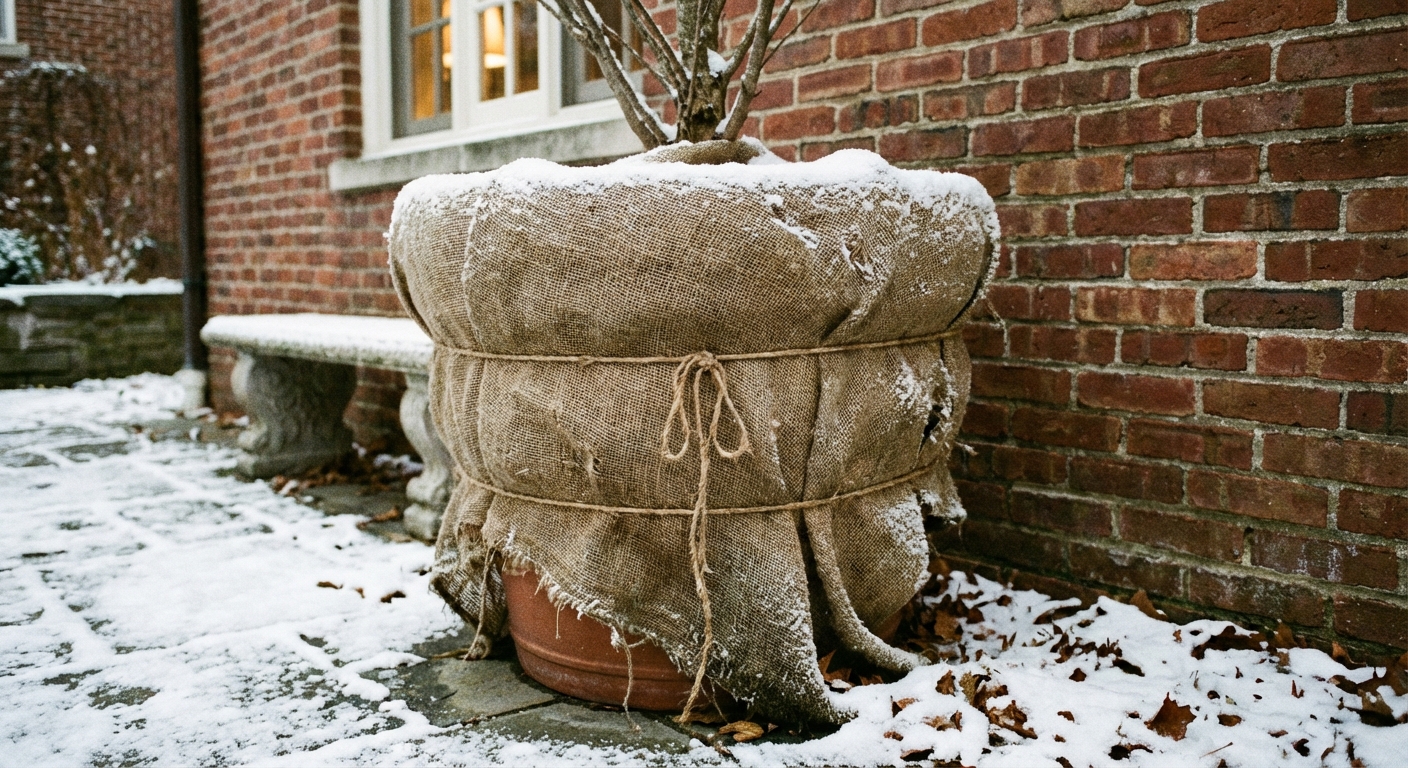
In-ground blueberries have soil insulation. In containers, roots are more exposed and can freeze harder. Winter care depends on your climate, pot size, and variety.
Options that work
- Move the pot to a sheltered spot near the house, out of winter wind.
- Insulate the container with burlap, old blankets, or bubble wrap around the outside (keep drainage holes clear).
- Cluster pots together to reduce exposure.
- Mulch the surface with pine needles or bark to protect the root zone.
- In very cold zones: Place the pot in an unheated garage or shed once fully dormant. Water lightly about once a month so roots do not dry out completely.
Important: Do not bring blueberries into a warm living room for winter. They need chilling hours and dormancy to fruit well.
Small caution: If you wrap pots for winter, check occasionally for trapped moisture and for rodents looking for a cozy hiding place.
Timeline to first harvest
This is the part everyone wants to know, so let’s set expectations kindly and honestly. Blueberries are not instant-gratification plants, but they are absolutely worth the wait.
- Year 1: Focus on roots and growth. You might get a small handful of berries, but it is better to remove many blossoms on small plants.
- Year 2: A light harvest is common, often a few cups depending on variety and container size.
- Years 3 to 5: Plants hit their stride. In a large container with good care, you can often harvest multiple pounds over the season.
Blueberries typically ripen over several weeks. The berries should come off with a gentle tug when fully ripe. If you have to fight them, give them another day or two.
Do not forget the birds
Birds can strip a blueberry bush right when the fruit turns perfect. If berries are disappearing overnight, you are probably not imagining it. Drape bird netting over the plant as berries begin to blush, and secure the bottom so birds cannot slip underneath. On balconies, even a simple net clipped to the railing works wonders.
Troubleshooting
No berries (or very few)
- Not enough sun
- Not enough chill hours for your variety
- Poor pollination, especially on balconies
- Too much nitrogen fertilizer leading to leafy growth instead of flowers
Berries vanish before you pick them
- Birds (the usual culprit). Use netting as fruit starts to color.
- Squirrels or other nibblers, depending on your area
Yellow leaves
- Soil pH too high
- Hard water over time
- Root stress from drying out repeatedly
Shriveled berries or leaf scorch
- Inconsistent watering during fruiting
- Container too small for summer heat
- Hot afternoon sun reflecting off walls or railings
If you only change one thing, make it this: upgrade the pot size and water consistently. Those two alone solve a shocking number of blueberry complaints.
A quick shopping list
- Blueberry plant (Top Hat, Sunshine Blue, Patriot, or a locally recommended variety)
- 15 to 25 gallon container with drainage
- Peat moss and pine bark fines
- Quality potting mix
- Elemental sulfur (optional, if pH needs lowering)
- Acid-loving plant fertilizer
- Pine needle or bark mulch
- Optional: second blueberry variety for better pollination
- Optional but often essential: bird netting and clips
One last pep talk
If blueberries have intimidated you, you are in good company. They have a reputation for being fussy, but in containers they are actually easier because we control the soil. Give them an acidic, airy mix, keep the moisture steady, and let the sun do its work. Then, when you taste your first warm, just-picked berry, you will wonder why you ever waited.