
How to Grow Basil at Home

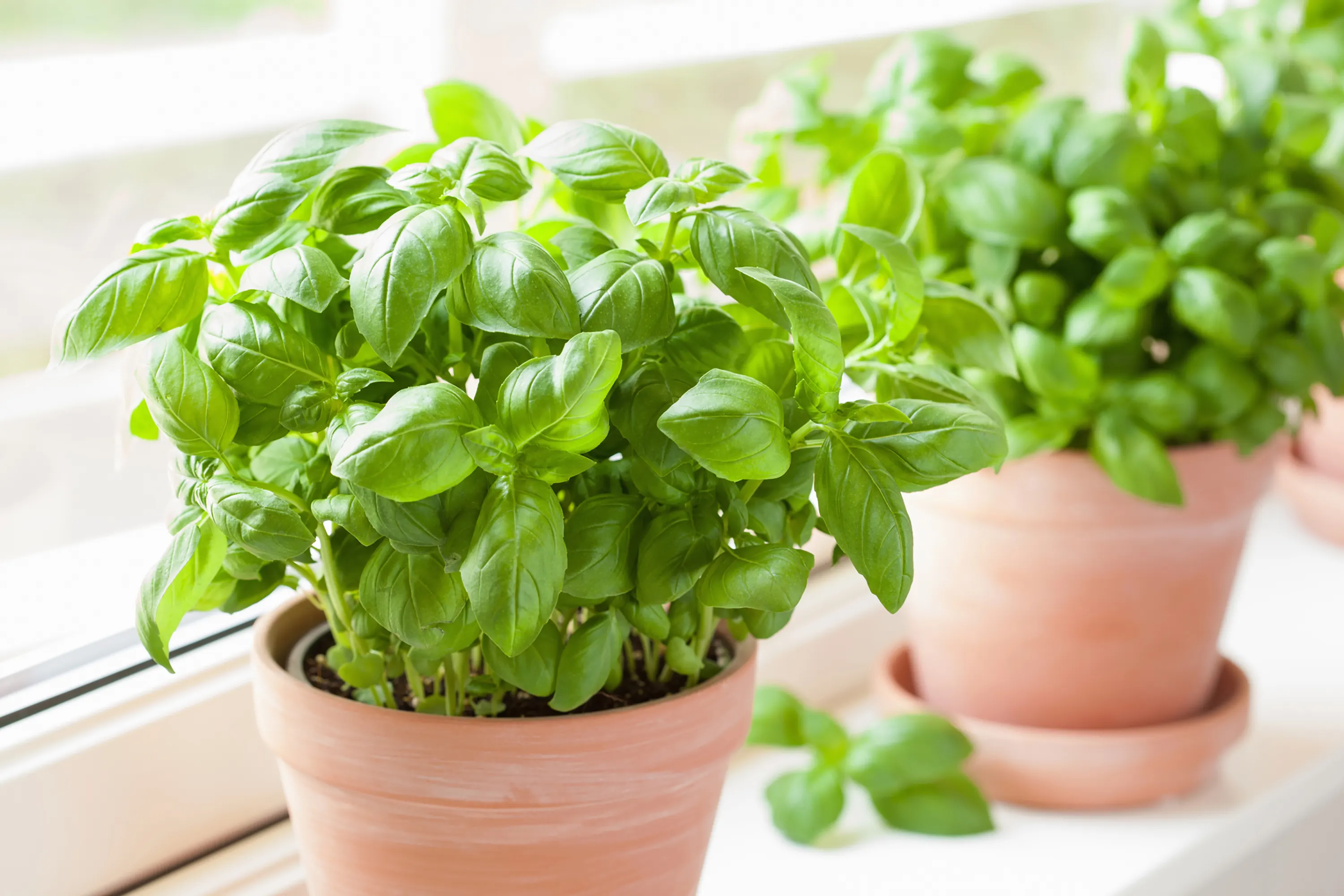
There is nothing like brushing your fingers over a basil plant and getting that sweet, spicy perfume on your skin. Basil is generous, fast-growing, and forgiving, but it is also a little dramatic about cold, soggy soil, and being ignored for too long. The good news: once you understand what basil is asking for, you can keep a steady supply of tender leaves from a single pot, a raised bed, or even a sunny windowsill.
This guide covers basil from seed or transplants, the conditions it craves, how to prune it into a leafy little shrub, and how to prevent the classic problems like bolting and yellow leaves. I also included a couple small upgrades (succession planting and easy propagation) so you can keep basil coming like it is on a schedule.
Meet basil: what it wants
Basil (Ocimum basilicum) is a warm-season annual that grows quickly when it has:
- Heat: it sulks below about 50°F and grows best around 70 to 85°F. It can handle warmer weather, but steady moisture matters more as temps climb.
- Sun: 6 to 8 hours outdoors, or very bright light indoors.
- Moist but well-drained soil: evenly damp, never swampy.
- Regular picking: harvesting is not just allowed, it is the secret to bushy growth.
If you give basil warmth and bright light, you are already most of the way there.
Popular basil varieties
There are many basils, and you can absolutely grow more than one. Each one shines in different dishes and growing setups.
Genovese basil
The classic Italian sweet basil for pesto and caprese. Big, tender leaves and a familiar aroma. If you are growing “basil,” this is usually what you mean.
Thai basil
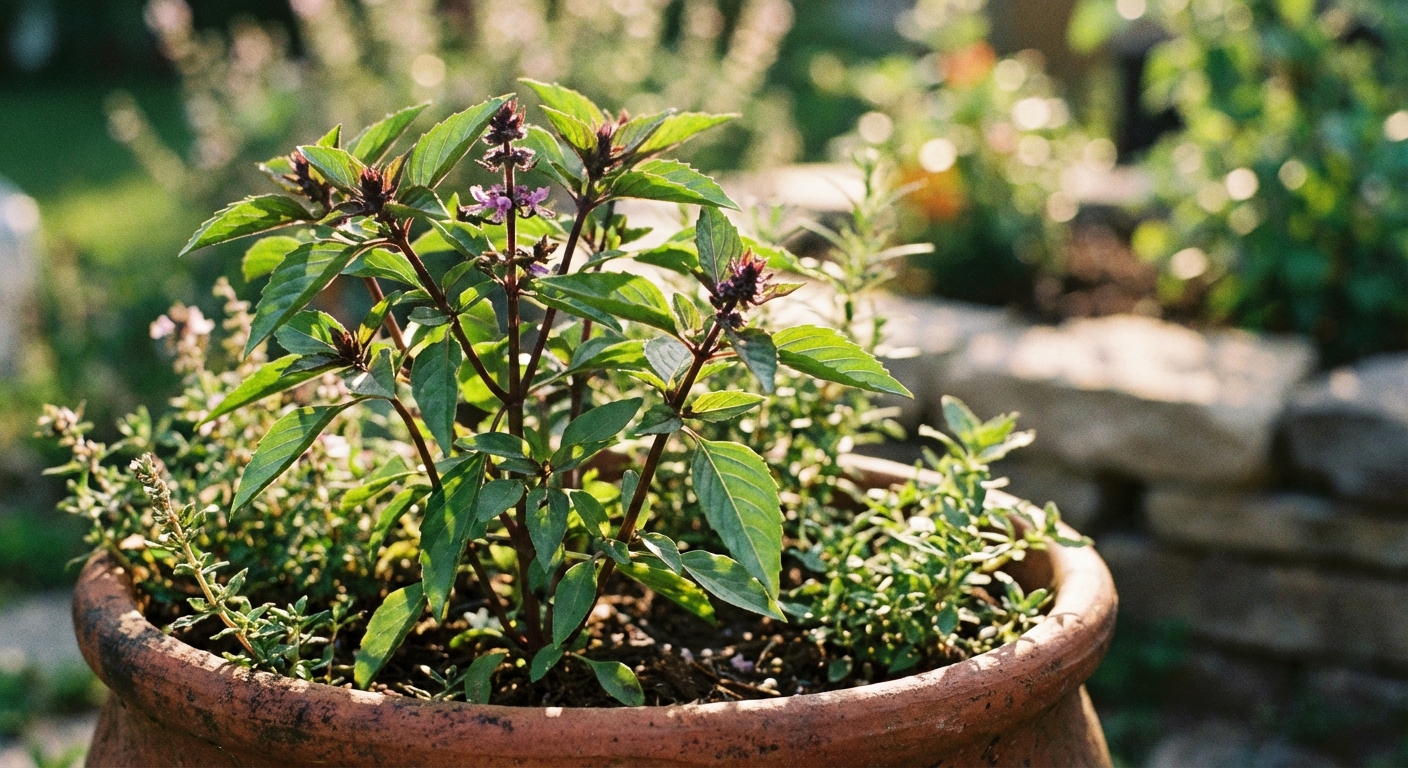
More licorice-like, with sturdier leaves and purple stems. It holds its flavor beautifully in stir-fries and soups. It is also a bit more heat-tolerant and tends to be slightly less floppy than Genovese.
Other great options
- Lemon basil: bright citrus notes, lovely in teas and salads.
- Holy basil (tulsi): technically a different species (Ocimum tenuiflorum), more medicinal and clove-like. It grows similarly, but the flavor is not a substitute for pesto basil.
- Compact “Greek” basil: naturally bushy, great for containers.
Start basil from seed
Basil from seed is one of the most confidence-building gardening wins. It germinates quickly and grows fast.
When to start
- Indoors for transplanting outside: start seeds 4 to 6 weeks before your last spring frost date.
- Direct sow outdoors: wait until nights are reliably warm and soil is about 60 to 70°F. Germination is fastest closer to 65°F and up.
- Indoors year-round: start anytime if you can provide strong light.
How to sow basil seeds
- Fill a tray or small pots with seed-starting mix (lighter than regular potting soil).
- Moisten the mix so it is damp like a wrung-out sponge.
- Sow shallowly: plant seeds about 1/8 inch deep, then gently press the surface. Do not bury them deeply.
- Keep warm: 70 to 80°F speeds germination. A heat mat helps, but a warm room works too.
- Keep evenly moist until sprouts emerge, usually in 5 to 10 days.
- Provide strong light immediately after germination. A sunny window can work, but a grow light 2 to 4 inches above seedlings is much more reliable.
Thinning and potting up
Basil is often sown thickly. Once seedlings have a couple sets of true leaves, thin so each plant has space. If you want a fuller pot, you can grow a small cluster, but avoid a crowded mat of stems. Crowding reduces airflow and invites disease.
Succession planting
If you want a steady supply all summer, start a small batch of seeds every 3 to 4 weeks. Basil has a “best window” when it is young, leafy, and enthusiastic, and succession planting keeps you in that window.
Grow basil from transplants
Buying a basil start from a nursery is the quickest way to harvest. You can also “rescue” grocery store basil, but it usually comes as an overcrowded clump that needs dividing.
What to look for
- Deep green leaves (not pale or spotty)
- Short, sturdy stems (not stretched and floppy)
- No flowers forming yet
- No visible pests under leaves
When to plant outside
Move basil outdoors after danger of frost has passed and nights stay above about 50°F. Warm nights are basil’s love language.
How to plant
Plant basil at the same depth it was in its pot. Water it in gently. If moving outdoors, harden it off for 5 to 7 days by gradually increasing its time outside.
Where basil grows best
Outdoors in the ground or raised beds
Choose a warm, sunny spot with soil that drains well. Basil loves fertile soil, but it does not need heavy feeding if your soil has compost.
- Spacing: about 10 to 18 inches, depending on variety. Compact types can be closer; big Genovese plants are happier with more elbow room.
- Companions: tomatoes, peppers, and marigolds are classic neighbors. Basil’s scent can help confuse pests, and it enjoys similar warmth.
In containers (my favorite for steady picking)
Containers are perfect because you can control the soil and move the plant away from cold snaps.
- Pot size: at least 8 to 10 inches wide for one plant, 12 inches for a small cluster.
- Drainage: non-negotiable. Basil hates wet feet.
- Skip the rocks: do not add gravel or rocks to the bottom “for drainage.” It usually makes water perch higher in the pot. Just use a quality potting mix and a pot with a drainage hole.
- Help excess water escape: pot feet or a slightly raised pot can make drainage more reliable outdoors.
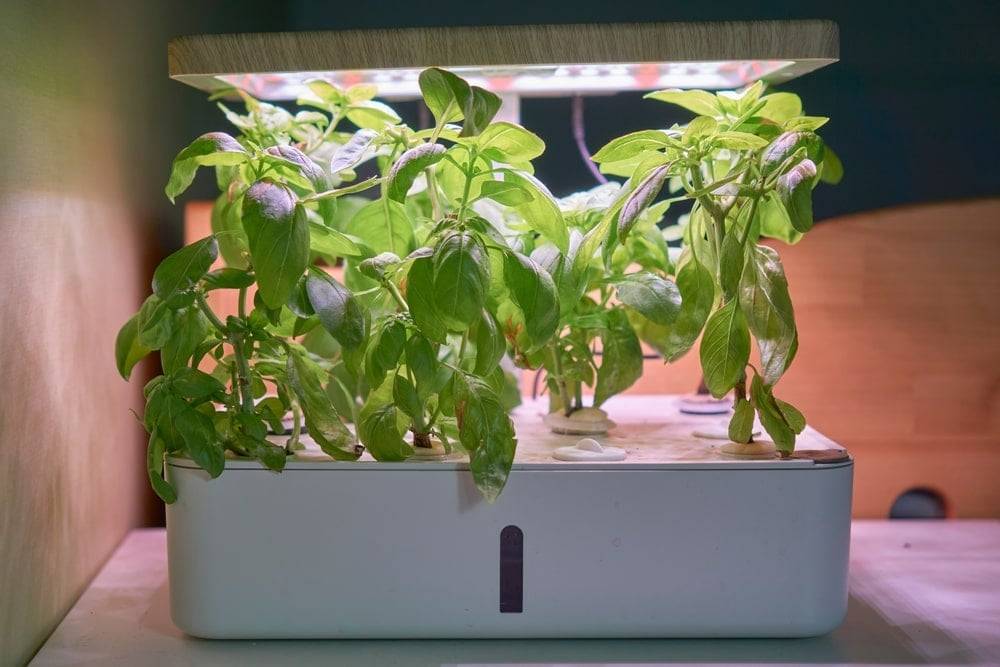
Indoors year-round
You can grow basil indoors, but the light needs to be serious.
- Window: south or west-facing is best. Rotate the pot weekly.
- Grow light: aim for 12 to 16 hours/day if natural light is weak.
- Airflow: a gentle fan helps prevent fungal issues and keeps stems strong.
Soil and fertilizer
Best soil for basil
Basil wants a loose, rich, well-draining mix.
- In-ground: work in 1 to 2 inches of finished compost before planting.
- Containers: use a quality potting mix plus a scoop of compost. Avoid heavy garden soil in pots, it compacts and stays soggy.
Fertilizing basil (keep it gentle)
Too much fertilizer can mean big plants with weaker flavor. I prefer a light touch.
- In-ground: compost at planting is often enough.
- Containers: feed every 3 to 4 weeks with a diluted organic fertilizer (fish emulsion, seaweed, or a balanced liquid), or top-dress with compost.
If you are growing for pesto, you want steady, even growth, not a boom-and-bust cycle.
Watering basil without yellow leaves
Most basil problems trace back to watering. The goal is consistent moisture with good drainage.
How often to water
- Containers: check daily in summer. Water when the top inch of soil feels dry.
- In-ground: water deeply when the top couple inches are dry. Many gardens land around 1 inch of water per week, but heat, wind, and soil type can change that fast.
How to water correctly
- Water at the soil line, not over the leaves, especially late in the day.
- Water thoroughly until it drains out the bottom of pots.
- Empty saucers so the pot is not sitting in water.
Why basil leaves turn yellow
Yellowing can mean a few things. Here is how to narrow it down:
- Overwatering: overall pale plant, soft stems, soil stays wet. Fix: let the soil dry slightly, improve drainage, repot if needed.
- Underwatering: droopy leaves that perk up after watering, crispy edges in heat. Fix: water more consistently, add mulch outdoors.
- Nitrogen deficiency: older leaves yellow first, growth slows. Fix: light feeding or compost top-dress.
- Cold stress: yellowing after chilly nights. Fix: cover outdoors or bring pots inside.
Pruning basil for bushy growth
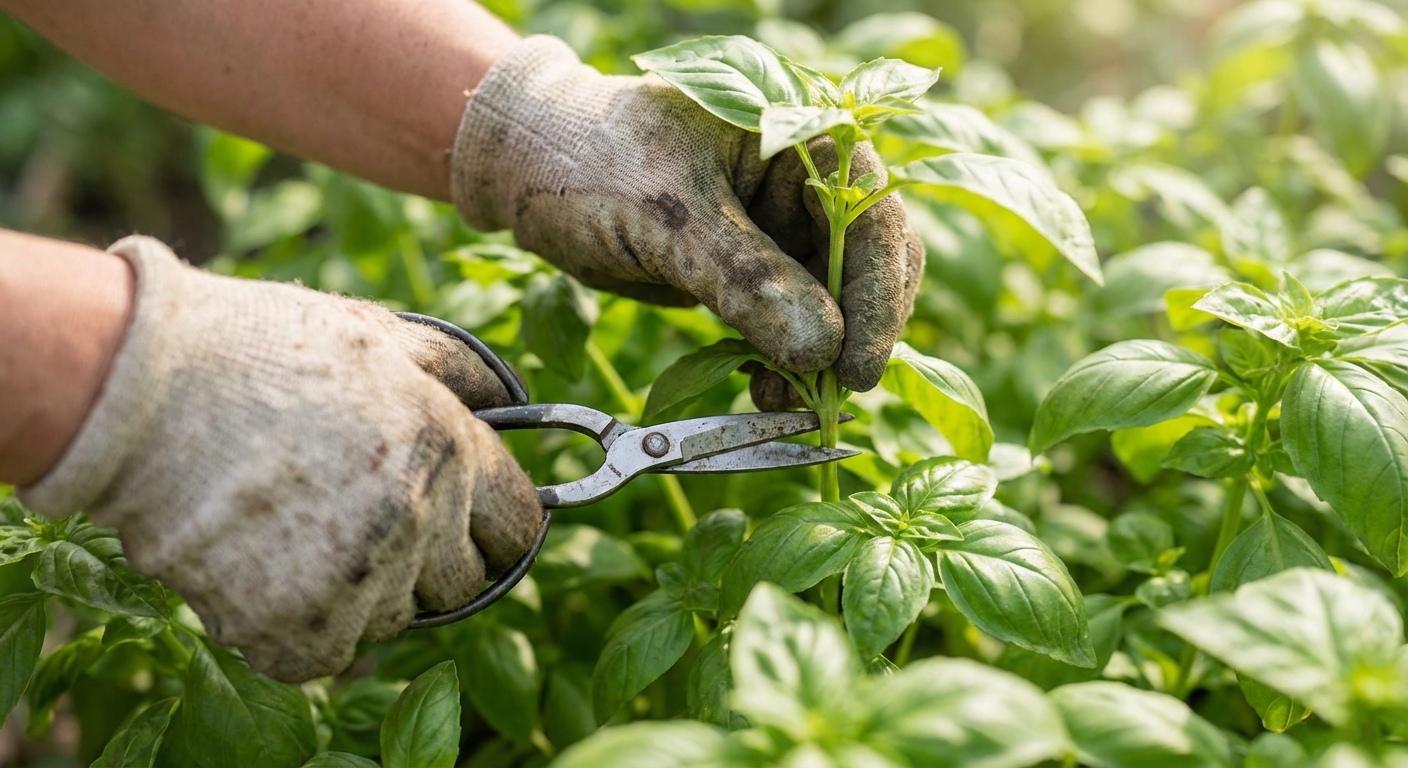
If you only remember one basil trick, make it this: prune above a leaf node so the plant branches. Basil wants to become a bush, not a single tall stem.
When to start pruning
When the plant is about 6 to 8 inches tall and has several sets of leaves, you can begin.
How to prune, step by step
- Find a stem with at least 2 sets of leaves.
- Locate a “node,” where two leaves grow opposite each other.
- Snip the stem just above that node (clean scissors or fingers).
- Two new branches will grow from that node, doubling your future harvest.
Repeat every week or two during active growth. Your basil will get thick, leafy, and surprisingly adorable.
Harvesting basil
Harvesting is basically pruning with dinner as the reward.
The best way to pick leaves
- For a small amount: pinch off a stem tip above a node rather than plucking random single leaves.
- For a big harvest: cut several stems back by about one-third, always above nodes.
How much can you take?
A good rule is to leave at least two-thirds of the plant at any one time. Basil rebounds fast when it still has plenty of leaves to photosynthesize.
When to harvest for best flavor
Harvest in the morning after the dew has dried, before the afternoon heat. Leaves are plump and aromatic then.
Prevent bolting
Bolting means basil shifts from leaf production to flowering and seed. Leaves often get smaller and the flavor turns sharper.
Why basil bolts
- Heat and drought stress (especially repeated dry spells)
- Natural maturity, especially in midsummer
- Infrequent harvesting or pruning
How to prevent it
- Pinch flower buds early: as soon as you see a central flower spike forming, pinch it out.
- Harvest often: regular cutting tells basil to keep branching.
- Keep moisture even: mulch outdoors, water containers consistently.
- Give it a little afternoon shade in extreme heat: if you regularly hit 90°F+, this can help basil stay leaf-focused.
If your basil already flowered
Cut the flowering stems back to a lower set of leaves. If the plant is old and woody, start a new succession planting from seed. I do this all summer, like keeping a fresh candle lit.
Common basil problems
Leggy, floppy basil
- Cause: not enough light, or not enough pruning.
- Fix: move to stronger sun or add a grow light. Prune back above nodes to encourage branching.
Leaf spots or fuzzy growth
- Cause: moisture on leaves, poor airflow, and either fungal issues or bacterial leaf spot (often shows as dark, water-soaked spots that can turn brown or black).
- Fix: water at soil level, avoid splashing, thin crowded plants, and increase airflow. Remove affected leaves. If the plant is getting worse quickly, remove it to protect nearby basil.
- If you use sprays: follow label rates, test on a few leaves first, and avoid applying oils or soaps during hot sun. Evening is safest.
Downy mildew
Downy mildew often shows as yellowing between veins on top of the leaf and grayish fuzz underneath. It spreads fast in humid conditions.
- Fix: remove infected plants (do not compost), improve spacing and airflow, avoid overhead watering, and look for resistant varieties when available.
Aphids or whiteflies
- Fix: rinse leaves with a firm spray of water, especially undersides. If needed, use insecticidal soap in the evening and repeat weekly. Indoors, a gentle wipe-down can do wonders.
Slugs (outdoors)
- Fix: hand-pick at dusk, use iron phosphate bait if needed, and keep mulch from touching stems.
Basil indoors: quick setup
If your basil keeps dying inside, it is almost always light and watering.
- Light: a bright window plus a grow light is often the magic combo. Aim for 12 to 16 hours of light in winter.
- Pot and soil: use a pot with drainage holes and a fluffy potting mix.
- Water: water when the top inch is dry, then let it drain completely.
- Prune: pinch weekly. Indoor basil gets leggy fast if you “save” it instead of using it.
Propagate basil from cuttings
If you want more basil without starting seeds (or you just love a gardening shortcut), basil roots easily in water.
- Snip a 4 to 6 inch stem just below a node.
- Strip off the lower leaves.
- Place the stem in a glass of water, leaves above the waterline.
- Set it in bright light and change the water every couple days.
- When roots are a couple inches long, pot it up in soil and keep it evenly moist for the first week.
It feels a little like magic, but it is just basil being its generous self.
Keeping basil after harvest
Short-term storage
Treat basil like a bouquet. Put stems in a glass of water on the counter and loosely cover with a bag. Basil often blackens in the fridge (chilling injury), so room temperature is usually best for a day or two. If your kitchen is very warm, you can also try stems-in-water in the fridge with a loose bag over the top and see what works in your home.
Freezing basil
- Pesto cubes: blend basil with olive oil (and garlic if you like), freeze in ice cube trays.
- Whole leaves: blanch for a few seconds, pat dry, then freeze flat.
Drying basil
You can dry it, but the flavor is softer and sweeter basils lose some sparkle. If you want that fresh basil punch in winter, freezing wins.
A simple basil routine
- Daily (containers): check soil moisture.
- Weekly: pinch growing tips and harvest what you will use.
- Every 3 to 4 weeks (containers): light organic feeding or compost top-dress.
- All season: pinch flowers as soon as they appear.
- Monthly: start a small new batch of seeds (or root a cutting) if you want nonstop leaves.
If you do those few things, basil becomes one of the most rewarding plants you can grow. And if you miss a week, it is okay. Basil is forgiving. Give it sun, a drink, and a haircut, and it will usually come right back, like a friend who is just happy you showed up.