
How to Get Rid of Tomato Hornworms Naturally

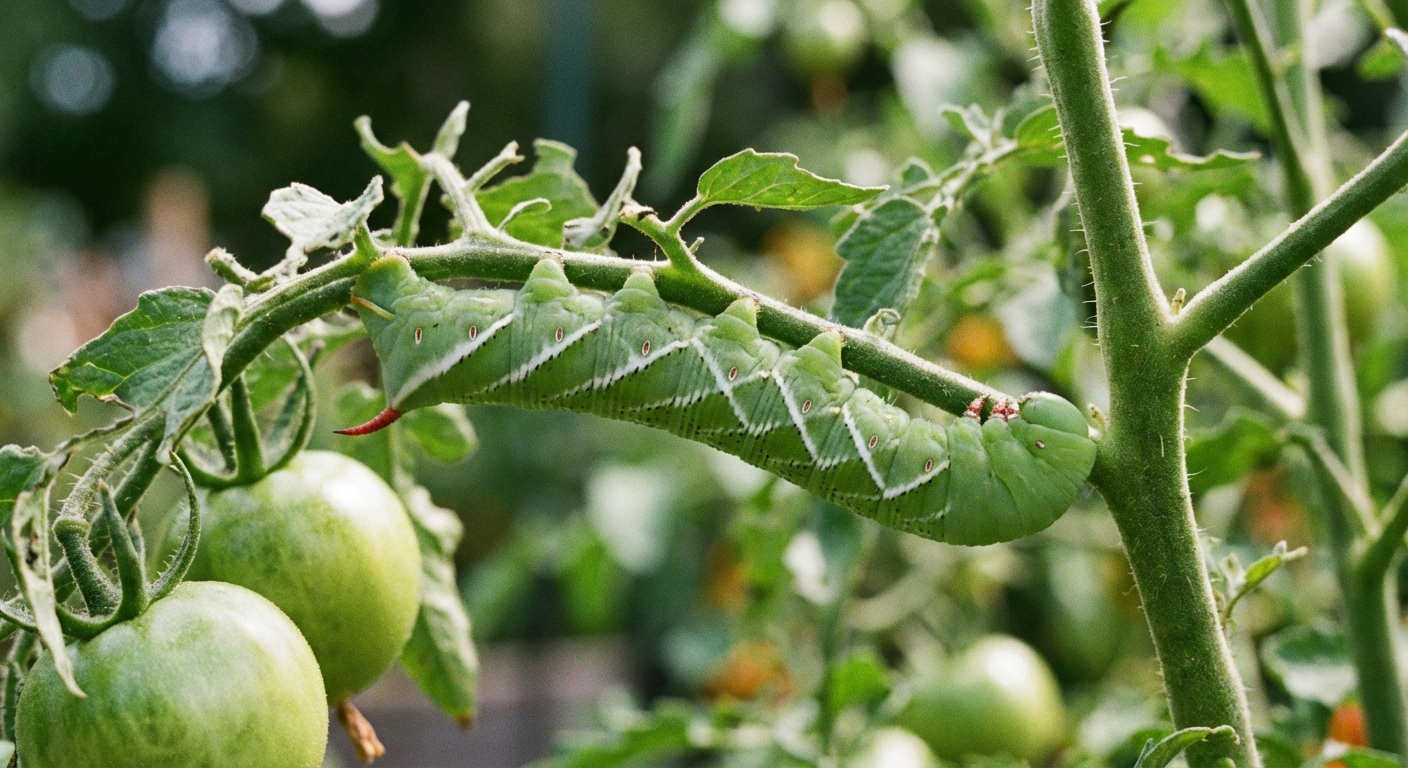
If your tomato plant looked fine yesterday and today it looks like a hungry toddler went to town on it, you are not imagining things. Tomato hornworms can strip a plant very quickly, sometimes in a night or two, and because they are the exact shade of tomato-leaf green, they are surprisingly hard to spot.
The good news is you can handle hornworms organically without nuking your whole garden ecosystem. I will show you how to identify them, confirm the damage, and choose natural controls that actually work, from simple hand-picking to Bt (Btk), companion planting, and inviting the hornworm’s worst enemy, parasitic wasps.
What hornworms are (and why they show up)
Tomato hornworms are the caterpillar stage of hawk moths (also called sphinx moths). Adult moths lay eggs on plants in the nightshade family, and the larvae hatch and start eating fast. Tomatoes are the classic target, but peppers, eggplant, and even potatoes can get hit too.
They can also breed on common nightshade weeds that act like a “backup pantry,” including jimsonweed and wild nightshades. If those are hanging around the edges of your garden, hornworms may be closer than you think.
Hornworms are most common in summer, especially mid to late season when plants are lush and moth activity is high. In cooler climates you may see one main surge. In warmer areas, there can be multiple generations in a season.
If you have had them once, it is worth checking every year. They can often show up in the same general area because pupae can overwinter in the soil near last season’s host plants, but it is not guaranteed.
Tomato vs tobacco hornworms
Gardeners usually call them all “tomato hornworms,” but two look-alikes commonly show up:
- Tomato hornworm (Manduca quinquemaculata): 8 white V-shaped marks (chevrons) along the sides, and the horn is often dark.
- Tobacco hornworm (Manduca sexta): 7 diagonal white stripes along the sides, and the horn is often red.
Both have that signature “horn” on the rear end. Both cause the same kind of damage. And thankfully, you manage them the same way in an organic garden.
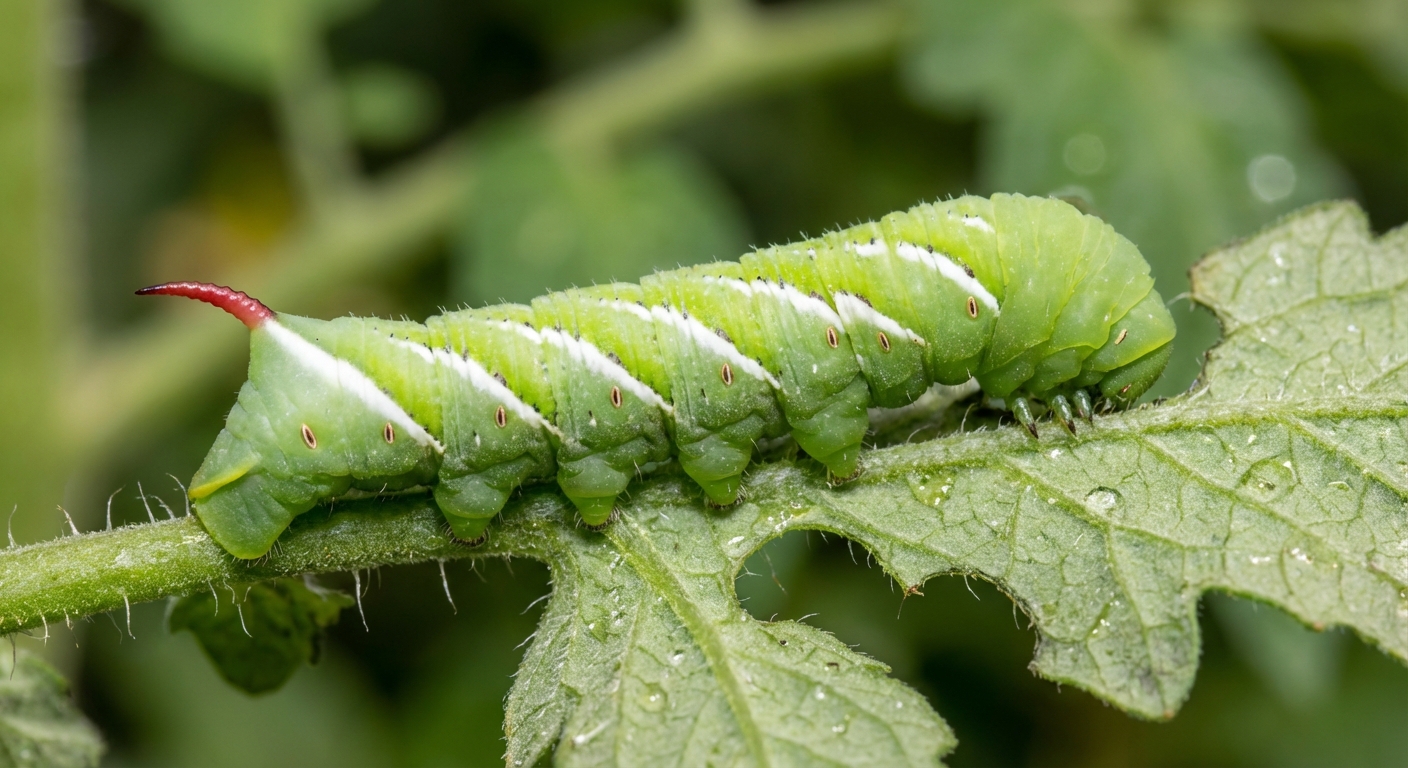
Size and color: Hornworms can reach 3 to 4 inches long. They are bright green with a slightly bumpy texture and blend in perfectly with tomato foliage.
Hornworm damage
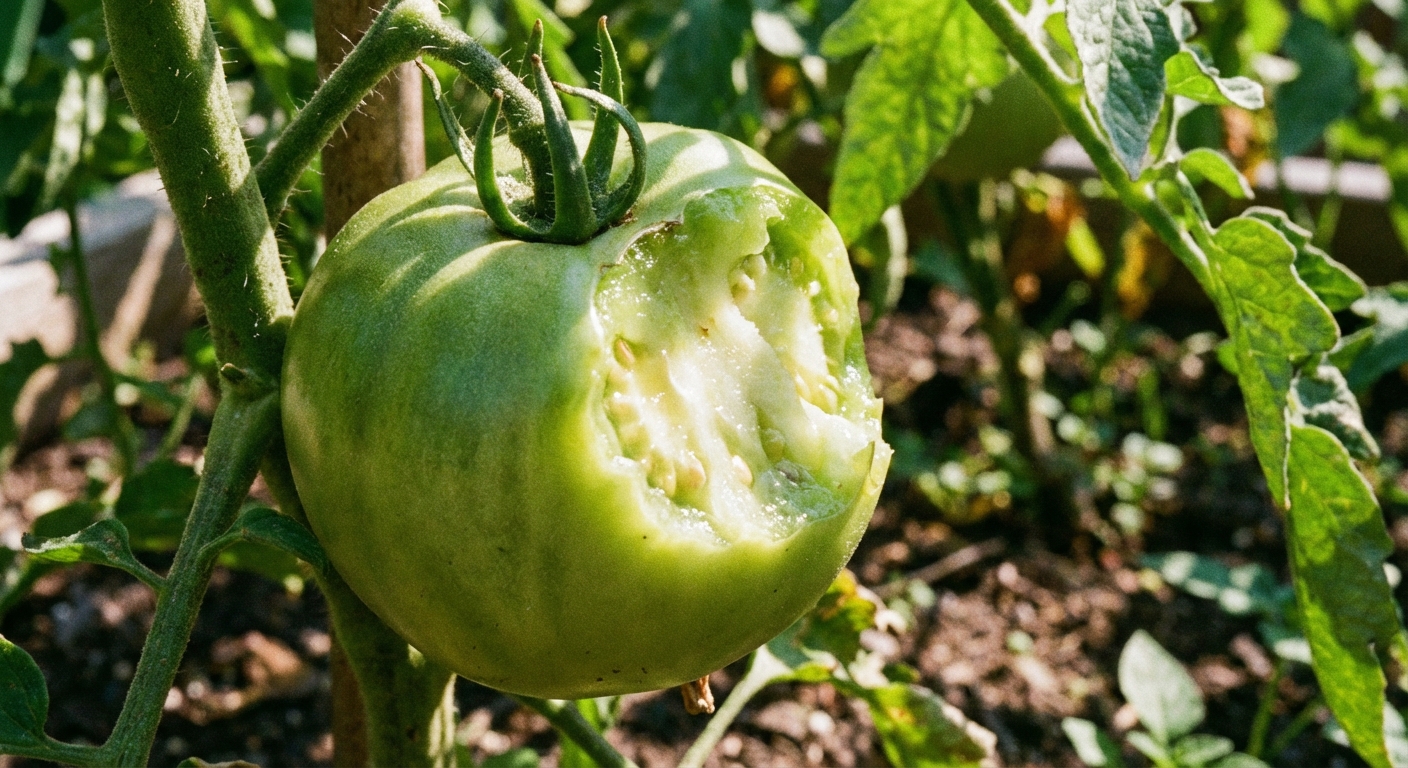
Hornworms are not subtle eaters. They start with leaves, then chew stems, and will happily take bites out of green tomatoes too.
Common symptoms
- Sudden defoliation: whole sections of a plant look “skeletonized” or stripped.
- Clean, scalloped chewing: leaf edges look neatly chomped.
- Damaged fruit: shallow bites or deep gouges in tomatoes, often still green.
- Black droppings: peppercorn-like frass on leaves, stems, or the soil beneath the plant.

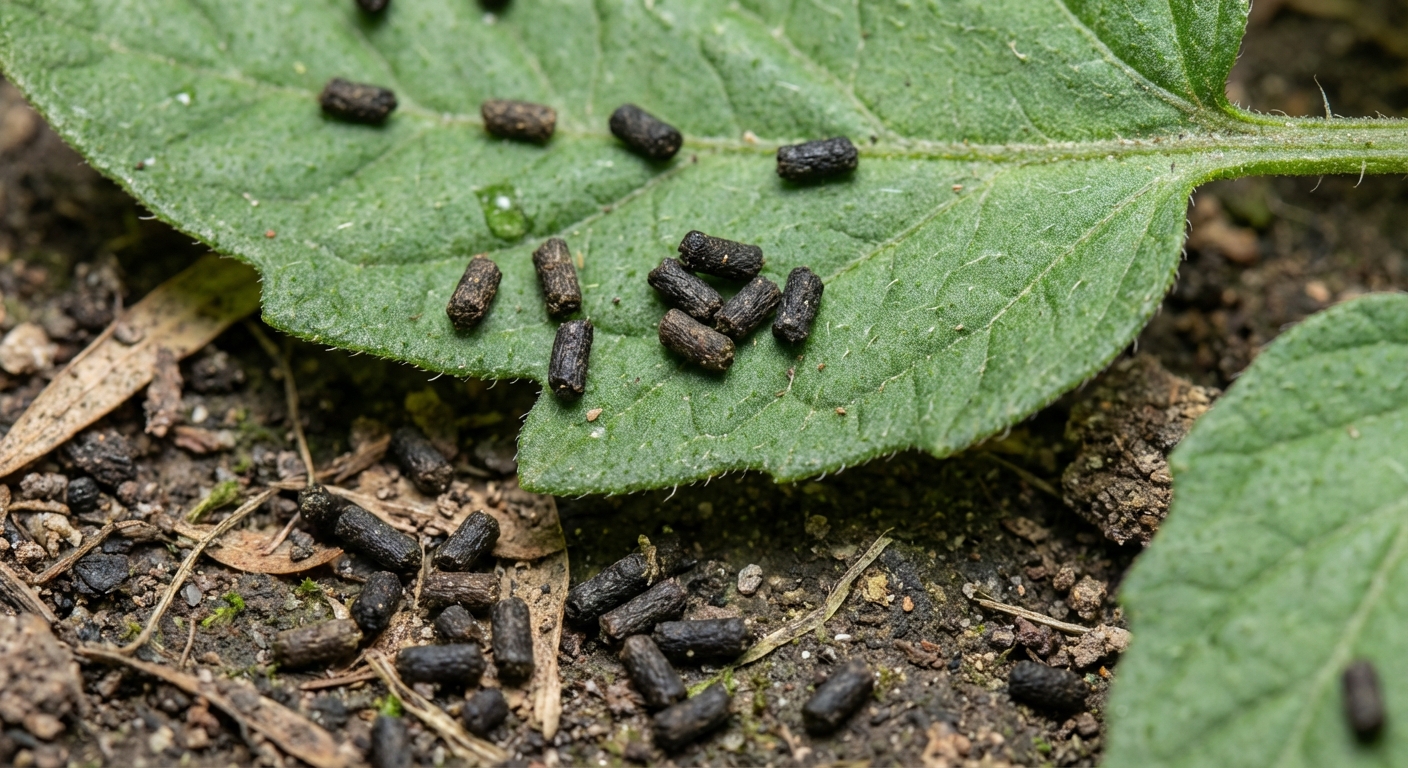
Clara tip: If you see frass, look above it. Hornworms usually camp out on the nearest stem and keep eating where they sit.
Could it be something else?
Other pests can chew tomato leaves, too (like armyworms, cutworms, slugs, and even some beetles). The hornworm giveaway is this combo: lots of fresh chewing up high on the plant, big missing leaf chunks, and those black frass pellets underneath.
Fastest fix: hand-pick
If you only have a few plants, hand-picking is the quickest, cleanest, most effective method. It is also oddly satisfying in a “I am protecting my tomatoes” kind of way.
Where to look
- Near fresh growth: start at the top where new leaves are tender.
- Along the main stems: check the “forks” where branches split.
- Inside the plant: they often sit along interior stems where they are shaded.
- Near damaged fruit clusters: especially if you see fresh gouges.
- Undersides of leaves: slow scan, because they blend in perfectly.
How to find them
- Go out at dusk or early morning. They feed actively in low light.
- Follow the frass trail. It is the garden’s version of breadcrumbs.
- Use a blacklight flashlight if you have one. Hornworms often fluoresce under UV light, which can make them easier to spot at night.
What to do with hornworms after you pick them
- Drop them into a cup of soapy water.
- Or seal them in a bag and dispose of them.
- If you keep chickens, they may happily take them, but offer only what your flock can handle and avoid feeding caterpillars you suspect were exposed to sprays.
Check again for a few nights in a row. A single missed hornworm can undo your good work.
Use Bt (Btk) spray
If you have multiple plants or you keep finding “new” chewed growth, Bt (Btk) is your best organic backup. Bt stands for Bacillus thuringiensis. For hornworms, you want Bacillus thuringiensis var. kurstaki, often abbreviated Btk. It is a naturally occurring soil bacterium that specifically affects caterpillars when they eat treated foliage.
Why gardeners love Bt for hornworms
- Targets caterpillars and is not a broad-spectrum insect killer.
- Does not leave harsh residues when used as directed.
- Works best on small hornworms and helps catch the ones you cannot see.
How to apply Bt effectively
- Spray in the evening to reduce breakdown from sun and to line up with feeding time.
- Coat both sides of leaves, especially new growth.
- Avoid spraying directly onto open blossoms and avoid spraying when bees are actively foraging.
- Reapply after heavy rain and according to the product label. Many gardeners repeat every 5 to 7 days during a flare-up.
- Bt works when they eat it, so do not expect instant knockdown. Most caterpillars stop feeding fairly quickly, then die within a couple of days.
Clara tip: If you are seeing monster-sized hornworms, pick those by hand first. Bt is excellent, but it shines most on the smaller larvae that are easy to miss.
Important: Bt can affect any caterpillar larvae that eat treated leaves, including butterfly and moth caterpillars. Use it only on the plants that need it, and avoid spraying nearby host plants for pollinator species.
Do not remove hornworms with white cocoons
This is one of the few times I will tell you to leave a creepy bug exactly where it is.
If you find a hornworm with white rice-like cocoons stuck to its back, those are cocoons from parasitic braconid wasps (often Cotesia congregata). The wasps laid eggs in the hornworm, and their larvae are doing the pest control for you.
- Do not hand-pick and destroy that hornworm.
- Do not spray it with insecticide or even Bt at that moment.
- Let it be. It will often slow down soon, and the next generation of beneficial wasps will help patrol your garden.
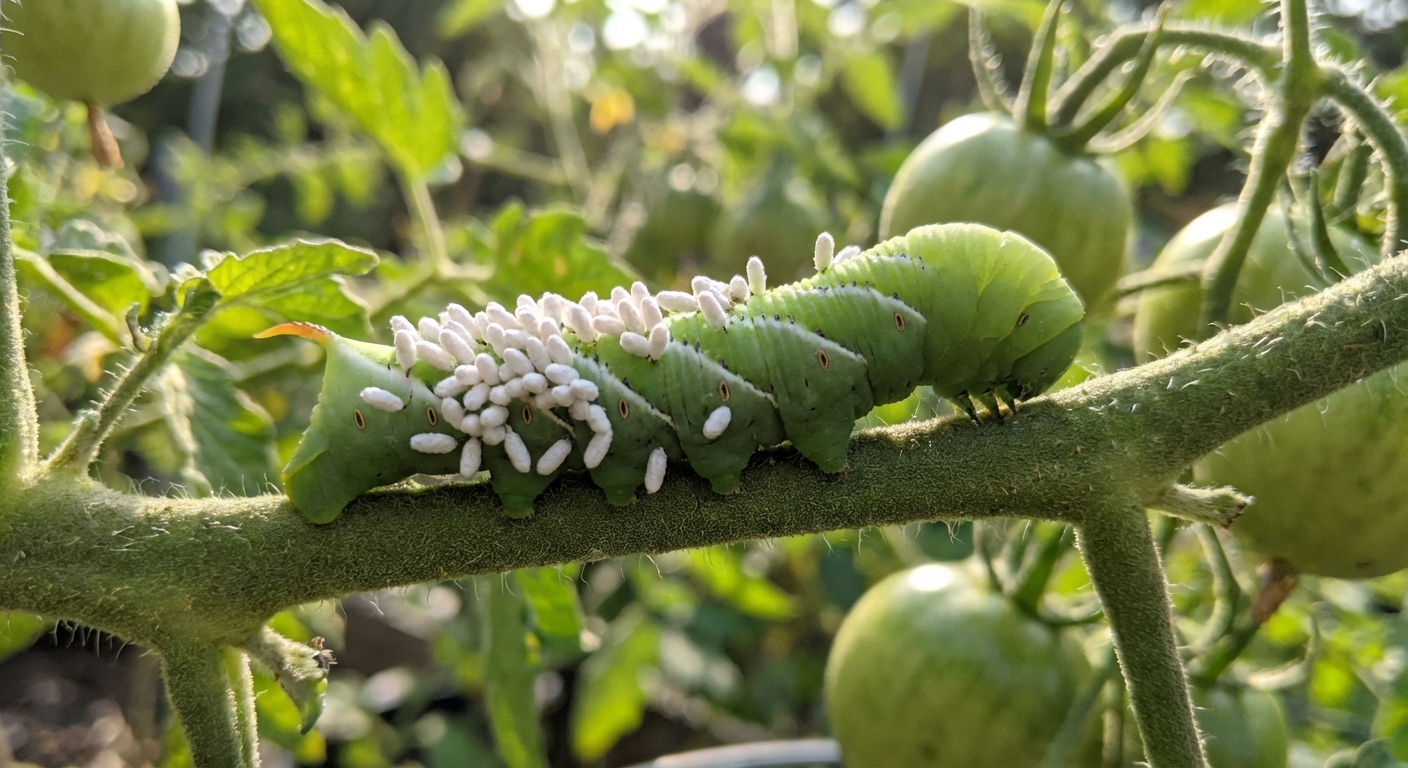
Attract parasitic wasps
Parasitic wasps are tiny, non-aggressive to people, and incredibly effective at keeping hornworms and other pests in check. The adults feed on nectar and pollen, so the easiest way to invite them is to keep a buffet of small, easy-to-access flowers nearby.
Best flowers to plant near tomatoes
- Sweet alyssum
- Dill (let some flower)
- Fennel (great for beneficials, can self-seed)
- Cilantro (bolt-friendly on purpose)
- Yarrow
- Calendula
- Chamomile
Sustainability note: Avoid broad-spectrum insecticides, even “organic” ones, if you want wasps to stick around. Many sprays that kill pests also knock back the beneficials that prevent future outbreaks.
Companion planting that helps
Companion planting will not magically stop hornworms on its own, but it can stack the odds in your favor by confusing pests and supporting beneficial insects.
Good companions for tomatoes
- Basil: easy, useful, and helps create a more diverse planting.
- Marigolds: add color and can support beneficial insect activity.
- Nasturtiums: act as a general “bug magnet” in some gardens and draw predators with their flowers.
- Dill and cilantro: when allowed to flower, they are excellent for beneficial wasps.
If you have room, planting a little mixed border around your tomato bed often helps more than any single “magic” companion plant.
Prevention
1) Inspect regularly
During peak season, do a quick hornworm check 2 to 3 times per week. Five minutes of scouting beats losing half a plant overnight.
2) Encourage biodiversity
More flowers, more beneficial insects, more birds, and more balance. Monocultures are an all-you-can-eat sign for pests.
3) Rotate nightshades when possible
If you can, avoid planting tomatoes in the exact same spot every year. Rotation will not eliminate hornworms, but it supports overall soil and pest health.
4) Light cleanup at season’s end
Remove and compost healthy plant debris, and dispose of heavily infested material if needed. Hawk moth pupae can overwinter in soil, so gentle cultivation and good garden hygiene can reduce carryover.
Quick action plan
- Tonight: Look for frass, then hand-pick every hornworm you can find (check stems, forks, and the plant interior).
- Tomorrow evening: If damage is still appearing, apply Bt (Btk) to tomato foliage (top and underside). Avoid spraying open flowers.
- All week: Re-scout at dusk. Reapply Bt after heavy rain or per label.
- This season: Add alyssum, dill, or calendula near tomatoes to support parasitic wasps.
- Always: Leave hornworms with white cocoons in place. Those are beneficials at work.
If you want, tell me what you are seeing on your plant, including whether you spotted frass or damaged fruit, and I can help you choose the fastest natural approach for your garden setup.