
How to Get Rid of Squash Vine Borers

If your squash vine looks perky in the morning and dramatically collapsed by dinner, you are not imagining things. Squash vine borers are one of the fastest ways to go from “Look at my zucchini!” to “Why is my plant suddenly giving up on life?”
The good news is you can beat them with a mix of quick action and well-timed prevention. I will walk you through how to identify the moth and larvae, what to look for on the vine, and the most effective organic controls, including timed Bt applications, row covers, crop rotation, trap cropping, and a little bit of careful vine surgery.
What squash vine borers are (and why they are so destructive)
Squash vine borers are the larvae of a day-flying moth (Melittia cucurbitae). The adult moth lays eggs near the base of squash plants. When the eggs hatch, the tiny larva bores into the stem and feeds inside, where it is protected from most sprays and predators.
That internal feeding blocks water flow like a clogged straw. The plant wilts quickly, even when the soil is moist.
Plants they love most
- Zucchini and summer squash (often hit hardest)
- Pumpkins
- Winter squash like butternut and acorn
- Gourds
Cucumbers and melons are less preferred and less commonly attacked because squash vine borers mainly target Cucurbita crops. Still, under heavy pressure, keep an eye on any cucurbits in the area.
How to identify squash vine borer moths and eggs
Adult moth ID
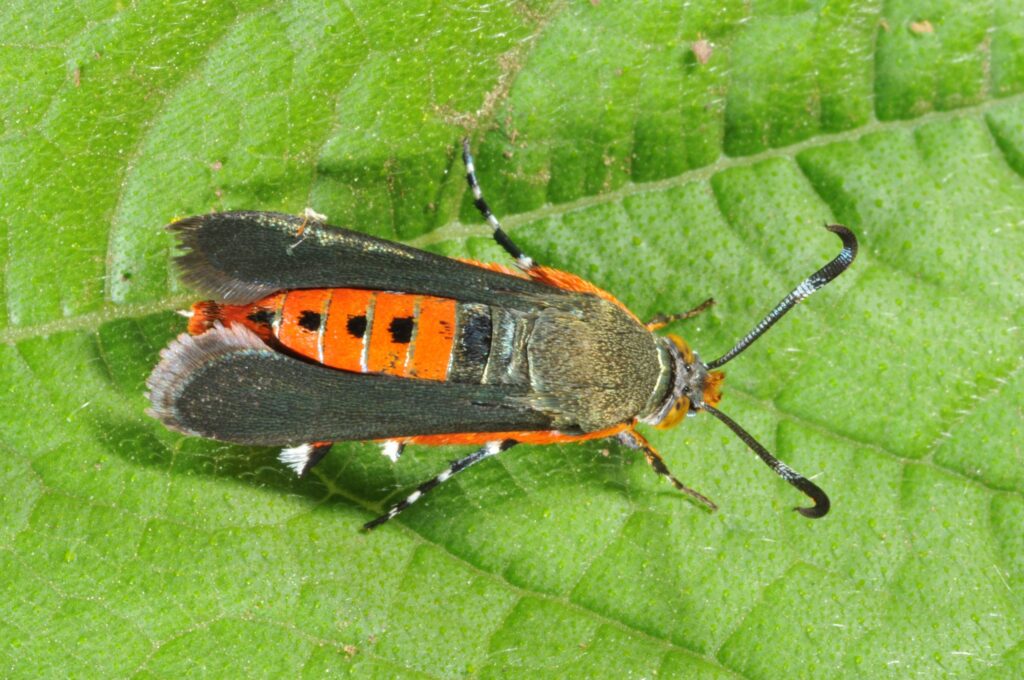
The adult is easy to misread at first because it looks more like a wasp than a moth.
- Active in daytime, especially sunny mornings
- Orange-red abdomen with dark markings
- Greenish-black body
- Wings often look clear or smoky
- Behavior: zig-zag flying around the base of plants, landing to lay eggs
Egg ID
Eggs are small, flat, and coppery to reddish-brown. They are usually laid singly near the base of the stem, on leaf stems, or on the underside of leaves close to the soil line.
- Size: about the size of a pinhead
- Color: amber, copper, or rust
- Placement: low on the plant, often within the first 6 inches of stem
If you are checking plants daily during egg-laying season, you can often prevent the whole problem by removing eggs before they hatch.
How to identify larvae and the key signs of infestation
Larva ID
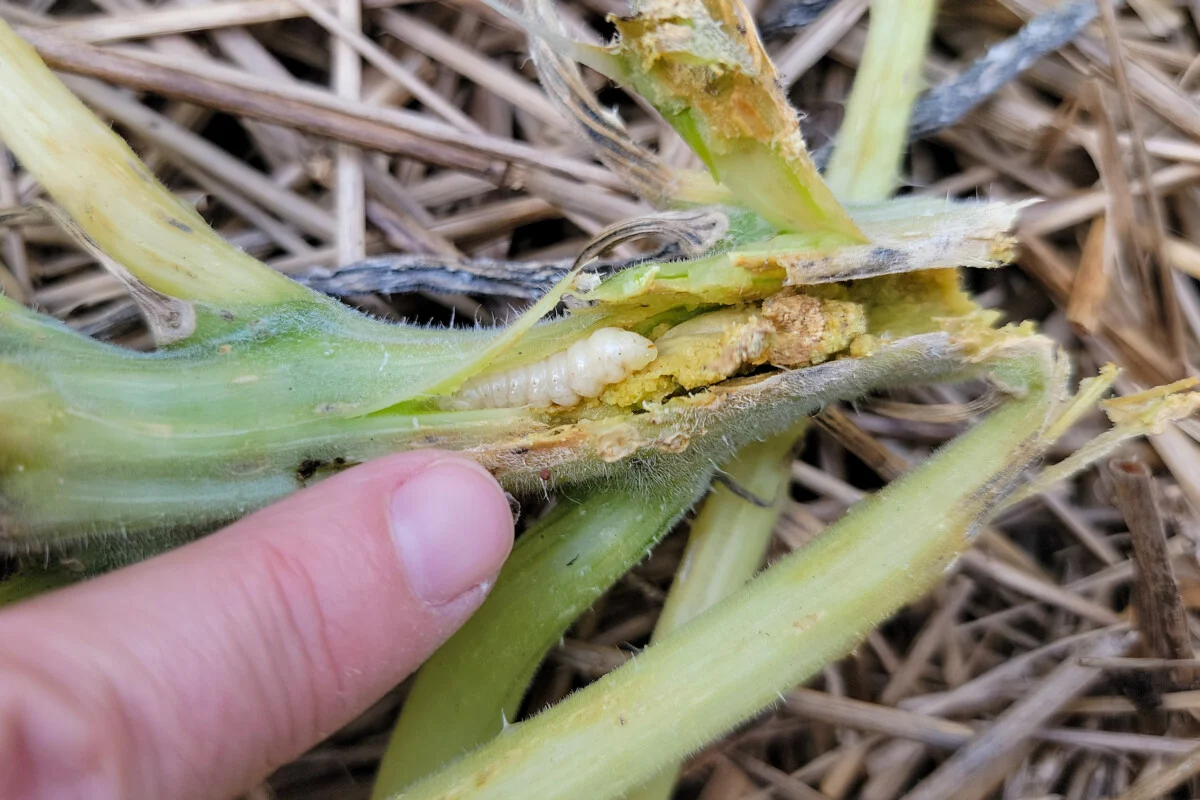
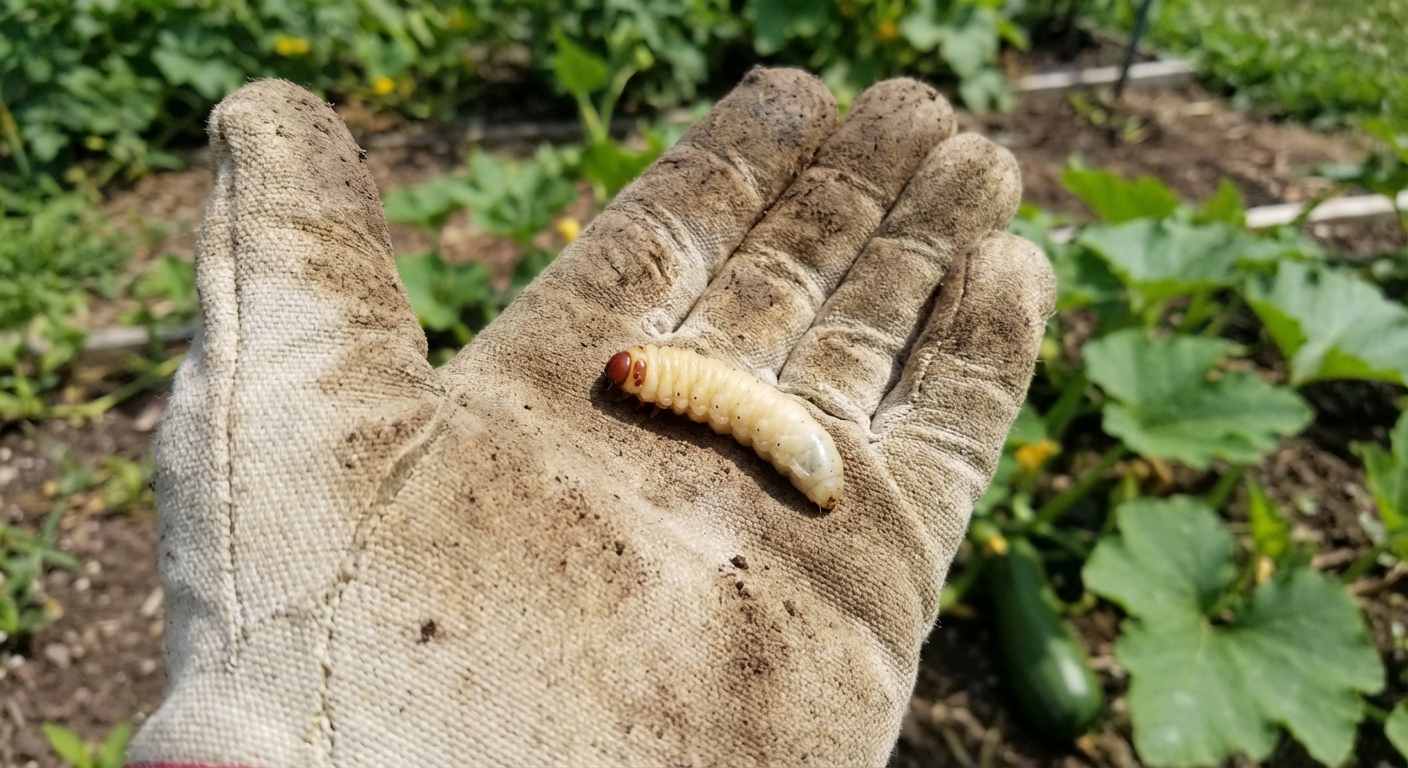
The larva is creamy white with a brown head. Once it is inside the vine, you usually will not see it unless you open the stem.
Classic symptoms
- Sudden wilting of one runner or the whole plant, often in midday
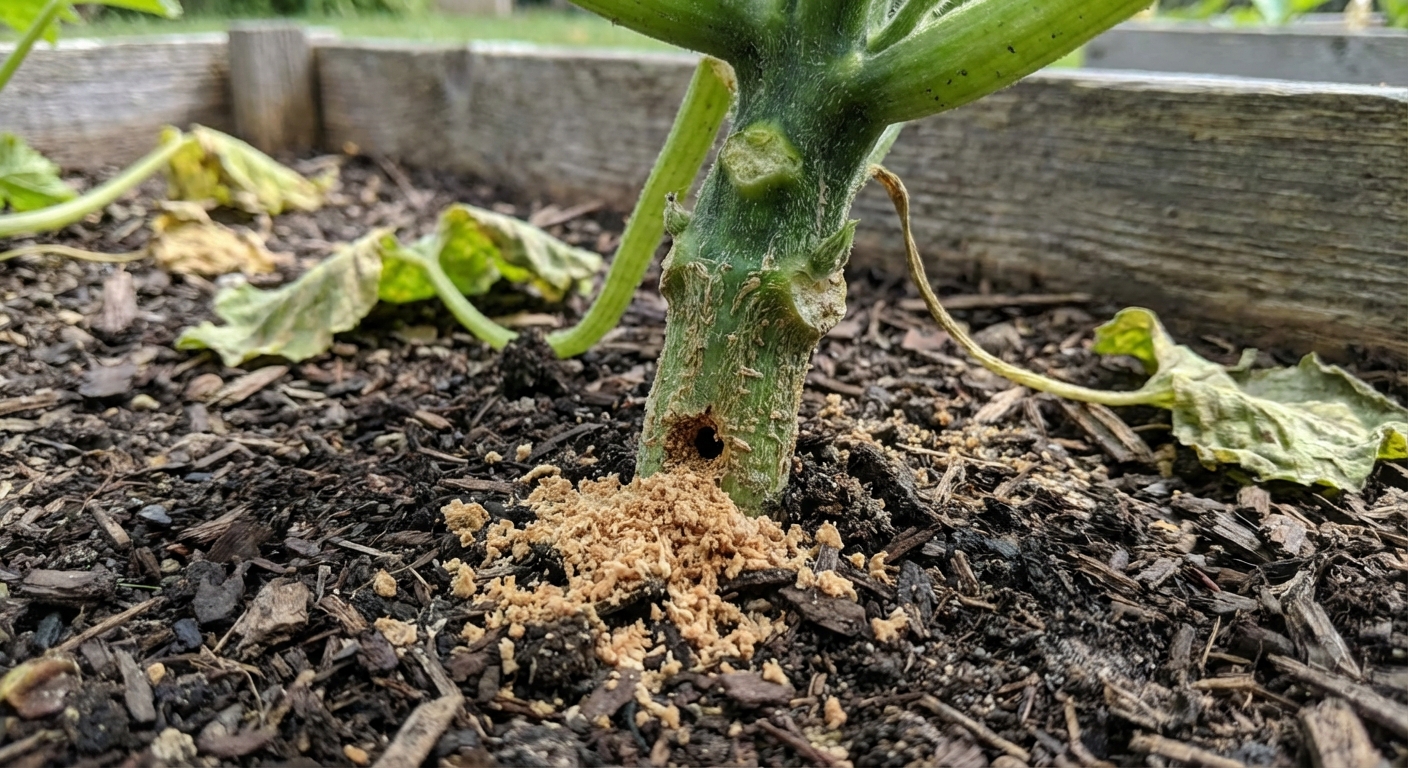
- Sawdust-like droppings (frass) at the base of the stem or at a small hole in the vine
- Stem feels mushy or looks split near the soil line
- Yellowing leaves that worsen quickly
Important: Wilting alone can be heat stress. Heat-stressed plants often perk back up by evening or the next morning. Squash vine borer damage tends to keep getting worse, especially when you also see frass near the stem base.
Quick reality check: Other problems can cause wilting too. If you do not see frass or stem damage, consider drought, root damage, or bacterial wilt (often linked to cucumber beetles) before you start cutting vines.
Timing matters (and it is local)
With squash vine borers, the calendar is half the battle. Adult emergence and egg laying can be a short burst in some regions, but it can also stretch out for weeks, and warm climates may get multiple generations.
General timing
- Warm climates: adults can appear in late spring and may have multiple generations
- Cooler climates: often a big first wave in early to mid-summer
If your area has a known “vine borer season,” plan to protect plants before you see symptoms. Once larvae are inside the stem, prevention turns into rescue.
Use local alerts (it helps)
If your local extension office offers phenology updates, degree-day tracking, or pest alerts, use them. They can help you time row covers, egg checks, and Bt applications to when moths are actually flying where you live.
A simple seasonal strategy
- Planting time: set up covers and barriers early
- Egg-laying window: inspect daily and use Bt preventively on stems
- After flowering begins: uncover for pollinators or hand-pollinate under cover
- Late season: destroy vines and rotate beds to reduce next year’s pressure
Fast rescue plan: what to do when a plant is already wilting
If you see frass or a sudden collapse, act the same day if you can. You are trying to stop feeding and help the plant re-root before the damage becomes fatal.
Step 1: Confirm it is vine borer
- Look for frass at the stem base.
- Check for a tiny hole or split in the vine.
- Gently press the stem. Infested tissue often feels softer.
Step 2: Use a simple sequence
If you are deciding what to do first, here is a practical order:
- First: mound moist soil or compost over the wounded area and bury a few vine nodes to encourage new roots.
- If you caught it early: use Bt as a targeted stem treatment (details below).
- If wilting worsens or frass keeps appearing: do vine surgery and remove the larva.
Organic control methods that actually work
1) Bt (Bacillus thuringiensis) targeted stem applications
Bt var. kurstaki (often labeled “Bt for caterpillars”) is a biological control that affects caterpillar-type larvae when they ingest it. Since vine borers feed inside the stem, the goal is to put Bt where newly hatched larvae will chew.
Best practice: Apply Bt to the lower stem (and leaf stems near the base) during the egg hatch window. Reapply after rain and on a schedule per label instructions.
- Apply in the evening to reduce UV breakdown.
- Be consistent during peak flight and egg hatch. One application rarely cuts it.
- Bt is most effective on small larvae. Once they are larger and deeper in the vine, mechanical removal can be faster.
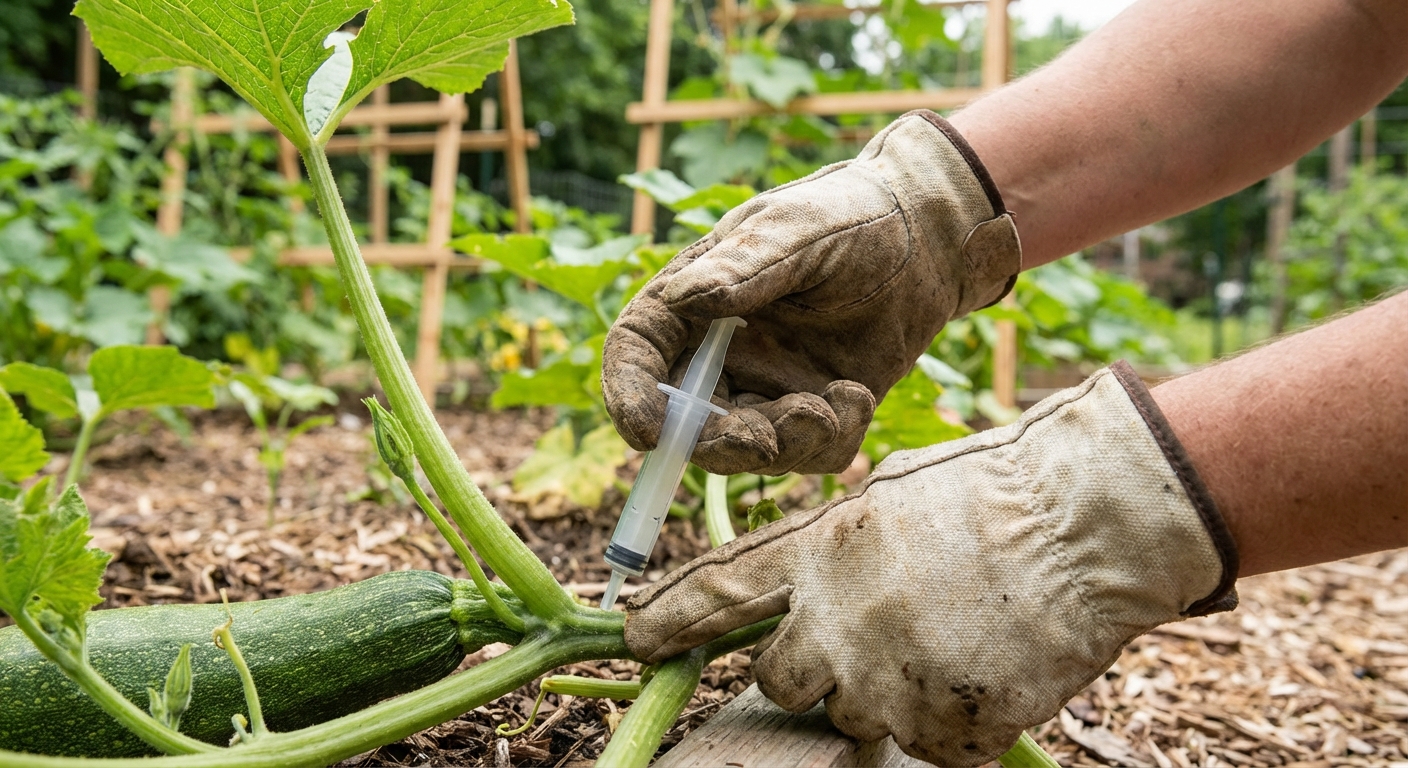
About “Bt injections”: Some gardeners use a syringe to deliver diluted Bt into the stem near a suspected entry point. This is not a universal, label-directed method for many products, so treat it as an optional gardener hack, not the main recommendation. If you try it, follow the product label, use clean tools, sanitize between plants, and understand results can vary.
Safety note: Always follow the product label for dilution, frequency, and allowed crops.
2) Row covers (the prevention powerhouse)
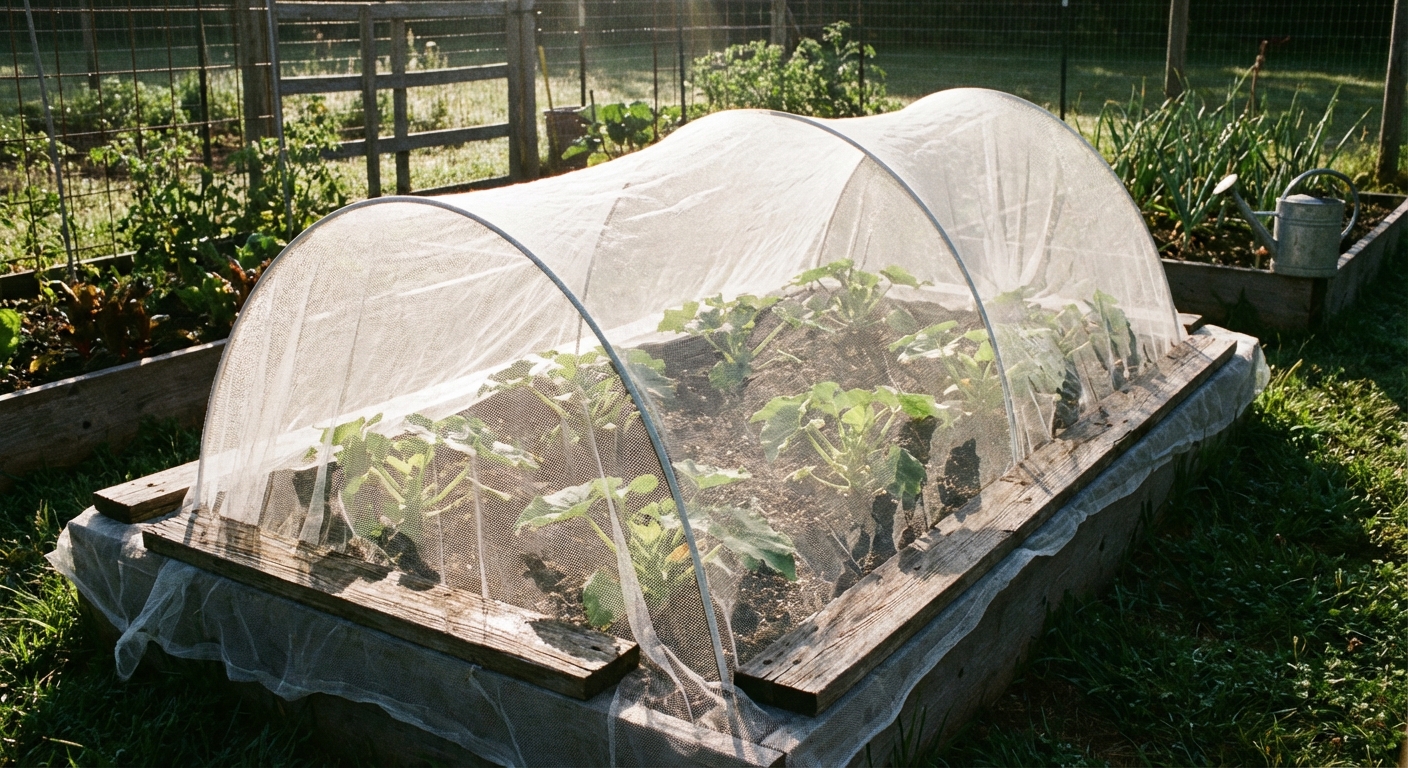
If I could pick only one preventive method, it would be row covers set up early. Lightweight insect netting or floating row cover keeps the adult moth from laying eggs on your plants.
How to use row covers correctly
- Cover plants at planting or immediately after transplanting.
- Seal edges with soil, boards, pins, or sandbags so moths cannot sneak in.
- Keep covers on through the main egg-laying window.
Pollination reality check
Squash need pollination to fruit. Once female flowers appear, you have two options:
- Uncover during the day and re-cover in late afternoon (works best if moth pressure is low).
- Hand-pollinate and keep covered (works best if pressure is high).
Hand-pollinating is simple: pick a male flower, peel back the petals, and dab the pollen onto the center of a female flower (the one with the tiny fruit behind it).
3) Vine surgery (yes, it sounds dramatic, but it works)
When you know a larva is inside, careful surgery can save the plant. I like to think of it as plant first aid with a clean blade and a calm breath.
What you need
- A sharp, clean knife or razor blade
- Rubbing alcohol for sterilizing
- Gloves (optional, but nice)
- Moist soil or compost to mound afterward
Step-by-step vine surgery
- Find the entry area: Look for frass and a small hole, usually near the base.
- Slice lengthwise: Make a shallow cut along the stem, following the vine, not across it. Keep the cut as small as possible.
- Remove the larva: Gently open the slit and pull out the grub.
- Mound soil: Cover the cut section with moist soil or compost, and mound along the vine nodes to encourage new roots.
- Water deeply: Keep the plant evenly moist for a week while it recovers.
If the plant is already sprawling, you can bury several nodes along the vine. Squash are wonderfully willing to root wherever they touch soil, and those extra roots can keep the plant producing even if the main stem took a hit.
4) Trap cropping (a sneaky organic helper)
Trap cropping is exactly what it sounds like: you plant something vine borers find irresistible so they lay eggs there instead of on your main crop.
- Common trap crop: Blue Hubbard squash is a classic choice because it is highly attractive.
- How to use it: Plant the trap crop a little earlier than your main squash so it is lush when moths arrive, and place it at the edge of the squash patch.
- The key: A trap crop only works if you are willing to be ruthless. Inspect it often and destroy heavily infested vines (or remove eggs and larvae aggressively), or you can accidentally raise a bigger next generation.
5) Crop rotation and fall cleanup (protect next year’s garden)
Squash vine borers overwinter as pupae in the soil. That means last year’s squash bed can become this year’s problem. Rotation helps, but it is not a guarantee because adults can fly in from nearby gardens.
Rotation basics
- Avoid planting squash-family crops in the same spot for 2 to 3 years if possible.
- Move new plantings as far from last year’s cucurbit bed as your space allows.
End-of-season cleanup
- Pull and destroy vines after harvest. Do not leave them to decompose in place if you had borers.
- Remove any vines with hollowed stems from the garden bed.
- In small gardens, you can lightly cultivate the top couple inches of soil in fall to expose pupae to predators and weather. Do this thoughtfully to avoid damaging soil structure and beneficial life.
6) Physical egg removal (the daily habit that pays off)
If you have the patience for a quick daily check during the peak season, you can drastically reduce infestations.
- Inspect the lower stem and leaf stalks.
- Scrape off eggs with a fingernail or a piece of tape.
- Drop eggs into soapy water.
This is especially effective when paired with row covers. If a moth finds a gap, you will catch the eggs before they become a full-blown stem invasion.
7) Monitoring tools (to time your response)
If you want to get ahead of the wave, monitoring helps you act before you see wilting.
- Pheromone traps can help you confirm moth activity and time inspections and Bt applications. They are best as a monitoring tool, not a standalone cure.
- Yellow sticky traps can catch a mix of insects and are less specific, but they can still signal that pest activity is ramping up.
Common questions gardeners ask me about vine borers
Will a wilted plant recover?
Sometimes, yes. If you remove the larva early and help the plant grow new roots by burying vine nodes, many zucchini and squash plants rebound and keep producing.
Should I pull the whole plant?
If the stem is completely hollowed, mushy, or the plant is repeatedly re-infested, pulling can be the best option. In that case, focus on protecting any remaining squash with covers and timed Bt applications.
Do resistant varieties exist?
Some gardeners report fewer issues on butternut-type squash (especially varieties of Cucurbita moschata) because the stems can be more solid and vigorous. Think of it as tolerance, not total resistance. Zucchini and many Cucurbita pepo types are often the highest risk in borer-heavy areas.
What about beneficial nematodes?
Beneficial nematodes can help reduce soil-dwelling stages in some settings. They are not an instant fix for larvae already inside vines, but they can be part of a longer-term organic program, especially when applied according to label timing and soil conditions.
A simple spring prevention checklist
If you want the most bang for your effort, do these in order:
- Before planting: Plan crop rotation. Avoid last year’s squash bed if you can.
- At planting: Install row covers immediately and seal the edges.
- During early growth: Check under covers occasionally for trapped moths or gaps.
- As the season warms: Start stem inspections and remove eggs daily during peak activity.
- Peak pressure window: Apply Bt to lower stems on a schedule per label, especially after rain.
- If symptoms appear: Mound soil first, then use vine surgery if frass persists or wilting worsens.
- After harvest: Remove vines and keep the bed clean to reduce overwintering pupae.
And if you do everything “right” and still lose a plant, please do not take it personally. Vine borers are persistent, and gardening is a long conversation with nature, not a test you can fail. The goal is fewer losses and more squash on your cutting board, season by season.