
How to Get Rid of Japanese Beetles Naturally

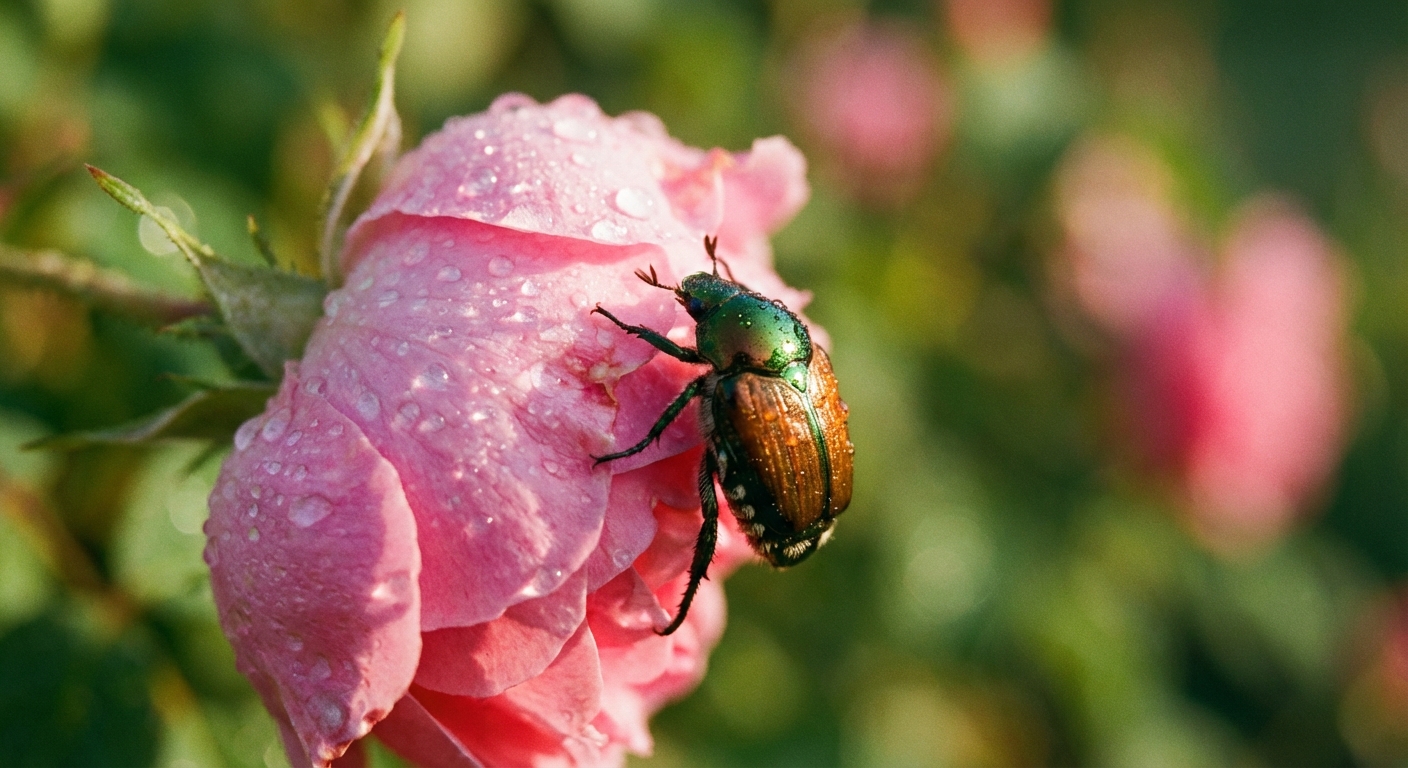
Japanese beetles have a special talent for showing up the week your garden looks its best. One day your roses are perfection, the next you have lacy leaves, ragged petals, and a little metallic-green party happening right in the sunshine.
The good news: you can knock them back naturally without carpet-bombing your yard. The secret is to tackle adults (the shiny leaf-chewers) and grubs (the lawn and soil stage) at the right times, using a few methods that work together.
Quick note on timing: In many areas adults show up sometime from late June through August, but local timing varies. Start the moment you see the first one.
Quick ID: Is it Japanese beetles?
Before you treat, make sure you are chasing the right culprit. Japanese beetles are about 3/8 inch long, with a metallic green head and thorax, copper-brown wing covers, and little white tufts along the sides of their abdomen.
Classic damage
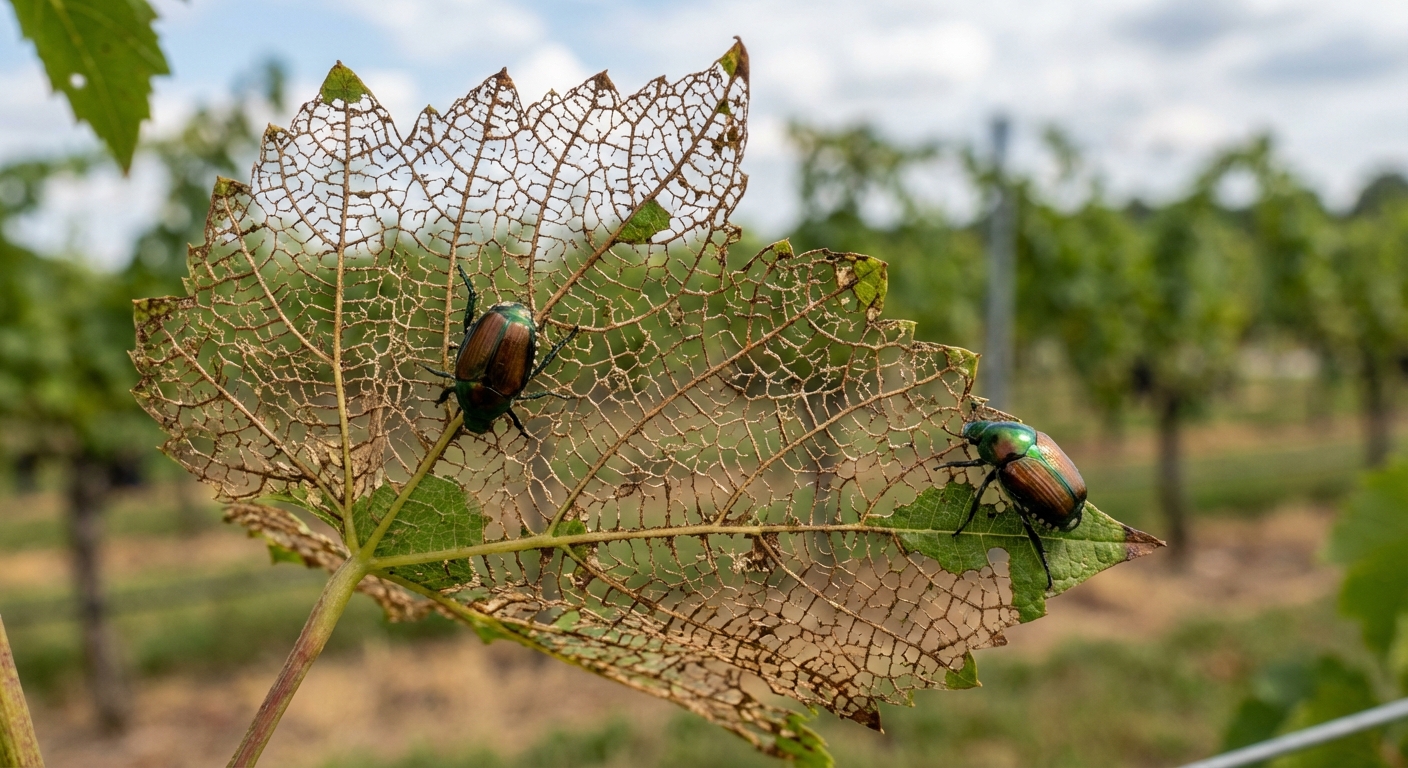
- Skeletonized leaves: They chew the soft tissue between leaf veins, leaving a lacy network behind.
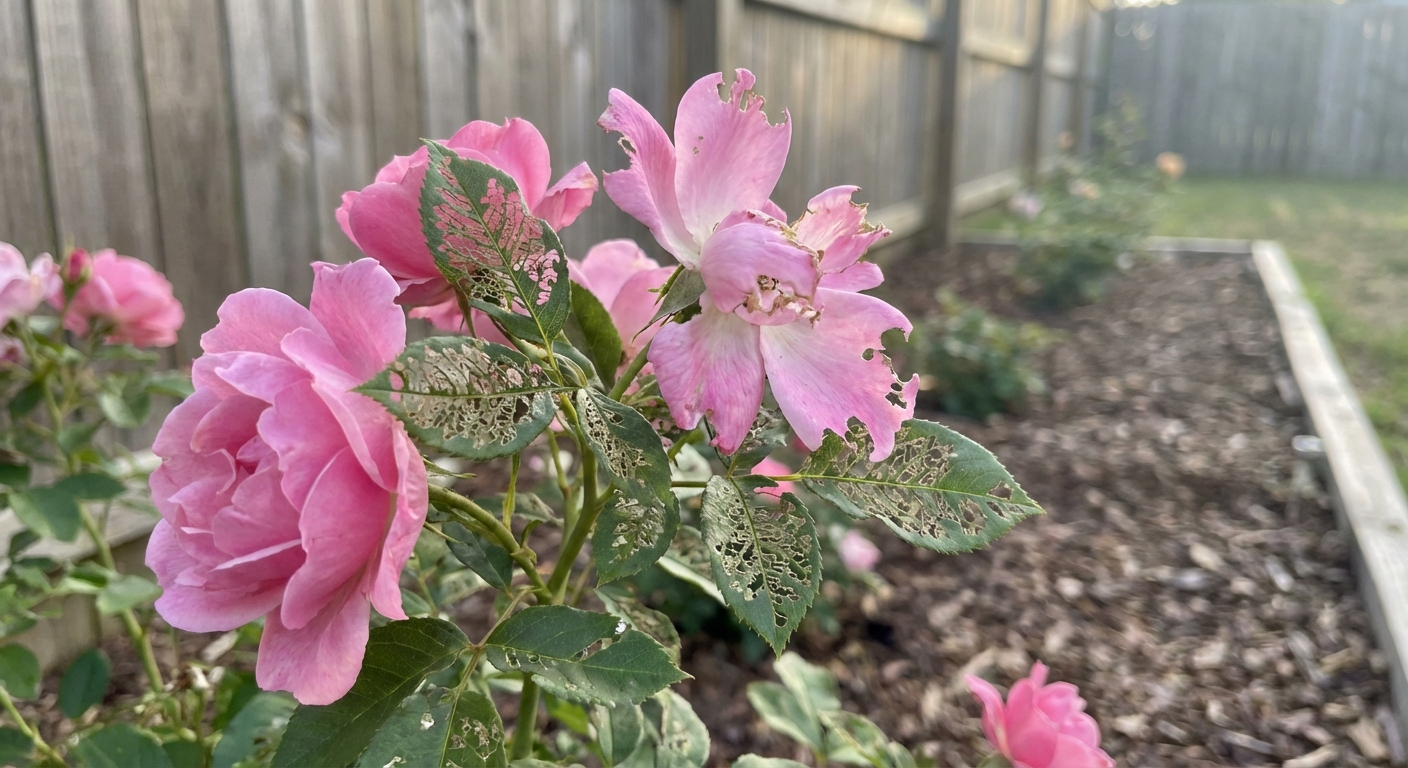
- Ragged flowers: Especially roses, where petals look shredded and buds can be ruined before opening.
- Cluster feeding: You often see several beetles together because early feeding damage and scent signals can draw in more beetles.
Common look-alikes
- Green June beetles: Larger and more oval. They are clumsy fliers and their feeding habits differ.
- Asiatic garden beetles: Smaller, more uniformly brown, and more active at night.
If you see metallic green plus copper and those little white side tufts, you are in Japanese beetle territory.
What they hit hardest
Roses
Roses are basically a dinner bell. You will see petals chewed, edges ragged, buds damaged, and leaves skeletonized. Beetles often start on the top, sunniest parts of the plant.
Grapes
On grapevines, Japanese beetles can defoliate quickly in midsummer. Leaves turn into see-through lace, which reduces the vine’s ability to ripen fruit and store energy for next year.
Vegetables
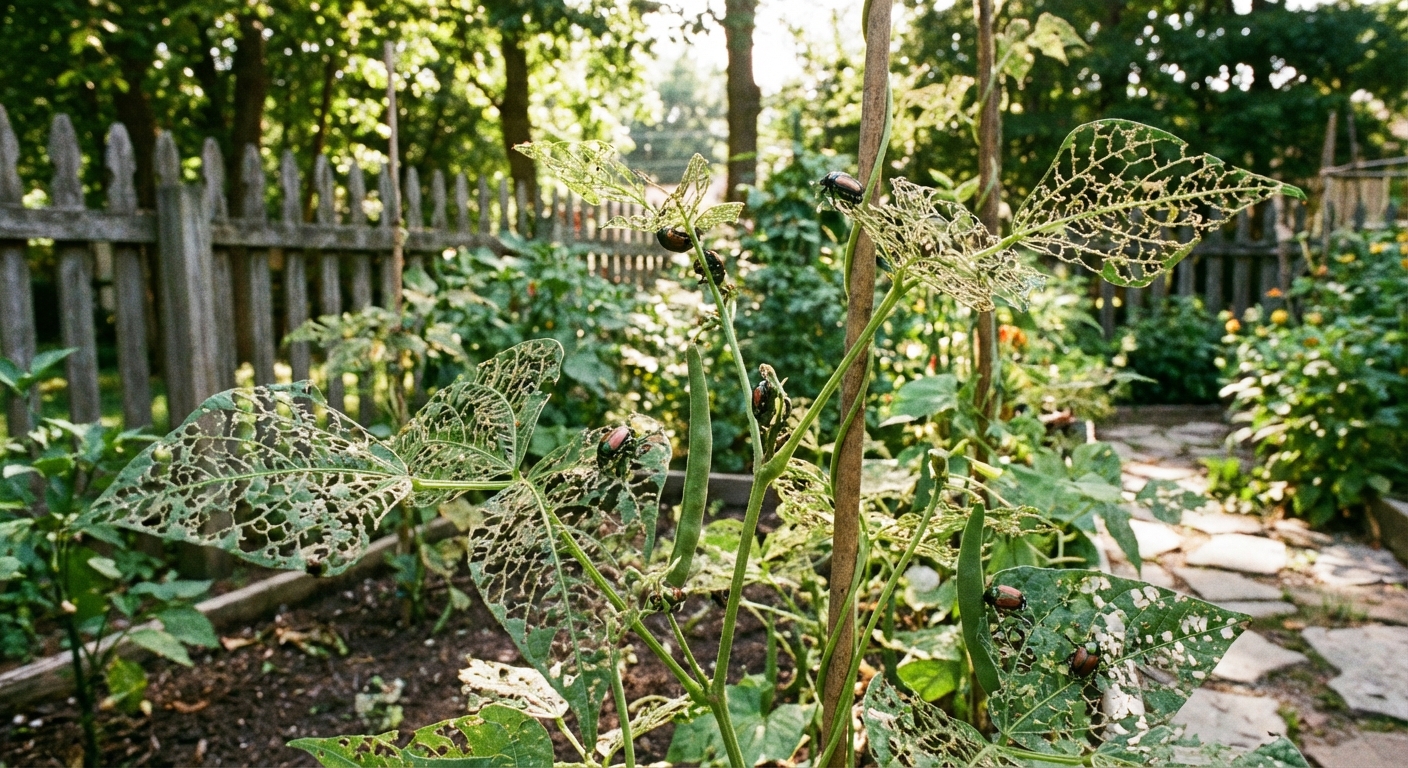
They are especially fond of beans, okra, corn silk, and some fruit crops. Damage ranges from lacy leaves to missing chunks. On corn, beetles may clip silks which can reduce pollination and ear fill.
Natural control methods
If you only do one thing, do this: start early and be consistent for 10 to 14 days when adults first appear. Early feeding damage helps call in reinforcements, so knocking down the first wave matters more than people think.
1) Hand-pick
I know, I know. But hand-picking is extremely effective for Japanese beetles because they are slow, social, and predictable.
- When: Early morning is ideal, when beetles are sluggish.
- How: Hold a container of soapy water under the beetle and tap it in. They drop straight down.
- What soap: A small squirt of dish soap in a quart or two of water is enough.
- How often: Daily during peak emergence. Every other day at minimum.
Tip from my “talk-to-the-ferns” playbook: pick quietly and steadily for a week and you will feel the garden exhale. The population drops faster than most people expect.
2) Beetle sprays (use thoughtfully)
Sprays can help reduce feeding, but they work best as repeat treatments and when you spray correctly. Also, not all “organic” options behave the same.
Btg (best modern organic option for adults)
Bacillus thuringiensis galleriae (often labeled as Btg) is currently a gold-standard organic option for adult Japanese beetles. It targets beetles and is widely considered more pollinator-friendly than many broad-spectrum sprays when used as directed.
- Choose: A product labeled for Japanese beetles and approved for your specific plants.
- Timing: Spray in the evening.
- Repeat: Follow label intervals and reapply after heavy rain.
Neem (know what you are buying)
Neem can help reduce feeding and egg-laying, but results vary by product.
- Neem oil: Mostly a contact approach. Coverage matters a lot.
- Azadirachtin products: Neem-derived, often labeled separately. These act more like an antifeedant and growth regulator, and may perform differently than straight neem oil.
- Timing: Spray in the evening to reduce risk to pollinators and avoid leaf burn in heat.
- Coverage: Coat upper and lower leaf surfaces.
- Repeat: Typically every 5 to 7 days during active beetle pressure, and after heavy rain. Always follow the label.
Important: Avoid spraying open blooms whenever possible. Even organic sprays can harm beneficial insects if they are hit directly.
3) Row covers and netting
For beans and other susceptible vegetables, lightweight insect netting or row cover can be a game-changer.
- Install before beetles arrive, then secure edges so beetles cannot crawl underneath.
- Easy example: You can keep beans covered most of the time. For crops that need insect pollination, such as squash, you may need to uncover during flowering or hand-pollinate.
4) Traps (only if placed correctly)
Japanese beetle pheromone traps are notorious for one reason: they can draw in additional beetles from surrounding areas. If the trap is too close to your favorite plants, the extra traffic can mean extra damage.
- If you use traps: Put them as far from prized plants as practical (often 30+ feet), ideally at the property edge and downwind if you can.
- Use as a lure-away strategy: Put the trap away from the rose bed, not in it.
- Empty often: A full trap stops trapping and starts stinking.
- Monitor: If damage increases near the garden, move the trap farther away or discontinue.
If your yard is small, I usually skip traps and focus on hand-picking plus grub control.
5) Companion planting (support, not a shield)
Companion planting will not erase a heavy infestation. Evidence for specific “deterrent” plants against Japanese beetles is mixed, so I treat this as support, not magic.
- What it does well: Adds diversity, boosts habitat for beneficial insects, and makes the garden less of a monoculture buffet.
- Great support plants nearby: dill, fennel, yarrow, alyssum, and native flowers help bring in predators and parasitic insects that support your garden’s balance.
Think of it as your garden’s background immune system. Helpful, but not a standalone cure.
Grub control that matters
Adult beetles are the loud problem, but grubs are the next generation. Japanese beetle grubs live in soil and turf, feeding on roots. If you treat grubs at the right time, you shrink next summer’s adult swarm.
Check for grubs first
Before you treat the whole lawn, confirm they are actually there.
- Cut and lift a 1 foot by 1 foot patch of turf (a flat shovel works).
- Peel it back a few inches and count the C-shaped grubs in the top couple inches of soil.
- If you find several in one small patch and you also see turf that lifts like a loose carpet, treatment is more likely to be worth it. Local extension offices often publish thresholds for your region.
Milky spore (long game)
Milky spore is a bacterium (Paenibacillus popilliae) that targets Japanese beetle grubs specifically. It is a slow-build, long-game approach that can persist in soil for years once established.
- Best for: Areas with recurring Japanese beetle problems year after year.
- Timing: Apply when young grubs are present (late summer to early fall is usually ideal).
- Expectations: This can take 2 to 5 years to really build and show strong results.
- Notes: Efficacy can be inconsistent in cooler climates with shorter warm-soil seasons. It tends to perform better where Japanese beetles are a steady, long-term problem and soils warm well in summer.
Beneficial nematodes (faster biological help)
Beneficial nematodes are microscopic organisms that seek out and infect soil-dwelling pests. For Japanese beetle grubs, look for species commonly sold for grub control such as Heterorhabditis bacteriophora. You may also see Steinernema glaseri marketed for grubs, but H. bacteriophora is a common go-to for Japanese beetle larvae.
- Timing: Late summer to early fall when grubs are small and near the surface, or in spring if you missed fall (spring is often less efficient because grubs are bigger and may be deeper).
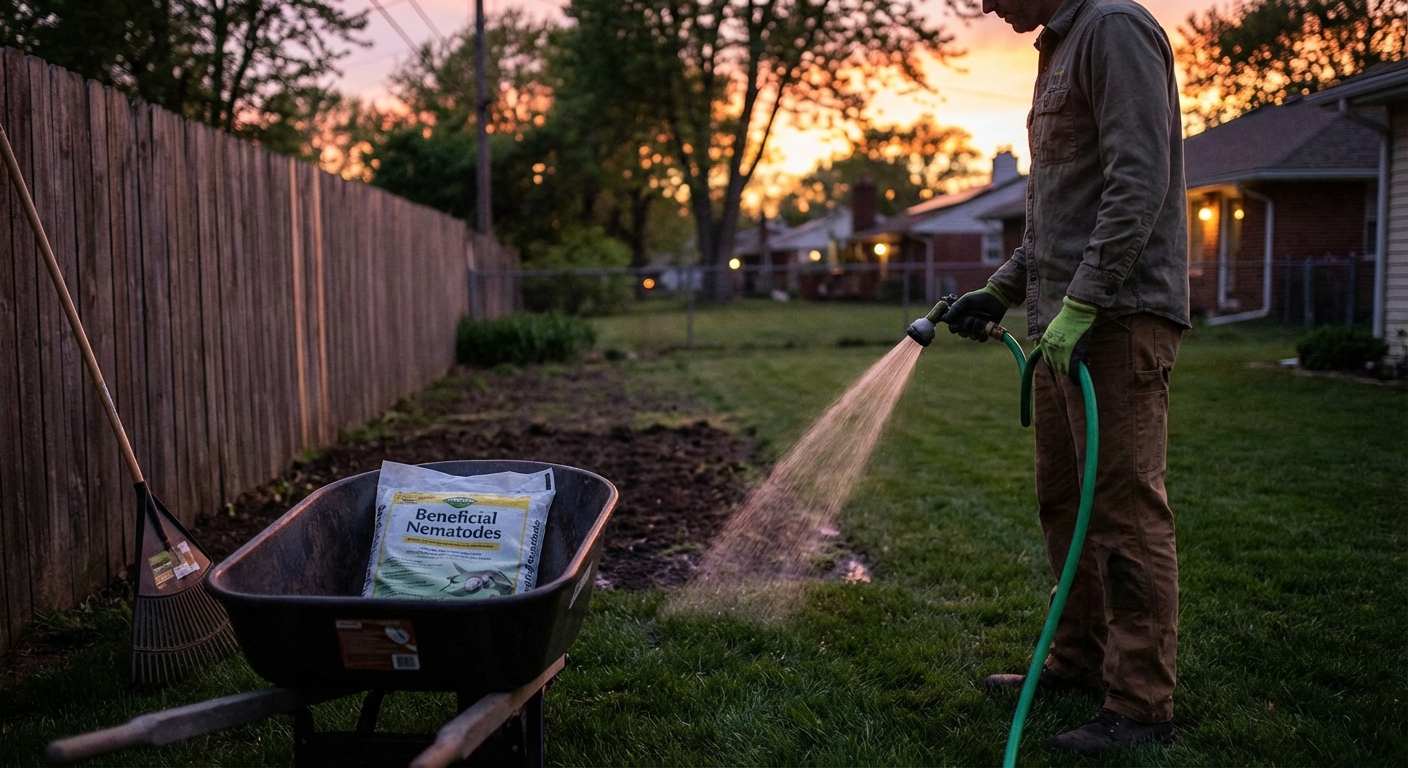
- How to apply: Water the area first, apply nematodes in the evening or on a cloudy day, then water again to wash them into the soil.
- Soil moisture matters: Keep soil evenly moist for about 1 to 2 weeks so nematodes can work.
- Avoid: Applying in hot, dry conditions or in direct blazing sun.
If you only pick one grub treatment and you want a more immediate biological impact, nematodes are usually my first choice.
Seasonal timeline
Japanese beetle control gets dramatically easier when you line your actions up with their life cycle. Here is the simple seasonal rhythm most gardeners can follow.
Early spring
- Scout: Watch for past hot spots in lawn and garden beds.
- If you had heavy damage last year: Consider a spring nematode application when soil warms and grubs are active, knowing spring control is often less efficient than fall because grubs are bigger and may be deeper.
- Strengthen plants: Mulch, water deeply, and avoid excessive nitrogen which can create extra-tender growth beetles adore.
Early to mid-summer
- Start hand-picking immediately when you spot the first beetles.
- Use Btg or neem as a repeat tool on foliage, applied in the evening, focusing on leaves more than blooms.
- Protect vegetables with netting or row cover where practical.
- Be consistent for 10 to 14 days: This is often the turning point.
Late summer to early fall
- Apply beneficial nematodes when young grubs are near the soil surface.
- Apply milky spore if you want long-term suppression and it is a fit for your region and yard.
- Keep soil moist after application so biological controls can establish and move through soil.
Late fall and winter
- Clean up: Remove heavily damaged foliage and spent plants from the vegetable garden.
- Plan: Note which plants were magnets and decide what to protect first next summer. If one plant is a yearly beetle buffet, consider swapping it for a less-preferred variety.
Common mistakes
Putting traps near your plants
This is the big one. Traps belong far away from your roses and grapes, or not at all in small yards.
Spraying once
Neem and Btg are not one-and-done. They work with repeat coverage and good timing.
Overfeeding with nitrogen
High nitrogen can push out tender, lush growth that is extra attractive to beetles. Feed for steady health, not speed.
Ignoring grubs
If you only fight adults, you are playing summer whack-a-beetle forever. Grub control is how you change next year.
Simple action plan
This week
- Hand-pick every morning for 5 to 7 days.
- If pressure is high, use Btg (or neem) in the evening and repeat per label.
- Cover vulnerable vegetables with netting.
This month
- Keep up hand-picking every 1 to 2 days during peak flight.
- If using traps, move them to the edge of your property far from garden beds and monitor whether damage improves.
Late summer or early fall
- Check for grubs, then apply beneficial nematodes when soil is moist and temperatures are moderate.
- Consider milky spore for long-term suppression if Japanese beetles are a yearly problem and you are in a region where it performs well.
If you want, tell me what you are growing and what month you are seeing beetles where you live. I can help you choose the most effective combination without turning your whole yard into a spray schedule.
FAQ
Will soapy water hurt my plants?
Soapy water is for the bucket, not for spraying your foliage. Used as a dunk bucket, it is safe and very effective.
Do birds help?
Birds can eat some adults and grubs, but they rarely provide complete control. Encourage biodiversity, but still plan to hand-pick and treat grubs.
Should I remove beetles even if there are only a few?
Yes. Early beetles can attract more. Removing the first wave is one of the most effective moves you can make.
Do they live in mulch?
Grubs live in soil and turf. Mulch can keep soil moist which is great for plants and helpful for nematode applications, but it does not cause beetles. Focus on timing and targeted grub control.