
How to Get Rid of Colorado Potato Beetles

Colorado potato beetles have a special talent for showing up right when your potato patch is starting to look lush and promising. One day your plants are happily leafing out, and the next you are staring at chewed stems and a whole lot of orange larvae that were definitely not invited.
The good news is that you can control them organically. The trick is timing. Learn what each life stage looks like, scout often, and use the right method before they multiply.
Know Your Enemy: ID on Nightshades
Colorado potato beetles (CPB) mainly attack plants in the nightshade family (Solanaceae), especially potatoes and eggplant. They can also feed on tomatoes and, more occasionally, peppers, especially when pressure is high or nearby preferred plants are already stripped. They also feed on weeds like nightshade, which lets them hang around even when your beds look “empty.”
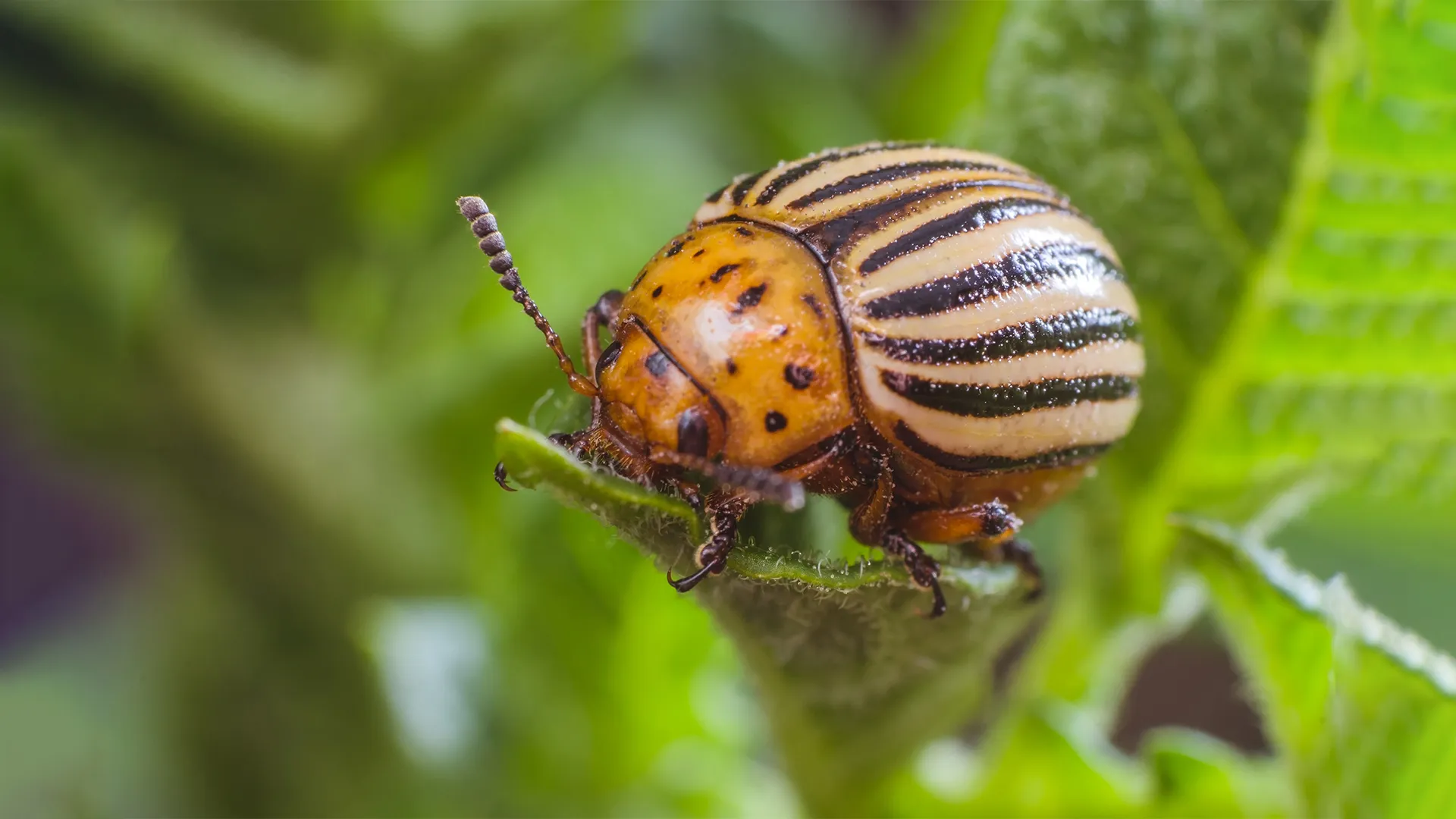
Adult beetles
- Size: About 3/8 inch (roughly the size of a small fingernail).
- Look: Yellow to orange bodies with 10 black stripes running lengthwise on the wing covers.
- Where to look: On the top and undersides of leaves, especially on outer rows and warmer, sunny edges of a bed.
- Damage: Ragged holes and chewing. Adults are often the early warning that eggs are coming next.
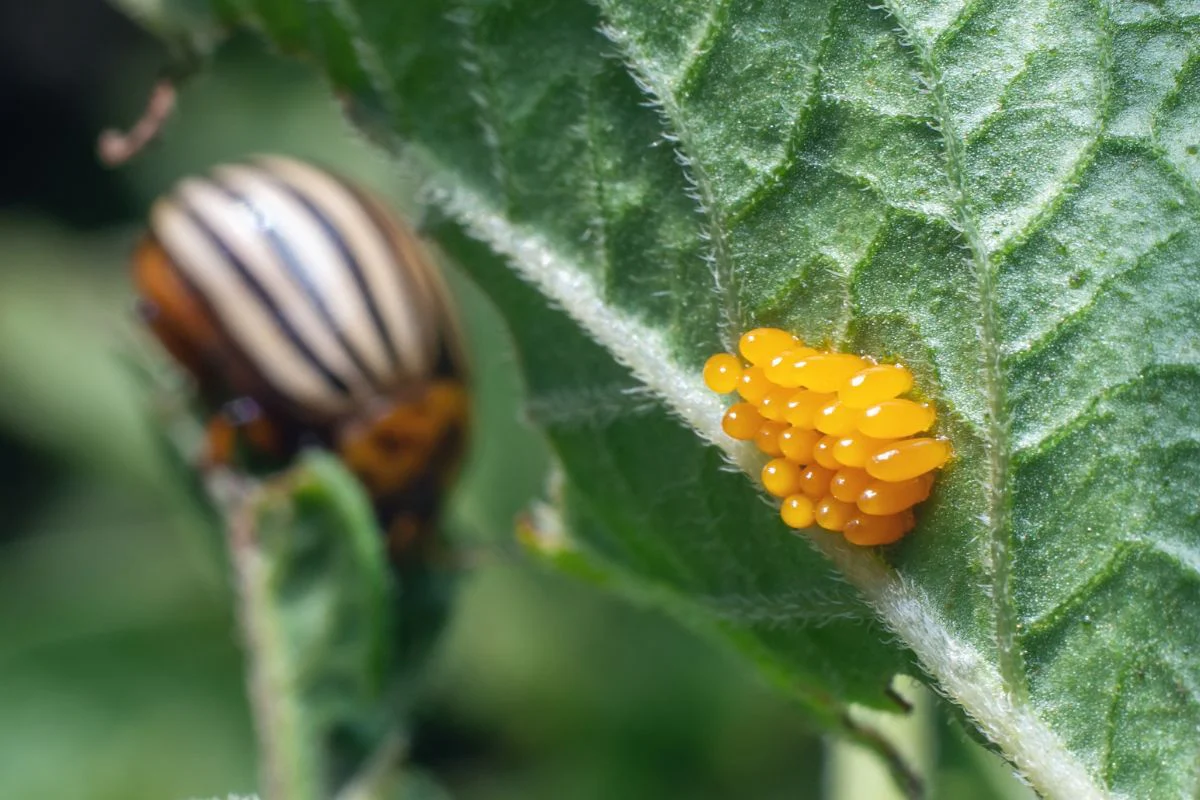
Eggs
- Look: Tight clusters of bright yellow-orange, football-shaped eggs.
- Where to look: Almost always on the underside of leaves, commonly in clusters of 10 to 40+.
- Why they matter: This is your easiest, cleanest control point. Remove eggs and you prevent the “larvae explosion.”
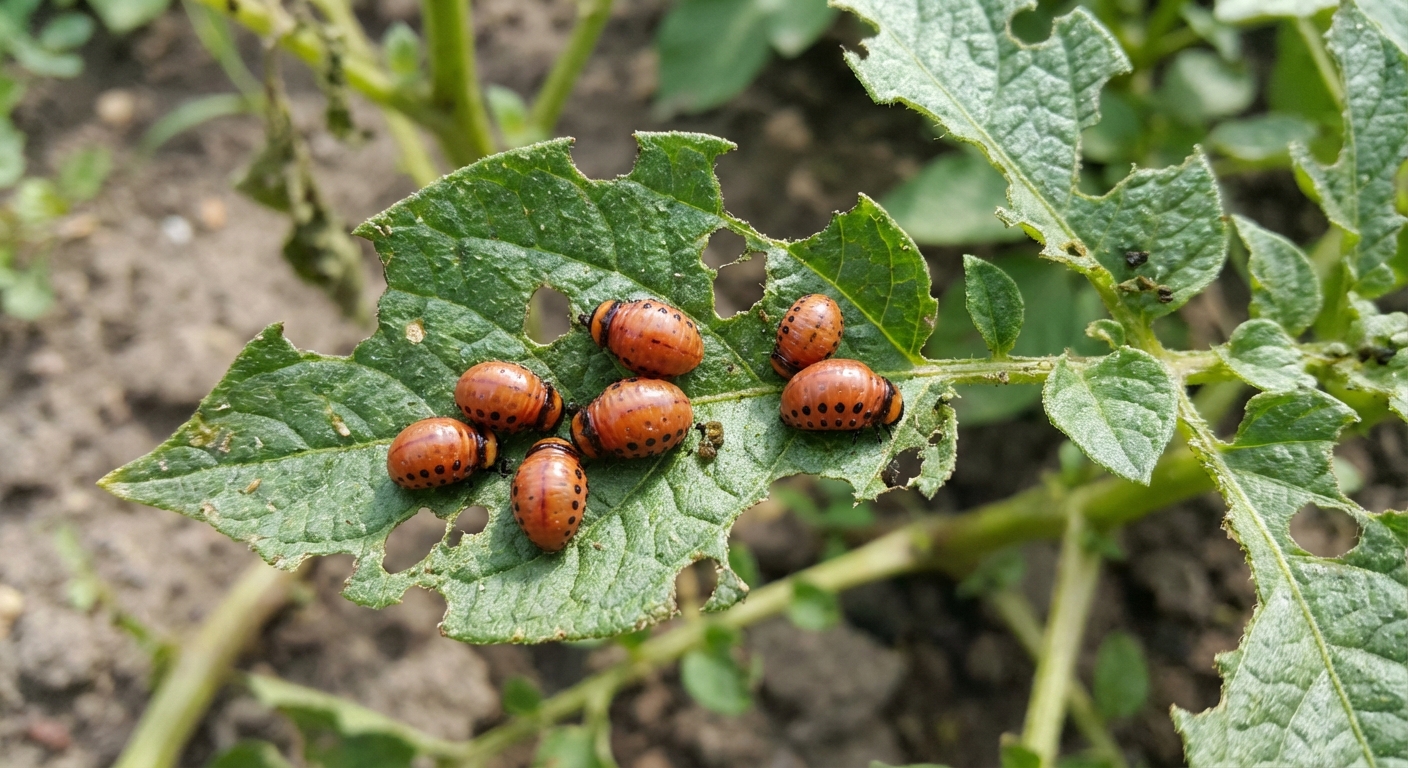
Larvae
- Look: Soft-bodied, humpbacked grubs that start dark reddish-brown and become salmon to brick red with two rows of black spots on each side.
- Where to look: Typically on leaves near where the egg cluster hatched. They often feed in groups.
- Damage: This is the most destructive stage. Larvae can defoliate plants fast, sometimes leaving only stems.
Quick look-alikes
Striped cucumber beetles also have stripes, but they are slimmer, more greenish-yellow, and prefer cucurbits like cucumbers and squash. CPB adults are rounder, bulkier, and most at home on potatoes and eggplant.
Scout Hard (5 Minutes That Can Save a Harvest)
CPB control is less about one miracle spray and more about a steady routine. During peak season, I like to check plants at least twice a week, and daily if I am seeing fresh eggs.
- Start early: Begin scouting when potatoes are 6 to 8 inches tall, or when transplants go into the ground.
- Flip leaves: Focus on the undersides for eggs and small larvae.
- Check edge plants first: Adults often colonize the perimeter before moving inward.
- Know the clock: Eggs often hatch in roughly 4 to 10 days depending on temperature. Larvae feed for about 2 to 3 weeks, then drop into the soil to pupate. That is why early larval control matters so much.
- Track generations: In many regions there are 1 to 2 generations per season, sometimes more in warmer climates. The earlier you interrupt the cycle, the easier it gets.
Organic Controls (What Works and When)
Here are the organic tools that consistently help home gardeners. You can mix and match, but try to be intentional. Use the gentlest effective option first, then escalate only if pressure is high.
1) Hand-picking (surprisingly powerful)
If you only do one thing, do this. Hand-picking is low-tech, oddly satisfying, and extremely effective in small gardens and container plantings.
- What to bring: A jar or cup with soapy water (a few drops of dish soap) to drop adults and larvae into.
- Egg removal: Rub egg clusters off with your thumb, or snip off the small leaf section holding them.
- Best time: Morning when beetles are slower and easier to spot.
Stay consistent for 1 to 2 weeks and you can knock populations down dramatically.
2) Row cover (block spring adults)
If CPB is an annual visitor, floating row cover can be a game-changer early in the season. It keeps overwintered adults from landing on your plants in the first place.
- When: Put it on right after planting or transplanting.
- Seal the edges: Bury edges in soil or pin tightly so beetles cannot crawl under.
- Remove at bloom: Potatoes are usually self-fertile, but if you want pollinators accessing flowers (or you are covering eggplant), uncover during flowering and go back to scouting.
3) Bt tenebrionis (best for small larvae)
Bacillus thuringiensis subsp. tenebrionis (often sold as Bt tenebrionis, sometimes associated with “San Diego” strains) is a targeted biological control that works when larvae eat treated foliage. Regular “caterpillar Bt” (Bt kurstaki) does not work on beetles, so make sure the product is labeled for Colorado potato beetle.
- When to use: Right after eggs hatch, when larvae are small. Large larvae are harder to control.
- How to apply: Coat leaf surfaces well, especially where larvae are feeding.
- Timing tips: Apply in the evening or on a cloudy day to reduce UV breakdown, and reapply as the label directs, especially after rain.
- Why I like it: It is more selective than many broad insecticides and fits nicely into an organic approach.
4) Spinosad (for heavy pressure)
Spinosad is an organic-approved insecticide in many systems (depending on product and your certifier) and can be very effective on CPB larvae and sometimes adults. It is also strong stuff, so I treat it like a targeted tool, not a weekly habit.
- When to use: If hand-picking and Bt are not keeping up, or if you have a fast-moving larval outbreak.
- Pollinator and beneficial safety: Spinosad can harm bees when wet and can impact some beneficial insects too. Apply at dusk, avoid spraying open flowers, and do not blanket-spray the whole garden.
- Resistance prevention: Follow label intervals, limit applications, and do not rely on spinosad as your only plan all season. Use it as a short intervention, then go back to scouting and non-spray control.
5) Neem oil (helpful, but timing matters)
Neem oil can reduce feeding and disrupt growth in young insects, but it is not my first pick for a raging CPB problem. Think of it as a supportive tool when pressure is light to moderate.
- Best targets: Small larvae and newly arrived adults.
- How to use: Thorough coverage is important, especially leaf undersides. Follow label mixing and reapplication instructions.
- Heat caution: Avoid spraying in strong sun or high heat to reduce leaf burn.
6) Straw mulch (can help, still scout)
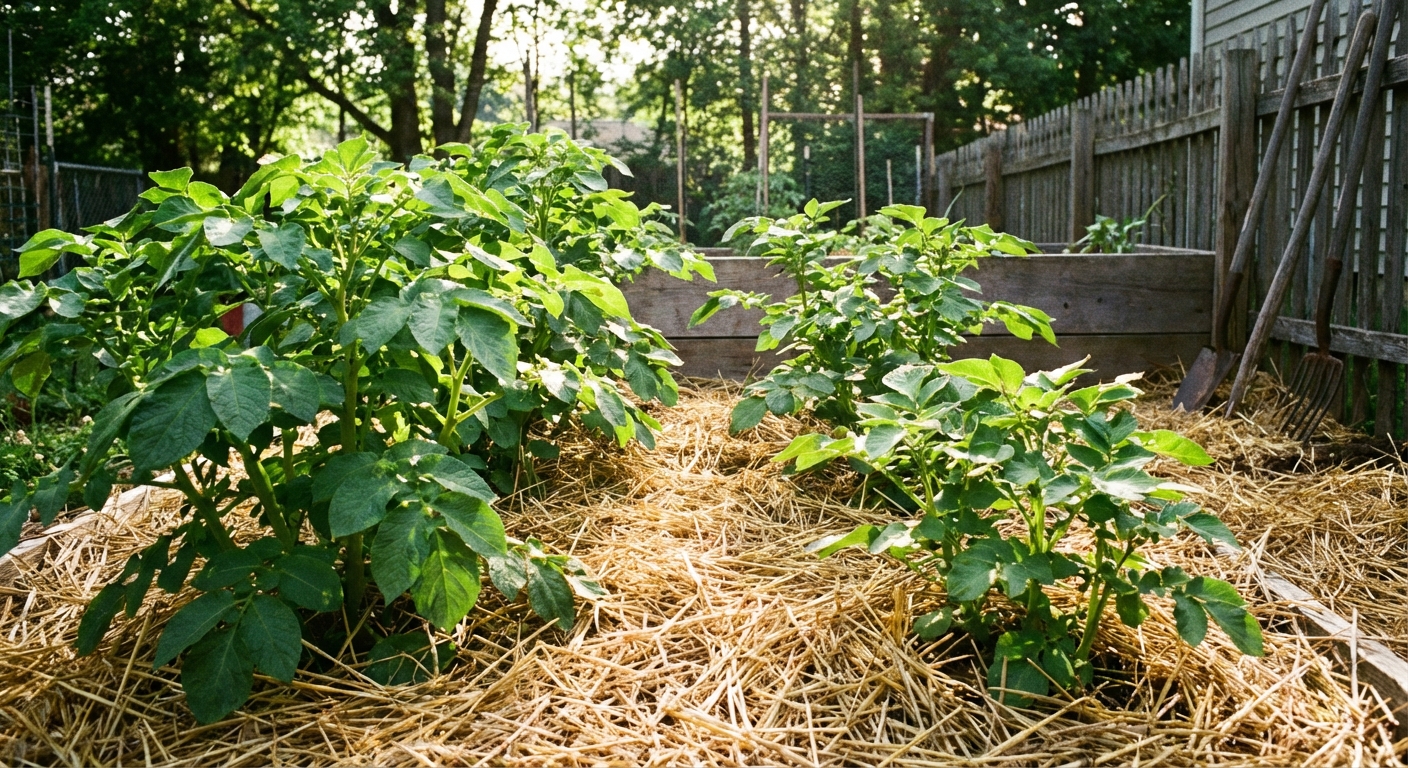
A thick straw mulch around potato plants can help by creating a less inviting setup for CPB and supporting ground beetles and other beneficial predators. Results can vary by site, so treat mulch as a helper, not a force field. It also keeps moisture steady, which potatoes love.
- How much: Aim for 3 to 6 inches of clean straw around plants, keeping stems clear to avoid rot.
- Extra perk: Mulch helps protect soil structure and can make your garden routine easier in hot weather.
7) Crop rotation (the long game)
Colorado potato beetles overwinter in soil and plant debris, then emerge looking for their favorite meal. If you plant potatoes in the same spot, you are basically setting the table.
- Rotate away from: Potatoes, tomatoes, peppers, eggplant, and volunteer potatoes.
- How far: Rotate to a different bed if possible, ideally as far as your garden allows.
- How long: A 2 to 3 year rotation away from nightshades is helpful.
If you garden in containers, rotation can mean replacing potting mix, solarizing it, or moving containers to a different part of the yard and being vigilant about volunteers.
8) Companion plants (optional support)
Companion planting is not a force field, but strong-scented plants can sometimes help confuse pests and support beneficial insects. Consider this “nice to have,” not the core plan.
- Tansy: Some gardeners plant it near potatoes as a deterrent. It can be aggressive in some areas and can be toxic if ingested, so place it thoughtfully and keep it away from kids and grazing pets.
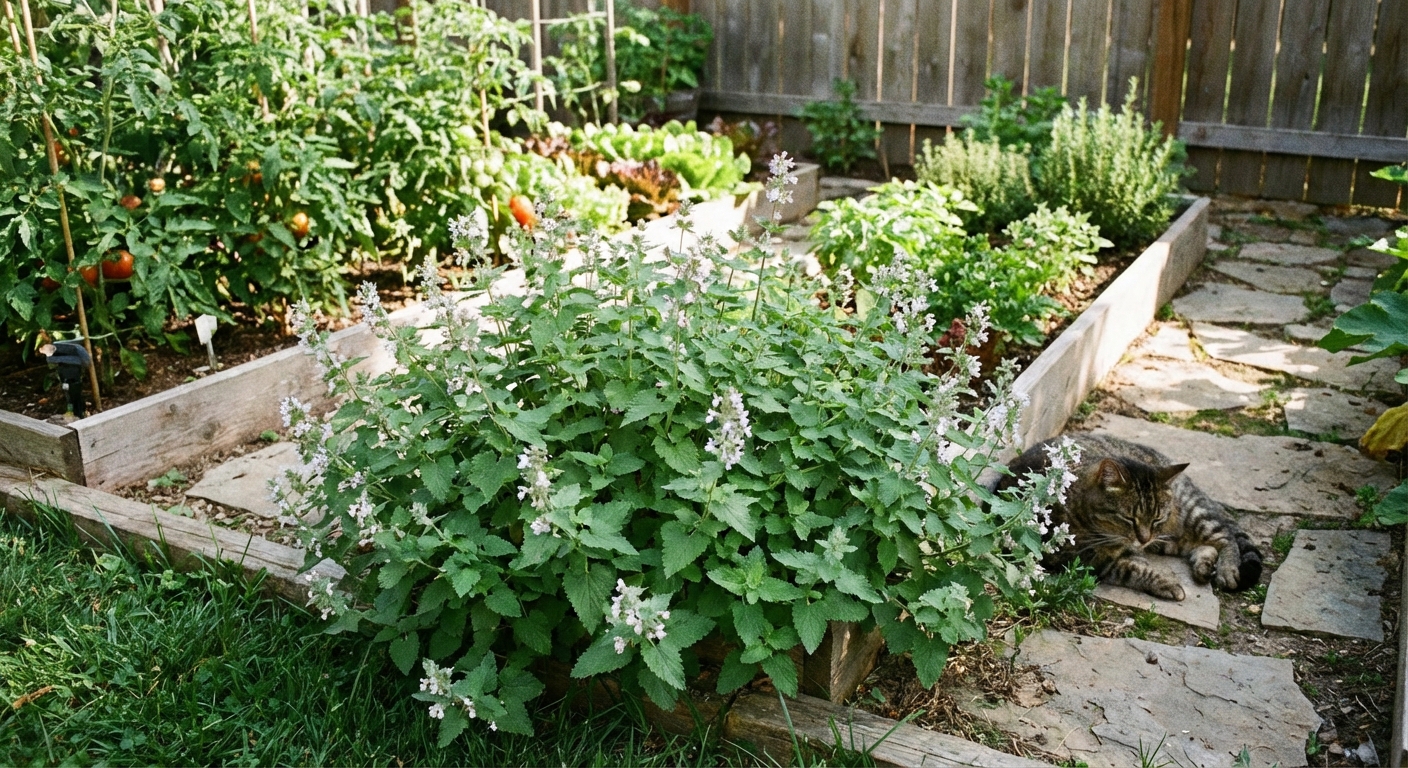
- Catnip: Some gardeners report it helps deter CPB. It is also a magnet for neighborhood cats, so consider placement.
My advice: Use companions as part of an integrated plan. The real winners are scouting and early intervention.
Simple Action Plan
Early season (young plants)
- Scout twice weekly and remove any adults.
- Check undersides for egg clusters and rub them off.
- Consider row cover if CPB is a repeat problem.
- Lay straw mulch once soil warms and plants are established.
When you find eggs
- Remove eggs immediately.
- Return in 2 to 3 days to look for missed clusters and new ones.
When larvae hatch (the big moment)
- Hand-pick small larvae in the morning.
- If numbers are rising, apply Bt tenebrionis (labeled for CPB) to foliage and reapply as directed.
When to escalate
- If you are seeing multiple larvae per plant, or leaves are getting skeletonized and defoliation is moving fast, step up your response.
- Use spinosad as a targeted intervention (apply at dusk, avoid blooms), then return to scouting and non-spray controls.
Prevention That Helps Next Year
- Pull volunteer potatoes: They act like a beacon for early beetles.
- Keep nightshade weeds down: Especially near the garden edge and compost area.
- Clean up at season’s end: Remove potato vines and debris so fewer beetles have cozy overwintering spots.
- Support beneficials: Diverse plantings and mulch help predator insects that snack on eggs and small larvae.
- Do not get stuck in one tool: Mix methods and avoid repeating the same spray over and over. Your future self will thank you.
FAQs
Will Colorado potato beetles attack my tomatoes and peppers?
They prefer potatoes and eggplant, but they can feed on tomatoes and occasionally peppers, especially if potatoes are nearby or already stripped. If you see CPB on any nightshade plant, treat it as a whole-garden issue and scout everything in that family.
What is the most effective organic spray?
If you can time it for small larvae, Bt tenebrionis (labeled for Colorado potato beetle) is a strong first spray option. For heavy infestations, spinosad can be highly effective, but use it carefully to protect pollinators and reduce resistance risk.
Is neem oil enough on its own?
Sometimes for light pressure, especially combined with hand-picking. But if you have lots of larvae, neem alone often is not fast enough. Pair it with scouting, egg removal, and Bt or spinosad if needed.
My pep talk
Colorado potato beetles can feel personal, like they saw your planting plan and chose chaos. But they are also predictable. Once you get in the habit of flipping leaves and dealing with eggs early, you will feel the power shift back to you.
And if you catch yourself talking to your potatoes while you patrol for larvae, please know you are in excellent company.