
How to Get Rid of Cabbage Worms and Loopers

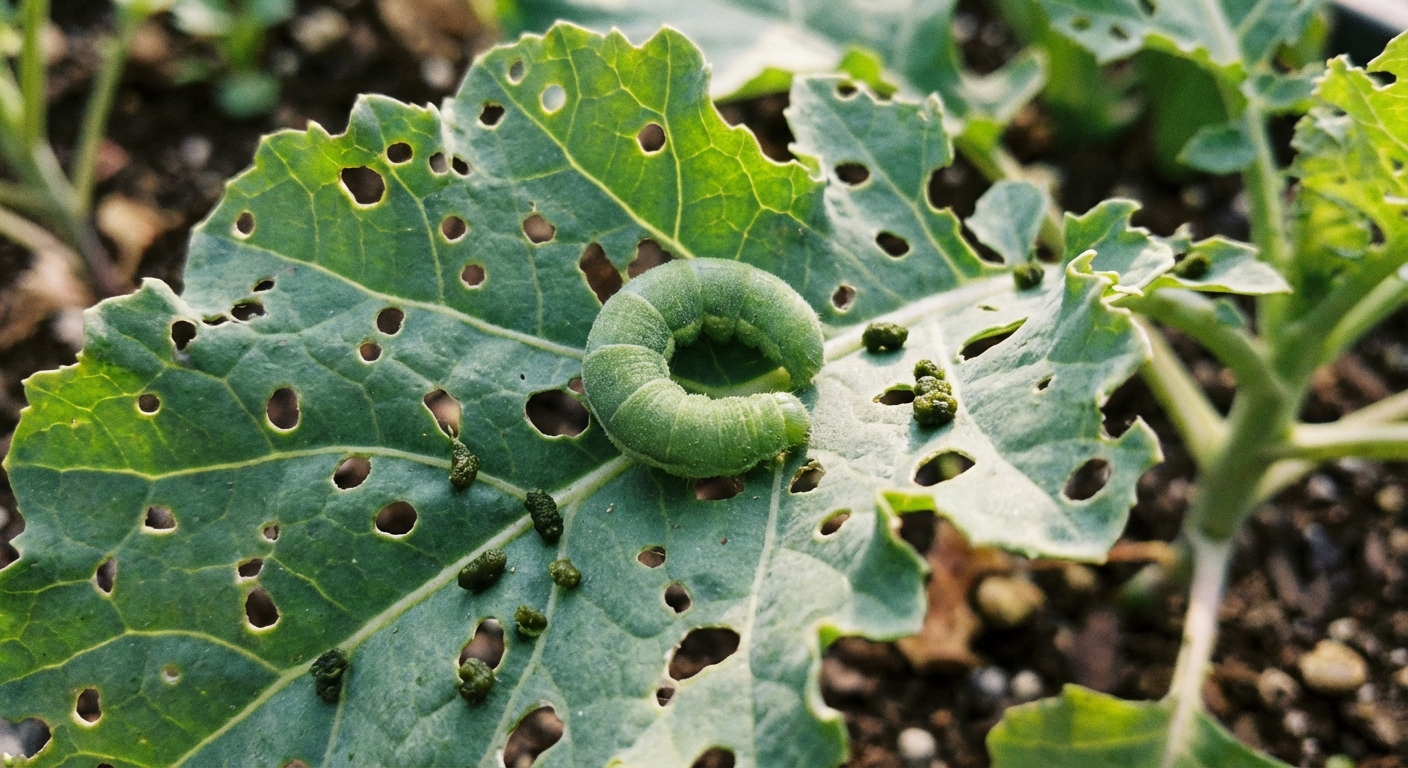
If your kale looks like it went through a tiny paper shredder, you are not alone. Brassicas like cabbage, broccoli, cauliflower, kale, collards, Brussels sprouts, and bok choy are basically a neon sign for a few famous leaf-chewers. The good news is you do not need harsh chemicals or panic. You need a clear ID, a simple routine, and timing that targets the pest’s life cycle.
This page walks you through how to spot cabbage white butterflies, imported cabbageworms, cabbage loopers (and a couple of common look-alikes), then how to stop them using row covers, Bt (Btk) (Bacillus thuringiensis var. kurstaki), hand-picking, and a few companion and habitat tweaks that keep reinfestation from becoming a weekly tradition.
Know your culprits
Most gardeners call all of them “cabbage worms,” but there are a couple of different pests that behave a little differently. Getting the ID right helps you pick the easiest fix. Also, note that multiple caterpillars can create very similar holes, so use a few clues at once (damage plus frass plus the actual critter).
Cabbage white butterfly (adult)
You might see small white butterflies fluttering over your brassicas in daytime. These are usually cabbage whites (often called imported cabbageworm butterflies). They lay eggs that hatch into the classic green caterpillars.
- Clue: White butterfly with a soft, fluttery flight, often hovering right over brassica leaves.
- What it means: Eggs are likely being laid right now. This is your cue for row covers or egg patrol.
Eggs (what to look for)
If you want to stop damage before it starts, learn the egg stage. Cabbage white eggs are typically small, yellow to yellow-green, and shaped like a tiny grain of rice or a little bullet. They are often laid singly on the underside of leaves, commonly near veins.
- Where to check: Undersides of outer leaves and the newest leaves near the plant center.
- What to do: Rub them off with your thumb or wipe with a damp cloth during inspections.
Imported cabbageworm (larva)
This is the familiar green caterpillar that blends in annoyingly well. Some people describe them as “velvety,” others as smooth. Either way, they chew irregular holes and leave little dark green droppings (frass) on leaves, especially in the plant’s center where it is sheltered.
- Clue: Green caterpillar, usually on the underside of leaves or tucked into the plant crown.
- Damage: Ragged holes, skeletonized patches, frass on leaves.
Cabbage looper (larva)
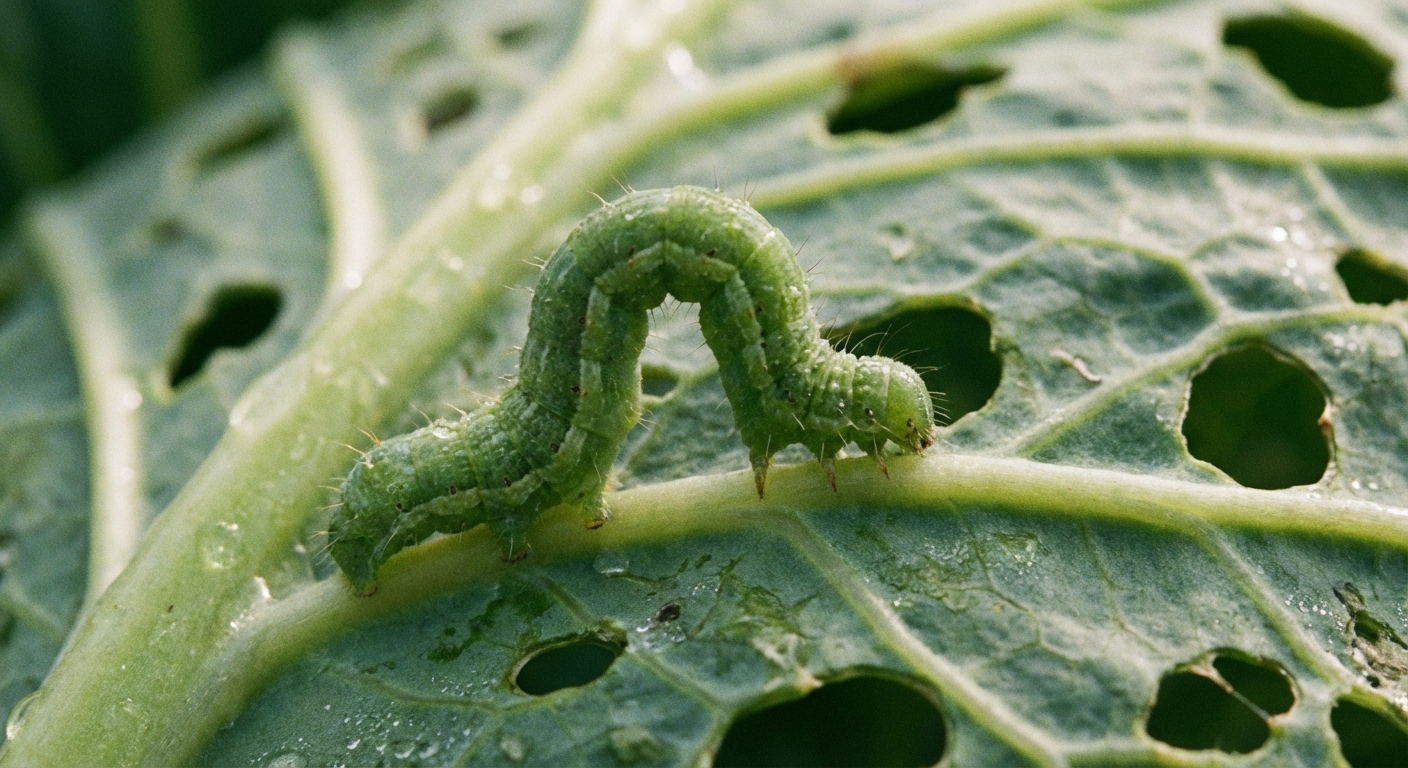
Loopers are caterpillars too, but they move with that signature inchworm “loop” because they do not have as many prolegs. They can do a shocking amount of damage fast, especially on leafy greens like kale and collards.
- Clue: Green caterpillar that moves by arching its body into a loop.
- Damage: Larger, more ragged holes, often lots of chewing along leaf edges.
Diamondback moth larva (common look-alike)
If you see a smaller, tapered caterpillar that wiggles aggressively or drops on a little silk thread when disturbed, you may be dealing with diamondback moth larvae. They are another classic brassica pest and are often present alongside cabbageworms and loopers.
- Clue: Small, slender caterpillar that wriggles hard when poked and may drop on silk.
- Damage: Small holes and “windowpane” feeding where the leaf surface looks scraped or thin.
Confirm it is worms
Before you treat, do a quick check so you are not chasing the wrong pest.
- Hole pattern: Caterpillars make irregular holes and missing chunks. Flea beetles make tiny “shot holes” that look like peppered pinpricks.
- Frass: Worms leave dark green or black pellets on leaves and in the plant center.
- Undersides: Flip leaves. Eggs and tiny larvae often hide below, especially near veins.
If you find frass plus chewed leaves, you are in the right place.
Life cycle basics
If you only remove the caterpillars you can see today, you will be right back here in a week. A simple life-cycle mindset makes control much easier.
Egg stage
Adults lay small eggs on brassica leaves, often on the underside. Eggs can hatch quickly in warm weather.
- What to do: Cover plants early with insect netting or floating row cover, or wipe and squish eggs during inspections.
Larva stage
This is when plants get shredded. Small larvae are easiest to control, especially with Bt (Btk).
- What to do: Hand-pick, spray Bt (Btk) on young larvae, keep scouting every few days.
Pupa stage
Caterpillars pupate and later emerge as new adults. Pupae may be on plants, nearby structures, or garden debris, including in and near the bed.
- What to do: Remove heavily infested leaves, keep beds tidy, and do end-of-season cleanup so fewer make it to the next round.
Adult stage
Adults fly, mate, and lay more eggs. This is why physical barriers are so powerful.
- What to do: Use row covers, encourage beneficial insects, and avoid broad-spectrum sprays that knock out natural predators.
Fast action plan
If you are already seeing holes, here is the most efficient order of operations.
- Inspect and hand-pick. Check undersides and the plant center. Drop worms into a cup of soapy water or crush them if you are up for it.
- Remove the worst leaves. If a leaf is mostly skeleton, snip it off and trash it. Do not compost heavily infested material unless your compost gets truly hot.
- Spray Bt (Btk) in the evening. Bt (Btk) works best on small caterpillars that eat treated leaf surfaces. Evening application helps protect it from sun breakdown and lines up with feeding.
- Make a prevention plan. Add row cover if plants are still small enough to cover, and start a regular scouting schedule.
Row covers
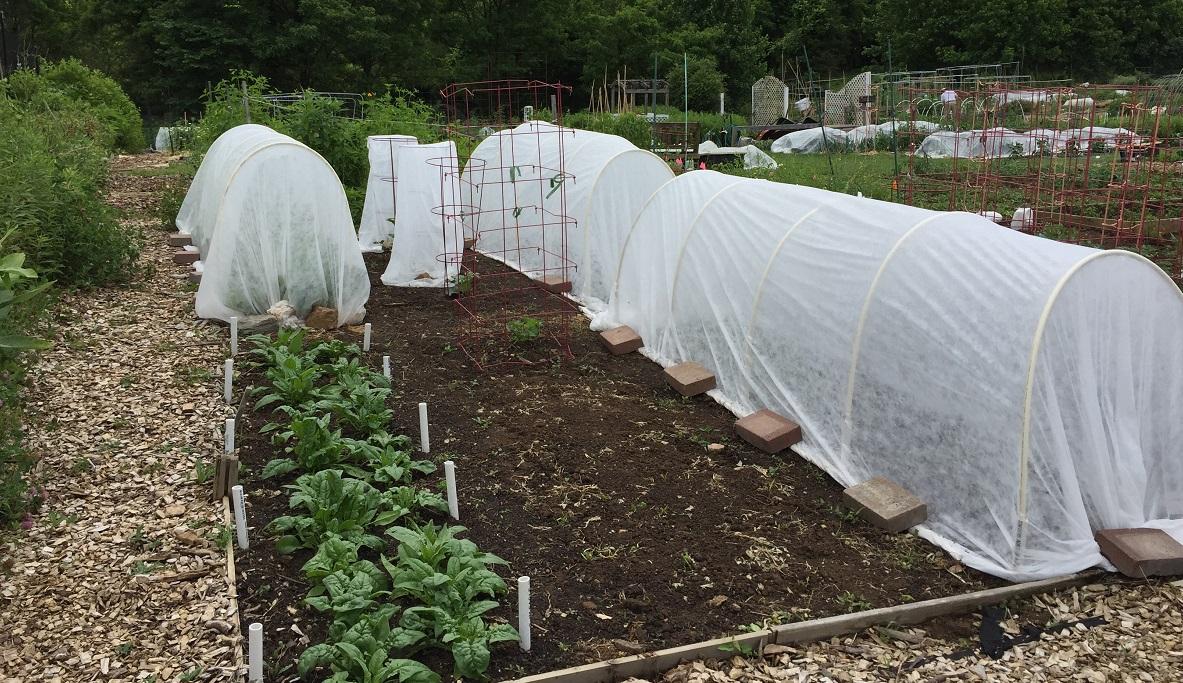
If I could choose only one organic strategy for brassica worms, it would be exclusion. Floating row cover or insect netting physically keeps adults from laying eggs on your plants.
When to use row cover
- Right at planting is ideal, especially in spring and early fall when brassicas are prime targets.
- After you clean up an infestation, once you are confident you removed eggs and larvae.
How to use it
- Inspect plants carefully, including undersides and the crown.
- Hand-remove any eggs, larvae, or pupae you find.
- Cover with fine insect netting or floating row cover, sealing edges with soil, boards, or landscape pins.
- Give plants room to grow so leaves are not pressed hard against the fabric.
- Open weekly to weed, water, and inspect, then reseal.
Important: Row cover works best if you rotate where brassicas are grown each season. If pupae are already in or near the bed, you can accidentally create a little caterpillar greenhouse.
Seed note: If you are growing brassicas for seed, you will need to remove covers during flowering so pollinators can do their job. For leafy harvests, keeping covers on is usually the whole point.
Bt (Btk)
Bacillus thuringiensis var. kurstaki, often sold as “Bt” or “Btk,” is a naturally occurring soil bacterium used in organic gardening. It targets many larval Lepidoptera (caterpillars) after they eat treated foliage. It is not a contact killer, so coverage and timing matter.
Why it works
- It works best on small larvae, which is exactly when you want to stop damage.
- It is more selective than broad-spectrum insecticides, which helps protect many beneficial insects when used correctly.
How to apply it
- Spray in the evening to reduce breakdown from sun and to catch active feeding.
- Coat both sides of leaves, especially undersides and the plant center.
- Reapply after rain or overhead watering. Bt (Btk) does not last forever on leaf surfaces.
- Repeat on a schedule during heavy pressure, often every 5 to 7 days, following your product label.
Common mistakes
- Spraying once and expecting a season-long fix. Bt (Btk) is not systemic. New growth is unprotected until you spray again.
- Only spraying the top of leaves. Caterpillars love hiding underneath.
- Waiting until you see big worms. Larger caterpillars are harder to control and have already eaten plenty.
Non-target note: Because Bt (Btk) affects caterpillars, it can also harm desirable butterfly or moth caterpillars if it is sprayed where they feed. Keep applications targeted to your brassicas and avoid drift onto nearby host plants.
Safety note: Always read and follow the label for any product, organic or not. Bt (Btk) is not considered a primary bee hazard, but it is still smart to avoid spraying open blooms and to apply in the evening when you can control drift and contact.
Hand-picking and egg patrol
If you have a small garden, nothing beats a calm five-minute inspection every few days. I like to bring a cup of soapy water and pretend I am a detective on a leafy case.
Where to look
- Undersides of outer leaves, especially along veins
- Deep in the plant crown where new leaves are forming
- Near the midrib and leaf folds where caterpillars hide from birds
How often
- During peak season: Every 2 to 3 days
- When pressure is low: Weekly
Leave parasitized worms
If you spot a caterpillar with small white, rice-like cocoons on its back, that caterpillar has likely been parasitized by beneficial wasps. It is already on its way out, and those wasps are part of your free pest control team. Leave it in place if you can.
When you catch them early, you often prevent the “sudden explosion” week where everything looks fine until it does not.
Companion and habitat help
Companion planting will not magically make cabbage worms disappear, but it can help in two useful ways: it can make it harder for pests to find your brassicas, and it can support beneficial insects that hunt caterpillars.
Good companions
- Dill, cilantro, and parsley (let some flower): Umbel flowers can support tiny beneficial wasps and other helpful insects.
- Sweet alyssum: A long-blooming nectar source that fits nicely at bed edges.
- Green onions or chives: Useful space fillers and may confuse pests when mixed in.
- Marigolds: Not a cure-all, but they add biodiversity and bring pollinators and predators into the mix.
What companions cannot replace
If butterflies are actively laying eggs, you still need row covers or Bt (Btk) plus scouting. Think of companion planting as supportive background music, not the entire concert.

Prevent repeat attacks
Once you knock an infestation back, keeping it from returning is mostly about consistency and a few smart habits.
Start covers early
Cover seedlings and transplants as soon as they go in. If you wait until you see damage, eggs may already be present.
Inspect new growth
Brassicas grow from the center, and worms love to hide there. Focus your checks on the newest leaves.
Do not overfeed nitrogen
Over-fertilized brassicas push out very tender growth that pests adore. Feed the soil steadily with compost and balanced organic amendments rather than heavy, quick nitrogen.
Clean up after harvest
- Pull and remove old brassica plants promptly.
- Rake up leaf debris where pupae can hide.
- If you had a severe problem, consider bagging and trashing residues rather than composting them.
Rotate brassicas
If possible, do not plant brassicas in the same bed year after year. Even a modest rotation reduces the chance of overwintering pests emerging right where you are planting their favorite buffet.
When damage is severe
Sometimes you discover the problem late, and a plant is more hole than leaf. If that happens:
- Harvest what you can (kale and collards often bounce back).
- Remove heavily infested plants if they are not worth saving.
- Cover the remaining brassicas after you clean them up.
- Spray Bt (Btk) to catch any tiny larvae you missed.
I know it feels discouraging, but brassicas are tougher than they look. With one good reset and better timing next round, you can absolutely grow beautiful cabbage and broccoli without sharing half of it with caterpillars.
Quick cheat sheet
- White butterflies hovering over brassicas: Put on row cover now or start egg patrol.
- Yellow rice-grain eggs under leaves: Wipe them off before they hatch.
- Green worms and frass: Hand-pick today, spray Bt (Btk) tonight, repeat as needed.
- Inchworm looping movement: Cabbage looper. Treat the same way, but scout more often since they can chew fast.
- Best prevention: Row covers plus regular inspections.
FAQ
Will soapy water spray kill cabbage worms?
Soap sprays are not my first choice for caterpillars and can stress leaves if mixed too strong. For cabbage worms and loopers, hand-picking and Bt (Btk) are typically more effective and gentler on plants when used correctly.
Can I just rely on birds?
Birds help, but caterpillars often hide deep in the crown and under leaves where birds do not reach. Think of birds as helpful assistants, not your whole plan.
Is Bt (Btk) safe for beneficial insects?
Bt (Btk) is targeted to caterpillars that eat treated foliage. That selectivity is why it is popular for brassicas. Still, avoid spraying anywhere desirable caterpillars feed, avoid blooms when possible, and follow label directions.
Do neem oil or horticultural oils work?
They are not as reliable for cabbage worms and loopers as Bt (Btk). Oils can also burn leaves in heat or sun if misapplied. If your problem is caterpillars, Bt (Btk) plus exclusion usually wins.
What if I cannot find Bt (Btk)?
If Bt (Btk) is unavailable, some gardeners use spinosad as a backup for caterpillars. It can affect pollinators if misused, so use it only as a last resort, avoid blooms, apply in the evening, and follow the label carefully. Row covers and hand-picking still do a lot of heavy lifting either way.