How to Fix Blossom End Rot on Tomatoes

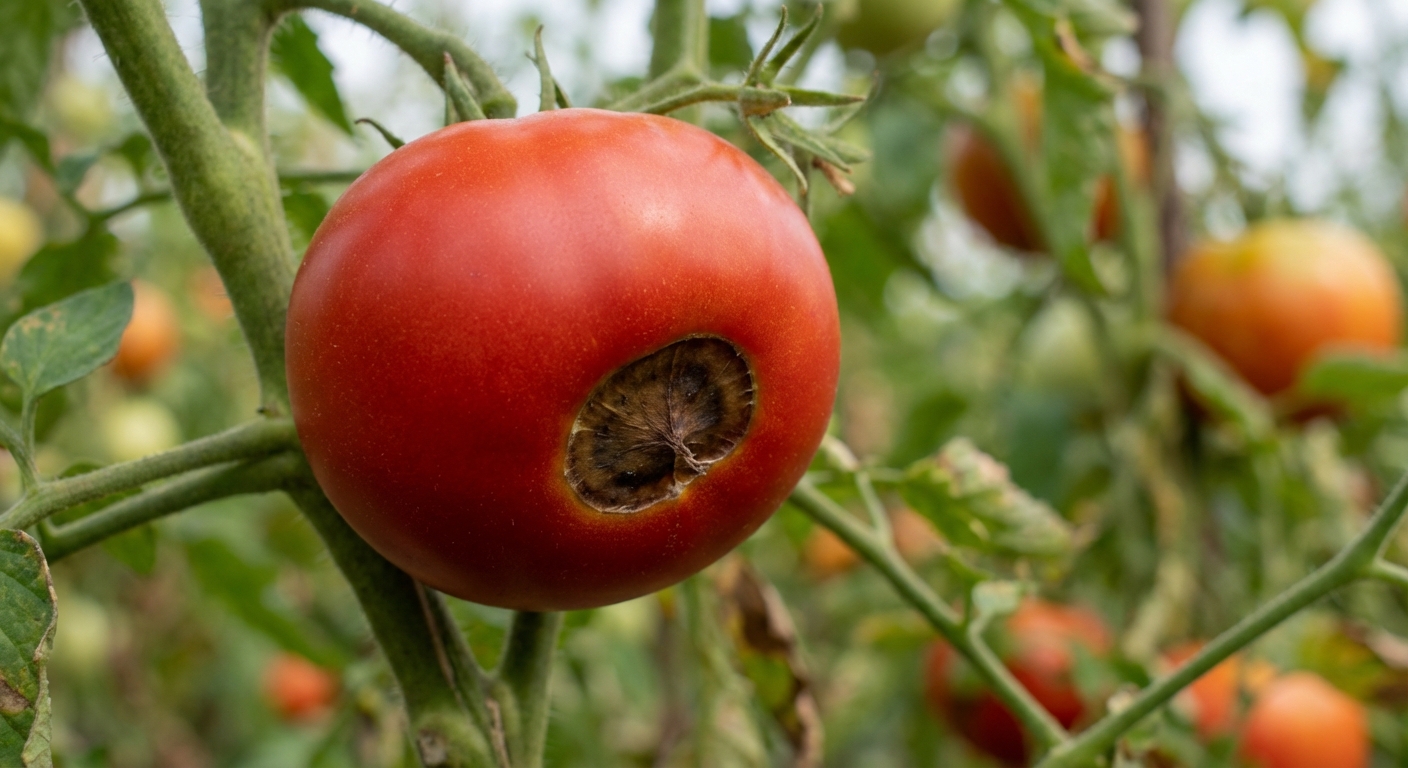
If you have ever picked up a promising tomato and found a dark, leathery patch on the bottom, you have met blossom end rot. Take a breath. This is not a contagious disease, not a fungus, and not something “spreading” through your garden like a cold at daycare. Blossom end rot is a physiological disorder, meaning the plant is struggling to deliver enough calcium to developing fruit at the right time.
Quick summary: Blossom end rot is a calcium delivery problem in the fruit, and the most common trigger is uneven soil moisture.
The good news is that once you fix the underlying stress, the plant often corrects itself and new fruit can come in clean and beautiful.
What it is
Blossom end rot happens when a tomato fruit does not get enough calcium during early development. Calcium is used to build strong cell walls. When calcium supply to that fruit is interrupted, cells at the blossom end break down, creating the classic sunken brown to black spot.
Here is the key detail that surprises most gardeners: the soil can have plenty of calcium and you can still get blossom end rot. The problem is often calcium uptake and transport, not a simple lack of calcium in the ground.
How to spot it
- Location: The spot forms on the bottom of the fruit (the blossom end), not around the stem.
- Texture: Starts water-soaked, then turns brown, leathery, and sunken.
- Timing: Most common on the first flush of fruit, especially during weather swings.
- Plant looks fine: Leaves may look normal, which is why it feels so frustrating.
Is it safe to eat? Usually, yes, as long as the rest of the tomato is firm and not moldy or foul-smelling. Slice off the damaged portion generously and use the rest right away. (Damaged tissue can invite secondary molds or bacteria, which is why “trim and use immediately” is the safest approach.)
Why it happens
Anything that stresses the plant or interrupts consistent water flow can reduce calcium moving into fruit. Calcium travels with water through the plant, so the “calcium problem” is very often a watering problem in disguise.
1) Uneven watering
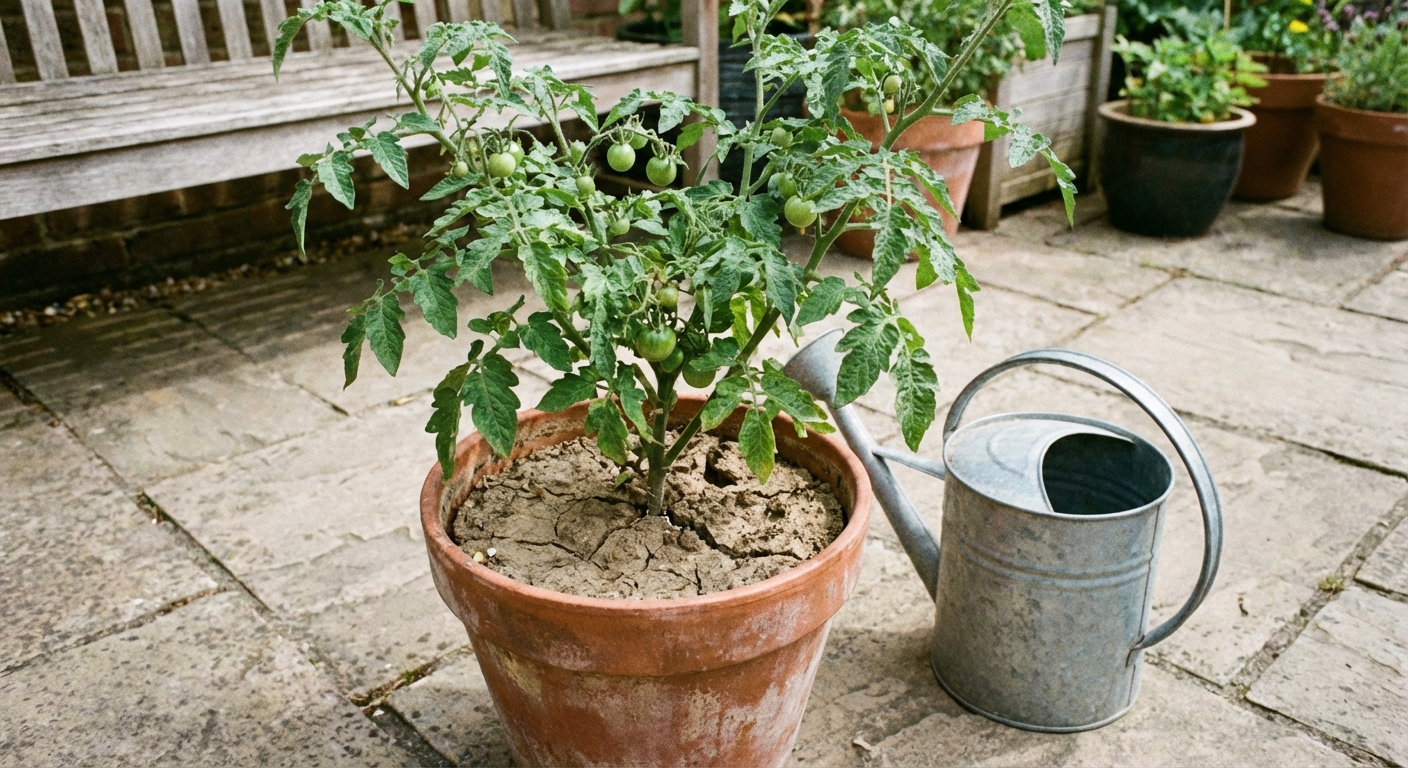
Wide swings between dry soil and soaking wet soil are the most common trigger. When roots dry out, calcium uptake slows. When you suddenly flood the plant, the fruit may already be in a rapid growth phase and the calcium cannot catch up.
2) Too much nitrogen
High-nitrogen feeding can push fast leafy growth. When the plant is growing rapidly, calcium delivery to developing fruit can lag behind, especially during warm spells and growth spurts. This is common with strong lawn-type fertilizers or frequent high-nitrogen liquid feeds.
3) pH out of range
Tomatoes generally do best around pH 6.0 to 6.8. If soil is too acidic or too alkaline, calcium becomes less available to the plant even if it is present. pH issues are common in new beds, heavily amended beds, and containers filled with unknown mixes.
4) Root stress
- Heat waves increase water demand fast, making swings more likely.
- Root damage from cultivating too close, transplant shock, or nematodes reduces uptake.
- Cramped containers dry out quickly and cause repeated moisture stress.
- Salt buildup in containers (often from over-fertilizing) can make water uptake harder, which indirectly raises BER risk.
It can also show up after a dry spell followed by heavy rain, when fruit growth surges and the plant is trying to catch up.
What to do now
If you are seeing blossom end rot right now, focus on stabilizing moisture and reducing stress. You cannot “heal” the damaged spot, but you can protect the next fruit set.
Step 1: Remove damaged fruit (often)
Pick off tomatoes with significant damage. This helps keep the plant tidy, reduces wasted effort on fruit that will not recover, and lowers the chance of secondary rot and pests moving in on soft tissue. If the spot is tiny and the fruit is nearly ripe, you can leave it, harvest soon, and trim it in the kitchen.
Step 2: Set a steady watering rhythm
- Water deeply so moisture reaches the full root zone.
- Then water again when the top 1 to 2 inches of soil are dry, not when the plant looks sad.
- Aim for even moisture, not a cycle of drought and flood.
Container tip: In hot weather, containers may need daily watering. Check in the morning, and again late afternoon during heat spells.
Step 3: Mulch heavily
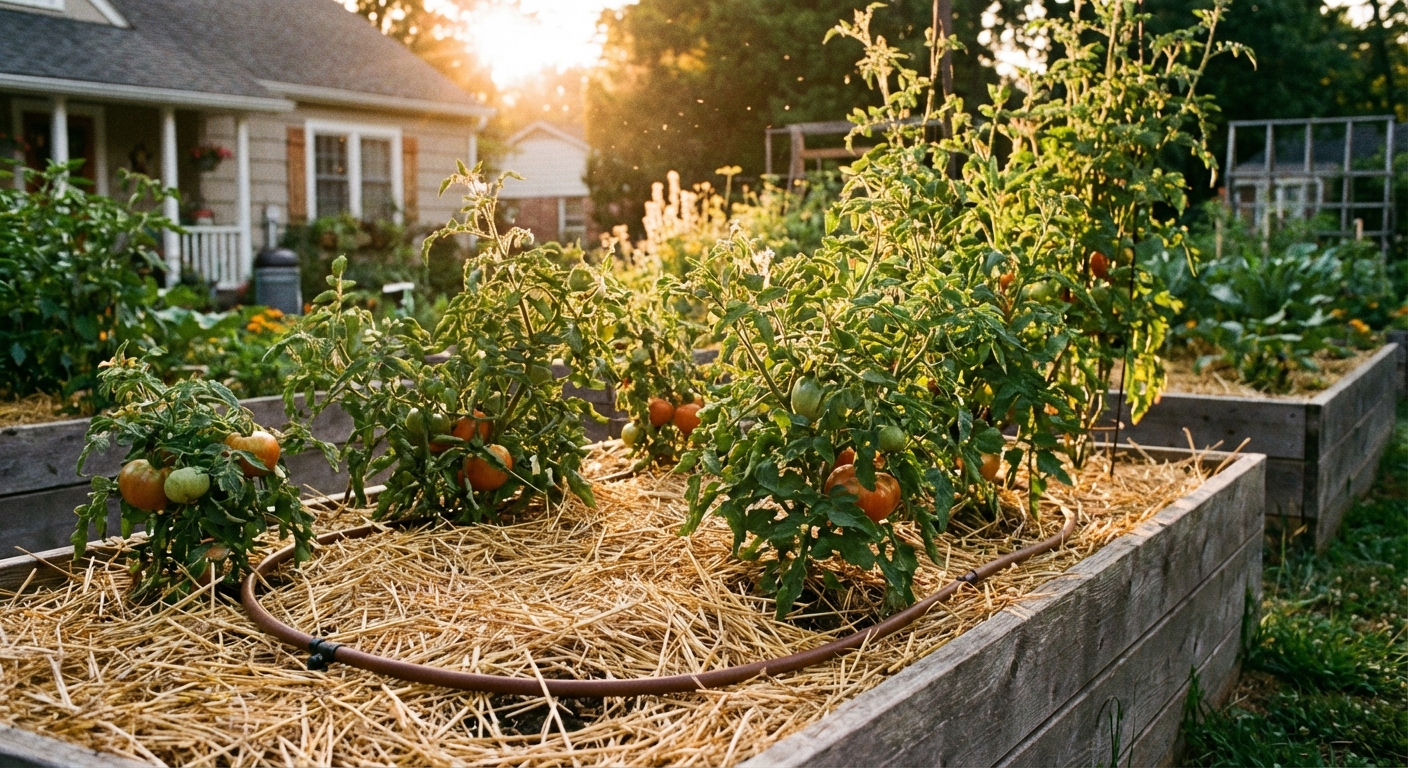
Mulch is my favorite quiet fix because it evens out soil moisture and keeps roots cooler. Add a 2 to 3 inch layer around the plant, keeping mulch a couple inches away from the stem.
- Straw (seed-free)
- Shredded leaves
- Untreated grass clippings in thin layers
- Compost topped with straw
Calcium fixes
Because blossom end rot is about calcium delivery, calcium amendments help most when they correct a true deficiency or when your pH is off. They are not magic dust, but they can be part of a solid plan.
Start with a soil test
If blossom end rot is a repeat visitor in your garden, a basic soil test is worth it. It tells you pH and calcium levels so you can amend with confidence instead of guessing.
If your soil is low in calcium
- Garden lime (calcium carbonate): Raises pH and adds calcium. Best when soil is too acidic. Works gradually.
- Gypsum (calcium sulfate): Adds calcium without raising pH much. Helpful when pH is already in a good range.
- Crushed eggshells: Fine as a long-term soil builder if crushed very well, but too slow to fix an active problem this season.
Foliar calcium sprays
They are popular, but results are mixed because calcium does not move easily from leaves into fruit. If you use a calcium spray, think of it as minor support, not the main fix. The heavy lifting still comes from consistent soil moisture and healthy roots.
Feeding: what to choose
When fruit is setting, avoid fertilizers with a high first number (like 24-8-16). Choose a tomato-friendly blend that is moderate and balanced, or slightly higher in phosphorus and potassium than nitrogen.
- Better direction: something like 5-10-10 or a balanced organic fertilizer used lightly
- Also helpful: compost as a gentle, steady nutrient source
What not to do
- Do not over-lime without a soil test. Too much lime can cause new nutrient problems.
- Do not overwater to “fix” it. Soggy roots cause their own stress.
- Do not expect eggshells to solve an active outbreak quickly.
Prevention
Once you have seen blossom end rot, prevention becomes a simple routine. Not always effortless, but simple.
Water consistently
- Drip irrigation or a soaker hose is ideal for steady moisture.
- Water early in the day to reduce stress and evaporation.
- Be extra consistent during the first fruit set and during heat waves.
- After big rain events, check that soil is draining well and the root zone is not staying waterlogged.
Protect roots
- Mulch to keep temperatures even.
- Avoid deep hoeing near the plant that can nick roots.
- In containers, size matters. For best results, aim for 10+ gallons, and go larger for indeterminate varieties or hot climates.
Keep pH in the sweet spot
Aim for roughly 6.0 to 6.8. If you suspect pH issues, a soil test is the fastest way to stop guessing. Adjusting pH is a slow, steady process, but it pays off for years.
Do not push lush growth
If your tomato looks like a leafy green monster with few flowers, it is probably getting more nitrogen than it needs. Ease up on feeding and let the plant shift into fruiting mode.
FAQ
Will it keep happening?
Often, no. If you stabilize watering and reduce stress, later fruit sets frequently come in healthy even if the first few were affected.
Does Epsom salt fix it?
Usually not. Epsom salt provides magnesium, not calcium. Too much magnesium can also compete with calcium uptake in some soils. Only use it if a soil test shows a magnesium deficiency.
Can I compost affected tomatoes?
Yes, if your compost is active and managed well. Blossom end rot is not contagious. If the fruit is moldy and your compost runs cold, you may prefer to discard it to avoid nuisance mold spores.
Is it more common in some tomatoes?
It can be more common in Roma and other paste types because of their fruit shape and rapid growth, but any tomato can get it under stress.
Takeaway
I know blossom end rot feels like a personal insult from the universe, especially after you have babied those seedlings. But this is one of those garden problems that responds beautifully to steady, boring care: even moisture, mulch, balanced feeding, and healthy soil.
If you want one action that gives the biggest return, make it this: pick a watering routine you can actually stick to, then mulch to help you keep that promise to your plants. Your tomatoes will notice.