
Growing Herbs Indoors Year-Round

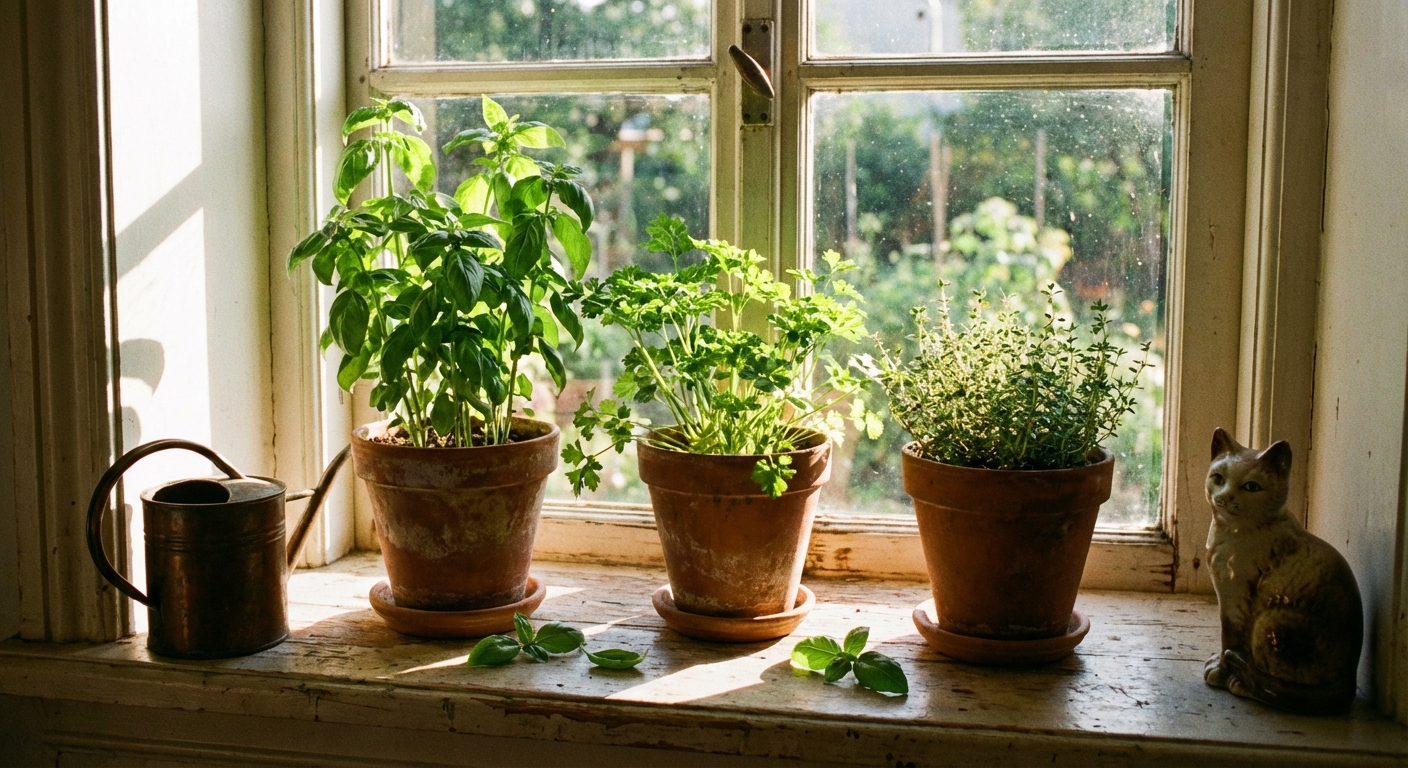
There’s something quietly magical about snipping a little handful of basil while the rain taps the window, or brushing your fingers across rosemary on a snowy morning and getting that piney, sun-warmed scent anyway. Indoor herbs are the closest thing I know to bringing a tiny, living piece of summer into your kitchen year-round.
This guide is here to make indoor herbs feel doable, not finicky. We’ll focus on the three big levers that matter most: light, watering, and soil. Once those are steady, the rest is just learning your plants like friends. Yes, I talk to my herbs, and no, it’s not required. But it does help you pay attention.
Choose herbs that like indoors
Some herbs adapt beautifully to pots and steady indoor temperatures. Others can be grown indoors, but they act like divas about it. Start with friendly plants, then branch out once your confidence grows.
Best indoor herbs for beginners
- Chives: forgiving, regrows fast after cutting, tolerates moderate light.
- Mint: vigorous and resilient. Keep it in its own pot unless you want it to take over.
- Parsley: steady grower, prefers cooler rooms and consistent moisture.
- Thyme: drought-tolerant, likes bright light and leaner soil.
- Oregano: similar to thyme, thrives with lots of sun and a lighter watering hand.
Herbs that need brighter light
- Basil: totally doable indoors year-round, but it needs strong light and warmth. Great under a grow light.
- Cilantro: prefers cooler temps and can bolt quickly. Best grown in short cycles.
- Rosemary: can grow indoors, but it’s one of the trickier herbs long-term. It wants very bright light, excellent drainage, and often does best with slightly cooler nights.
If you’re the kind of person who wants quick wins, start with chives, mint, and thyme. Then add basil once you’ve got your lighting dialed in.
Light is everything
Most indoor herb struggles are just light struggles in disguise. A plant can survive on a dim windowsill for a while, but “survive” looks like pale leaves, long floppy stems, and weak flavor. We’re aiming for compact growth and fragrant oils, and that takes real light.
Window light basics
- South-facing (Northern Hemisphere): strongest and usually the best for basil, rosemary, thyme, and oregano.
- East-facing: gentle morning sun. Great for parsley, chives, and mint.
- West-facing: hot afternoon sun. Can work, but watch for scorched leaves in summer.
- North-facing: typically too low for most herbs without a grow light.
Keep herbs close to the glass, but not pressed against a freezing pane in winter. If your leaves feel cold to the touch, scoot pots back a few inches at night.
Grow lights (especially for winter)
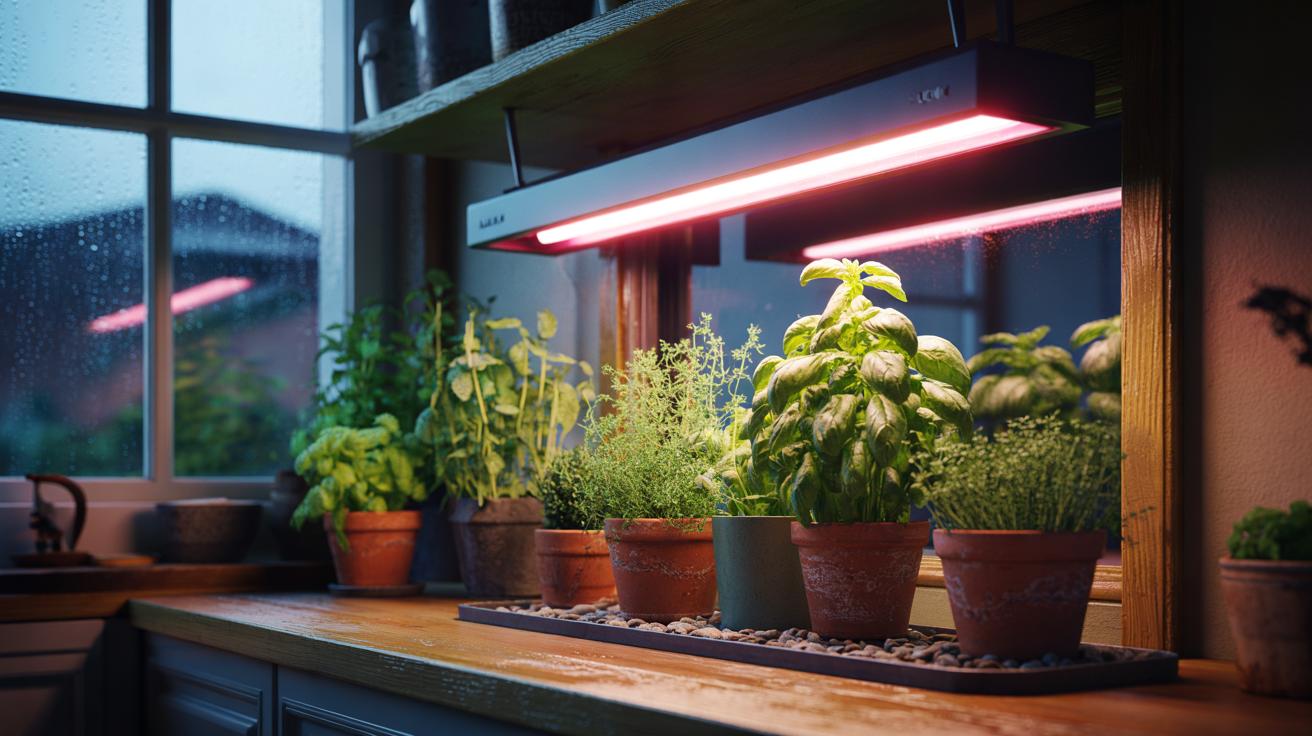
If you want thick basil in January, a small grow light is the kindest shortcut. You don’t need a complicated setup.
- Type: LED grow light or full-spectrum LED shop light.
- Distance: follow the manufacturer’s guidance. Many dedicated grow LEDs work well about 6 to 12 inches above the canopy, while weaker shop-light style LEDs often need to be closer (sometimes just a few inches) to prevent legginess.
- Duration: aim for about 10 to 14 hours for steady herbs like thyme, oregano, and rosemary, and 12 to 16 hours for faster growers like basil. Adjust based on growth and how your plants look.
- Goal: bright, even light from above to prevent leaning and floppy stems.
Signs your herbs want more light
- Stems stretch and flop toward the window.
- Leaves are smaller than expected.
- Color looks washed out or pale green.
- Flavor seems weak even when the plant’s otherwise healthy.
If you see these signs, don’t blame yourself. Add light first. Everything else gets easier.
Soil and pots
Herbs aren’t picky about fancy containers, but they’re extremely picky about one thing: drainage. Indoors, wet roots linger longer because there’s less sun and wind. That’s why indoor herbs so often die from love.
Pot setup that works
- Pots with drainage holes: non-negotiable.
- Saucers: yes, but empty them after watering so roots don’t sit in runoff.
- Size: 4 to 6 inches wide for a single small herb start, 6 to 8 inches for bigger herbs like basil or mint.
- Depth: don’t overlook this. Parsley and cilantro have longer roots and do best in deeper pots (often 8 to 10 inches deep). Thyme and oregano are fine in shallower pots.
- Material: terracotta “breathes” and helps prevent soggy soil. Plastic holds moisture longer. Choose based on how heavy-handed you tend to be with watering.
One quick myth-buster: skip putting gravel in the bottom “for drainage.” It usually makes things worse by creating a perched water layer. Use a pot with a real drainage hole and a well-draining mix instead.
A soil mix that resists root rot
Skip garden soil. It compacts in pots and drains poorly. Use a quality potting mix, then lighten it for herbs that like things on the dry side.
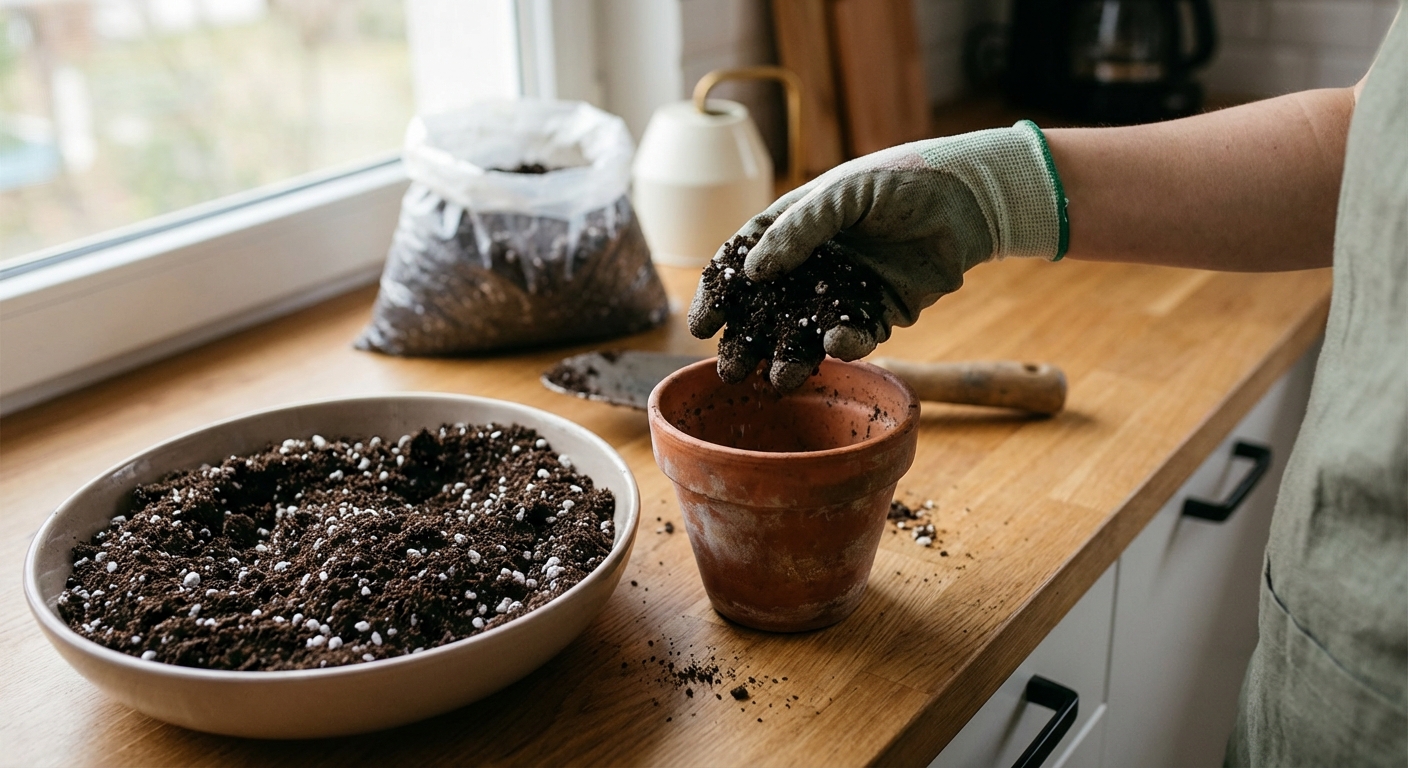
Simple indoor herb soil recipe:
- 2 parts high-quality potting mix
- 1 part perlite or pumice for airflow and drainage
- Optional: a small handful of worm castings for gentle nutrition
For rosemary, thyme, and oregano, I often add a little extra perlite. For parsley and mint, I keep the mix a touch richer and more moisture-retentive.
Watering that works
If I could tape one reminder to every herb pot, it would say: water when the plant needs it, not when the calendar says so. Indoor conditions change constantly between seasons, heating vents, and window temperatures. So instead of rigid rules, use a repeatable check-in routine.
The finger test
Stick your finger into the soil up to your first knuckle.
- If it feels dry at that depth, water.
- If it feels cool and damp, wait.
How to water properly
- Water slowly until you see water run out of the drainage hole.
- Let it drip for a minute, then empty the saucer.
- Avoid constant little sips that keep the top layer perpetually damp. That can lead to shallow roots and invites fungus gnats in organic potting mixes.
Seasonal rhythm
- Winter: less light, slower growth, less water. Check weekly, water only when needed.
- Spring: growth picks up. You’ll likely water more often and may need a bit of fertilizer.
- Summer: sunny windows can dry pots quickly. Check every few days, especially terracotta.
- Fall: ease back as daylight drops. Watch for overwatering when growth slows.
One more tip: keep herbs away from heating vents. Warm air dries leaves while the pot stays wet, which is a sneaky path to stress and root problems.
Feeding without overdoing it
Herbs don’t need heavy feeding, and too much fertilizer can make them grow fast but taste bland. The goal is steady, healthy growth and strong aroma.
When to fertilize
- During active growth, typically spring through early fall.
- If you’re harvesting often and the plant seems to stall.
- When leaves get smaller over time despite good light and watering.
What to use
- Worm castings: gentle and beginner-friendly. Top-dress monthly or mix in at potting.
- Liquid organic fertilizer: fish emulsion or seaweed, diluted to half strength, every 3 to 4 weeks.
- Compost: great, but use sparingly indoors to avoid bringing in pests.
If you’re growing herbs mainly for flavor, less is often more.
Harvesting
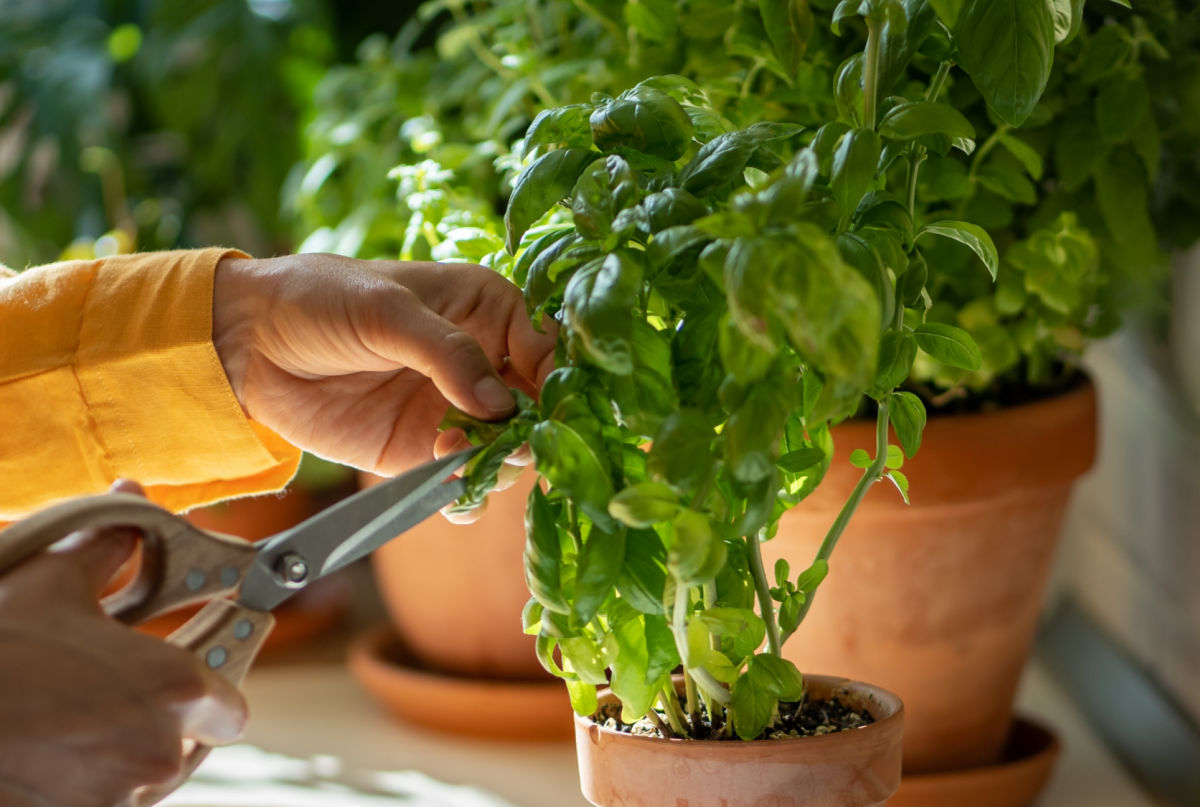
Harvesting isn’t just for dinner. It’s how you tell the plant, “branch more.” The more you pinch and cut correctly, the fuller your herb garden becomes.
How to harvest common herbs
- Basil: pinch above a pair of leaves to encourage two new stems. Don’t just pluck single leaves from the bottom.
- Mint: cut stems back by a third to keep it bushy. It’ll bounce back fast.
- Parsley: snip outer stems at the base, leaving the center to keep producing.
- Chives: cut leaves about 1 to 2 inches above the soil, not all the way down.
- Thyme and oregano: snip soft tips. Avoid cutting into woody stems too hard.
Rule of thumb: harvest up to one-third of the plant at a time, then let it recover. For slow growers (or anything growing in low winter light), go lighter and treat harvesting like a gentle trim.
Temp, airflow, humidity
Herbs like the same comfort zone we do, with a few preferences depending on the plant.
- Temperature: most herbs are happiest around 60 to 75°F. Basil prefers warmer conditions and sulks below 55°F.
- Airflow: gentle airflow reduces mildew and strengthens stems. A small fan on low across the room can help.
- Humidity: average home humidity is usually fine for herbs, but winter heating can crisp leaf edges. Grouping pots together or using a pebble tray (pot above water line) can help.
If you see fuzzy mold on soil, it’s usually a sign of too much moisture and not enough airflow or light. Let the top layer dry more between waterings and increase light if possible.
Easy indoor setups
1) Sunny windowsill trio
Best for: chives, parsley, thyme
- 3 small pots with drainage
- A bright east or south window
- Rotate pots weekly for even growth
2) Countertop light station
Best for: basil, cilantro, mint, oregano
- One tray or shallow bin to catch drips
- LED grow light on a timer
- Set the light height based on the fixture and how your plants respond
3) "I travel sometimes" setup
Best for: thyme, oregano, rosemary
- Terracotta pots for breathability
- Lean soil mix with extra perlite
- Bright light, water only when soil dries
Grocery store herb rescue
Those “living basil” pots from the grocery store are basically a tiny herb crowd scene. They can do well indoors, but they usually need a little help.
- Split and repot: gently divide the clump into 2 to 4 smaller bundles and pot them up separately so each plant has room.
- Upgrade the pot: move to a container with drainage holes and fresh potting mix.
- Give it real light: a bright south window or a grow light makes all the difference.
- Ease it in: plants that lived in soft greenhouse light can sulk for a week or two while they adjust. Keep conditions steady and don’t drown them.
Troubleshooting
Leggy, floppy growth
- Cause: not enough light
- Fix: move to a brighter window or add a grow light; pinch tips to encourage branching
Yellow leaves
- Cause: often overwatering or poor drainage; sometimes low nitrogen
- Fix: check soil moisture, ensure drainage holes, let soil dry more between waterings; consider light feeding during growth season
Brown, crispy edges
- Cause: underwatering, hot sun through glass, or dry heat
- Fix: water deeply when dry, provide slight midday shade in summer, move away from vents
Drooping leaves but soil is wet
- Cause: roots struggling from too much water
- Fix: stop watering, increase light and airflow, consider repotting into fresh, better-draining mix if the soil stays wet for days
Fungus gnats
- Cause: consistently damp, organic potting mix (especially when the surface stays moist)
- Fix: let the top 1 to 2 inches dry between waterings, use yellow sticky traps, and consider BTI (Mosquito Bits or dunks) as a reliable option. A thin layer of coarse sand can help in some setups if it stays dry, but it’s not always a slam dunk.
Aphids or spider mites
- Cause: stressed plants (often low humidity or inconsistent care), plus pests hitchhiking in on new plants
- Fix: rinse plants in the sink, then treat with insecticidal soap as needed; isolate the plant for a couple weeks
If your herb looks miserable, pause and check the basics in this order: light, drainage, watering pattern. Ninety percent of indoor herb problems live right there.
Food-safe note: Always follow label directions for any spray, and rinse edible leaves before using them in the kitchen.
Simple care calendar
- Weekly: check soil moisture; rotate pots; pinch or harvest lightly.
- Monthly: wipe dusty leaves with a damp cloth; top-dress with worm castings or use a diluted liquid feed during active growth.
- Seasonally: in spring, consider repotting crowded herbs; in fall, add a grow light if daylight drops.
And please remember: every “oops” is useful information. Plants are the most patient teachers I know. If you keep showing up with curiosity and a watering can, you’ll get the hang of it.
My low-stress herb list
If you want a small, steady indoor herb garden that keeps giving without demanding perfection, this is my go-to mix:
- Chives for eggs, soups, and baked potatoes
- Parsley for brightness in everything
- Thyme for roasted vegetables and cozy winter dishes
- Mint for tea and desserts, in its own pot
Once that quartet is thriving, add basil under a grow light and you’ll feel like you just unlocked a new level of indoor gardening.