
Dracaena Care for Beginners

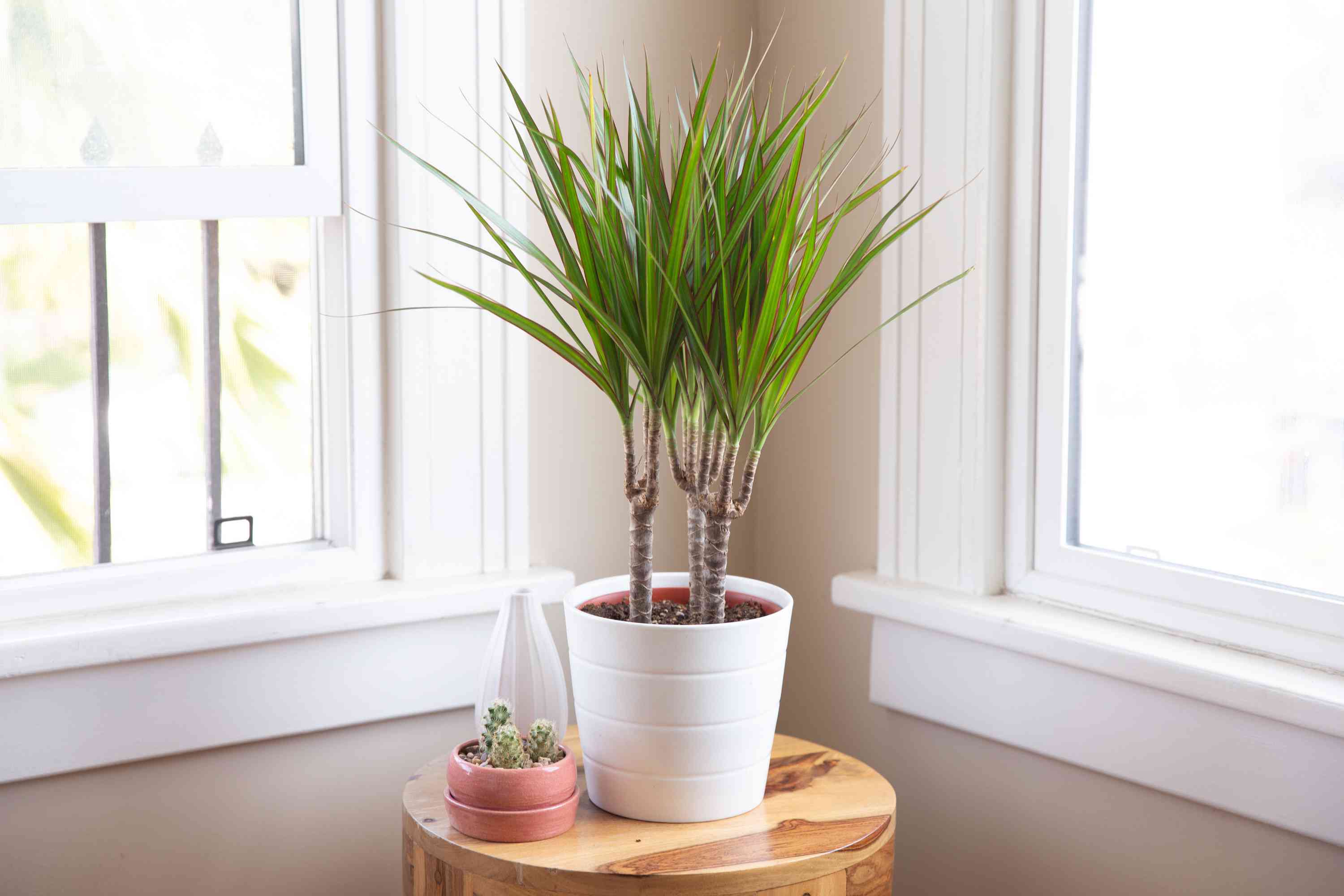
Dracaena is the kind of houseplant that quietly builds your confidence. It tolerates real life, including missed waterings, office lighting, and the occasional “I forgot you existed behind the couch” moment. If you are new to plants, Dracaena is one of the best places to start because it grows slowly, communicates clearly, and forgives a lot.
In this guide, I will walk you through the most common Dracaena types, how to nail light and watering, why tap water can contribute to brown tips, and how to fix the most common problems without panic.
Meet popular Dracaena types
Dracaenas are a big group, but these are the ones you will see most often in stores, offices, and hand-me-down plant collections.
Dracaena marginata (dragon tree)
This is the classic “spiky cane plant” with narrow leaves, often edged in red or burgundy. It looks dramatic, stays fairly slim, and can handle lower light than you would expect for such a bold silhouette.
- Look for: thin trunks (canes), tufts of narrow leaves, red-edged varieties like ‘Colorama’ or ‘Tricolor’
- Beginner note: it can be prone to brown tips if your water is high in fluoride or salts
Dracaena fragrans (corn plant)
Usually sold as “corn plant,” this one has thicker, broader leaves and sturdy canes. It is one of the most tolerant Dracaenas for average home conditions.
- Look for: wide arching leaves, solid green or striped cultivars like ‘Massangeana’
- Beginner note: great for medium light; grows slowly but can become a tall, handsome floor plant
Dracaena fragrans ‘Warneckii’
Warneckii has upright leaves with crisp striping, often white or gray-green. It feels a bit more “tailored” than the corn plant and looks fantastic in modern spaces.
- Look for: sword-like leaves, striped pattern, often multiple canes in one pot
- Beginner note: it needs a little more light than a plain green corn plant to keep the striping strong
Dracaena fragrans ‘Lemon Lime’
This is a bright, cheerful Dracaena with green leaves edged in chartreuse and yellow tones.
- Look for: lime-green striping, bold color, fast visual payoff
- Beginner note: color looks best in brighter indirect light
Light
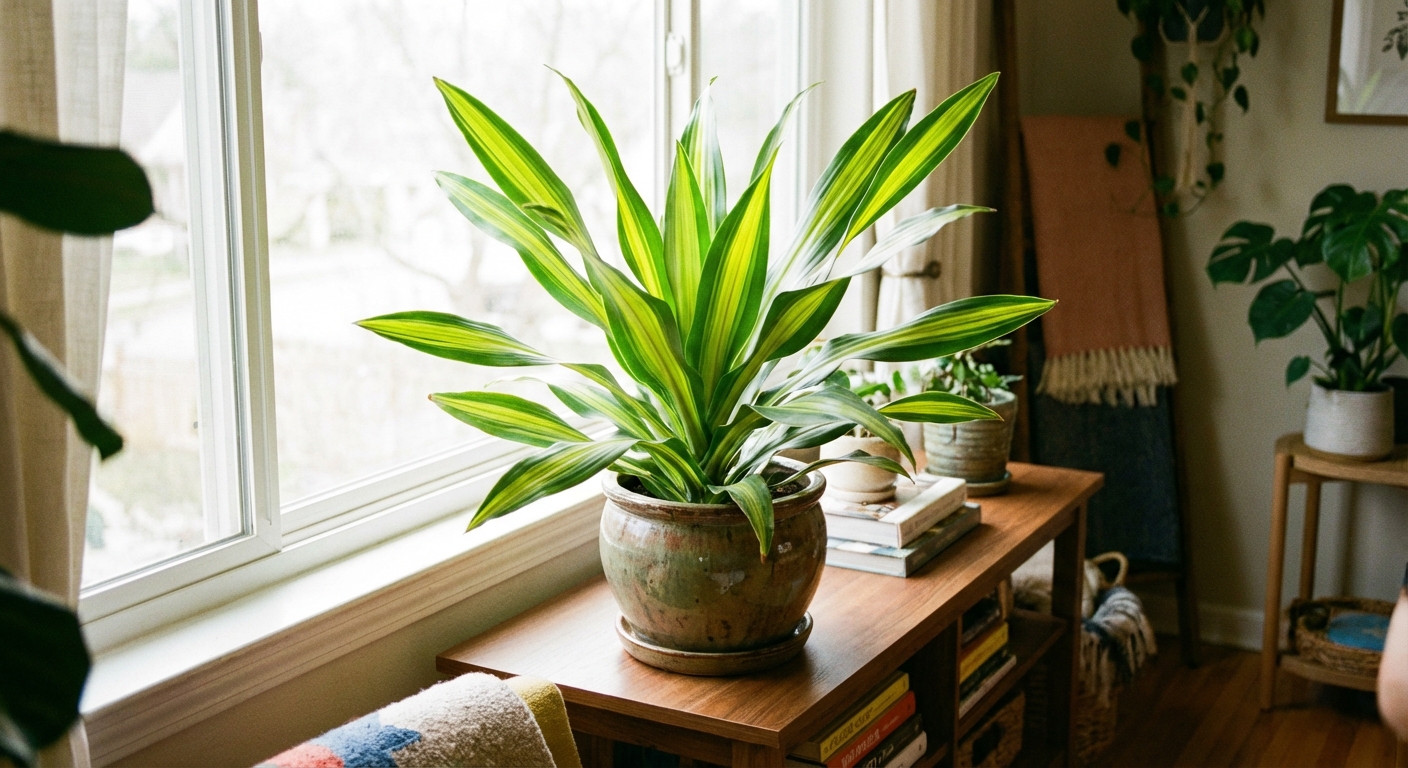
Dracaena is famous for being “low light,” but here is the truth: it tolerates low light. It thrives in bright, indirect light.
Best light
- Bright, indirect light near an east window, or a few feet back from a south or west window
- Filtered light through a sheer curtain is perfect
Low light
- Dracaenas can survive in offices and interior rooms, but growth slows dramatically
- Variegated types (Warneckii, Lemon Lime) may fade toward greener leaves in low light
Avoid harsh sun
- Hot direct sun can bleach leaves or cause dry, crispy patches
- If you see pale, washed-out areas, move it back from the window
My quick test: if the spot is bright enough that your shadow looks soft (not sharp) for part of the day, your Dracaena will probably do well there.
Watering
The fastest way to stress a Dracaena is to water it on a schedule instead of checking the soil. Dracaena prefers to dry out a bit between waterings.
How often to water
- Bright indirect light: often every 10 to 14 days
- Medium light: often every 14 to 21 days
- Low light or winter conditions: often every 2 to 4+ weeks
Use these as starting points, not rules. Pot size, soil type, temperature, and airflow change everything. The soil check is the boss.
The finger test
Stick your finger about 2 inches into the soil.
- If it feels damp, wait.
- If it feels mostly dry, it is time to water.
How to water correctly
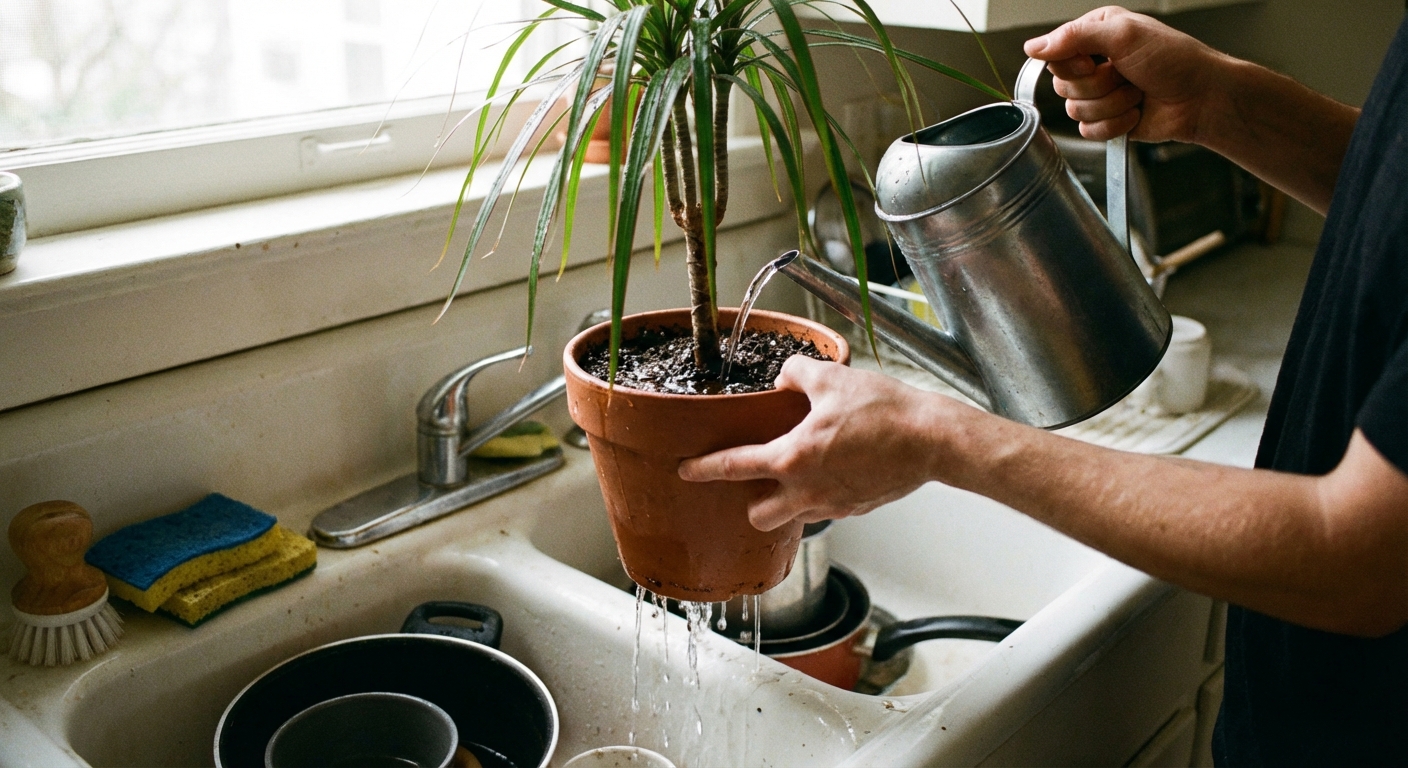
- Water slowly until you see runoff from the drainage holes.
- Empty the saucer so the pot is not sitting in water.
- Do not give “tiny sips” every few days. That keeps roots stressed and encourages gnats.
Pot must-have: drainage holes. If your Dracaena is in a decorative pot with no drainage, treat that pot like a cachepot and keep the plant in a plastic nursery pot inside it.
Tap water and brown tips
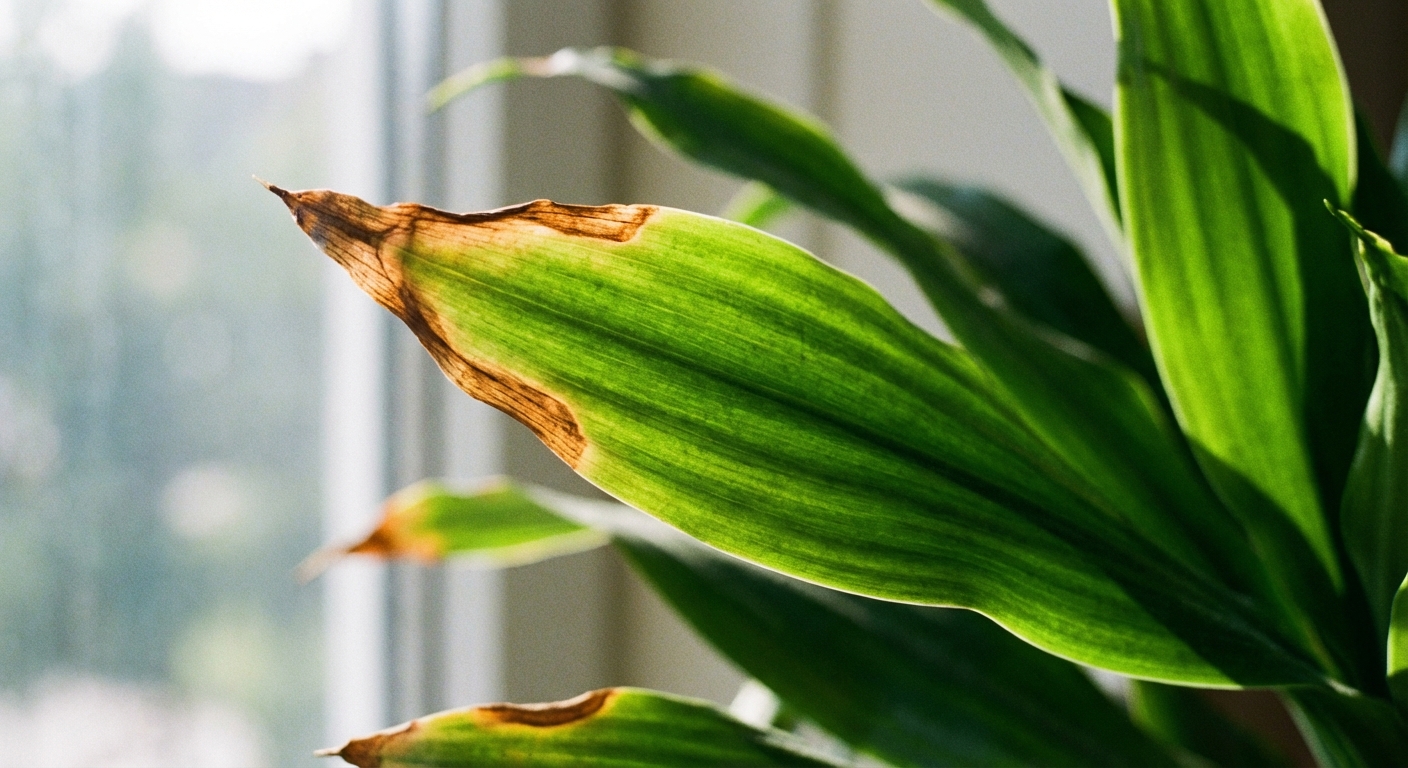
If Dracaena had a personal grudge, it would be against fluoride and mineral salts. Many Dracaenas are sensitive to chemicals commonly found in tap water, especially fluoride. This can show up as brown leaf tips or crispy edges even when your watering routine seems fine. Low humidity, inconsistent watering, and fertilizer salt buildup can also contribute, so think of this as a “stacking factors” situation.
What to use instead
- Rainwater (my favorite when available)
- Distilled water
- Reverse osmosis (RO) water
- Filtered water can help, but not all filters remove fluoride
If tap water is your only option
- Let water sit out overnight to reduce chlorine (note: chloramine does not dissipate well this way).
- Flush the pot monthly: water thoroughly for a full minute so excess salts wash out the bottom.
- Avoid over-fertilizing, which adds more salts to the soil.
Can I trim brown tips?
Yes. Use clean scissors and follow the natural shape of the leaf tip. You are not harming the plant. You are giving it a haircut.
Soil and potting
Dracaena wants soil that drains well and still holds a little moisture. The goal is roots that get both water and oxygen.
Easy soil mix
- Use a quality indoor potting mix, then add 20 to 30 percent perlite for extra drainage.
- If your mix is very dense or peat-heavy, perlite is your best friend.
When to repot
- Every 2 to 3 years, or when roots are circling the pot and watering becomes tricky
- Spring and early summer are the least stressful times
Pot size tip: go up just 1 to 2 inches in diameter. A too-big pot holds extra wet soil, which is how “easy care” turns into “why is it sad.”
Also true: Dracaena does not mind being slightly root-bound. If you are on the fence, wait. Most beginners repot too soon, not too late.
Temperature and humidity
Dracaena is comfortable in typical household conditions.
- Ideal temperature: 65 to 80°F (18 to 27°C)
- Avoid: cold drafts, blasts from AC vents, and winter windows that chill the leaves
- Humidity: average home humidity is usually fine, but higher humidity can help prevent crispy edges
If your home is very dry, run a small humidifier nearby or group plants together. I like to tell my ferns it is “spa day,” but your Dracaena will quietly appreciate it too.
Fertilizer
Dracaena is not a heavy feeder. Too much fertilizer can contribute to brown tips due to salt buildup.
- When: spring through early fall
- How often: every 4 to 6 weeks
- What: a balanced liquid houseplant fertilizer at half strength
- Skip feeding: in winter, or if the plant is stressed, recently repotted, or in low light
Leaf care
Dusty leaves look dull, but more importantly, they photosynthesize less efficiently and make it harder to spot early pests.
- Wipe leaves with a damp microfiber cloth every few weeks.
- While you are there, check the undersides for stippling, webbing, or cottony spots.
Troubleshooting
Brown leaf tips
Most common causes: fluoride or salt in water, low humidity, fertilizer buildup, inconsistent watering.
- Switch to distilled, RO, or rainwater if possible.
- Flush the pot monthly to reduce salts.
- Trim tips for a cleaner look.
- Check that you are not letting the plant go bone-dry for long stretches, then flooding it.
Brown spots or crispy patches
Common causes: sun scorch from direct light, very dry air, or watering issues.
- Move the plant a few feet back from harsh sun.
- Ensure water is reaching the entire root ball when you water.
Drooping leaves
Drooping can mean two opposite things, which is annoyingly on-brand for plants.
- Underwatering: soil is dry, pot feels light, leaves look limp. Water thoroughly and let excess drain.
- Overwatering or poor drainage: soil stays wet, pot feels heavy, lower leaves may yellow. Let soil dry more between waterings and confirm drainage holes are open.
Quick check: feel the soil before you do anything. The soil tells the truth.
Yellow leaves
Common causes: overwatering, low light, natural aging of lower leaves.
- If only one or two bottom leaves yellow occasionally, that can be normal.
- If many leaves yellow quickly, review drainage and reduce watering frequency.
- Increase light gradually if the plant is deep in the room.
Leaf drop after moving
Dracaena can sulk after a big change in light or temperature.
- Keep conditions steady for a few weeks.
- Do not “fix” it by watering more unless the soil is actually dry.
Soft, mushy stems
This usually points to rot from staying too wet.
- Stop watering and assess roots.
- If the base is soft, you may need to take healthy cane cuttings and restart the plant.
Pests: spider mites and mealybugs
Dry indoor air and dusty leaves can make Dracaena a magnet for a couple of classic freeloaders.
Spider mites
- What you will see: pale stippling, dull leaves, fine webbing (often where leaves meet the cane)
- First response: rinse the plant in the shower or sink, especially the undersides of leaves
- Treatment: insecticidal soap or horticultural oil, applied thoroughly, repeated every 7 to 10 days for a few rounds
- Pro tip: raise humidity a bit and wipe leaves regularly to make your home less of a mite resort
Mealybugs
- What you will see: white, cottony clusters in leaf joints and along stems; sticky residue
- First response: dab bugs with a cotton swab dipped in 70% isopropyl alcohol
- Treatment: follow with insecticidal soap, and repeat weekly until you stop seeing new bugs
- Quarantine: keep the plant away from others while treating
Pruning and shaping
One of my favorite things about Dracaena is how well it responds to a haircut. If it gets tall and bare, you can encourage branching.
Encourage branching
- Use clean, sharp pruners.
- Cut a cane back to your desired height.
- New growth points typically emerge below the cut, creating multiple tufts over time.
Propagation
You can often root the cut top section as a new plant in water or moist potting mix. It is like getting a two-for-one confidence boost.
- In water: keep the stem in clean water, change it every few days, and give it bright indirect light.
- Timing: roots often start in a few weeks, but a sturdy root system can take 1 to 2 months (sometimes longer).
- Potting up: move to soil once you have several roots a couple of inches long.
Pet safety
Dracaena is toxic to cats and dogs if chewed. It contains saponins and can cause drooling, vomiting, and appetite loss. If you suspect your pet has eaten it, contact your veterinarian or a pet poison hotline for guidance.
Quick care checklist
- Light: bright, indirect preferred; tolerates low light
- Water: let top 2 inches dry, then water thoroughly
- Water quality: fluoride and salts can cause brown tips; flush soil monthly
- Soil: well-draining potting mix with added perlite
- Fertilizer: half strength every 4 to 6 weeks in spring and summer
- Common issues: brown tips (water quality, salts, low humidity), drooping (too dry or too wet), yellowing (often overwatering), pests (spider mites, mealybugs)
If you take nothing else from me, take this: Dracaena likes patience. Check the soil, adjust slowly, and give it time to respond. Plants do not do instant feedback, but they do reward steady care.