
Christmas Cactus Care and How to Make It Bloom

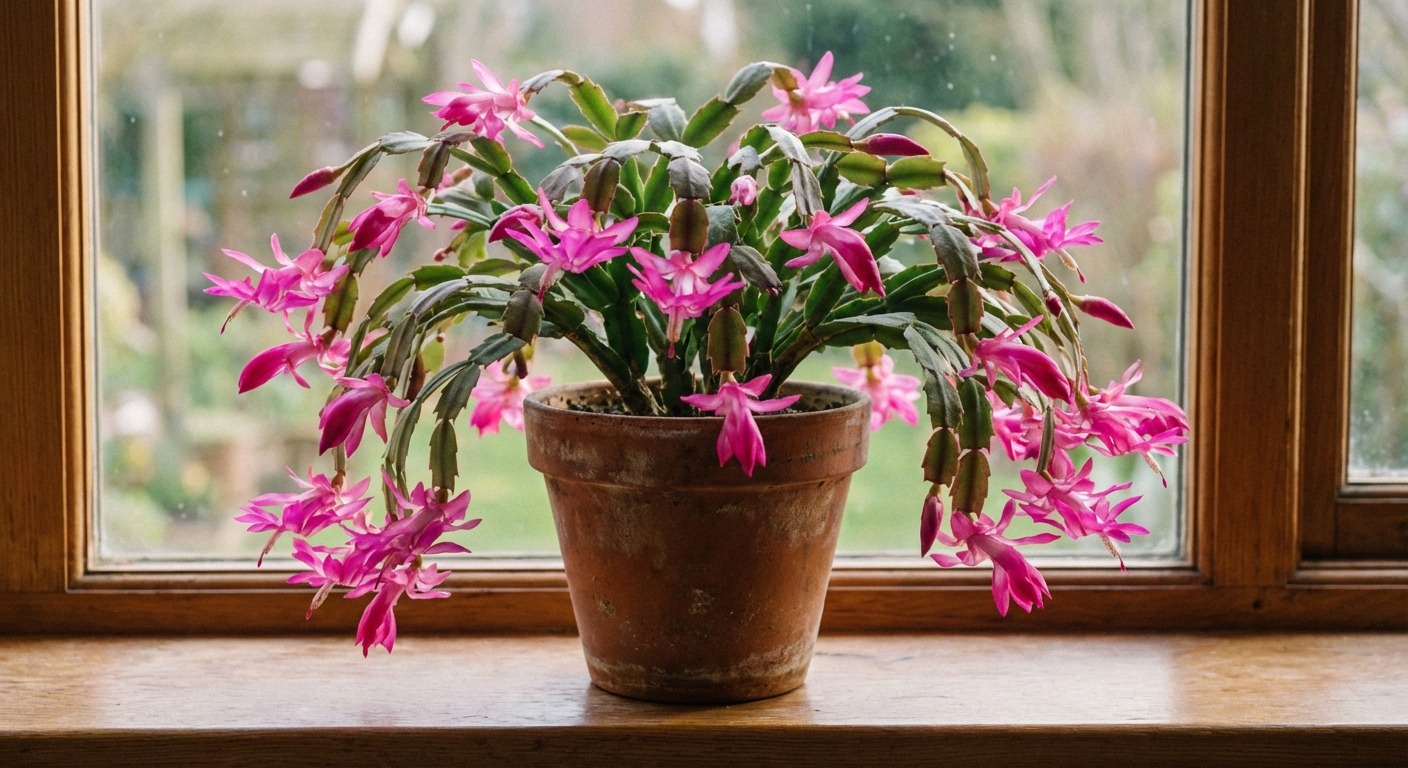
Christmas cactus has one of my favorite personality traits in a houseplant: it looks like a cactus, but it behaves like a friendly forest creature. Give it bright, gentle light, an airy potting mix, and a little seasonal rhythm, and it will reward you with those dreamy, dangling blooms right when the days feel shortest.
Below you will find year-round care you can actually follow, plus the light and temperature cues that tell a holiday cactus it is time to set buds for the holidays.
Meet the holiday cacti
Most people say “Christmas cactus” for any festive blooming cactus, but there are three common types. In nature, these plants are mostly epiphytic and lithophytic, meaning they grow in tree crotches, on mossy branches, or tucked into rocky crevices with leaf litter, not in desert sand.
Thanksgiving cactus (most common in stores)
- Botanical name: Schlumbergera truncata
- Bloom timing: typically late fall, often around Thanksgiving
- Segment edges: pointed “teeth” or claw-like tips on the flattened segments
- Flower posture: more horizontal, with a slightly asymmetrical look
Christmas cactus
- Botanical name: Schlumbergera × buckleyi (often labeled as Christmas cactus, sometimes listed under older names depending on the source)
- Bloom timing: early winter, often closer to Christmas
- Segment edges: smoother, more rounded scallops
- Growth habit: gracefully arching, excellent for hanging baskets
Easter cactus (a different genus)
- Botanical name: Hatiora (syn. Rhipsalidopsis)
- Bloom timing: spring
- Segment edges: rounder, thicker segments with tiny bristles at the tips in some varieties
- Flowers: more starburst and symmetrical
If you are trying to “force” blooms and nothing is happening, misidentification is a sneaky culprit. A true Easter cactus will not be impressed by your November efforts.
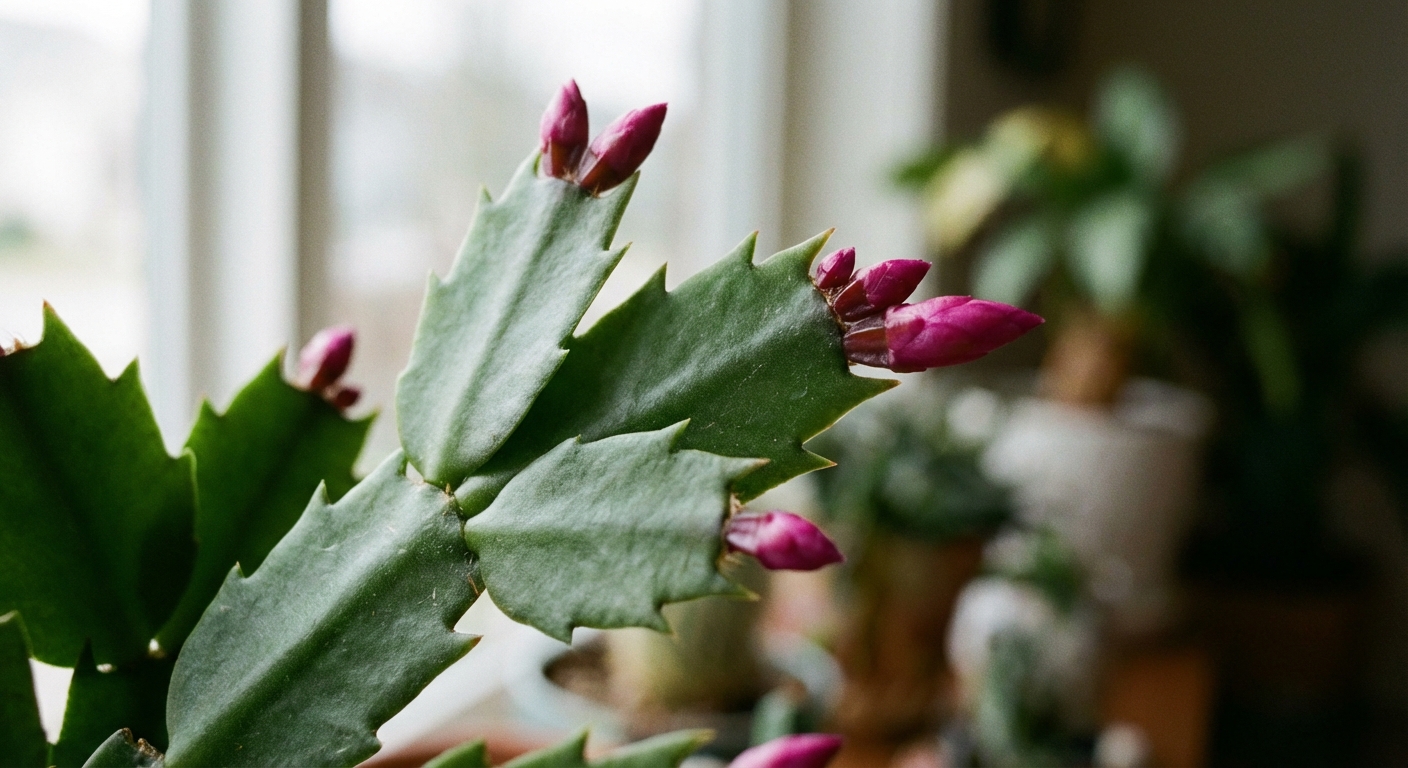
Holiday cactus care, season by season
Think of this plant as a rainforest cactus that loves consistency, but also appreciates a clear rest period. These are the basics that keep it healthy all year.
Light
- Best: bright indirect light, like an east window or a few feet back from a sunny south or west window
- OK: a little gentle morning sun
- Avoid: harsh midday sun on the glass, which can scorch segments and turn them reddish or pale
Watering
This is where most “black thumb” anxiety lives, so let’s make it simple.
- Water thoroughly until excess drains out.
- Then wait until the top 1 to 2 inches of mix are dry before watering again.
- Never let the pot sit in a saucer of water. If it drains into a saucer, empty it after about 10 to 15 minutes.
In active growth (spring and summer) you will water more often. In bud set and blooming (fall and winter) watering is steadier but slightly lighter, because soggy roots can cause buds to drop.
Humidity
Holiday cacti appreciate moderate humidity. If your home is very dry in winter, place the pot on a tray of pebbles with water below the pot’s base, or group plants together. You do not need to mist constantly, and wetting buds can encourage spotting.
Temperature
- Happy range: about 60 to 75°F (16 to 24°C)
- Bud and bloom support: cooler nights often help, roughly 50 to 65°F (10 to 18°C)
- Avoid: drafts from doors, heating vents, and radiators, especially once buds form
Soil and pot
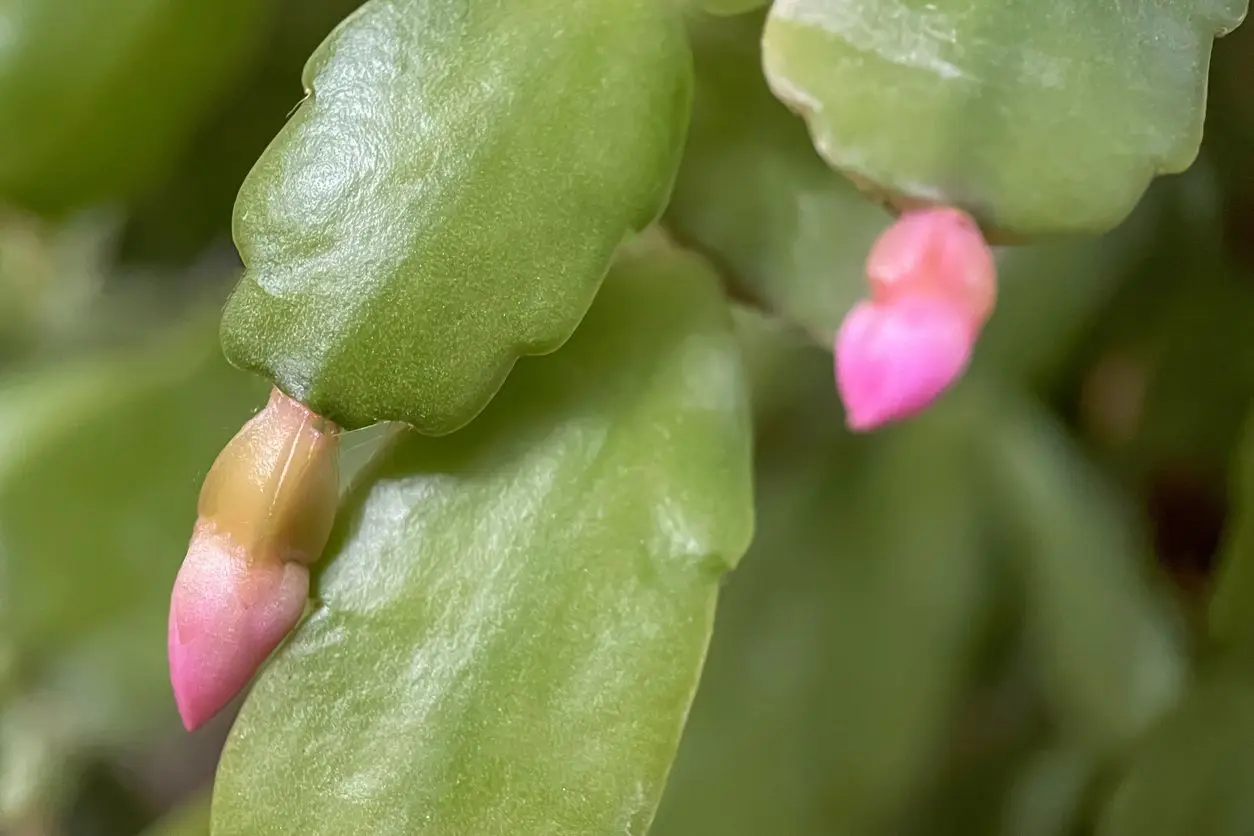
Skip dense, bone-dry mixes that behave like desert sand. You want something that drains quickly but holds a bit of moisture, more like chunky houseplant soil.
- Easy mix: 2 parts quality potting soil + 1 part perlite + 1 part fine orchid bark
- If you only have cactus or succulent mix: choose one that is not ultra sandy, then amend it with potting soil and bark so it does not dry out in a day.
- Pot: any pot with drainage holes, slightly snug is fine
They often bloom better when mildly rootbound, so do not rush to up-pot.
Feeding
- When: spring through late summer
- What: balanced organic liquid fertilizer at half strength every 3 to 4 weeks, or a gentle slow-release fertilizer
- Pause: early fall through bloom time
Pruning
Right after blooming is the perfect time to shape the plant. Pinch or twist off 1 to 2 segments from the tips of a few stems to encourage branching. More branches usually means more flower sites next season.
Summer outdoors (optional)
If you like to summer your plant outside, give it bright shade or dappled light and protect it from heavy rain. Bring it back indoors before nights reliably drop below about 50 to 55°F (10 to 13°C).
How to make it bloom
Thanksgiving and Christmas cacti typically set buds in fall in response to long nights and, for many plants, cooler temperatures. You can lean into that natural rhythm without turning your home into a laboratory.
The two bloom triggers
- Darkness: about 12 to 14 or more hours of uninterrupted darkness each night, typically for 6 to 8 weeks (some varieties respond a bit faster)
- Cool nights: often helpful, ideally somewhere around 50 to 65°F (10 to 18°C) during that same period
Some plants will set buds with long nights even if temperatures stay fairly normal. Others respond strongly to cooler nights. If you can do both, your odds improve.
Simple schedule for most homes
Start: mid-September to early October for holiday blooms.
- Move the plant to a spot with bright daytime light but reliably dark nights. A spare room, a cool bedroom, or a lightly used office can work well.
- Keep it away from evening lamps, TVs, kitchen lights, streetlights, and even bright holiday string lights. A few nights of interrupted darkness can delay buds.
- Keep nights a little cooler if possible. A slightly cooler windowsill can help, as long as it is not drafty.
- Water a bit less than summer, but do not let it go bone dry for weeks. Aim for “evenly moist, never soggy.”
When buds appear
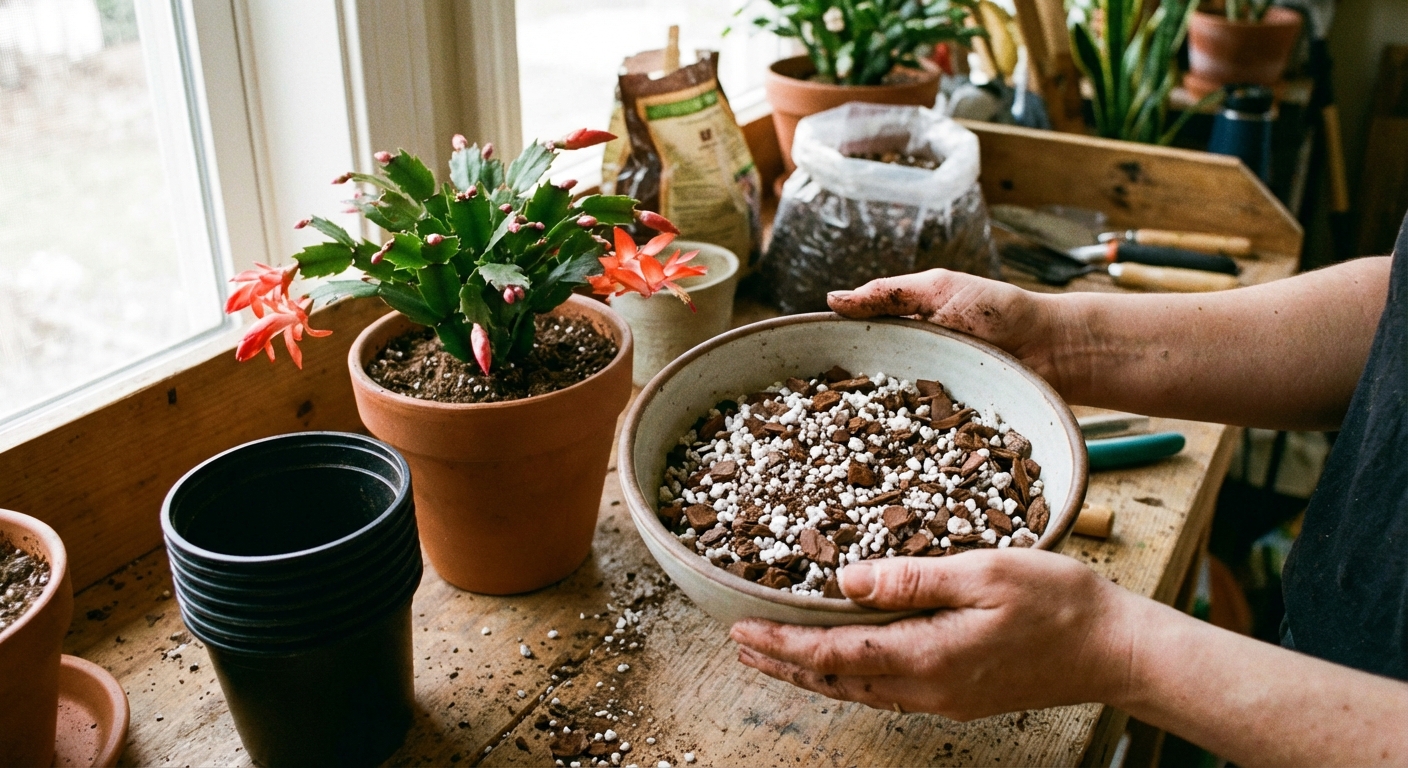
Once you see tiny bud nubs at the segment tips, you can relax the darkness routine. Now the goal is bud retention.
- Avoid sudden changes once buds form. That includes frequent moving, big temperature swings, and heavy rotation.
- Keep temperatures steady. Avoid heat blasts from vents.
- Water consistently. Big swings between very dry and very wet can cause bud drop.
Why buds form but fall off
- Drafts or heat: near a heater, fireplace, or frequently opened exterior door
- Overwatering: roots staying wet in cool weather
- Underwatering: plant shrivels, then gets flooded
- Low humidity: very dry indoor air combined with warmth
- Stress moves: moved repeatedly between rooms, or a sudden change in light direction
Repotting without drama
If your plant is healthy, repotting every 2 to 3 years is plenty. The best time is after flowering, when it is ready to grow again.
- Choose a pot only 1 to 2 inches wider than the current one.
- Use a fast-draining mix (see above).
- Gently loosen circling roots, but do not shred them.
- Water lightly after repotting, then resume normal watering once you see new growth.
If you are mainly chasing blooms, remember: a slightly snug pot is your friend.
Propagation from segments
Propagating holiday cactus is wonderfully low-stress. I like to do it right after blooming when I am pruning anyway. And yes, talking to the cuttings is allowed. My ferns swear it helps.
Step-by-step propagation
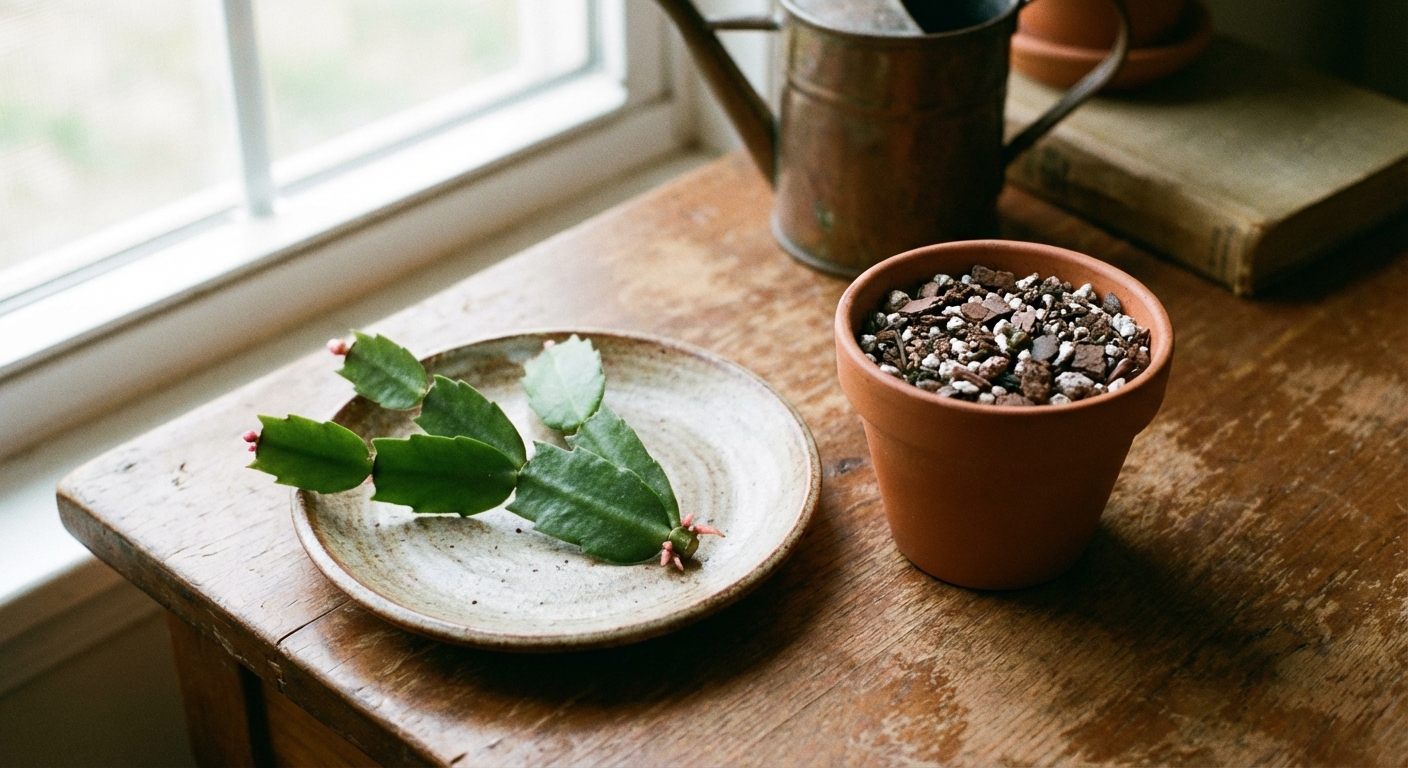
- Take a cutting: twist off a piece with 2 to 4 segments. Use clean hands or snips.
- Let it callus: set the cutting on a plate out of direct sun for 24 to 48 hours. This reduces rot.
- Pot it up: insert the bottom segment about 1/2 to 1 inch into slightly damp mix (a small pot is perfect).
- Keep it lightly moist: not wet. Think “barely damp sponge.” Bright indirect light.
- Wait for rooting: in 3 to 6 weeks, gentle tug resistance means roots.
Water propagation?
You can root segments in water, but soil propagation usually produces sturdier roots for this plant. If you do use water, change it often and move to soil once roots are about 1 inch long.
Common problems and quick fixes
Wrinkled, limp segments
- Most likely: underwatering or roots damaged from staying wet
- Fix: check the soil. If dry, water deeply. If soggy, let it dry and consider repotting into a faster mix.
Reddish or pale segments
- Most likely: too much direct sun, or cold stress
- Fix: move to bright indirect light and stabilize temperature.
Segments dropping
- Most likely: overwatering, cold drafts, or sudden change in conditions
- Fix: assess drainage, reduce watering frequency, and move away from drafts.
No blooms
- Most likely: nights not dark enough, nights too warm, or feeding late into fall
- Fix: aim for several weeks of long, uninterrupted nights and slightly cooler evenings, and pause fertilizer by early fall.
Pests
Watch for mealybugs (cottony clusters) and spider mites (fine webbing, speckling). Treat early with a strong shower, then insecticidal soap or horticultural oil, keeping sprays off open flowers when possible.
Pets
Holiday cacti are commonly considered low toxicity for cats and dogs, but any plant can cause mild stomach upset if chewed. If a pet is a dedicated plant snacker, place it out of reach.
Year-round checklist
- Spring: start feeding, water as growth resumes, repot if needed after bloom
- Summer: bright indirect light, consistent watering, pinch tips for bushiness (optional: enjoy it outdoors in bright shade)
- Early fall: stop fertilizing, begin long nights and cooler temps
- Late fall and winter: keep stable conditions, avoid drafts, do not overwater, enjoy blooms
If your cactus skips a year, do not take it personally. Plants have seasons too. Get the light right, keep the roots breathing, and give it those long, cozy nights in fall. The blooms tend to follow.