
Boston Fern Care Indoors and Outdoors

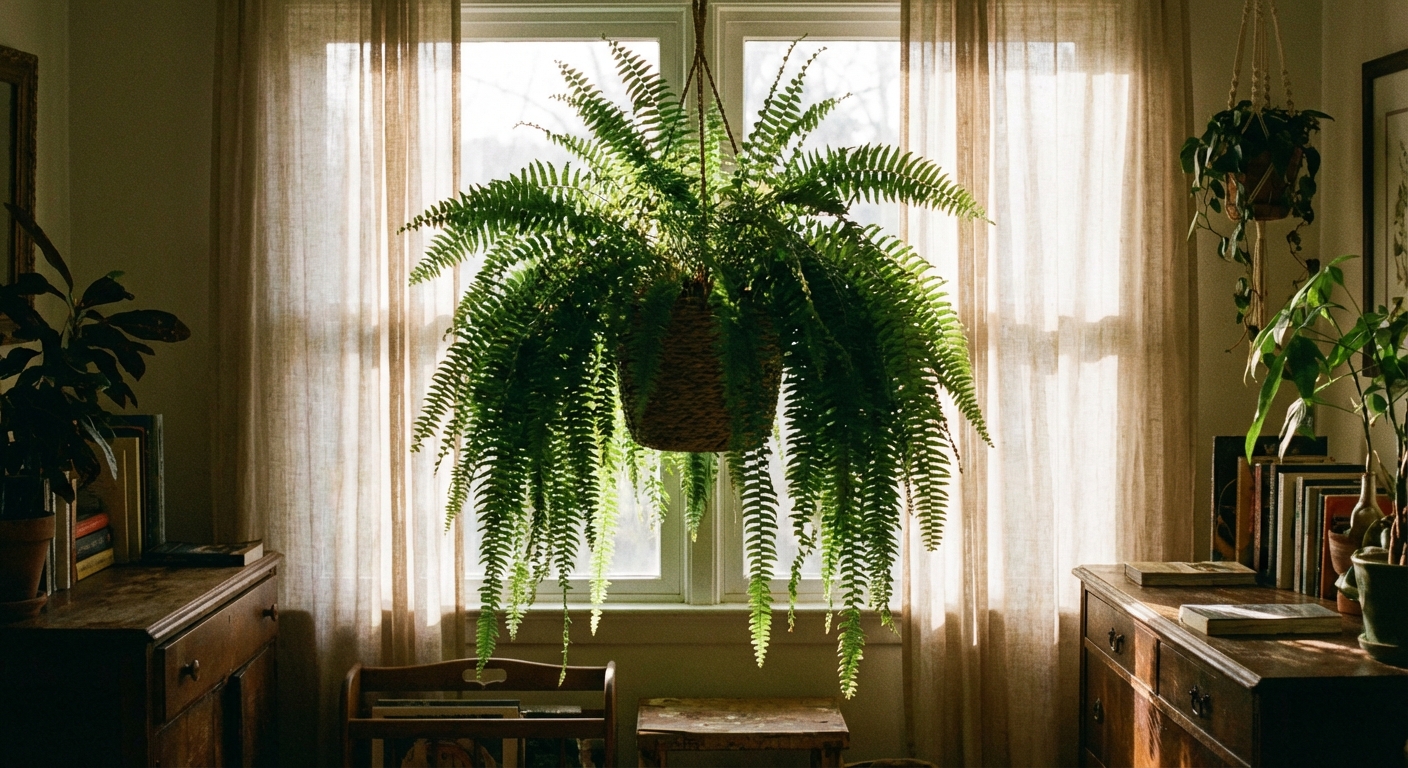
Boston ferns have a way of making a space feel instantly softer, like you just opened a window to a shady woodland. They are also famously dramatic when their needs are off by even a little. The good news is that once you understand what a Boston fern is really asking for, it becomes one of the most rewarding, lush plants you can grow indoors or on a porch.
Think of it this way: a Boston fern wants bright, gentle light, consistently moist soil, and air that is not painfully dry. Nail those three and you are most of the way there.
Hi, I’m Clara, and I’ll be your calm voice when your fern gets a little theatrical. I’ve grown them indoors and on porches long enough to know they are not “hard,” they are just consistent.
Quick Boston fern snapshot
- Botanical name: Nephrolepis exaltata (often sold as N. exaltata ‘Bostoniensis’)
- Best light: bright indirect light, or bright shade outdoors
- Water: keep evenly moist, never bone dry
- Humidity: prefers 50% to 70%+
- Temperature: happiest around 60 to 75°F (avoid prolonged dips below 50°F)
- Pet safety: generally considered non-toxic to cats and dogs (still, discourage chewing)
Light
Indoors
Indoors, place your fern in bright, indirect light. Near an east window is usually perfect. South or west windows can work too, but pull the plant back from the glass or soften the light with a sheer curtain. If you remember one placement rule, make it this: keep it away from heating and cooling vents. Dry blasts are fern heartbreak.
- Too little light: slower growth, smaller fronds, more frond drop over time
- Too much direct sun: crispy tips, pale fronds, a fried look that appears quickly
Outdoors
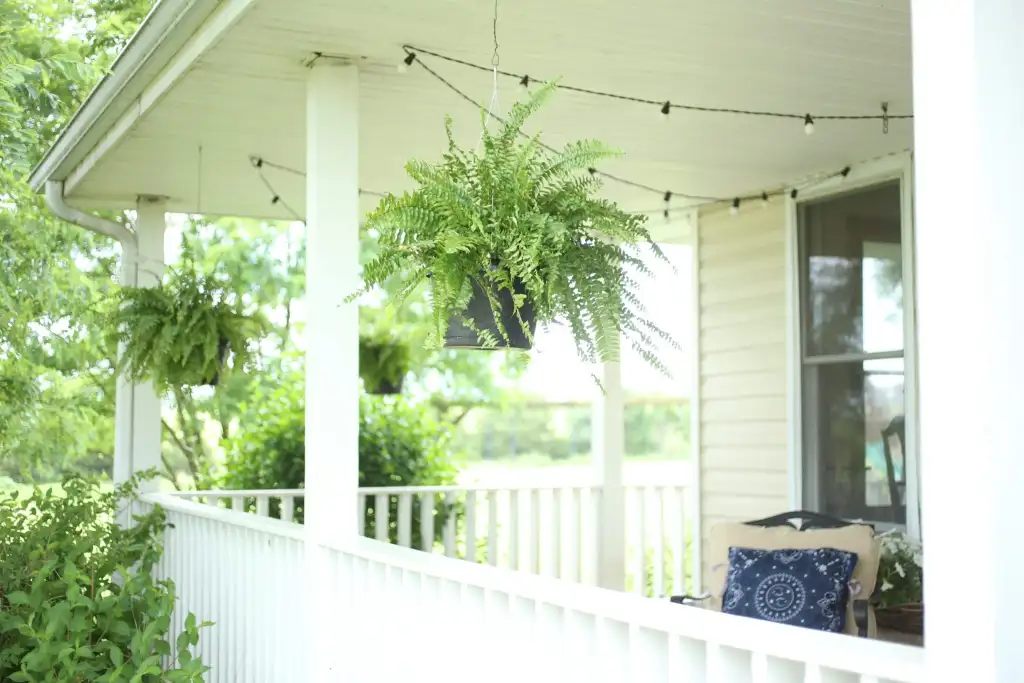
Outside, Boston ferns want bright shade, meaning dappled light under a tree canopy or the shelter of a covered porch. Morning sun can be fine in many climates, but hot afternoon sun is usually too intense.
Watering
If there is one secret to a happy Boston fern, it is this: do not let the root ball fully dry out. Ferns have lots of fine, thirsty roots. When they dry, they respond by dropping fronds and leaflets.
How often to water
There is no perfect schedule because light, pot size, season, and indoor heat all change the pace. Instead, use a quick finger test.
- Check the soil with your finger. When the top 1 inch feels slightly dry to the touch, but you can still sense moisture below, it is time.
- Water thoroughly until it runs out the drainage holes.
- Empty the saucer so the plant never sits in water.
Typical ranges: in bright indoor light, many Boston ferns need water every 3 to 7 days. On a warm porch in summer, a hanging basket can need water daily, especially during heat waves.
Water quality
Boston ferns can be sensitive to mineral salts and some water additives. If your tap water is hard, rainwater or filtered water can help. Letting tap water sit out overnight can reduce chlorine smell, but it will not remove hardness (and it does not remove chloramine). If you notice persistent brown tips despite good humidity and steady watering, water quality is one of the first things I tweak.
Drainage
Even moisture does not mean soggy soil. Choose a pot with drainage holes, and use a light, airy mix so roots get oxygen. If your fern came in dense peat that stays wet forever, consider repotting to a fluffier blend.
Humidity
Boston ferns are the houseplant equivalent of someone who moisturizes religiously. They can survive average home humidity for a while, but they look their best when the air is comfortably humid.
Best targets
Aim for 50% or higher. If you can get to 60% to 70%, you will usually see longer, softer fronds and far fewer crispy tips.
Easy upgrades
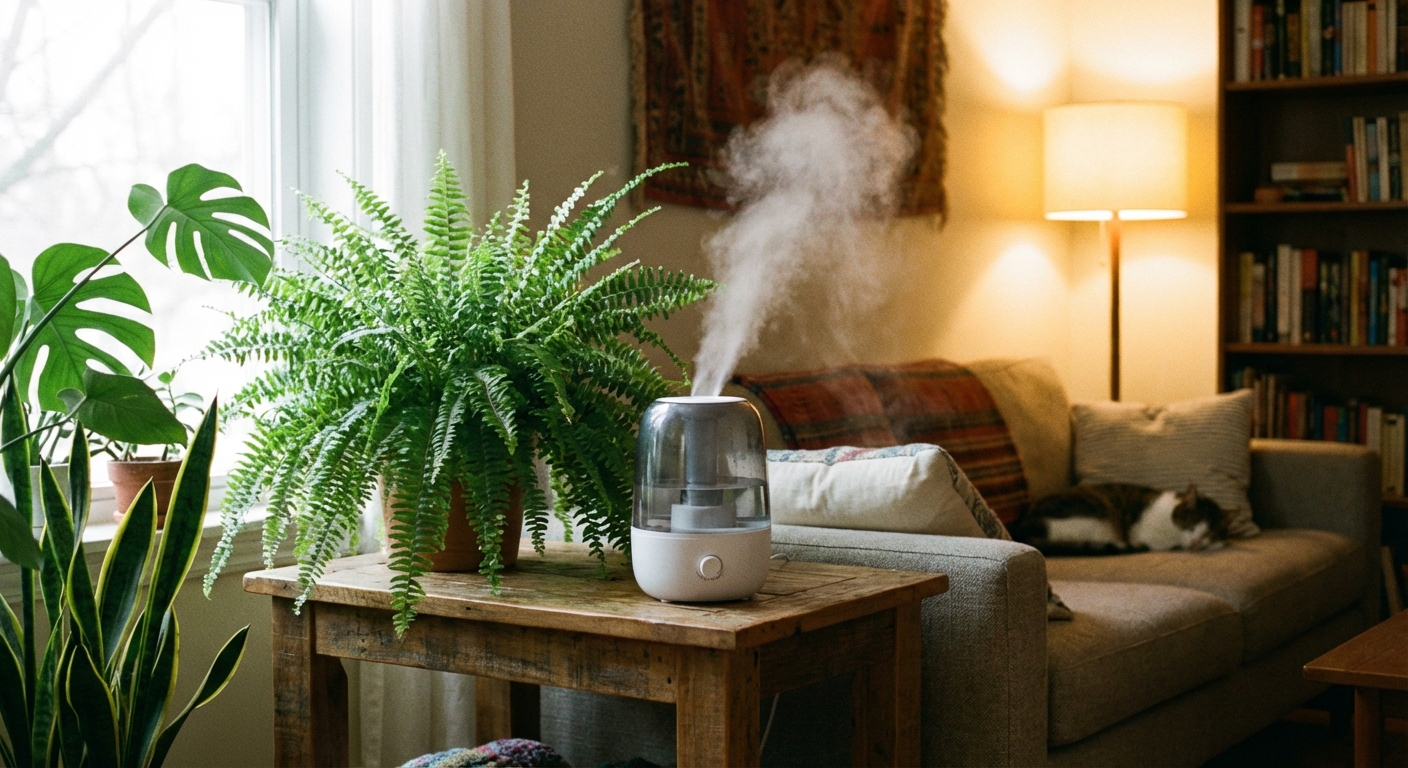
- Humidifier: the most reliable option, especially in winter heat.
- Bathroom placement: if it gets bright light, a steamy bathroom is fern heaven.
- Group plants together: a small jungle creates a slightly more humid pocket of air.
- Pebble tray: helpful as a small boost, but do not expect miracles in very dry rooms.
About misting: misting can feel nice, but it is short-lived. It is fine as a little ritual, but it is not a replacement for real humidity if your home drops to 30% in winter.
Soil and pots
Boston ferns like soil that holds moisture but still breathes. My favorite approach is a potting mix that is spongy, not swampy.
- Good mix idea: quality indoor potting mix + extra perlite for airflow, plus a small amount of compost for gentle nutrition.
- Pot choice: plastic retains moisture longer, terracotta dries faster. Either can work, but you will water terracotta more often.
- Size: go up 1 pot size when repotting. Oversized pots stay wet too long and can invite root trouble.
Repotting
Most Boston ferns appreciate a repot every year or two. The best time is spring, when growth is naturally picking up.
- Signs it is time: roots circling the pot, soil drying out unusually fast, or the plant looking crowded and thirsty all the time.
- How: move up one pot size, refresh the mix, and keep it evenly moist while it settles in.
If your fern is massive, repotting is also the perfect moment to divide it (more on that below).
Feeding
Ferns do not need heavy fertilizing. Too much can lead to salt buildup and brown tips. During spring and summer, feed lightly.
- When: spring through early fall
- How: a balanced liquid fertilizer at 1/4 to 1/2 strength every 4 to 6 weeks
- Pause: stop feeding in winter when growth slows
If you prefer organic, a very diluted fish emulsion can work, but use it sparingly indoors. A little goes a long way, and yes, it can smell.
Pruning and frond drop
A little shedding is normal, especially when a fern is adjusting to a new home. But if your fern is dropping fronds like it is auditioning for a bare-branch look, it is almost always one of a few fixable issues.
How to tidy
- Trim brown or yellow fronds at the base with clean snips.
- For crispy tips, you can trim just the brown ends, but do not chase perfection.
- Rotate the plant every week or two for even growth.
Why it sheds
- Dry soil: the most common cause. Increase watering consistency and do not let it fully dry.
- Low humidity: especially in winter. Add a humidifier or move it to a naturally humid room.
- Hot or cold drafts: keep away from vents, radiators, and frequently opened exterior doors.
- Too much sun: move it back from harsh light.
- Salt buildup: flush the pot with plenty of water every 4 to 8 weeks during active growth, or periodically if you fertilize often.
Clara note: when my fern starts shedding, I do not panic. I adjust one thing at a time for a week. Ferns respond, but they like consistency. Rapid changes can make them sulk.
Propagation
Boston ferns are easy to multiply once they are mature. You will see two common options: division (the most reliable) and runners (the long, skinny stolons that reach outward).
Division
- Do this in spring, ideally when you are already repotting.
- Slide the plant out and gently tease the root ball to find natural sections.
- Use clean hands or a clean knife to separate into 2 or 3 clumps, each with healthy roots and fronds.
- Pot each division into fresh, airy mix and water well.
- Keep humidity higher for a couple of weeks while they recover.
What to do with runners
Those runners can form little baby plantlets. If you see one starting to root, you can pin it to the surface of a nearby pot of moist mix. Once it has its own roots, snip the runner connecting it to the parent. Not every runner will root indoors, so consider this the “bonus method,” not the only plan.
Outdoor care
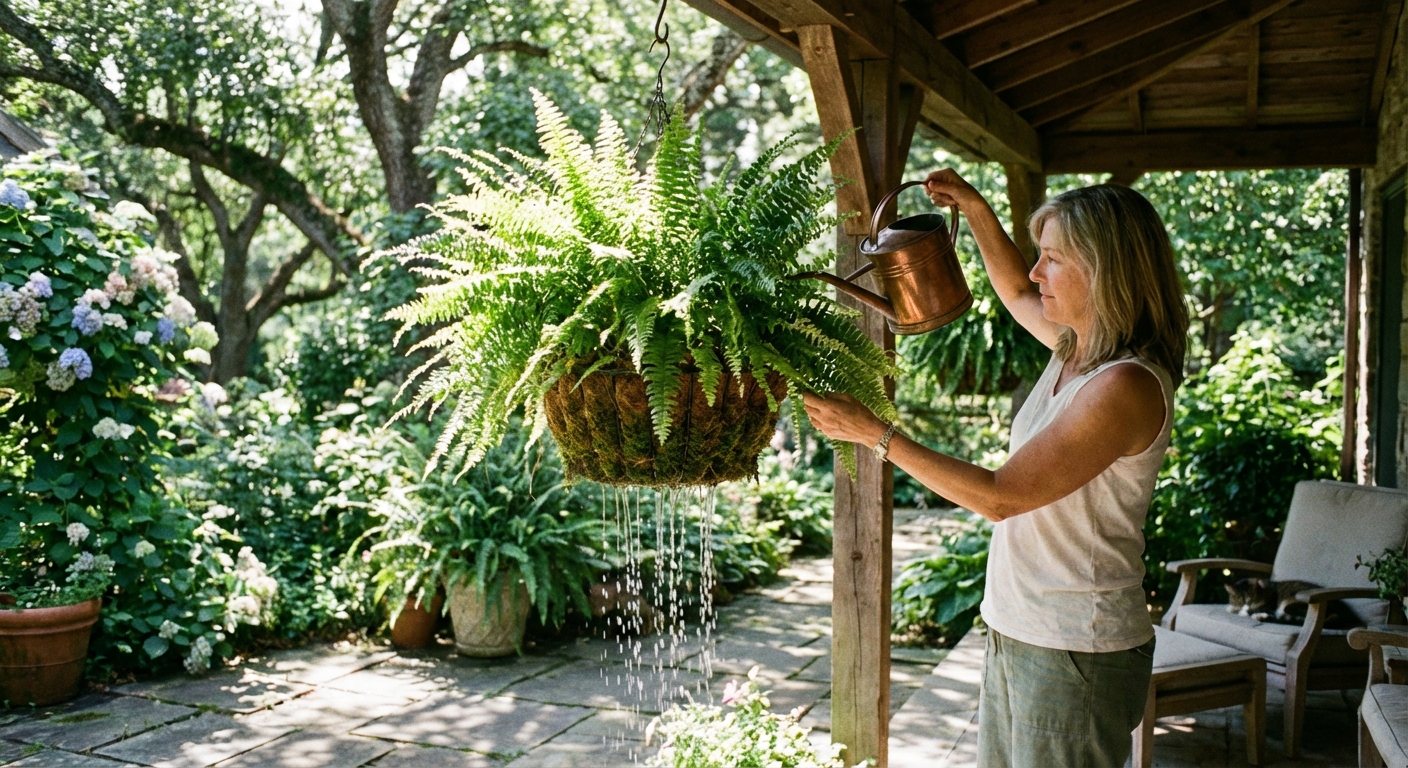
Boston ferns absolutely shine outdoors in warm months. The airflow and natural humidity can make them explode with growth, as long as you keep up with water.
Outdoor checklist
- Shade: bright shade is best.
- Wind protection: strong wind dries baskets fast and can snap fronds.
- Water more often: baskets dry quickly, especially in heat.
- Feed lightly: monthly during active growth.
Overwintering
In many regions, Boston ferns cannot handle frost. If your fern spent summer outdoors, you can absolutely overwinter it inside. The goal is to bring it in before cold nights and help it transition to lower light and drier air.
When to bring it in
Plan to move your fern indoors when nights regularly drop below 50°F. It can tolerate cooler for short periods, but repeated chills will stress it.
Transition steps
- Inspect: check undersides of fronds and the soil for hitchhikers like aphids, scale, mealybugs, or spider mites.
- Rinse: give the plant a gentle hose-down or shower to knock off pests and dust.
- Quarantine: keep it separate from other houseplants for 7 to 14 days if possible.
- Light: place in bright indirect light indoors. Expect some shedding as it adapts.
- Humidity: start a humidifier right away if your home is dry.
- Watering: continue consistent moisture, but let the top inch get slightly dry between waterings as growth slows.
Should you cut it back
If your outdoor fern is huge and messy, you can trim it back moderately, removing the oldest, roughest fronds. Avoid cutting it down to a stub unless it is truly in rough shape. A gentler haircut usually leads to a smoother indoor transition.
Common problems
Brown tips
- Increase humidity.
- Switch to filtered or rainwater if tips persist.
- Flush the pot to remove salts every 4 to 8 weeks during active growth, especially if you fertilize.
Yellow fronds
- Check watering. Both soggy and too-dry conditions can yellow fronds.
- Confirm it is not in direct sun.
- Look for pests if yellowing is patchy.
Leaf drop after moving indoors
- Expect some adjustment shedding.
- Stabilize conditions: bright indirect light, steady moisture, higher humidity.
- Keep away from vents and drafts.
Spider mites and other pests
Boston ferns can attract spider mites in dry indoor air. If you see fine webbing or stippled fronds, isolate the plant and rinse it well. Repeated showers and improving humidity often help. If needed, use insecticidal soap labeled for houseplants, and test on a small area first. Scale and mealybugs are less common, but they can show up too, especially on plants that summer outdoors. A careful wipe-down and repeat treatments usually do the trick.
Care checklist
- Bright, indirect light indoors. Bright shade outdoors.
- Keep soil evenly moist. Do not let it go bone dry.
- Aim for 50%+ humidity for best results.
- Keep away from vents, radiators, and drafty doors.
- Trim brown fronds at the base and rotate for even growth.
- Bring outdoor ferns inside before nights drop below 50°F.
If you have ever felt like ferns are only for people with magical plant powers, I promise they are not. They just want you to be consistent. If you can keep a dish towel damp and in the same spot, you can keep a Boston fern happy.